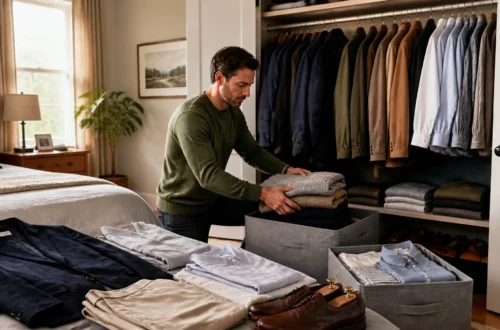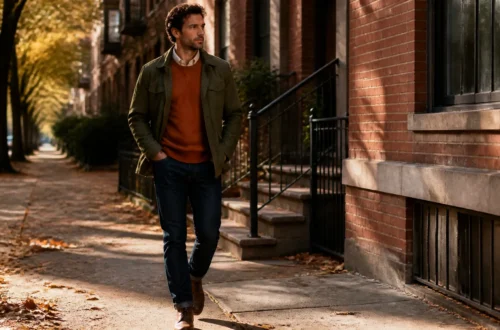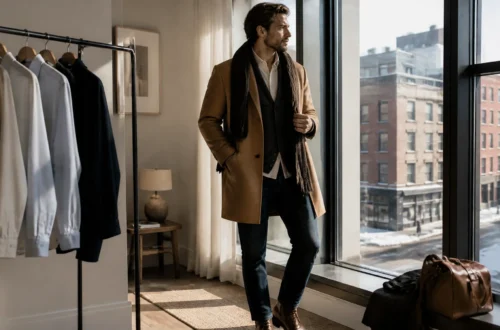
A chilly morning, warm afternoon, and aggressively air-conditioned office can make one outfit feel wrong three different ways. Good spring to summer layering men can rely on solves that problem without leaving you carrying half your closet by lunch.
The key is to combine breathable fabrics, removable pieces, and balanced proportions. Here is how to build outfits that adapt comfortably while still looking intentional.
The Foundation of Spring to Summer Layering for Men

Effective layering begins with one simple idea: every piece should work after another piece comes off. If your overshirt hides a stained undershirt or your sweater is the only element holding the outfit together, changing temperatures will expose the problem.
Build from a presentable base layer, add a light middle layer, and reserve outerwear for genuinely cool or wet conditions. Each layer should be easy to remove, compact enough to carry, and visually compatible with the rest of the outfit.
A useful warm-weather system has three possible levels:
- Base: A T-shirt, polo, tank under a shirt, or lightweight button-down worn next to the skin.
- Middle: An open overshirt, cardigan, unstructured blazer, or fine-gauge knit.
- Outer: A light jacket or rain shell for brisk mornings, wind, and showers.
You will not always need all three. By late spring, a tee and overshirt may be enough. On a damp 50-degree morning, a breathable base, open shirt, and light jacket give you more control without the bulk of winter clothing.
Leave a little room between layers. A close-fitting T-shirt can sit beneath a relaxed overshirt, while the jacket should accommodate both without pulling across the chest or restricting your shoulders. The goal is mobility, not a stack of skin-tight garments.
Choose Fabrics That Release Heat and Moisture
As temperatures climb, fabric matters more than the number of layers. Heavy material traps warmth even when a garment looks summery, while breathable fibers help sweat evaporate and allow air to move.
Linen and lightweight cotton are dependable choices for shirts, overshirts, and trousers. Linen feels airy and gains character from a few wrinkles, so it suits relaxed settings particularly well. Cotton poplin, seersucker, gauze, and open-weave fabrics offer different levels of crispness without winter weight.
Lightweight merino wool can also earn a place in transitional outfits. It works well in thin sweaters and polos because it regulates temperature better than a chunky cold-weather knit. If wool feels impractical for your climate, a fine cotton sweater provides a simpler alternative.
Synthetic performance fabrics can help during commutes, travel, or humid weather, especially when they dry quickly. Check that the fabric feels breathable rather than slick and heavy. A dense polyester jacket may be light on a hanger but surprisingly steamy in the sun.
Texture adds visual depth when the layers themselves are thin. A slub-cotton tee under a smooth poplin shirt, or a linen overshirt above a fine knit polo, creates contrast without relying on bulky construction.
Use Proportion to Keep Light Layers Looking Sharp

Warm-weather outfits often use softer fabrics and looser silhouettes, but relaxed does not need to mean shapeless. Proportion gives spring to summer layering men a sense of structure after heavy coats and boots disappear.
Start by considering length. An overshirt generally looks cleaner when it extends below the T-shirt beneath it, while a cropped casual jacket works best over a base that does not hang several inches below the hem. Small differences are fine; dramatic, accidental-looking tiers can make the outfit appear cluttered.
Balance a relaxed top half with trousers that have a straight or gently tapered leg. Very slim pants beneath a boxy jacket exaggerate the contrast, while extremely wide trousers and a long overshirt can overwhelm the frame. These are not rigid rules, but they are useful starting points when an outfit feels visually off.
Collars also create proportion. A camp-collar shirt worn open over a crew-neck tee adds width near the shoulders, while a button-down collar gives an unstructured blazer a neater line. If several collars compete at once, simplify. A polo, open shirt, and jacket can become crowded around the neck.
Roll sleeves with some care rather than pushing them into a tight bunch. One or two broad folds expose the forearm and make a long-sleeve shirt feel seasonally appropriate. They also unroll easily when the evening cools.
Coordinate Color Without Making Every Piece Match
Layered outfits put several colors next to one another, so a limited palette makes coordination easier. That does not mean dressing entirely in beige, although spring menswear has certainly tried to make that a full-time occupation.
Choose a neutral foundation such as navy, white, cream, gray, olive, tan, or light blue, then introduce one color with more energy. A white tee, olive overshirt, and navy chinos feel cohesive because each shade is muted. Rust, dusty blue, soft green, or burgundy can provide an accent without dominating the outfit.
Light colors reflect the mood of warmer months and tend to show fabric texture clearly. Ecru jeans, pale-blue shirts, and stone chinos transition naturally into summer, but darker shades remain useful near the face or on outer layers. A navy chore jacket over a cream tee creates a sharper outline than two similarly pale pieces.
Patterns work best when their scale and intensity do not compete. A striped tee under a solid overshirt is easy to read. If the outer layer has a bold plaid or botanical print, keep the base quiet and let that garment carry the outfit.
Build Outfits Around the Day Ahead

The best layer combination depends on where you are going, how much time you will spend outside, and whether you can store removed clothing. Planning around the day is more useful than dressing for the temperature at 8 a.m. alone.
Casual Weekends and Errands
Pair a breathable crew-neck tee with a cotton or linen overshirt, straight-leg jeans or chinos, and clean sneakers. Wear the shirt open during warmer hours and button it when the wind picks up. A chore jacket can replace the overshirt on cooler spring days.
Work and Smart-Casual Settings
A knit polo beneath an unstructured cotton or linen-blend blazer offers polish without formal stiffness. Combine it with lightweight wool trousers, chinos, or neat dark jeans if the dress code allows. Loafers, leather sneakers, or suede derbies finish the outfit without the visual weight of rugged winter boots.
For a more traditional office, use a lightweight button-down as the base and keep a fine-gauge cardigan or blazer nearby. Avoid adding an undershirt that shows prominently at the collar unless it is intended to be visible.
Travel and Long Temperature Swings
Travel calls for pieces that pack easily and work in several combinations. Try a moisture-managing tee, wrinkle-tolerant overshirt, and light water-resistant shell with drawstring trousers or chinos. The shell handles rain and wind, while the overshirt remains useful indoors after the shell comes off.
For any setting, footwear should support the season visually and practically. Canvas sneakers, leather sneakers, loafers, and lightweight derbies pair naturally with thinner clothing. No-show socks may suit low-cut shoes, but breathable crew socks can look intentional with sneakers and cropped trousers while reducing friction.
Know What to Remove, Store, and Retire
A layering system succeeds only if taking pieces off is convenient. If possible, choose outer layers that fold neatly into a tote, backpack, or briefcase. Linen and soft cotton will crease, but that is often preferable to hauling a rigid jacket over your arm all afternoon.
Do not tie every removed layer around your waist by default. It can work with casual outfits, especially with a shirt or thin sweatshirt, but a blazer or structured jacket usually looks awkward and may hold wrinkles in unhelpful places.
As summer settles in, retire layers gradually rather than changing the entire wardrobe overnight. First drop insulated jackets and thick knits. Next, replace denim overshirts and lined bombers with linen shirts, chore shirts, or unlined windbreakers. In persistent heat, the “layer” may simply be an open short-sleeve shirt over a tank or tee.
Pay attention to care as well. Sweat reaches collars, cuffs, and underarms quickly in warm weather, so follow garment labels and air pieces between wears. Rotating washable base layers helps protect jackets and knits that require less frequent cleaning.
Frequently Asked Questions
Can you layer clothes in hot and humid weather?
Yes, but reduce both fabric density and coverage. Choose a moisture-managing base with one loose, breathable layer, such as a linen shirt worn open. Avoid tight stacks of fabric that prevent air from circulating.
What jacket works best between spring and summer?
An unlined chore jacket, lightweight bomber, cotton Harrington, or packable rain shell can all work. Choose according to the weather and dress code: chore jackets are versatile and casual, while a rain shell is more practical for wet commutes.
Should a summer overshirt be oversized?
It should be roomy enough to move and admit air, but it does not have to be dramatically oversized. Check that the shoulder seams, sleeve length, and hem look deliberate, and make sure the garment can close without pulling over your base layer.
How many layers are too many in warm weather?
There is no fixed number, but three substantial garments are often unnecessary once daytime temperatures rise. For spring to summer layering men should prioritize adaptable combinations, such as a tee, overshirt, and optional shell, rather than wearing several layers for appearance alone.
Can shorts work with layered tops?
Yes. A tee with an open long-sleeve shirt can balance tailored shorts, chino shorts, or simple drawstring styles. Keep the upper layers light and avoid pairing short shorts with a long, heavy jacket unless the strong proportion contrast is deliberate.
Make Every Layer Earn Its Place
A useful transitional wardrobe does not require more clothing. It requires pieces that breathe, fit together, and still look complete when separated.
Start with one reliable formula for your routine, such as a presentable tee, relaxed overshirt, straight-leg trousers, and adaptable shoes. Check the day’s high temperature, carry only the outer layer you are likely to need, and let comfort determine when it comes off.