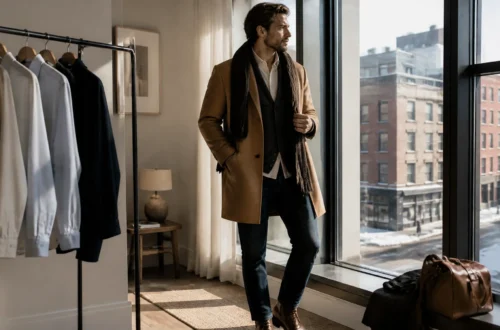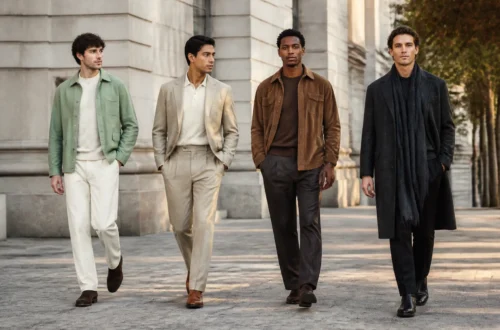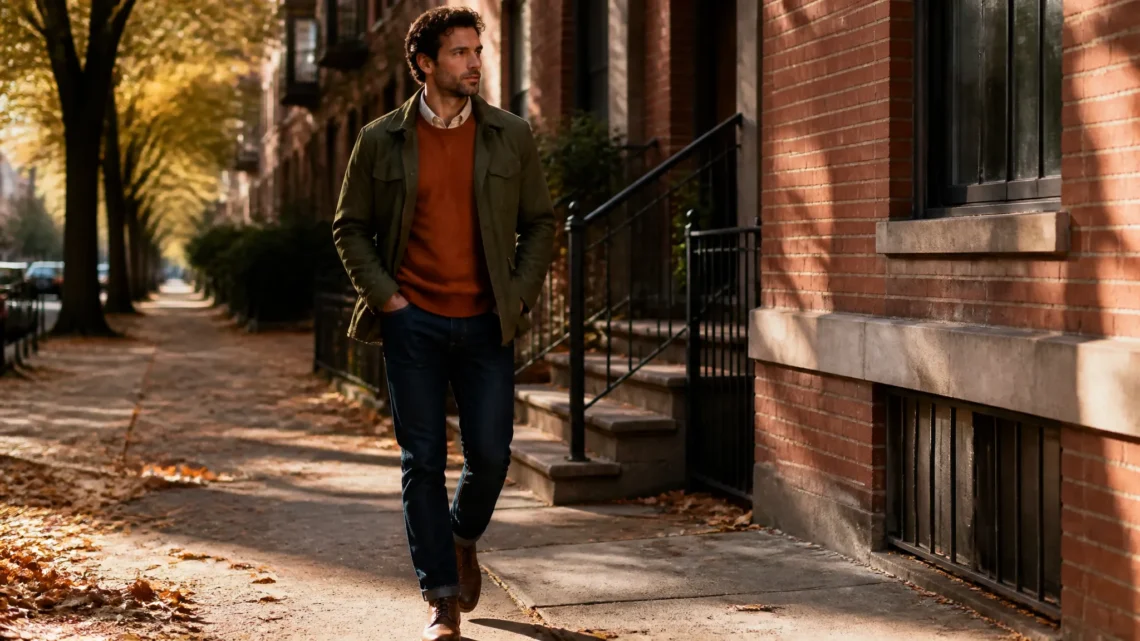
Fall outfits often look simple until a cold morning turns into a warm afternoon and every layer suddenly feels wrong. Learning how to layer clothes for fall men can remove that daily guesswork without requiring an oversized wardrobe.
This guide explains how to build a flexible system around breathable base layers, insulating middle layers, practical outerwear, and balanced proportions. You will also learn how to coordinate fabrics, colors, footwear, and accessories for casual and dressier settings.
How to Layer Clothes for Fall Men Without Adding Bulk
A useful layering system does more than stack garments. Each piece should perform a distinct job, fit comfortably beneath the next one, and still look intentional when you remove a layer.
Think of an outfit as three adjustable levels: a base layer worn against the body, a middle layer that adds warmth and visual interest, and an outer layer that handles wind or light rain. You will not need all three every day, but choosing compatible pieces lets you adapt without rebuilding the outfit.
Start thin and add structure outward. A cotton or merino T-shirt can sit beneath an Oxford shirt, fine-gauge sweater, or overshirt. A field jacket, chore coat, or topcoat then provides the cleanest outline, rather than forcing a bulky sweater under an equally bulky jacket.
The layers should also work independently. If taking off your jacket exposes a rumpled undershirt that looks like sleepwear, the system has failed its first indoor test.
Build From the Base Layer Outward

The base layer controls comfort because it sits closest to your skin. In mild weather, this can be a crewneck T-shirt, polo, henley, or lightweight button-down. Choose a trim but nonrestrictive fit that does not bunch beneath the middle layer.
Cotton feels familiar and works well for everyday wear, while lightweight merino wool offers warmth without much thickness and handles changing temperatures particularly well. Synthetic performance fabrics can suit hiking or active commutes, though their sheen may look out of place beneath tailored clothing.
The middle layer provides most of the insulation. Fine-gauge crewneck sweaters, cardigans, flannel shirts, fleece jackets, quilted vests, and unlined overshirts all fill this role, but they create different levels of formality. A navy merino sweater looks natural under a wool topcoat, while a brushed flannel shirt fits more comfortably beneath a canvas chore coat.
Your outer layer should answer the weather and the setting. Harrington jackets and bombers suit mild, casual days; field jackets and waxed-cotton coats offer more coverage; mac coats and topcoats work with office clothing. For a dependable men’s fall layering system, prioritize outerwear with enough room through the shoulders and chest to accommodate one middle layer.
A practical wardrobe might include these interchangeable components:
- Two or three neutral T-shirts or henleys for casual bases
- An Oxford shirt and a flannel shirt for more visible base layers
- A fine-gauge sweater, cardigan, or lightweight fleece for insulation
- An overshirt or quilted vest for transitional weather
- One casual jacket and one weather-resistant or dressier coat
Control Fit, Length, and Proportion
Good fall layering depends as much on shape as temperature. Every added garment changes the outline of your body, so small fit problems can multiply quickly.
Begin with armholes and shoulders. A base shirt with excessive fabric under the arms will bunch inside a sweater, while a sweater with dropped shoulders may pull awkwardly beneath a fitted jacket. You should be able to reach forward, sit down, and bend your elbows without the layers binding.
Length matters when garments remain untucked. A T-shirt can extend slightly below a cropped bomber or sweater for a relaxed effect, but several uneven hems often look accidental. When combining a button-down, sweater, and jacket, either tuck the shirt or ensure its hem does not trail far below the other layers.
Let the outermost piece define the silhouette. Straight-cut or gently tapered pants balance most layered outfits because they give the upper body some visual room. Very slim pants can make a substantial coat look top-heavy, while excessively wide pants may overwhelm a short jacket.
Pay attention to collars, too. A crewneck sweater frames an Oxford collar cleanly, while a cardigan leaves more of the shirt visible. Under a jacket with a prominent collar, a hoodie introduces another bulky neckline, so it works best when both garments have enough space and the hood lies flat.
Use Color and Texture to Create Depth

Once fit is under control, color and texture make the layers legible. If every piece has the same weight, finish, and shade, the outfit can resemble one large fabric block rather than a thoughtful combination.
Neutral foundations simplify coordination. Navy, charcoal, olive, brown, cream, and medium gray mix easily and suit fall’s softer natural light. A straightforward example is a white Oxford shirt under a heather-gray sweater, finished with an olive field jacket and dark indigo jeans.
You do not need every layer to contrast sharply. A tonal outfit can combine several shades from one color family, such as an ecru henley, camel cardigan, and dark-brown suede jacket. The changing textures keep those related colors from appearing flat.
Texture is especially useful when learning how to layer clothes for fall men because it creates separation without loud patterns. Try smooth cotton beneath lambswool, brushed flannel under waxed cotton, or fine merino beneath a substantial herringbone coat. Keep the roughest or heaviest-looking material toward the outside so the progression feels natural.
Patterns require a little restraint, not fear. A plaid flannel can sit beneath a solid vest or jacket, while a striped shirt works beneath a plain sweater. If two patterns appear together, vary their scale and connect them with at least one shared color.
Adapt the System to Weather and Occasion
A strong layering wardrobe should shift between settings without relying on one outfit formula. The same base pieces can support a weekend errand, an office day, or an evening out when you adjust fabric, structure, and footwear.
Mild and Changeable Days
For temperatures that fluctuate, wear two light layers rather than one heavy one. A long-sleeve T-shirt with an overshirt, or an Oxford shirt with an unlined chore coat, gives you a layer to remove while remaining presentable.
Breathable materials matter more than maximum insulation on these days. Cotton twill, merino, light flannel, and unlined wool release heat more comfortably than thick fleece or heavily padded outerwear.
Cold, Windy, or Wet Conditions
When the weather turns, preserve warmth by adding a wind-resistant shell instead of simply choosing a thicker sweater. A water-resistant mac over knitwear can be more versatile than a bulky coat, particularly during rain or gusty commutes.
Do not overlook extremities. Wool socks, lined leather gloves, and a compact scarf add warmth without distorting the outfit’s proportions. If rain is likely, choose rubber-soled leather boots or weather-resistant sneakers and leave delicate suede at home.
Work and Smart-Casual Settings
For an office, trade rugged layers for cleaner surfaces and sharper lines. A button-down shirt, fine-gauge V-neck or crewneck sweater, tailored trousers, and a topcoat create warmth without making the outfit feel outdoorsy.
In a smart-casual setting, dark jeans or chinos can replace trousers. A textured sport coat may also serve as the outer layer indoors, provided the shirt and knitwear beneath it are thin enough to prevent pulling at the buttons.
Make Shoes and Accessories Support the Layers
Layering does not stop at the waist. Footwear and accessories affect the visual weight of an outfit, and mismatched choices can make practical clothing feel oddly disconnected.
Substantial outerwear generally looks best with shoes that have some presence. Service boots, moc-toe boots, chukkas, sturdy derbies, and leather sneakers can anchor field jackets, chunky cardigans, and wool coats. Sleeker loafers or minimalist sneakers pair more naturally with fine knitwear and streamlined jackets.
Match materials loosely rather than obsessively. Brown suede boots can complement an olive jacket without matching a brown belt exactly. Repeating a color once, perhaps through a burgundy scarf and similarly toned socks, often provides enough continuity.
Scarves should fit beneath or within the coat collar without creating a large knot. Beanies suit casual outerwear, while a wool cap can work with both rugged and tailored pieces. Bags follow the same logic: canvas and pebbled leather support casual textures, while smooth leather fits cleaner office layers.
Before leaving, use a quick mobility and comfort check:
- Raise and cross your arms to confirm the shoulders do not bind.
- Fasten the outer layer without stretching its buttons or zipper.
- Sit down to check whether shirts bunch and coats pull.
- Remove one layer and confirm the remaining outfit still looks complete.
- Consider where you will store a coat or sweater indoors.
Frequently Asked Questions
How many layers should a man wear in fall?
Two layers often suffice in mild weather, while three provide more flexibility in colder conditions. The better question is whether each layer has a purpose and can be removed without making the outfit look unfinished.
Can you wear a hoodie under a jacket?
Yes, particularly beneath roomy bombers, denim jackets, field jackets, and casual overcoats. Choose a medium- or lightweight hoodie with a relatively flat hood, and make sure the jacket closes without pulling across the chest.
Should a fall jacket be sized up for layering?
Not automatically. Try the jacket over the thickest middle layer you realistically expect to wear, then check the shoulders, chest, sleeves, and arm movement. Sizing up can help if the cut is very trim, but it may also make the collar and shoulders look sloppy.
What is the warmest thin layer for men?
Fine merino wool is a strong choice because it provides insulation without the bulk of a heavy sweatshirt. Lightweight down or synthetic insulated vests are also efficient, especially when worn beneath a wind-resistant outer layer.
How do you layer a button-down shirt without looking too formal?
Choose an Oxford, chambray, or flannel shirt and combine it with casual pieces such as jeans, chinos, an overshirt, or a chore coat. Leaving the collar unbuttoned and using textured fabrics keeps the outfit relaxed.
Build Your System One Outfit at a Time
The easiest way to learn how to layer clothes for fall men is to begin with one reliable combination: a comfortable base, a removable insulating layer, and outerwear suited to your usual weather. Check that all three fit together, then expand with compatible colors and textures rather than buying isolated statement pieces.
Start by laying out one week’s worth of fall clothing and testing combinations at home. The pieces that work in several outfits form your system; the ones that only cooperate under perfect conditions may be taking up valuable closet space.