
An overfilled closet can make getting dressed harder, even when it contains plenty of good clothes. A thoughtful approach to seasonal wardrobe rotation men can use throughout the year keeps weather-appropriate pieces visible while protecting everything else.
This guide explains when to rotate clothes, what should remain available, and how to clean, pack, and store garments without damaging their shape or fabric.
Build a Seasonal Wardrobe Rotation Men Can Actually Maintain
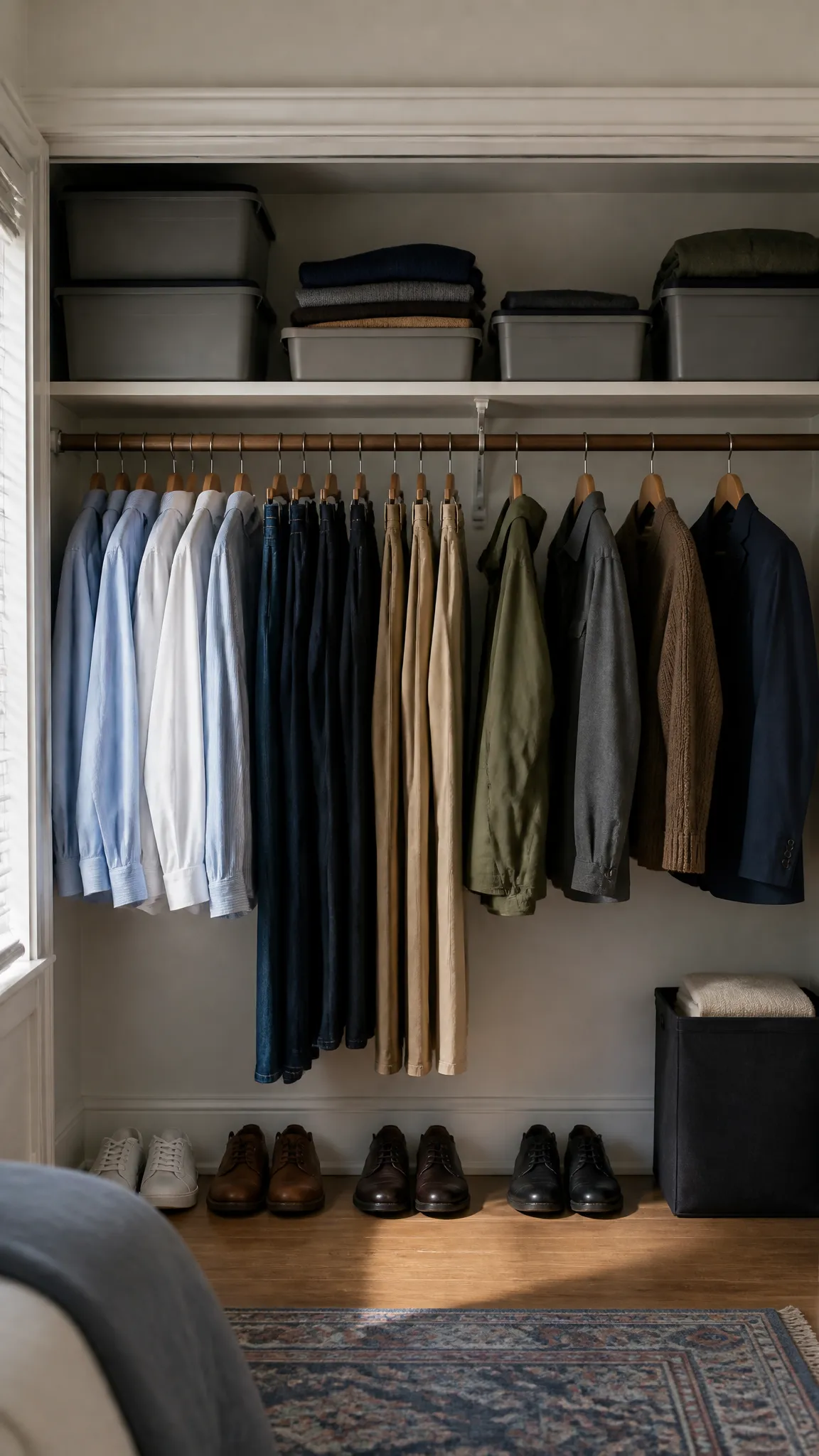
A useful rotation begins with your climate and daily life, not a rigid date on the calendar. Someone in Minneapolis may need a complete winter changeover, while someone in Southern California might rotate only outerwear, knitwear, and warm-weather shirts.
Think of your closet as having three layers: year-round essentials, clothes for the current season, and genuinely off-season pieces. Everyday Oxford shirts, dark jeans, chinos, unstructured blazers, underwear, and versatile sneakers may stay available all year. Heavy parkas and wool sweaters can leave the closet in July, just as linen shirts and swim trunks rarely need prime space in January.
Rotate when the weather changes consistently rather than after one unusually warm or cold day. A transitional zone also helps. Keep a rain jacket, one medium-weight sweater, and a light overshirt accessible when spring and fall temperatures are unpredictable.
The goal is not to empty and rebuild the closet four times a year. It is to give current clothing enough room to hang properly and remain easy to see. If a garment works across seasons, leave it in circulation.
Use the Changeover to Edit What You Own
Before storing anything, decide whether it deserves the space. Seasonal changeovers create a natural pause for evaluating fit, condition, and usefulness because you have just lived through several months of wearing, or avoiding, each piece.
Pull out the outgoing season as a group and assess each garment in daylight. A jacket that pinches through the shoulders, trousers that no longer suit your routine, or a sweater that remains unworn despite repeated opportunities should not automatically return to storage.
A compact set of questions keeps this review practical:
- Does it fit comfortably and support the silhouette you prefer?
- Did you wear it during its appropriate season?
- Is it in good enough condition to repair, donate, sell, or keep?
- Does it duplicate another piece that you consistently choose instead?
- Will it suit a foreseeable occasion, rather than an imaginary future life?
Sentimental garments and specialized formalwear deserve separate judgment. A tuxedo may be worth keeping despite infrequent use, while five nearly identical navy crewneck sweaters probably require a closer look. The standard is not minimalism for its own sake. It is a closet in which each item has a clear role.
Clean Every Garment Before It Goes Into Storage

Once you know what you are keeping, clean it before packing. Body oils, perspiration, food residue, and invisible spills can discolor fabric over time and attract pests. A faint mark that seems harmless now may be much harder to remove months later.
Follow the care label rather than applying one cleaning method to everything. Launder cotton T-shirts, polos, casual shirts, and washable pants, then dry them completely. Damp fabric packed in a closed container can develop mildew and persistent odors.
Wool suits, tailored coats, and structured jackets may need professional cleaning when stained or noticeably soiled, but unnecessary dry cleaning can be hard on fibers. Between deeper cleanings, brush wool garments with a clothes brush, empty the pockets, air them away from direct sunlight, and address spots using an appropriate method.
Knitwear needs particular care. Remove pills gently, wash or clean the sweater according to its label, and fold it instead of hanging it. A hanger can stretch the shoulders and length of cashmere, merino, and heavier cotton knits.
Shoes should also enter storage clean. Brush dirt from leather footwear, let damp pairs dry naturally, condition smooth leather when needed, and insert shoe trees or acid-free tissue to support the shape. Never seal wet shoes inside a box, no matter how eager you are to finish the job.
Choose Storage That Protects Fabric and Shape
Proper containers matter, but the storage environment matters more. Clothing lasts best in a clean, dry, temperature-stable, dark location. Avoid attics with intense heat, damp basements, and garages subject to moisture or large temperature swings.
Fold soft garments and hang structured ones
Fold sweaters, sweatshirts, casual pants, and sturdy shirts loosely enough to avoid sharp creases. Place heavier garments at the bottom and lighter fabrics above them. Acid-free tissue between delicate pieces can reduce friction and help preserve folds.
Hang suits, sport coats, and overcoats on broad, supportive hangers that follow the shoulder line. Use breathable cotton garment bags for long-term protection. Thin wire hangers and sealed plastic dry-cleaning bags can distort shoulders or trap moisture, so neither is ideal for storage.
Select containers with the garment in mind
Clean plastic bins with secure lids work well where dust or occasional moisture is a concern. Breathable fabric boxes can suit a dry interior closet. Clear bins make contents visible, but an inventory kept outside the container works just as well and prevents repeated rummaging.
Vacuum bags save space, yet compression can flatten loft, create deep wrinkles, and strain structured garments. Reserve them for resilient items such as basic cotton clothing, if you use them at all. Do not compress tailored jackets, leather, down, or delicate knitwear for long periods.
Cedar blocks or sachets may help discourage moths, but they do not replace cleaning and sealed storage. Keep cedar from resting directly against fabric, and skip mothballs unless their odor and handling requirements are acceptable in your home.
Bring the New Season Forward as Complete Outfits

A seasonal wardrobe rotation men can sustain should improve dressing, not merely move bins around. As incoming clothes return to the closet, organize them according to how you build outfits. This quickly reveals missing basics, unnecessary duplicates, and combinations you had forgotten.
Start with the season’s most frequently worn layers. For fall, that might mean dark denim, charcoal flannel trousers, Oxford shirts, merino crewnecks, an overshirt, and a rain-resistant coat. For summer, it may include lightweight chinos, linen-blend shirts, polos, shorts, loafers, and canvas sneakers.
Keep colors and textures visible together. Navy, olive, gray, tan, and white often coordinate easily, while seasonal accents such as rust, burgundy, pale blue, or sage can add variety. The point is not to impose a neutral uniform, but to see whether shirts, trousers, footwear, and outer layers form useful combinations.
Give prime closet space to pieces that match your current weather and dress codes. Office tailoring should remain easy to reach if you wear it weekly; hiking gear should not occupy the same visual priority unless the trail is part of your regular routine. Put occasional items toward the sides or upper shelves.
As you arrange the closet, assemble a few complete combinations. A navy hopsack blazer, light blue Oxford shirt, gray trousers, and brown loafers make a dependable mild-weather outfit. A chore coat, heavyweight T-shirt, straight-leg jeans, and suede boots cover casual fall days without fussy layering.
Keep the System Working Between Major Rotations
A good storage day can unravel quickly if incoming purchases, laundry, and weather shifts have nowhere to go. Leave some open hanging space and avoid filling shelves to their edges. Clothes wrinkle less, and you can actually see what you own.
Create a small holding area for repairs, alterations, and cleaning. Missing buttons and loose hems are easier to handle when they are not rediscovered six months later. Set a reasonable deadline so the repair basket does not become a textile retirement community.
Midseason checks should be brief. Return obviously unsuitable items to storage, bring forward one or two layers as temperatures change, and note genuine wardrobe gaps. This makes seasonal wardrobe rotation men practice less like a major household project and more like routine maintenance.
An inventory can be simple: a note on your phone listing each bin and its contents. Labels such as “summer shirts and shorts” are more useful than vague labels such as “clothes.” If you store several similar containers, include the location as well.
Frequently Asked Questions
How often should a men’s wardrobe be rotated?
Most wardrobes benefit from two substantial rotations, one for warm weather and one for cold weather, with smaller adjustments during spring and fall. Climate, travel, and available closet space may make more frequent changes useful.
Can clothes be stored in cardboard boxes?
Cardboard is acceptable for short-term use in a clean, dry interior space, but it absorbs moisture and offers limited protection from pests. For longer storage, clean lidded plastic bins or breathable archival-style boxes are generally safer choices.
Should clothes be ironed before storage?
Clothes should be clean, fully dry, and neatly folded, but crisp ironing is usually unnecessary. Long storage can create new creases anyway. Steam or press garments after unpacking, following the fabric’s care instructions.
How can stored clothes be kept from smelling stale?
Clean and dry every item, use clean containers, and store them in a dry, temperature-stable room. Breathable garment bags help hanging clothes, while cedar sachets or unscented moisture-control products can be used carefully without touching fabric.
What should stay in the closet all year?
Keep true year-round staples available, including underwear, socks, versatile shirts, dark jeans, chinos, a lightweight jacket, and footwear appropriate for indoor or moderate conditions. The exact selection should reflect your local climate and typical dress codes.
A Better Closet Starts With the Next Weather Shift
Effective rotation is less about owning separate wardrobes for four seasons than matching accessible clothing to real conditions. When you clean before packing, protect fabric and shape, and keep versatile pieces in circulation, both dressing and garment care become easier.
At the next sustained change in weather, begin with one category such as outerwear or knitwear. Edit it, clean it, store it correctly, and use that small win to establish a system you can repeat.