When heat and humidity settle in, a heavy shirt can feel uncomfortable before you even leave home. Choosing among the best summer fabrics men can wear helps sweat evaporate, lets air circulate, and keeps clothes from clinging.
This comparison explains how eight warm-weather materials handle breathability, moisture, wrinkles, and everyday wear. You’ll also learn which fabric weights and blends make sense for work, weekends, travel, and dressier occasions.
1. Linen

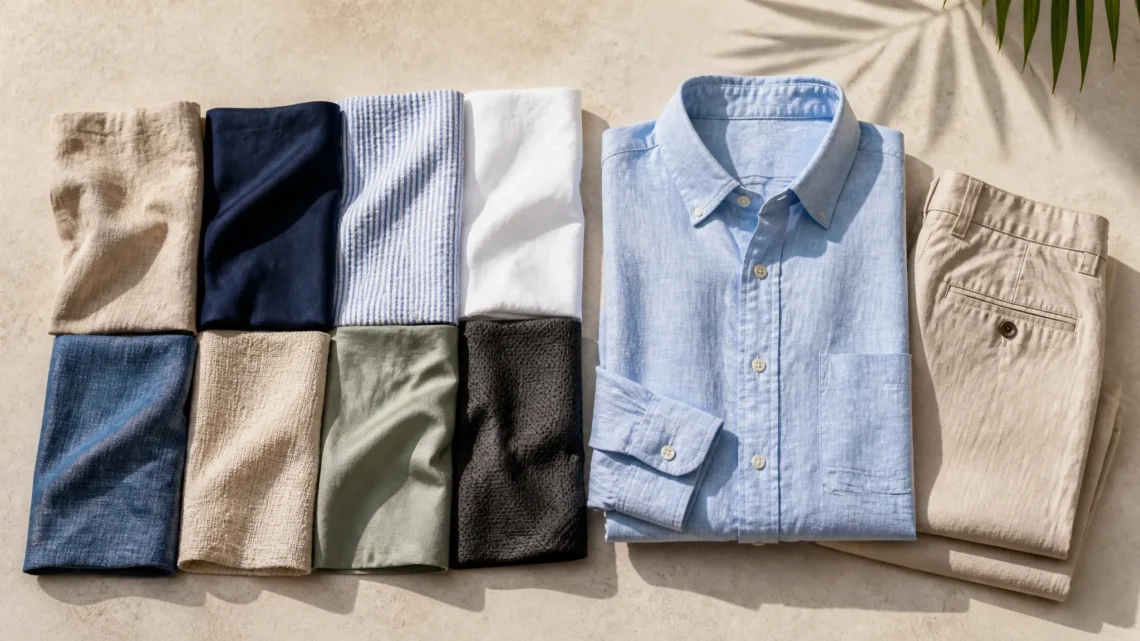
Linen is a warm-weather staple because its fibers create a breathable fabric that allows heat to escape. It absorbs moisture without immediately feeling saturated, and its slightly crisp structure tends to hold fabric away from the skin. Expect visible wrinkles, which are part of linen’s relaxed character rather than a sign that something has gone wrong.
- Cooling: Excellent airflow makes linen particularly comfortable in dry heat and humid conditions.
- Moisture: Highly absorbent fibers help manage perspiration, though damp spots may remain visible on pale or tightly fitted garments.
- Care: Washing can soften linen over time, but high heat may encourage shrinkage and set stubborn creases.
- Wear it for: Button-down shirts, drawstring trousers, unstructured suits, shorts, and vacation clothing.
Choose a medium-weight weave when you want trousers or a jacket with some shape. Lightweight linen works well for shirts, but check it against daylight because very open weaves can be sheer. A linen-cotton blend offers a smoother feel and somewhat fewer wrinkles while retaining useful breathability.
2. Tropical-Weight Wool
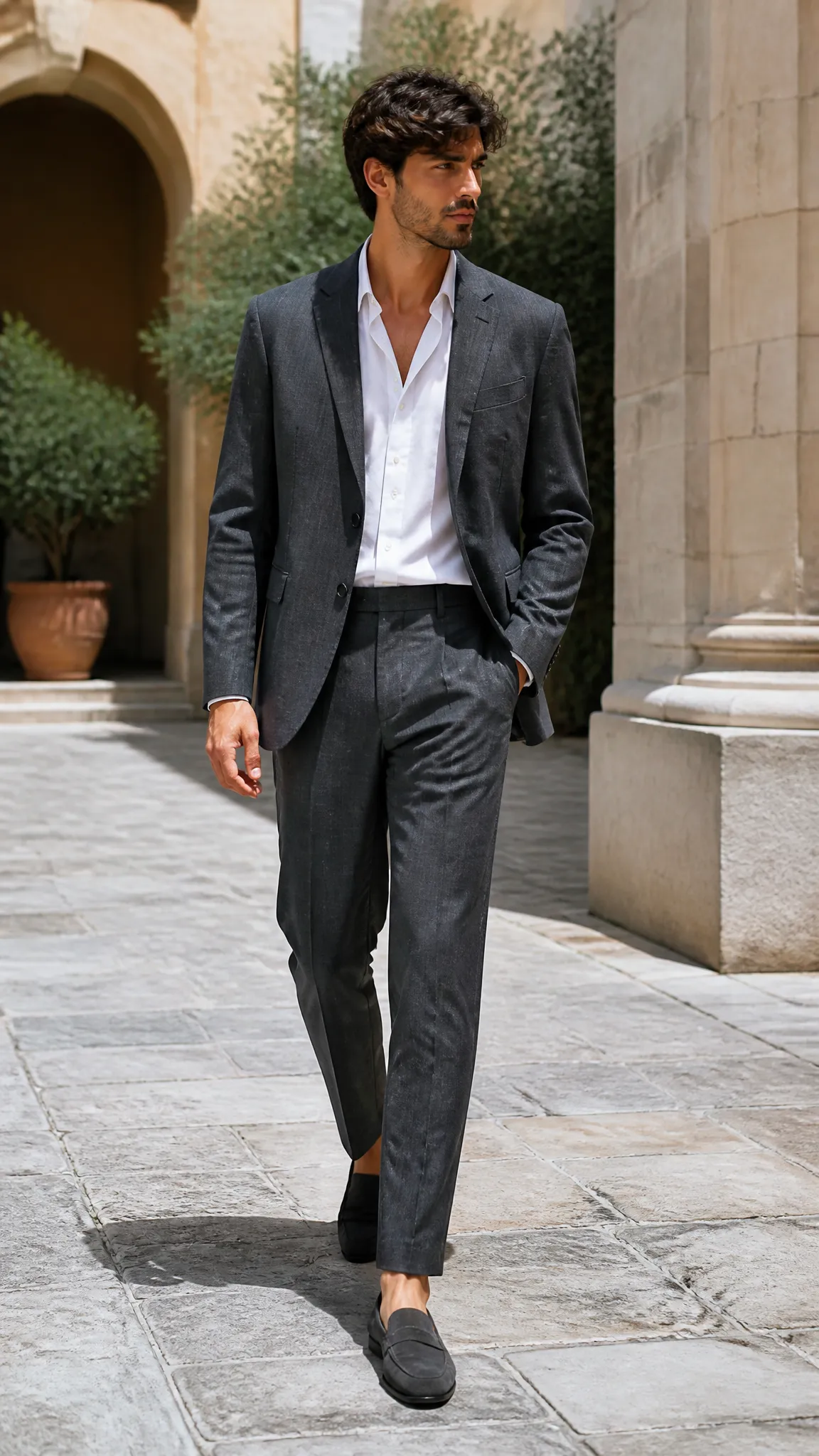
Wool may sound like a winter-only choice, but tropical-weight wool is made with fine yarns in an open weave that releases heat. It regulates moisture well and generally resists odors better than many plant-based fabrics. Its natural resilience also helps tailored garments recover from sitting and resist the deep creases common in linen.
- Cooling: The open weave provides good ventilation, especially in loosely constructed jackets and unlined trousers.
- Moisture: Wool can absorb water vapor while remaining relatively comfortable against the body.
- Care: Most tailored pieces need dry cleaning, but frequent airing and spot cleaning can reduce unnecessary trips to the cleaner.
- Wear it for: Summer suits, office trousers, formal events, business travel, and lightweight blazers.
Look for fabric described as tropical, high-twist, or fresco-style rather than simply “lightweight wool.” A loose, high-twist cloth usually feels drier and wears more crisply. For maximum airflow, pair it with partial lining, minimal shoulder padding, and a breathable cotton or cupro lining instead of dense polyester.
3. Seersucker Cotton
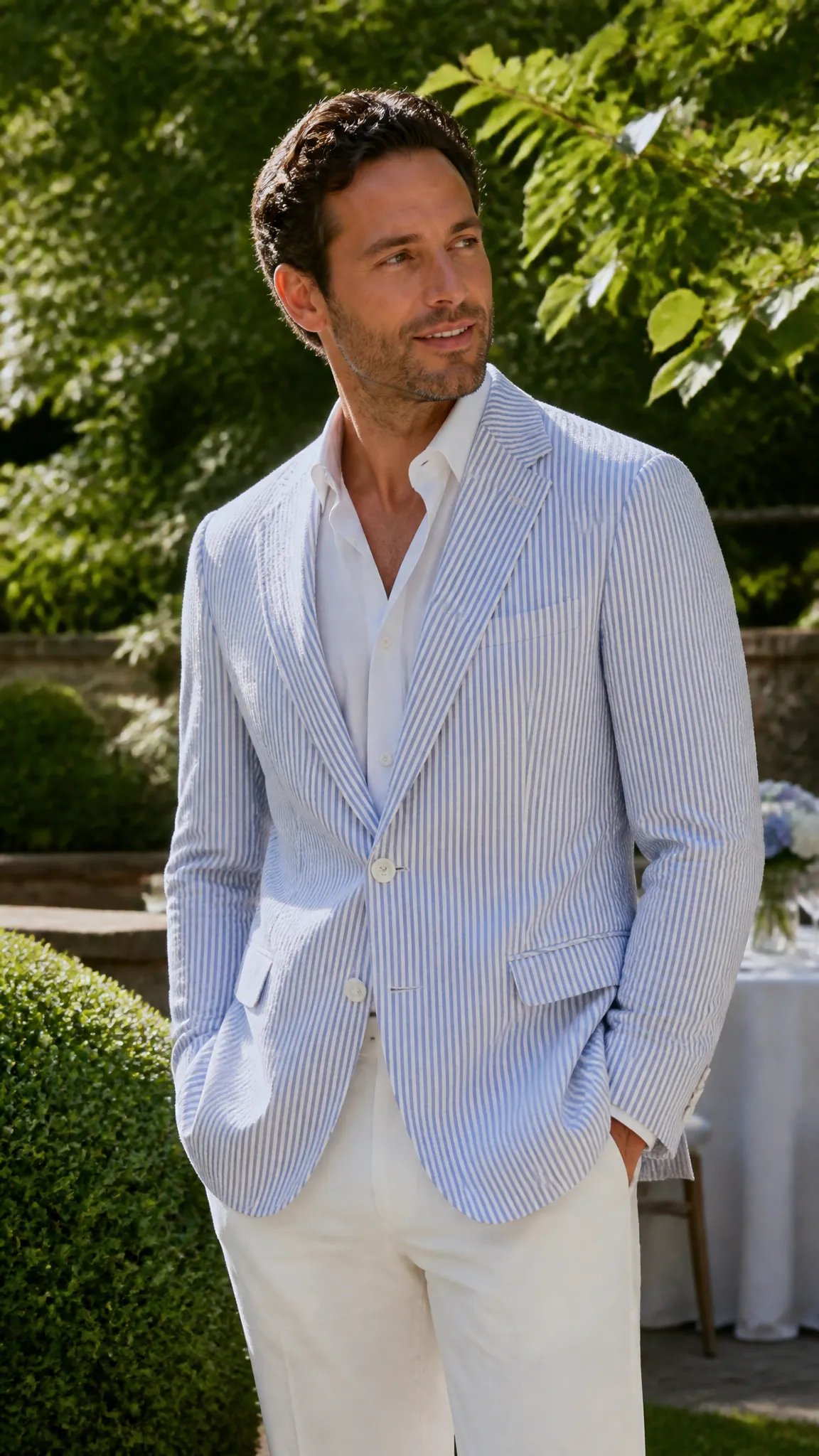
Seersucker is distinguished by alternating smooth and puckered stripes created through variations in yarn tension. Those raised areas keep much of the fabric from resting flat against your body, creating small channels where air can move. The texture also makes wrinkles less noticeable, so the material remains presentable with little pressing.
- Cooling: Its puckered surface limits skin contact and encourages ventilation.
- Moisture: Cotton absorbs sweat readily, although it dries more slowly than linen or technical synthetics.
- Care: Most cotton seersucker is washable, and ironing it flat would defeat its characteristic texture.
- Wear it for: Casual shirts, shorts, warm-weather suits, lightweight robes, and outdoor celebrations.
Blue-and-white stripes are traditional, but solid and micro-check versions can be easier to combine with an everyday wardrobe. Keep the cut comfortable rather than skin-tight so the puckering can do its job. Because seersucker already has plenty of visual texture, simple shoes and minimally patterned accessories usually create a balanced outfit.
4. Lightweight Cotton Poplin

Cotton poplin has a smooth surface and plain weave that give shirts a clean, versatile appearance. In lightweight form, it provides reliable airflow without looking as casual as linen or seersucker. Cotton’s absorbency makes it comfortable for moderate summer weather, though a soaked poplin shirt can become heavy and slow to dry in extreme humidity.
- Cooling: Good in thin, loosely fitted garments, but less airy than open-weave linen or gauze.
- Moisture: Absorbs perspiration effectively but tends to retain it longer than quick-drying materials.
- Care: Usually machine washable and easy to press, with wrinkles varying by finish and fiber quality.
- Wear it for: Office shirts, camp-collar shirts, chinos, lightweight shorts, and smart-casual outfits.
Among the best summer fabrics men can use for work, poplin offers one of the easiest transitions from commute to office. Choose pale colors and a relaxed fit for better heat management. Hold the fabric up to a light before buying: a cloth that appears dense and opaque may trap more heat, while an extremely thin white poplin may require an undershirt.
5. Chambray
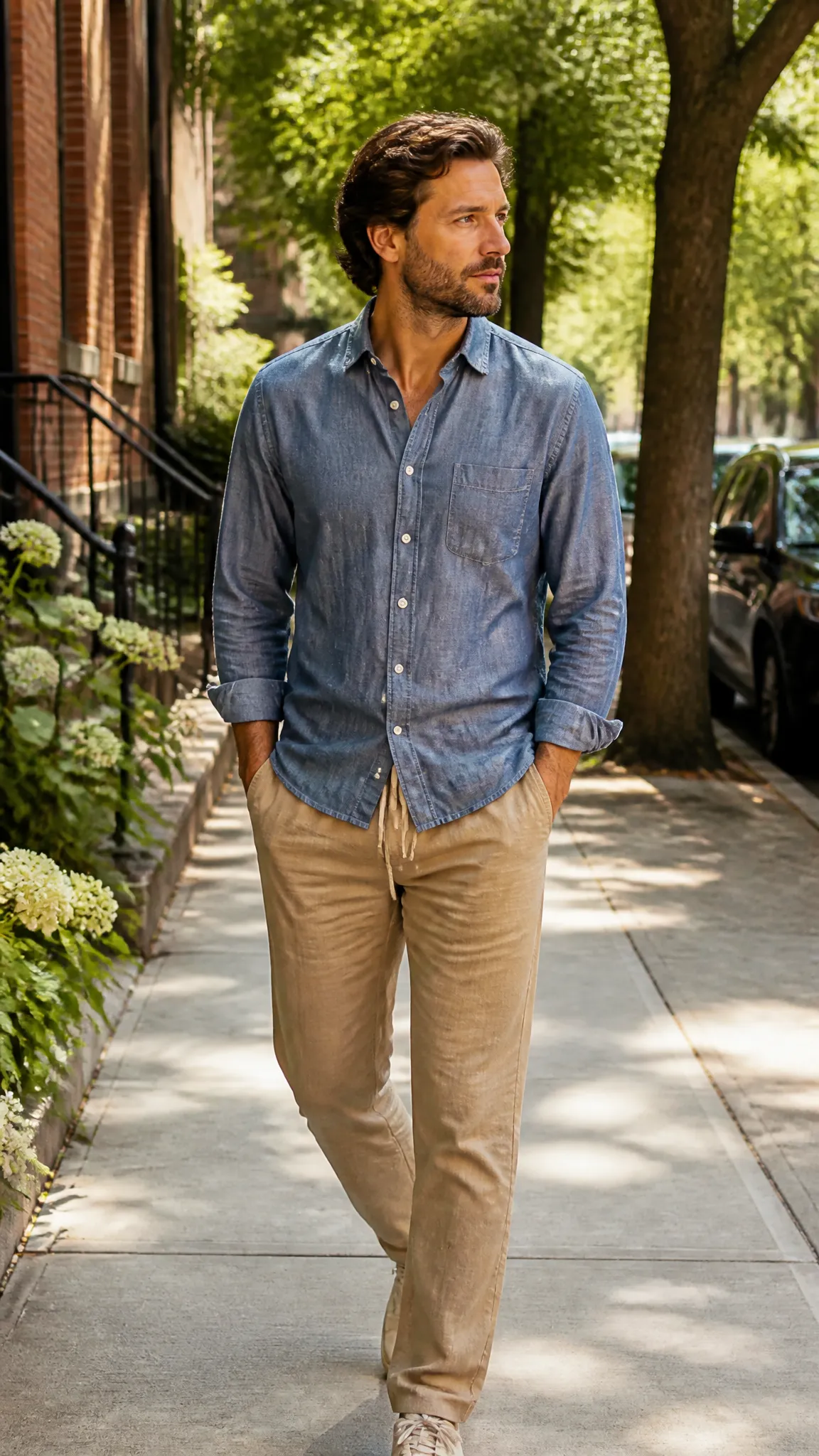
Chambray delivers much of denim’s blue workwear character in a lighter plain weave. It typically uses a colored warp and white weft, producing a subtle heathered appearance without denim’s heavy twill structure. Lightweight chambray feels soft, wears casually, and hides minor perspiration or travel creases better than a perfectly smooth solid cloth.
- Cooling: Lightweight versions provide moderate airflow, although tightly woven chambray can still feel warm.
- Moisture: Its cotton fibers absorb sweat but don’t dry especially quickly.
- Care: Generally machine washable, durable, and forgiving of wrinkles; indigo-like dyes may fade or transfer at first.
- Wear it for: Casual button-downs, overshirts, drawstring shorts, and relaxed weekend clothing.
Fabric weight matters more than the chambray label alone. Look for a shirt that feels noticeably lighter and more flexible than denim, ideally with enough room through the chest and back for air circulation. Wear it open over a breathable undershirt during cooler mornings, then roll the sleeves neatly as temperatures rise.
6. Hemp
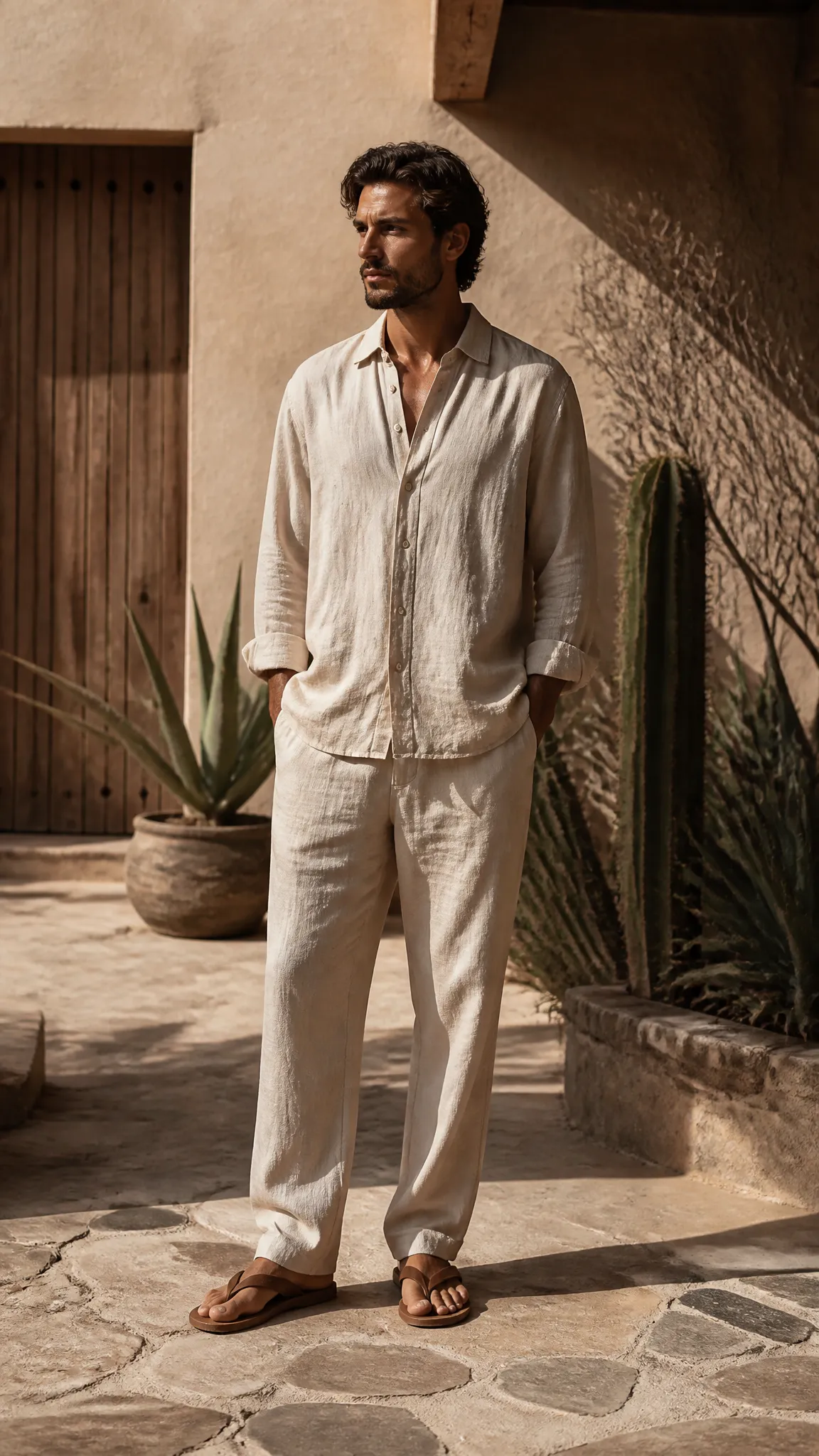
Hemp fabric combines a dry, textured hand with strong fibers and useful warm-weather breathability. It often begins somewhat crisp but becomes softer through washing and wear. Like linen, it can absorb moisture and feel less clingy than a fine, dense cotton, although actual comfort depends heavily on weave, weight, and any fibers blended into the cloth.
- Cooling: Good airflow in loose weaves makes hemp suitable for hot days and relaxed silhouettes.
- Moisture: Absorbent fibers help pull perspiration away, but the garment isn’t automatically quick-drying.
- Care: Many hemp garments are washable, though checking the label is important because blends and construction vary.
- Wear it for: Casual shirts, overshirts, loose trousers, shorts, tees, and chore-style jackets.
Hemp-linen blends emphasize crispness and ventilation, while hemp-cotton blends tend to feel familiar and soft. Avoid assuming every hemp item will be cool simply because of its fiber content. For summer, seek a light or medium weight, visible weave, and easy fit rather than a thick canvas commonly used for workwear.
7. Lyocell
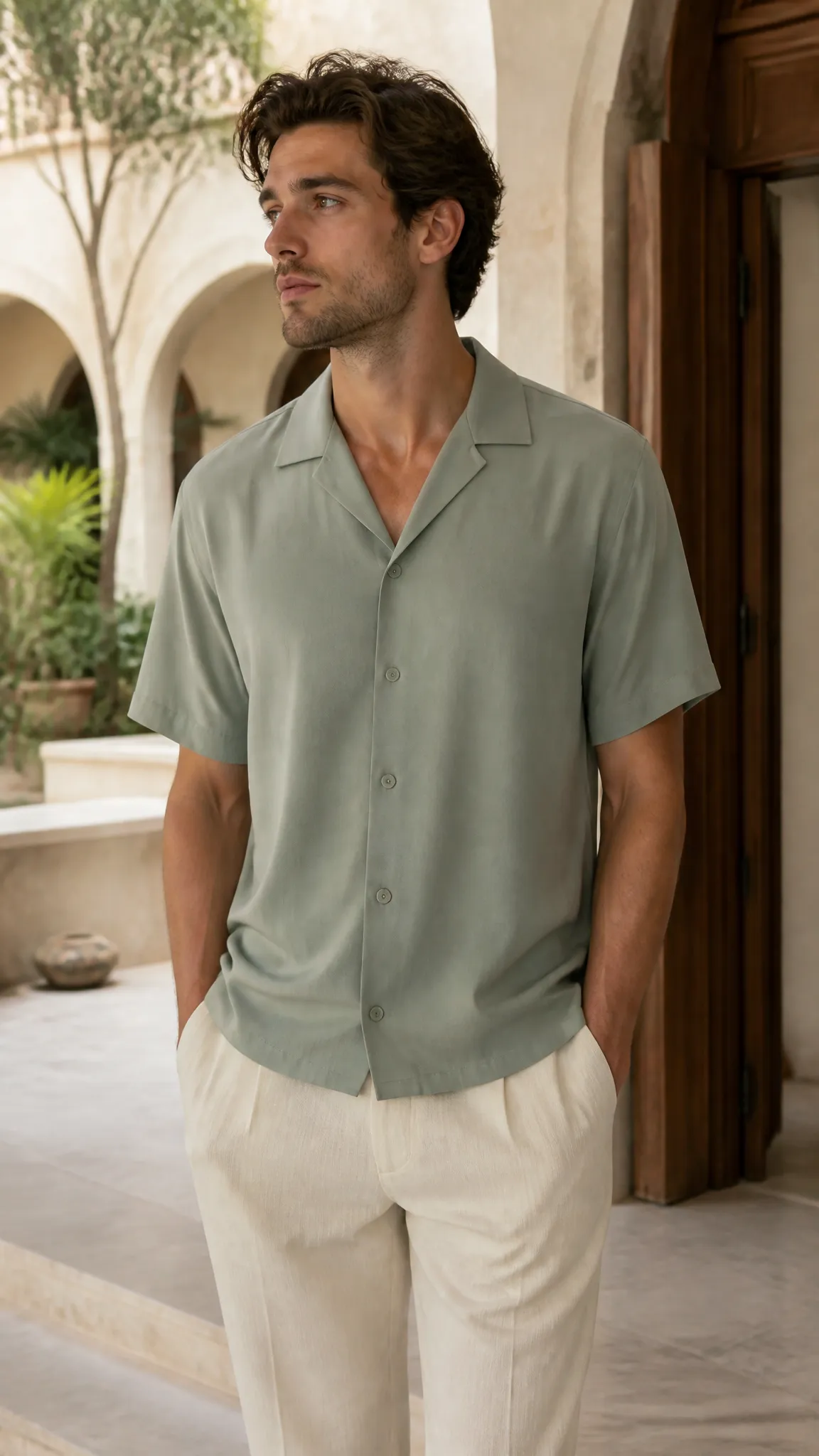
Lyocell is a regenerated cellulose fiber known for its smooth hand, fluid drape, and effective moisture absorption. It can feel cool against the skin and works especially well when you dislike the coarse texture of some linen or hemp. The tradeoff is less body: very fluid lyocell may cling when damp and rarely creates the crisp structure expected from traditional tailoring.
- Cooling: A smooth surface and breathable construction can feel comfortable in heat, particularly in relaxed cuts.
- Moisture: Good absorbency helps manage sweat, though drying performance varies with fabric thickness and blends.
- Care: Some garments are machine washable, but gentle cycles and low heat help protect drape and surface appearance.
- Wear it for: Camp-collar shirts, flowing trousers, soft tees, resort shirts, and travel outfits.
Check the care label and construction rather than judging the fiber in isolation. A lyocell-linen blend combines softer drape with linen texture, while lyocell-cotton can make casual shirts smoother. Because the material often hangs close to the body, a slightly roomier cut provides better airflow and reduces the chance of damp fabric sticking to your skin.
8. Lightweight Performance Synthetics
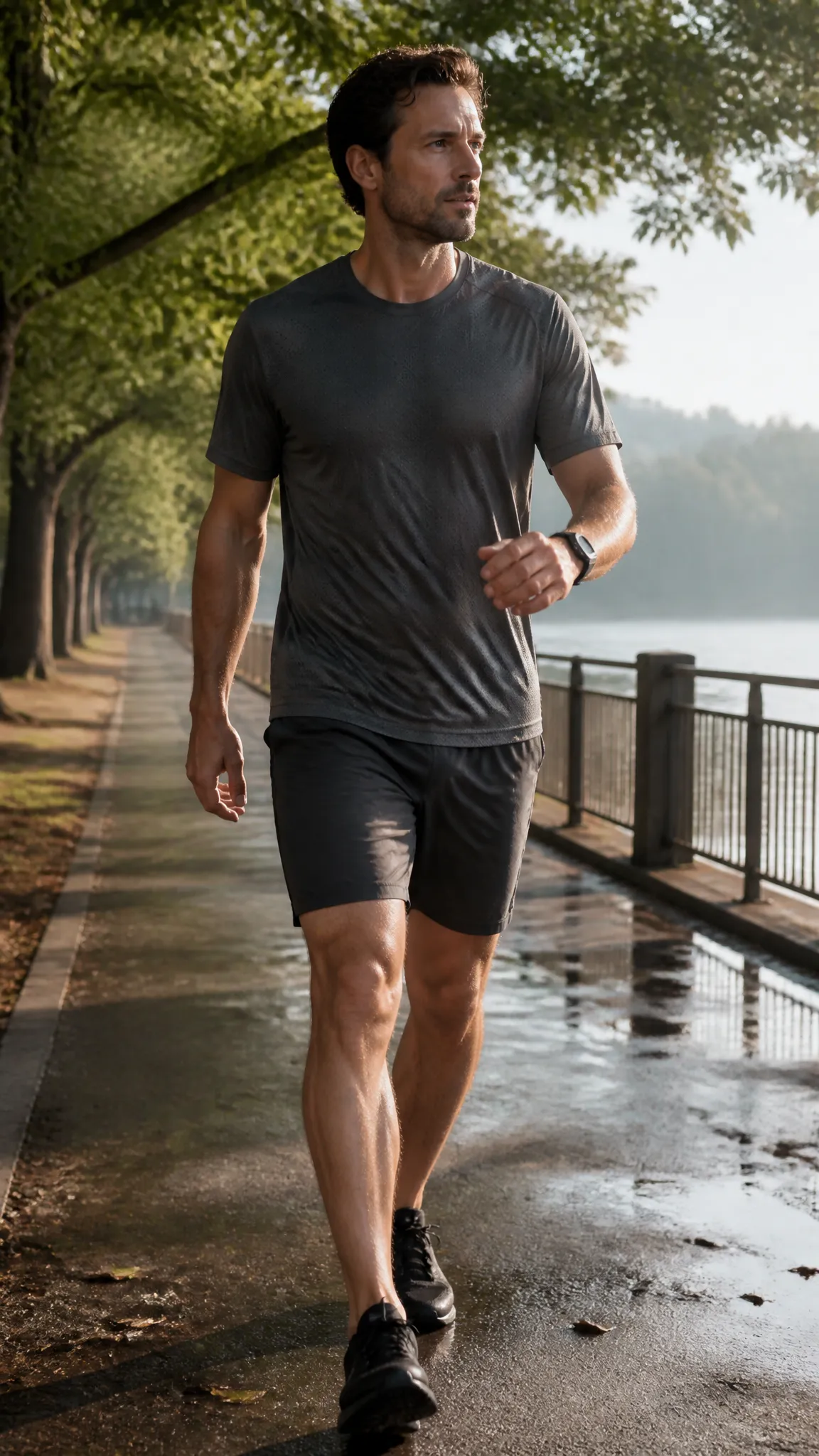
Purpose-built polyester or nylon fabrics can outperform natural fibers when fast drying is the main priority. Many summer garments use thin yarns, mechanical stretch, mesh zones, or moisture-wicking construction to move sweat across a larger surface area. Quality varies widely, and dense synthetics with poor ventilation may trap heat or develop odors more quickly.
- Cooling: Best when the fabric is thin, porous, and cut to permit airflow; fiber content alone doesn’t guarantee comfort.
- Moisture: Low absorbency supports rapid drying, making these fabrics useful for heavy perspiration and repeated wear.
- Care: Usually easy to wash, but fabric softener may interfere with some wicking finishes and high heat can damage stretch fibers.
- Wear it for: Active commutes, hiking, workouts, travel shirts, golf clothing, and humid outdoor errands.
Inspect the fabric in person when possible. A soft, airy knit or perforated weave is usually a better hot-weather bet than shiny, tightly woven material. If odor is a concern, rotate garments and wash them promptly; blending synthetics with wool or cellulose fibers can improve feel while preserving faster drying.
How to Choose Hot-Weather Fabric
The fiber name is only one part of the decision. Weave, weight, fit, color, and garment construction can make two pieces with the same label perform very differently. A loose linen shirt may feel cooler than a tight one, while an unlined wool jacket may ventilate better than a cotton jacket packed with synthetic lining and padding.
For dry heat, prioritize airflow, sun coverage, and fabrics that don’t cling, such as linen or loose hemp. In humid weather, moisture has less opportunity to evaporate, so open construction and room around the body matter even more. Performance synthetics can help during high-output activity because they dry quickly, while tropical wool is useful when you need polish without heavy insulation.
Also consider transparency and sun exposure. Very lightweight cloth can transmit more light, so hold it up to a bright window and check how it looks when stretched. Light colors generally absorb less solar heat than dark ones, but a fabric’s density and fit may have a larger impact on comfort than color alone.
Ultimately, the best summer fabrics men should choose depend on the activity. Linen is hard to beat for easygoing airflow, tropical wool handles tailoring, poplin fits conservative offices, and technical materials suit movement and frequent washing. Build around the conditions you face most rather than expecting one fabric to cover every summer day.
Frequently Asked Questions
Is linen or cotton cooler for men?
Linen is usually cooler when garments have comparable weight and fit because its structure promotes airflow and tends to sit away from the skin. Lightweight cotton can still be comfortable, especially in poplin or seersucker, and may be preferable when you want a smoother, less rumpled look.
What fabric is best for hot and humid weather?
Loose linen works well for low-intensity use, while thin performance fabrics are practical for workouts, commuting, or situations where fast drying matters. Seersucker is another strong option because its puckered surface reduces contact with damp skin. Whatever the fiber, avoid tight fits and dense linings.
Should men wear an undershirt in summer?
A lightweight undershirt can absorb sweat and protect a dress shirt, but it also adds insulation. Choose a thin, close-fitting, breathable version with a neckline that stays hidden. On extremely hot days, skipping it may feel cooler unless transparency, sweat marks, or workplace expectations make it useful.
Are fabric blends bad for hot weather?
No. A thoughtful blend can reduce wrinkles, improve softness, or speed drying. Linen-cotton balances texture and familiarity, while wool-synthetic blends may add durability. Judge the garment by its weight, weave, lining, and feel instead of rejecting it solely because the label lists multiple fibers.