A shirt that looks crisp at breakfast can turn rumpled before your first meeting. Finding wrinkle resistant work shirts men can depend on is easier when you compare fabric, collar structure, fit, and care instead of trusting the label alone.
These 10 shirt styles cover formal offices, business-casual workplaces, travel, hot commutes, and hands-on jobs. Use the practical criteria below to choose a shirt that stays presentable without creating more laundry work.
1. Non-Iron Cotton Dress Shirt

A non-iron cotton dress shirt is the most traditional choice for suits, client meetings, and formal offices. Quality versions preserve the familiar hand and breathability of cotton while resisting the creases that develop around the elbows, waist, and placket.
- Fabric: Look for densely woven cotton with a smooth broadcloth, poplin, or twill surface.
- Wrinkle control: A non-iron finish generally delivers stronger crease resistance than a shirt described only as easy-care.
- Workplace fit: A structured collar, adjustable cuffs, and a long enough tail help the shirt stay polished and tucked.
Choose white or pale blue for maximum versatility. Follow the care label closely because excessive dryer heat can shorten the useful life of fabric treatments and encourage collar or cuff wear.
2. Performance Stretch Dress Shirt

A performance dress shirt suits days filled with commuting, presentations, and frequent movement. Its stretch fibers help the fabric recover after you sit, reach, or carry a bag, reducing the crushed appearance common around the torso and sleeves.
- Fabric: Cotton or synthetic blends with a small stretch component offer mobility without looking like activewear.
- Wrinkle control: Favor fabric with good shape recovery rather than an extremely thin, clingy knit.
- Workplace fit: Clean cuffs, a firm collar, and a matte surface make technical material more office appropriate.
This is a practical option if fitted shirts usually pull across your shoulders or elbows. Check that the fabric isn’t overly shiny and wear a neutral undershirt if a lightweight version becomes transparent under bright office lighting.
3. Wrinkle-Resistant Oxford Shirt

The Oxford shirt bridges the gap between dressy and relaxed. Its basket-weave texture disguises minor wrinkles better than very smooth fabric, while a button-down collar stays in place beneath a blazer, cardigan, or quarter-zip.
- Fabric: Cotton-rich Oxford cloth provides recognizable texture and generally feels sturdier than fine broadcloth.
- Wrinkle control: Easy-care finishing plus the textured weave keeps everyday creasing less conspicuous.
- Workplace fit: Select a tidy silhouette that leaves room through the chest without billowing at the waist.
Light blue, white, and subtle stripes work across most business-casual wardrobes. An Oxford looks best with chinos, wool trousers, or dark denim where permitted, but it’s usually less suitable for conservative workplaces requiring a suit and tie.
4. Moisture-Wicking Commuter Shirt
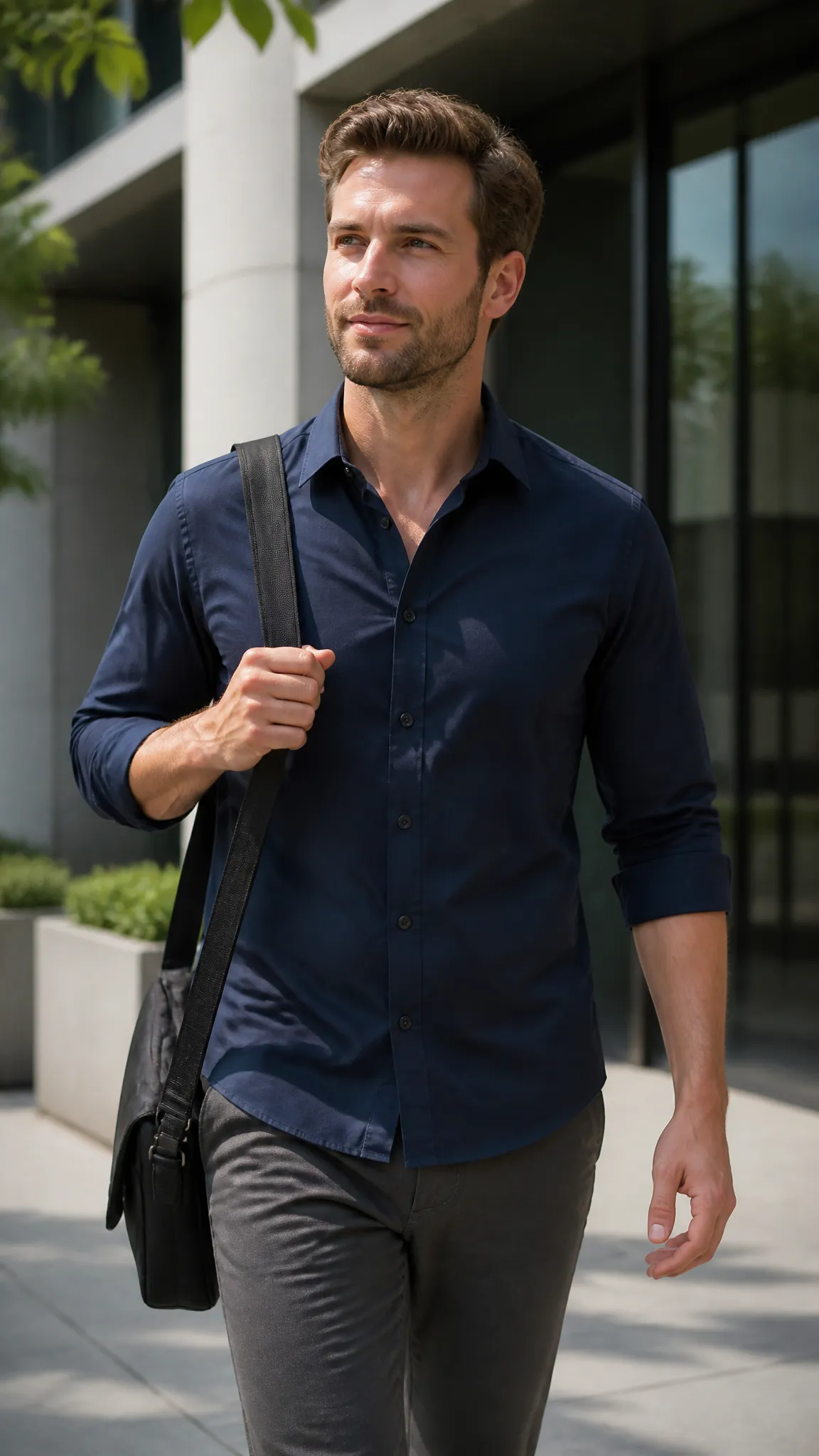
For warm train platforms, bike commutes, or long walks from the parking lot, a moisture-wicking shirt can arrive looking fresher than heavy cotton. The strongest designs combine quick-drying fabric with conventional dress-shirt details rather than obvious outdoor styling.
- Fabric: Lightweight synthetic or cotton-performance blends move moisture and dry more quickly than dense all-cotton cloth.
- Wrinkle control: Resilient fibers resist compression and tend to recover well after a crowded commute.
- Workplace fit: Prioritize opaque fabric, restrained colors, and a collar that holds its shape without a tie.
Among wrinkle resistant work shirts men can wear through humid weather, this style offers a useful balance of neatness and comfort. Wash it promptly after heavy wear, since odor retention can be a drawback of some synthetic fabrics.
5. Easy-Care Poplin Shirt

Poplin has a flat, lightweight weave that slips comfortably beneath a suit jacket or sweater. An easy-care version gives you a clean dress-shirt profile with less ironing, making it useful for a weekly office rotation.
- Fabric: Choose cotton-rich poplin for a crisp feel or a blended version for faster drying and greater crease resistance.
- Wrinkle control: Smooth fabric shows wrinkles readily, so a credible easy-care finish and proper sizing matter.
- Workplace fit: A spread or point collar works with a tie, while slim seams reduce bunching beneath tailored layers.
Remove poplin from the dryer while slightly damp, smooth the placket and cuffs, and place it directly on a hanger. That simple routine can produce a cleaner result than letting a lightweight shirt cool in a laundry basket.
6. Stretch Twill Work Shirt
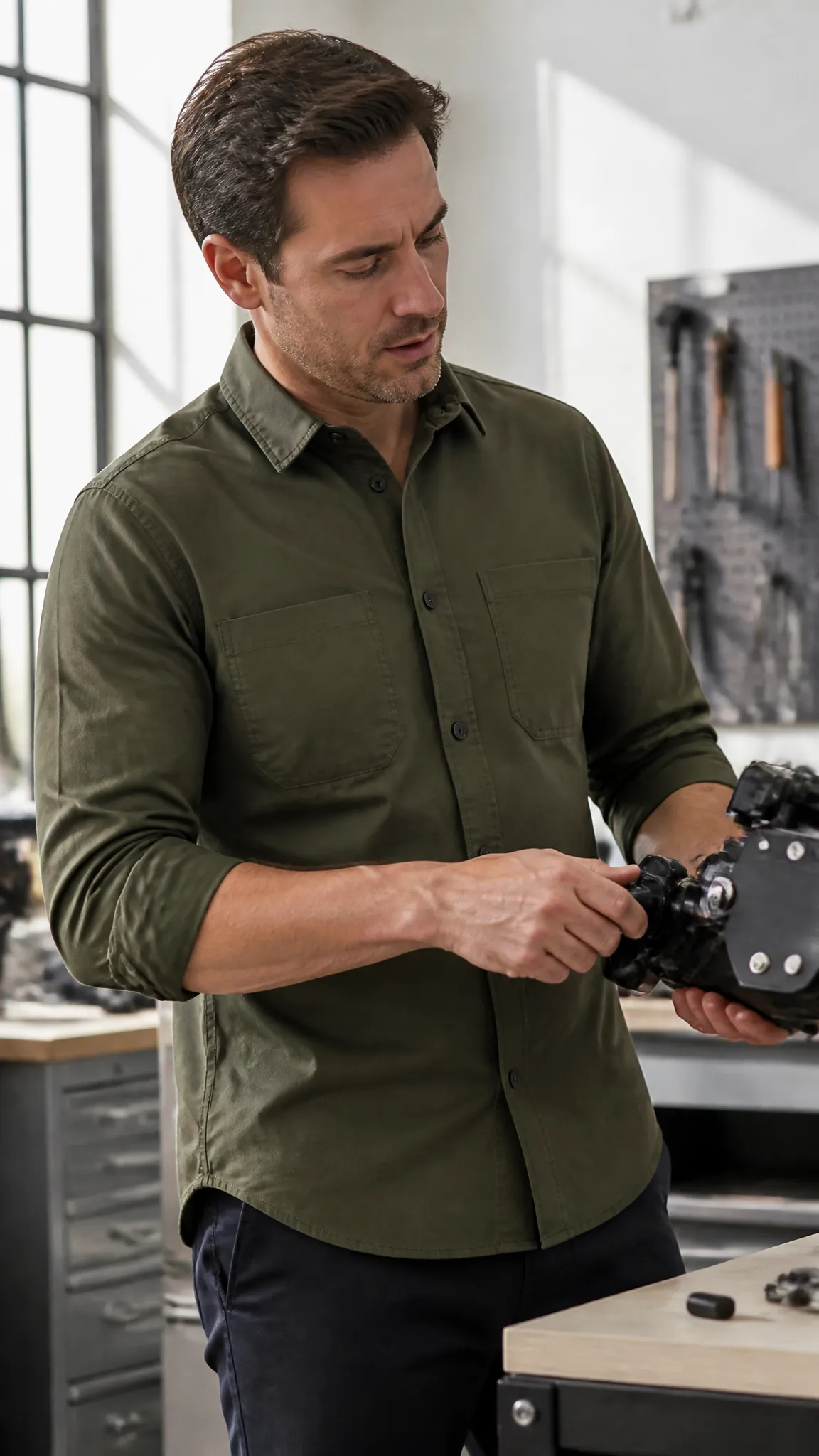
A stretch twill shirt is well suited to field visits, creative offices, and workplaces where durability matters as much as polish. The diagonal weave adds body, masks small creases, and handles repeated movement better than delicate dress fabric.
- Fabric: Cotton-blend twill with modest stretch feels substantial while allowing comfortable bending and reaching.
- Wrinkle control: The textured surface and resilient construction make pressure wrinkles less visually obvious.
- Workplace fit: Minimal pockets and tonal buttons keep it refined; reinforced seams favor more practical settings.
Wear a navy, gray, olive, or light tan version with chinos and sturdy leather shoes. Because twill can run warm, check fabric weight if your workplace is hot or you plan to layer the shirt year-round.
7. Knit Dress Shirt

A knit dress shirt provides the softness of a polo with the long sleeves, cuffs, and collar of a conventional button-up. Knit construction flexes naturally and doesn’t form the same sharp creases as many woven shirts, making it comfortable for long seated days.
- Fabric: Fine-gauge cotton blends feel smooth, while added synthetic fibers improve recovery and drying speed.
- Wrinkle control: The flexible structure resists hard folds, though loose knits may stretch or curl over time.
- Workplace fit: Seek a stable placket, structured collar, and fabric thick enough to maintain a professional outline.
This shirt works best in business-casual offices and on flights followed by informal meetings. Keep the fit close but not tight, since stretchy material can emphasize the undershirt, waistband, and anything carried in a chest pocket.
8. Travel Dress Shirt

A purpose-built travel shirt earns its place when you need to pack light and wear the same garment more than once. It typically combines wrinkle recovery, stretch, and quick-drying fibers in a design that can pass in an office or at a business dinner.
- Fabric: Lightweight blends reduce suitcase bulk and can be washed in a hotel sink when the care instructions allow.
- Wrinkle control: Look for fabric that releases packing creases after hanging rather than requiring high heat.
- Workplace fit: Neutral colors, discreet pockets, and standard dress cuffs offer the broadest professional use.
Roll or fold the shirt around other soft clothing, unpack it immediately, and hang it in the bathroom while you shower. Steam may relax shallow folds, but severe creases can still require a hotel iron or handheld steamer.
9. Short-Sleeve Performance Button-Up
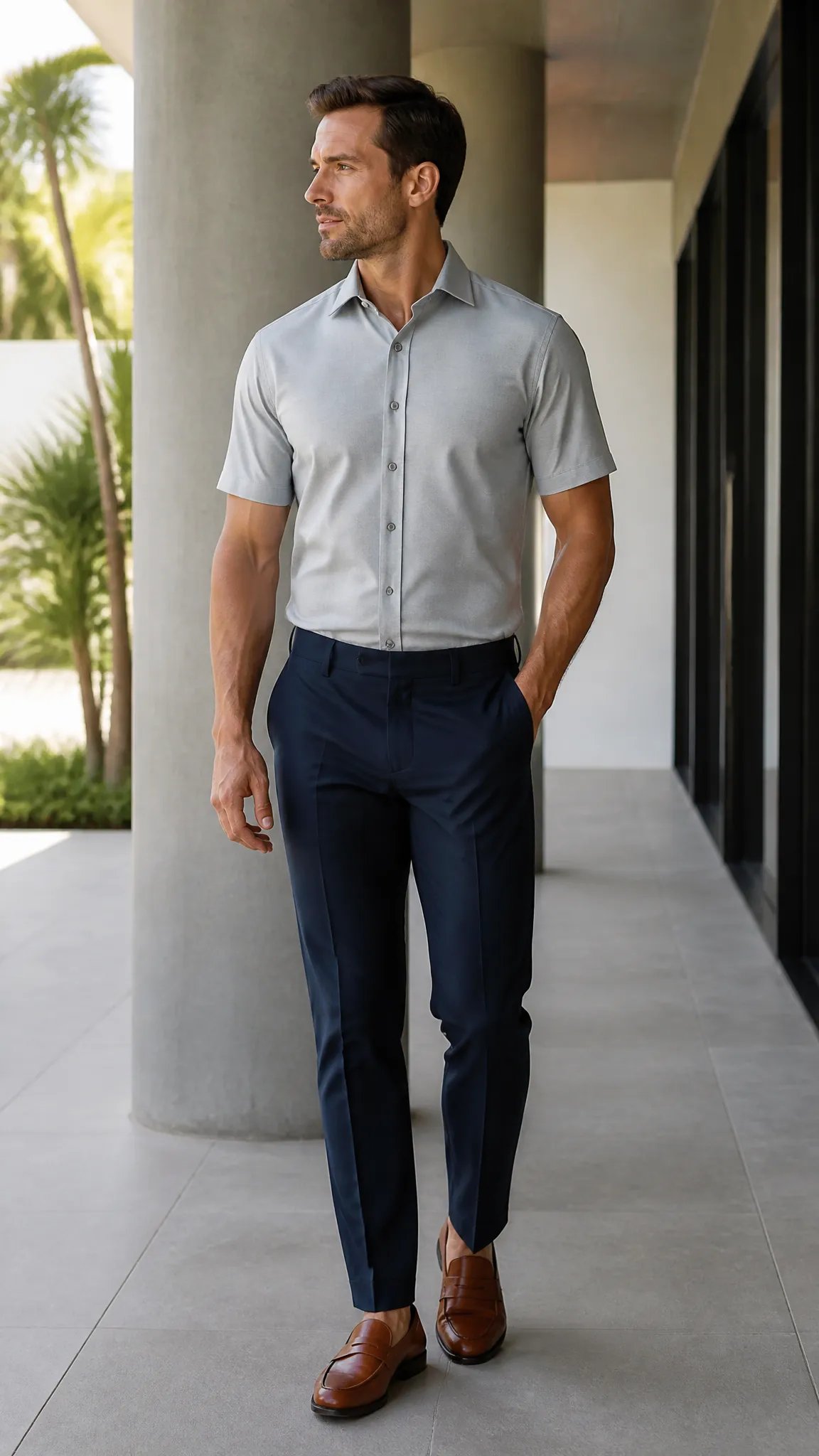
A short-sleeve performance button-up is practical for hot climates and offices with relaxed dress codes. It avoids wrinkled forearms entirely while moisture management and resilient fibers help the body of the shirt maintain a tidy appearance.
- Fabric: Breathable, quick-drying material is useful, but it should remain opaque and feel comfortable against bare skin.
- Wrinkle control: A medium-weight synthetic blend usually drapes more cleanly than ultralight fabric.
- Workplace fit: Sleeves should end around mid-bicep without flaring, and the collar should lie flat when open.
Pair it with tailored chinos or lightweight trousers rather than cargo pants to preserve a work-ready look. Skip this option for formal presentations or conservative offices unless short sleeves are already accepted workplace attire.
10. Easy-Care Chambray Shirt

Chambray offers a workwear-inspired appearance without the weight of denim. Its lightly variegated surface hides modest wrinkles and makes the shirt a useful choice for casual offices, studio environments, and relaxed Fridays.
- Fabric: Cotton-rich chambray feels breathable, while blended easy-care versions improve shape retention.
- Wrinkle control: Color variation and visible weave soften the appearance of creases rather than eliminating them.
- Workplace fit: Fine fabric, simple pockets, and dark buttons appear sharper than rugged Western-style details.
Combine chambray with charcoal, navy, or olive trousers so it reads as intentional business casual. Avoid wearing it with jeans in a nearly identical shade unless your workplace leans distinctly casual.
How to Choose a Wrinkle-Resistant Work Shirt
Start with your office dress code. Formal workplaces call for smooth cotton, restrained colors, structured collars, and enough shirt length to remain tucked, while business-casual settings allow Oxford cloth, knits, chambray, and technical fabrics.
Read product descriptions carefully because non-iron, wrinkle-resistant, and easy-care aren’t always interchangeable. Non-iron usually signals the strongest finishing treatment, while wrinkle-resistant or easy-care fabric may still need quick steaming or touch-up ironing. A textured weave can also conceal creases even when it doesn’t prevent them.
Fit is just as important as fabric. A shirt that strains across the back or bunches around the waist will look rumpled regardless of its finish. Check shoulder seams, sleeve length, torso room, and the tucked length while sitting as well as standing.
For a versatile rotation of wrinkle resistant work shirts men can use throughout the week, begin with two light dress shirts and one textured business-casual option. Add a moisture-wicking or travel style if heat, long commutes, or frequent flights create your biggest clothing problems.
Care Tips That Help Shirts Stay Smooth
Fasten only the buttons recommended by the manufacturer, treat stains before washing, and avoid overloading the machine. Crowded loads prevent shirts from moving freely and can press wrinkles into damp fabric.
Use the water temperature and dryer setting on the care label. Take shirts out promptly, shake them gently, smooth the collar, cuffs, and placket by hand, then hang them on broad hangers. If touch-ups are permitted, use a steamer or an iron at the correct temperature rather than assuming every technical fabric tolerates high heat.
Frequently Asked Questions
Are wrinkle-resistant and non-iron shirts the same?
Not necessarily. Non-iron shirts are designed to require little or no ironing after proper washing and drying, while wrinkle-resistant shirts may simply crease less and recover better than untreated fabric. Brand terminology varies, so consult the care instructions and material details.
Is cotton or polyester better for preventing wrinkles?
Polyester typically resists wrinkles and dries faster, while cotton often feels more breathable and traditional in formal settings. A cotton-polyester blend can balance comfort, shape retention, and straightforward care.
Can wrinkle-resistant shirts go in the dryer?
Many can, but the garment label is the authority. Low or moderate heat is commonly safer than high heat, which may damage stretch fibers, shrink cotton, or wear down performance finishes. Prompt removal also matters.
Do wrinkle-resistant shirts still need ironing?
Some need occasional touch-ups, especially after packing or sitting damp in a washer. Hanging the shirt immediately and smoothing it by hand often reduces the work, while collars and plackets may still benefit from brief steaming or ironing.
How many work shirts should a man own?
The right number depends on laundry frequency and dress code. For a five-day office schedule, enough shirts to cover the workweek plus one spare offers flexibility without requiring an oversized wardrobe.