You put on a collared shirt and chinos, yet something about the outfit still feels wrong when you reach the office. Many business casual mistakes men make come down to fit, condition, and context rather than a single forbidden garment.
This list will help you spot the details that make work clothes look careless, overly formal, or too relaxed. You’ll also learn straightforward fixes that don’t require replacing your entire wardrobe.
1. Misreading What Business Casual Means at Your Office

Business casual isn’t a universal dress code. A tech startup may accept dark jeans and minimalist sneakers, while a law firm might expect wool trousers and leather shoes even on its least formal days. Dressing for a generic idea of the workplace can leave you noticeably underdressed or overdressed.
Better approach: Pay attention to respected coworkers who have similar responsibilities, particularly during meetings and client visits. When you’re new, choose a conservative baseline such as chinos, an Oxford shirt, and loafers, then adjust after observing the office. If expectations remain unclear, ask your manager or HR for examples rather than relying only on a vague policy.
2. Wearing Clothes That Fit Poorly
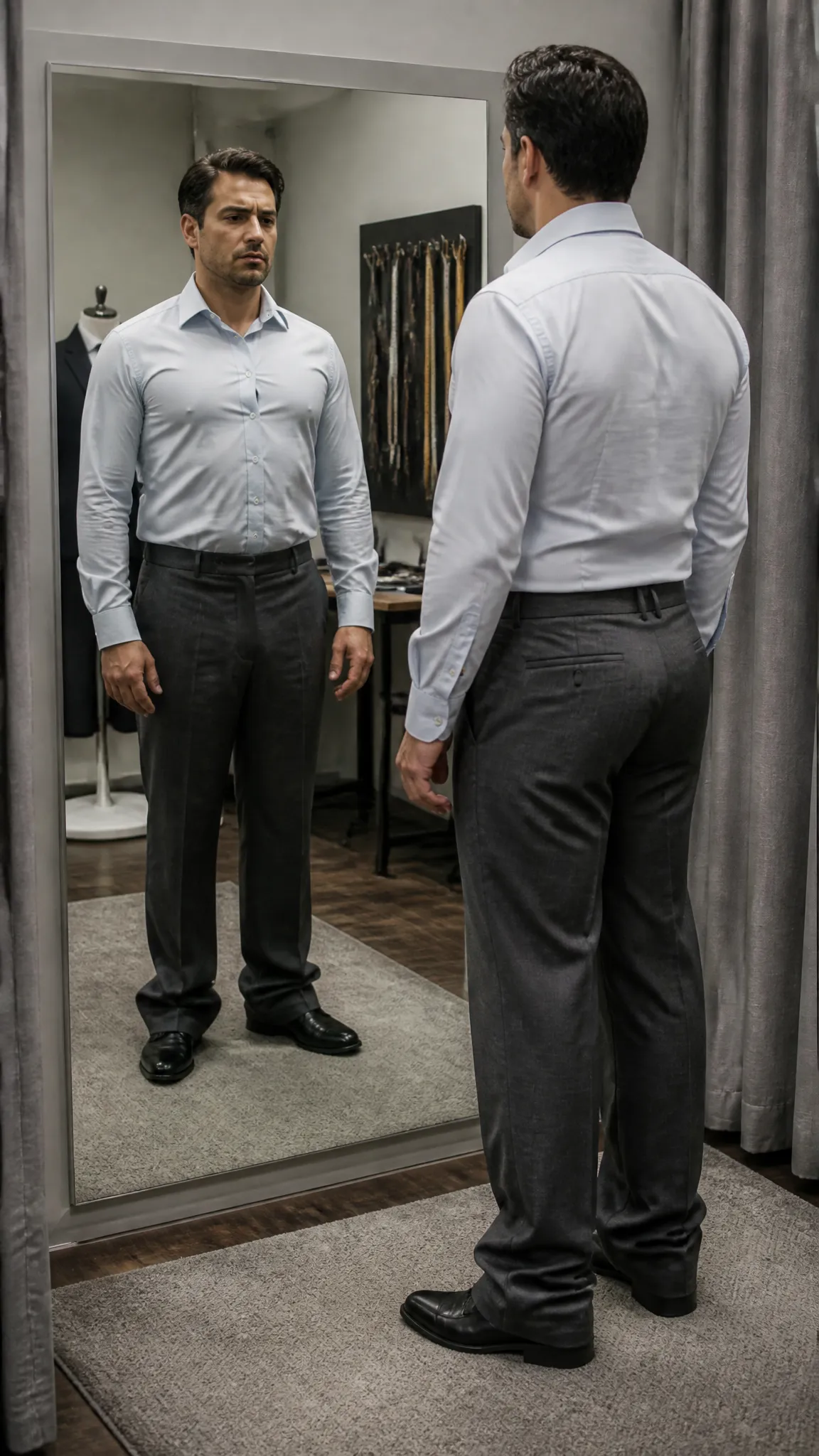
Even expensive clothing looks careless when it pulls, sags, or bunches. Common trouble spots include shirt buttons straining across the chest, shoulder seams hanging below the shoulders, trousers pooling over shoes, and pants that are uncomfortably tight through the seat or thighs.
Better approach: Look for a clean silhouette that allows you to sit, reach, and walk comfortably. A shirt should follow your torso without clinging, while trousers should sit securely at the waist and fall with minimal excess fabric. A tailor can often correct sleeve length, trouser hems, or a roomy shirt body, but garments that don’t fit in the shoulders are usually better exchanged.
3. Treating Any Collared Shirt as Office-Appropriate

A collar alone doesn’t make a shirt business casual. Loud resort prints, shiny evening shirts, wrinkled dress shirts, and polos made from thin performance fabric can look out of place. Leaving too many buttons open also pushes an otherwise appropriate shirt toward weekend territory.
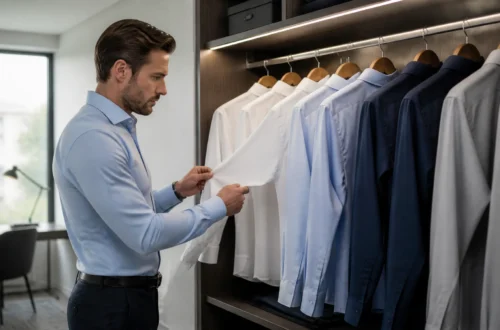
Better approach: Build around dependable options such as an Oxford cloth button-down, a solid polo with a structured collar, or a subtle patterned shirt. Cotton and breathable cotton blends generally provide the texture and structure an office outfit needs. Keep the shirt clean and pressed, and leave only the top button undone when you aren’t wearing a tie.
4. Choosing Pants That Are Too Casual
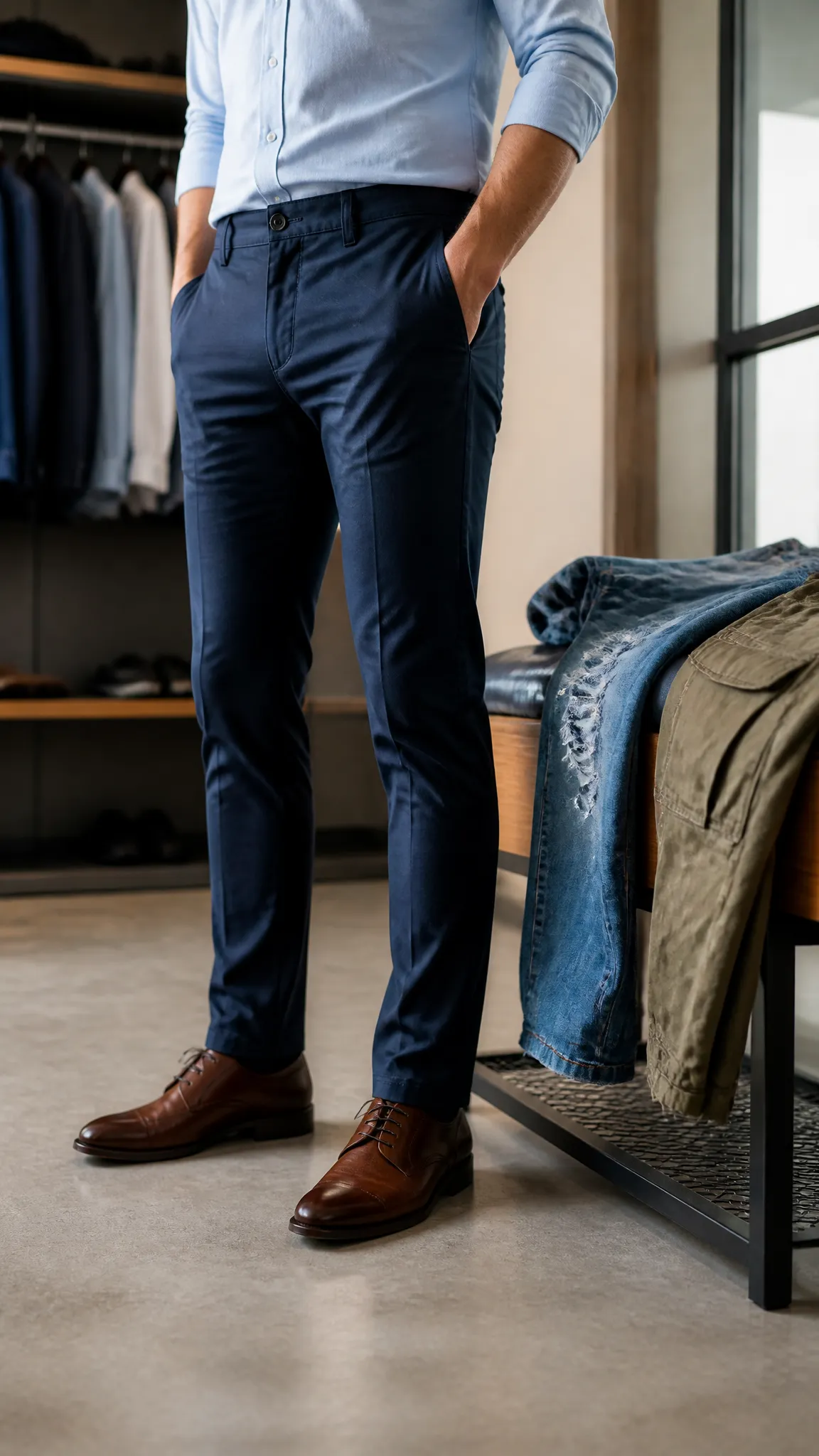
Distressed denim, cargo pants, joggers, and drawstring trousers can undermine an outfit even when the shirt and shoes are polished. Faded knees, oversized utility pockets, visible elastic, and athletic fabrics make pants read as leisurewear rather than workwear.
Better approach: Choose chinos, tailored trousers, or dark jeans if denim is accepted at your workplace. Navy, charcoal, medium gray, khaki, and olive coordinate easily with common shirt colors. Look for a defined waistband, a clean hem, and fabric with enough structure to hold its shape throughout the day.
5. Wearing the Wrong Shoes
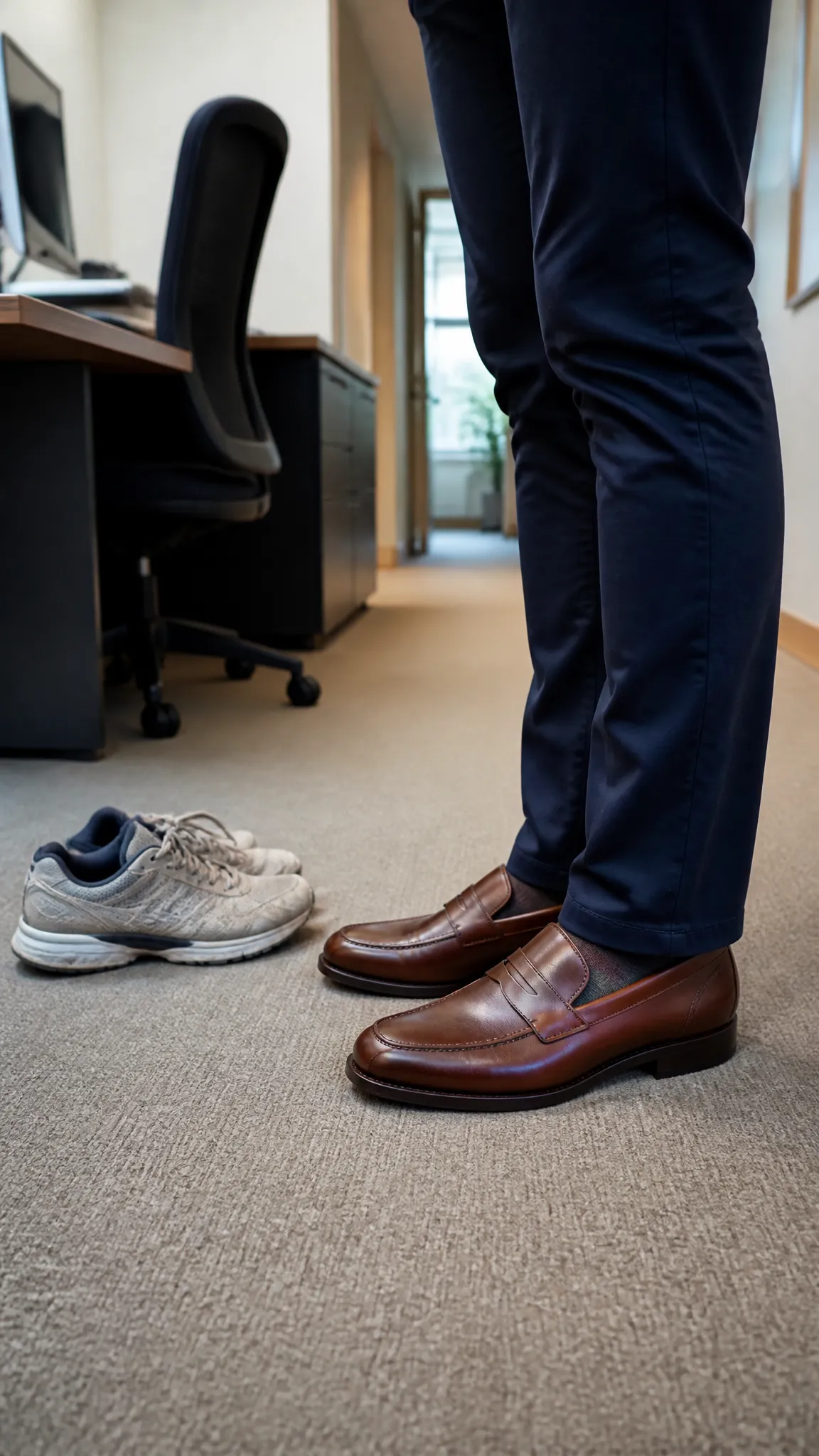
Bulky running shoes, scuffed dress shoes, flip-flops, and heavily worn casual sneakers draw attention for the wrong reasons. Footwear sits at the visual foundation of an outfit, so shoes that conflict with the formality or condition of your clothes can make everything above them feel less intentional.
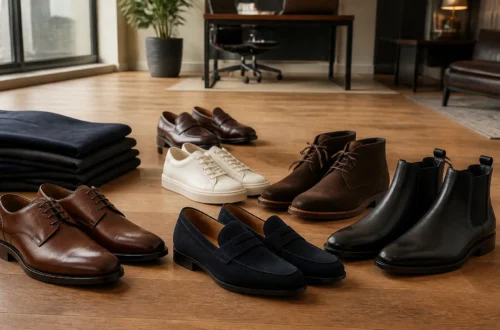
Better approach: Match the shoe to the workplace and trousers. Loafers, derbies, brogues, chukka boots, and clean leather sneakers cover most business-casual settings. Keep leather conditioned, suede brushed, and soles reasonably clean. If your office permits sneakers, select a simple low-profile pair rather than a technical running model designed for the gym.
6. Ignoring Grooming and Clothing Maintenance
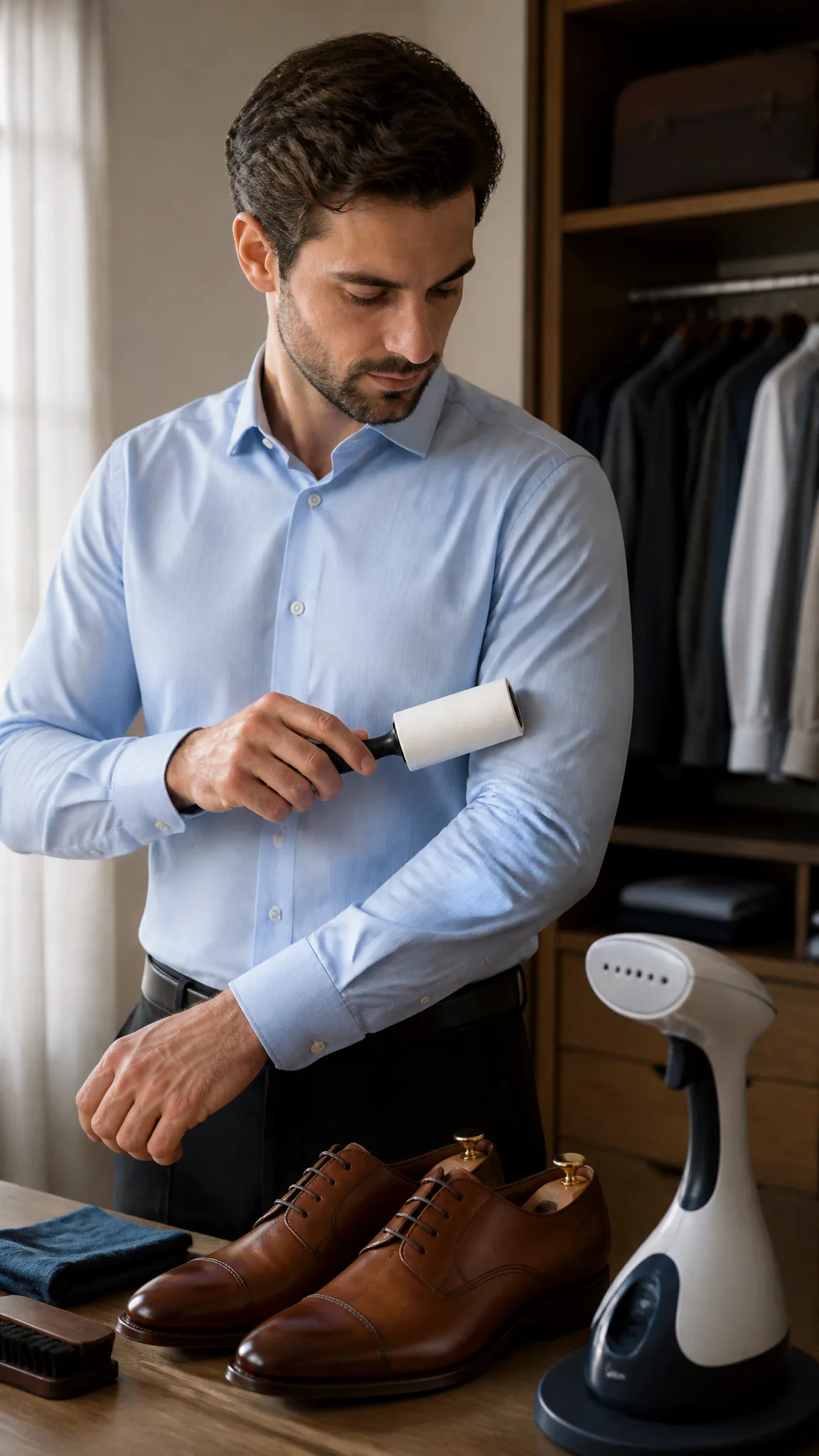
Wrinkles, lint, stains, loose threads, and worn collars can cancel out a well-coordinated outfit. The same is true of unkempt facial hair or hair that looks unintentionally messy. These details are easy to miss at home but become more visible under bright office lighting.
Better approach: Inspect tomorrow’s clothing the night before so you have time to steam a shirt, remove lint, or choose another piece. Clean spills promptly, replace shirts with frayed cuffs, and rotate shoes so they can dry between wears. Keep facial hair neatly edged and follow a grooming routine you can maintain consistently rather than one that requires constant attention.
7. Overdoing Patterns, Colors, and Accessories

A bright patterned shirt, bold socks, statement belt, large watch, and colorful shoes can compete rather than coordinate. Business casual gives you room for personality, but wearing every interesting item at once creates visual noise and can distract in presentations or client conversations.
Better approach: Give one element the lead and keep the rest restrained. If you wear a checked shirt, pair it with solid trousers and quiet accessories. A simple leather belt, proportionate watch, and subtle socks are usually enough. Repeat colors gently rather than matching everything exactly, and use neutral shades to create breathing room around stronger tones.
8. Getting the Belt and Shoe Combination Wrong
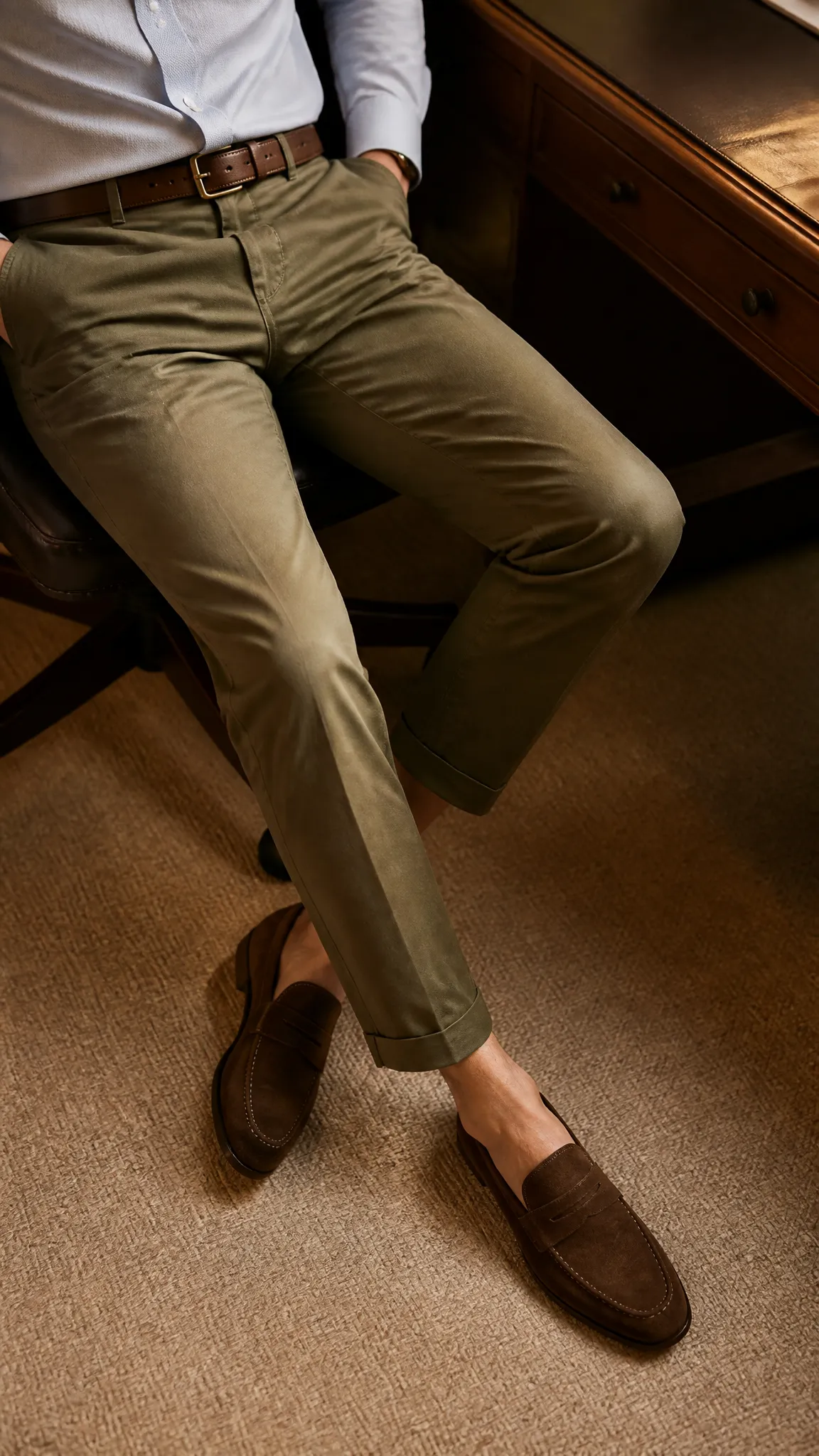
Your belt and shoes don’t need to be identical, but they should look related. A glossy black belt with casual tan suede shoes creates a sharper mismatch than two slightly different shades of brown. Fabric belts and oversized buckles may also feel too relaxed for tailored trousers.
Better approach: Coordinate both color and formality. Wear black leather with black footwear, and combine brown shoes with a brown belt in the same general color family. Smooth dress belts suit wool trousers and polished shoes, while textured or braided belts work well with chinos and loafers. With minimalist sneakers, a discreet leather or woven belt can bridge the difference.
9. Layering Without Considering Proportion
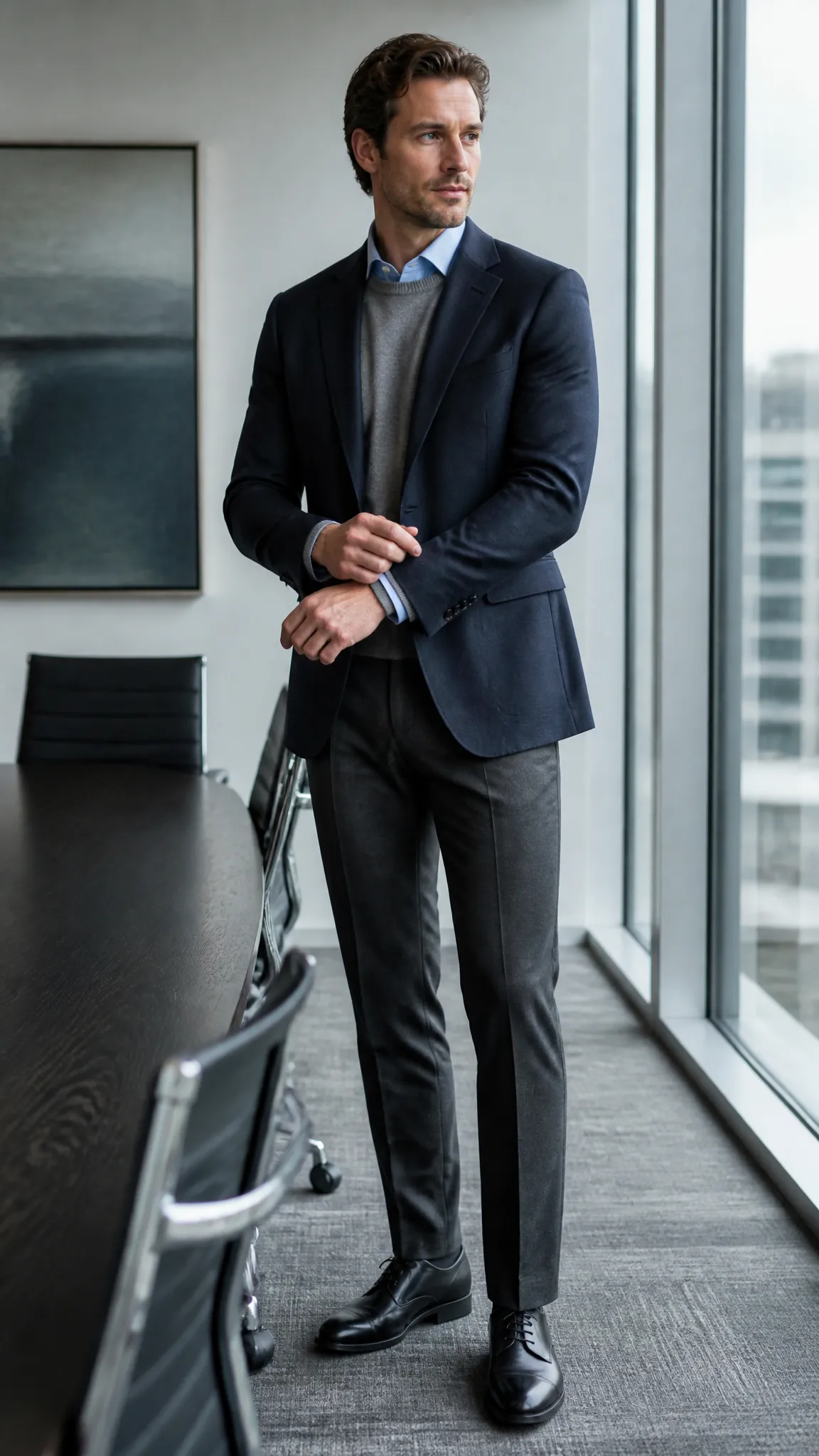
A long shirt hanging beneath a short sweater, a bulky hoodie under a fitted blazer, or a jacket pulling across the buttons makes layering look accidental. This is one of the more visible business casual mistakes men encounter during colder months, when warmth can take priority over shape.
Better approach: Keep inner layers lighter and more fitted than outer ones. Fine-gauge merino sweaters, unstructured blazers, overshirts, and tailored cardigans add warmth without excessive bulk. Check that collars sit flat, shirt cuffs aren’t swallowing your hands, and jacket buttons close without pulling. If you tuck in your shirt, smooth the excess fabric before adding a sweater or jacket.
10. Dressing for Your Desk Instead of Your Entire Day

An outfit may feel suitable while you’re answering email but fail during a client meeting, lunch presentation, site visit, or after-work event. Temperature also matters: heavy layers can become uncomfortable in a warm conference room, while a thin shirt may not be enough for an aggressively air-conditioned office.
Better approach: Review your calendar before getting dressed and plan for the most formal part of the day. Keep a versatile layer, such as a navy blazer or neat cardigan, available for meetings. Choose comfortable shoes when you’ll walk between buildings, and bring weather protection that still works with the outfit. Preparation is more reliable than trying to make an overly casual look presentable at the last minute.
A Simple Business-Casual Outfit Formula
When you’re unsure, start with a restrained combination: a light blue or white Oxford shirt, navy or olive chinos, brown loafers or derbies, and a matching leather belt. In cooler weather, add a fine-gauge sweater, chore jacket, or unstructured blazer. Each item should fit cleanly, be in good condition, and suit the most formal task on your schedule.
You can then vary one part at a time. Swap the Oxford for a knit polo, the chinos for gray wool trousers, or the loafers for simple leather sneakers if your office allows them. This controlled approach helps you avoid the business casual mistakes men often make when combining too many unfamiliar pieces at once.
Frequently Asked Questions
Can men wear jeans for business casual?
Yes, if the workplace allows denim. Choose dark, evenly colored jeans with a straight or gently tapered fit and no rips, fading, decorative stitching, or raw hems. Pair them with a structured shirt and polished shoes so the overall outfit still looks work-ready.
Should a business-casual shirt be tucked in?
Dress shirts with long, curved tails should generally be tucked in. Shorter Oxford shirts and polos may be worn untucked if the hem ends around mid-fly and remains neat when you move. For presentations, interviews, and client meetings, tucking the shirt in is usually the safer choice.
Are sneakers acceptable in a business-casual office?
They can be, depending on company culture. Clean, simple leather or suede sneakers in neutral colors work better than running shoes, high-tops, or heavily branded athletic styles. When in doubt, wear loafers or derbies until you understand the norm.
Does business casual require a blazer?
Usually not, but a blazer is a useful option for meetings and more conservative workplaces. Choose an unstructured style in navy, charcoal, or a subtle texture so it coordinates with chinos, wool trousers, and dark denim. The blazer should look intentional rather than like the top half of an orphaned suit.
How can I tell if I’m underdressed?
Compare your outfit with what managers and client-facing coworkers wear in similar situations. If your clothes include athletic fabric, visible wear, distressed details, or beach-style footwear while others wear structured shirts and leather shoes, you’re probably too casual. When uncertain, moving up one level of formality is easier than recovering from looking unprepared.
Make the Final Check
Before leaving home, check fit, wrinkles, stains, shoes, and your day’s schedule. Correcting those small details prevents most business casual mistakes men make at work and produces a polished outfit without making it feel stiff or overplanned.