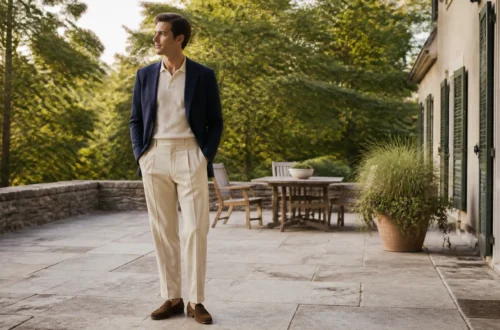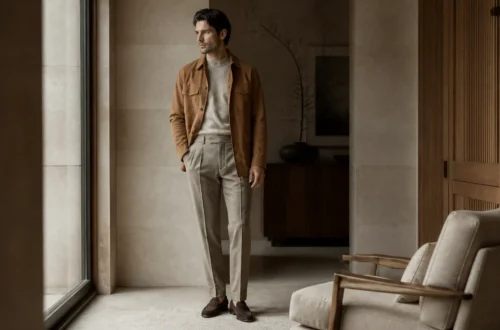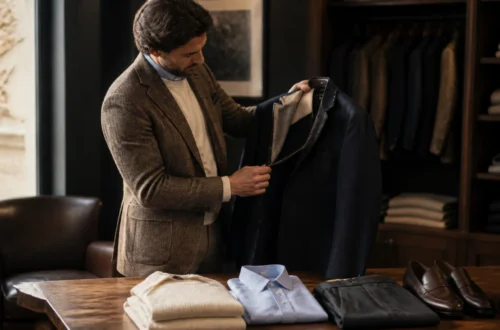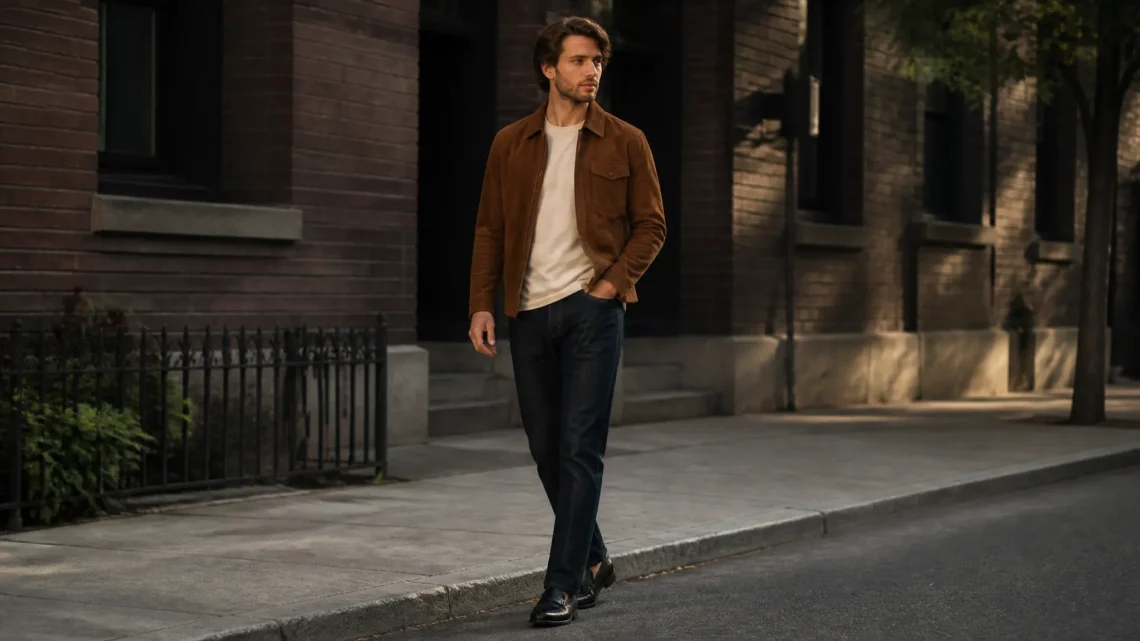
Combining old and new clothing sounds simple until your carefully chosen vintage jacket makes the whole outfit feel like a costume.
The best vintage modern outfits men can wear today balance character with restraint, using contemporary fit, familiar basics, and thoughtful styling to make older pieces feel relevant. This guide explains how to choose vintage menswear, coordinate it with modern clothing, and avoid looking as though you dressed for a historical reenactment.
Build Vintage Modern Outfits Men Can Wear Naturally
The central idea is straightforward: let one era lead without allowing it to take over. A vintage garment should add texture, shape, or history to an otherwise current outfit, not require every other item to come from the same decade.
Start with one clearly vintage piece and surround it with restrained modern clothing. A 1950s gabardine jacket can work over a plain heavyweight T-shirt with straight dark jeans. A 1970s suede overshirt becomes easier to wear with a fine-gauge crewneck, charcoal trousers, and simple leather sneakers.
This approach also keeps the outfit legible. When the vintage element is visually distinctive, quieter modern pieces provide contrast and prevent competing lapels, patterns, washes, and accessories from creating clutter.
Not every older garment reads as obviously vintage, of course. An Oxford shirt, navy peacoat, gray sweatshirt, or pair of pleated wool trousers can cross decades without calling attention to its age. These understated pieces are useful starting points because their fabric and construction provide character while their design remains familiar.
Balance Fit and Proportion Before Thinking About Era
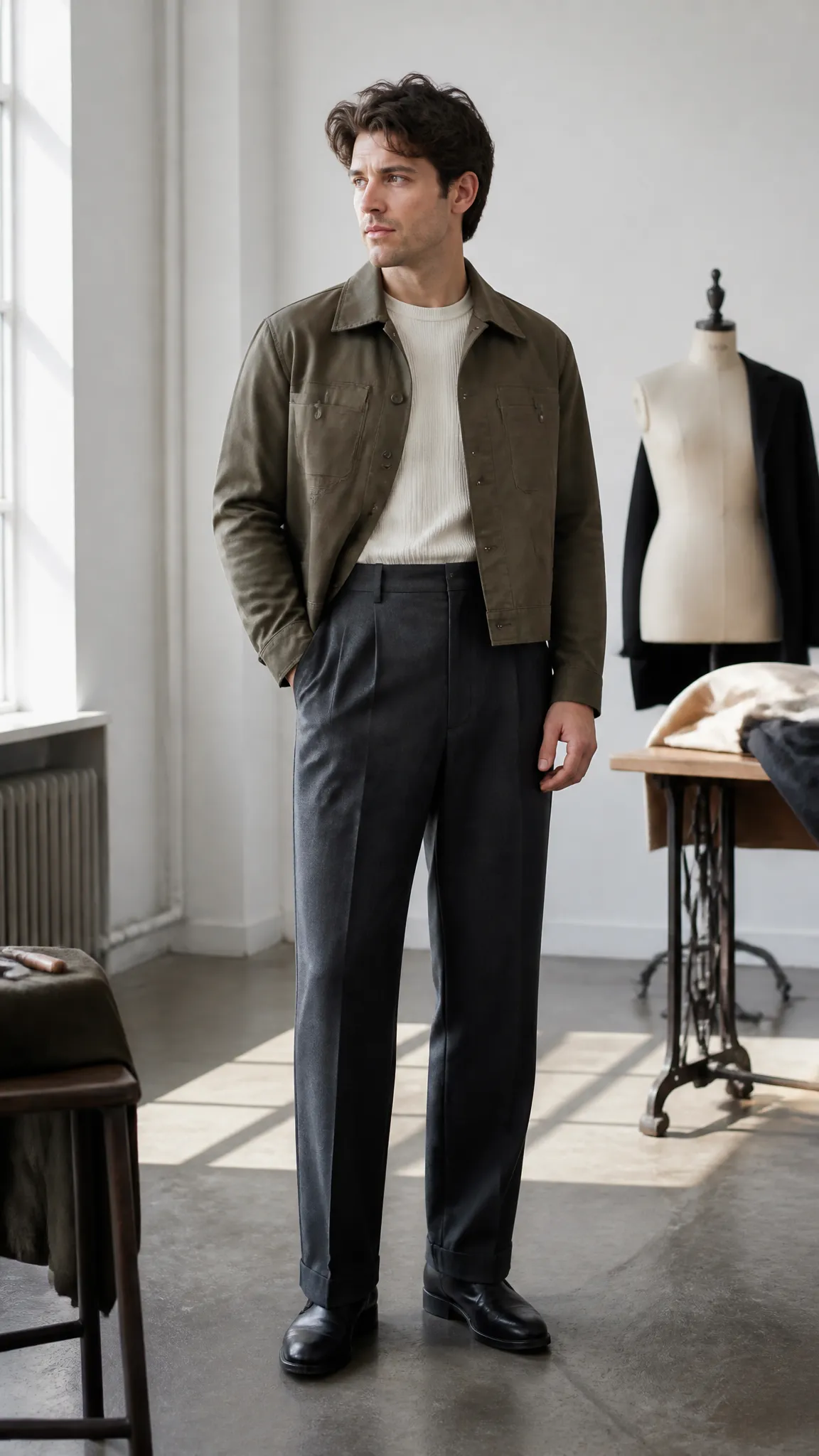
Once you have a focal piece, assess how its silhouette relates to everything around it. Vintage clothing often reflects proportions that differ from current mass-market cuts: trousers may rise higher, jackets may sit shorter, and shirts may have fuller bodies or longer collars.
Trying to force every vintage garment into an ultra-slim silhouette usually works against its design. High-rise pleated trousers need enough room through the thigh to hang cleanly, while a boxy work jacket looks intentional over a relaxed shirt rather than a clingy one.
Balance matters more than matching widths exactly. A cropped bomber or Eisenhower jacket pairs naturally with higher-rise straight trousers because both pieces meet near the waist. A longer overcoat can sit over a trimmer knit and moderate-width pants, creating a clear outer layer without excessive bulk.
Pay particular attention to these fit points:
- Shoulders: Jacket seams should align reasonably well unless the garment was deliberately cut with soft, extended shoulders.
- Sleeves: Shortening sleeves can modernize a coat or jacket without changing its essential character.
- Trouser break: A slight break or clean hem usually integrates vintage pants more easily than heavy pooling.
- Waist position: Wear high-rise trousers at their intended height rather than sizing up and letting them sag.
Tailoring can correct length and modest fullness, but large structural alterations may become costly or distort the garment. If the shoulders, armholes, or rise feel fundamentally wrong, wait for a better piece.
Use Color and Texture to Connect Old and New
After proportion, color provides the easiest bridge between decades. Vintage menswear frequently comes in muted shades such as tobacco, olive, cream, burgundy, navy, rust, and charcoal. Modern basics in related neutrals help those colors look deliberate rather than dusty.
A brown herringbone sport coat, for example, can sit comfortably with an ecru T-shirt, faded black jeans, and dark brown loafers. The jacket supplies pattern and texture, while the limited palette keeps the outfit grounded. Similarly, an olive military field jacket works with a gray sweatshirt, raw denim, and black boots because each color has comparable visual weight.
Texture can do the connecting when colors differ. Pair rugged fabrics such as denim, corduroy, canvas, suede, and tweed with clean modern materials rather than combining every heritage texture at once. A coarse Donegal sweater over smooth cotton trousers creates contrast; adding a waxed jacket, pebble-grain boots, and a thick wool cap may start to resemble a catalog costume.
Patterns deserve similar restraint. If a vintage shirt has a bold geometric print, keep the pants and outerwear solid. Small checks, chalk stripes, and herringbone are quieter and can coexist with another subtle texture, provided the scales do not compete.
Make the Outfit Current With Shoes and Accessories
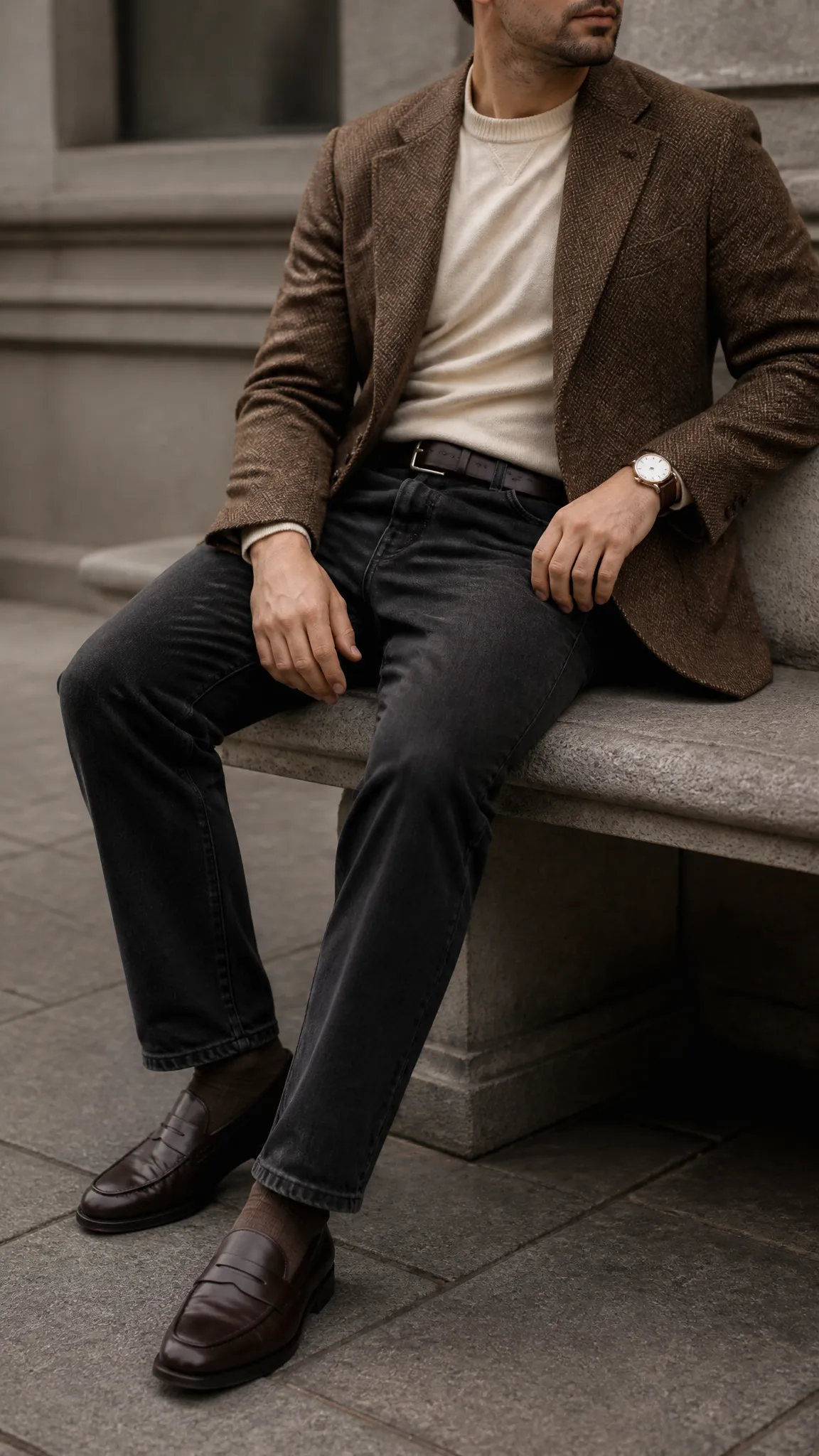
Shoes often determine whether mixed-era clothing feels contemporary. They occupy relatively little visual space, but they establish the outfit’s level of formality and can either soften or exaggerate the vintage reference.
Minimal leather sneakers can relax pleated trousers and a camp-collar shirt. Plain-toe derbies or loafers make faded jeans and an old chore coat feel polished without becoming formal. Service boots suit workwear, but cleaner boots with a moderate sole tend to be more versatile than heavily distressed pairs covered in decorative hardware.
The same principle applies to accessories: choose pieces that support the clothing rather than advertise a decade. A simple leather belt, understated watch, knit beanie, or modern canvas tote generally integrates well. Vintage ties can add personality to contemporary tailoring, especially when their width is reasonably compatible with the jacket lapels.
Be cautious when several accessories carry strong period associations. A fedora, pocket watch, tie bar, suspenders, and spectator shoes may all be legitimate objects, but together they turn an outfit into a production. For most vintage modern outfits men will wear regularly, one expressive accessory is enough.
Adapt Vintage Pieces to the Setting and Season
A successful outfit must work for the place you are going, not only look convincing in a mirror. Vintage garments vary widely in formality, and their original purpose offers clues about where they fit today.
For a casual weekend, try a vintage denim jacket with a white tee, olive chinos, and suede sneakers. In cooler weather, a wool overshirt can replace the jacket while keeping the same uncomplicated structure. These combinations work because every piece is practical and none demands special handling.
For a smart-casual office, consider high-rise wool trousers with a modern knit polo and loafers, or wear a vintage sport coat with an Oxford shirt and dark, unwashed denim if the dress code permits. Keep distressing minimal and check that older jackets are free from shiny elbows, damaged linings, or odors that become noticeable indoors.
At dressier events, vintage tailoring can be especially effective, but fit and condition become less forgiving. A well-preserved double-breasted blazer can work with contemporary trousers and a crisp shirt. Avoid combining a period jacket with mismatched formal pants when the fabrics are almost, but not quite, identical; intentional contrast looks better than a failed imitation of a suit.
Seasonal comfort also matters. Older synthetic linings may trap heat, while dense wool coats can feel warmer than their modern equivalents. Check fiber labels when present, layer breathable cotton or merino underneath, and leave enough room for movement.
Shop for Wearability, Not Just Age
Mixing vintage menswear with modern clothing becomes much easier when you buy pieces that serve a real role in your wardrobe. Age alone does not make a garment stylish, rare, or useful.
Before buying, inspect collars, cuffs, underarms, pocket edges, closures, and linings. Hold fabric up to light to reveal thinning or small holes, and look for dry leather, moth damage, weakened seams, and permanent stains. A missing button is usually manageable; extensive fabric deterioration is not.
Try to imagine at least three outfits using clothes you already own. If an unusual blazer works only with a particular pair of vintage trousers, shoes, shirt, and tie that you do not have, it is closer to a collecting project than a versatile purchase.
Care should match the material and construction. Follow any surviving garment label, use a reputable cleaner for structured tailoring, and avoid aggressive washing simply because an item smells stored. Airing a garment, brushing wool, steaming cautiously, or using a suitable specialist can be safer than improvised treatment.
Finally, do not confuse visible wear with desirable patina. Softened denim and gently creased leather can look appealing because those materials age gradually. Frayed stress points, brittle fabric, deep underarm discoloration, and musty odors are condition problems, not personality.
Common Questions About Mixing Vintage and Modern Menswear
How many vintage pieces should you wear at once?
One statement piece is the easiest starting point, but two or three quieter vintage items can work together if they do not all announce the same era. A vintage overcoat, plain wool trousers, and an old watch may look cohesive because only the coat reads strongly from a distance.
Can vintage menswear work with streetwear?
Yes, particularly when silhouettes share volume or utility details. A vintage varsity jacket can pair with relaxed modern jeans and low-profile sneakers, while military cargo pants can work with a plain hoodie. Avoid stacking oversized pieces without defining the waist, hem, or layer lengths.
Should vintage clothing be tailored?
Minor tailoring often improves wearability, especially sleeve length, trouser hems, and waist suppression. Preserve distinctive features such as generous pleats, wide lapels, or patch pockets when they are central to the garment’s design.
How can you tell whether an outfit looks like a costume?
Remove one item with a strong period signal and reassess. If every element points to the same decade, replace the shoes, shirt, or accessories with a simple contemporary alternative. Costume-like styling usually comes from accumulation rather than any single vintage garment.
Can you mix pieces from different decades?
Absolutely. Coordinate them by silhouette, color, and formality rather than date. A mid-century overcoat can work with 1990s jeans and a current knit because the pieces share a relaxed shape and subdued palette.
Start With One Piece and Build Outward
The most convincing vintage-modern style does not depend on recreating a decade. It comes from choosing an older garment for its fabric, shape, or detail, then giving it room to work alongside clothes that suit your present-day life.
Begin with the vintage piece you wear most confidently, add modern basics in compatible proportions, and finish with simple footwear. If the result feels balanced before you add the hat, tie pin, or antique briefcase, consider that permission to stop.