Quiet-luxury style looks simple, which makes disappointing clothes surprisingly easy to miss until they have been worn a few times.
If you are researching quiet luxury clothing quality men can rely on, labels and lofty fabric claims tell only part of the story. This guide explains how to judge material, construction, fit, and lasting value before an understated garment earns space in your closet.
What Quiet Luxury Clothing Quality for Men Really Means
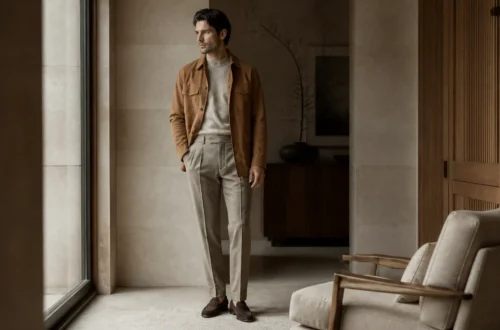
Quiet luxury is less about displaying wealth than choosing clothes whose appeal survives close inspection. The strongest pieces rely on refined proportions, tactile materials, restrained colors, and careful finishing rather than visible logos or conspicuous novelty.
Quality is not synonymous with expense. A high price can reflect design, distribution, scarcity, or marketing, none of which guarantees clean seams or durable fabric. Conversely, a reasonably priced garment may be excellent if the maker spent money where it matters and kept the design uncomplicated.
The practical test is whether a piece continues to look intentional after regular wear. Does the collar hold its shape? Do the trousers hang cleanly? Does the knit recover after being stretched? Quiet luxury depends on consistency, because there is little decoration to distract from puckered stitching, weak fabric, or an awkward cut.
It also helps to separate quality from delicacy. Fine cashmere may feel beautiful but require more care than a sturdy merino knit. Both can be well made; the better purchase is the one suited to your routine, climate, and tolerance for maintenance.
Read the Fabric Before You Read the Label
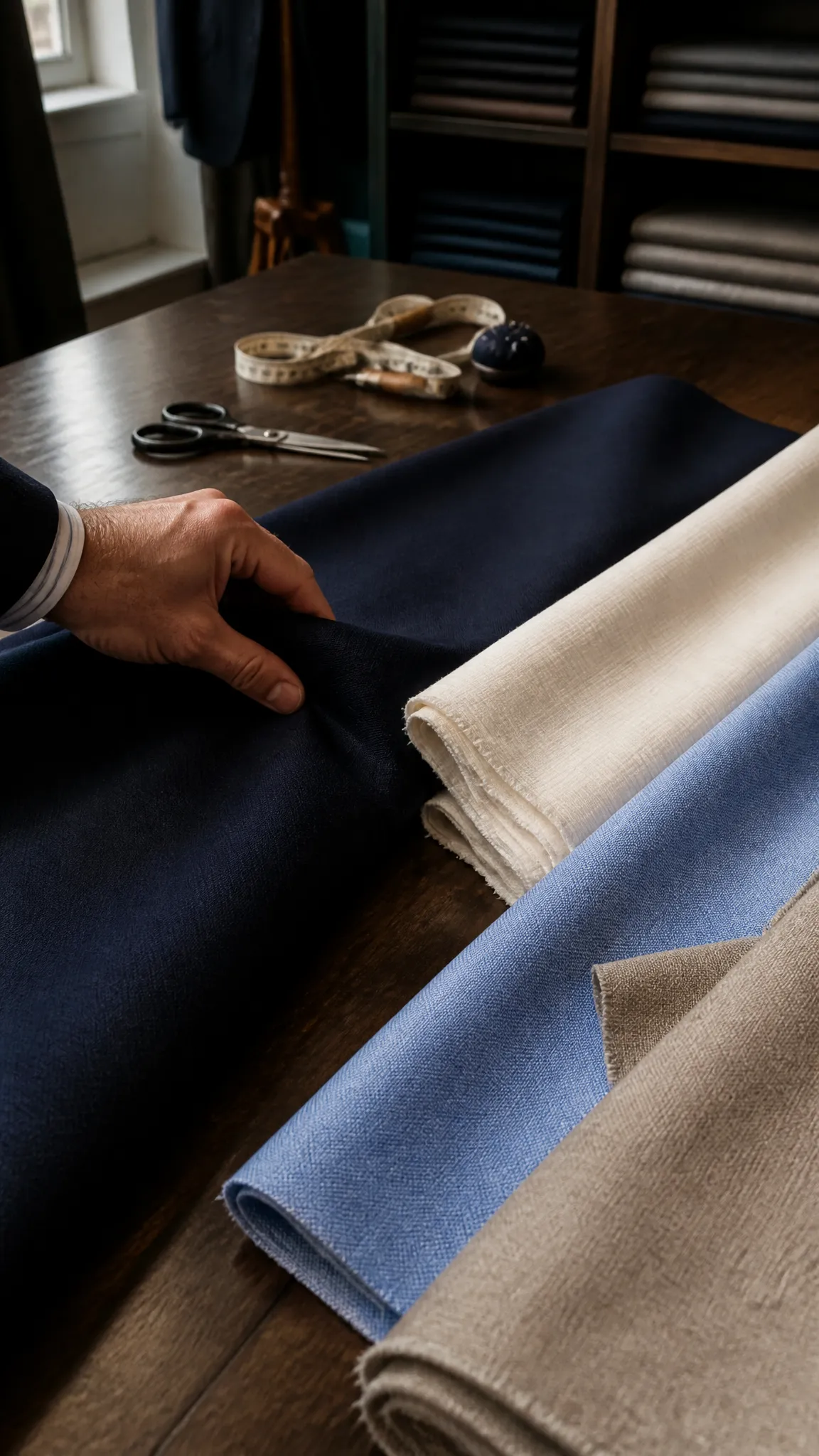
Fabric creates the first impression and often determines how gracefully a garment ages. Fiber content matters, but touch, density, recovery, and surface character reveal more than a prestigious material name alone.
Look for substance and recovery
Gently compress a section of fabric and release it. Quality wool suiting should regain its shape without remaining badly crumpled, while cotton shirting should feel crisp or softly substantial rather than thin and papery. Stretch fabric should return smoothly instead of rippling where it was pulled.
Hold lighter fabrics toward a lamp when practical. Some transparency is appropriate in summer linen or fine voile, but uneven density can indicate inconsistent weaving. Examine the surface for snags, pills, broken fibers, or fuzzy patches on a supposedly new garment.
Judge fibers in context
Natural fibers are prominent in quiet-luxury wardrobes because wool, cotton, linen, silk, and cashmere offer attractive texture and drape. Still, fiber names do not establish grade. Short, loose fibers may pill quickly, and a poorly knitted cashmere sweater can be less satisfying than a compact, smooth merino version.
Synthetics are not automatically disqualifying. A modest amount of nylon may reinforce socks or knitwear, and elastane can improve comfort in fitted trousers. Be more cautious when a garment marketed for its natural material contains a large synthetic share without a clear functional benefit.
When comparing quiet luxury clothing quality men should assess how the textile serves the garment. A topcoat needs enough weight to fall cleanly, an Oxford shirt benefits from a firm basket weave, and summer trousers need breathability without becoming shapeless by lunch.
Inspect Construction Where Shortcuts Tend to Hide
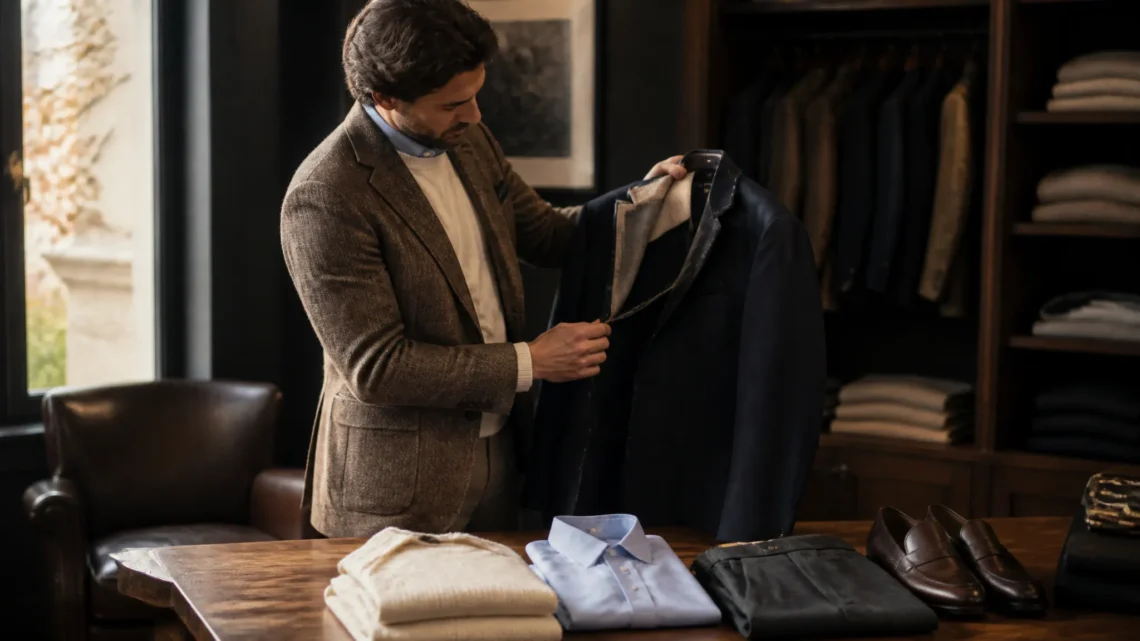
Once the cloth passes inspection, turn to the less glamorous areas. Inside seams, pocket openings, button attachments, and hems reveal whether a garment received careful assembly or merely a polished storefront presentation.
Stitches should generally appear even and secure, with no loose loops or abrupt changes in tension. Seams should lie flat rather than twisting or puckering. Perfectly tiny stitching is not always necessary, but the work should suit the fabric and remain consistent across the garment.
A brief inspection can focus on the places that handle the most strain:
- Check that buttons are firmly attached and have enough thread shank for the fabric thickness.
- Open and close zippers to confirm smooth movement and a flat, reinforced installation.
- Inspect pocket corners, side seams, and the base of a fly for secure reinforcement.
- Look for generous, tidy hems that may permit minor tailoring.
- Match stripes, checks, or directional patterns at prominent seams when the design allows.
Jackets deserve extra attention. A well-constructed lapel rolls rather than folding like cardboard, the lining hangs without pulling, and the vents remain closed when you stand naturally. Fully canvassed tailoring can mold elegantly over time, but half-canvas construction can also offer an excellent balance of shape, comfort, and cost. Fused construction is not inherently bad, though bubbling or stiffness is a warning sign.
For knitwear, inspect the shoulder joins, cuffs, and side seams. Fully fashioned shaping, visible as orderly decreases near an armhole or neckline, often creates a cleaner silhouette than roughly cut knit panels. What matters most is secure joining and a shape that remains stable without bulky ridges.
Fit and Drape Make Restraint Look Intentional
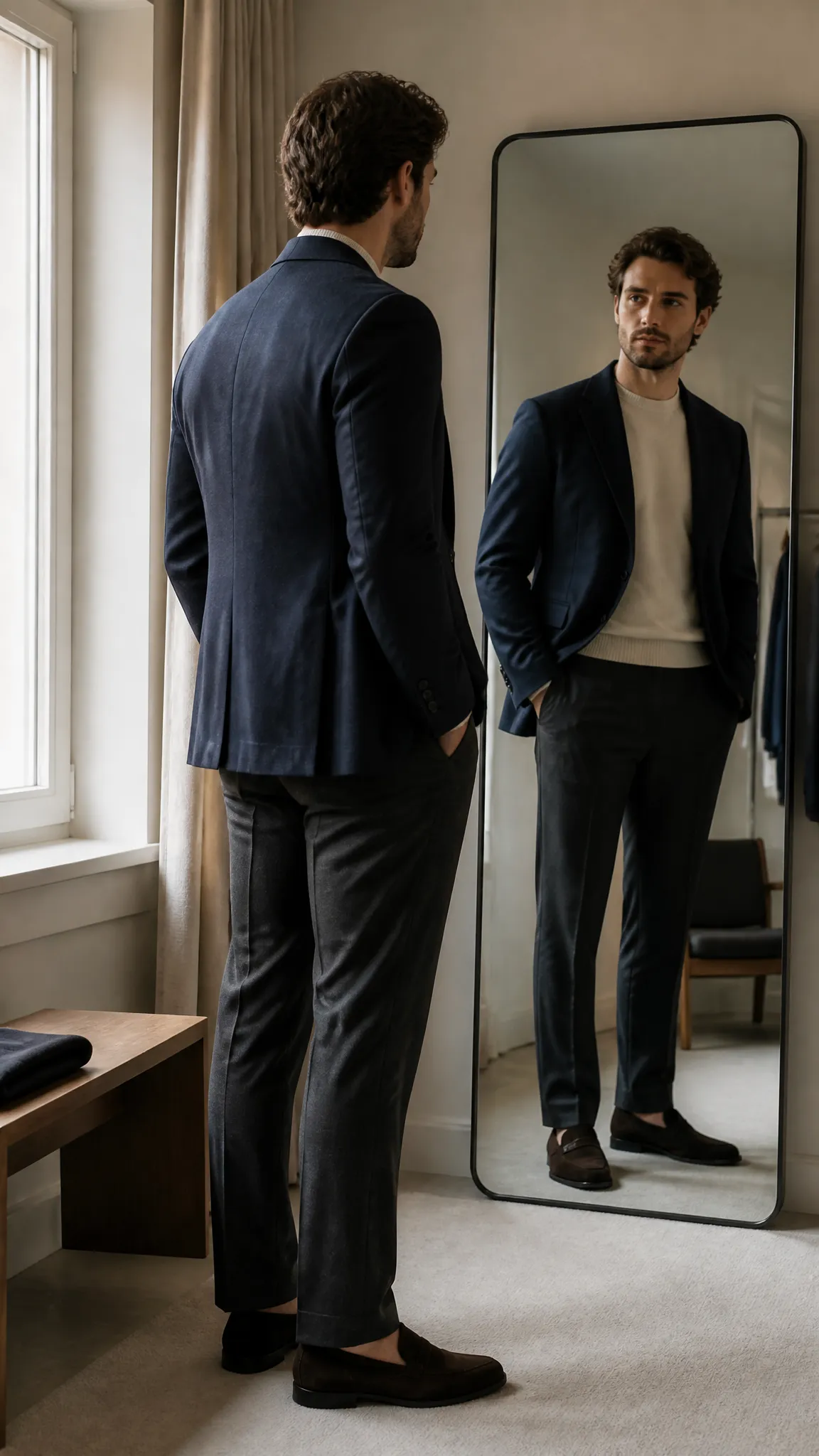
Even flawless cloth cannot rescue poor proportions. Quiet-luxury clothing works because each garment follows the body without clinging, collapsing, or creating unnecessary drama.
Start with areas that are difficult to alter. Jacket shoulders should end close to your natural shoulder line, shirt collars should sit comfortably without a wide gap, and a coat should close over its intended layers without pulling. Sleeve and trouser lengths are comparatively straightforward tailoring jobs.
Watch the garment while you move, not only while standing squarely before a mirror. Sit, reach forward, walk, and place your hands in the pockets. Horizontal strain lines signal tightness, while excess folds around the seat, chest, or crotch can indicate too much room or the wrong shape for your build.
Drape is controlled movement, not simply looseness. Pleated wool trousers may fall in a full line from the hip, while a fine-gauge polo should skim the torso. A relaxed cashmere sweater can have dropped shoulders, but its hem and cuffs should still give the volume a defined boundary.
Proportion also affects versatility. A softly structured navy blazer, straight gray trousers, and a cream knit combine easily because their silhouettes speak the same calm language. Pairing an extremely cropped jacket with puddling trousers can be stylish, but it shifts the outfit away from timeless understatement and toward a deliberate trend statement.
Build a Quiet Palette Without Making It Dull
Understated clothing becomes more interesting when color and texture do the work usually assigned to logos or bold patterns. The familiar quiet-luxury palette includes navy, charcoal, chocolate, camel, cream, olive, stone, and soft white, but these are tools rather than compulsory uniforms.
Choose neighboring tones with enough contrast to remain distinct. A camel coat over an oatmeal sweater may look rich when one is smooth and the other softly brushed. If their colors and textures are nearly identical, the outfit can appear accidental rather than tonal.
Texture provides depth: flannel beside poplin, suede beside denim, or ribbed merino under brushed wool. Limit the number of strongly tactile surfaces in one outfit so the effect stays composed. A navy hopsack blazer, pale blue Oxford shirt, charcoal flannel trousers, and dark brown loafers offer variation without visual noise.
Black can absolutely belong in a quiet wardrobe, especially in eveningwear, fine knitwear, leather shoes, and streamlined outerwear. It is not mandatory, nor are beige outfits inherently sophisticated. The more useful principle is controlled color relationships supported by excellent fit and fabric.
Shop for Longevity, Not a Luxury Costume
The best buying decisions connect inspection with actual use. Before purchasing, imagine at least three realistic combinations involving clothes you already own. A beautiful taupe overshirt that conflicts with every trouser in your closet is not versatile simply because its color looks restrained.
Start with high-frequency garments: dark wool trousers, well-cut chinos, Oxford shirts, merino crewnecks, an unstructured blazer, a weather-appropriate coat, and simple leather or suede shoes. You do not need every category. Select the pieces that match your workplace, social life, and climate rather than assembling a fictional country-house wardrobe.
Cost per wear can be a helpful concept, but only when the piece is comfortable and easy to maintain. Check care instructions before buying. Dry-clean-only trousers may be reasonable; a fragile casual shirt that complicates every laundry day may not be.
Brand reputation and country-of-origin labels can provide context, but neither replaces inspection. Manufacturing quality varies within countries, factories, and product lines. For quiet luxury clothing quality men can verify, the garment itself remains the most reliable evidence.
Finally, distinguish natural character from defects. Linen wrinkles, suede develops a nap, and quality leather gains creases where the foot bends. Those changes can add beauty. Split seams, peeling coatings, warped collars, and severe early pilling indicate deterioration, not patina.
Frequently Asked Questions
Can quiet-luxury style work on a moderate budget?
Yes. Prioritize fit, coherent colors, and sound fabric over labels, then buy fewer pieces with clear roles. Secondhand tailoring, quality knitwear, and simple outerwear can offer value, provided you inspect wear points and budget for alterations.
How can I assess clothing quality when shopping online?
Read the full fiber composition, zoom in on seams and closures, check care instructions, and look for garment measurements rather than relying only on letter sizes. A practical return policy matters because drape, hand feel, and fit cannot be confirmed on a screen.
Is cashmere always better than merino wool?
No. Cashmere is prized for softness and warmth, while merino often offers better resilience, temperature regulation, and ease of care. Fiber grade, yarn construction, knit density, and intended use matter more than the name alone.
Which alterations provide the greatest improvement?
Hemming trousers, adjusting sleeve length, suppressing a jacket waist modestly, and refining shirt sleeves can make a strong difference. Major shoulder or jacket-length changes are often complex, so begin with a garment that fits those areas correctly.
Make the Garment Prove Its Worth
A quiet-luxury wardrobe is built through observation, not obedience to a label or aesthetic trend. Feel the cloth, inspect the stress points, study the drape in motion, and consider how the piece will live with what you already own.
On your next shopping trip, compare two similar garments side by side and examine them inside out. That small pause will tell you more about enduring quality than any prominent name on the tag.