Looking polished without turning your outfit into a designer billboard can feel harder than it should. The search for old money style without logos men can actually wear is less about expensive labels and more about fit, fabric, restraint, and consistency.
This article explains how to build that understated look, from choosing jackets and trousers to coordinating shoes, accessories, and seasonal layers. You will also learn where quiet sophistication ends and costume begins.
What Defines Old Money Style Without Logos for Men
The old money look communicates ease rather than conspicuous spending. Its strength comes from familiar menswear shapes, subdued colors, natural materials, and clothes that suit the setting. Nothing needs to announce its price or provenance from across the room.
That distinction matters because dressing logo-free does not automatically create a refined outfit. A plain synthetic polo, aggressively skinny chinos, and square-toed shoes may lack branding, but they also lack the proportion and texture associated with classic style.
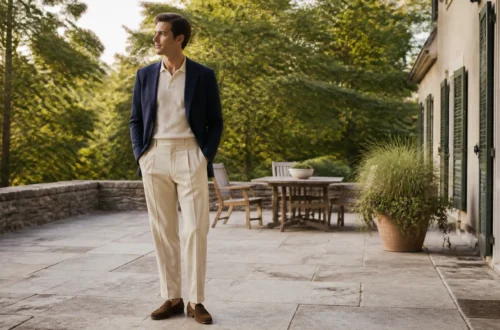
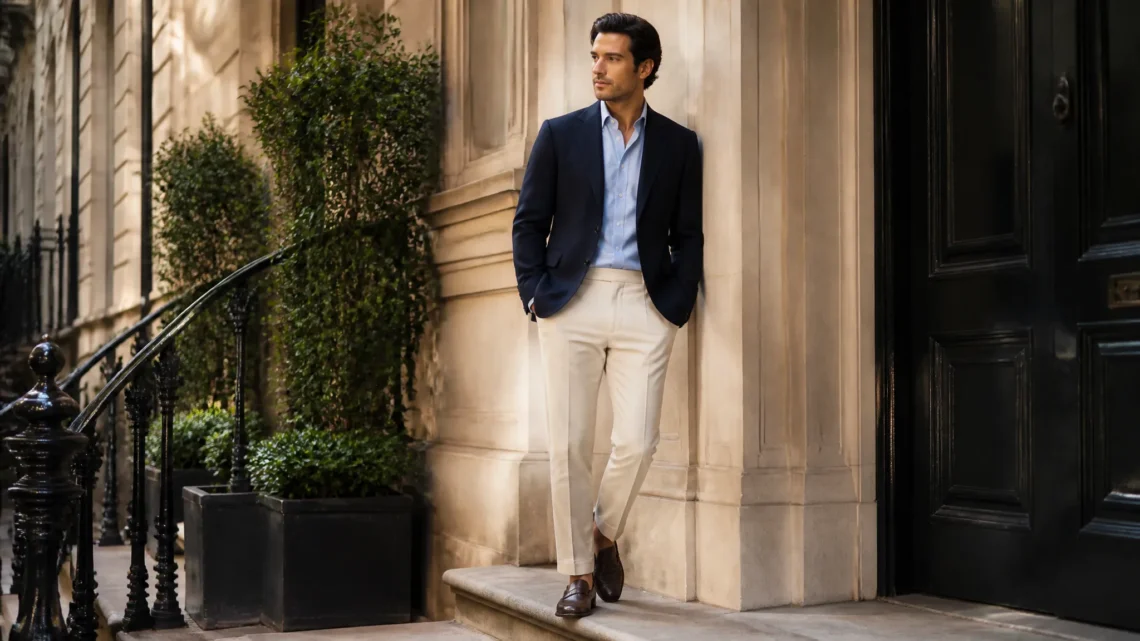
Instead, prioritize quiet visual coherence. A navy blazer, pale blue Oxford shirt, gray wool trousers, and dark brown loafers work because every component belongs to the same level of formality. The colors support one another, while the fabrics provide enough contrast to keep the outfit interesting.
Old money style without logos men can adopt also favors continuity over novelty. Garments should look as if they can remain useful for years, even if the way you combine them changes. That does not require dressing like a country club member at breakfast, lunch, and the hardware store.
Build the Wardrobe Around Shape, Fit, and Proportion
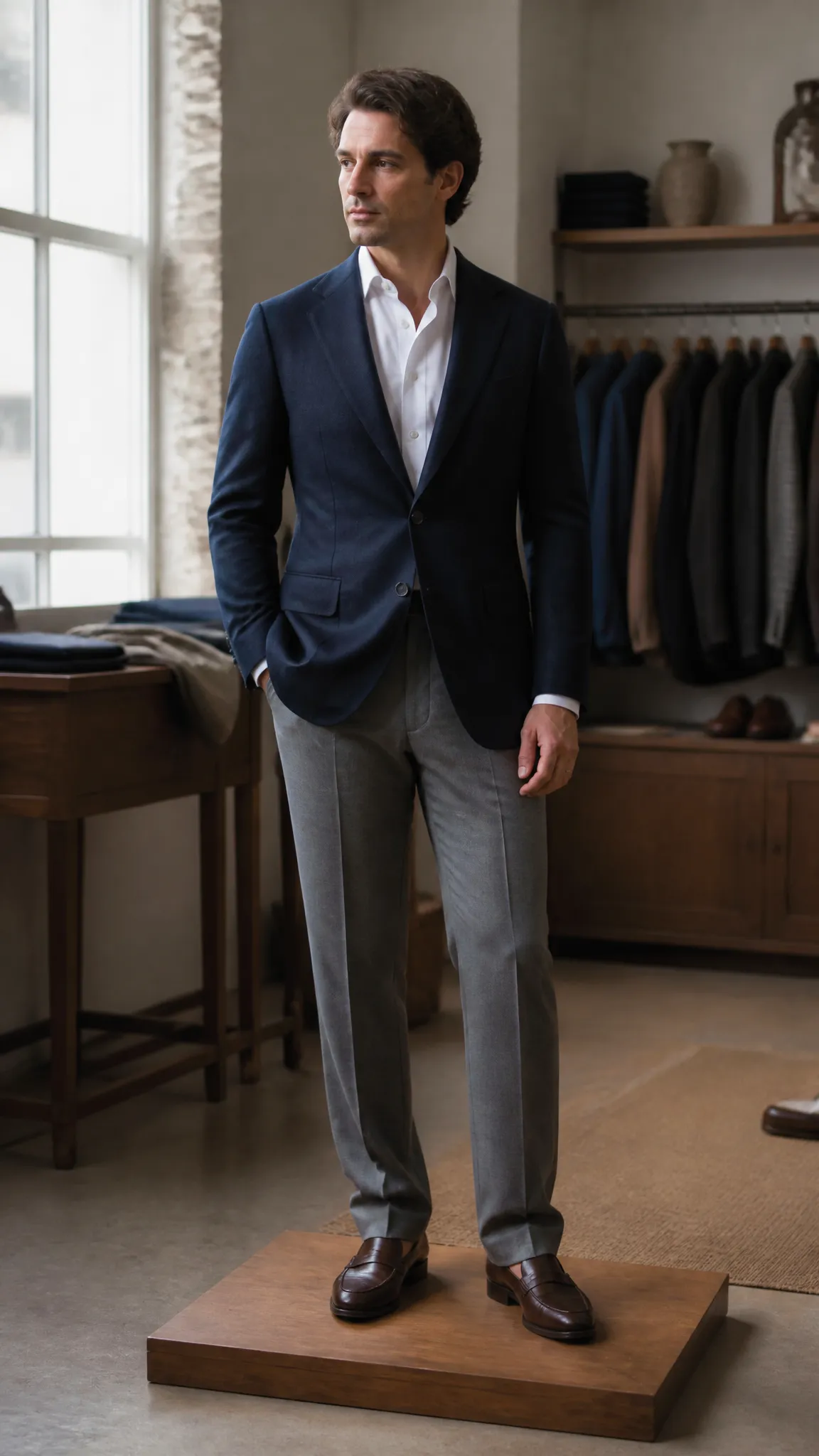
Once the underlying idea is clear, fit becomes the most important practical concern. Classic menswear should follow your body without clinging to it, giving you enough room to sit, walk, and layer naturally. The goal is composure, not stiffness.
Choose relaxed structure, not excessive volume
Jacket shoulders should end close to your natural shoulder line, with clean sleeves and a body that buttons without pulling. A softly structured blazer often feels more relaxed than a heavily padded business suit jacket, making it easier to wear with chinos, flannel trousers, or dark denim.
Trousers benefit from a medium or moderately high rise because this creates a longer, cleaner leg line. Straight and gently tapered cuts generally pair more naturally with loafers and lace-up shoes than extremely narrow trousers. A slight break at the shoe is traditional, while a cleaner hem can look contemporary without becoming cropped.
Use silhouette to balance casual pieces
Casual clothing still needs proportion. A chunky cable-knit sweater works best with trousers substantial enough to balance its texture, such as corduroy, flannel, or heavier chinos. By contrast, a fine merino crewneck can sit neatly over an Oxford shirt and under a blazer.
Shirts should be long enough to stay tucked when the outfit calls for it. For untucked wear, choose a shorter casual hem rather than letting a formal dress shirt hang halfway down your thighs. Small tailoring adjustments often do more for perceived quality than replacing the garment.
Let Fabric and Color Provide the Quiet Luxury
Without prominent branding, the eye notices material and color more readily. This is where an understated wardrobe earns its character. Natural fibers tend to develop richer surfaces, drape more gracefully, and coordinate well across different levels of formality.
Useful foundations include wool flannel, cotton twill, Oxford cloth, linen, corduroy, cashmere, merino wool, suede, and full-grain leather. Fiber content is not the only quality measure, but it is a sensible starting point. Feel the fabric, inspect how it hangs, and check whether the seams lie flat.
Color should look collected rather than perfectly matched. Navy, charcoal, cream, camel, olive, chocolate brown, stone, burgundy, pale blue, and white form a versatile base. These shades mix easily because they are muted enough to share an outfit without competing for attention.
Patterns can add personality when their scale remains controlled. Fine stripes, herringbone, glen plaid, subtle checks, and small foulard motifs have enough detail to reward a closer look. Reserve louder patterns for one element at a time, perhaps a striped shirt under a solid sweater or a patterned pocket square with a plain jacket.
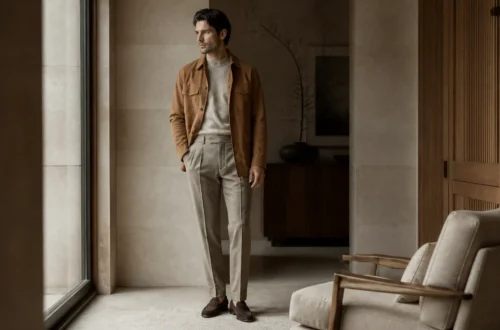
Texture replaces visible branding as the source of interest. Cream denim with brown suede, for example, looks richer than a flat combination of several similar cotton fabrics, even though both outfits may use the same neutral palette.
Create Complete Outfits for Real Settings
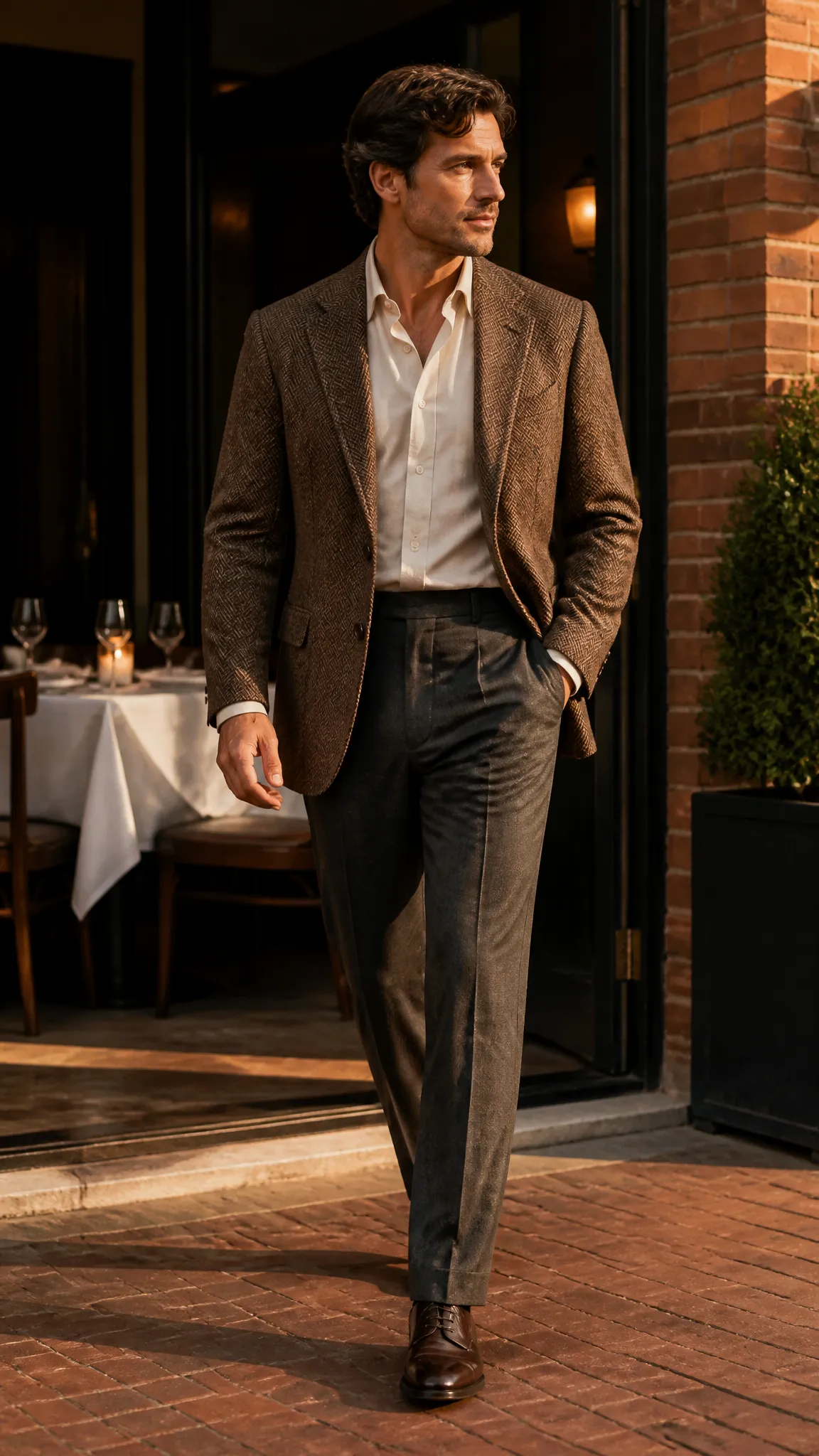
A convincing wardrobe must function outside a mood board. The pieces should accommodate ordinary American settings, including offices, dinners, weekends, travel, and seasonal weather. Dressing appropriately is itself part of the understated effect.
Smart casual and professional settings
For a business-casual office, pair charcoal flannel trousers with a light blue Oxford shirt, a navy merino sweater, and dark brown loafers. Add an unstructured navy blazer when meetings require another layer. Each piece can be removed without making the outfit feel unfinished.
For dinner, try a brown herringbone sport coat with an ecru shirt, dark gray trousers, and sleek leather derbies. A knitted tie can increase the formality without suggesting a corporate uniform. If the venue is more relaxed, omit the tie and use a fine-gauge polo under the jacket.
Weekends and warm weather
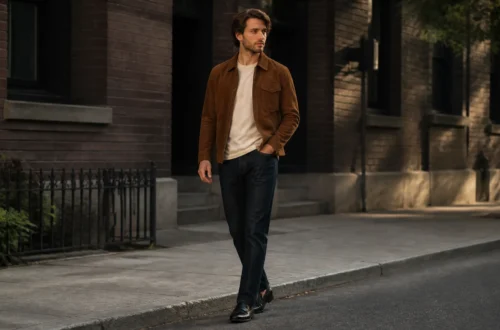
Weekend old money style should still look practical. Straight dark jeans or olive chinos, a tucked or neatly cut polo, a braided belt, and suede loafers create structure without seeming overdressed. A Harrington jacket, waxed cotton jacket, or simple field jacket works when a blazer would feel too formal.
In summer, focus on breathable fabrics rather than simply removing layers. Linen trousers, cotton-linen shirts, lightweight polos, and unlined loafers suit warm conditions while preserving a composed silhouette. Cream trousers with a dusty blue shirt and medium-brown footwear offer a softer alternative to head-to-toe navy.
For old money style without logos men should adjust the formality before changing the core principles. A wedding guest outfit might use a linen suit and silk tie; a Saturday lunch might use chinos and a knit polo. Both can share the same restrained palette and careful fit.
Choose Footwear and Accessories That Do Not Shout
Shoes and accessories can either confirm the outfit’s restraint or undermine it. Highly recognizable buckles, monograms, and oversized watches draw attention away from the clothes as a whole. Simpler designs allow material, proportion, and maintenance to carry the message.
Penny loafers, tassel loafers, plain-toe derbies, brogues, and restrained leather sneakers cover most situations. Brown leather offers broad versatility with navy, gray, olive, cream, and denim. Black shoes remain useful for formal business wear, evening events, and darker tailoring.
Suede is particularly effective in casual outfits because its matte surface feels softer than polished calfskin. Keep the shape relatively clean, though. Bulky soles can work with heavier clothing, but they may overwhelm lightweight trousers and fine knits.
Accessories should have a job. A leather belt can relate to the shoes without matching them precisely, and a simple watch should suit the scale of your wrist and the formality of the outfit. Sunglasses with classic proportions, a wool scarf, and a folded pocket square can add polish without creating clutter.
A compact accessory wardrobe is usually enough:
- A dark brown leather belt with a plain buckle
- A simple leather-strap or metal-bracelet watch
- Classic sunglasses in black, tortoiseshell, or dark brown
- A solid or subtly patterned silk tie
- A white linen or muted patterned pocket square
Visible branding is not the only concern. Too many accessories can look just as conspicuous, even when every item is unmarked. Choose one or two details that support the occasion, then stop before the outfit starts collecting souvenirs.
Avoid Turning Understatement Into a Costume
The greatest risk with this aesthetic is trying too hard to signal inherited ease. Crest-covered blazers, equestrian references without context, driving gloves at the grocery store, and stacks of decorative accessories can make the look theatrical. Classic clothing works best when it belongs naturally in your life.
Do not confuse old money style with wearing only beige. Tonal neutrals can look sophisticated, but navy, forest green, rust, burgundy, and pale blue often give an outfit welcome depth. The key is controlling saturation, not removing color.
Similarly, worn clothing should look maintained rather than deliberately distressed. Polish leather shoes, brush wool coats, depill sweaters, press trousers appropriately, and repair loose buttons. Good care is part of the aesthetic, especially when labels are absent.
Budget matters less than purchasing discipline. Start with garments you will wear frequently, such as a navy blazer, gray trousers, an Oxford shirt, loafers, and a versatile sweater. Thrift stores, consignment shops, alterations, and patient end-of-season shopping can all help, but condition and fit should remain the deciding factors.
Avoid buying an entire persona at once. Add pieces slowly, repeat outfits, and notice what fits your climate and schedule. A closet built for coastal summers will differ from one designed for Chicago winters, even when both follow the same visual principles.
Frequently Asked Questions
Can sneakers work with an old money outfit?
Yes, provided they are clean, minimal, and appropriate to the setting. Low-profile leather or suede sneakers pair well with chinos, dark jeans, knit polos, and casual tailoring, but they are not a substitute for dress shoes at formal events.
Do clothes need to be expensive to look refined?
No. Fabric, fit, color coordination, and garment care are more visible than a price tag. Spend selectively on items that take heavy wear, and allow room in the budget for alterations and shoe maintenance.
Can men wear black in this style?
Black works particularly well for evening clothes, formal footwear, overcoats, and restrained knitwear. For daytime casual outfits, navy, charcoal, brown, and olive often coordinate more softly with traditional materials such as tweed, suede, and corduroy.
How should visible logos be handled on essentials?
A tiny, tonal mark is less disruptive than a large contrasting emblem, but no logo is the cleanest option. If an otherwise useful garment has modest branding, balance it with plain pieces rather than adding more recognizable symbols.
Is a blazer required for the old money look?
No. A well-fitted knit polo, Oxford shirt, merino sweater, wool overshirt, or waxed jacket can create the same composed effect. The relevant qualities are proportion, material, condition, and suitability for the occasion.
Start With Restraint, Then Refine
Successful old money style without logos men can use every day begins with a small, coherent wardrobe rather than a collection of status symbols. Choose one dependable outfit for your real routine, correct its fit, and then expand with complementary colors and textures.
If you are unsure where to begin, assemble a navy or brown jacket, pale shirt, gray or cream trousers, and well-kept brown shoes. Once that foundation feels natural, the style stops looking like an aesthetic you borrowed and starts looking like your own clothes.