Dressing in one color family sounds simple, yet the result can easily look flat, overly matched, or suspiciously like a uniform. A successful tonal quiet luxury outfit men can wear regularly depends less on labels and more on nuanced color, considered proportions, and fabrics that reward a closer look.
This guide explains how to combine those elements into understated outfits that feel polished without appearing precious.
Start a Tonal Quiet Luxury Outfit for Men With the Right Palette
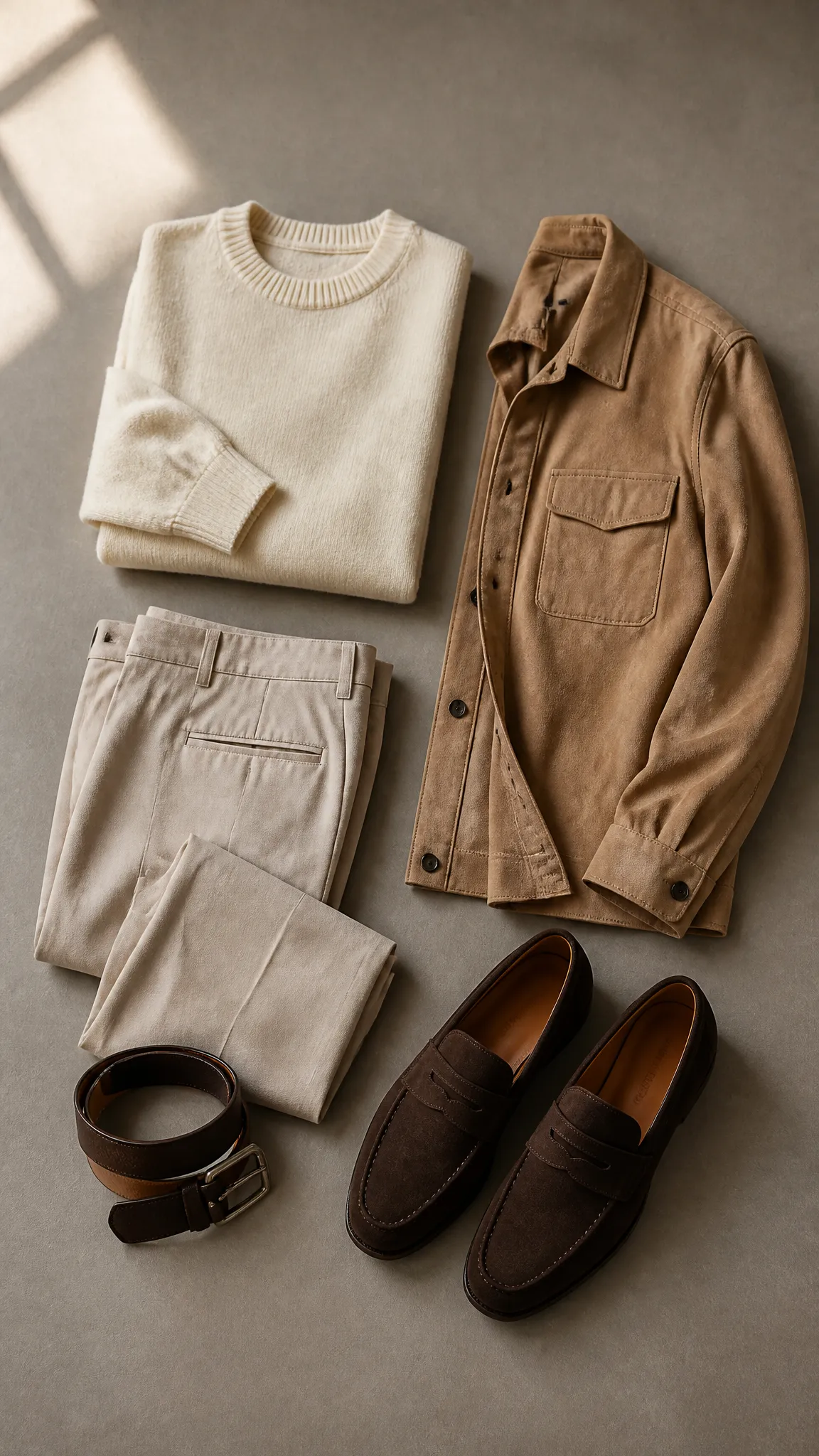
Tonal dressing does not mean wearing the exact same shade from collar to shoe. In fact, a single unbroken color can erase the distinctions between garments. The stronger approach is to choose a color family, then build with its lighter, darker, warmer, and cooler variations.
Neutrals are especially useful because their undertones create subtle contrast. Cream, oatmeal, stone, camel, chocolate, charcoal, and navy all offer enough range to support several layers without becoming visually busy.
Begin with one anchor color based on the setting and season. Navy and charcoal lend themselves to offices, dinners, and cooler weather, while taupe, ecru, and pale gray feel relaxed in daylight and warm conditions. Brown can move between both worlds, particularly when it runs from sand through tobacco to espresso.
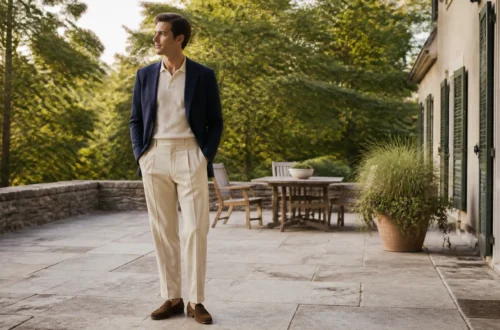
Then vary the values. A cream knit worn with beige trousers and dark brown loafers remains tonal because the pieces share a warm neutral character, even though their depths differ. Likewise, a slate overshirt, heather-gray T-shirt, charcoal pants, and black suede shoes form a cool, restrained progression.
Undertones matter more than many shoppers expect. A pinkish beige can feel disconnected beside a distinctly yellow camel, while blue-gray may sit awkwardly against warm greige. They are not forbidden combinations, but they require more deliberate repetition elsewhere. When in doubt, compare garments in natural light and look for a shared warm, cool, or neutral cast.
Use Fabric to Create Quiet Contrast
Once the palette is controlled, texture keeps it from looking lifeless. Quiet luxury style favors materials with visual depth rather than obvious decoration: brushed wool, matte cotton, suede, linen, cashmere, fine-gauge merino, flannel, and substantial twill. These surfaces react differently to light, separating neighboring shades without introducing a loud pattern.
For example, a smooth cotton poplin shirt beneath a softly napped wool jacket creates distinction even when both pieces are navy. An ecru ribbed sweater over flat-weave stone trousers works for the same reason. The eye notices the change in surface before it notices any strong color break.
Mix finishes as well as weights. Pairing every matte item with another matte item can feel dull, while too many glossy surfaces may read as formal or synthetic. A subtle sheen from polished leather, silk-blend knitwear, or a crisp shirt is most effective when balanced by dry, tactile fabrics.
Season should guide the mix. Linen, cotton-linen, lightweight suede, tropical wool, and open-knit cotton provide dimension without trapping excessive heat. In colder months, flannel, corduroy, cashmere, brushed cotton, and dense wool offer richer texture and support more substantial layering.
Material quality helps, but expensive fiber content alone does not guarantee sophistication. Check whether the fabric hangs cleanly, feels appropriate for the garment, and recovers reasonably well from a gentle squeeze. Good construction and proper care often contribute more to the finished impression than a conspicuous designer name.
Balance Fit, Silhouette, and Proportion
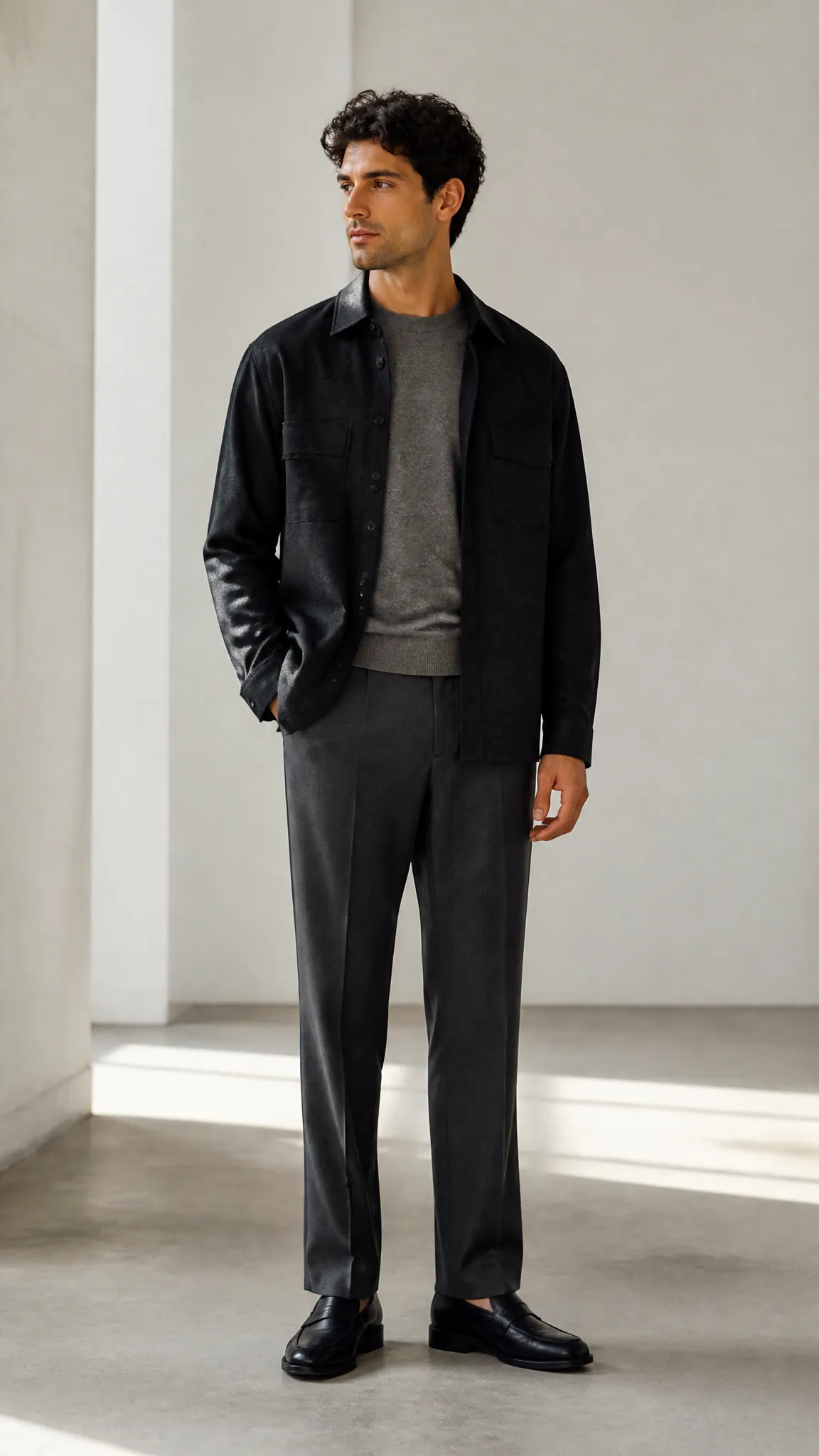
A restrained palette puts fit under a brighter spotlight. With few prints or color contrasts competing for attention, pulling at the buttons, trousers pooling heavily over the shoes, or a jacket ending at an awkward point becomes much easier to see.
Quiet luxury does not demand one silhouette. A trim merino polo can work with straight trousers, while a relaxed cashmere crewneck may look better with fuller pleated pants. What matters is that the volumes appear related rather than accidental.
A dependable starting point is to place the cleaner, closer-fitting layer near the body and add slightly more room outward. Think of a fine T-shirt under an unstructured overshirt, or a lightweight rollneck beneath a relaxed topcoat. This approach keeps layers from bunching and allows each hem and collar to remain visible.
Proportion can also prevent a tonal outfit from becoming a featureless column. High- or mid-rise trousers establish a clear waist, a tucked knit polo lengthens the leg line, and a hip-length jacket divides the outfit without relying on contrasting color. If both the top and trousers are loose, shortening or tucking the top usually restores shape.
Before leaving home, use a practical fit check:
- Shoulder seams sit close to the natural shoulder unless the garment is intentionally dropped.
- Shirts and knitwear skim the torso without stretching or collapsing into excess folds.
- Trousers fall cleanly through the thigh and break lightly, or not at all, over the shoe.
- Outerwear closes comfortably over the intended layers.
- Sleeves reveal deliberate proportions rather than simply covering the hands.
Tailoring can refine ordinary clothing, especially trouser hems, sleeve lengths, and waist suppression. Still, preference plays a role: some men favor fluid Italian-inspired shapes, while others prefer crisp, structured lines. Either can express understated luxury when the fit looks intentional and permits natural movement.
Build the Outfit Around One Quiet Focal Point
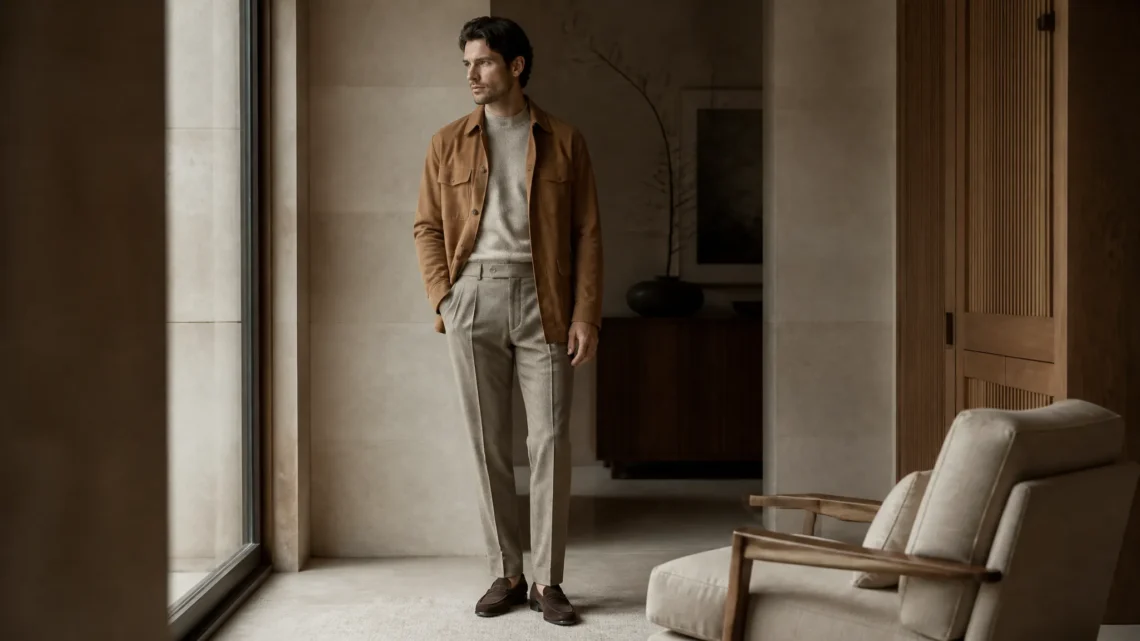
A tonal look benefits from a visual center, but that focal point need not shout. It might be the drape of a double-pleated trouser, the nap of a suede jacket, a clean topcoat, or a sweater with a pronounced rib. Choosing one lead element prevents every piece from competing for attention.
Build outward from that garment. If the anchor is a camel suede overshirt, try a sand knit underneath, tobacco wool trousers, and dark brown shoes. If it is a charcoal topcoat, use a medium-gray sweater and deeper charcoal pants, then finish with black or graphite footwear.
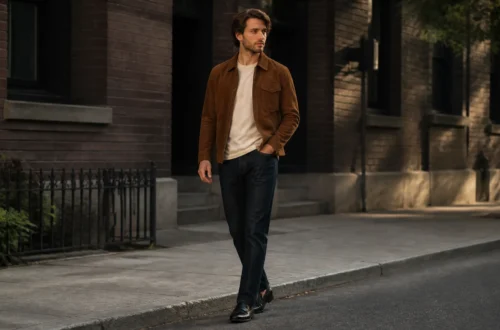
For a casual tonal quiet luxury outfit men can repeat on weekends, start with a well-shaped crewneck T-shirt and straight-leg trousers in adjacent shades. Add an overshirt, chore jacket, or unstructured blazer according to the occasion. The outer layer should introduce texture or a meaningful shift in depth, not merely duplicate the shirt beneath it.
More formal settings call for greater precision. A navy suit with a midnight knit polo, dark socks, and black or deep brown loafers feels composed without the contrast of a white dress shirt. For business environments that expect traditional attire, a pale blue shirt and discreet tie may be the more appropriate choice; tonal styling should serve the dress code, not wrestle it to the floor.
Keep patterns quiet if you use them at all. A faint herringbone, tonal stripe, or small-scale check adds depth without breaking the color story. Large plaids, prominent monograms, and high-contrast graphics shift attention away from fabric and silhouette, which changes the character of the outfit.
Finish With Shoes and Accessories That Belong
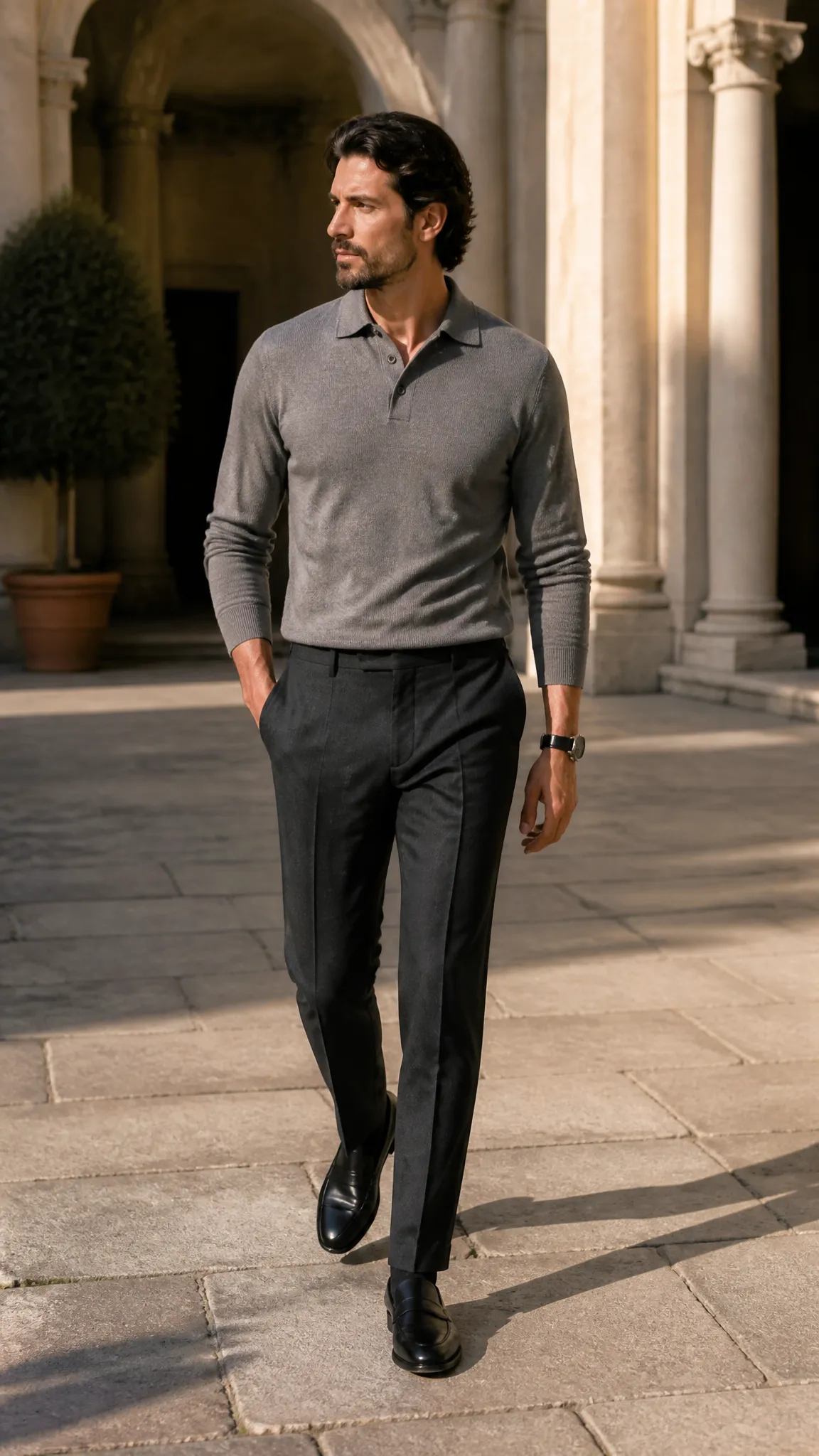
Footwear can either complete the tonal progression or chop it off abruptly. Shoes do not have to match the trousers, but they should share the outfit’s temperature and level of formality. Dark brown suede complements camel, taupe, cream, and olive; black leather works naturally with gray, charcoal, and cool navy.
Loafers, minimalist leather sneakers, plain-toe derbies, sleek boots, and refined sandals can all fit the aesthetic in the right context. Choose restrained construction, clean lines, and a material that connects to something else in the look. Bulky athletic shoes can work with wider trousers, but highly technical detailing may undermine an otherwise quiet composition.
Accessories should provide punctuation rather than a plot twist. A leather belt close to the shoe color is a safe choice, though beltless side-adjuster trousers often look cleaner. Watches, rings, and bracelets are most coherent when their metal finishes do not compete, and socks usually look best when they extend the trouser color or bridge the trousers and shoes.
A useful accessory edit includes:
- A structured or softly grained leather bag without prominent branding
- A scarf that repeats one shade while introducing a different weave
- Eyewear with simple frames in tortoiseshell, black, or translucent neutral acetate
- A pocket square in a muted neighboring tone rather than an exact match
Restraint is the finishing skill. If the outfit already features textured suede, pleated trousers, jewelry, and an expressive shoe, another statement item is unlikely to make it quieter. Remove one element and reassess the balance.
Make the Wardrobe Work Beyond One Outfit
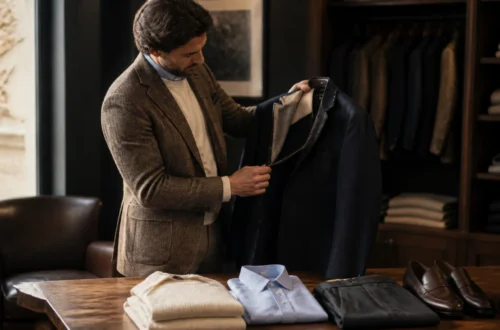
The most convincing version of quiet luxury is repeatable. Instead of buying an entire beige wardrobe at once, identify the neutral family already dominant in your closet and expand it gradually. Navy, gray, warm brown, or off-white can each form a reliable base.
A compact wardrobe might include trousers in two depths, knitwear in three adjacent shades, one tailored jacket, one casual outer layer, and shoes that coordinate with most combinations. This creates tonal outfits while allowing every garment to work with denim, white shirts, and other existing staples.
Care matters because subdued clothing exposes wear. Brush wool garments, remove pilling carefully, use appropriate hangers for jackets, and follow each care label. Rotate shoes and knitwear so they can recover between wears, and address stains early rather than hoping they acquire a distinguished patina overnight.
Avoid treating every imperfection as failure. Linen wrinkles, suede develops tonal variation, and good leather gains character. The goal is well-kept rather than untouched, with natural signs of use that suit the material.
Also resist the urge to force exact matches across different stores or fabric types. Near-matches often look more sophisticated because they reveal intentional layering. If two items are almost identical but clash in undertone, however, separate them with a clearly lighter or darker layer.
Frequently Asked Questions
Can a tonal outfit include black?
Yes. Black can anchor charcoal, graphite, cool gray, and very dark navy, particularly through shoes, outerwear, or trousers. Combining varied textures, such as wool, suede, and matte cotton, prevents an all-black outfit from reading as one solid block.
Does quiet luxury require expensive designer clothing?
No. The recognizable qualities are controlled color, appropriate fit, pleasing fabric, neat construction, and minimal branding. A modestly priced garment that fits well and coordinates broadly may contribute more than an expensive piece chosen mainly for its label.
How many shades should a tonal outfit contain?
Two to four related shades usually provide enough variation while preserving cohesion, but this is a guideline rather than a rule. More shades can work when their undertones and textures remain connected; fewer can work when the fabrics are distinctly different.
Can men wear tonal quiet luxury in summer?
Yes. Use breathable fabrics and lighter shades, such as ecru linen trousers, a cream cotton knit polo, and taupe suede loafers. Looser cuts and unlined tailoring also improve airflow while maintaining a polished silhouette.
How do you keep a beige outfit from looking washed out?
Vary the depth around the face and add one deeper anchor, such as chocolate shoes, a tobacco belt, or a darker jacket. Texture and a crisp neckline also create definition without abandoning the warm neutral palette.
Let Restraint Do the Work
A persuasive tonal outfit is not an exercise in buying everything in one color. Choose a coherent palette, vary its depth and texture, and let proportion establish structure before adding restrained shoes and accessories.
Begin with one garment you already wear often, then assemble two neighboring shades around it. That small exercise reveals which colors, fabrics, and silhouettes deserve a lasting place in your wardrobe.