The old-money look can easily become a costume: navy blazer, loafers, inherited-estate attitude, repeat. For anyone searching old money style men 2026, the more useful direction is quieter, looser, and less concerned with looking as if you belong to a fictional country club.
This article explains what is changing, which traditional elements still work, and how to build polished outfits that feel current rather than copied from an archive.
The New Meaning of Old Money Style Men 2026
The central change is a move away from literal status signaling. Old-money style still draws on tailoring, collegiate sportswear, country clothing, and Mediterranean leisurewear, but the most convincing version now treats those references as a vocabulary, not a uniform.
That means fewer crests, obvious equestrian motifs, and head-to-toe prep combinations. A cable-knit sweater with chinos and penny loafers can still work, but adding all three to a striped Oxford shirt, club tie, and brass-button blazer risks looking like wardrobe department property.
The newer approach keeps the qualities that made the aesthetic appealing in the first place: restraint, durable materials, useful layers, and clothes that improve with wear. Ease now matters as much as pedigree. A soft-shouldered jacket, washed Oxford cloth, slightly rumpled linen, and well-maintained suede communicate confidence without insisting on wealth.
This also makes the style more accessible. You do not need a family estate or a closet full of luxury labels. You need coherent colors, sensible proportions, natural fabrics where practical, and enough restraint to stop before the outfit starts telling an elaborate story about your imaginary grandfather.
The Silhouette Is Relaxing, Not Collapsing
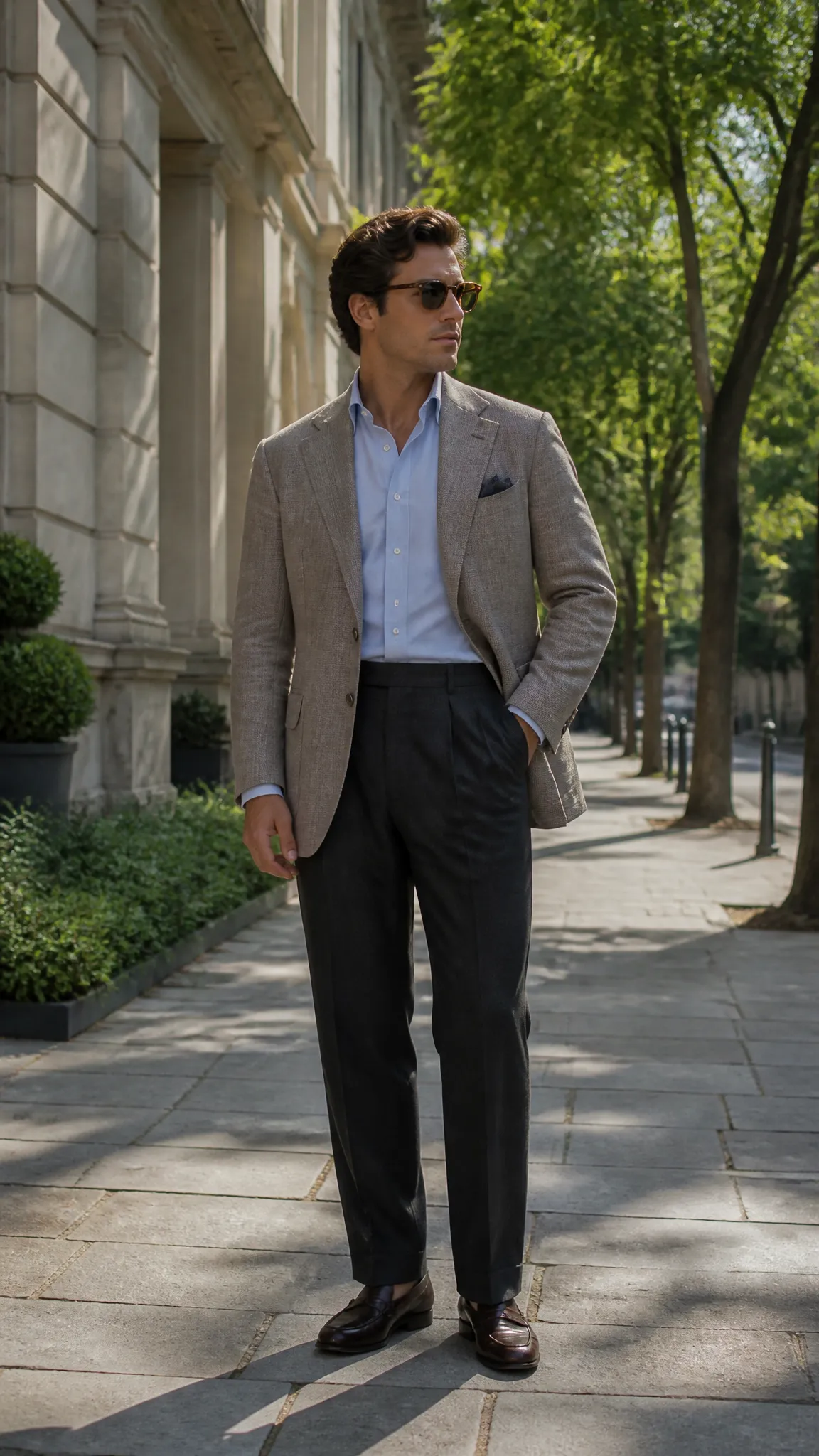
The clearest visual update is proportion. Slim chinos, shrunken blazers, and ankle-tight trousers no longer capture the relaxed assurance associated with this style. The contemporary silhouette has more room through the chest, thigh, and leg, while remaining clean enough to look intentional.
For tailoring, look for a jacket with a natural shoulder, moderate lapel, and enough length to cover the seat. It should skim the torso rather than grip it. Trousers can sit at or near the natural waist, with a straight or gently tapered leg and a light break over the shoe.
Casual clothes follow the same principle. Straight chinos, fuller pleated trousers, relaxed denim, roomy rugby shirts, and substantial knitwear create a balanced outline. Relaxed fit does not mean oversized everything. If the trousers are wide, a sweater that ends around the hip keeps the outfit controlled; if the coat is generous, avoid trousers that puddle heavily at the ankle.
Length is especially important. A polo should not cling or extend halfway down the thigh, and shorts generally look more polished when they have room in the leg instead of fitting like compression gear. These details produce comfort without sacrificing structure.
Color and Fabric Are Doing More of the Work
As logos and decorative signals recede, color and texture become the distinguishing features. Traditional navy, cream, gray, camel, olive, brown, and pale blue remain dependable, but they are being combined with softer, earthier shades such as tobacco, ecru, muted burgundy, stone, sage, and faded yellow.
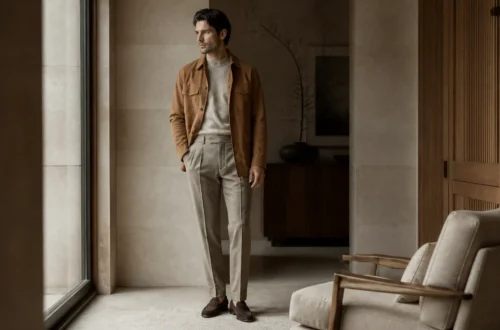
The goal is not to dress entirely in beige. Low-contrast combinations simply make it easier for fabric and cut to register. Try an ecru Oxford shirt with olive trousers, a tobacco suede jacket over gray flannel, or a cream knit polo with dark brown linen trousers. Navy still anchors these palettes when too many warm neutrals begin to resemble an upscale oatmeal sampler.
Natural fibers support the aesthetic because they develop texture and patina. Wool flannel, hopsack, linen, cotton twill, brushed cotton, suede, and leather generally look better with minor signs of use than shiny synthetic fabrics do. Blends can improve durability, stretch, or wrinkle resistance, so fiber purity should not become a purity test.
Seasonality matters more than rigid rules. Linen and open-weave wool help in hot, humid summers, while corduroy, tweed, brushed cotton, and lambswool add depth in cooler weather. The best old money style men 2026 wardrobes use texture to create interest rather than relying on conspicuous branding.
Classic Pieces Are Being Styled With Less Ceremony
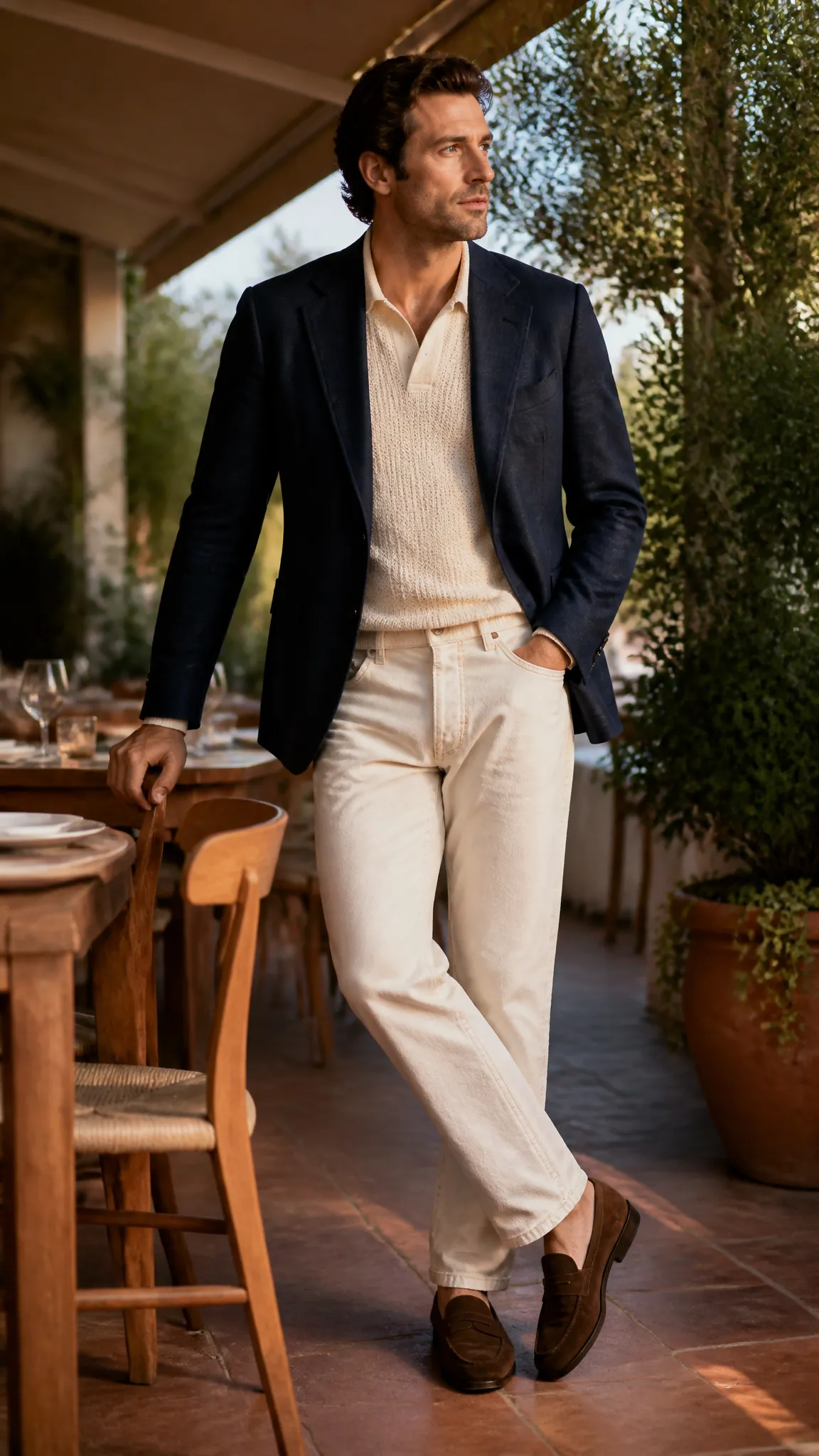
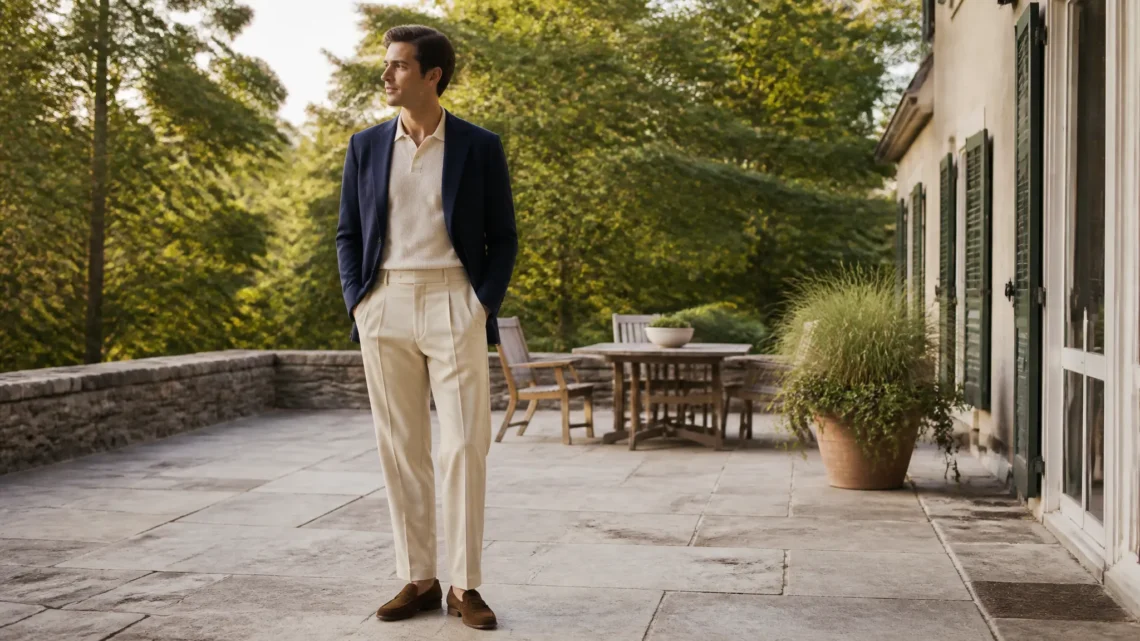
The easiest way to modernize classic menswear is to reduce the formality around it. A navy blazer does not always need gray wool trousers, a tie, and polished oxfords. Wear it with a knitted polo, straight ecru jeans, and brown suede loafers, and it retains authority without feeling like office attire.
The same principle applies in reverse. Casual staples look more considered when one tailored element enters the outfit. A chambray shirt and chinos become sharper beneath an unstructured sport coat; a rugby shirt looks grown-up with pleated trousers instead of distressed jeans.
Several combinations capture the updated balance without requiring a large wardrobe:
- A soft blazer, blue Oxford shirt, straight chinos, and suede loafers for smart casual offices or dinner.
- A textured knit polo, pleated linen trousers, and leather sandals for warm-weather gatherings.
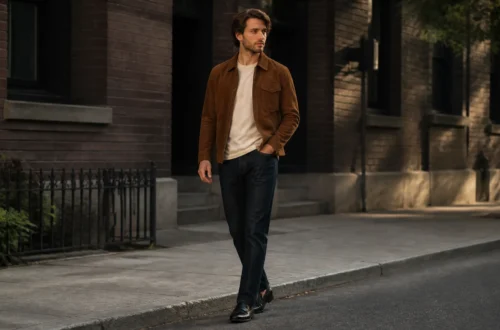
- A waxed or suede jacket, brushed cotton shirt, dark denim, and plain-toe boots for weekends.
- A crewneck sweater over a collared shirt, charcoal flannel trousers, and derbies for cooler business-casual settings.
These are frameworks rather than uniforms. Adjust the footwear and outer layer to suit the occasion. A leather sandal may belong at a coastal lunch, but it will not become boardroom footwear merely because it is expensive.
Footwear and Accessories Are Becoming Quieter
Accessories once carried much of the stereotype: signet rings, silk scarves, club ties, gold watches, and polished loafers. Those pieces have not disappeared, but wearing several together can make the reference too obvious. In 2026, one traditional accent usually has more impact than a full collection.
Footwear should look cared for, not untouched. Penny loafers, tassel loafers, derbies, simple boots, deck shoes, and restrained leather sneakers all fit the broader style. Suede is particularly useful because its matte surface softens tailoring, while dark brown leather provides more versatility than highly polished black in casual settings.
Choose a belt that relates to the shoes without matching them exactly. A woven leather belt, plain calfskin strap, or simple canvas option often looks more relaxed than glossy leather with a large buckle. Socks can quietly connect the palette through charcoal, navy, brown, or muted burgundy.
For jewelry, watches, and eyewear, scale and simplicity matter more than recognizable branding. A modest watch, slim ring, or classic acetate frame can complete the outfit. Piling them together with a neckerchief and monogrammed luggage may suggest that subtlety missed its connecting flight.
Dressing for Real Life Instead of a Mood Board
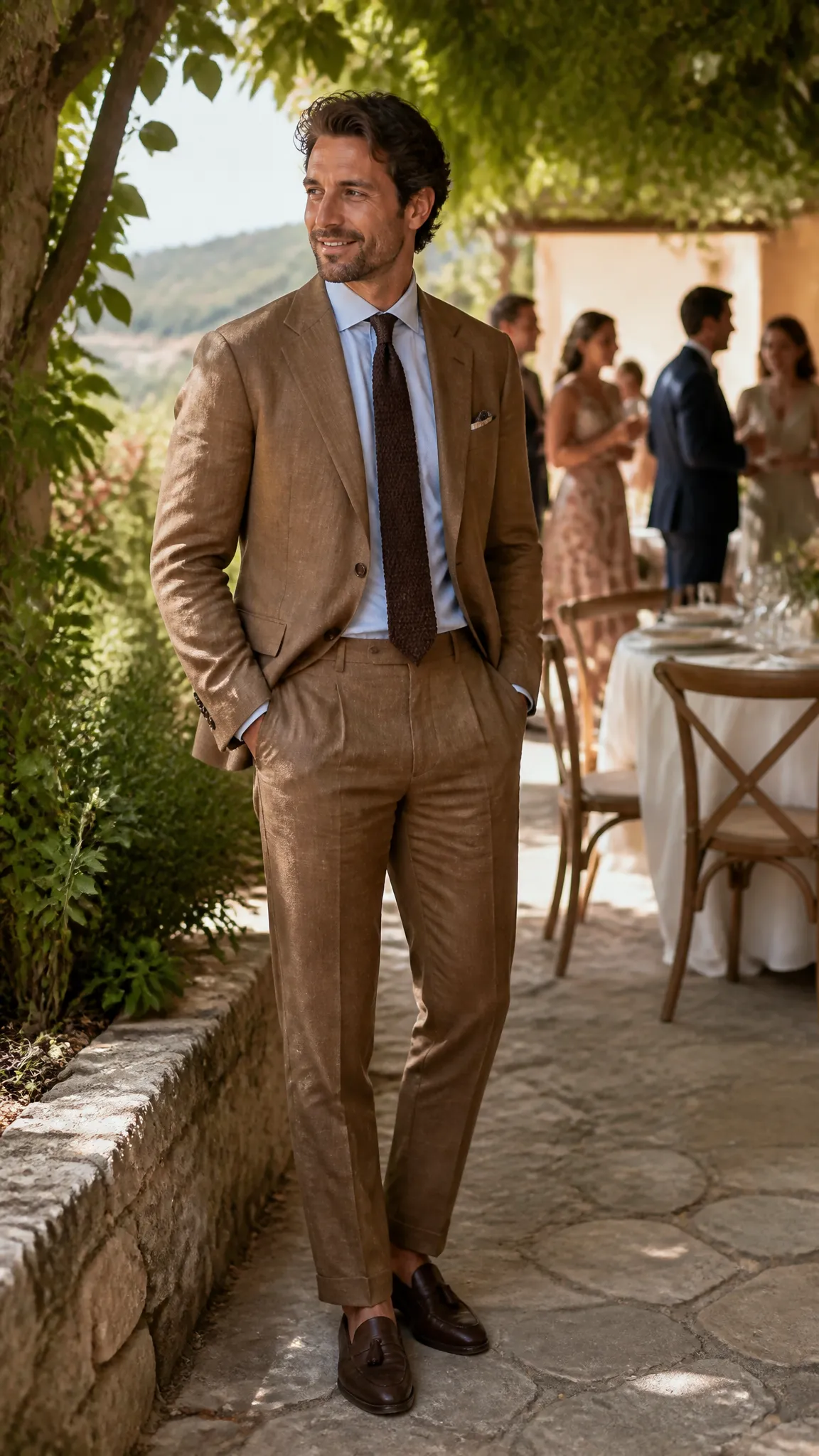
The updated aesthetic succeeds when it responds to an actual setting. Old-money references originated in clothes designed for particular activities and climates, so practicality is not an enemy of the look. It is part of what makes the clothes believable.
For a business-casual office, start with high-rise trousers or chinos, a tucked Oxford shirt, and loafers or derbies. Add an unstructured blazer when needed. Keep the colors subdued and the fit relaxed enough for movement, but avoid beach fabrics and overly casual footwear unless the workplace clearly permits them.
At a summer wedding, a lightweight wool or linen-blend suit in navy, tobacco, or stone works better than assembling a collection of resort clichés. Pair it with a pale shirt, loafers, and a restrained tie if the dress code calls for one. Linen wrinkles naturally; pressing the suit beforehand is wise, but expecting it to remain perfectly flat is not.
For everyday wear, combine one refined item with practical basics. A camel topcoat can sit over denim and a sweater, while pleated trousers can work with a plain T-shirt and suede jacket. This high-low balance keeps old money style men 2026 grounded in contemporary American life rather than an imagined European summer.
Climate should guide purchases too. Heavy tweed has limited value in Florida, and unlined linen will not carry a Chicago winter. Choose the version of the aesthetic that supports your daily routine, not the version that photographs best beside a vintage convertible.
Buying Less and Caring for It Better
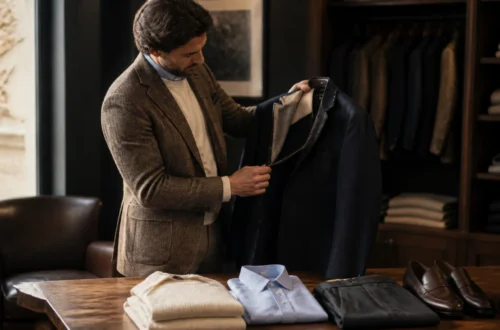
Longevity is the least theatrical and most useful part of the old-money idea. A compact wardrobe of compatible garments usually looks more convincing than a rush of trend-specific purchases. Before buying, ask whether the piece works with at least three things you already own and whether its fabric, construction, and care needs suit your habits.
Start with alterations before replacement. Adjusting trouser length, taking in a shirt, or refining a jacket sleeve can improve an otherwise solid garment. Tailoring cannot fix every issue, especially tight shoulders or a jacket that is much too short, so prioritize fit in those areas when shopping.
Care should match the material. Brush wool jackets, rotate leather shoes, use shoe trees when appropriate, and allow garments to air between wears. Wash knitwear and shirts according to their labels, and avoid dry-cleaning more often than necessary. Suede benefits from a proper brush and weather protection, although no treatment makes it immune to a downpour.
Secondhand clothing can be especially useful for sport coats, overcoats, knitwear, and leather accessories because established materials often age attractively. Inspect for moth damage, stains, brittle linings, worn soles, and alteration limits. Patina is desirable; structural failure is merely expensive.
Frequently Asked Questions
Is old-money style still fashionable for men in 2026?
Yes, but the literal costume version feels less current than relaxed interpretations. Natural shoulders, fuller trousers, textured fabrics, and restrained accessories preserve the classic character while avoiding an overly themed result.
Can you wear this style on a modest budget?
Yes. Focus on fit, color harmony, and repeatable staples rather than prestige labels. Secondhand wool jackets, cotton shirts, simple trousers, and well-kept leather shoes can build the look gradually, especially when alterations are included in the budget.
Are sneakers compatible with old-money menswear?
Minimal leather or suede sneakers can work with chinos, denim, knit polos, and unstructured tailoring in casual settings. Keep them clean and visually simple. Formal events and traditional business dress still call for loafers, derbies, or oxfords.
Does every outfit need a blazer or collared shirt?
No. A substantial crewneck sweater, fine-gauge knit polo, suede jacket, or well-cut plain T-shirt can carry the same restrained mood. The surrounding fit and materials matter more than checking off traditional prep items.
How can you avoid looking like you are wearing a costume?
Limit each outfit to one or two recognizable heritage references and combine them with ordinary contemporary clothes. Skip fake crests, excessive monograms, and accessories that imply an activity or affiliation you do not have.
Build Around Ease, Quality, and Restraint
The strongest version of this style is not an impersonation of wealth. It is a practical wardrobe built from comfortable proportions, harmonious colors, tactile materials, and clothes appropriate to the occasion.
Begin by improving one dependable outfit: relax the trouser fit, replace a stiff jacket with a softer one, or introduce texture through suede or knitwear. When each addition works with what you own, the result looks composed rather than performed.