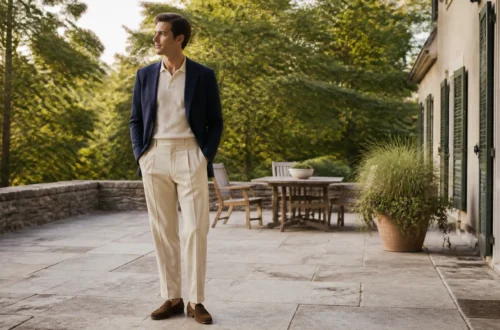
A jacket can fit well and still look strangely flat, while a simple sweater can appear refined before anyone notices the label. The difference often lies in how the material catches light, holds its shape, and moves on the body.
Understanding luxury fabrics for men’s clothing will help you judge quality by sight and touch, choose the right material for each garment, and avoid paying extra for prestige that the cloth does not deliver.
What Makes Luxury Fabrics for Men’s Clothing Look Expensive
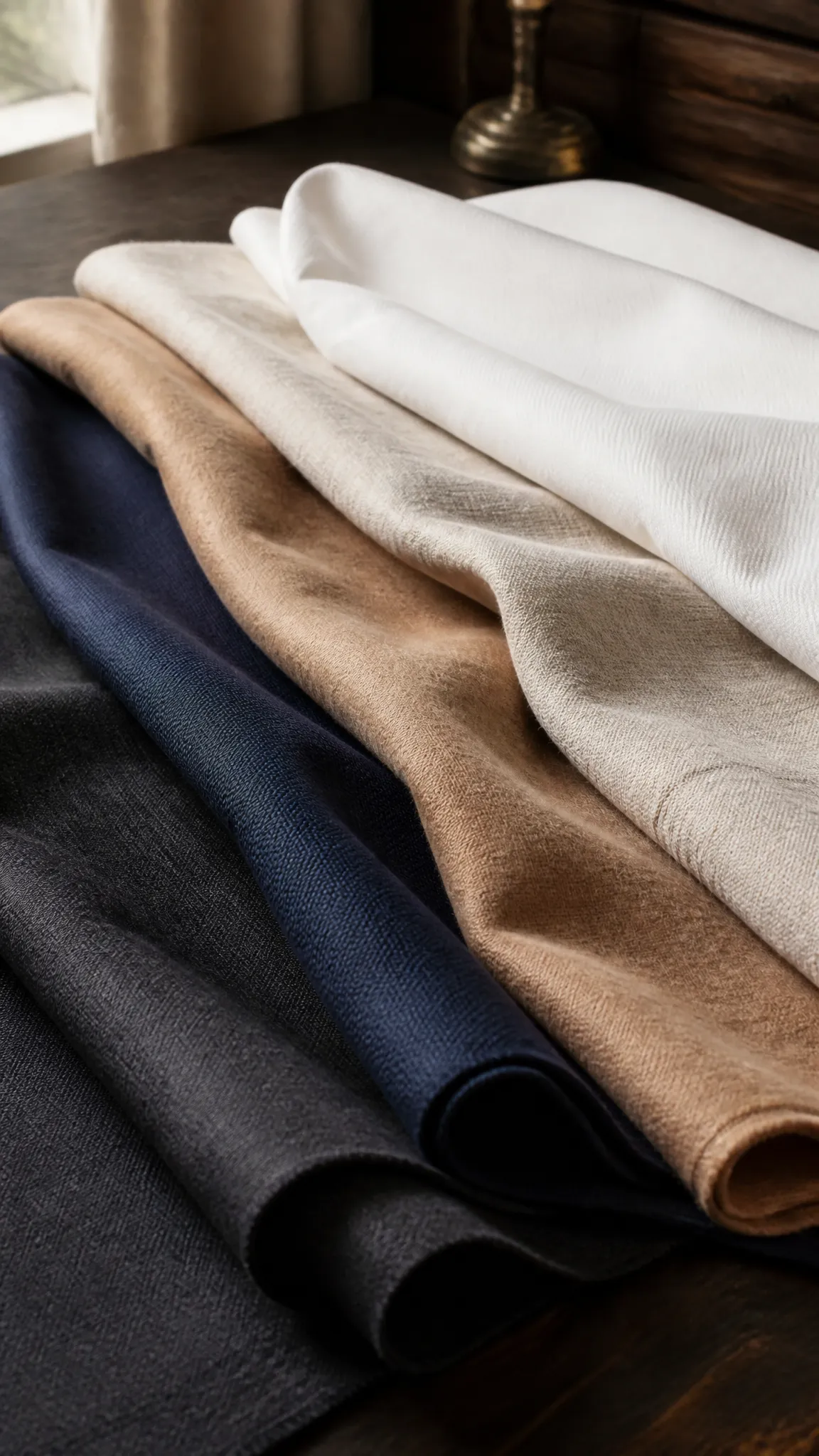
Luxury is less about shine or softness alone than about controlled texture, graceful drape, and visual depth. Good cloth responds to light rather than reflecting it like polished plastic. It may have a soft luster, a clearly defined weave, or subtle tonal variation that becomes more interesting at close range.
Drape describes how fabric falls and moves. A fine wool trouser should hang in a clean line without looking limp, while a cashmere sweater should settle around the body instead of standing away from it. The ideal behavior depends on the garment, which is why the softest option is not automatically the most luxurious.
Density and recovery matter, too. Gently compress a fabric in your hand, then release it. Quality wool often springs back with minimal wrinkling; good cotton feels substantial without becoming cardboard-like. This simple test says more than dramatic marketing language ever will.
Finally, inspect the finish. Look for an even surface, tidy yarns, consistent color, and a weave suited to the intended use. Natural irregularities can add character, especially in linen and slubby silk, but random snagging, fuzziness, or uneven dye may indicate poor construction rather than artisanal charm.
Match the Fiber to the Garment
Once you know what quality looks like, consider function. A cloth earns its place in a wardrobe by helping a garment perform properly, not merely by sounding impressive on a label.
Wool for tailoring, trousers, and outerwear
Wool is the cornerstone of refined menswear because it can be spun and woven in remarkably different ways. Worsted wool has a smooth, clean face that suits business suits and dress trousers. Flannel has a brushed surface and softer outline, making it ideal for relaxed tailoring, winter trousers, and sport coats.
For coats, denser melton, cavalry twill, or wool-cashmere blends provide body and warmth. Extremely fine suit wool can feel seductive in a fitting room, but it may wrinkle or wear faster than a slightly sturdier cloth. For regular use, resilience is a form of luxury.
Cashmere and fine knitwear fibers
Cashmere looks richest when the knit has enough substance to hold its shape. A very thin sweater may feel soft yet reveal seams, pill quickly, or cling awkwardly. Check the cuffs, hem, and collar for elasticity, and look for a consistent surface rather than excessive fluffy fibers.
Merino wool is often the more practical choice for fine-gauge knitwear. It regulates temperature well, layers neatly under tailoring, and generally recovers better than delicate cashmere. Blends can also be worthwhile when each fiber serves a purpose, such as wool adding strength to cashmere.
Cotton, linen, and silk for warmer weather
Long-staple cotton can produce smooth shirting with strength and a subtle luster. Poplin looks crisp, Oxford cloth feels more textured, and twill drapes softly while resisting wrinkles reasonably well. Choose the weave according to the shirt’s role rather than assuming a high thread count guarantees quality.
Linen should look relaxed, not neglected. Its characteristic creases and slight irregularities give summer tailoring and shirts depth, particularly in tobacco, cream, olive, navy, and pale blue. Silk works best as a supporting fiber in menswear, lending luster or softness to ties, evening jackets, knitwear, and select blends.
Use Weave, Texture, and Color to Create Visual Depth
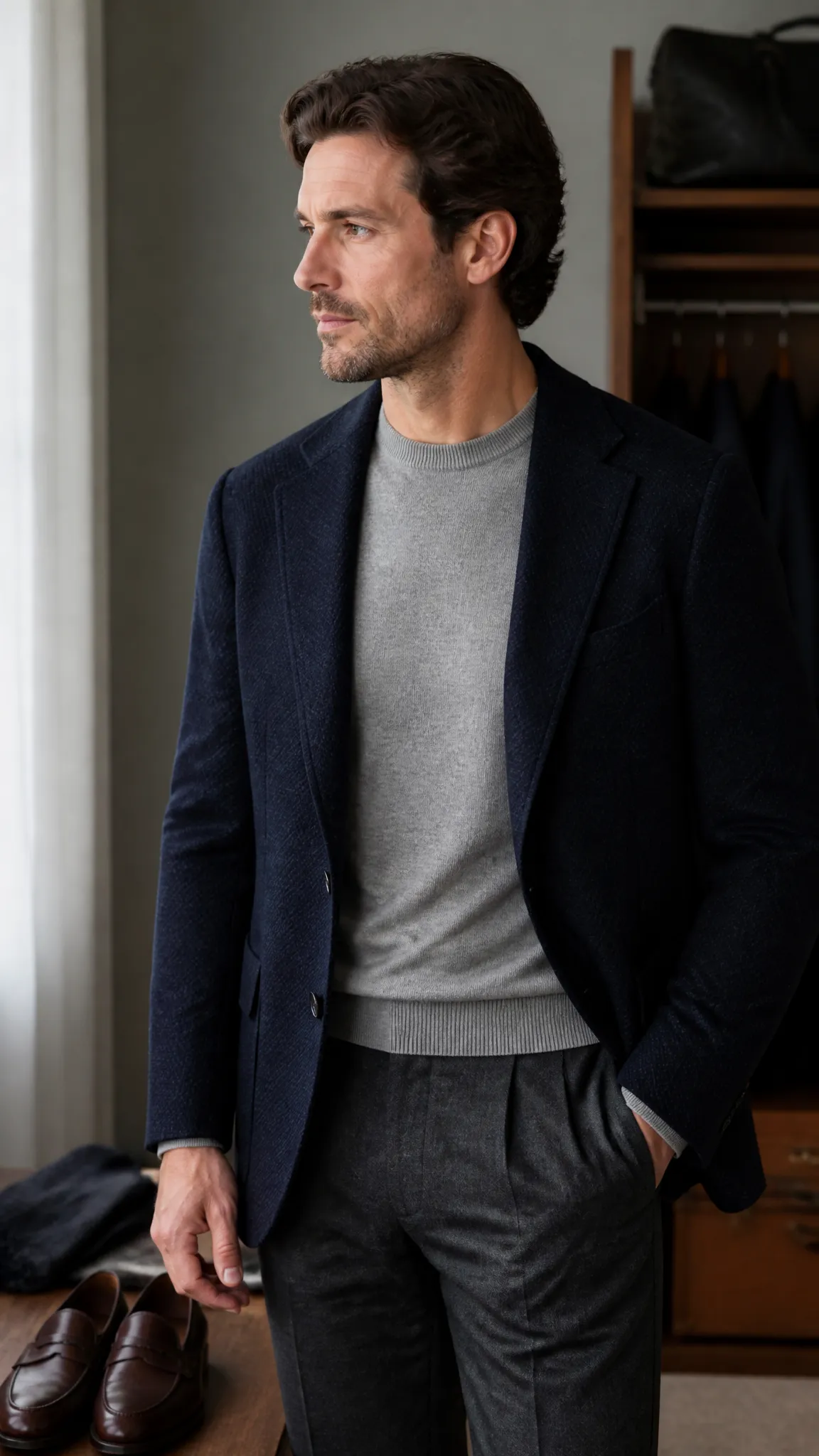
Expensive-looking clothes rarely rely on a single obvious flourish. Their richness usually comes from details that reveal themselves gradually: a herringbone visible at conversational distance, a brushed nap that softens a dark color, or a matte weave that keeps tailoring from looking severe.
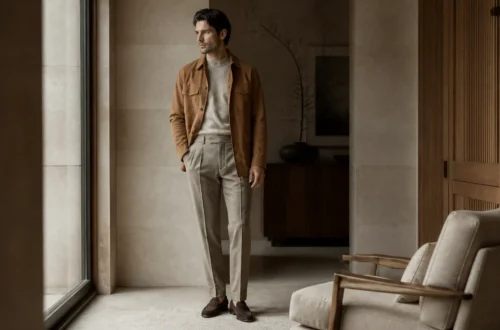
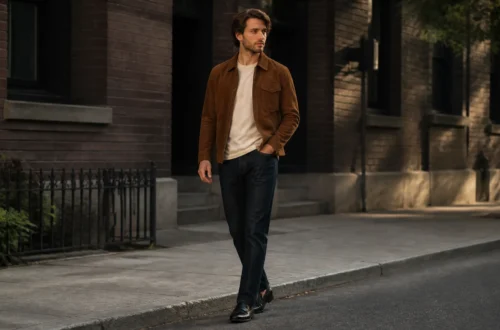
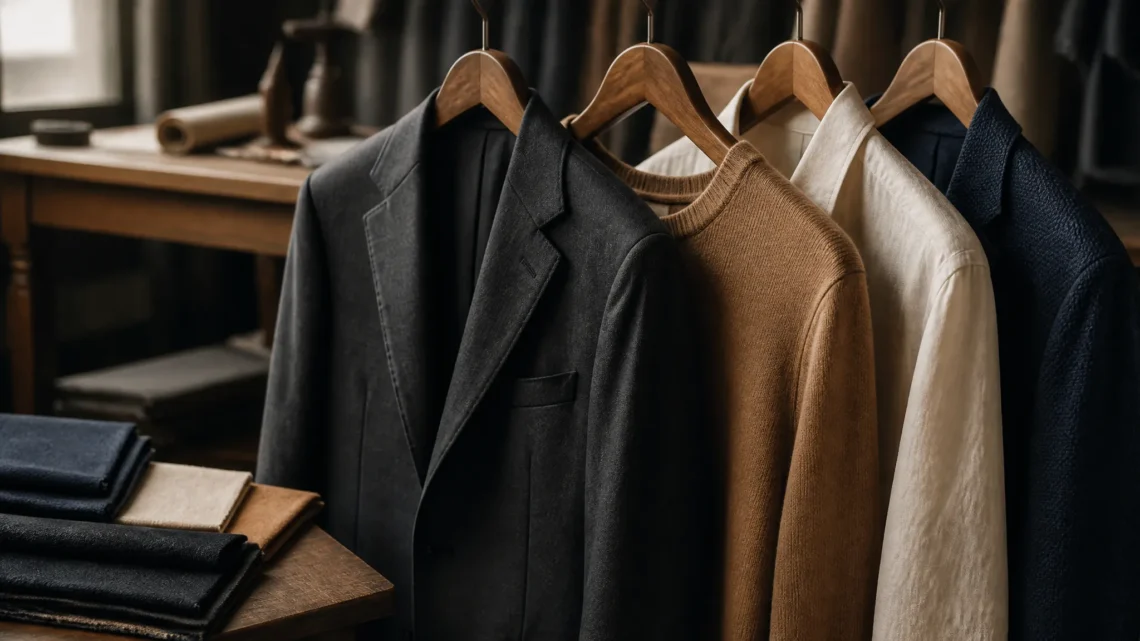
Texture is especially useful with neutral colors. Charcoal flannel appears deeper than flat charcoal cloth, while a navy hopsack blazer feels more dimensional than one made from smooth, shiny material. Brown suede, oatmeal cashmere, and cream denim work similarly because their surfaces create natural tonal variation.
Keep contrast measured when combining textured garments. A brushed sport coat, ribbed sweater, and heavily pebbled shoes can compete for attention. Instead, place one pronounced texture beside quieter materials, such as a gray flannel jacket over a smooth merino knit with dark brown calfskin loafers.
Patterns also look more sophisticated when the scale suits the garment. Fine herringbone complements trousers and overcoats because it reads almost like a solid from a distance. Larger checks make more sense on casual jackets, where their visual weight has room to breathe.
Color influences perceived quality because some dyes and finishes expose flaws more readily. Deep navy, charcoal, chocolate, camel, forest green, and off-white tend to showcase natural fibers well. This is not a universal rule, but restrained colors make it easier to notice drape and texture instead of being distracted by high saturation.
Read Labels Without Letting Them Make the Decision
Fiber content is useful evidence, not a verdict. A garment labeled “100% cashmere” may be loosely knitted and fragile, while a well-made wool-cashmere blend may look better for years. Construction, yarn quality, weave, finishing, and suitability all influence the result.
When comparing luxury fabrics for men’s clothing, use the label to confirm what your hands and eyes already suggest. A practical inspection should cover several points:
- Check whether the material feels substantial enough for the garment.
- Hold it under normal light to spot excessive shine or uneven color.
- Compress a discreet area and see how quickly wrinkles relax.
- Inspect seams for puckering, pulling, and mismatched patterns.
- Confirm that the care requirements suit your actual routine.
Be cautious with vague phrases such as “cashmere touch” or “silky feel.” They describe a sensation, not necessarily a fiber. Likewise, a tiny percentage of a prestigious material does not transform an ordinary blend. Ask what each component contributes: warmth, resilience, softness, breathability, stretch, or luster.
Stretch fibers can improve comfort in slim trousers, but too much elasticity may create a springy, synthetic appearance. A small functional addition is different from a fabric that depends on stretch to compensate for poor fit. Clothes should follow the body without gripping every contour.
Judge the Fabric on the Body, Not Just the Hanger
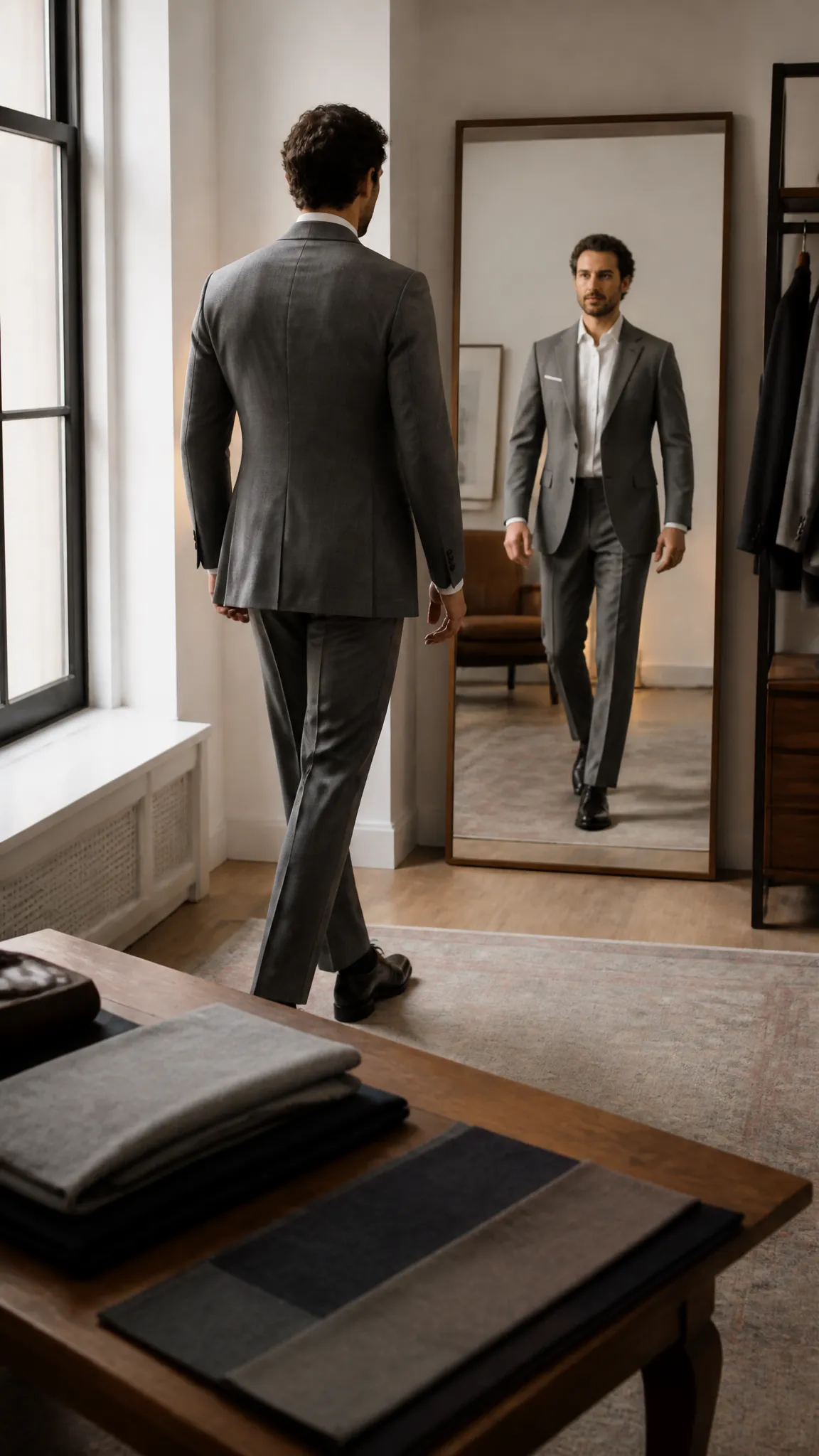
Even exceptional cloth can look ordinary when the silhouette works against it. Fabric and fit are partners: weight supports structure, drape shapes movement, and texture changes how proportions appear.
Try tailored garments in motion. Button the jacket, sit down, raise your arms, and walk. The lapels should remain reasonably flat, the front should not collapse into deep folds, and the back should settle after movement. Heavier cloth often creates cleaner lines, though it still requires competent tailoring.
For trousers, examine the line from waistband to shoe. A fluid wool should fall cleanly over the thigh and maintain its shape below the knee. If the fabric is lightweight, a slightly fuller cut often looks more polished than a tight one because the cloth has room to hang rather than catch.
Knitwear needs a different assessment. The shoulder seam should sit naturally, the neckline should recover after gentle stretching, and the hem should not flare. Fine fibers look particularly luxurious in simple shapes because there is nowhere for poor finishing to hide.
Layering reveals whether fabrics cooperate. A smooth merino sweater slips neatly beneath a worsted jacket, while a bulky cable knit needs a roomier coat. Matching fabric volume to garment volume keeps an outfit intentional instead of making each layer look like it arrived from a different closet.
Balance Beauty, Durability, and Care
A luxurious wardrobe should survive ordinary life. Before buying delicate cloth, consider how often you will wear it, whether it will encounter rain or friction, and how much maintenance you are willing to provide.
Reserve fragile cashmere, silk, and very fine wool for garments that avoid heavy abrasion. Trousers, travel jackets, and daily coats benefit from tighter weaves and more robust fibers. High-twist wool is particularly useful for warm-weather tailoring because it holds a crisp line and resists wrinkles better than many soft, loosely woven alternatives.
Care begins with restraint. Brush wool coats and suits, air them between wears, and avoid cleaning them more often than necessary. Fold knitwear rather than hanging it, since gravity can distort the shoulders. Give shoes, trousers, and jackets time to rest so moisture can dissipate and fibers can recover.
Cost per wear provides a more honest measure than the purchase price alone. A versatile navy wool jacket worn regularly may offer greater value than a delicate statement piece kept under protective custody like a minor royal. The most convincing luxury is material you can actually use.
Frequently Asked Questions
Are natural fibers always more luxurious than synthetic fabrics?
No. Natural fibers often provide nuanced texture, breathability, and graceful aging, but high-quality synthetic fibers can add durability, weather resistance, or shape retention. Judge the entire cloth and its purpose rather than treating fiber origin as the only measure of quality.
What is the best fabric for a man’s first high-quality suit?
Medium-weight worsted wool is usually the most versatile choice. It holds a clean shape, works across many indoor settings, and is generally easier to maintain than linen, velvet, or ultra-fine wool. Navy and charcoal also coordinate easily with common shirts, ties, and shoes.
How can I tell if cashmere is good quality?
Look for a dense, even knit with resilient cuffs and minimal loose fuzz. The fabric should feel soft but not slippery or suspiciously weightless, and it should return toward its original shape after gentle stretching. Some pilling can occur with cashmere, but heavy shedding before purchase is a warning sign.
Can inexpensive clothing look luxurious through fabric choice?
Yes, especially when you prioritize matte finishes, substantial cloth, consistent color, and clean drape. Cotton twill, merino wool, linen, and sturdy wool blends can look refined without belonging to the rarest fiber category. Good fit and careful pressing also have an outsized effect.
Which fabrics should be avoided if I dislike wrinkles?
Pure linen and very lightweight cotton wrinkle readily, though that quality is part of their character. Worsted wool, high-twist wool, cotton twill, and thoughtfully engineered blends generally maintain a cleaner appearance. Always test wrinkle recovery before buying.
Choose Cloth That Performs Beautifully
The best luxury fabrics for men’s clothing combine appearance with purpose. Look for material that drapes correctly, shows depth under ordinary light, feels appropriate for the garment, and can withstand the way you plan to wear it.
On your next shopping trip, ignore the label for the first few moments. Study the surface, compress the cloth, watch it move, and try the garment with the layers you normally wear. Those simple checks will tell you whether the fabric merely sounds luxurious or genuinely looks the part.