When a suit jacket feels too formal but a T-shirt looks underdressed, getting ready for work can become surprisingly difficult. Finding the right balance in business casual without blazer men can wear often comes down to choosing structured shirts, polished shoes, and well-fitting trousers.
These 10 outfits give you practical combinations for regular office days, client lunches, presentations, and after-work plans. Each one includes specific pieces and simple adjustments, so you can dress appropriately without relying on a blazer.
1. Oxford Shirt and Chinos
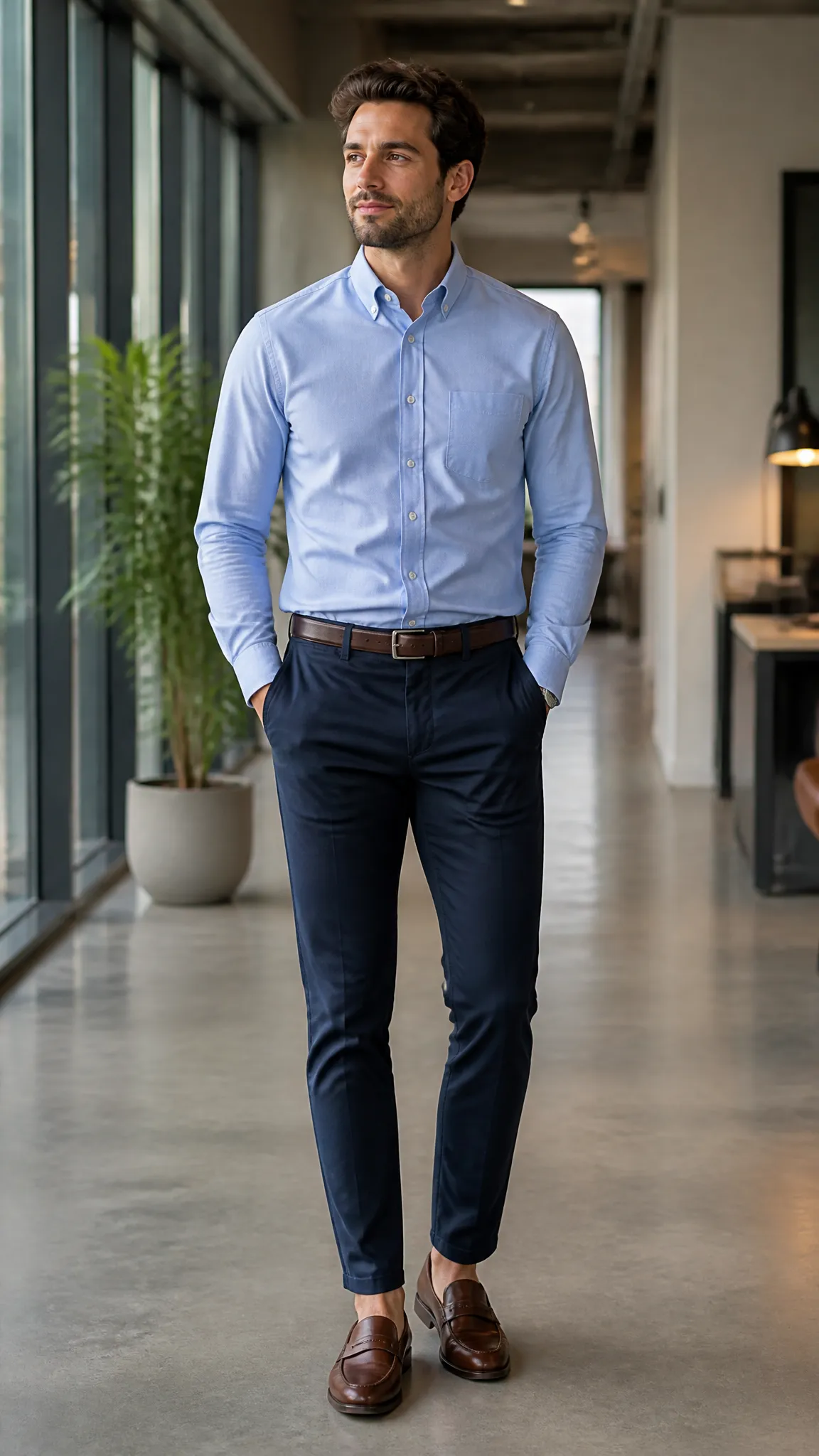
A light blue Oxford cloth button-down with chinos is one of the most dependable starting points for a blazer-free office wardrobe. The shirt has more structure than a casual poplin button-down, while chinos feel approachable without looking sloppy.
Outfit Pieces
- Light blue or white Oxford cloth button-down
- Slim-straight chinos in navy, khaki, or olive
- Brown leather loafers or derbies
- Matching leather belt and simple watch
How to Style It
Tuck in the shirt and leave the collar open for an everyday office look. Choose chinos that sit cleanly at the waist and taper gently without clinging to the legs. A small break at the shoe keeps the outfit neat, and rolling the sleeves once or twice can make it feel more relaxed late in the day.
2. Fine-Gauge Sweater Over a Collared Shirt
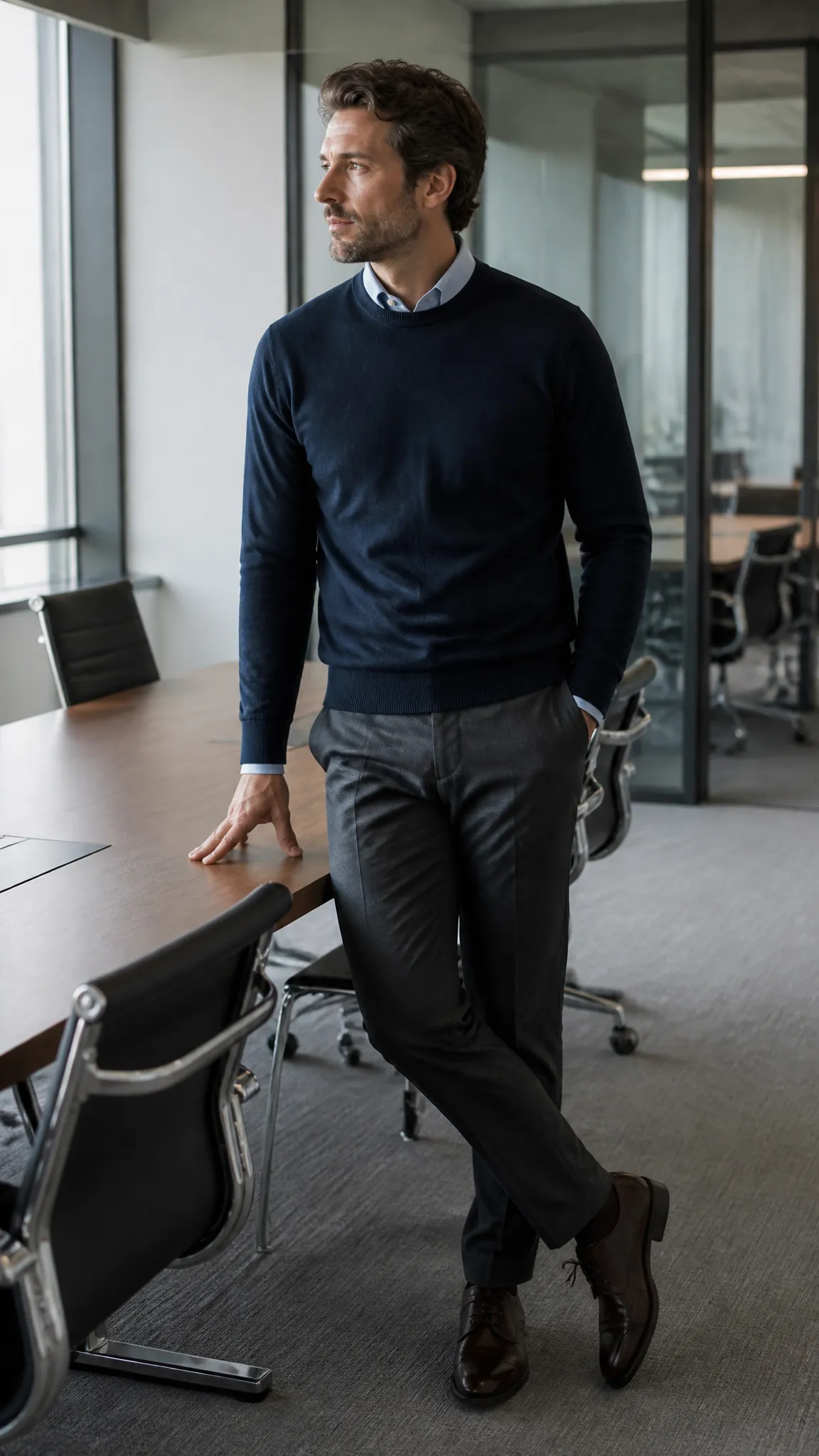
Layering a lightweight crewneck sweater over a collared shirt adds visual structure without the stiffness of tailoring. It works especially well in air-conditioned offices and during transitional weather when you need warmth that’s easy to remove.
Outfit Pieces
- White, pale blue, or subtly striped dress shirt
- Merino wool or cotton crewneck sweater
- Charcoal or medium-gray trousers
- Black or dark brown leather derbies
How to Style It
Keep the sweater fine enough that the shirt doesn’t bunch underneath it. Let the collar sit naturally rather than pulling it over the neckline, and tuck the shirt tails fully into your trousers. Navy, charcoal, burgundy, and forest green sweaters offer contrast while remaining office appropriate.
3. Knit Polo and Tailored Trousers
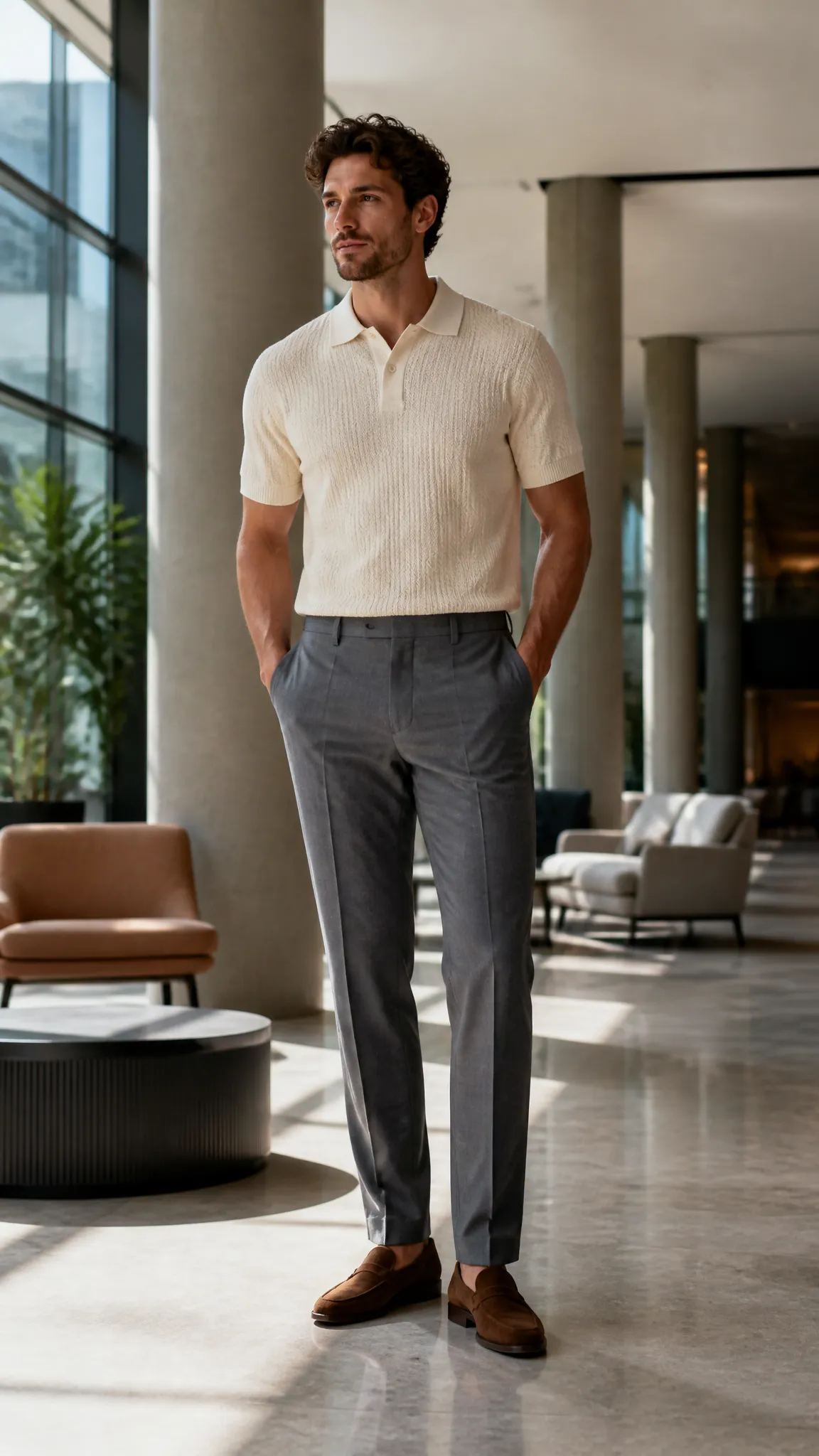
A knit polo bridges the gap between a conventional dress shirt and a casual short-sleeve polo. Its soft collar and textured fabric look intentional with tailored trousers, making this a useful option for warm offices, business lunches, and polished summer dressing.
Outfit Pieces
- Long- or short-sleeve knit polo
- Flat-front wool-blend trousers
- Suede loafers or leather penny loafers
- Minimal leather belt or side-adjuster trousers
How to Style It
Choose a polo with a firm collar that holds its shape and a hem that can be tucked in smoothly. Cream, navy, chocolate, and muted green pair easily with gray, tan, or charcoal pants. Keep the fit close but not tight, since stretched buttons and clinging fabric quickly undermine the outfit’s polished effect.
4. Cardigan, Dress Shirt, and Wool Pants
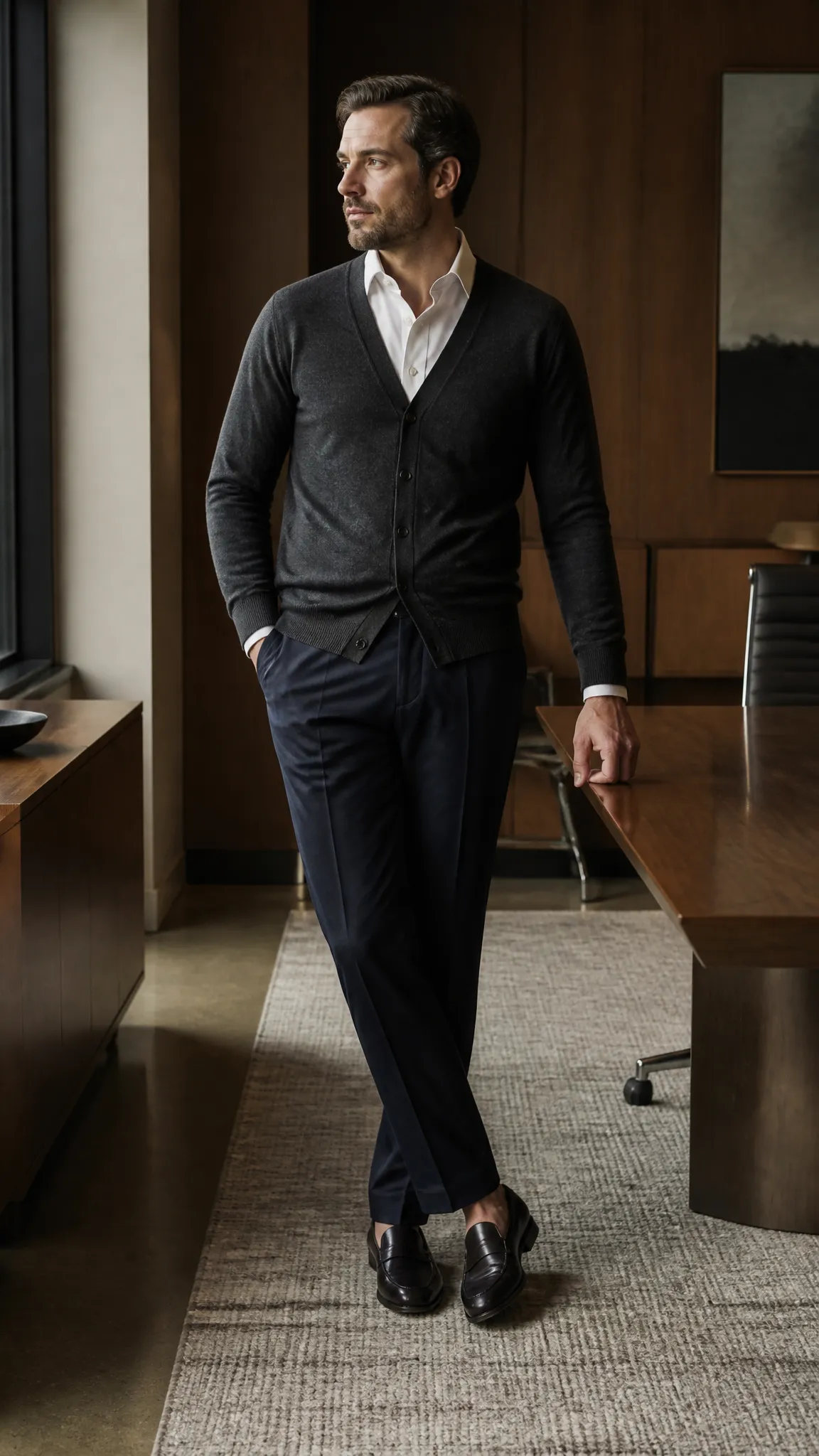
A cardigan provides some of the framing effect of a jacket while remaining softer and more comfortable. The button front creates a strong vertical line, and the dress shirt underneath keeps the combination firmly on the professional side of business casual.
Outfit Pieces
- Crisp cotton dress shirt
- Fine-gauge V-neck cardigan
- Gray or navy wool trousers
- Leather loafers, derbies, or monk straps
How to Style It
Wear the cardigan mostly buttoned, leaving the bottom button open so the hem sits naturally. Its shoulder seams should align with your shoulders, and the sleeves shouldn’t extend over your hands. This is a practical formula for business casual without blazer men can adapt to conservative workplaces by using restrained colors and smooth, minimally textured fabrics.
5. Dress Shirt and Pleated Trousers
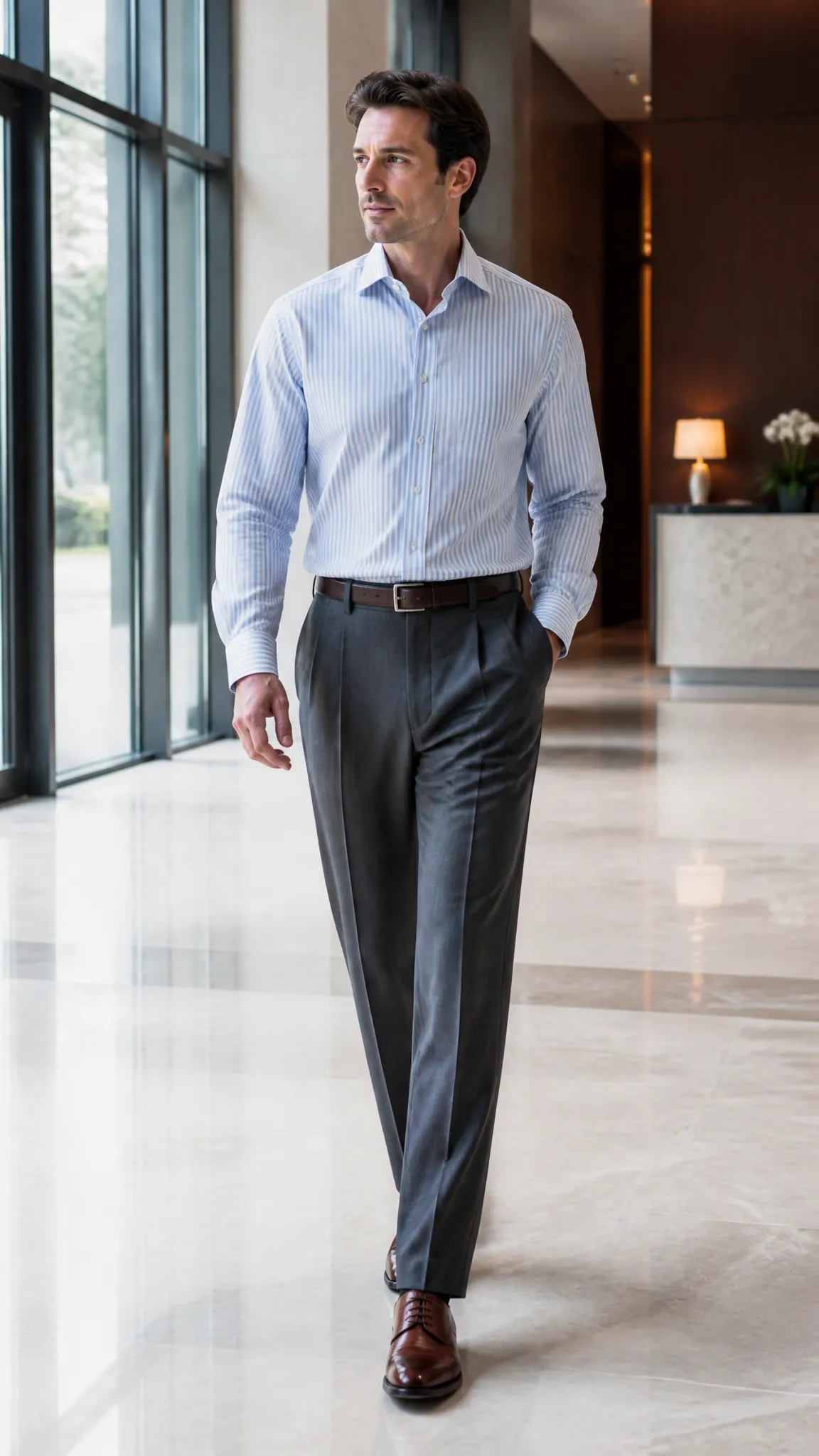
A dress shirt and trousers may sound basic, but pleats, proportion, and fabric give the pairing more character. Higher-rise pants with a fuller, controlled leg can look particularly refined because they create a clean line from the tucked shirt to the shoe.
Outfit Pieces
- Solid or fine-striped dress shirt
- Single- or double-pleated tailored trousers
- Leather derbies or sleek loafers
- Understated watch and coordinating belt
How to Style It
Choose pleats that lie flat when you stand and trousers with enough room through the seat and thigh. A fitted but not skinny shirt balances the fuller leg. For greater formality, use white or pale blue with charcoal pants; for a softer effect, pair an ecru shirt with brown or olive trousers.
6. Quarter-Zip Sweater and Chinos
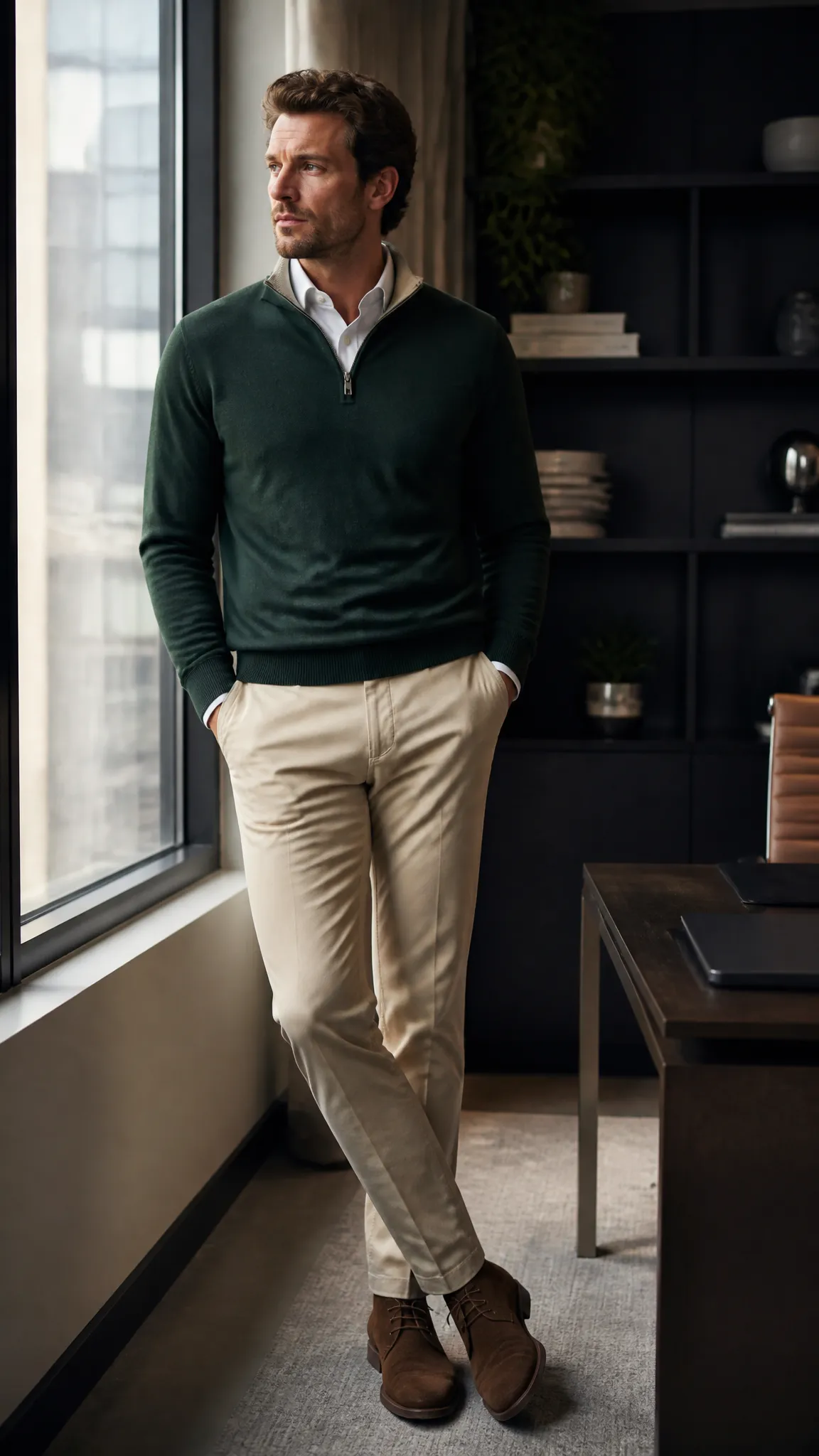
A quarter-zip can work in a business-casual setting when it’s made from fine knit fabric and styled with polished pieces. Compared with a sporty fleece version, a merino or smooth cotton sweater creates a cleaner silhouette and layers neatly over a collared shirt.
Outfit Pieces
- Fine-gauge quarter-zip sweater
- Solid Oxford or dress shirt
- Tailored chinos in stone, navy, or charcoal
- Leather derbies or refined chukka boots
How to Style It
Keep the zipper open far enough to reveal the shirt collar without creating a deep V. Avoid visible athletic details, contrast piping, and oversized logos. Dark neutrals look more professional, while suede chukkas can relax the outfit slightly for workplaces where traditional dress shoes aren’t necessary.
7. Chambray Shirt and Dark Trousers
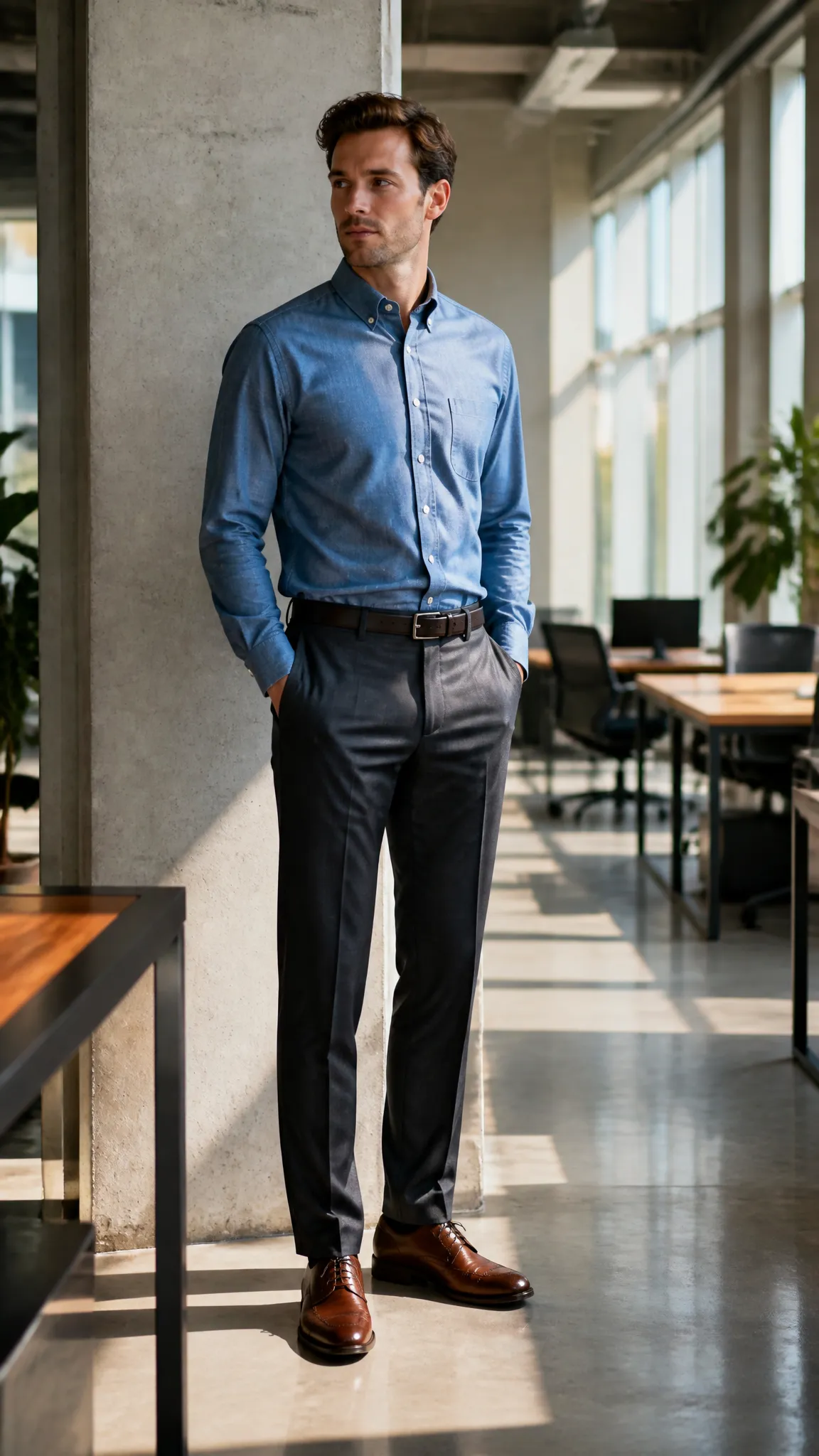
A smooth chambray shirt brings subtle workwear texture to the office without the weight or rugged fading of a denim shirt. Dark tailored trousers sharpen the contrast, so the outfit reads as considered rather than weekend casual.
Outfit Pieces
- Mid-blue chambray button-down
- Charcoal, navy, or dark brown trousers
- Brown leather brogues or loafers
- Dark brown belt with a simple buckle
How to Style It
Select chambray with a neat collar, tonal stitching, and no distressed patches or Western-style details. Tuck it in, press the collar and placket, and pair it with trousers that have a defined crease. A brown shoe complements the shirt’s softer texture while maintaining a smart-casual office look.
8. Turtleneck and Tailored Pants
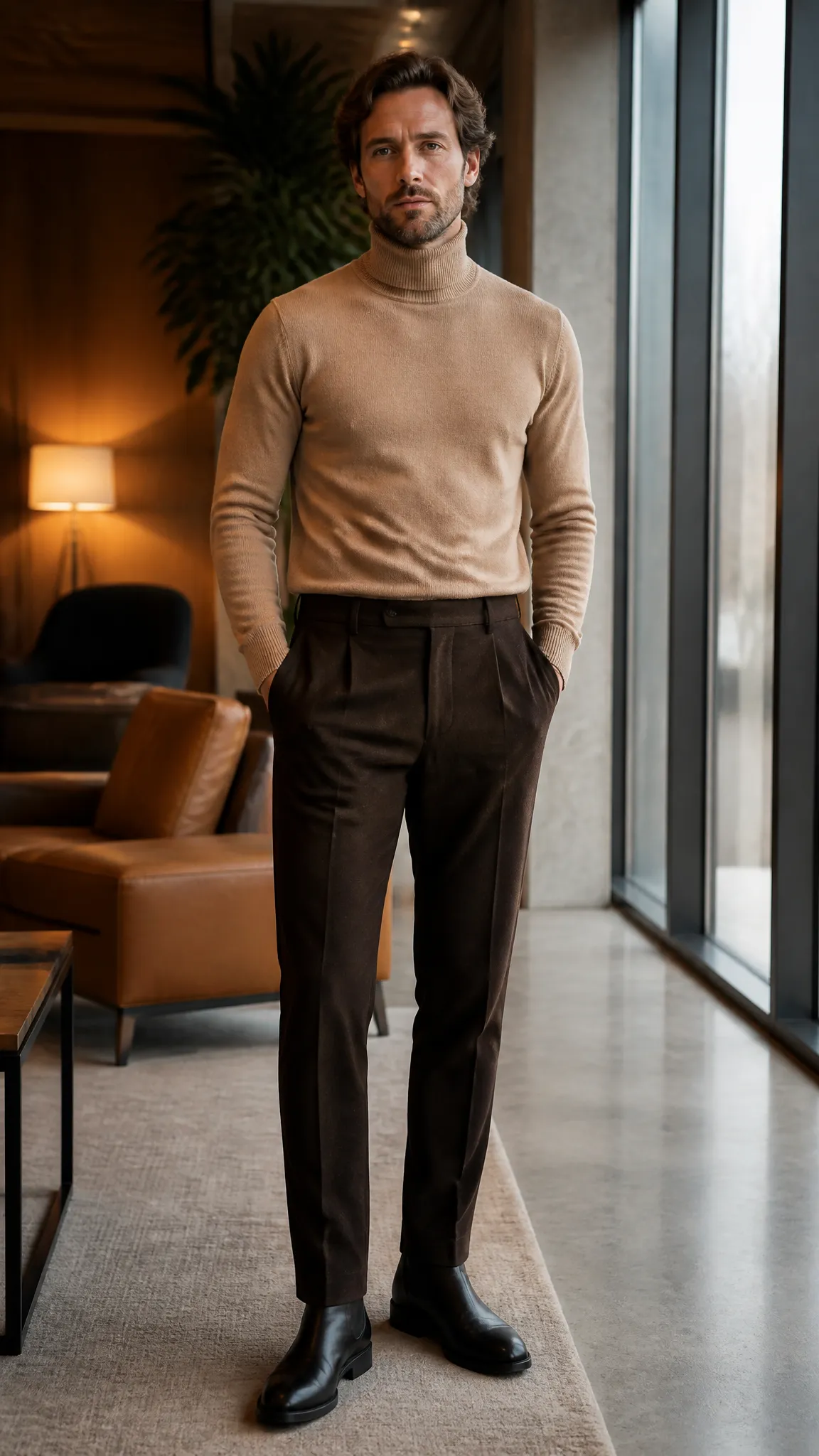
A fine-knit turtleneck creates a streamlined outfit that doesn’t need a jacket or visible collar. It’s best suited to creative, modern, or less conservative offices, especially during fall and winter.
Outfit Pieces
- Fine-gauge merino or cotton turtleneck
- Tailored wool or wool-blend pants
- Leather Chelsea boots or loafers
- Minimal watch with a leather or metal band
How to Style It
Use a lightweight knit that follows the body without stretching across the chest or waist. Black with charcoal can look severe, so add tonal variation through navy, camel, taupe, or dark green. Tuck the sweater into higher-rise trousers for a defined waist, or leave it untucked only if the hem is short and clean.
9. Dressy Overshirt and Tonal Separates
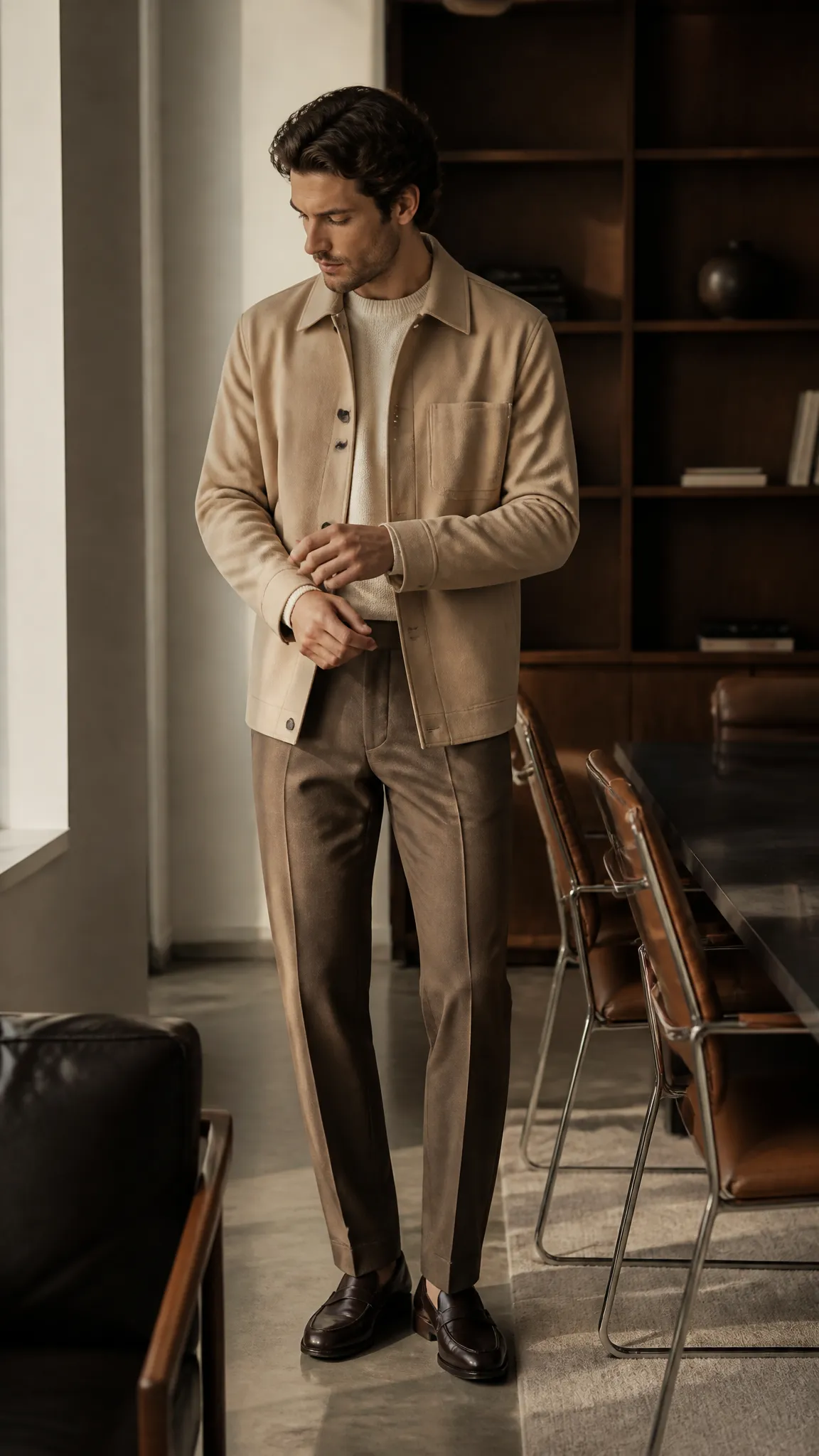
A structured overshirt is a relaxed substitute for a blazer in offices that allow contemporary business casual. A sharp collar, clean front, and substantial fabric give it enough presence to function as a lightweight third layer.
Outfit Pieces
- Wool-blend, twill, or brushed cotton overshirt
- Fine-knit crewneck or tucked polo
- Trousers in a related neutral tone
- Leather loafers or minimalist leather sneakers
How to Style It
Keep the palette tonal, such as navy over blue and charcoal, or tan over cream and brown. The overshirt should fit close to the shoulders and end around the hips, not hang like a casual jacket. For a stricter dress code, choose loafers and pressed trousers instead of sneakers.
10. Patterned Shirt and Solid Dress Pants
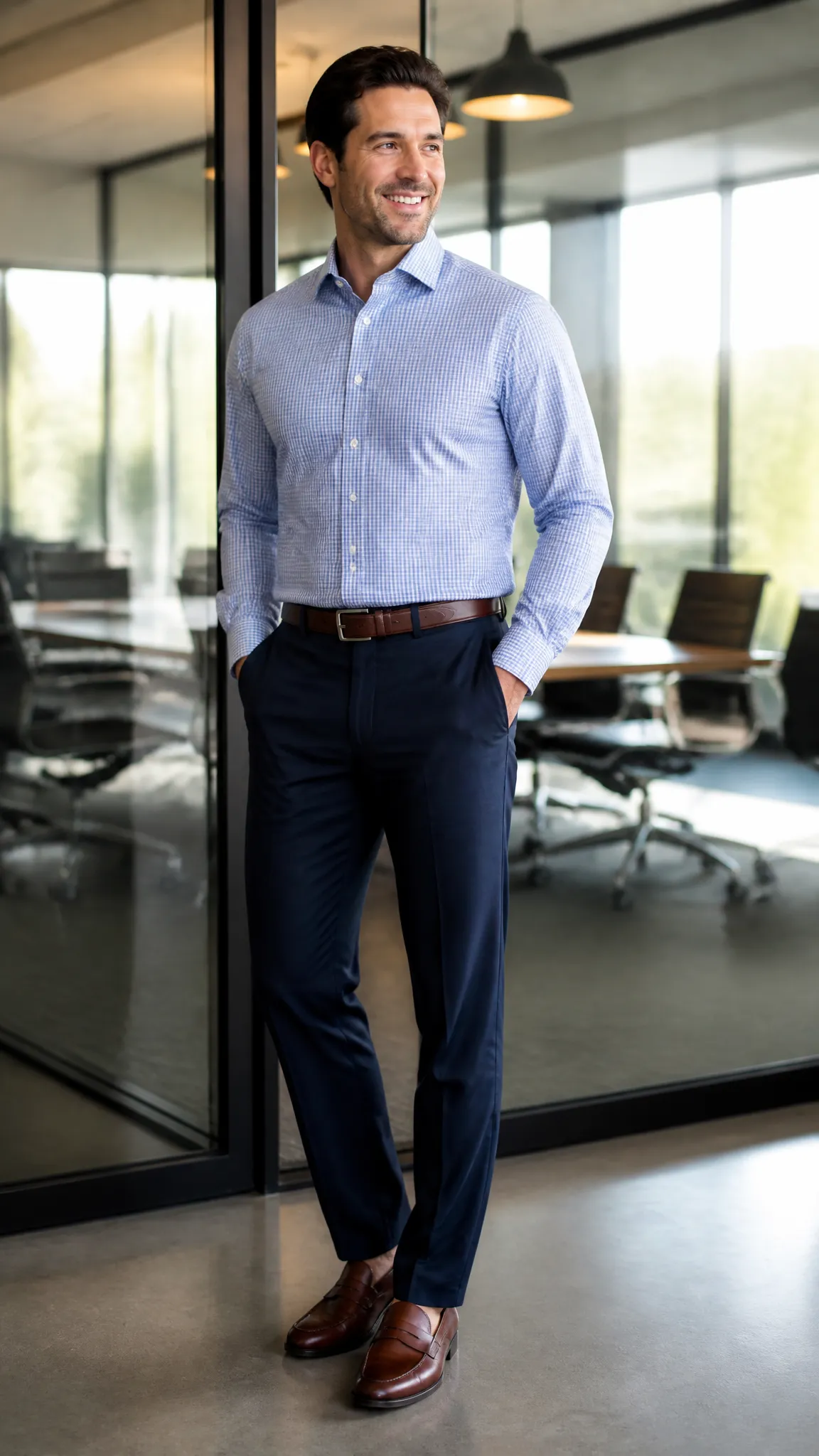
A restrained patterned shirt can make a simple shirt-and-trouser combination feel complete. Fine stripes, microchecks, and small geometric repeats provide interest without competing with the formality of solid dress pants.
Outfit Pieces
- Fine-striped or microcheck button-down shirt
- Solid navy, charcoal, or brown dress pants
- Leather derbies or penny loafers
- Simple belt in the same color family as the shoes
How to Style It
Keep the pattern small and the colors limited to two or three related shades. If the shirt is visually active, everything else should remain quiet, including socks and accessories. This approach to business casual without blazer men can wear is particularly useful when you want personality without sacrificing a professional appearance.
How to Make Blazer-Free Business Casual Look Intentional
Without a jacket to create structure, fit and fabric become more noticeable. Shirt shoulder seams should sit at the edge of your shoulders, waistbands should remain comfortable without a belt doing all the work, and trouser hems should avoid pooling over your shoes. Wrinkles, stretched collars, and worn footwear also stand out more in a simple outfit.
Build around a restrained palette of navy, gray, brown, white, pale blue, and olive, then introduce texture through Oxford cloth, merino wool, suede, or subtle twill. Your leathers don’t have to match exactly, but a black belt with tan shoes can make an otherwise cohesive outfit feel disconnected.
Finally, judge the outfit against your workplace rather than a universal rule. A knit polo and loafers may suit a client-facing summer office, while an overshirt and leather sneakers may belong in a creative setting. When you’re unsure, choose a collared shirt, tailored trousers, and leather shoes, then relax one element after you understand the dress code.
Frequently Asked Questions
Can you dress business casual without wearing a blazer?
Yes. A collared shirt or refined knit, tailored trousers or neat chinos, and polished shoes can provide enough structure for many business-casual workplaces. Fit, fabric quality, and grooming matter more when you remove the jacket.
Can men wear jeans for business casual?
That depends on the employer. If jeans are allowed, choose a dark, even wash with a straight or gently tapered fit and no fading, distressing, or torn details. Pair them with a tucked Oxford shirt and leather shoes to keep the look professional.
Are sneakers acceptable with these outfits?
Minimal leather sneakers may work in relaxed or creative offices. Choose a clean pair with a simple shape and little visible branding. Traditional leather loafers, derbies, or brogues are safer for client meetings and conservative environments.
Should a business-casual shirt always be tucked in?
Dress shirts and longer Oxford shirts generally look best tucked into trousers. An untucked shirt can work if it has a shorter, gently curved hem designed for that purpose, but it should still cover the waistband without extending far below the hips.
What colors are easiest to combine?
Start with navy, charcoal, medium gray, khaki, white, pale blue, and brown. These colors mix easily and let you repeat shoes or trousers across several outfits. Add muted burgundy, forest green, or rust once the core combinations are covered.