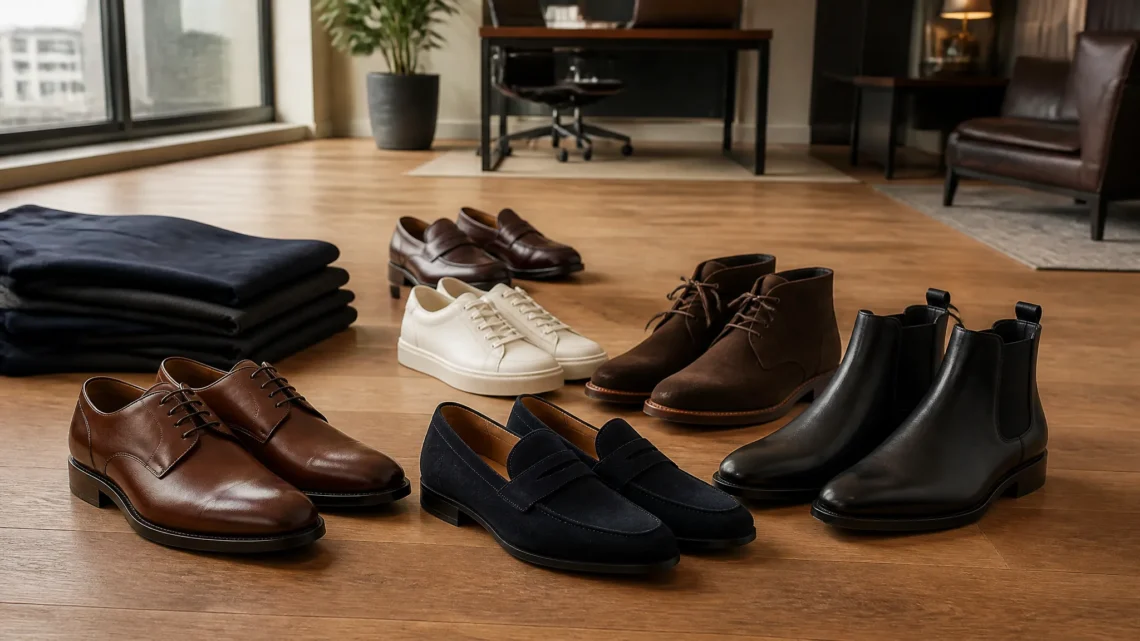
Office shoes can look sharp at 8 a.m. and feel unforgiving by lunch. If you’re comparing the best office shoes men can wear comfortably, the right choice depends on your dress code, commute, foot shape, and time spent standing.
This list covers nine versatile shoe styles, with practical guidance on cushioning, fit, materials, and office-appropriate outfits. Use it to find a pair that feels good without looking out of place at work.
1. Derby Shoes With Cushioned Insoles
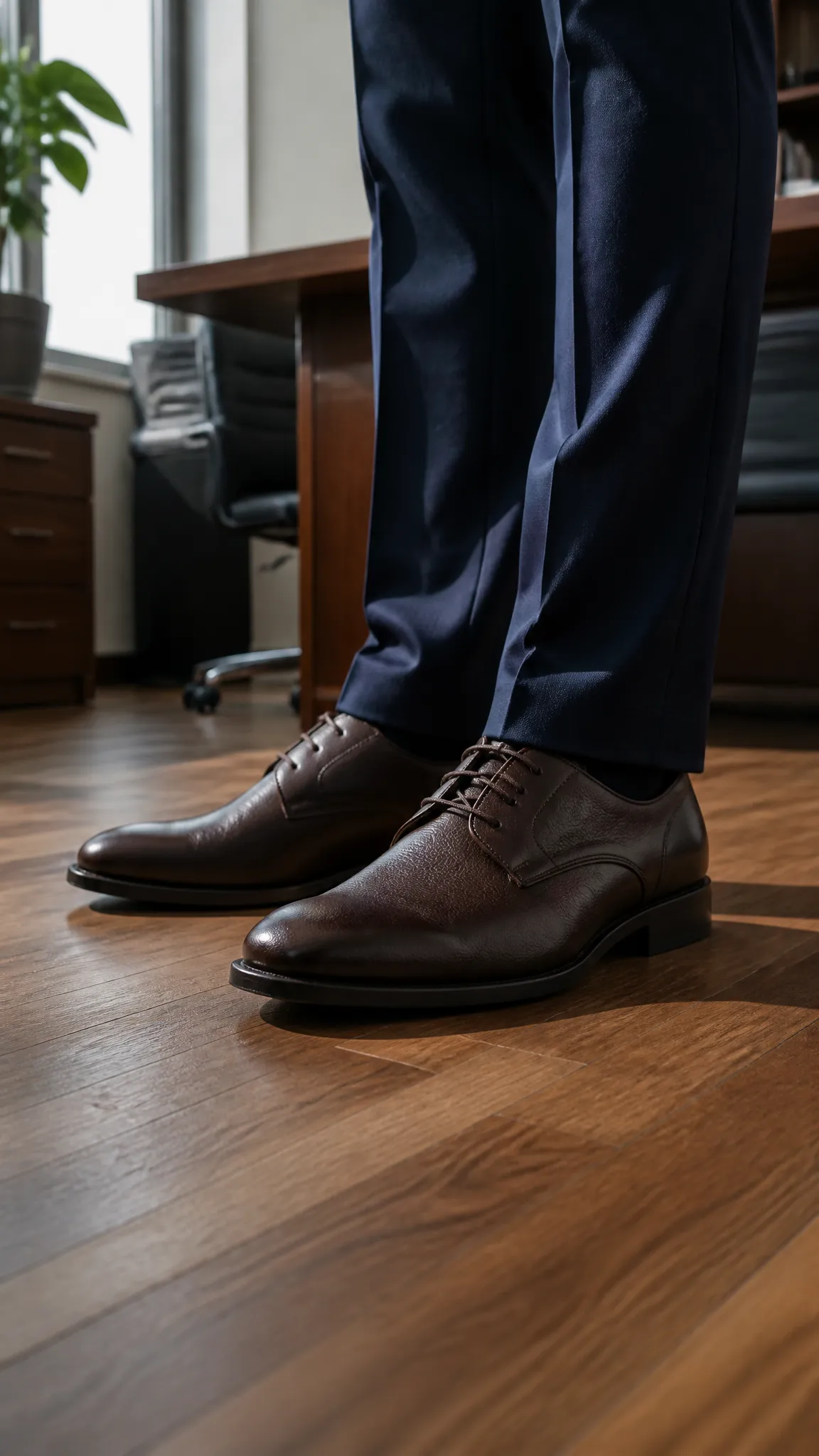
Derbies are among the best office shoes men can choose when they want traditional styling without the restrictive fit of some formal shoes. Their open-lacing construction allows the upper to spread more easily, which can accommodate higher insteps and feet that swell during long days.
- Comfort: Look for a removable, contoured insole, light arch support, and enough depth to prevent pressure across the top of your foot.
- Fit: Your heel should remain stable while your toes have room to move; wide-width options are useful if the sides feel pinched.
- Office style: Smooth black leather works with suits, while dark brown or burgundy pairs naturally with chinos and tailored trousers.
Choose a model with a flexible rubber or leather-and-rubber sole if your day includes walking between buildings. A clean toe shape keeps the added cushioning from making the shoe look bulky.
2. Leather Penny Loafers
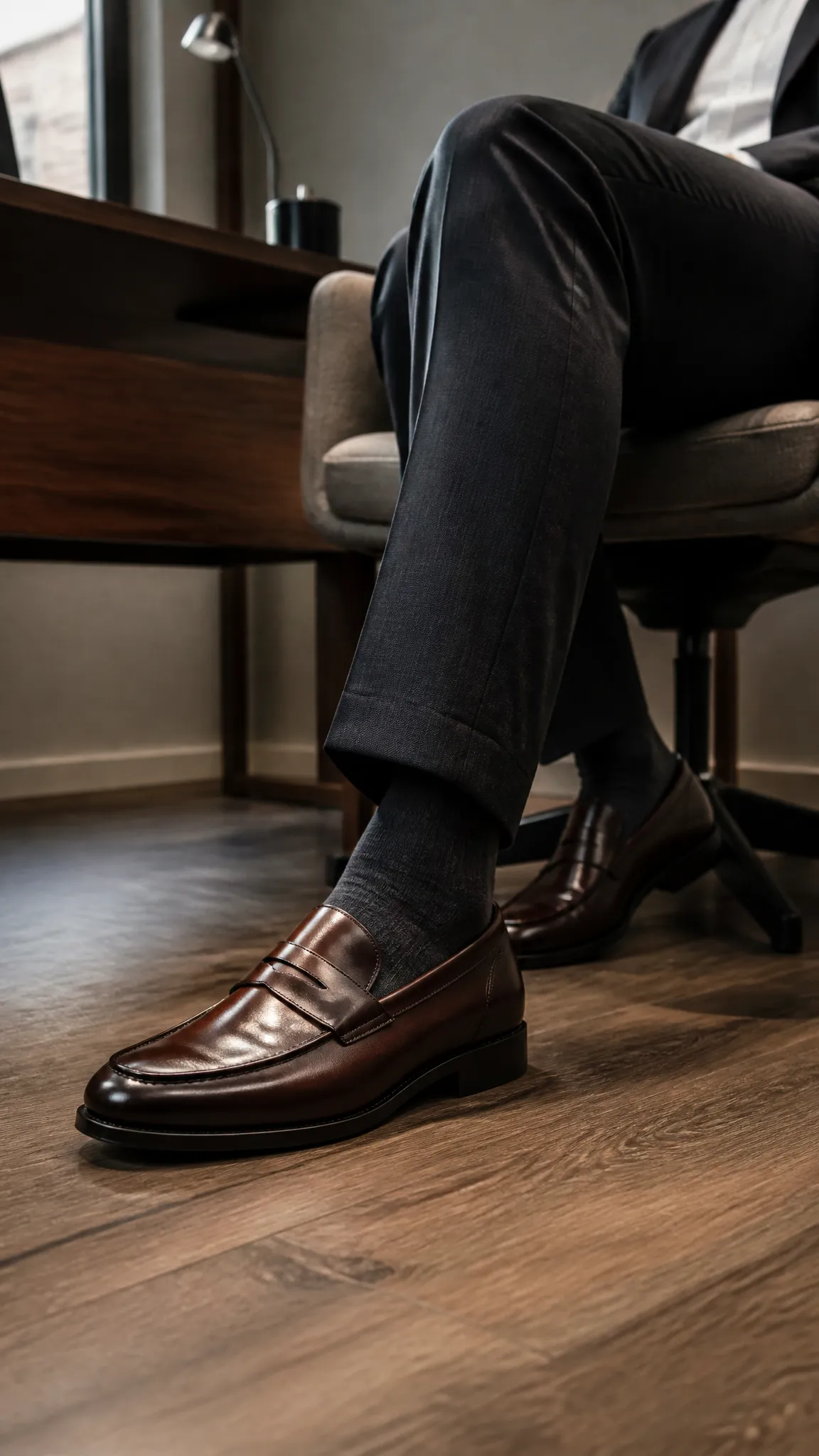
Penny loafers offer a polished appearance with no laces to adjust, making them useful for business-casual offices and frequent travelers. Soft leather and a flexible sole can make a well-fitted pair comfortable, though the slip-on design requires a particularly secure heel fit.
- Comfort: Seek a padded footbed, a smooth lining, and flexible leather that bends near the ball of the foot rather than digging into it.
- Fit: Expect a close fit at first, but avoid pairs that crush your toes or cause your heel to lift significantly with each step.
- Office style: Wear dark brown loafers with navy trousers, or choose black for a cleaner match with charcoal and gray tailoring.
Try loafers with the same sock thickness you plan to wear at work. Invisible socks may suit casual outfits, but lightweight dress socks usually improve moisture control and reduce friction during a full day.
3. Dress Sneakers in Full-Grain Leather
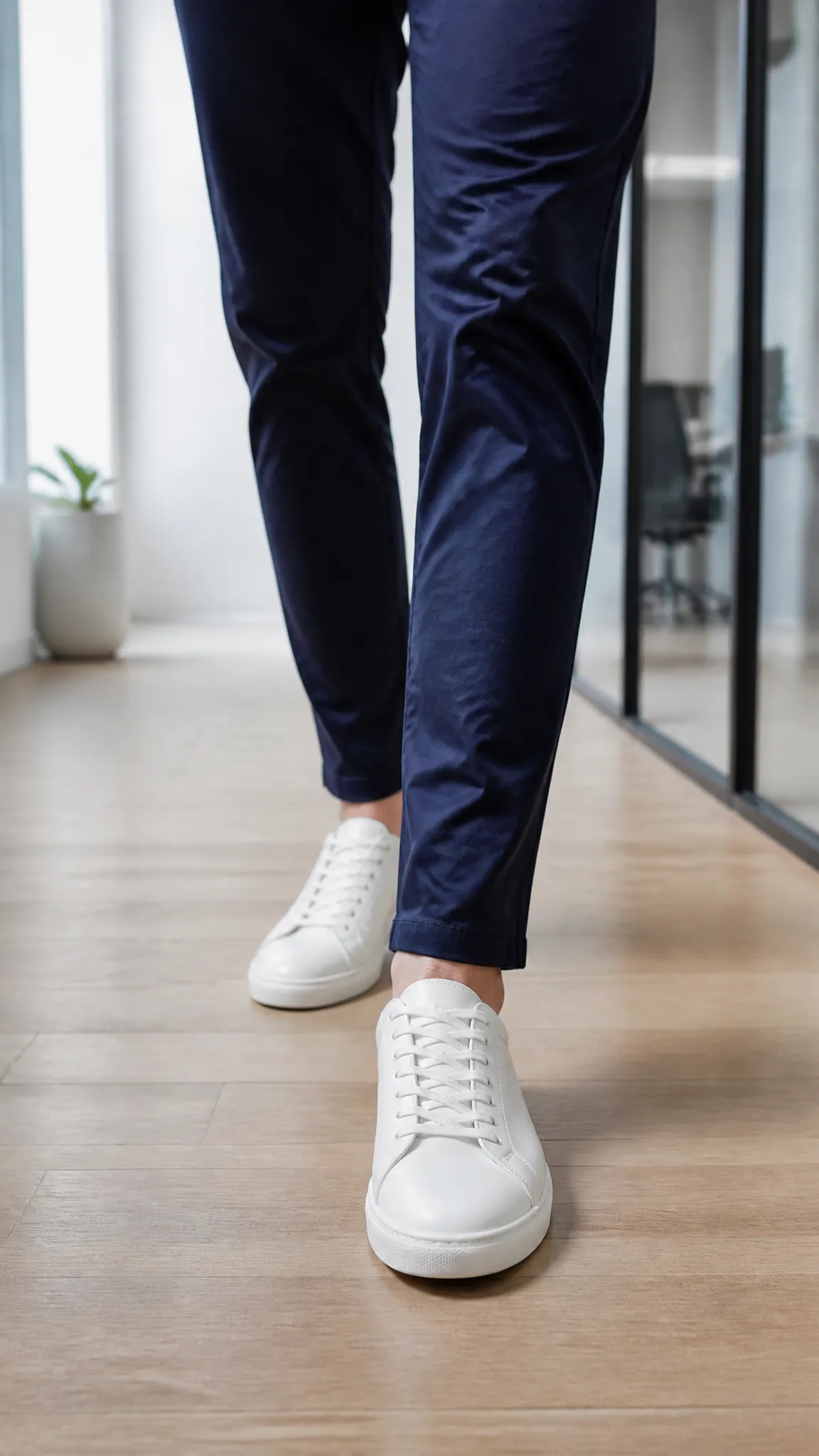
Minimal leather sneakers provide familiar underfoot comfort in offices where the dress code permits refined casual footwear. The most workplace-friendly versions use a low profile, restrained stitching, and tonal soles rather than athletic mesh, oversized cushioning, or bright color blocking.
- Comfort: Prioritize a cushioned removable insole, breathable lining, flexible forefoot, and a supportive heel counter.
- Fit: Leave roughly a thumb’s width ahead of your longest toe, and check that the widest part of your foot aligns with the shoe.
- Office style: Pair clean white, brown, black, or navy leather sneakers with chinos, knit polos, unstructured jackets, and tapered trousers.
Reserve this option for casual and business-casual settings unless your workplace explicitly accepts sneakers with formal clothing. Keeping the leather conditioned and the soles clean makes a significant difference to how professional they appear.
4. Hybrid Oxford Shoes
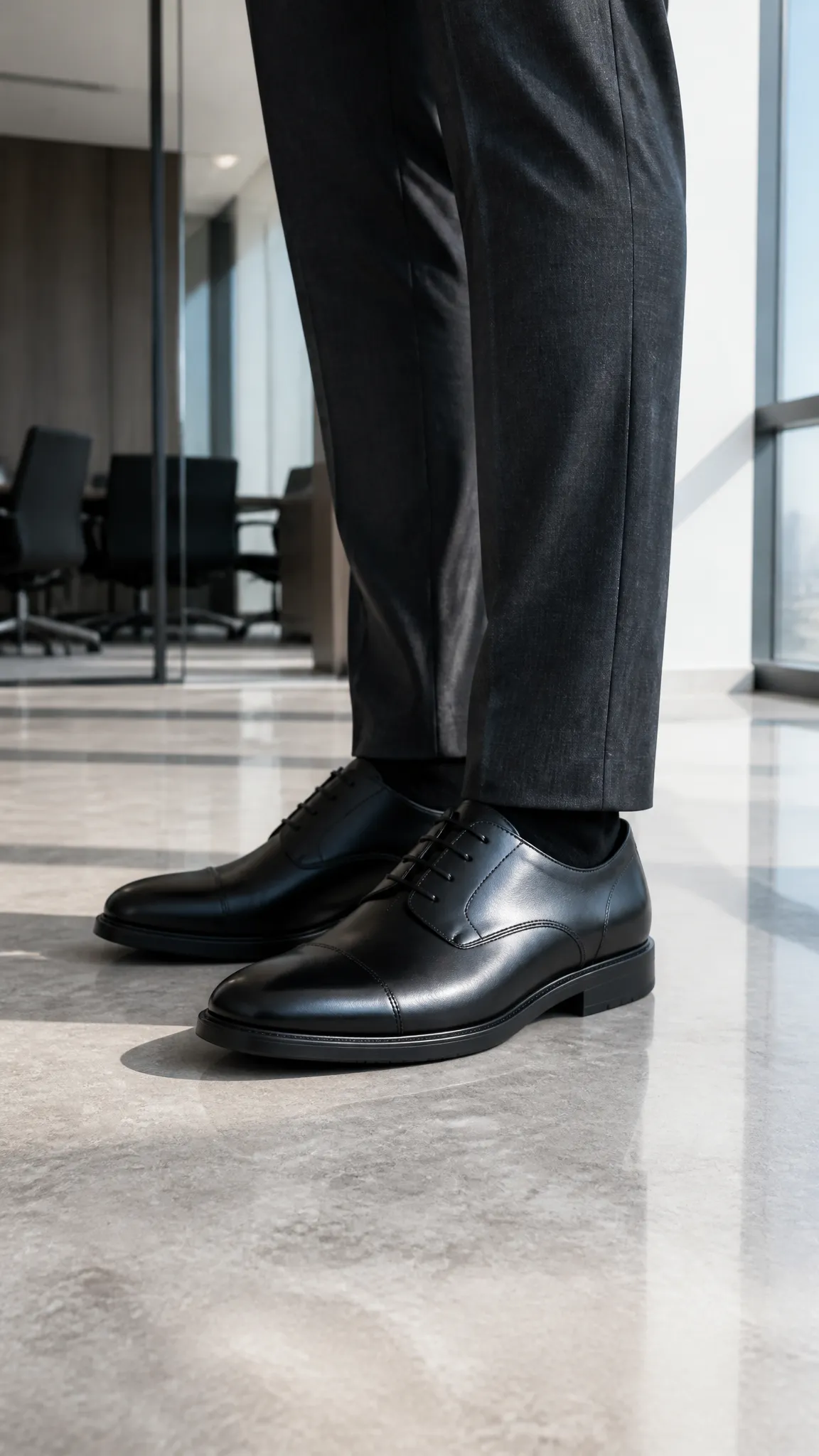
A hybrid Oxford combines a closed-lacing dress upper with a lighter, cushioned outsole. It can suit client-facing work when a conventional running-shoe silhouette feels too casual, although the sportier sole generally makes it less formal than a traditional leather-soled Oxford.
- Comfort: Choose shock-absorbing foam, a padded collar, and a sole that flexes at the forefoot without twisting too easily through the midfoot.
- Fit: Closed lacing offers less adjustability than a Derby, so avoid pressure on the instep and confirm that the eyelet tabs don’t spread excessively.
- Office style: Select a dark upper and a low-contrast outsole for suits, dress trousers, and offices with conservative expectations.
If you stand for presentations or commute on foot, the lighter sole can reduce the harshness associated with rigid dress shoes. For formal events, however, a classic Oxford with discreet internal cushioning remains the more traditional choice.
5. Plain-Toe Chukka Boots
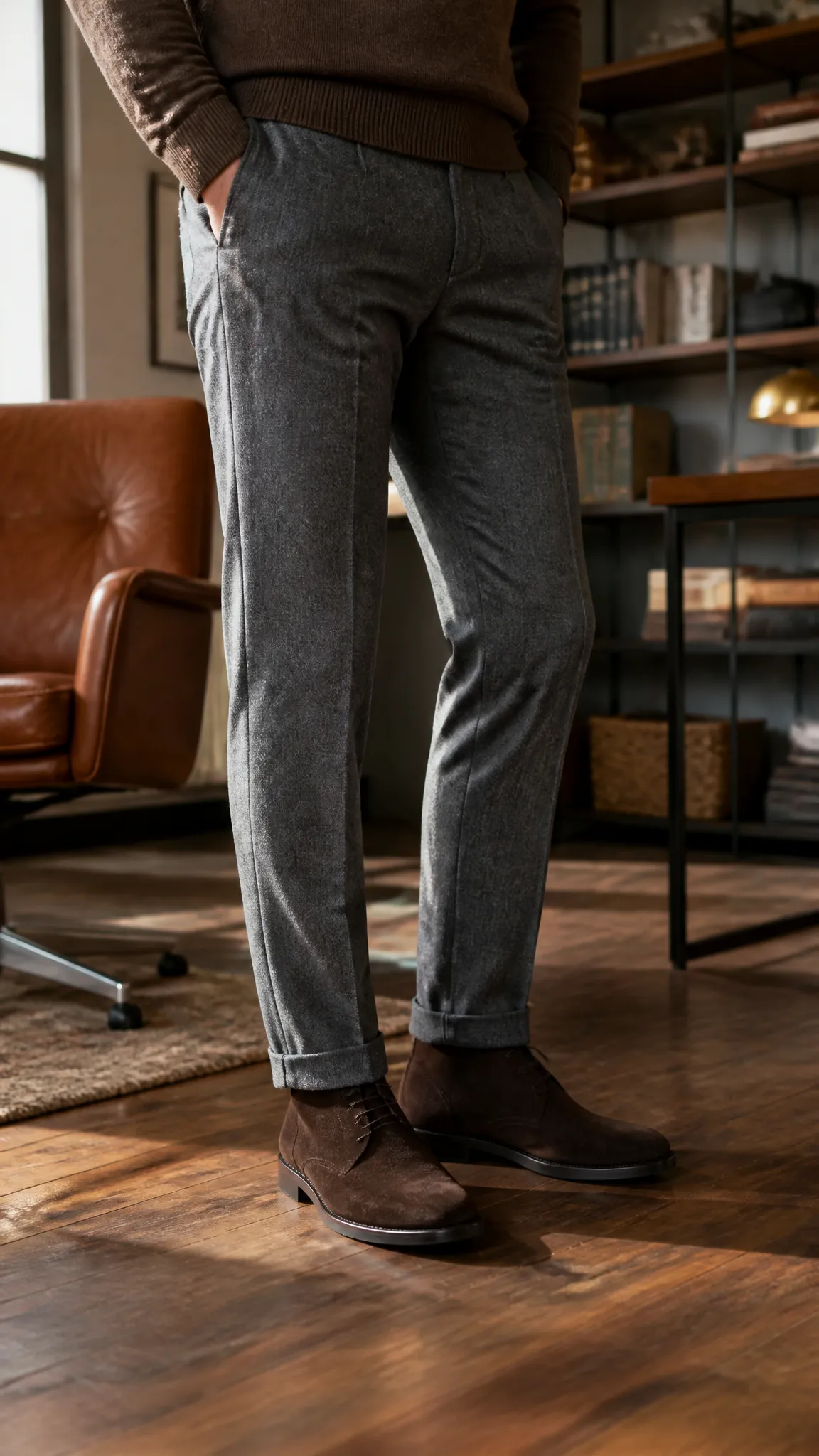
Chukka boots cover the ankle without the weight and visual bulk of many work boots. A plain-toe leather or suede pair works especially well in business-casual offices, and the two- or three-eyelet design makes it easy to adjust the fit across the instep.
- Comfort: Favor supple uppers, a cushioned footbed, soft ankle edges, and a grippy rubber sole for wet sidewalks and hard floors.
- Fit: Check for heel security and ankle clearance; the collar should support your foot without rubbing the ankle bone.
- Office style: Combine dark brown leather with wool trousers or chinos, while taupe or chocolate suede complements less formal fall outfits.
Chukkas look most polished when the shaft sits neatly beneath a tapered trouser opening. Avoid heavily lugged soles if your goal is a streamlined office shoe rather than an outdoors-oriented boot.
6. Soft Leather Monk-Strap Shoes
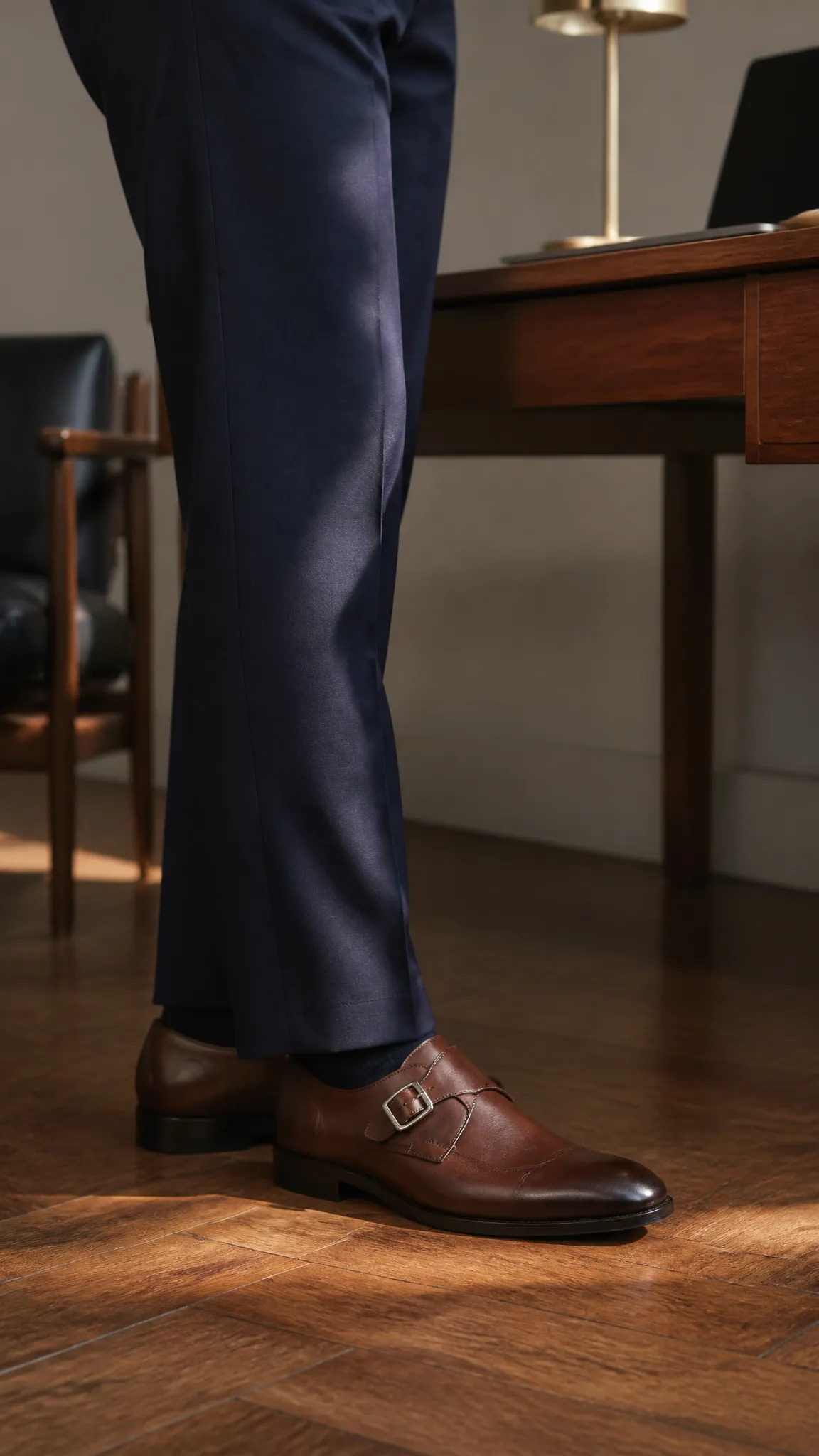
Monk straps replace laces with one or two buckled straps, giving office outfits a distinctive but established dress-shoe shape. The opening can be convenient, while a supple upper and padded insole help prevent the stiff feel sometimes associated with decorative formal footwear.
- Comfort: Look for smooth internal seams, flexible leather, modest cushioning, and buckles that sit away from sensitive pressure points.
- Fit: Use the strap adjustment to secure the midfoot without pulling the leather tightly enough to wrinkle or press into the instep.
- Office style: Single monks appear more restrained with suits, while double monks pair easily with tailored separates and smart business-casual outfits.
Keep the rest of your outfit relatively simple because the hardware already adds visual interest. Dark brown is highly versatile, while black offers a quieter option for conservative offices.
7. Supportive Slip-On Walking Shoes
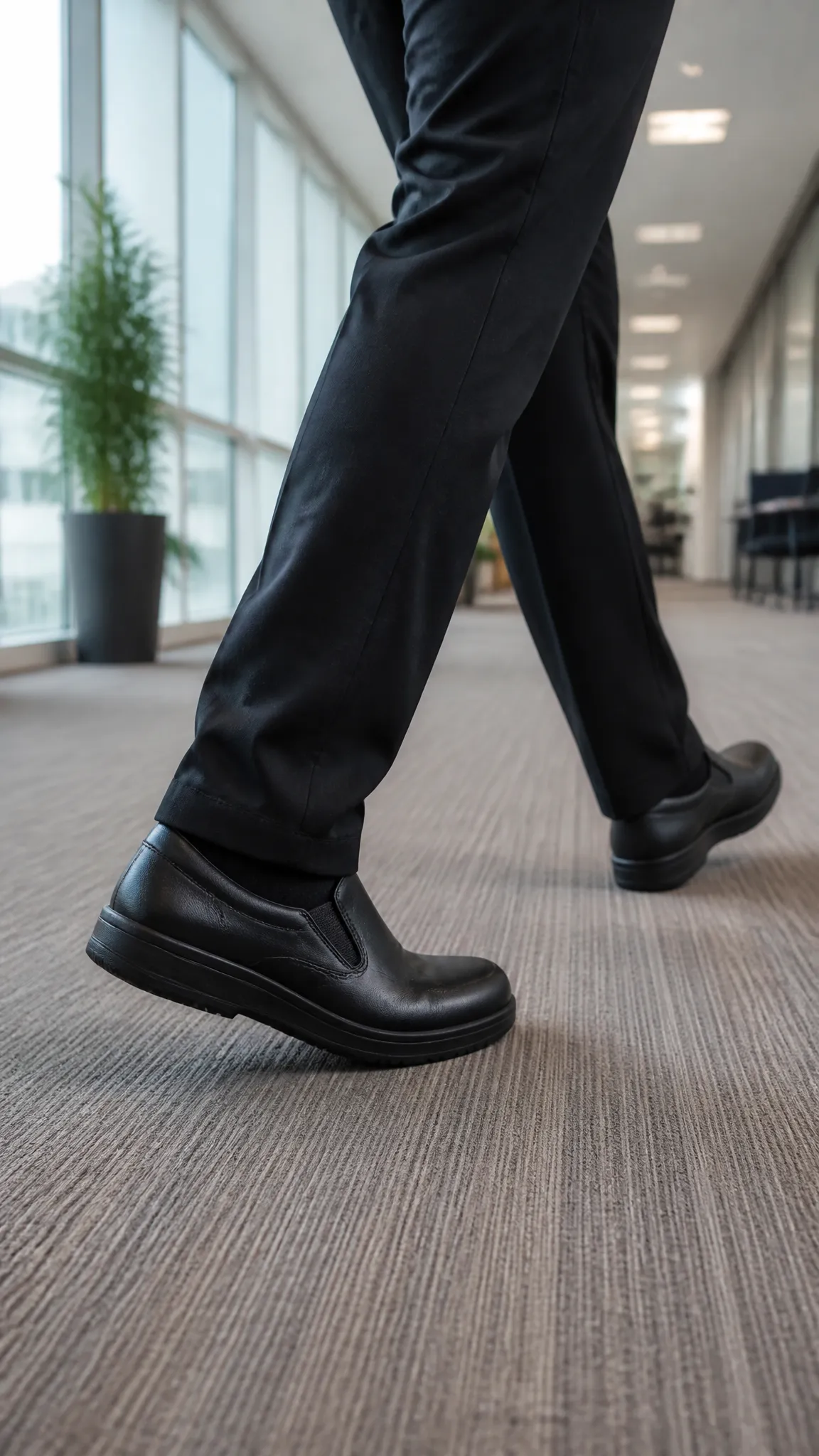
A streamlined walking shoe can be practical for employees who spend hours moving through hospitals, campuses, airports, or large offices. To remain work appropriate, it should have a simple leather upper and restrained sole rather than prominent athletic panels.
- Comfort: Seek stable cushioning, a supportive heel cup, a breathable lining, and a removable footbed if you use orthotics.
- Fit: Elastic side panels should hold the foot securely without squeezing, and your heel shouldn’t slide during brisk walking.
- Office style: Black or dark brown works with straight-leg trousers, uniform pants, chinos, and other practical professional clothing.
Among the best office shoes men can wear for high-step-count jobs, this style favors function over formal elegance. Confirm that the outsole grips smooth indoor flooring and that the upper meets any workplace safety or uniform requirements.
8. Weather-Resistant Chelsea Boots
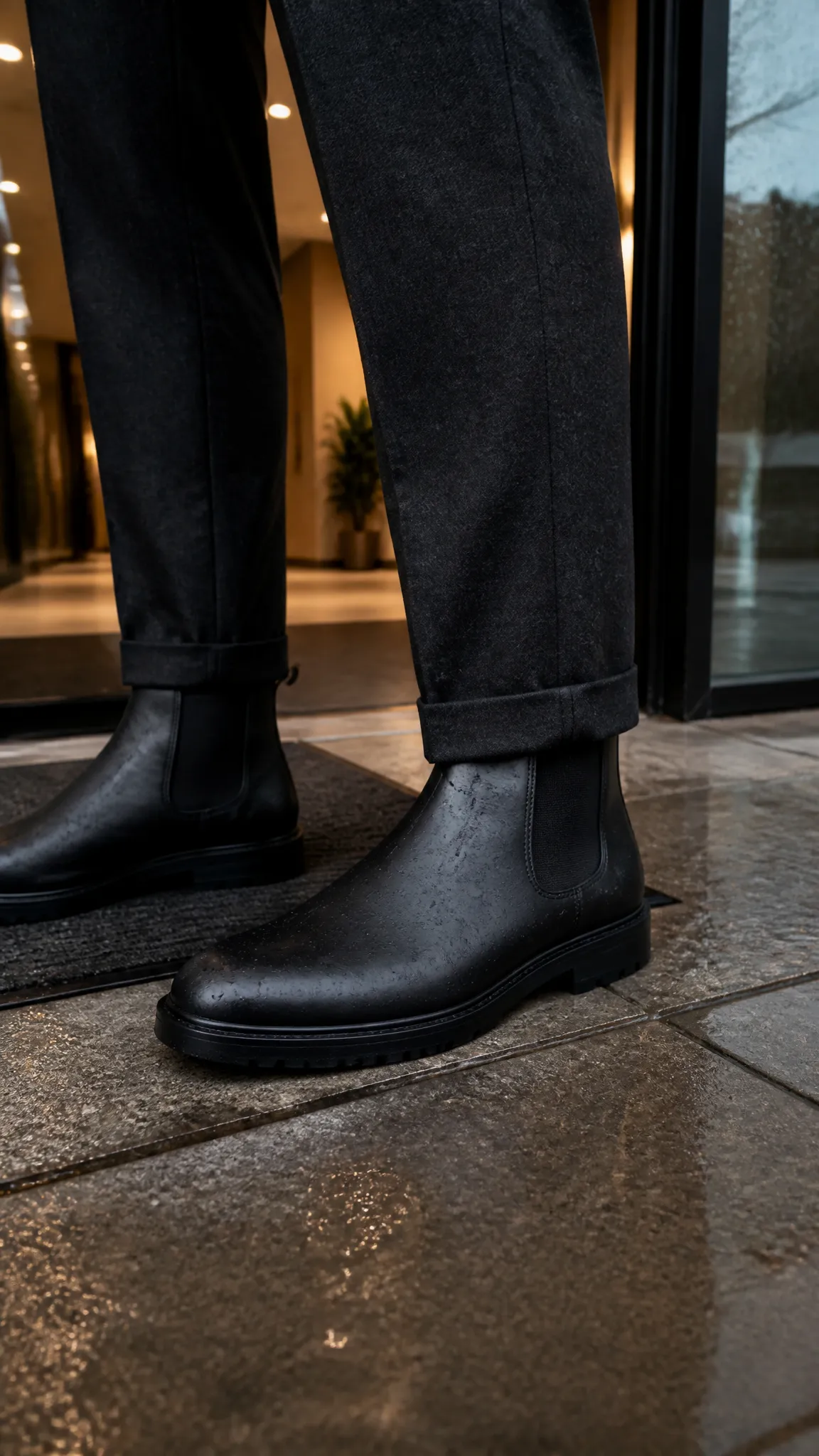
Chelsea boots provide ankle coverage and quick entry through elastic side panels. A sleek, weather-resistant pair is useful for rainy commutes and cold-weather offices, especially when treated leather and a rubber outsole replace delicate suede and slippery leather soles.
- Comfort: Choose a cushioned insole, smooth shaft lining, flexible side elastic, and a heel height that doesn’t pitch your weight forward.
- Fit: The instep should hold your foot because there are no laces; slight heel movement is normal, but excessive lifting can cause friction.
- Office style: A narrow shaft and plain toe sit cleanly under wool trousers, dark denim, chinos, and modern suiting.
Weather resistance doesn’t mean complete waterproofing, so follow the maker’s care guidance and let damp boots dry away from direct heat. A subtle tread offers traction while preserving the boot’s refined profile.
9. Wide-Toe-Box Dress Shoes
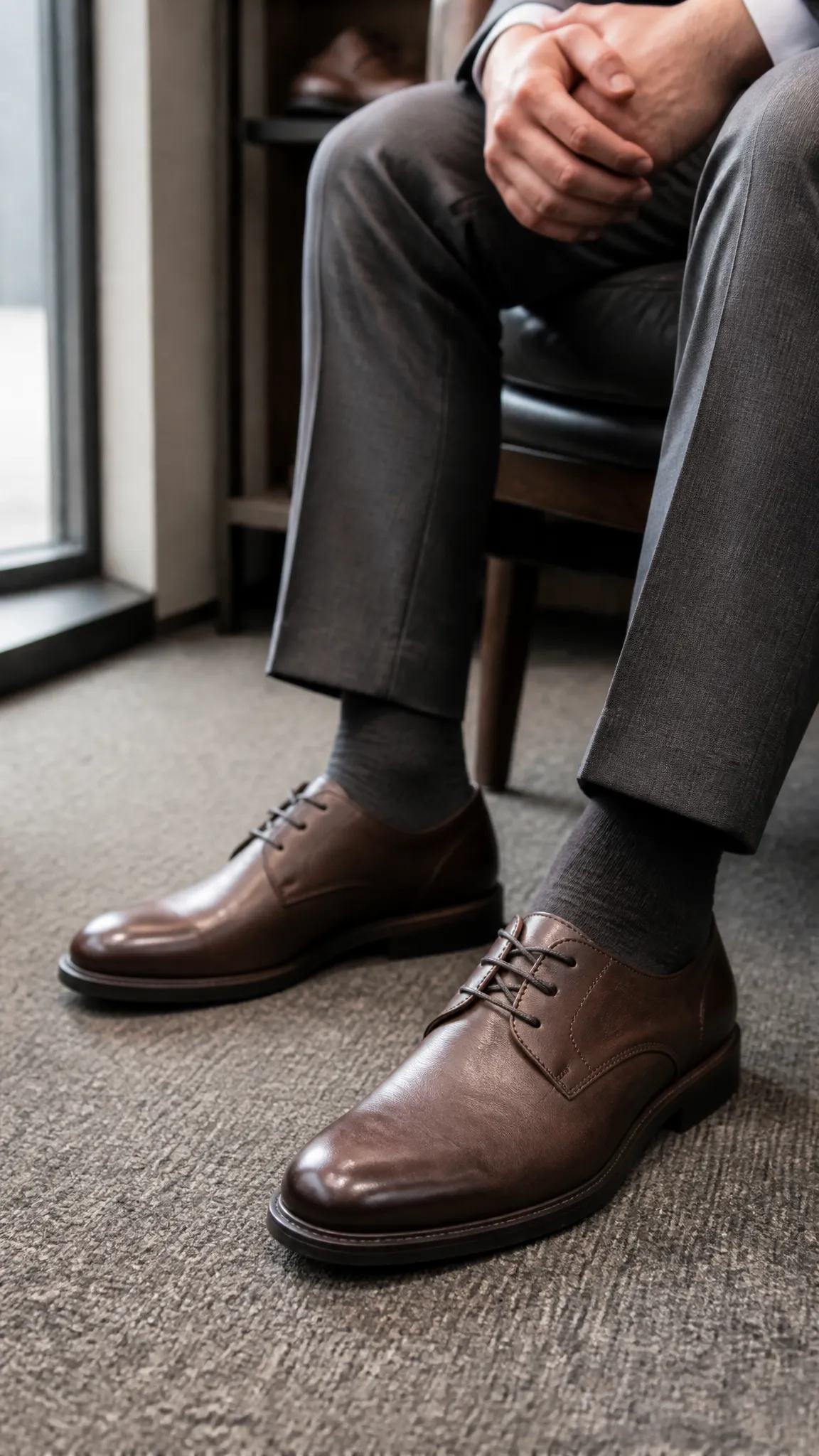
Wide-toe-box dress shoes are designed to reduce side pressure while retaining a professional upper. They’re worth considering if standard dress shoes compress your toes, but width alone isn’t enough: heel fit, shoe depth, and the position of the widest point also matter.
- Comfort: Look for an anatomically roomy forefoot, smooth toe lining, removable cushioning, and adequate vertical space above the toes.
- Fit: Choose your actual measured size rather than sizing up for width, which can place the flex point incorrectly and allow heel slipping.
- Office style: A softly rounded toe in black or dark brown looks more refined than an exaggerated square or visibly orthopedic shape.
Have both feet measured later in the day, then fit the larger foot. If you wear custom inserts, bring them when trying shoes so you can verify that they don’t crowd the toe box or lift your heel.
How to Choose Comfortable Office Shoes
The best office shoes men select are comfortable from the start and appropriate for their actual workday. Don’t rely on a painful break-in period to correct a shoe that’s too short, narrow, or shallow.
Shop late in the day, when feet may be slightly larger, and wear your usual work socks. Walk on a hard surface if possible, checking for heel slip, toe pressure, rubbing at the collar, and whether the shoe bends where your foot naturally bends.
Materials affect both appearance and feel. Leather can conform gradually to your foot, suede tends to feel softer but requires more care, and knit or mesh improves airflow while appearing more casual. A removable insole is valuable if you need extra arch support or use prescribed orthotics.
Match formality to your workplace. Traditional law, finance, and executive settings may favor Oxfords, Derbies, or restrained loafers, while creative and technology offices often allow minimalist sneakers or chukkas. When uncertain, choose dark leather, minimal decoration, and a low-contrast sole.
Frequently Asked Questions
What type of men’s shoe is most comfortable for standing all day?
A supportive walking shoe, cushioned Derby, or hybrid dress shoe can work well. Look for stable cushioning, enough toe room, secure heel support, and a sole suited to your workplace flooring rather than choosing by style alone.
Can men wear sneakers in a business-casual office?
Often, yes, but dress codes vary. Minimal leather sneakers in a neutral color generally look more professional than running shoes, especially when paired with clean, tailored trousers and a collared shirt or knit polo.
Should office shoes fit tightly at first?
They should feel secure, not painful. Leather may soften slightly, but shoes typically won’t become longer or correct major width problems. Avoid numbness, pinching, strong heel rubbing, or toes touching the front.
Are rubber soles better than leather soles for office shoes?
Rubber soles usually provide more grip, flexibility, and impact absorption, making them practical for commuting and long periods on hard floors. Leather soles look traditional and can suit formal settings, but they may feel firmer and become slippery when wet.
How often should men rotate office shoes?
If possible, avoid wearing the same pair on consecutive days. Rotation lets moisture dissipate and gives the upper time to recover. Shoe trees can help leather shoes retain their shape between wears.