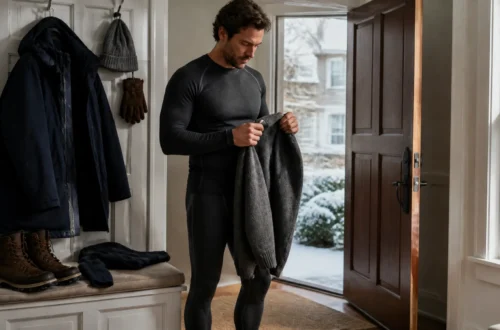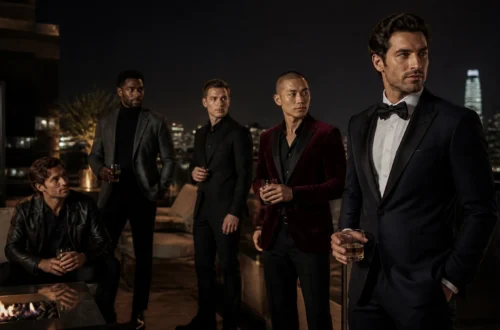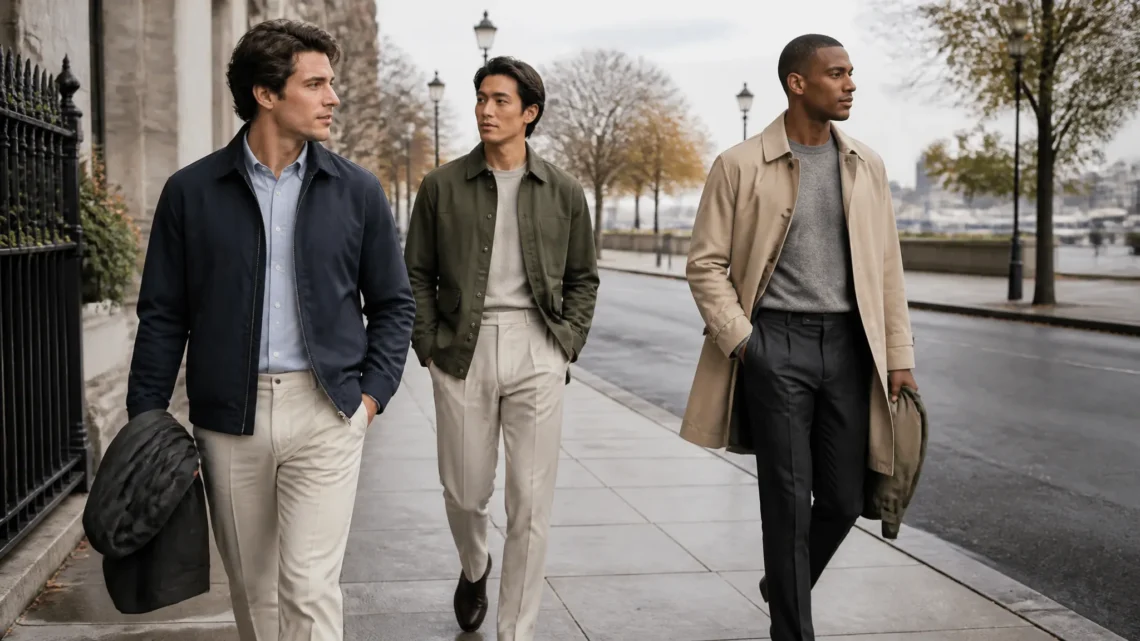
A chilly commute can turn into a warm afternoon, leaving you overdressed, underprepared, or carrying half your closet. The best transitional outfits men can rely on use breathable layers that are easy to add, remove, and combine.
These 12 formulas cover workdays, weekends, dinners, and rainy forecasts, with practical pieces you may already own. Keep scrolling to find an outfit that fits your plans and the temperature swing.
1. Oxford Shirt, Chinos, and a Lightweight Harrington
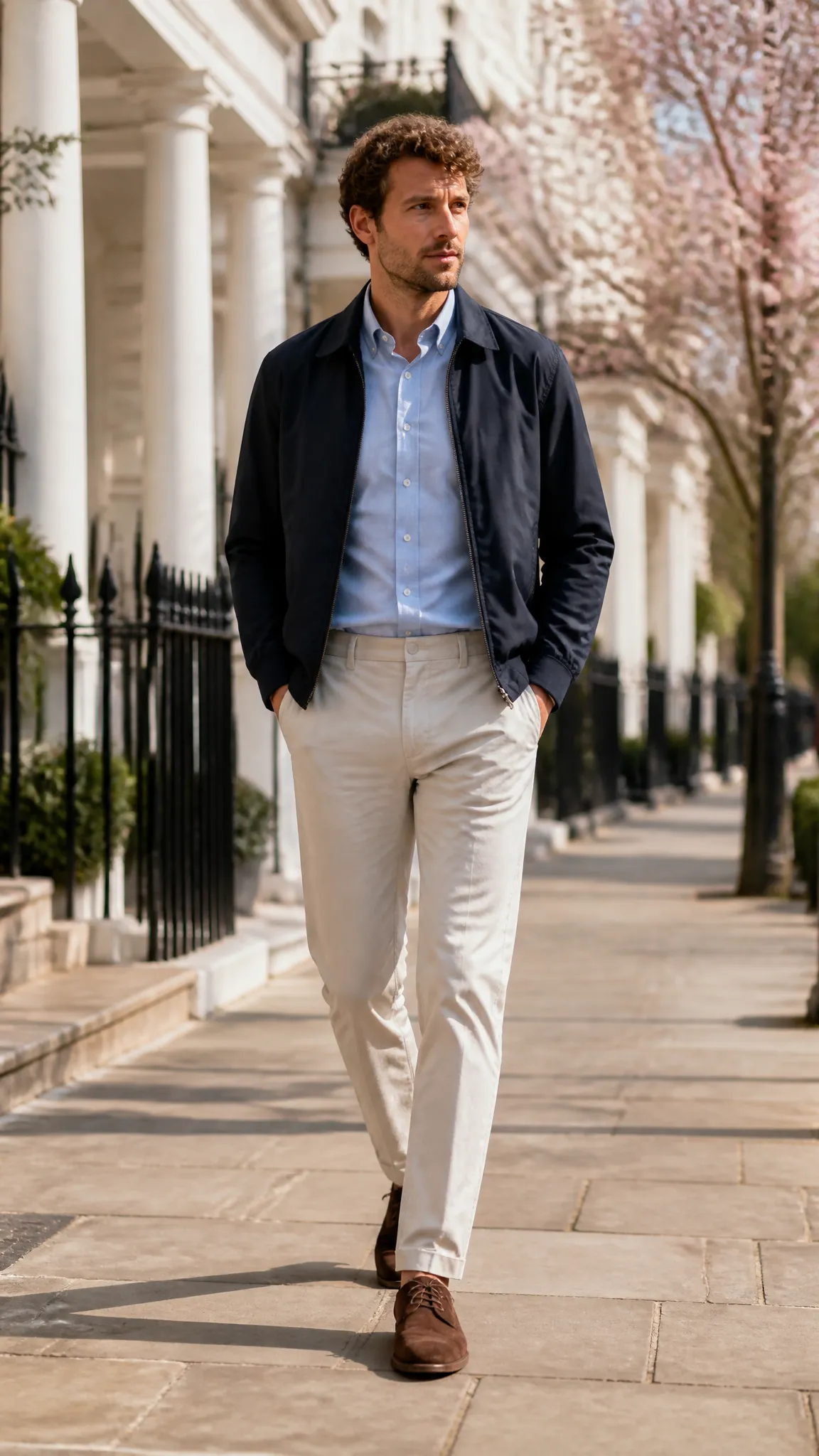
This clean, adaptable combination handles cool mornings without feeling heavy after lunch. The Harrington jacket adds wind protection, while the Oxford shirt and chinos keep the outfit polished enough for a casual office, dinner, or weekend plans.
Outfit Pieces
- A cotton Oxford shirt in white, pale blue, or a subtle stripe
- Midweight chinos in khaki, olive, navy, or stone
- A lightweight Harrington jacket with a simple collar
- Leather sneakers, loafers, or suede derbies
How to Style It
Choose a jacket that ends near your belt and leaves room for the shirt without looking loose. Wear the shirt tucked for a smarter setting or untucked if the hem is short and even. When it warms up, remove the jacket and roll your sleeves neatly to the lower forearm.
2. Merino Crewneck Over a T-Shirt
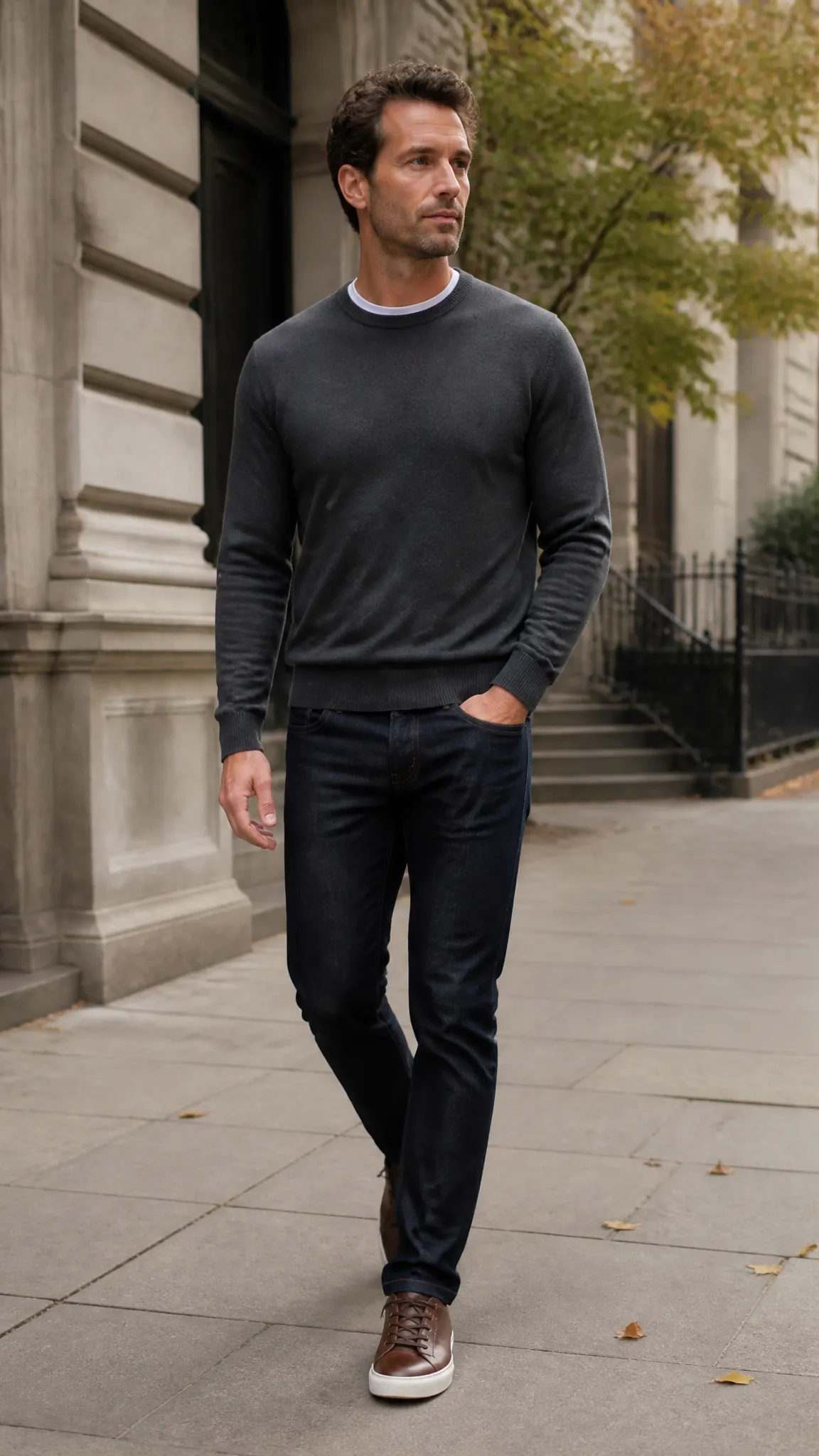
A fine-gauge merino sweater offers warmth without the bulk of a winter knit. Layering it over a T-shirt also prevents the outfit from looking unfinished if you need to remove the sweater later.
Outfit Pieces
- A plain, close-fitting crewneck T-shirt
- A lightweight merino wool crewneck sweater
- Straight or tapered dark-wash jeans
- Minimal leather sneakers or casual boots
How to Style It
Keep the T-shirt collar hidden or let only a narrow edge show. Charcoal, navy, forest green, and oatmeal sweaters work easily with denim. Merino can regulate temperature well, but fit still matters, so look for light fabric that skims your torso rather than trapping too much heat.
3. Unstructured Blazer and Knit Polo
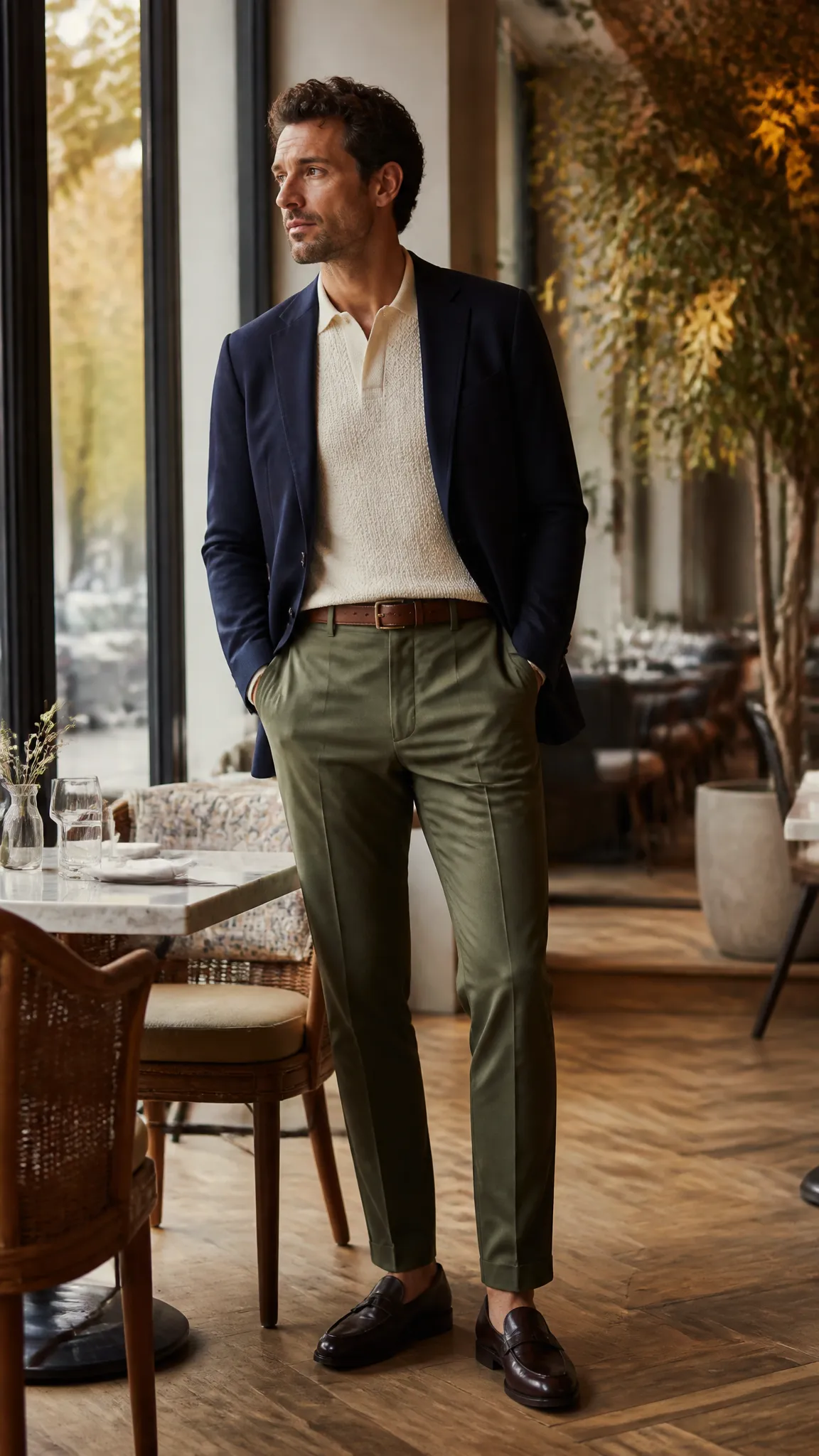
This is one of the most useful transitional outfits men can wear when a standard suit feels too formal. A soft blazer creates structure, while a short-sleeve knit polo stays comfortable in a heated office or restaurant.
Outfit Pieces
- A cotton or merino knit polo with a clean placket
- An unstructured blazer in navy, brown, or textured gray
- Tailored trousers or crisp chinos
- Penny loafers, derbies, or streamlined sneakers
How to Style It
Skip bulky shoulder padding and heavy linings, which make temperature changes harder to manage. Tuck in the polo and wear a belt that relates to your shoes without matching them exactly. For a relaxed version, pair a navy blazer with a cream polo, olive trousers, and dark brown loafers.
4. Denim Jacket With a Hoodie
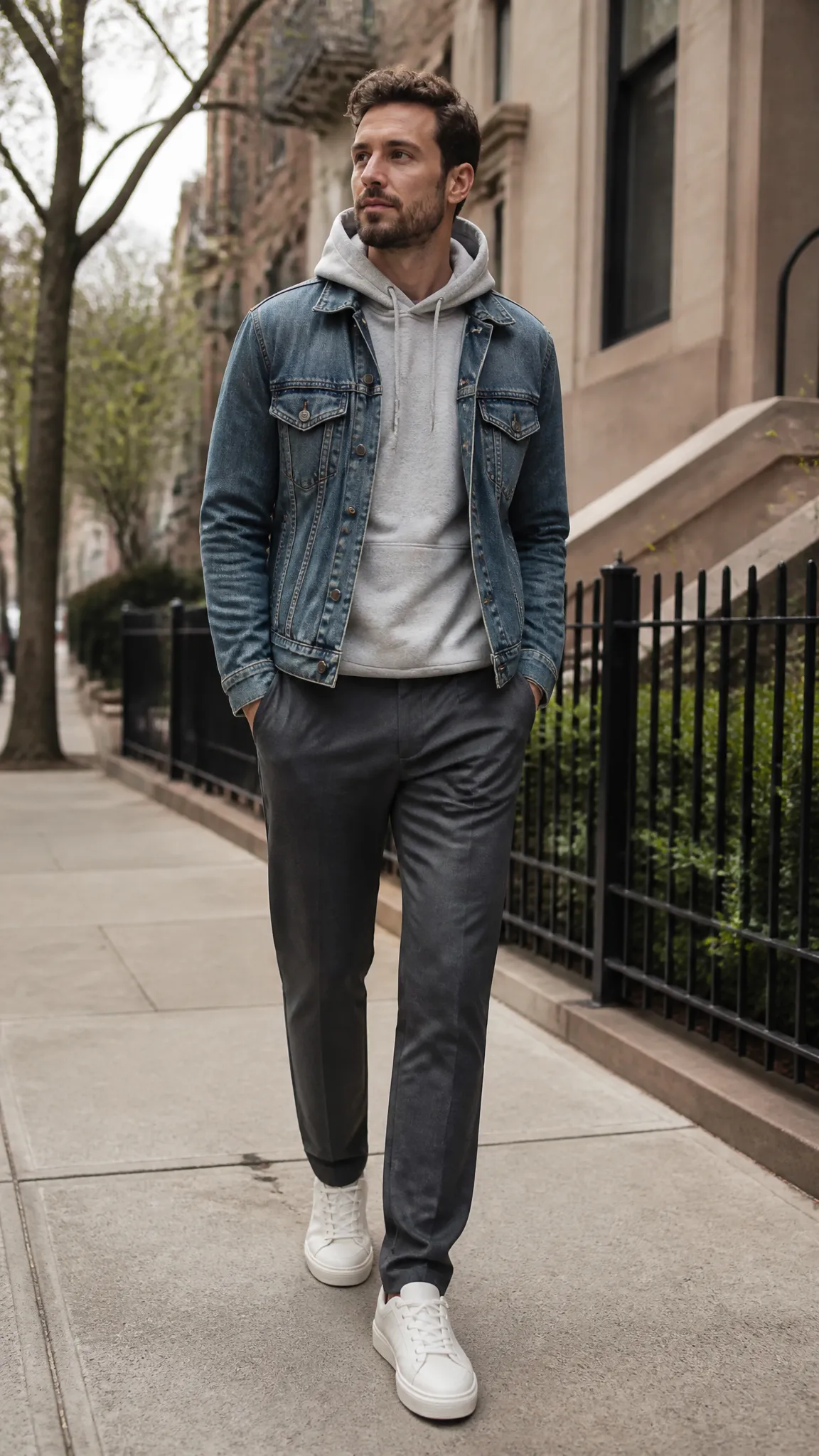
A denim jacket layered over a hoodie delivers casual warmth without requiring a thick coat. Each piece also works independently, giving you several ways to adjust when the forecast is uncertain.
Outfit Pieces
- A lightweight cotton hoodie in gray, navy, or cream
- A medium-wash or dark-wash denim jacket
- Contrasting trousers or black jeans
- Canvas sneakers or sturdy leather sneakers
How to Style It
Use a relatively thin hoodie so the sleeves don’t bunch inside the jacket. Avoid wearing blue jeans in a nearly identical wash unless you intentionally want a matching denim look. Charcoal pants create easy contrast, and clean white or off-white sneakers keep the outfit visually light.
5. Overshirt, Henley, and Fatigue Pants
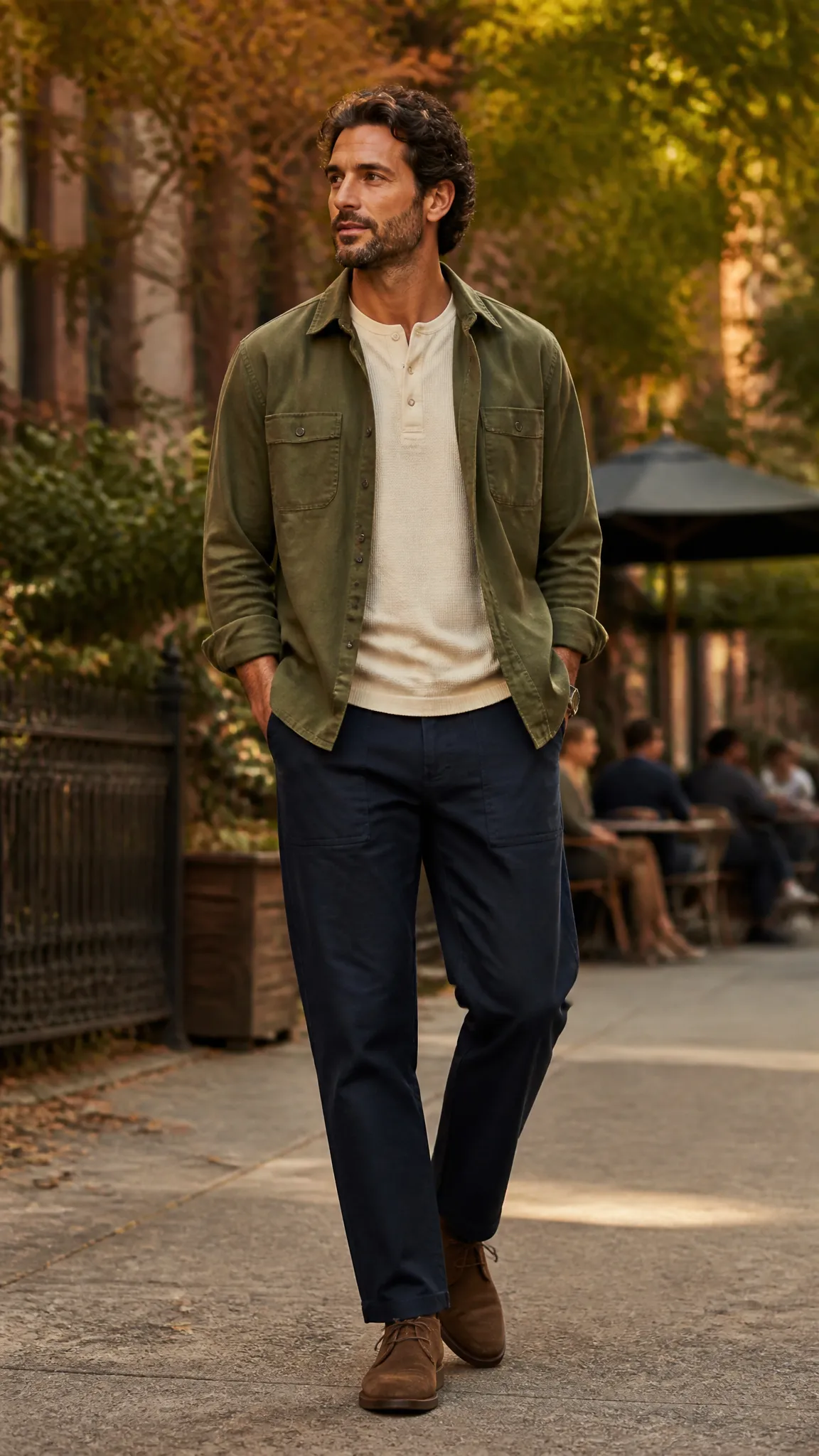
An overshirt gives you the convenience of a jacket with the relaxed feel of a button-up. Combined with a Henley and fatigue pants, it makes a practical weekend outfit for errands, travel, or an outdoor lunch.
Outfit Pieces
- A cotton Henley or heavyweight T-shirt
- A cotton twill overshirt in olive, navy, or tan
- Fatigue pants or straight-leg chinos
- Suede chukkas or retro running shoes
How to Style It
Wear the overshirt open when it’s mild and button the middle section as the air cools. Because fatigue pockets add visual detail, keep the top half free from large graphics and excessive hardware. A cream Henley, olive overshirt, navy pants, and brown suede shoes form an especially balanced palette.
6. Field Jacket With an Oxford Shirt
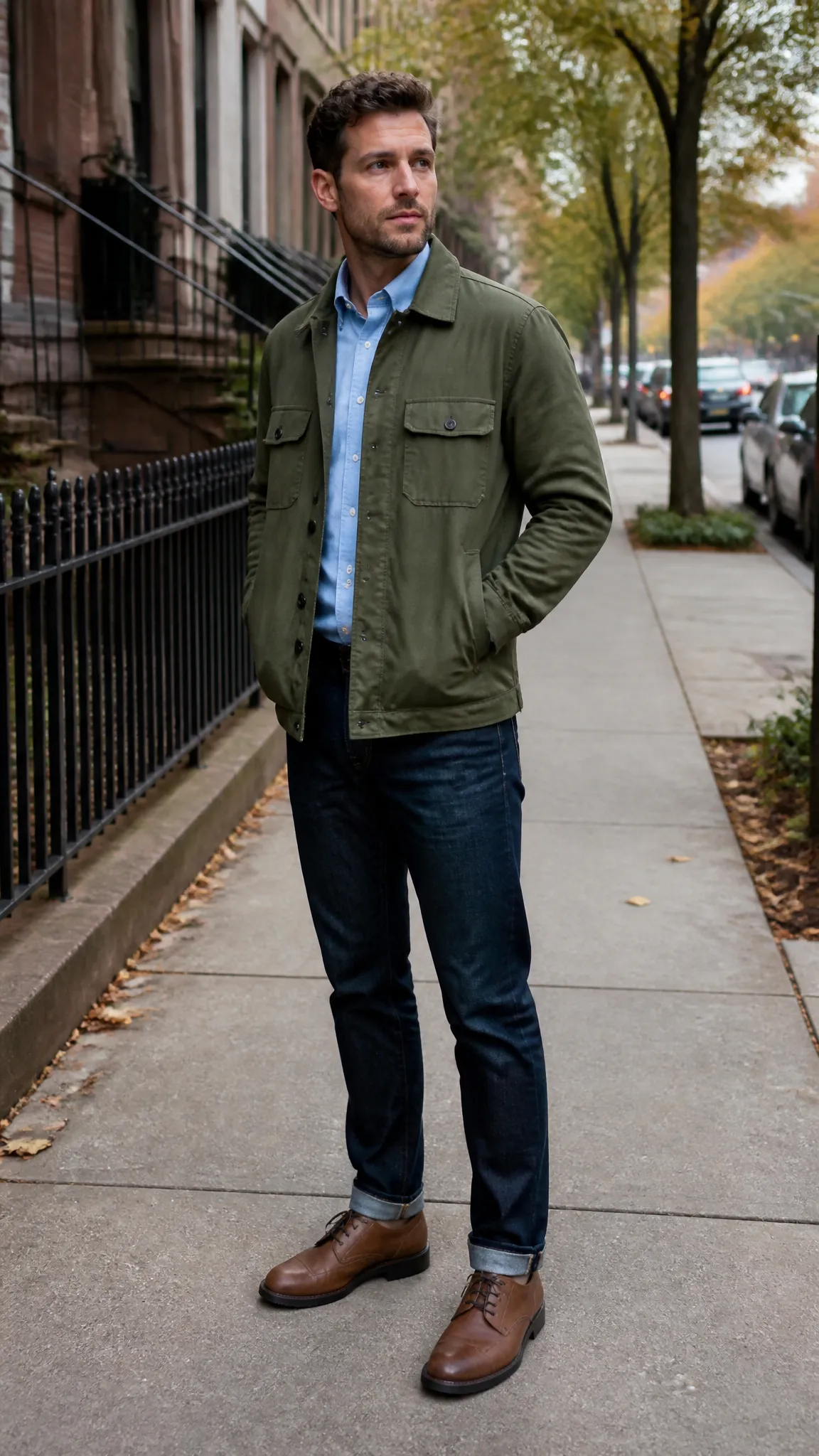
A field jacket is useful in variable weather because it offers coverage, pockets, and room for another light layer. The Oxford shirt keeps its military-inspired shape from making the outfit feel too rugged.
Outfit Pieces
- A blue or white Oxford cloth button-down
- An olive, navy, or tan field jacket
- Dark indigo jeans or neutral chinos
- Weather-ready footwear such as rubber-soled derbies or boots
How to Style It
Look for a field jacket in cotton canvas or a cotton-nylon blend rather than a heavily insulated version. Keep the shirt collar inside the jacket collar and avoid overfilling the pockets. On colder days, add a thin crewneck sweater between the shirt and jacket without changing the outfit’s proportions.
7. Trench Coat With a Sweatshirt and Trousers
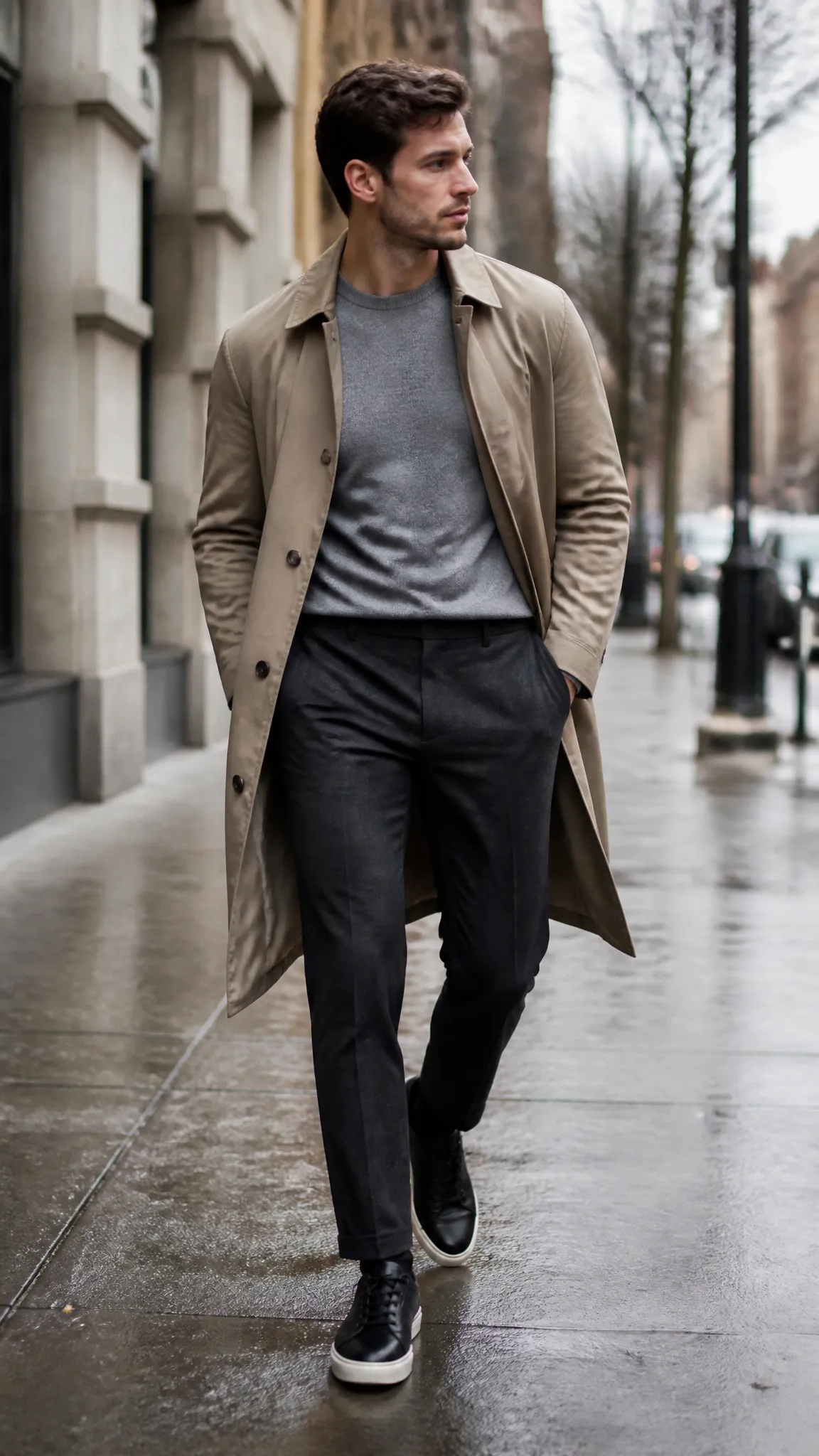
A trench coat isn’t limited to formal clothing. Wearing one over a simple sweatshirt creates a useful high-low mix that protects against light rain while remaining comfortable for commuting and walking.
Outfit Pieces
- A plain crewneck sweatshirt with minimal branding
- A knee-length or slightly shorter trench coat
- Pleated or flat-front tailored trousers
- Leather sneakers or chunky-soled loafers
How to Style It
Choose a sweatshirt that fits close enough to sit smoothly under the coat. A tan trench, heather gray sweatshirt, charcoal trousers, and black shoes create strong tonal contrast. Leave the coat open in mild weather, then use the belt or buttons when wind and light precipitation arrive.
8. Cardigan, Camp-Collar Shirt, and Jeans
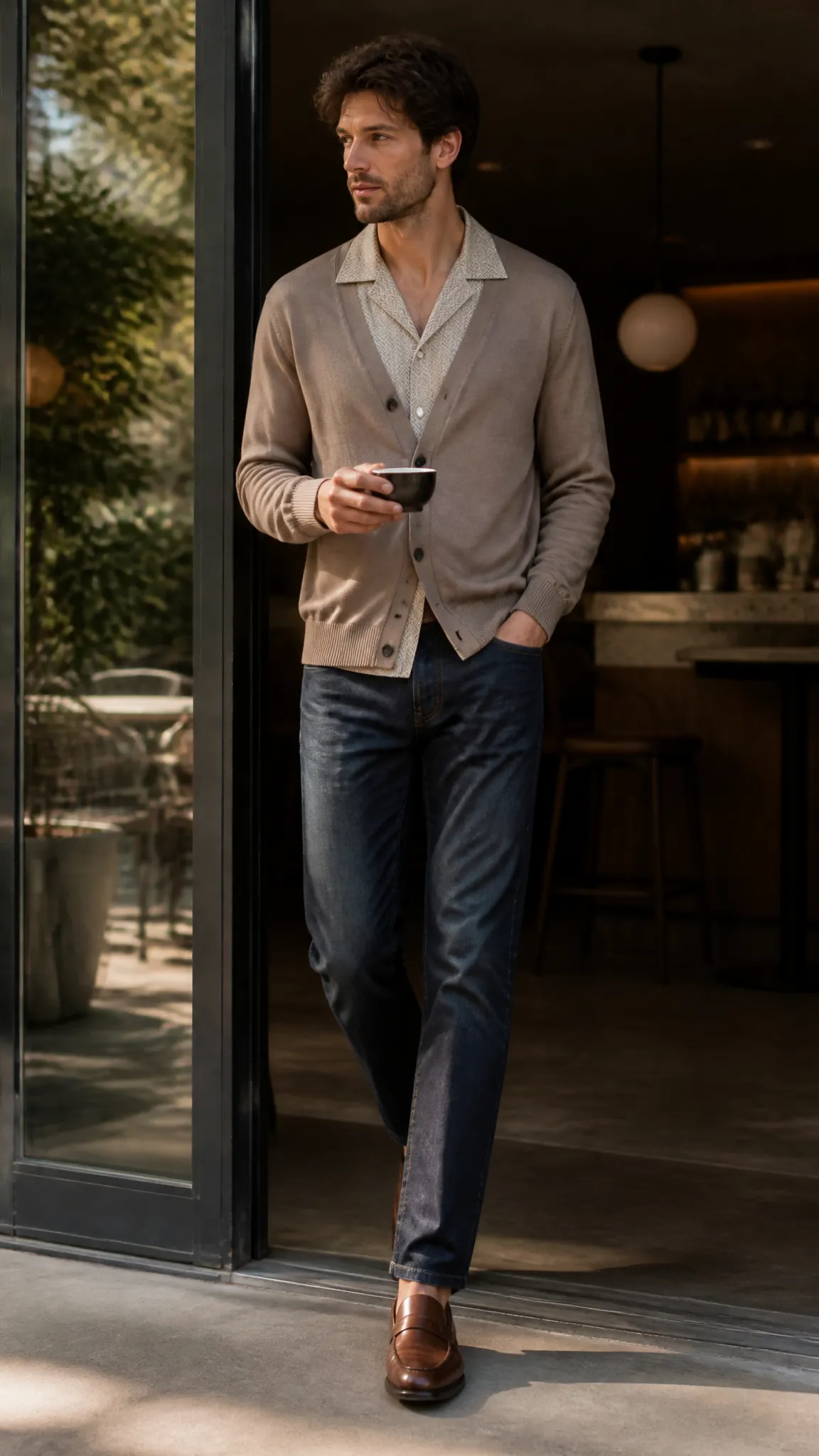
This layered outfit moves comfortably between warm sunlight and cooler indoor spaces. The camp-collar shirt brings relaxed character, while the cardigan gives you soft insulation that’s easy to carry when removed.
Outfit Pieces
- A solid or restrained-pattern camp-collar shirt
- A lightweight cotton or merino cardigan
- Relaxed straight-leg jeans
- Loafers, moc-toe shoes, or low-profile sneakers
How to Style It
Keep the shirt collar outside the cardigan for an intentional frame around the neckline. If the shirt has a pattern, use a solid cardigan that picks up one of its quieter colors. Leave the lower cardigan button undone and choose denim with a clean hem to maintain an easy, well-proportioned silhouette.
9. Quilted Vest Over a Chambray Shirt
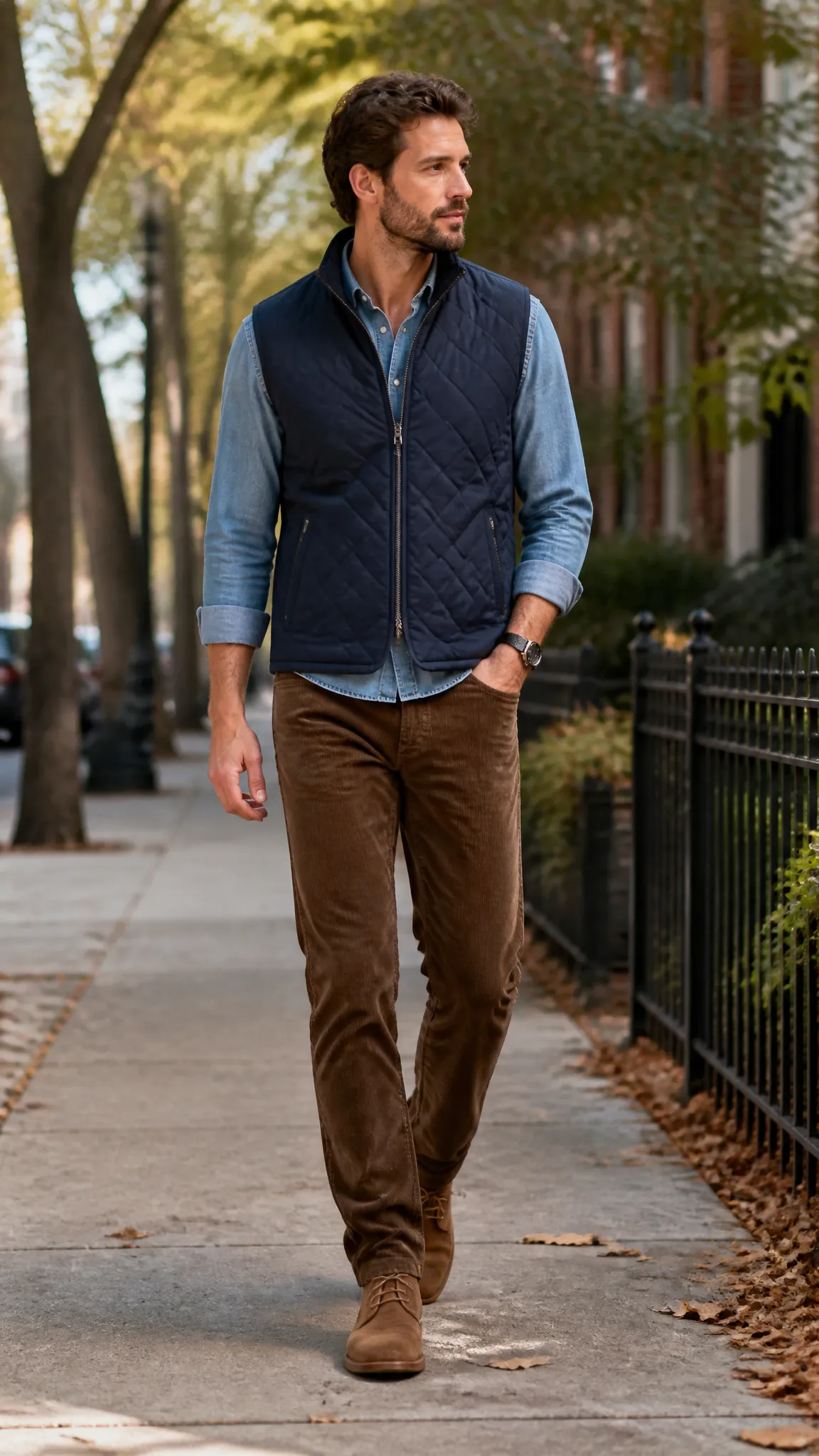
A quilted vest warms your core but leaves your arms unrestricted, making it well suited to dry days with large temperature swings. Chambray supplies enough texture to balance the vest without adding substantial weight.
Outfit Pieces
- A light blue or gray chambray shirt
- A low-profile quilted vest
- Corduroy pants or five-pocket trousers
- Chukka boots or suede sneakers
How to Style It
Avoid an overstuffed vest, which can overpower the shirt and feel too wintry. Instead, pick a trim layer that closes comfortably without pulling. Brown corduroy, blue chambray, and a navy vest give you useful texture while keeping the colors grounded and easy to repeat.
10. Suede Bomber With Monochrome Basics
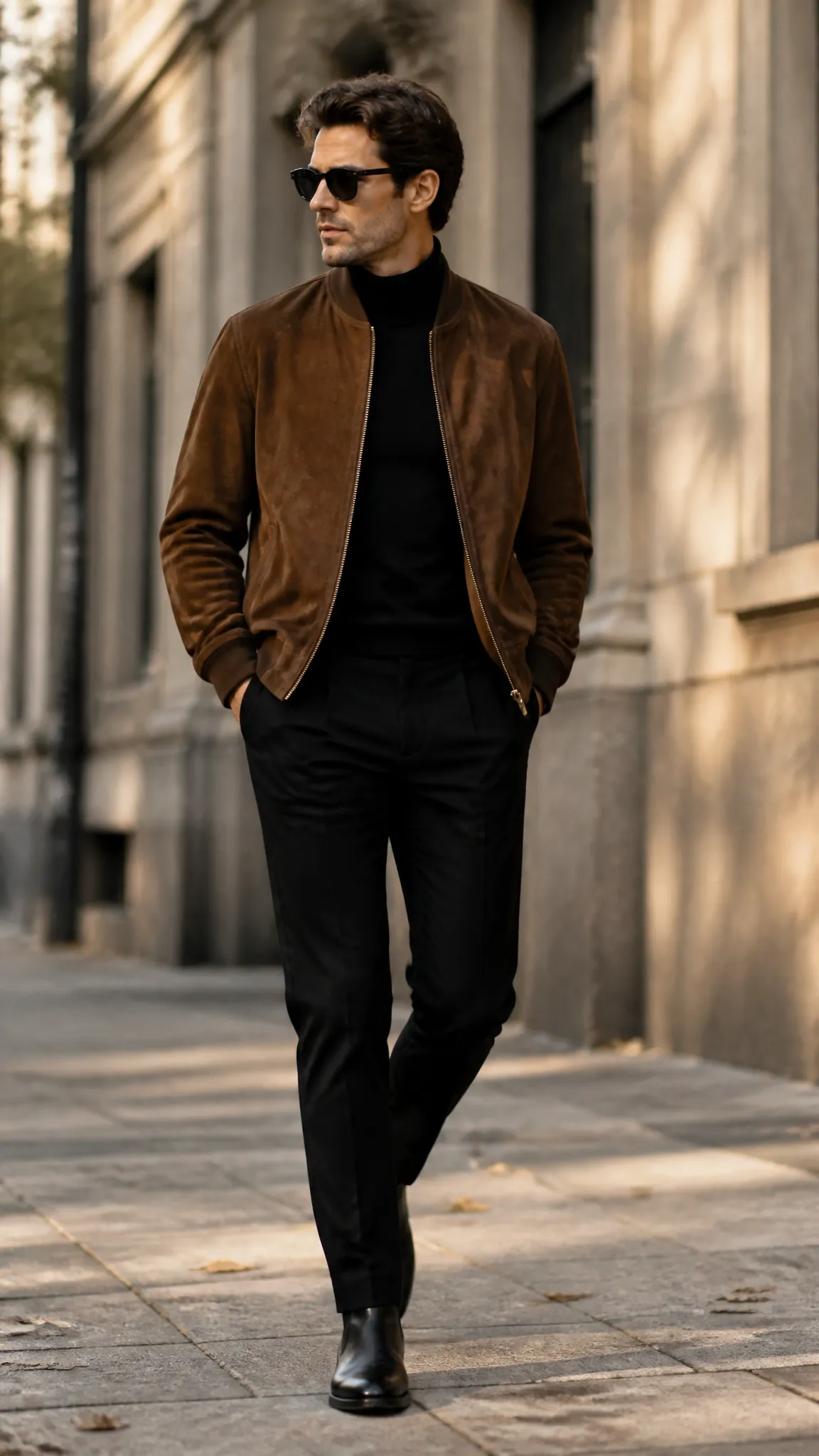
A suede bomber adds warmth and depth to otherwise simple clothing. Keeping the base outfit in one color family lets the jacket stand out without relying on loud patterns or complicated layering.
Outfit Pieces
- A cotton T-shirt or fine-knit mock neck
- A suede or microsuede bomber jacket
- Trousers or jeans close in color to the top
- Minimal sneakers or Chelsea boots
How to Style It
Try a black top and trousers beneath a dark brown or tobacco jacket, or pair cream basics with taupe suede. The tonal base creates a longer, cleaner line. Because suede is vulnerable to wet conditions, reserve this outfit for a dry forecast and choose a different outer layer when rain is likely.
11. Lightweight Rain Shell With Smart Casual Layers
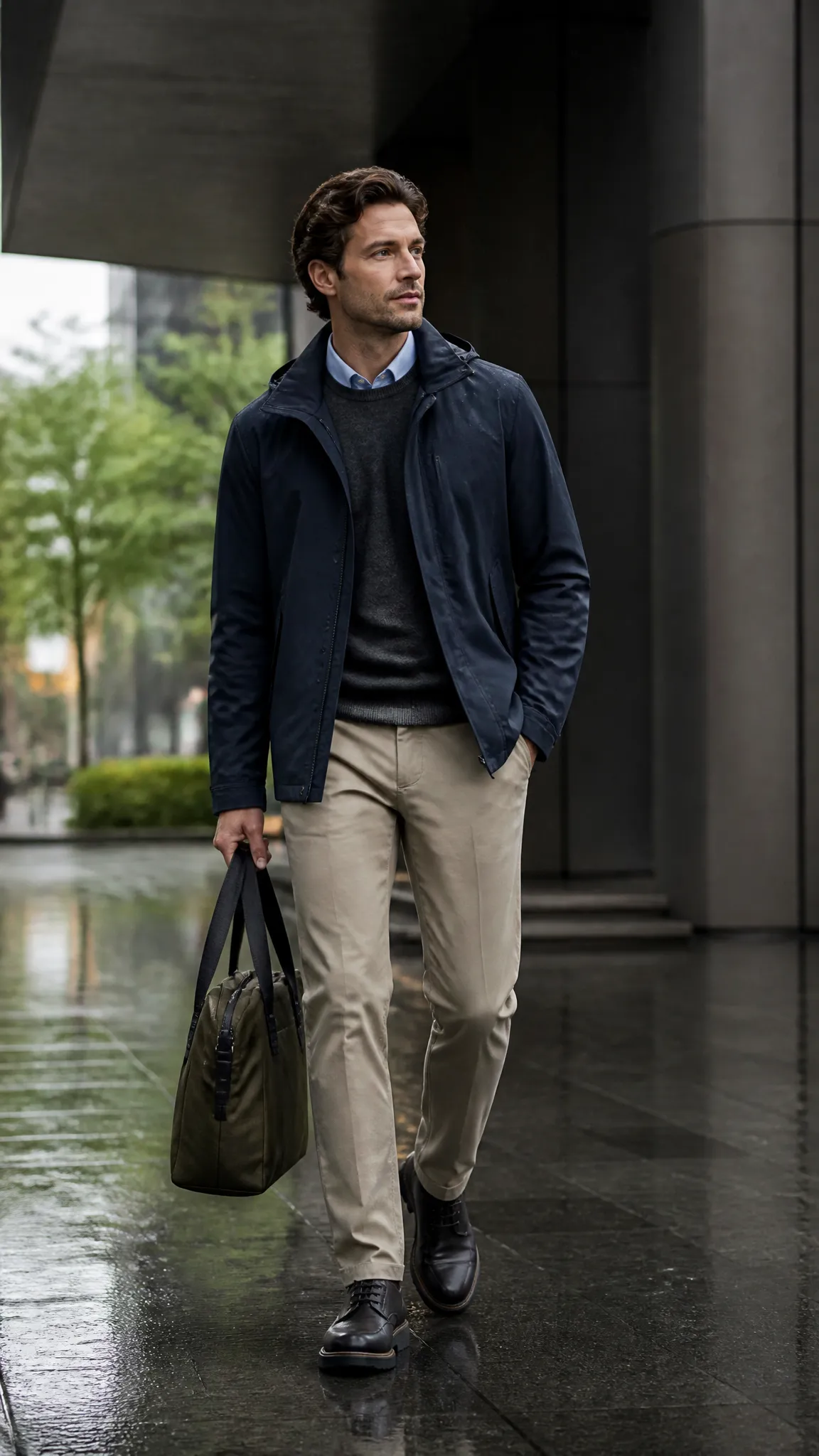
A packable shell makes uncertain spring or fall weather easier to handle, but it doesn’t need to look like hiking gear. A streamlined jacket over refined basics works for a commute, casual workplace, or rainy dinner plans.
Outfit Pieces
- A breathable polo, Oxford shirt, or merino crewneck
- A simple waterproof or water-resistant shell
- Tapered technical pants or cotton-blend chinos
- Rubber-soled shoes with good coverage
How to Style It
Choose a matte shell in navy, charcoal, olive, or black, with limited logos and clean pocket placement. Its hem should cover your waistband but not overwhelm the trousers. If conditions clear, fold or pack the shell and let the collared shirt or sweater carry the outfit.
12. Linen-Blend Shirt With a Cotton Chore Coat
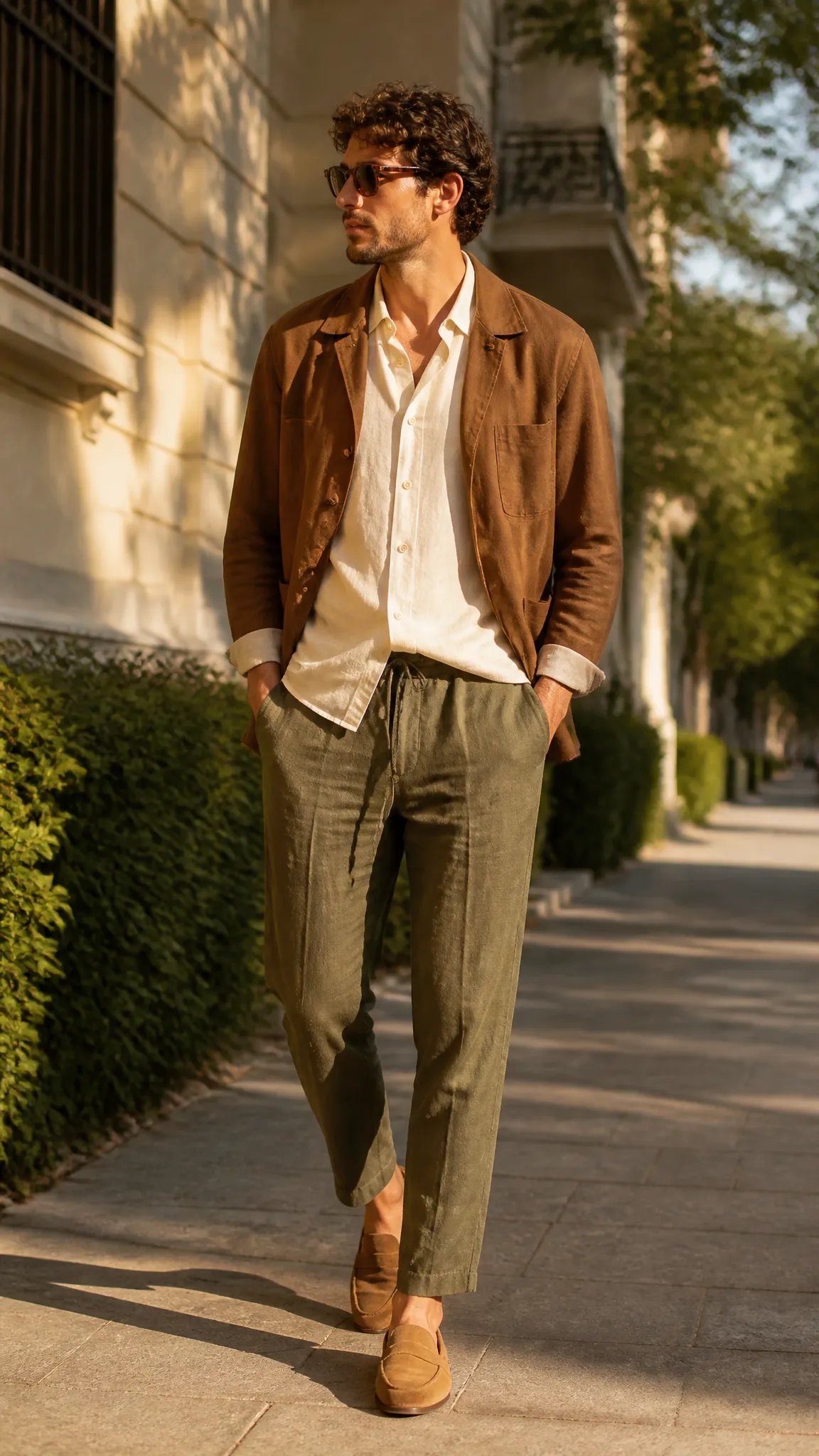
When the season is closer to summer than winter, breathable fabrics matter more than heavy insulation. A linen-blend shirt and cotton chore coat provide airflow, sun coverage, and just enough protection once evening temperatures drop.
Outfit Pieces
- A linen-cotton button-up shirt
- An unlined cotton chore coat
- Lightweight drawstring trousers or chinos
- Loafers, espadrilles, or canvas sneakers
How to Style It
Combine related natural tones, such as an off-white shirt, tobacco jacket, and olive pants. Roll the shirt cuffs once so they don’t bunch beneath the coat sleeves. This is among the most breathable transitional outfits men can choose for late spring evenings or warm early-fall days.
How to Dress for Unpredictable Temperatures
Build from the lightest layer outward. Your base should look complete on its own, since that’s what people will see when the afternoon warms up. Add one mid-layer for insulation and one light outer layer only when wind or rain makes it necessary.
Fabric weight matters as much as garment type. Unlined cotton jackets, fine merino, chambray, linen blends, and breathable twill are easier to regulate than thick fleece or heavily padded outerwear. Slightly relaxed layers also allow air to circulate, but avoid oversized pieces that leave gaps around the neck and cuffs on cold mornings.
Finally, check more than the daily high. Look at the morning temperature, evening low, wind, and chance of rain, then dress for the coolest portion while making at least one layer removable. A small umbrella and a foldable shell can solve more problems than an unnecessarily heavy coat.
Frequently Asked Questions
What does transitional weather mean for clothing?
It refers to the variable conditions between major seasons, especially winter and spring or summer and fall. Temperatures may change significantly through the day, so removable, breathable layers are more useful than one heavy garment.
Which jacket is most versatile for spring and fall?
A lightweight Harrington, chore coat, or unlined field jacket works across many casual settings. Pick one based on your wardrobe: Harringtons look clean and compact, chore coats feel relaxed, and field jackets provide more coverage and storage.
How many layers should a transitional outfit have?
Two or three light layers are usually easier to regulate than one thick layer. Start with a T-shirt or collared shirt, add a sweater if needed, and finish with an uninsulated jacket suited to the wind or rain.
Can you wear shorts in transitional weather?
Yes, when the day is warm enough and your plans are casual. Balance shorts with a long-sleeve shirt, sweatshirt, or light jacket, but don’t rely on a heavy top to compensate if your legs will be cold for most of the day.
What colors work best between seasons?
Navy, olive, tan, charcoal, cream, and medium blue combine easily and suit both spring and fall. You can make them feel more seasonal by using lighter combinations in spring and richer brown, rust, or forest tones in fall.
Build Your Outfit Around the Forecast
Start with the formula that matches your day, then adjust the fabric weight, footwear, and outer layer for local conditions. If every removable layer still looks intentional on its own, you’ll be prepared without carrying more clothing than you need.