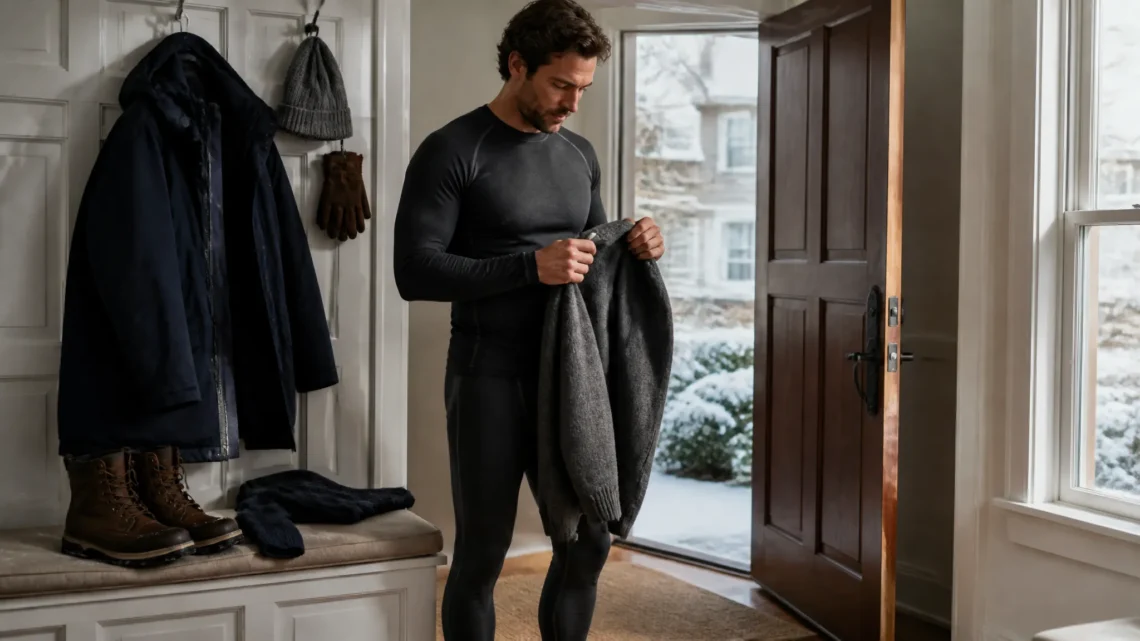
You bundle up for a cold morning, then spend the day sweating indoors, shivering outside, or fighting sleeves that won’t sit right. These are some of the most common layering mistakes men make, and adding another thick garment usually doesn’t solve them.
This list explains how to build a warmer, more comfortable system using breathable base layers, insulating midlayers, and weather-ready outerwear. You’ll also learn how to adjust that system for changing temperatures without making your outfit feel bulky.
1. Wearing Cotton Next to the Skin

A cotton T-shirt may feel comfortable when you get dressed, but it’s a poor foundation for active winter days. Cotton absorbs perspiration and dries slowly, leaving damp fabric against your skin when you stop moving or step into colder air.
Build a Better Base
- Choose a fitted merino wool or synthetic base layer.
- Match the fabric weight to your activity and the temperature.
- Pack a dry replacement for long, strenuous days outdoors.
Manage Moisture First
Your base layer should move sweat away from your skin without restricting your shoulders or bunching at the waist. Lightweight options work well for commuting and high-output activities, while heavier thermal underwear is more appropriate for slower pursuits in sustained cold. Cotton can still serve as a casual outer shirt, but it shouldn’t be your primary moisture-management layer.
2. Starting With a Base Layer That Fits Too Loosely
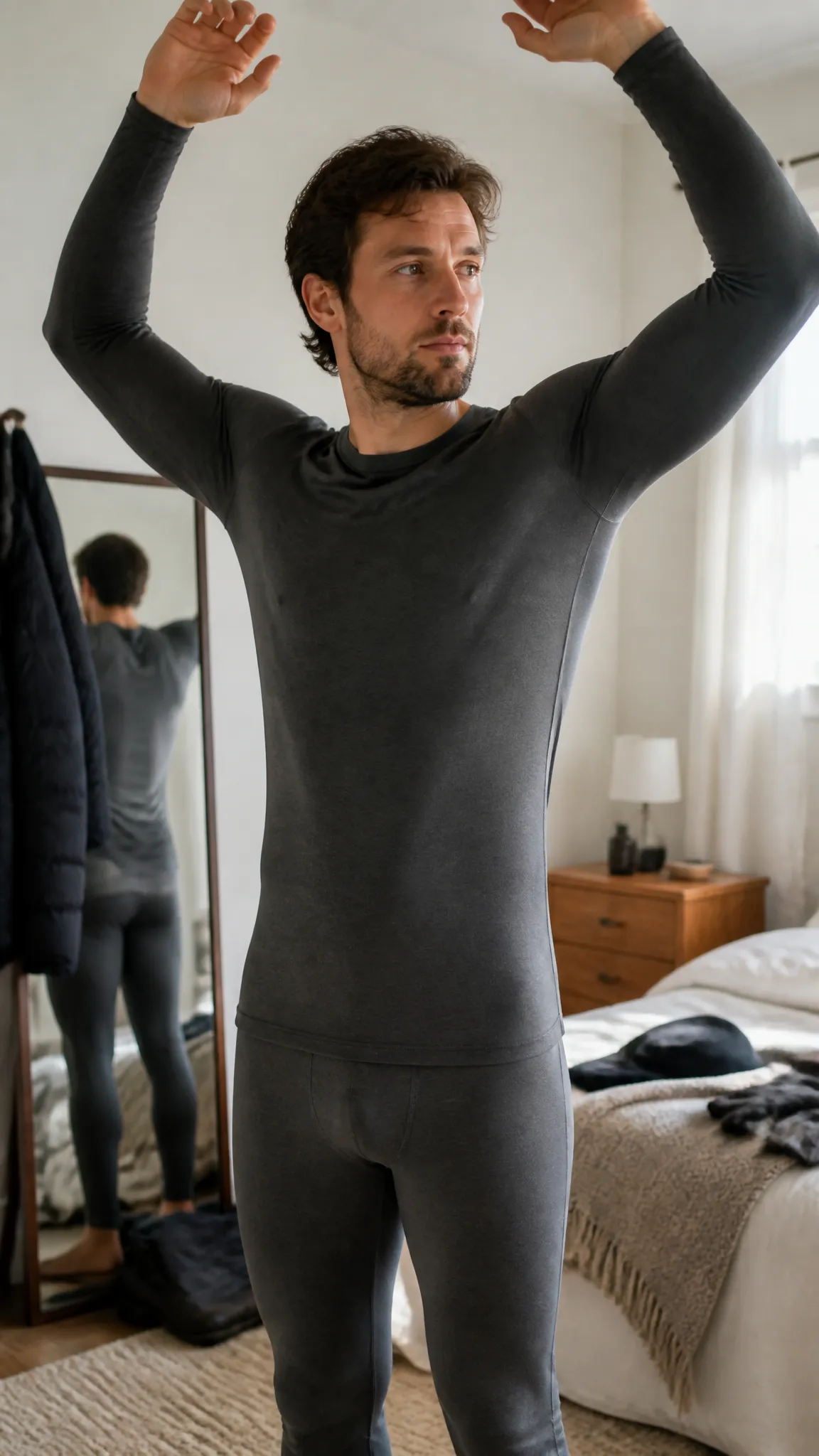
Even a high-quality thermal top underperforms when it hangs like a regular T-shirt. Loose fabric creates gaps, traps moisture unevenly, and bunches beneath sweaters, making the entire outfit feel less comfortable.
Get the Foundation Right
- Look for a close fit through the torso and sleeves.
- Choose a hem long enough to stay tucked during movement.
- Avoid seams or cuffs that dig into your skin.
Check the Fit in Motion
A proper base layer should follow your body without feeling compressive. Raise your arms, bend forward, and rotate your shoulders before removing the tags. If the shirt rides above your waistband or creates thick folds beneath your arms, try a different size or cut. A smooth foundation also helps every garment above it drape more naturally.
3. Using One Heavy Layer Instead of Several Adjustable Ones
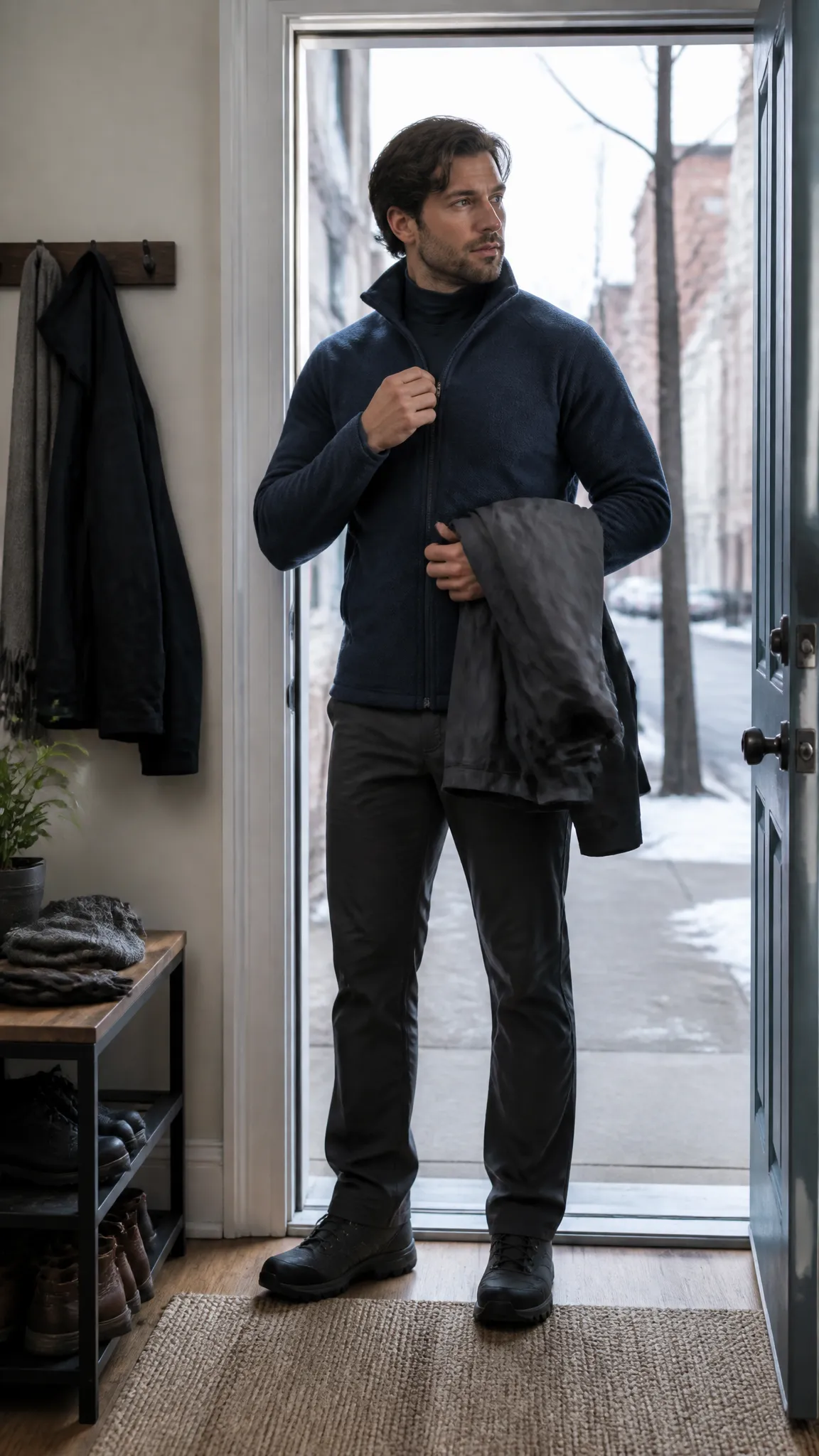
Relying on a single massive sweater or insulated coat limits your options. You may be warm while standing outside, but the same outfit can quickly become uncomfortable on public transit, in a heated store, or during a brisk walk.
Create an Adjustable System
- Start with a moisture-wicking base layer.
- Add a breathable sweater, fleece, or light insulated jacket.
- Finish with a shell suited to wind and precipitation.
Change One Layer at a Time
Several moderate layers let you respond to conditions without rebuilding your whole outfit. Remove the midlayer indoors, open your outer jacket before a steep walk, or add insulation when activity slows. Among the layering mistakes men often make, treating warmth as an all-or-nothing choice is one of the easiest to correct.
4. Ignoring Breathability
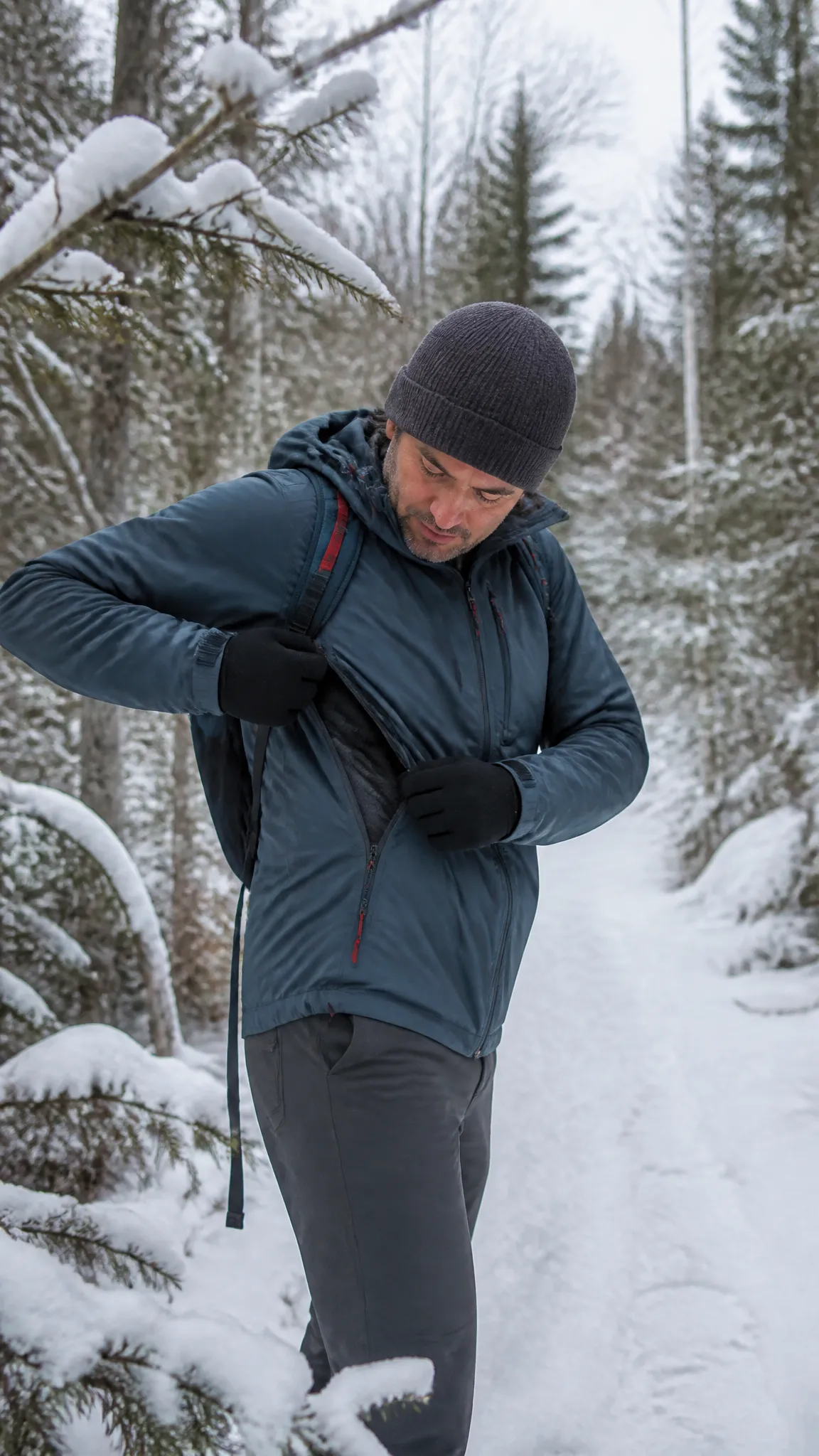
A jacket can block cold air effectively and still make you clammy. If sweat vapor can’t escape, moisture collects inside your clothing and eventually reduces comfort and insulation.
Choose Breathable Pieces
- Use wool, fleece, or breathable synthetics for insulation.
- Reserve fully waterproof shells for genuinely wet conditions.
- Look for useful ventilation such as pit zips or two-way zippers.
Dress for Your Output
A slow walk to dinner requires more insulation than shoveling snow or hiking uphill. Start slightly cool when you expect sustained activity, then vent before you begin sweating heavily. Breathability doesn’t mean allowing wind through every layer. It means balancing moisture release with enough protection for your pace and the weather.
5. Compressing Insulation Under a Tight Coat
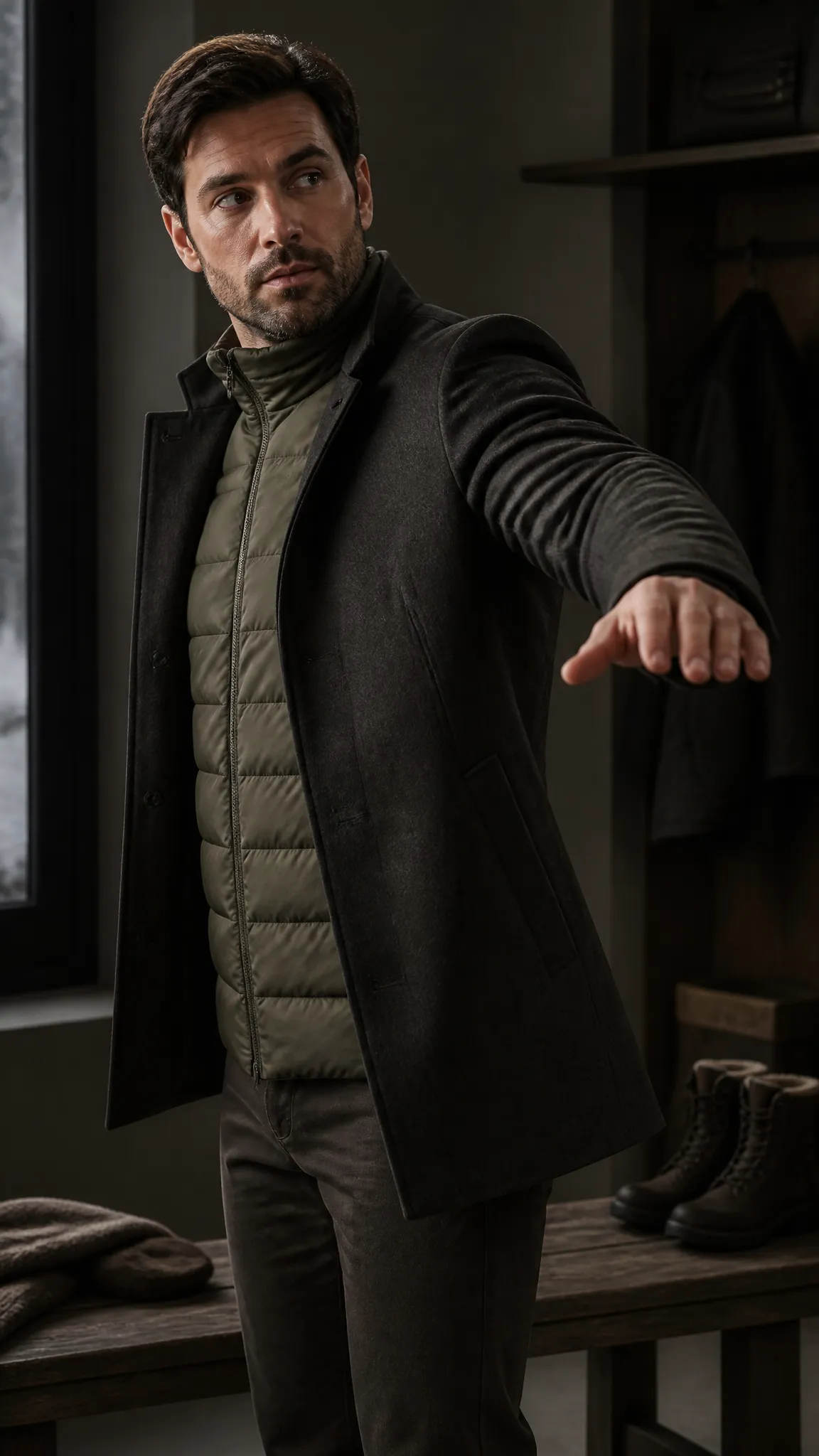
Down, synthetic fill, fleece, and lofty wool keep you warm partly by holding pockets of air. A tight outer jacket crushes that loft, restricts movement, and can make expensive insulation less effective.
Leave Room for Loft
- Try on outerwear over your usual winter midlayer.
- Check for pulling across the chest, back, and upper arms.
- Make sure insulation can expand without creating large gaps.
Test Your Full Winter Outfit
Zip the coat completely, cross your arms, and reach forward as if driving or tying a boot. The shell shouldn’t flatten the midlayer or pull sharply across your shoulder blades. You need enough room for natural fabric loft and movement, but not so much empty space that cold air circulates freely inside the coat.
6. Wearing Layers in the Wrong Order
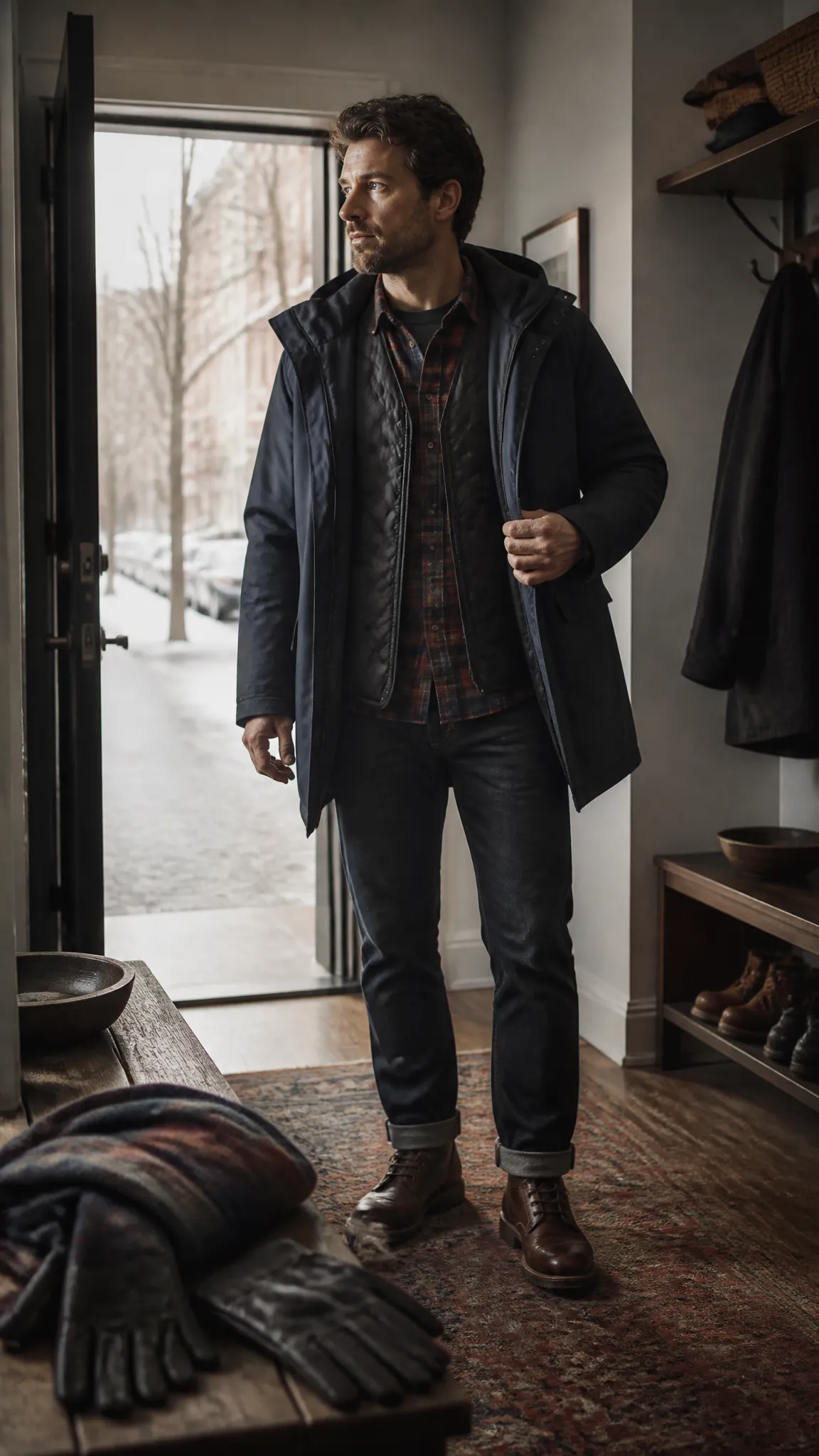
A bulky hoodie beneath a trim sweater or a thick puffer under a restrictive blazer creates friction, pressure points, and awkward proportions. Each layer should support the job of the one above it.
Follow a Functional Sequence
- Place the thinnest moisture-managing garment closest to your skin.
- Add insulation that fits comfortably over the base.
- Use the outermost layer for wind, rain, or snow protection.
Increase Volume Gradually
As you move outward, garments should generally become roomier and more protective. A thin thermal can sit under a flannel shirt, followed by a quilted vest and a weather-resistant coat. Avoid sandwiching a thick, textured garment between two slim pieces. The goal is a smooth progression rather than a stack of competing silhouettes.
7. Overlooking Wind and Wet Weather
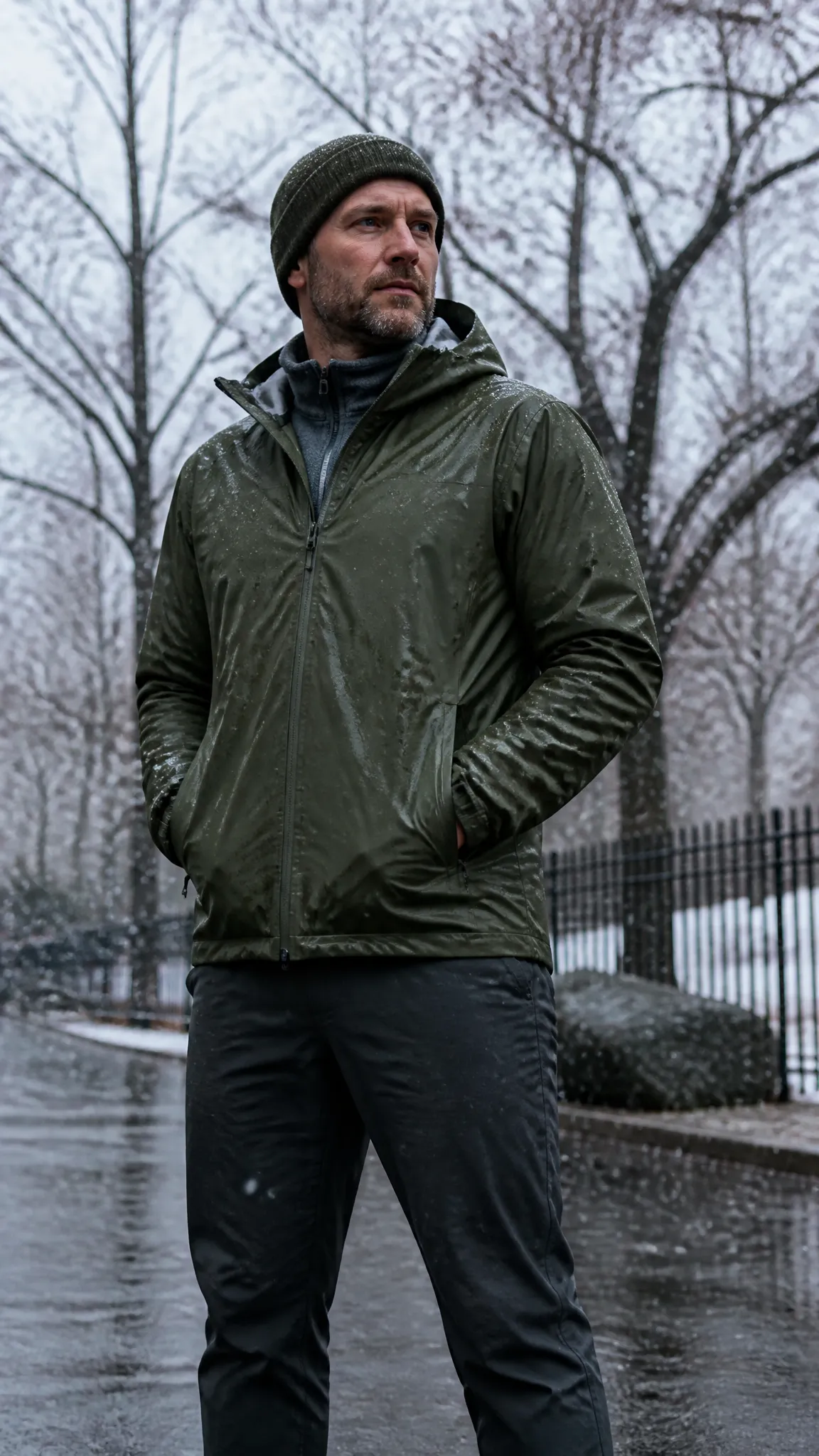
A thick wool sweater may provide plenty of insulation on a calm day, yet cold wind can pass through its knit. Likewise, damp insulation loses comfort and may offer less warmth, so temperature alone shouldn’t determine what you wear.
Match the Outer Layer to Conditions
- Add a wind-resistant shell on exposed, gusty days.
- Choose water-resistant protection for light, intermittent moisture.
- Wear a waterproof shell when steady rain or wet snow is likely.
Separate Insulation From Protection
Your warmest piece doesn’t need to handle every weather hazard. A thin shell worn over a fleece or insulated jacket can stop wind and shed precipitation while preserving flexibility. Check the forecast for wind and precipitation, not just the listed temperature, and adjust your outer layer accordingly.
8. Forgetting the Neck, Head, Hands, and Feet
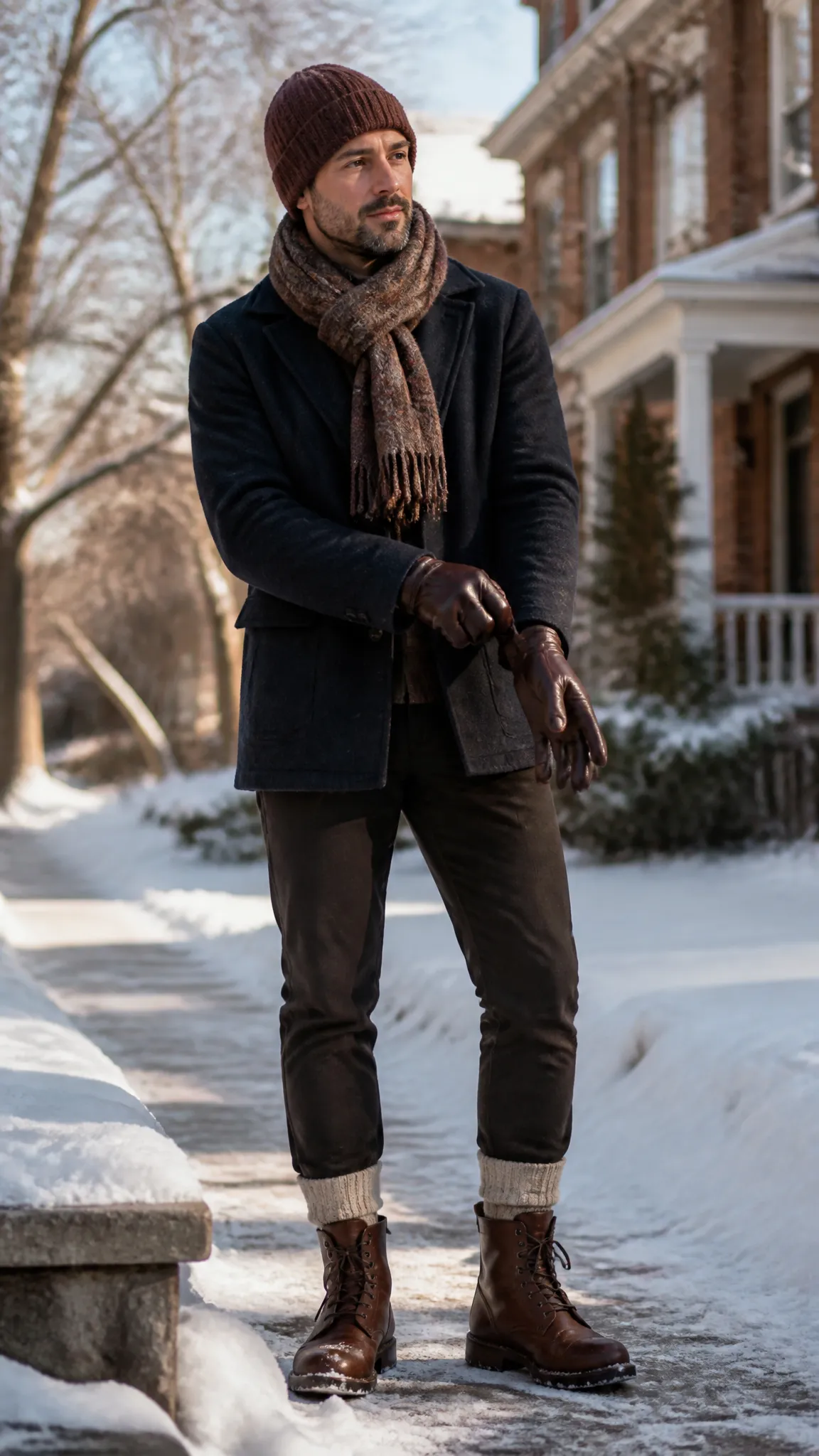
A carefully layered torso won’t keep you comfortable if cold air enters at the collar or your hands and feet are exposed. These areas also influence how warm you feel, particularly when you’re standing still.
Close the Exposed Gaps
- Wear a hat that covers your ears in sustained cold.
- Add gloves and a scarf or neck gaiter as conditions require.
- Use moisture-managing socks with weather-appropriate footwear.
Adjust Accessories Before Your Coat
Accessories provide precise temperature control without adding bulk around your core. Removing a hat or loosening a scarf may be enough when you warm up, while putting on gloves can make a chilly wait more tolerable. Avoid stacking socks until boots become tight, since compression can reduce circulation and eliminate insulating air space.
9. Failing to Remove Layers Indoors

Keeping every layer on in a heated office, restaurant, or train encourages sweating. Once that moisture accumulates, you can feel much colder when you return outside.
Plan for Easy Removal
- Wear a presentable base or shirt beneath your midlayer.
- Choose zippered or buttoned pieces that come off quickly.
- Carry a bag with room for a folded sweater or light jacket.
Adjust Before You Overheat
Open your coat as you enter a warm building, then remove it and your insulating layer if necessary. Don’t wait until your back is damp. Avoiding this problem is partly about wardrobe planning: if every inner garment works on its own, you’re less likely to remain overdressed because taking something off would leave an unfinished outfit.
10. Dressing Only for the Forecast Temperature
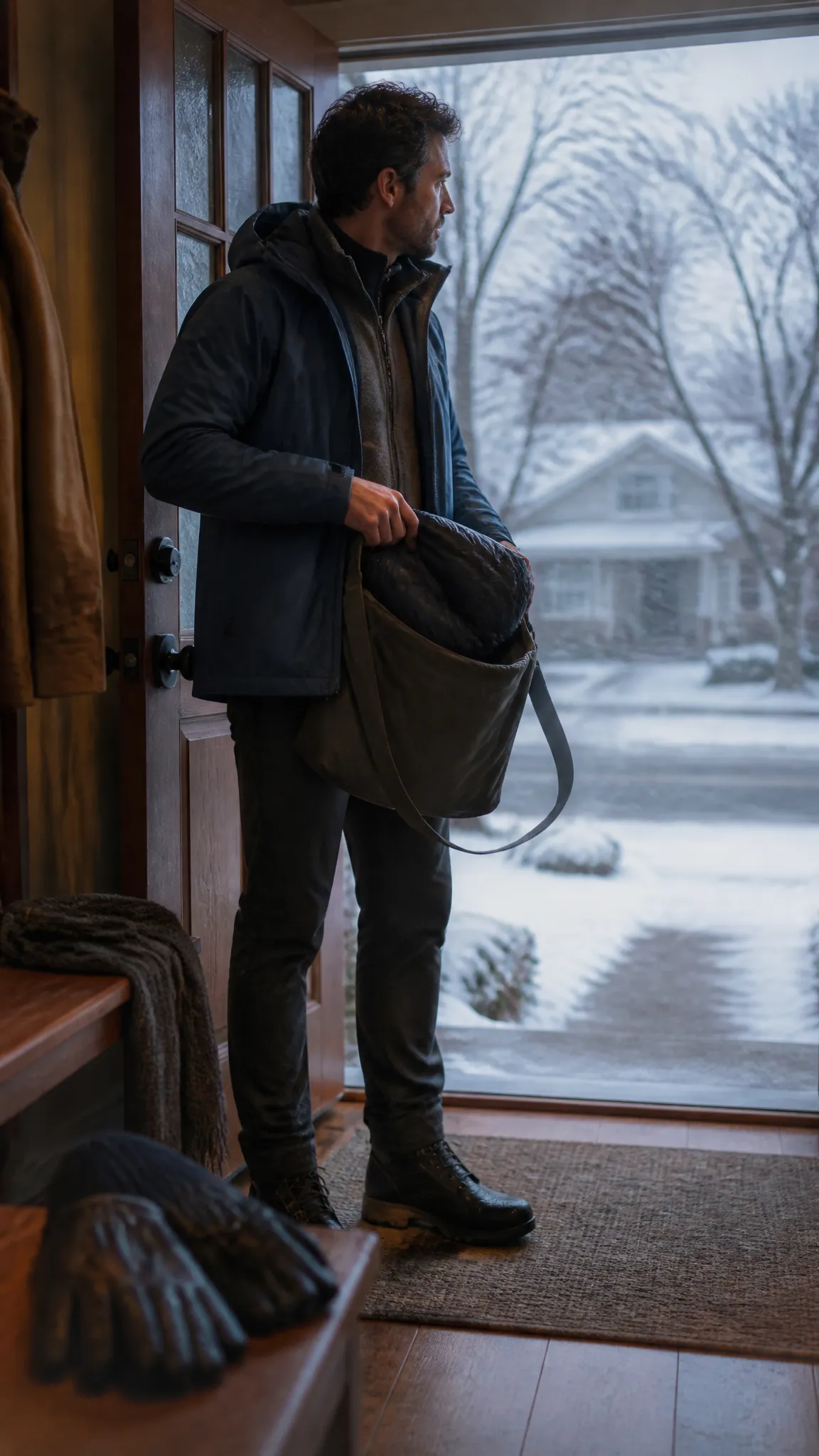
A reading of 30 degrees can feel very different depending on wind, sun, precipitation, activity, and time spent outdoors. Building an outfit around one number is therefore one of the more persistent layering mistakes men make in cold weather.
Consider the Whole Day
- Check wind, precipitation, and temperature changes.
- Account for outdoor exposure and physical activity.
- Bring one packable layer when conditions may shift.
Build Around the Coldest Realistic Moment
Think through your itinerary rather than dressing only for the moment you leave home. A short drive to a heated office needs a different system than waiting on a platform, attending an outdoor event, or walking several city blocks after dark. A compact vest, light fleece, or shell gives you insurance without forcing you to wear maximum insulation all day.
How to Build a Simple Cold-Weather Layering System
Start with three jobs: moisture management, insulation, and weather protection. Your base layer keeps skin drier, your midlayer holds warm air, and your outer layer limits the effect of wind and precipitation. Not every day requires three substantial garments, but thinking in terms of functions makes choosing clothes easier.
For a typical cold commute, you might wear a lightweight merino crewneck, a wool sweater, and a wind-resistant coat. For active outdoor use, switch the sweater for breathable fleece and carry a shell that can be vented. In deeper cold or during low activity, use a loftier insulated midlayer while preserving enough room beneath the outer shell.
When testing a combination, pay attention to moisture, mobility, and adjustability. You should be able to reach, sit, and walk without binding, and at least one garment should be easy to remove or vent. Fix those basics and most cold-weather layering problems become much easier to diagnose.
Frequently Asked Questions
How many layers should a man wear in cold weather?
Three functional layers are a useful starting point: a moisture-wicking base, an insulating midlayer, and a protective outer layer. Mild or dry conditions may require fewer, while severe cold may call for heavier insulation rather than simply more garments.
Should a base layer be tight or loose?
It should fit close to the body without restricting movement or circulation. A close fit helps manage moisture and prevents bunching, but it shouldn’t pinch at the neck, cuffs, waist, or underarms.
Is wool or fleece better for a midlayer?
Both can work well. Wool regulates temperature, resists odor, and looks at home in casual outfits, while fleece is lightweight, quick-drying, and practical for active use. Choose based on activity, conditions, and the style of the garments worn over it.
Can you wear two base layers?
You can, but it’s often less comfortable than using one appropriate base layer and a proper midlayer. Two tight garments may restrict movement or trap moisture between them. If you need more warmth, add breathable insulation instead.
Why am I still cold while wearing several layers?
Your layers may be damp, compressed, too loose, or unprotected from wind. Check for exposed gaps at the collar and cuffs, make sure footwear isn’t overly tight, and confirm that the outer layer matches the actual weather.
Make Each Layer Earn Its Place
Before heading out, ask what each garment contributes and whether you can remove or vent it easily. Correcting the biggest layering mistakes men make isn’t about owning more winter clothing. It’s about combining the right fit, fabric, and function for the day ahead.