Getting dressed is oddly tricky when a coat feels excessive but one light layer isn’t quite enough. The best mild weather outfits men can rely on balance breathable fabrics, useful layers, and shoes that suit the setting.
These ten combinations cover casual weekends, office days, dinners, and unpredictable afternoons without adding unnecessary bulk. Each one includes a practical formula and a few adjustments for temperature swings.
1. Oxford Shirt, Chinos, and Minimal Sneakers
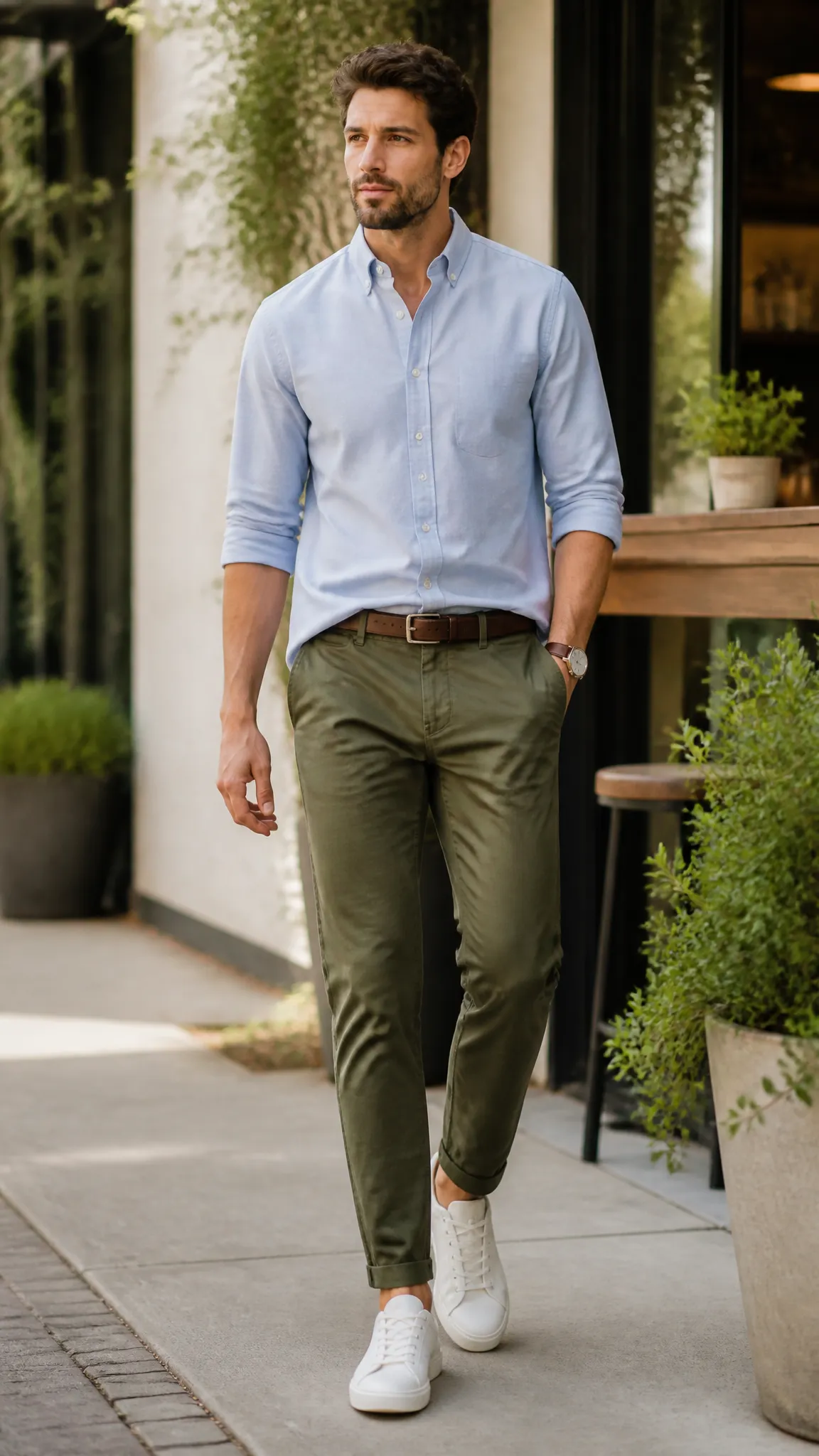
An Oxford cloth button-down and chinos form one of the most adaptable mild weather outfits men can wear from a casual office to weekend lunch. The shirt has more texture than a dress shirt, while cotton chinos feel polished without looking formal.
Outfit Pieces
- A white, pale blue, or striped Oxford shirt
- Straight or gently tapered cotton chinos
- Clean leather or suede sneakers
- A matching casual belt and simple watch
How to Wear It
Choose chinos in navy, olive, stone, or khaki, then keep the shirt untucked if its hem is short enough. Roll the sleeves neatly when the afternoon warms up. For a sharper workplace outfit, tuck in the shirt and swap sneakers for brown loafers.
2. Unstructured Blazer Over a Knit Polo
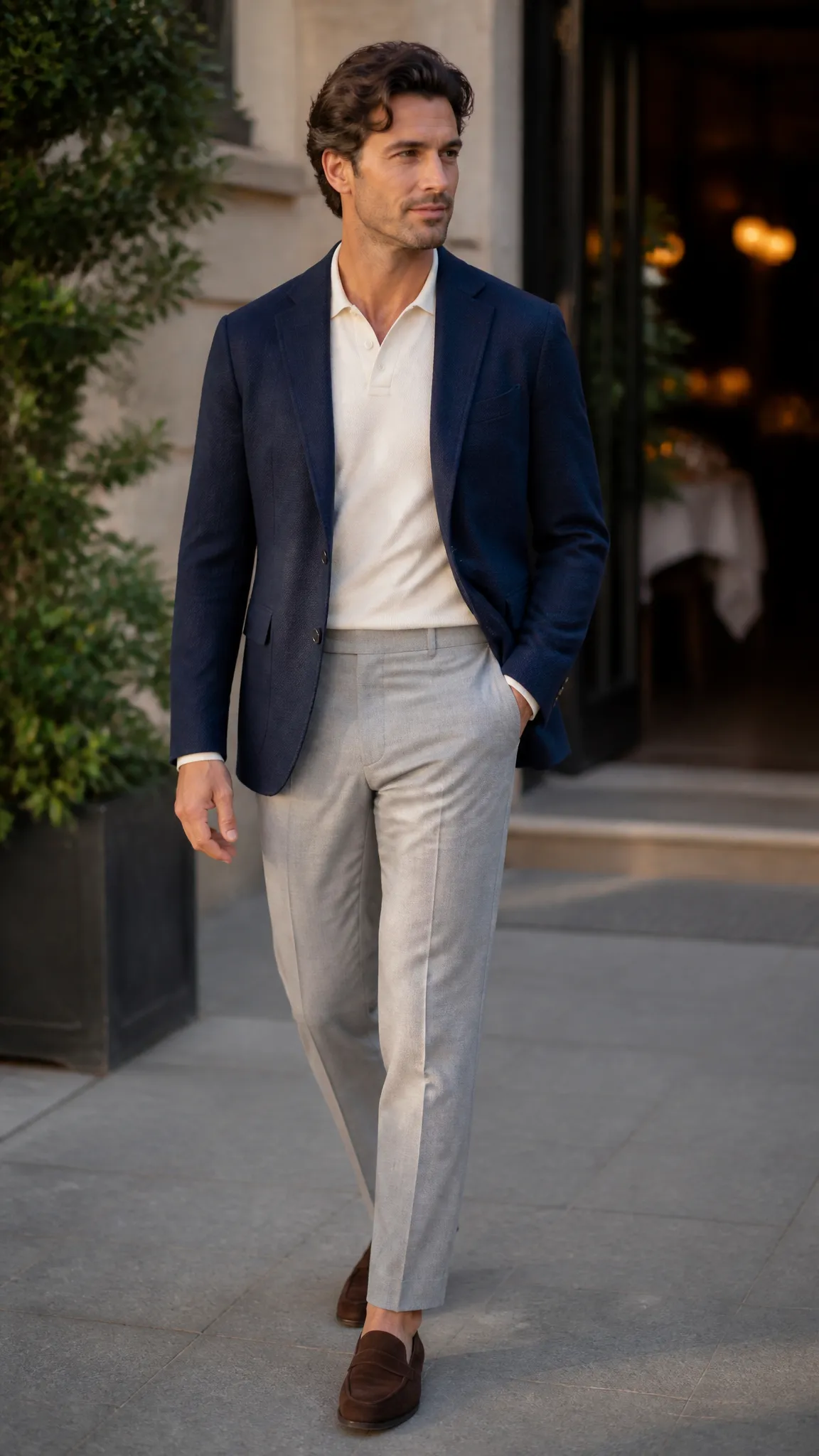
A soft-shouldered blazer provides shape and coverage without the weight or stiffness of outerwear. Layered over a knit polo, it lands comfortably between business casual and dressed-up, making it useful for dinners, presentations, or events with a vague dress code.
Outfit Pieces
- An unstructured cotton, linen-blend, or hopsack blazer
- A fine-gauge knit polo in a solid color
- Tailored trousers or dark chinos
- Suede loafers or leather derbies
How to Wear It
Keep the blazer and trousers different enough to avoid resembling a mismatched suit. A navy jacket with gray trousers or a tan jacket with dark navy chinos works reliably. Leave the polo open at the neck, and choose unlined or partially lined tailoring for better airflow.
3. Denim Jacket With a T-Shirt and Chinos
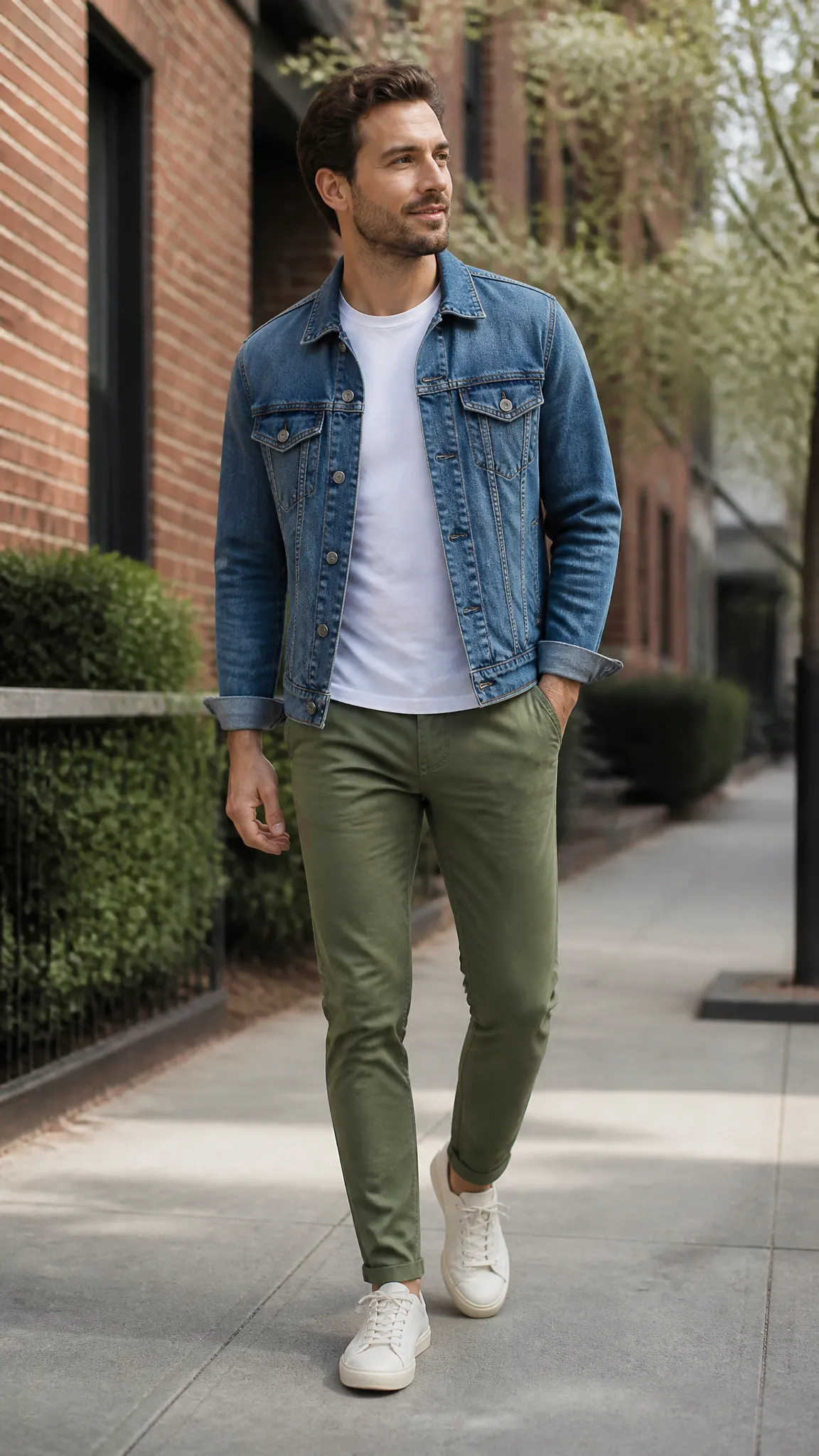
A denim jacket gives you a light barrier against wind while remaining easy to carry once the day heats up. Pairing it with chinos instead of jeans creates contrast and keeps the familiar combination from feeling overly rugged.
Outfit Pieces
- A mid-wash or dark-wash denim jacket
- A substantial crew-neck T-shirt
- Olive, tan, or charcoal chinos
- Canvas sneakers or casual leather boots
How to Wear It
Look for a jacket that sits close to the body but still buttons comfortably over your shirt. White, heather gray, navy, or muted green tees make layering straightforward. If you prefer double denim, use clearly contrasting washes, such as a faded blue jacket with deep indigo jeans.
4. Lightweight Cardigan and Straight-Leg Jeans
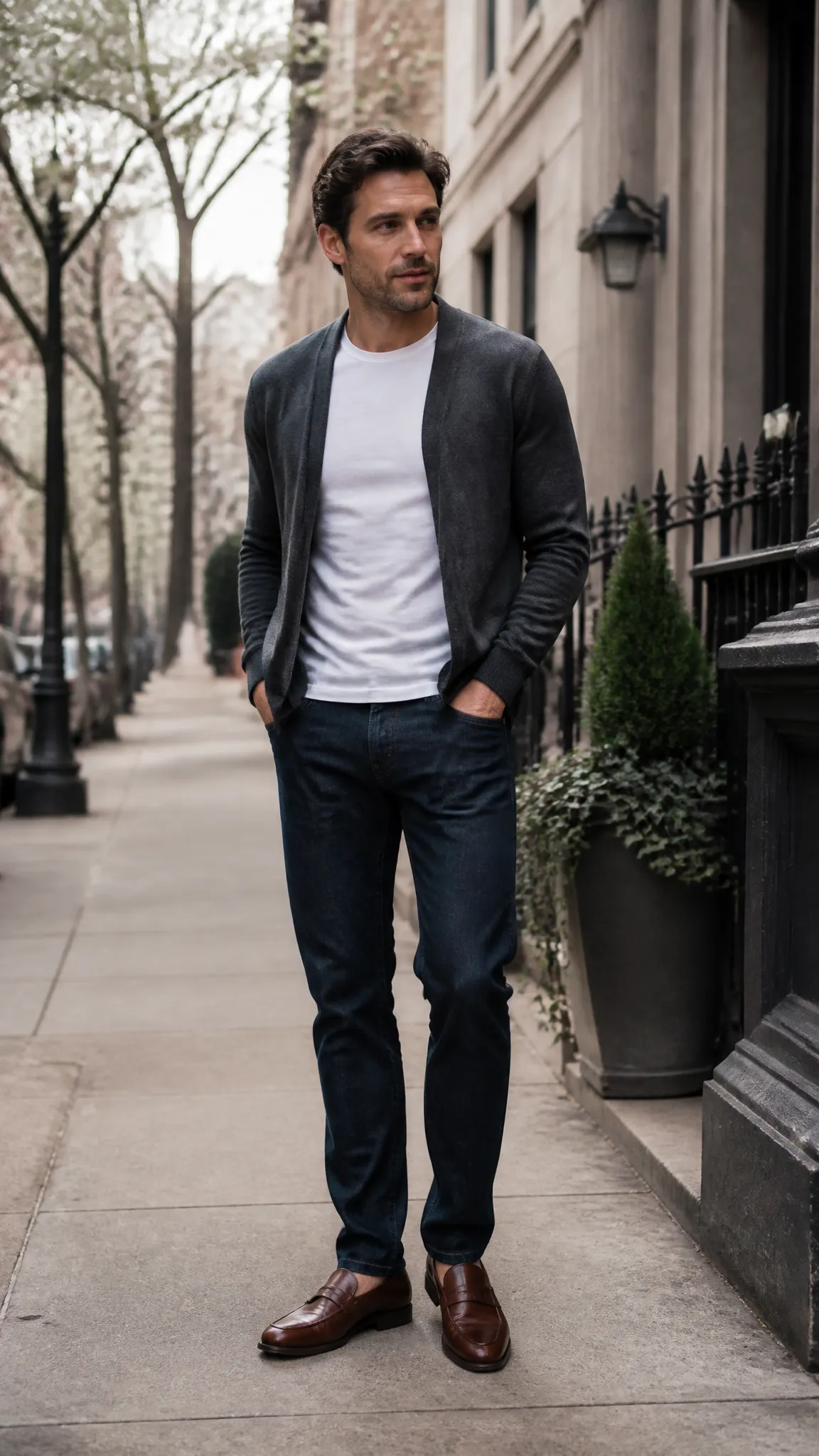
A cardigan offers adjustable warmth without committing you to a jacket. You can wear it buttoned during a cool commute, open indoors, or folded into a tote, which makes it especially practical when temperatures change throughout the day.
Outfit Pieces
- A cotton or merino wool cardigan
- A plain T-shirt or casual collared shirt
- Dark straight-leg jeans
- Leather sneakers, loafers, or chukka boots
How to Wear It
Choose a cardigan with enough structure to hold its shape and a hem that finishes around the hips. Charcoal, navy, camel, and deep green are easy to combine with denim. Keep the layer underneath relatively fitted so the outfit stays clean rather than bunching around the waist and sleeves.
5. Chore Jacket With a Henley and Fatigue Pants
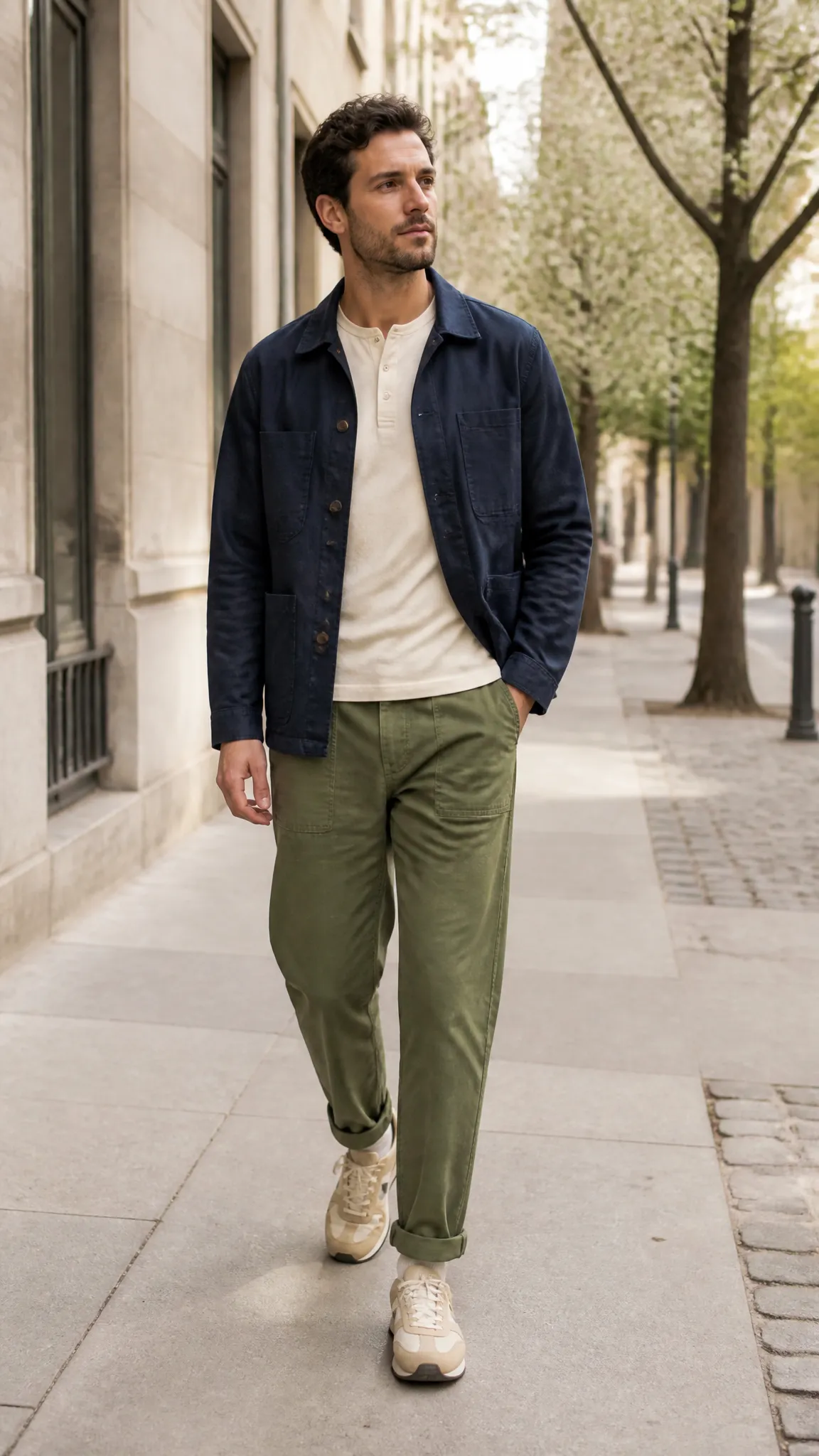
The chore jacket is a useful substitute for a coat because it’s light, roomy, and equipped with practical pockets. A Henley adds visual interest beneath it, while fatigue pants continue the workwear influence without requiring heavy fabrics.
Outfit Pieces
- An unlined cotton twill chore jacket
- A long-sleeve or short-sleeve Henley
- Straight-cut fatigue pants
- Retro runners or moc-toe shoes
How to Wear It
Avoid making every piece olive green or brown. Try a navy chore jacket, off-white Henley, and olive pants for a simple three-color palette. The fit should be relaxed but intentional, with clean hems and visible shape through the shoulders rather than excessive volume.
6. Merino Crewneck Over a Collared Shirt
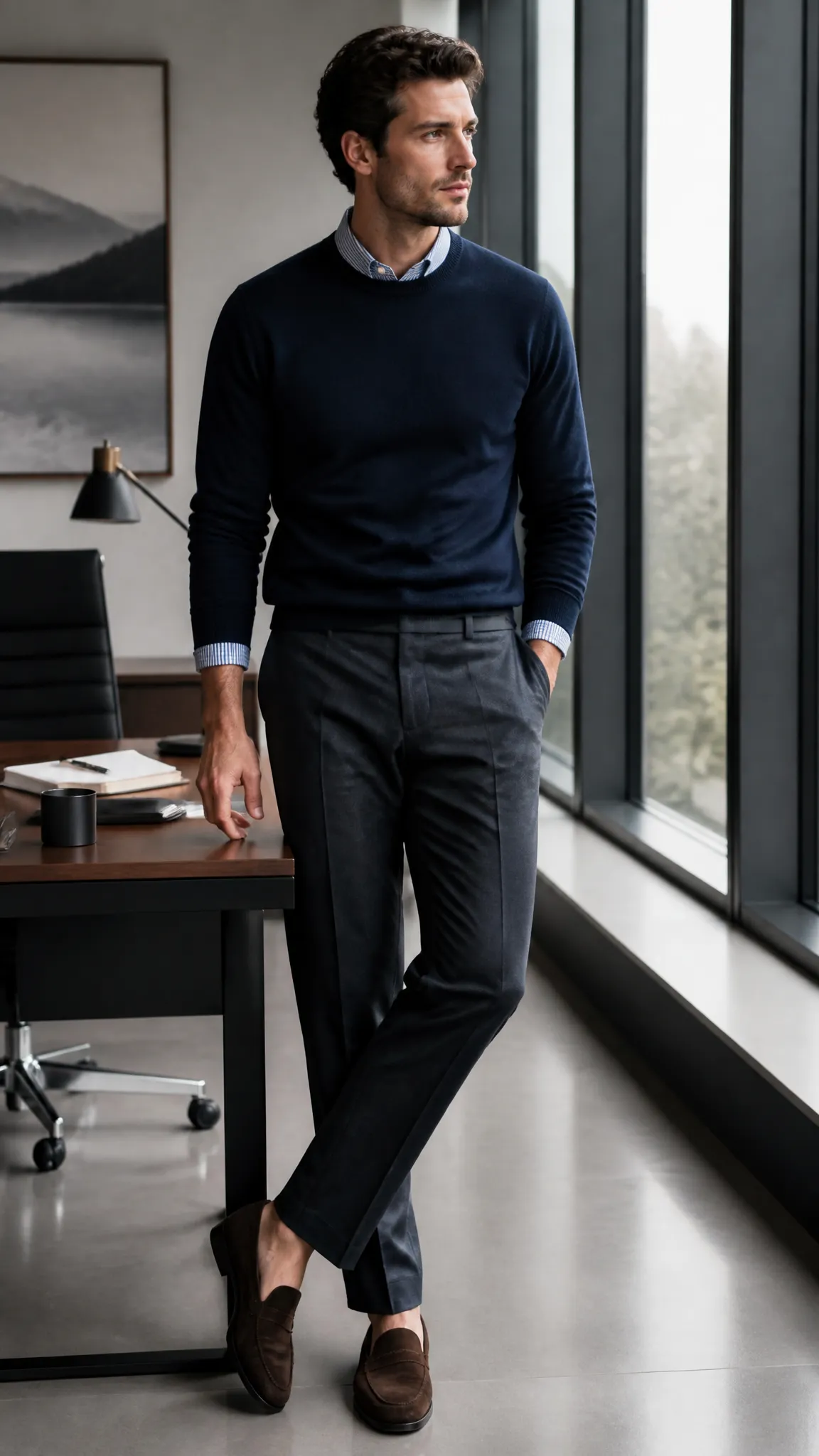
Fine merino wool regulates warmth better than a bulky sweatshirt and looks appropriate in most offices. A crewneck layered over an Oxford or poplin shirt also gives you two useful temperature controls: remove the sweater or push up its sleeves as needed.
Outfit Pieces
- A lightweight merino crewneck sweater
- An Oxford or poplin button-down shirt
- Wool trousers or cotton chinos
- Loafers, derbies, or streamlined sneakers
How to Wear It
Use a sweater with a close but comfortable neckline so the shirt collar sits neatly. A navy crewneck over a blue-and-white striped shirt is office-ready, while burgundy or forest green adds more personality. Let only a small amount of shirt cuff show, and avoid an overly long untucked hem beneath the sweater.
7. Overshirt With a Tee and Drawstring Trousers
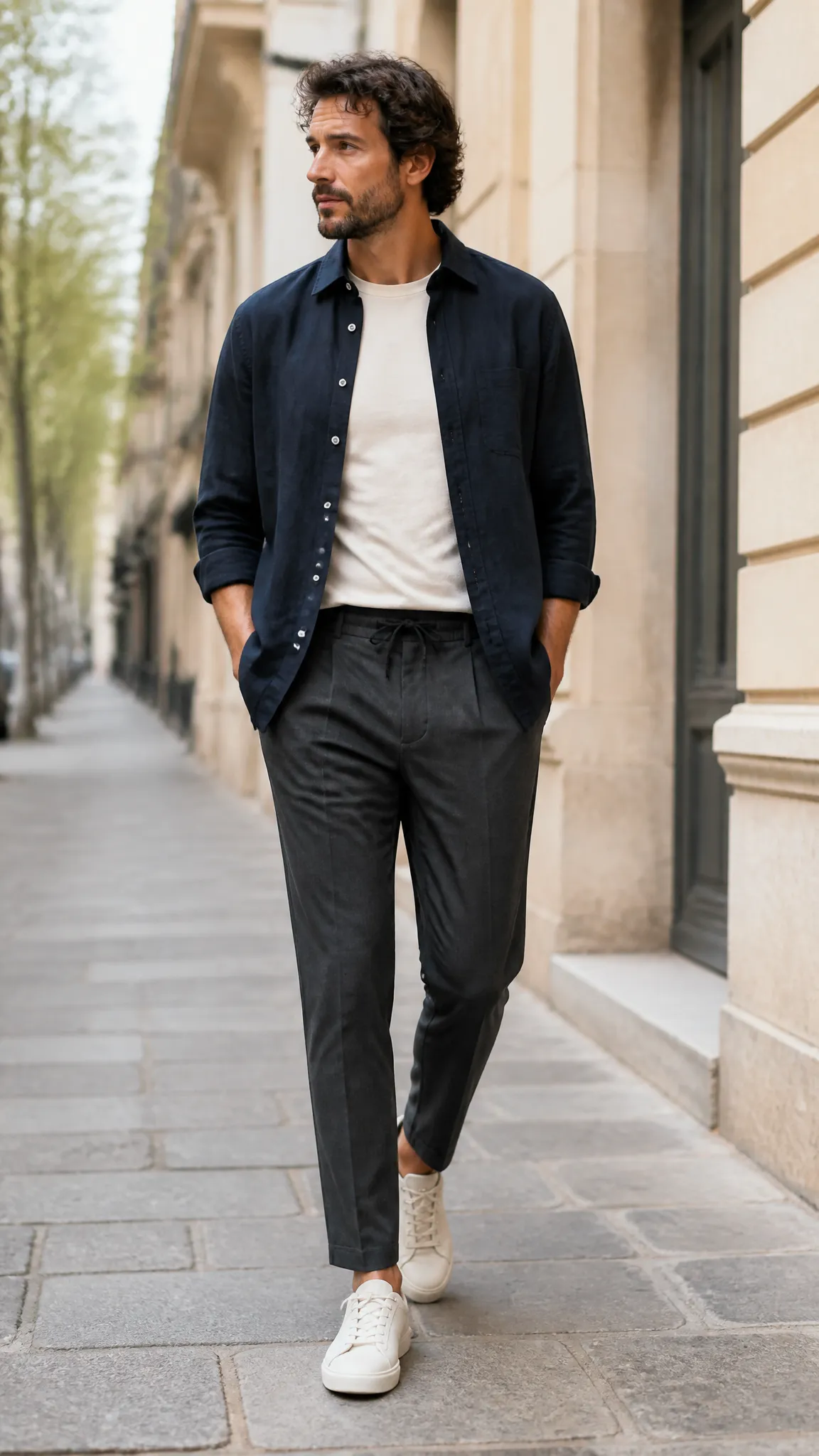
An overshirt has the coverage of a jacket and the easy fit of a button-down, making it ideal for transitional weather. Drawstring trousers keep the outfit relaxed, but a clean fabric and tapered cut prevent it from reading like loungewear.
Outfit Pieces
- A cotton, linen-blend, or lightweight wool overshirt
- A fitted or regular-cut crew-neck T-shirt
- Tailored drawstring trousers
- Low-profile sneakers or suede loafers
How to Wear It
Wear the overshirt open and choose a tee that contrasts with it, such as ecru beneath navy or gray beneath olive. Look for trousers with a discreet drawstring and a proper trouser-like drape. This combination works best with quiet, coordinated colors rather than athletic logos or shiny technical materials.
8. Suede Bomber With a Polo and Dark Denim
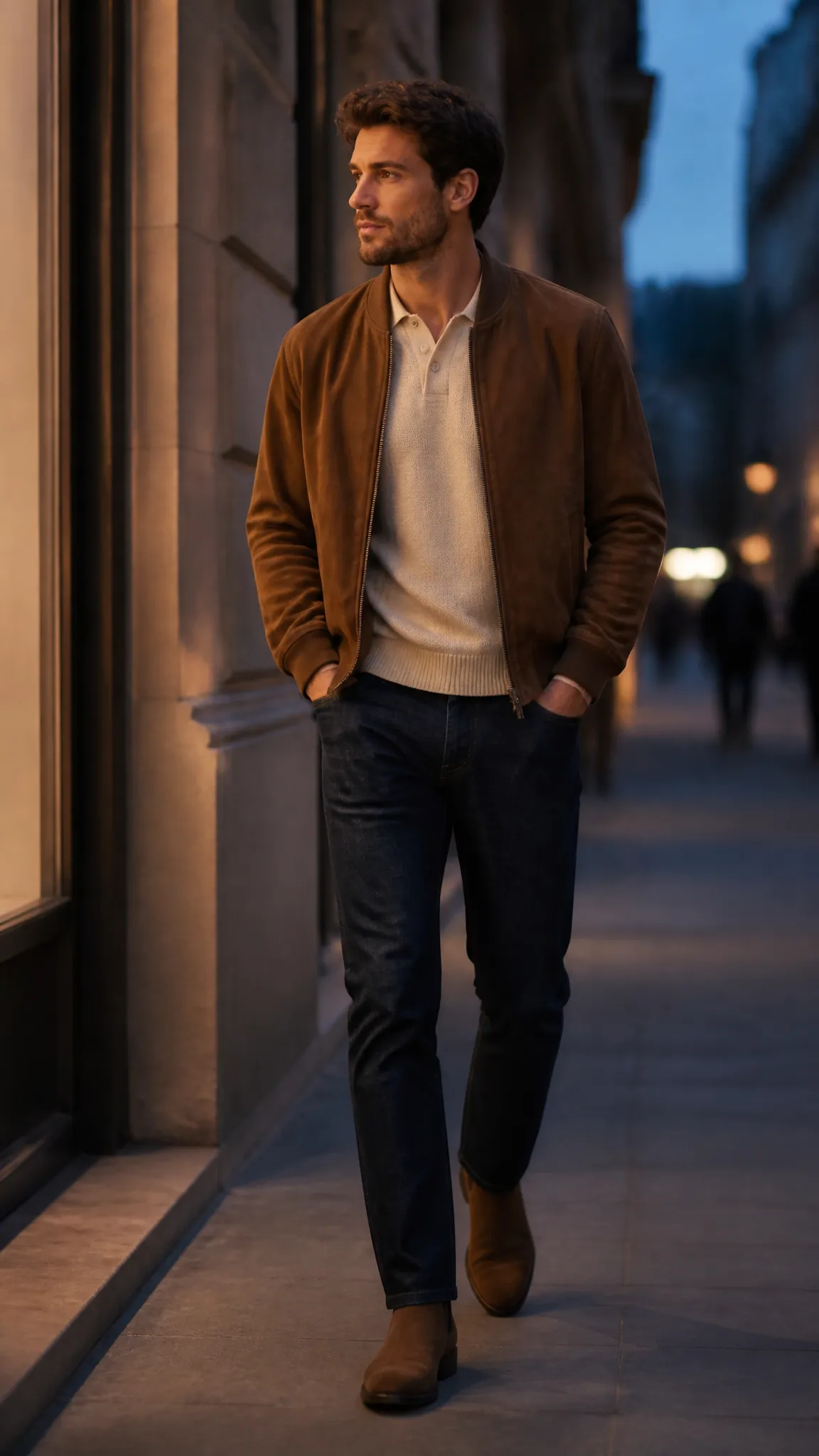
A suede bomber adds texture and warmth without the length or visual weight of a coat. It’s a refined option for evening temperatures, especially when you want a casual outfit that still feels considered.
Outfit Pieces
- A tobacco, dark brown, or navy suede bomber
- A cotton or knit polo shirt
- Dark indigo or black jeans
- Suede boots or minimalist leather sneakers
How to Wear It
Keep the rest of the outfit streamlined so the suede remains the focal point. A cream polo, dark jeans, and brown bomber create subtle contrast without looking busy. Since suede dislikes heavy rain, choose a different layer when showers are likely, and follow the garment’s care instructions before applying any protectant.
9. Quarter-Zip Sweater With Corduroy Trousers
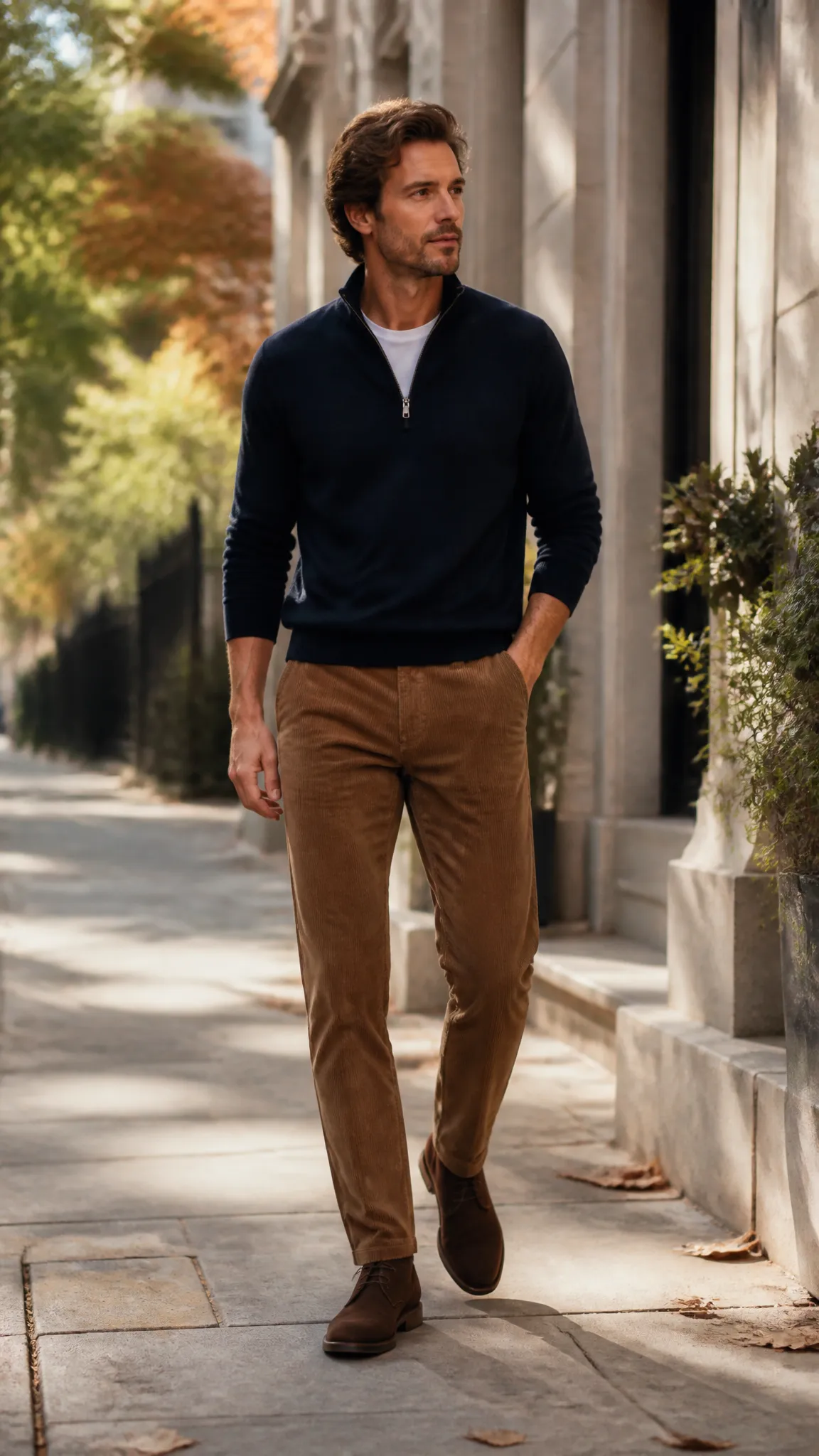
A fine-gauge quarter-zip sweater feels lighter than a traditional cold-weather knit while giving the neckline more flexibility. Thin-wale corduroy trousers bring softness and texture, making this one of the more seasonal mild weather outfits men can use on crisp, dry days.
Outfit Pieces
- A cotton or lightweight merino quarter-zip
- A crew-neck T-shirt or collared shirt
- Thin-wale corduroy trousers
- Leather sneakers, brogues, or desert boots
How to Wear It
Stick to lighter-weight corduroy rather than thick winter fabric. Stone, tobacco, or muted olive trousers pair well with a navy or charcoal sweater. Wear the zipper slightly open and let a simple tee show underneath for a casual result, or add an Oxford collar when the occasion calls for more polish.
10. Utility Vest Over a Sweatshirt and Jeans
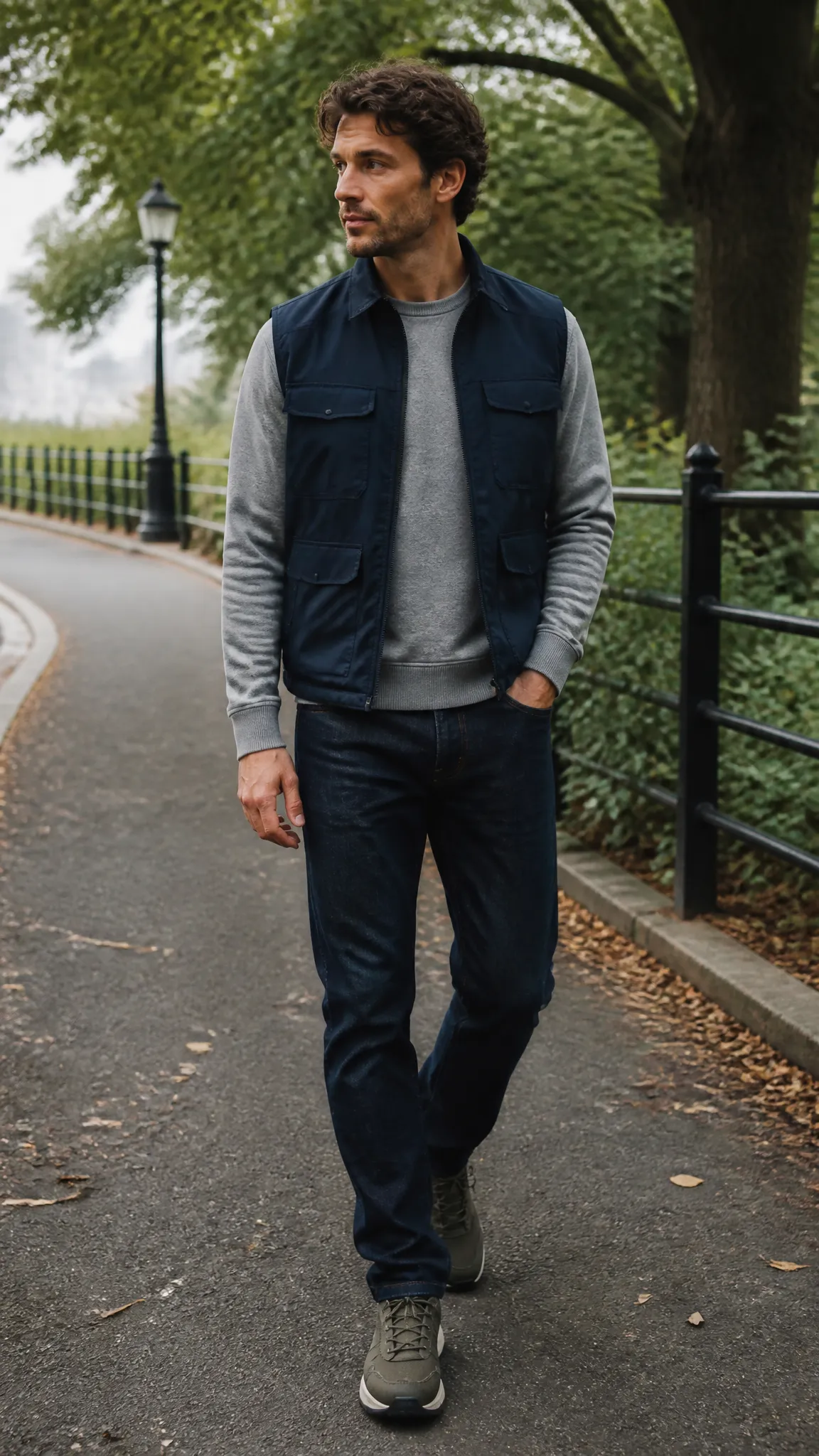
A lightweight utility vest warms your core while leaving your arms unrestricted, which is helpful for hiking, travel, errands, or active weekends. The key is choosing a streamlined vest rather than a thick insulated style designed for winter.
Outfit Pieces
- A light quilted, canvas, or technical utility vest
- A loopback cotton sweatshirt
- Straight-leg jeans or canvas pants
- Trail-inspired sneakers or casual boots
How to Wear It
Keep both layers relatively trim to avoid unnecessary bulk through the torso. A navy vest over a gray sweatshirt is an easy starting point, and dark denim keeps the combination grounded. If the weather turns warmer, replace the sweatshirt with a long-sleeve tee while retaining the pockets and wind protection of the vest.
How to Dress for Temperatures That Change
Successful transitional dressing starts with layers that work independently. Your base shirt should look complete after the sweater, overshirt, or jacket comes off, so avoid treating it as an afterthought. Natural fibers such as cotton, linen, and fine merino are often comfortable choices, though fabric weight and weave matter as much as the fiber itself.
Also consider the difference between the forecast and your actual day. Wind, shade, indoor air conditioning, and evening plans can make the same temperature feel very different. A breathable long-sleeve layer, closed-toe footwear, and an optional lightweight top layer cover more situations than one heavy garment.
For cohesive mild weather outfits men don’t need complicated color rules. Start with two neutrals, add one muted color, and repeat a tone through your shoes, belt, or upper layer. Navy, gray, olive, tan, cream, and dark denim combine easily and make it simpler to remove a layer without disrupting the outfit.
Frequently Asked Questions
What temperature is mild enough to skip a coat?
There isn’t one universal cutoff because wind, humidity, sun, activity level, and personal comfort all matter. When a coat seems excessive, bring an overshirt, cardigan, light blazer, or unlined jacket that you can remove and carry easily.
What fabrics work best in mild weather?
Midweight cotton, cotton twill, linen blends, lightweight denim, hopsack wool, and fine merino are versatile options. Focus on breathable weaves and moderate fabric weights, then avoid heavy insulation unless the forecast calls for a sharp temperature drop.
How can I make a casual layered outfit look sharper?
Prioritize fit, clean footwear, and a controlled color palette. Trousers with a neat hem and layers that align around the hips will make even a T-shirt, overshirt, and sneakers look intentional.
Should the outer layer be darker than the shirt?
It doesn’t have to be, but darker outer layers are usually easy to style. You can reverse the formula with an ecru chore jacket over a navy shirt, provided there’s enough contrast to keep the layers visually distinct.
What should I carry if the evening may turn cold?
Bring a packable cardigan, lightweight merino sweater, or thin wind-resistant layer. It should fit comfortably over your daytime shirt and fold into a bag without taking up the space of a full coat.