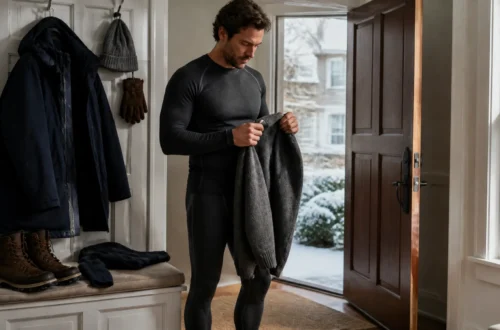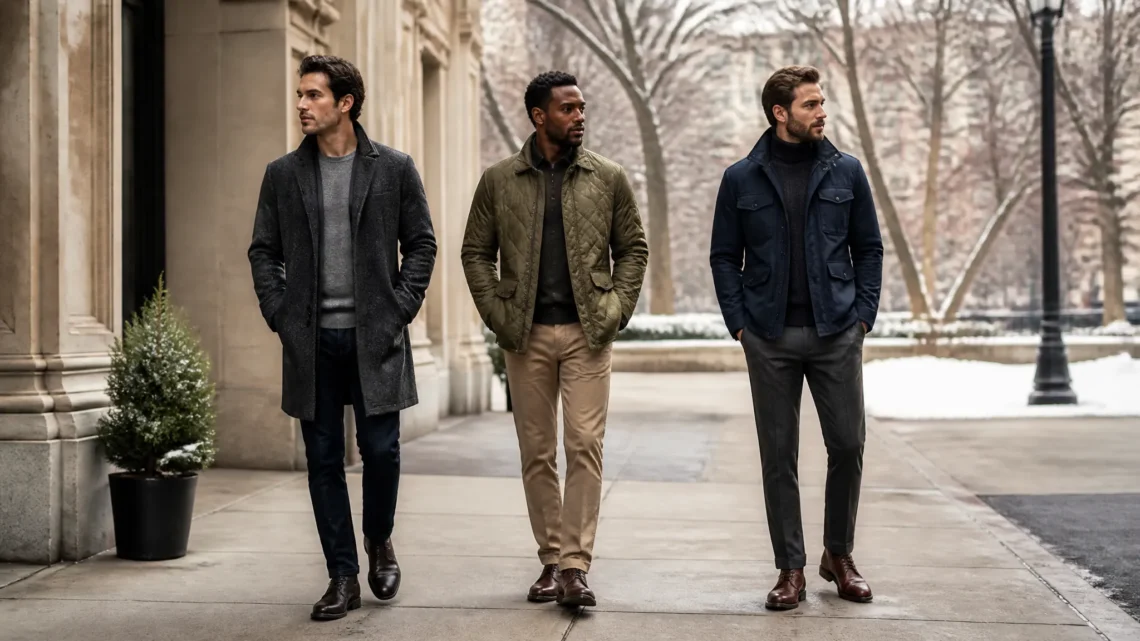
Getting dressed for a cold day can leave you feeling more padded than polished. The best men’s winter casual outfits stay warm by combining efficient layers, useful fabrics, and clean proportions instead of piling on thick pieces.
These 15 combinations show you exactly what to wear, how the layers work together, and where to adjust the fit. Keep scrolling to find options for errands, casual offices, weekends, and nights out.
1. Men’s Winter Casual Outfits With a Wool Topcoat
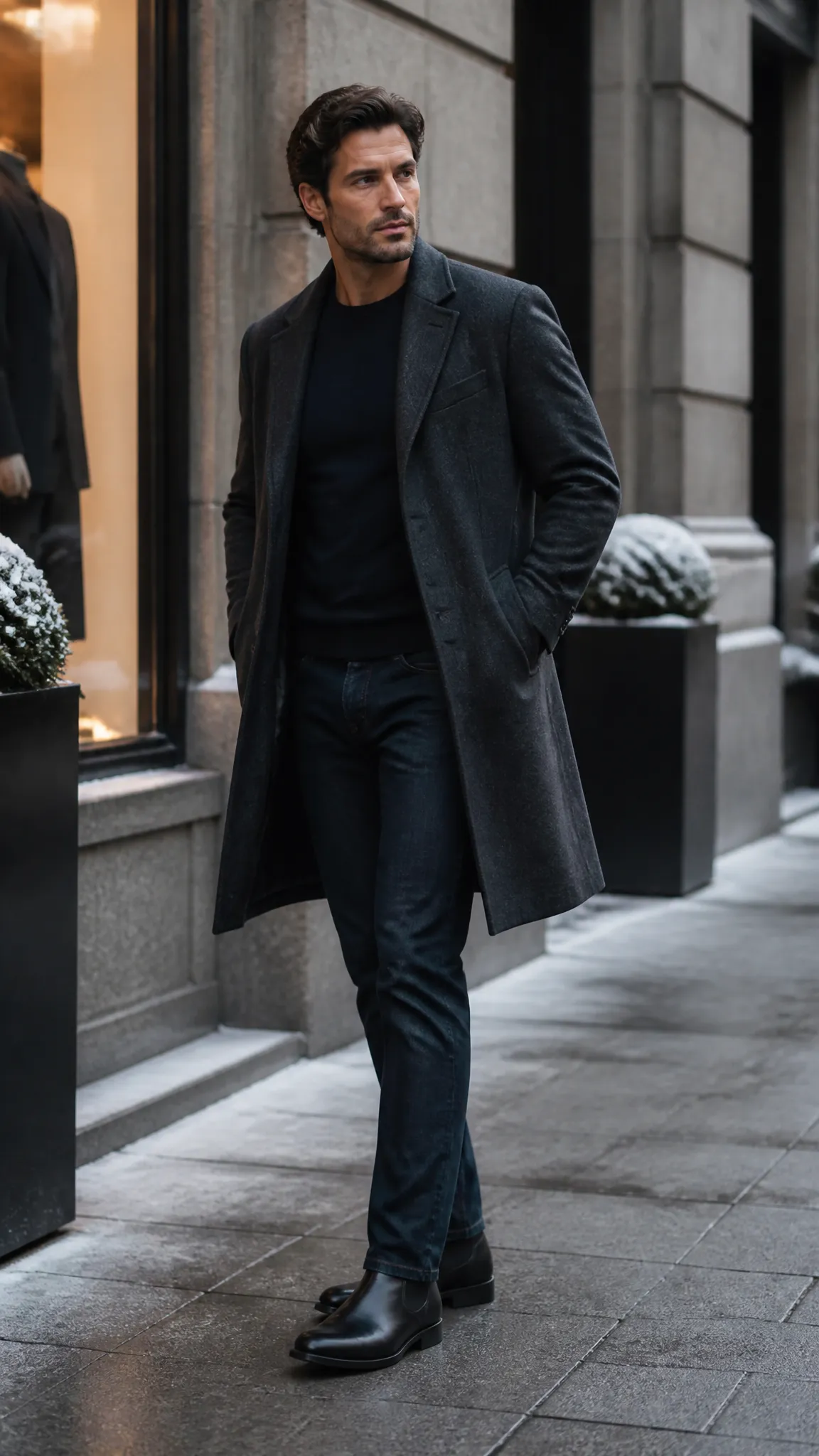
A tailored wool topcoat provides substantial coverage without the puffiness of an oversized parka. Worn over fine-gauge knitwear, it creates a long, clean outline suitable for workdays, dinner, or a city weekend.
Outfit Pieces
- Charcoal or camel wool topcoat
- Fine-gauge merino crewneck
- Straight dark-wash jeans
- Leather Chelsea boots
How to Wear It
Choose a coat with enough shoulder and chest room for the sweater, but avoid dropping several sizes up. Keep the sweater hem tucked or neatly contained beneath the coat, then use dark denim and close-fitting boots to maintain a streamlined lower half.
2. Quilted Jacket and Flannel Shirt
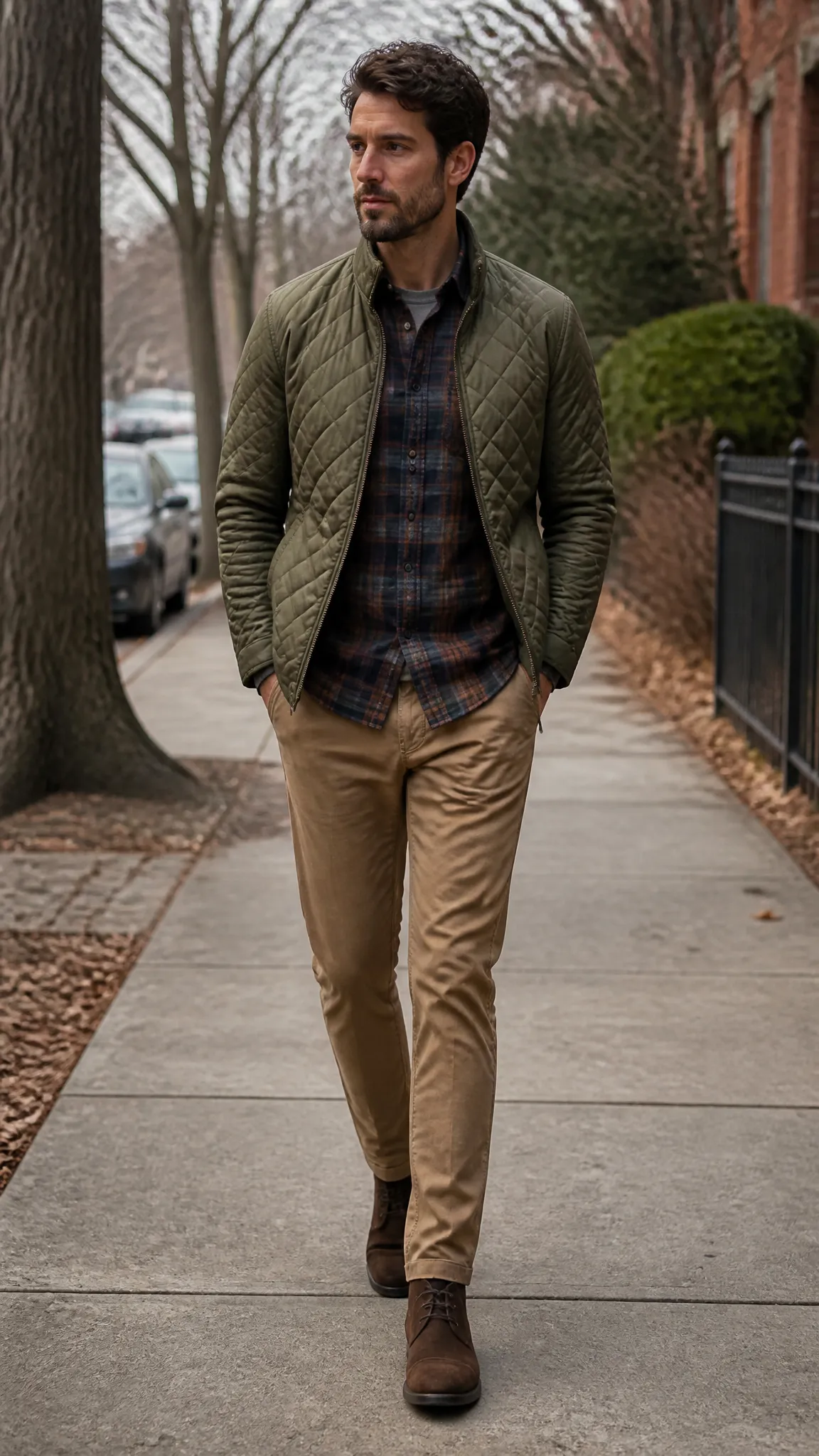
A lightly quilted jacket adds warmth through insulation rather than heavy fabric. Pairing it with a soft flannel shirt gives you a practical casual outfit that works especially well in mild to moderately cold weather.
Outfit Pieces
- Olive or navy quilted jacket
- Brushed cotton flannel shirt
- Tapered chinos
- Suede chukka boots
How to Wear It
Look for low-profile quilting and a jacket hem that ends around the hip. Wear the flannel over a thin undershirt rather than another sweater, and roll the cuffs only if the jacket sleeves allow space without bunching.
3. Field Jacket Over a Merino Turtleneck
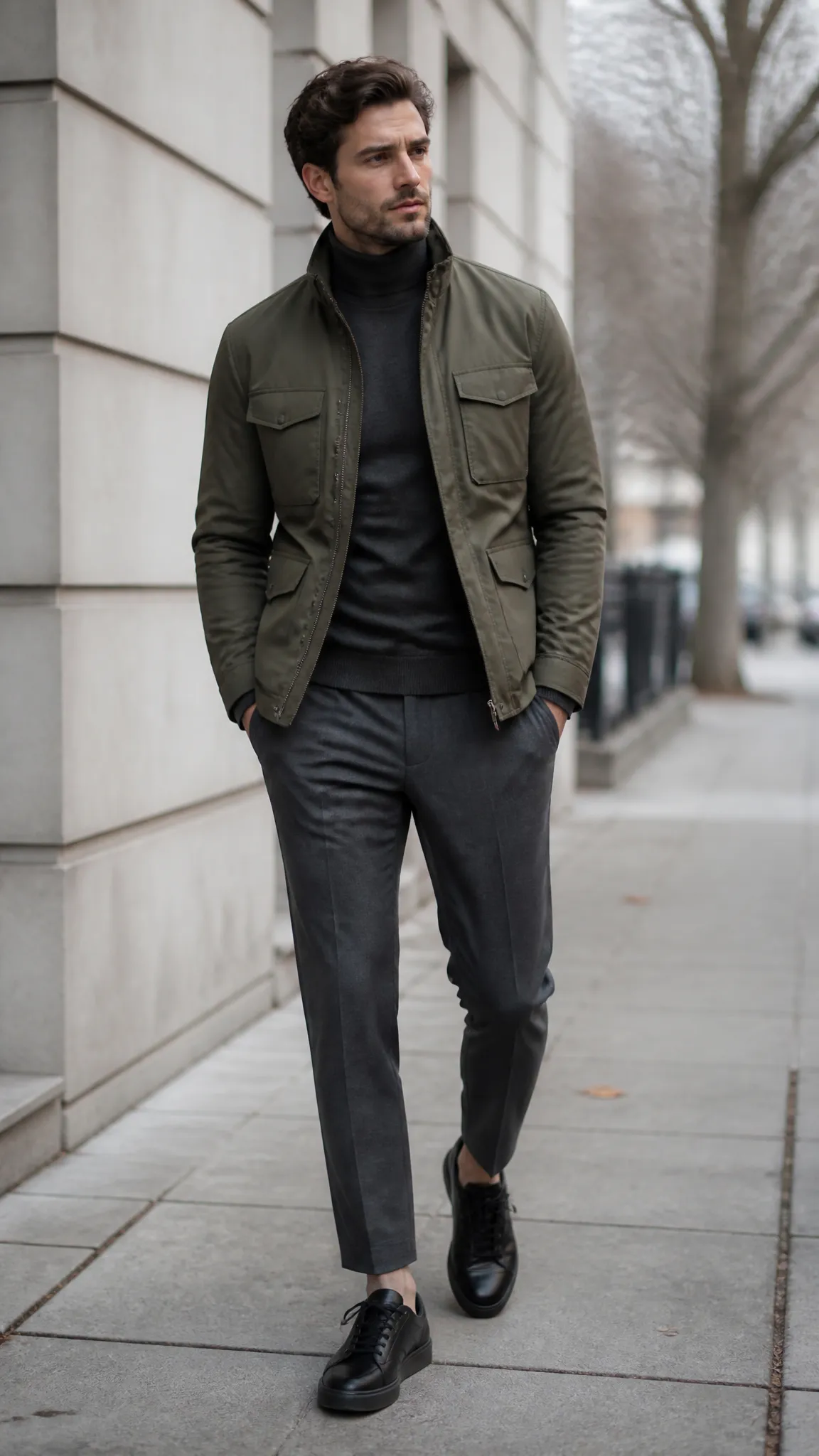
The field jacket’s structured pockets and stand collar bring visual interest without requiring a bulky layer underneath. A merino turtleneck protects the neck while keeping the torso smooth and comfortable.
Outfit Pieces
- Cotton-blend field jacket
- Merino wool turtleneck
- Gray wool-blend trousers
- Minimal leather sneakers
How to Wear It
Pick a field jacket with flat pockets instead of large bellows pockets, which can add width around the waist. A black, charcoal, or cream turtleneck keeps the palette controlled, while cropped or lightly tapered trousers prevent fabric from collecting over your shoes.
4. Technical Shell With a Fleece Zip-Up
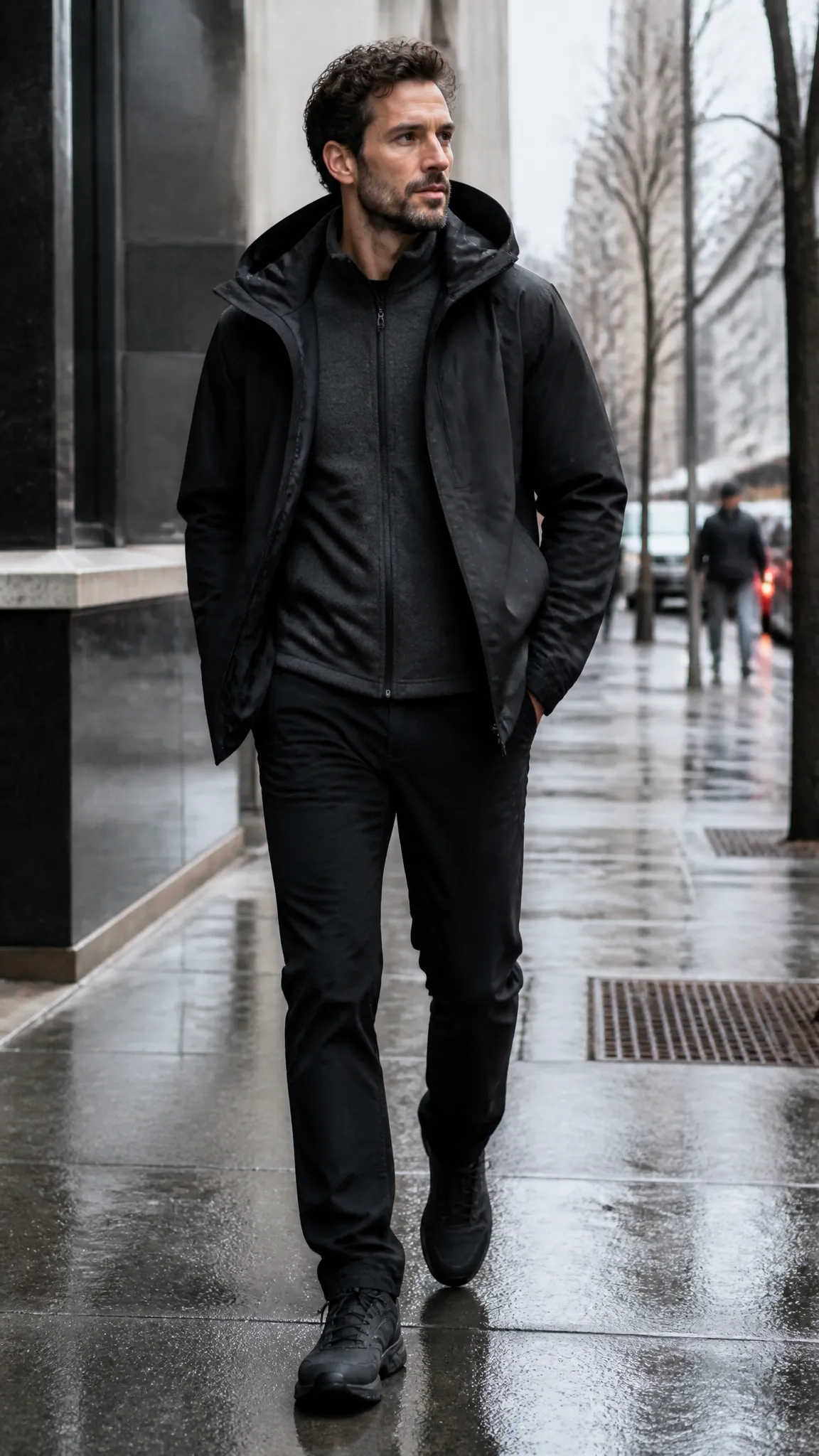
This weather-ready pairing separates wind and rain protection from insulation. A thin waterproof shell blocks the elements, while a smooth fleece zip-up traps warmth without the stiff feel of multiple heavyweight layers.
Outfit Pieces
- Unlined waterproof shell
- Low-pile fleece zip-up
- Five-pocket stretch pants
- Water-resistant trail sneakers
How to Wear It
Keep the fleece relatively fitted so the shell can move easily over it. Matching the two layers in neighboring colors, such as black and charcoal, reduces visual clutter, while water-resistant footwear makes the outfit useful for wet commutes and outdoor errands.
5. Denim Jacket Under a Parka
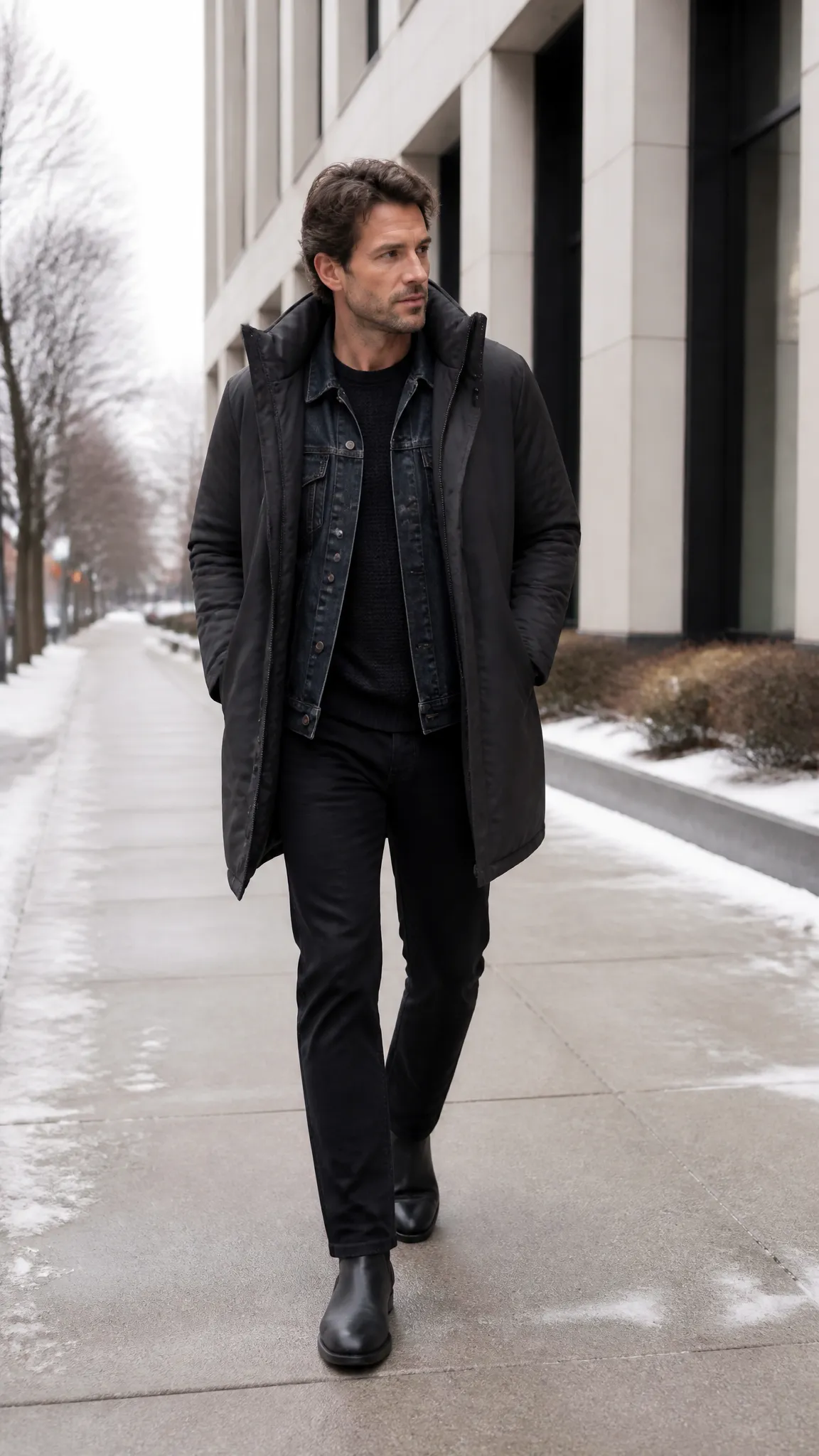
A denim jacket can function as a neat middle layer when your parka has a roomy but controlled cut. It adds warmth and texture, then remains useful as an indoor jacket after the parka comes off.
Outfit Pieces
- Streamlined insulated parka
- Dark denim trucker jacket
- Lightweight thermal shirt
- Straight black jeans
How to Wear It
Use a denim jacket with minimal fading and a hem shorter than the parka. Avoid combining it with a thick hoodie, since layered hoods and heavy denim can crowd the shoulders; a thin thermal base layer supplies warmth more efficiently.
6. Unstructured Blazer and Mock-Neck Sweater
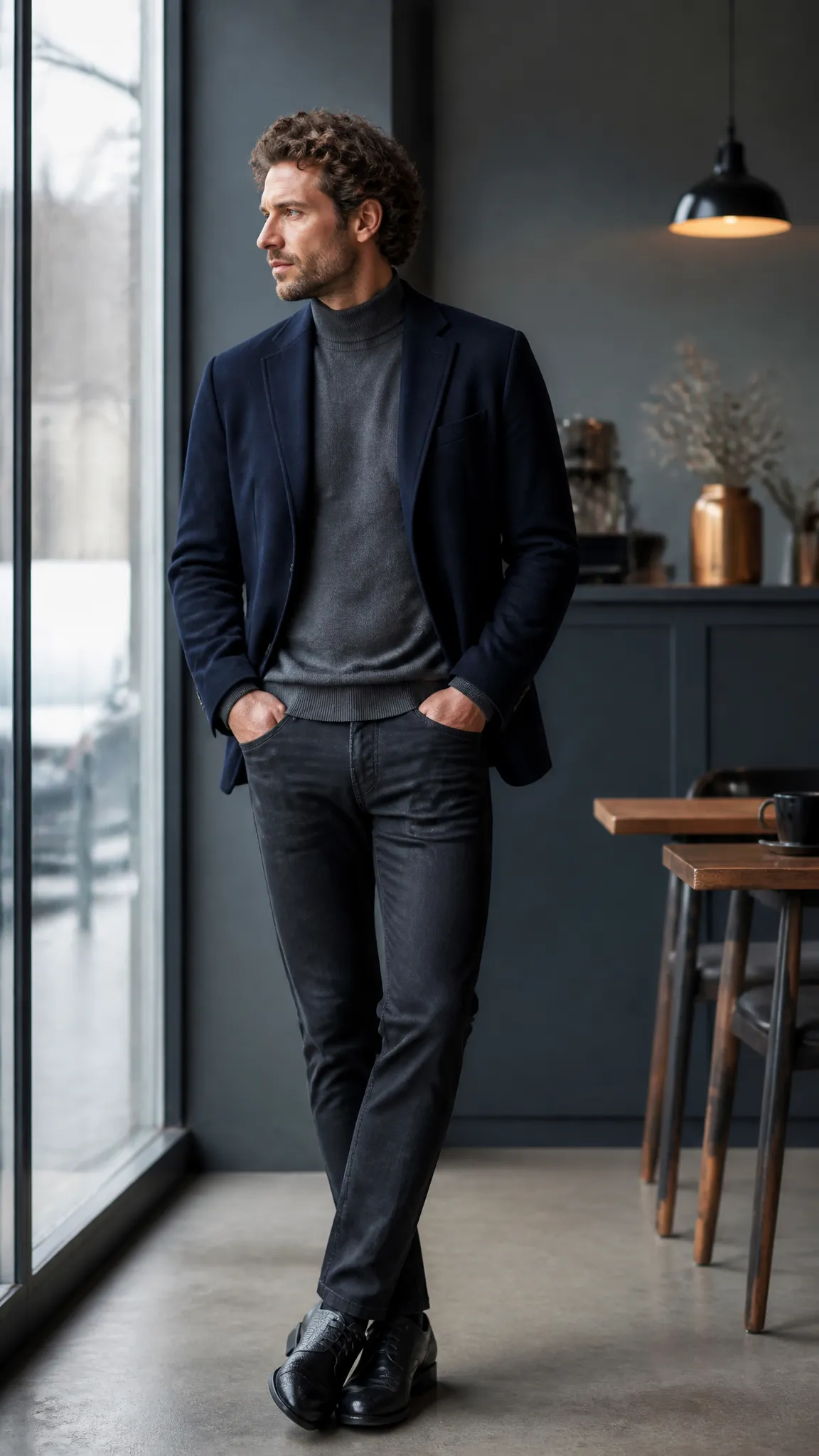
For smart-casual plans, an unstructured blazer delivers shape without rigid padding. The mock neck covers more skin than a crewneck but feels less formal and less fabric-heavy than a folded turtleneck.
Outfit Pieces
- Soft wool-blend blazer
- Fine-knit mock-neck sweater
- Dark tapered jeans
- Leather derby shoes
How to Wear It
Choose a blazer without heavy shoulder construction and make sure the sweater lies flat at the armholes. Tonal shades such as navy, slate, and black create a lean vertical line; textured leather shoes keep the result relaxed enough for a date or casual office.
7. Harrington Jacket With a Thermal Henley
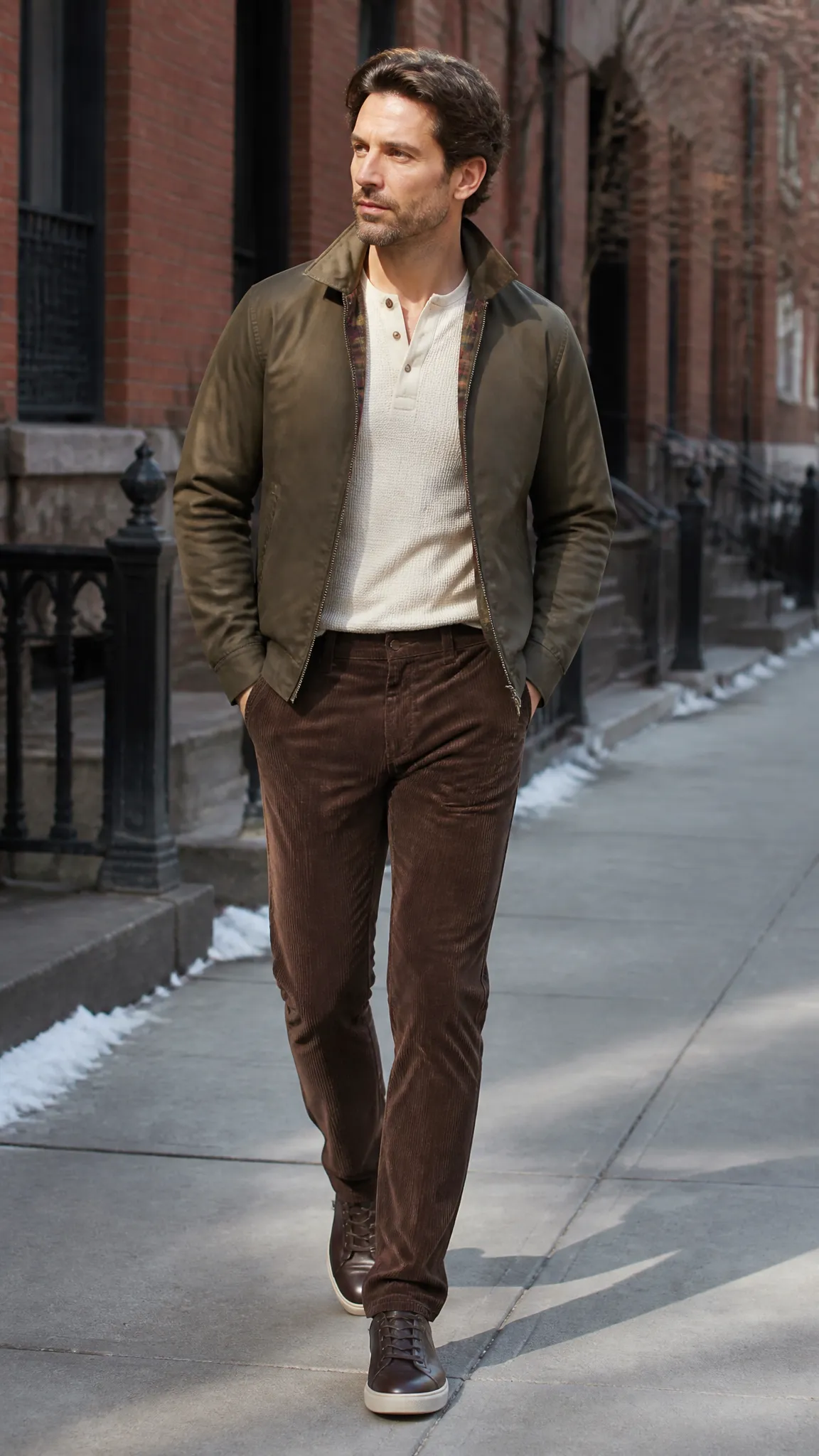
A Harrington jacket has a short, tidy profile that complements slim thermal layers. This combination suits clear winter days when you need more warmth than a shirt provides but less coverage than a long coat.
Outfit Pieces
- Lined Harrington jacket
- Waffle-knit thermal henley
- Straight corduroy pants
- Low-profile leather sneakers
How to Wear It
Keep the henley close to the body and leave only the top button or two open. Fine-wale corduroy provides seasonal texture without making the legs appear wider, and the jacket’s waistband should sit naturally rather than grip tightly and cause bunching.
8. Chore Coat Over a Knit Polo
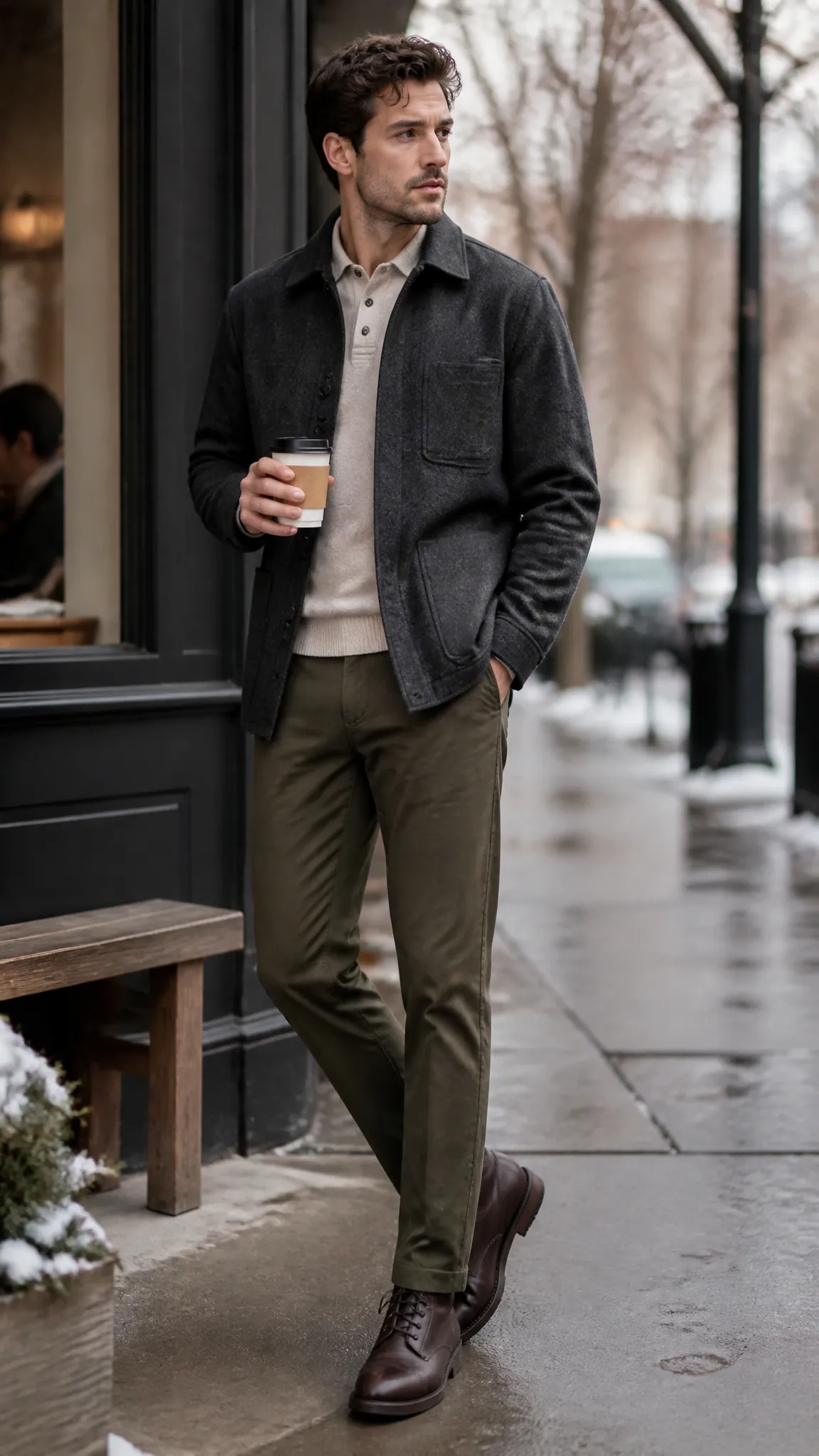
A chore coat offers the utility of workwear with less volume than many winter jackets. Layered over a long-sleeve knit polo, it looks intentional while remaining comfortable enough for coffee runs, travel, or a casual workplace.
Outfit Pieces
- Wool-blend chore coat
- Long-sleeve knit polo
- Flat-front chinos
- Plain-toe lace-up boots
How to Wear It
Favor a midweight coat with patch pockets that sit flat when empty. The polo collar adds definition without a scarf, while flat-front chinos keep the waist uncluttered; finish with boots that have a modest sole rather than an oversized lug profile.
9. Lightweight Puffer Vest and Oxford Shirt
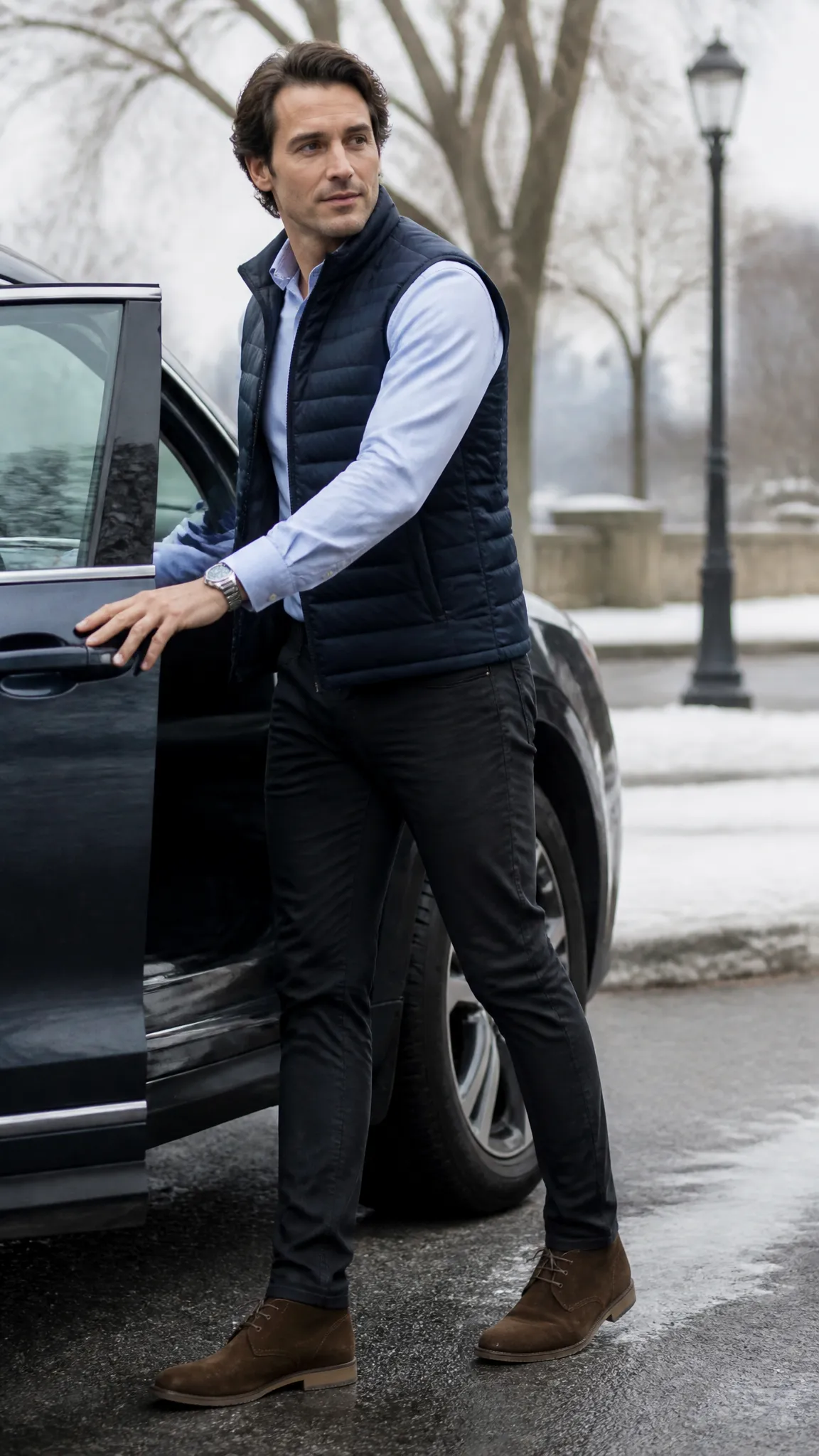
A puffer vest warms your core while leaving the arms free of extra padding. It works best in men’s winter casual outfits designed for driving, indoor-outdoor transitions, and active weekends.
Outfit Pieces
- Thin insulated vest
- Brushed Oxford cloth shirt
- Dark five-pocket pants
- Suede desert boots
How to Wear It
Select narrow baffles and a vest that closes without compressing the shirt. A long-sleeve base layer can fit beneath the Oxford on colder days, but keep it invisible at the collar and cuffs for a clean, low-bulk layered outfit.
10. Mac Coat With a Cardigan
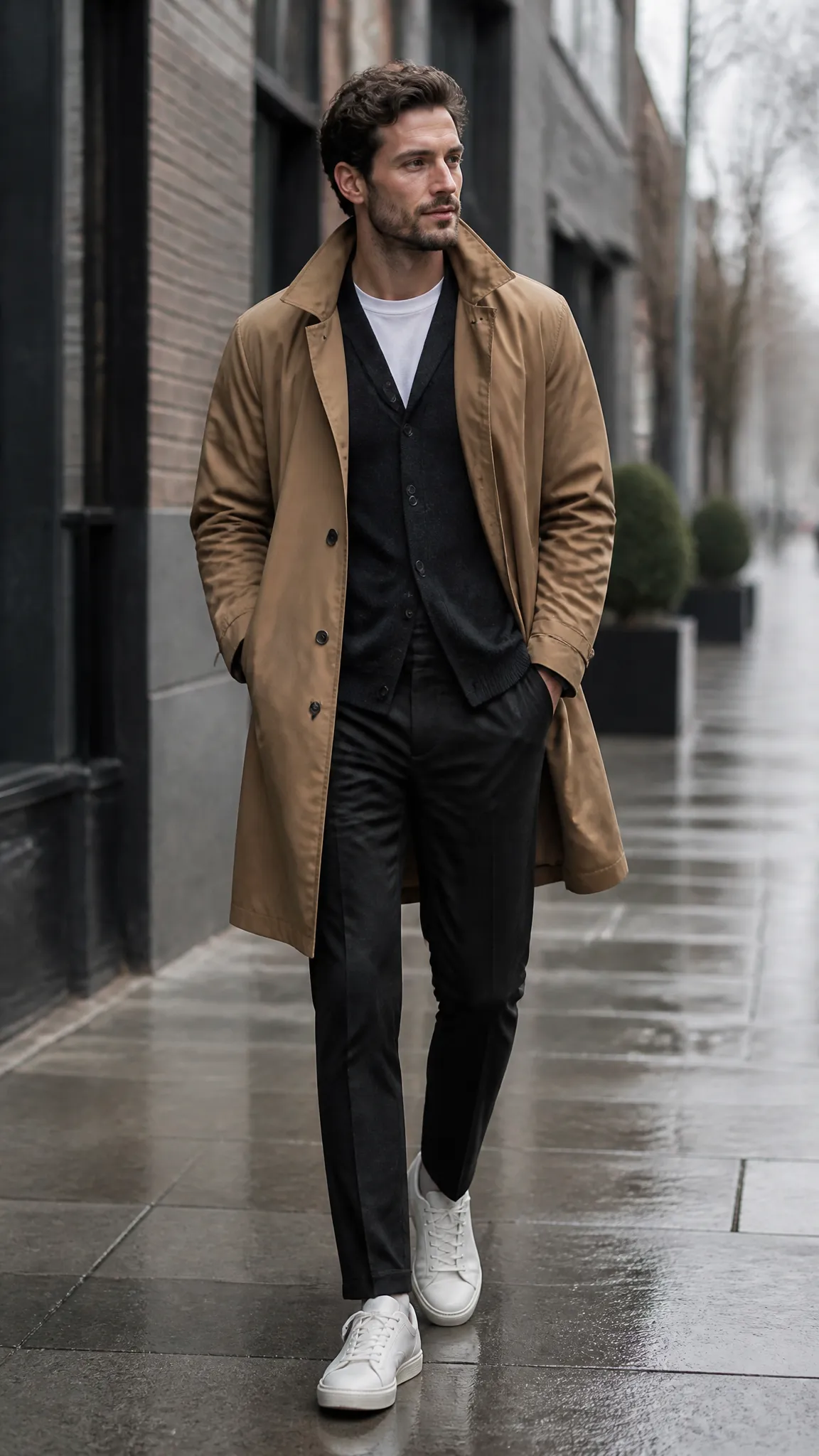
A weather-resistant mac coat creates a smooth outer layer, while a buttoned cardigan lets you regulate warmth indoors. Unlike a chunky shawl-collar sweater, a fine cardigan sits neatly beneath a coat and doesn’t overwhelm the neckline.
Outfit Pieces
- Water-resistant mac coat
- Fine-gauge wool cardigan
- Cotton crewneck T-shirt
- Tapered wool trousers
How to Wear It
Keep the cardigan mostly buttoned so its edges don’t fold under the coat. A T-shirt with a firm collar works for mild days, while a thin long-sleeve tee adds coverage when temperatures fall; clean leather sneakers maintain the outfit’s understated character.
11. Peacoat and Quarter-Zip Sweater
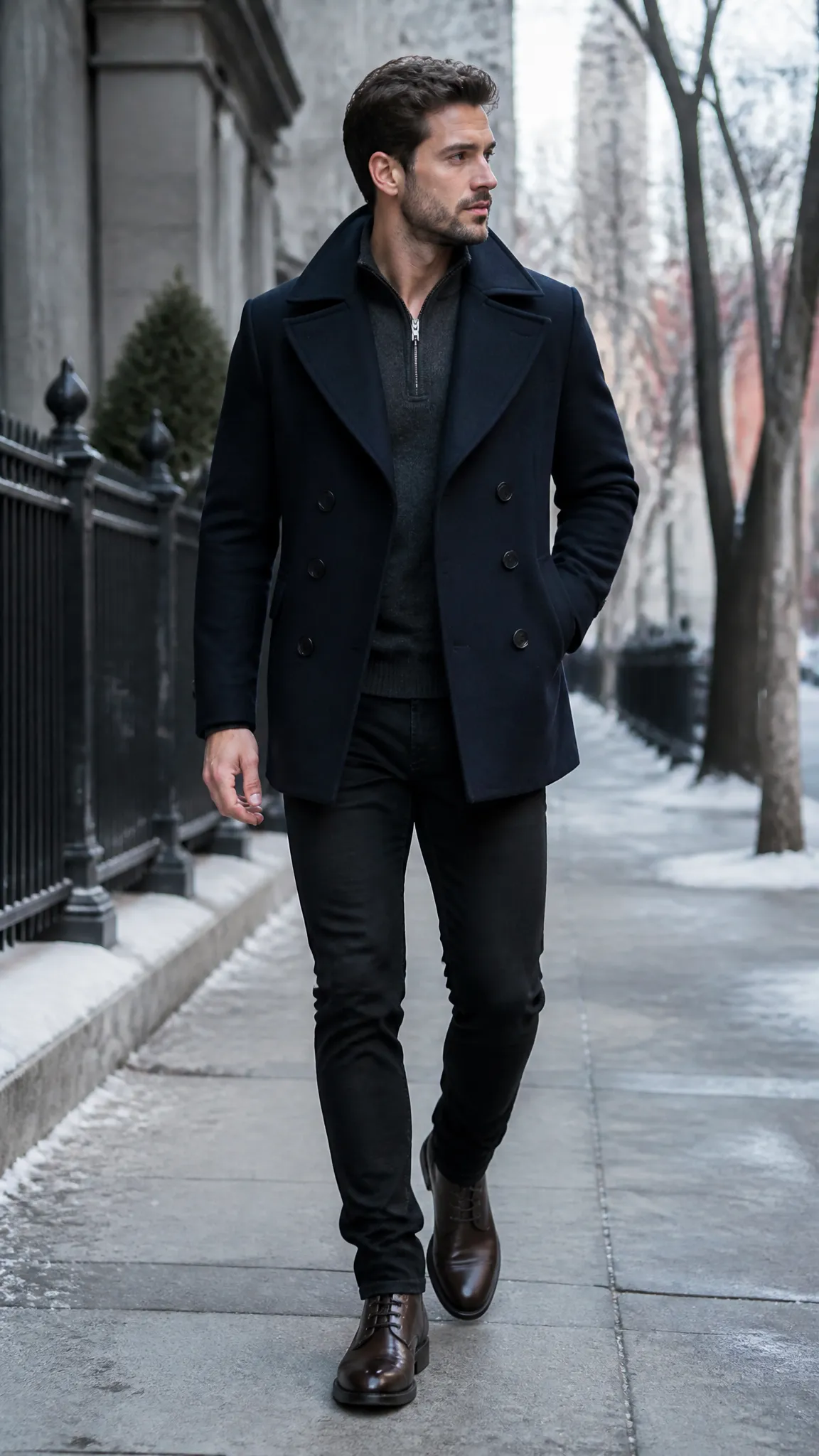
The peacoat’s broad collar gives this outfit structure, so the remaining pieces can stay simple and fitted. A quarter-zip sweater offers adjustable neck coverage without adding a separate scarf or bulky collar.
Outfit Pieces
- Hip-length wool peacoat
- Merino quarter-zip sweater
- Black or indigo jeans
- Sleek service boots
How to Wear It
Leave the sweater zip slightly open to separate its neckline from the coat’s lapels. Avoid very thick cable knits beneath a double-breasted coat, and check that the peacoat buttons without pulling across the chest for a sharp, unrestricted fit.
12. Bomber Jacket With a Crewneck Sweatshirt
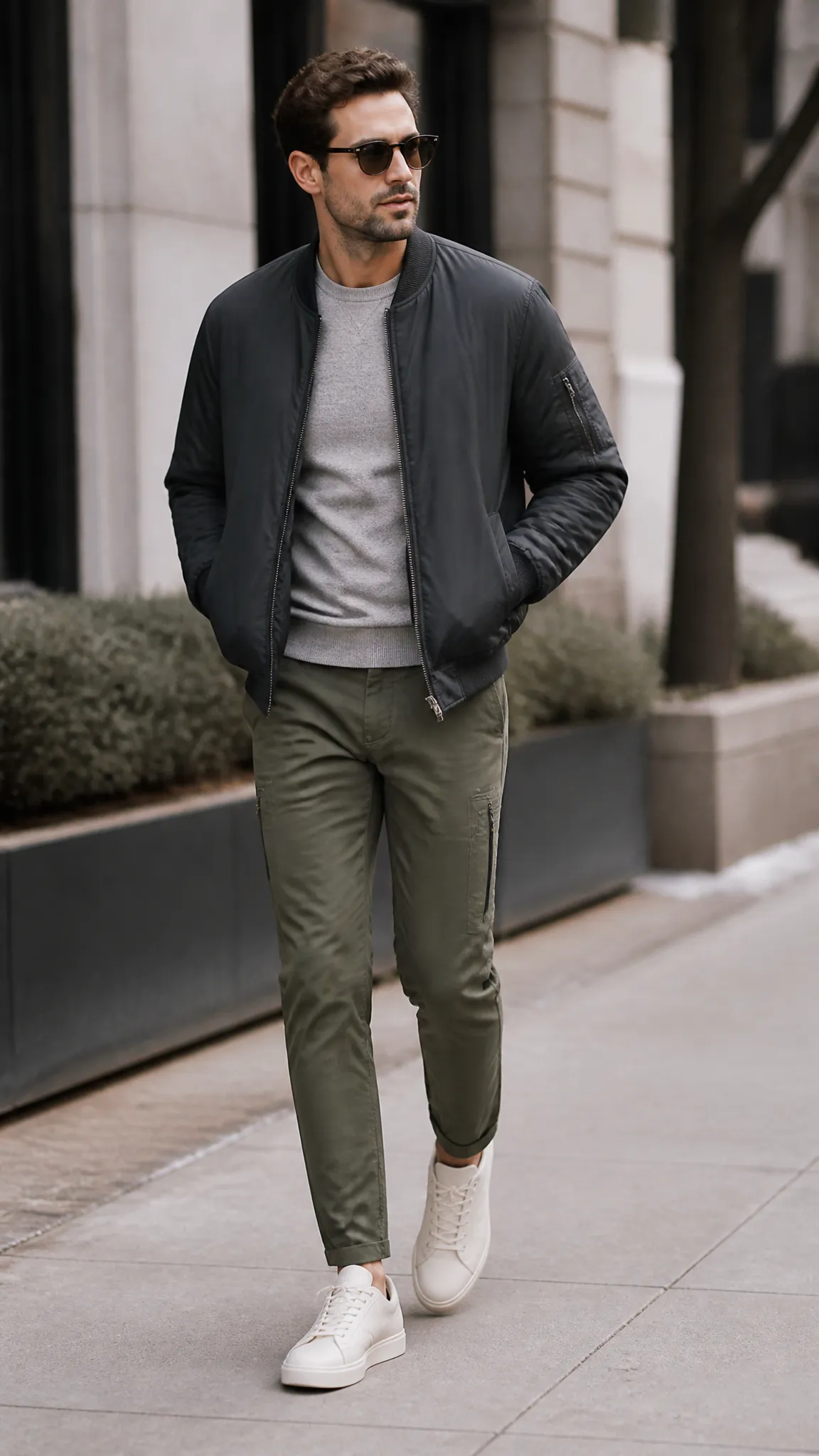
This familiar casual pairing stays streamlined when both garments are chosen in trim, midweight versions. A matte bomber and clean sweatshirt offer warmth and ease without the exaggerated proportions of an oversized streetwear silhouette.
Outfit Pieces
- Insulated matte bomber jacket
- Loopback cotton sweatshirt
- Tapered utility pants
- Simple retro sneakers
How to Wear It
Make sure the sweatshirt hem doesn’t extend below the bomber’s ribbed waistband. Choose utility pants with flat or zippered pockets rather than large cargo pouches, and use thin wool socks to add warmth without changing how your sneakers fit.
13. Waxed Jacket Over a Chambray Shirt
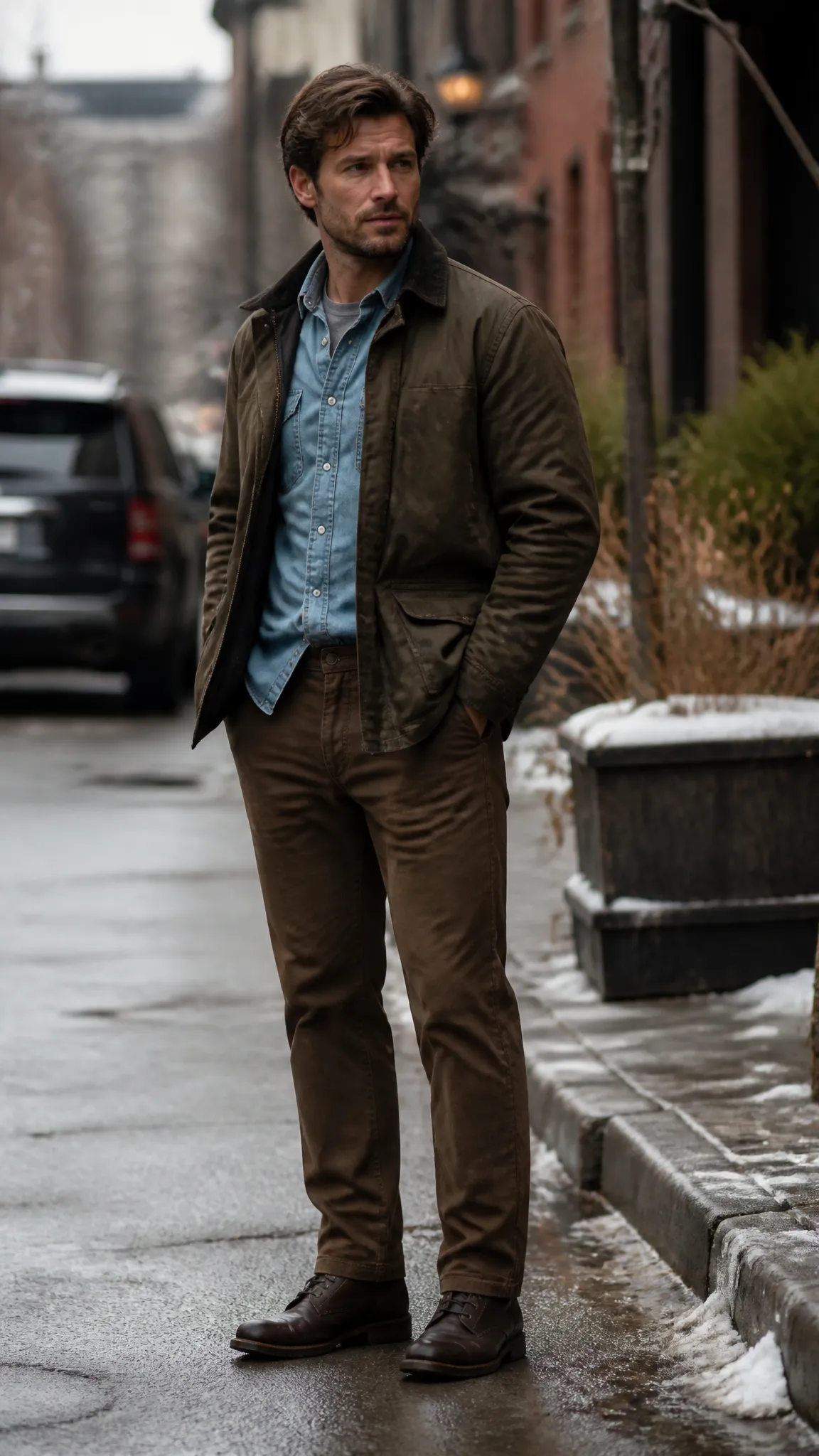
A waxed cotton jacket resists wind and light precipitation while developing more character than a standard synthetic shell. Chambray provides a lighter, smoother alternative to heavyweight denim underneath.
Outfit Pieces
- Waxed cotton jacket
- Chambray button-down shirt
- Merino wool undershirt
- Brown canvas pants
How to Wear It
Let the thin merino undershirt handle insulation close to your skin, then keep the chambray comfortably fitted rather than tight. Canvas pants balance the rugged jacket, but choose a straight cut with minimal pocket bulk and pair it with compact lace-up boots.
14. Overshirt With a Turtleneck Base Layer
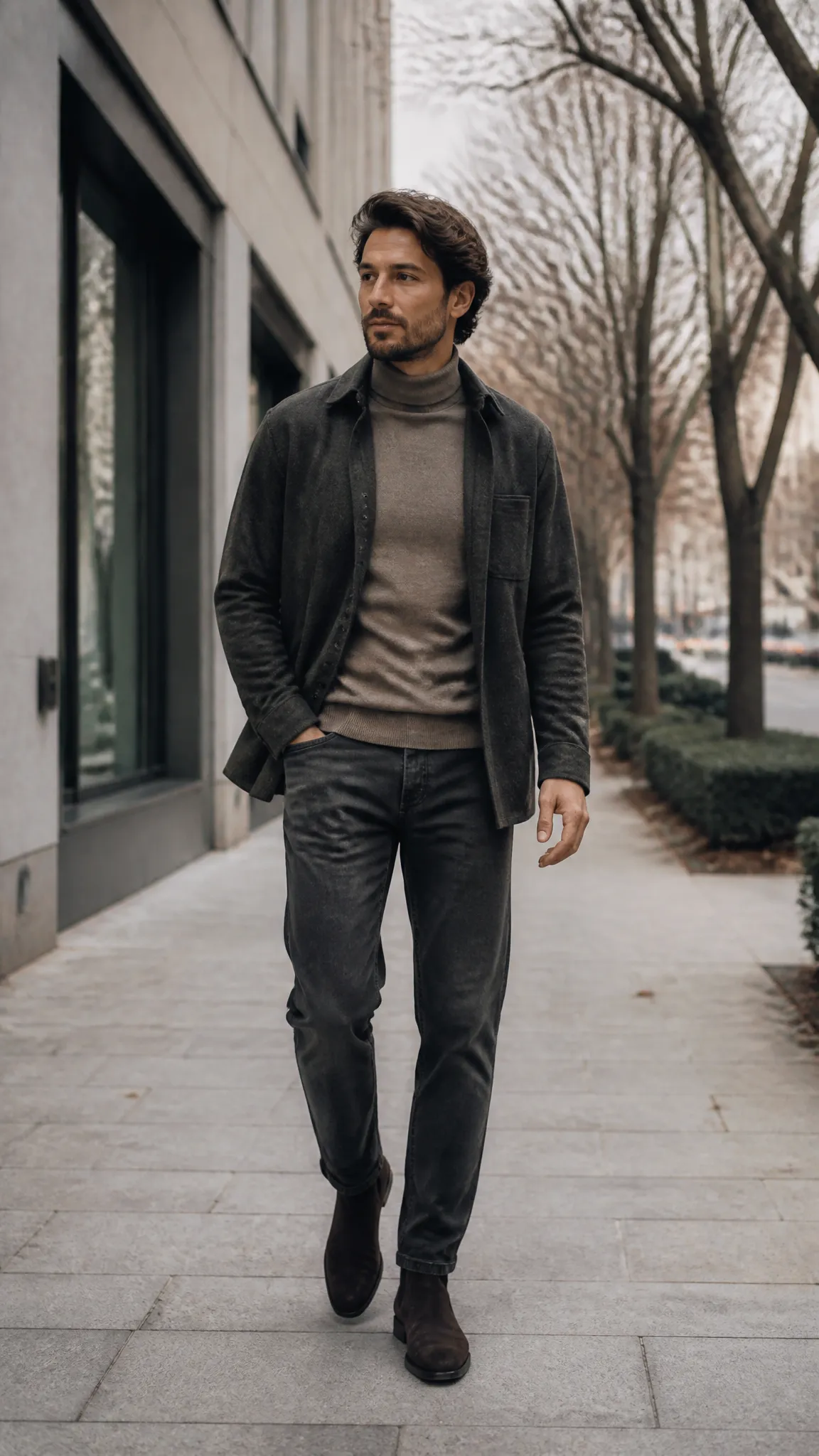
A lined overshirt can replace a jacket on milder winter days or slip beneath a coat when conditions turn colder. The combination gives you two thin, useful layers instead of one thick sweater.
Outfit Pieces
- Brushed wool-blend overshirt
- Lightweight jersey turtleneck
- Relaxed-tapered jeans
- Minimal Chelsea boots
How to Wear It
Wear the overshirt open to create two uninterrupted vertical lines through the torso. Keep its hem around mid-hip, and choose a turtleneck with a short, soft collar that doesn’t bunch; tonal layering makes the separate pieces read as one clean outfit.
15. Down Shirt Jacket With Monochrome Basics
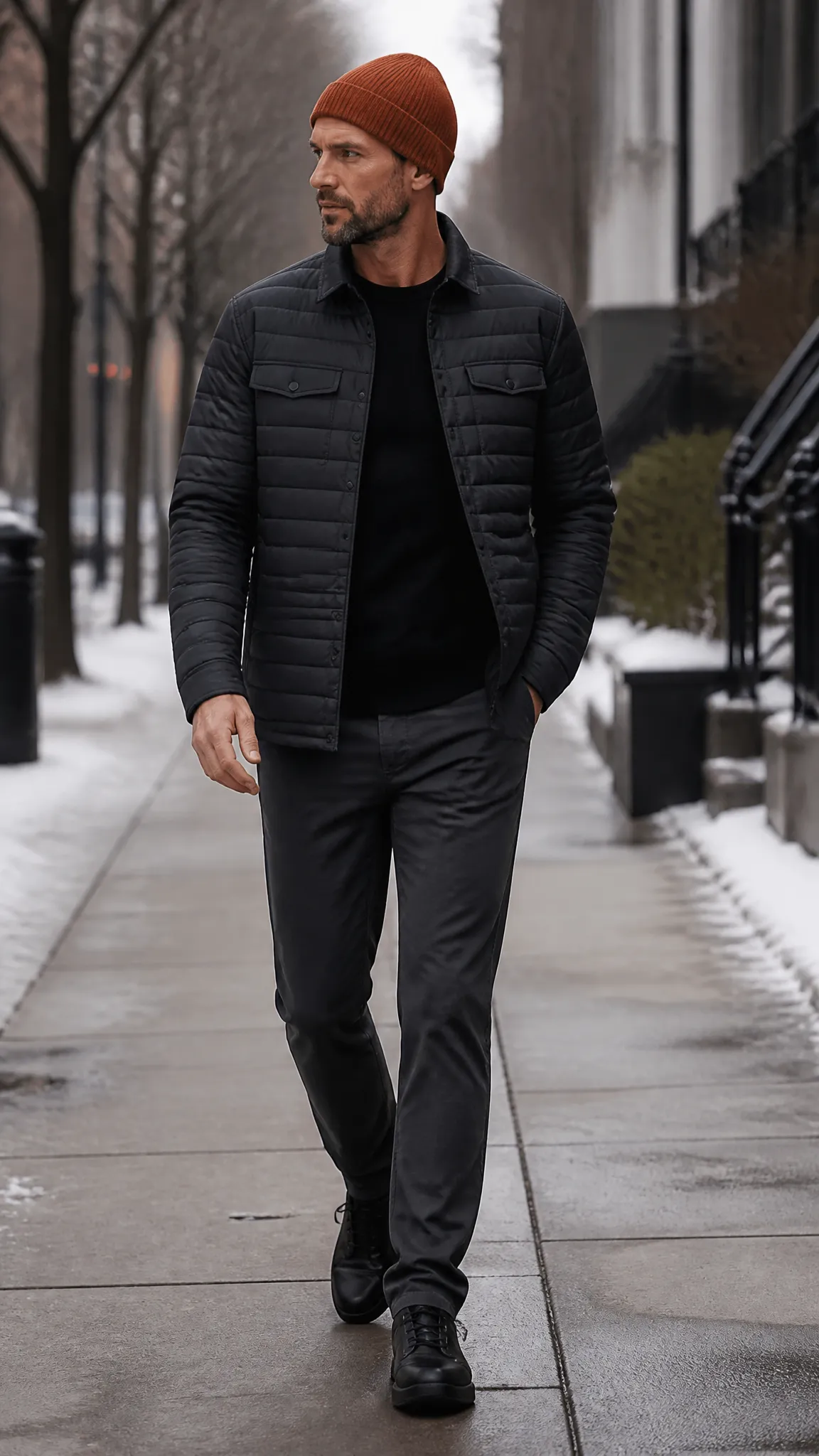
A down shirt jacket delivers efficient insulation in a compact shape, making it a strong alternative to a full puffer. A monochrome foundation keeps attention on the jacket’s texture rather than breaking the body into contrasting blocks.
Outfit Pieces
- Low-profile down shirt jacket
- Fitted long-sleeve base layer
- Straight charcoal pants
- Black weatherproof sneakers
How to Wear It
Look for small channels, low loft, and snap or zip pockets that lie flat. Keep the shirt jacket closed in cold weather and wear it open indoors; black and charcoal basics create a streamlined finish, while a contrasting beanie can add color without physical bulk.
How to Build Warm Outfits Without Looking Bulky
Start with a breathable base layer that follows your shape without restricting movement. Merino wool and modern thermal knits can hold warmth close to the body, reducing the need for a thick sweater. Add one insulating middle layer, then choose an outer layer that handles wind or moisture.
Fit matters at every stage. You should be able to raise your arms and button or zip the outerwear without pulling, but excess fabric at the shoulders, waist, and cuffs creates avoidable volume. When trying on a winter coat, wear the kind of sweater you plan to use beneath it.
Balance the silhouette below the waist, too. Straight and gently tapered pants generally work better than extremely skinny jeans, which can make an insulated jacket appear disproportionately large. Dark colors, tonal combinations, flat pockets, and footwear with moderate soles also help men’s winter casual outfits look cohesive rather than crowded.
Frequently Asked Questions
Which fabrics provide warmth without much bulk?
Merino wool, fine-gauge wool blends, low-pile fleece, and lightweight synthetic or down insulation all provide useful warmth in relatively slim layers. Wind-resistant outer fabrics also help because blocking cold air can reduce how much insulation you need.
How many layers should a casual winter outfit have?
Three functional layers are usually a flexible starting point: a base layer, a light insulating layer, and weather-appropriate outerwear. In milder conditions, you can remove the middle layer; in severe cold, prioritize protective outerwear and exposed-skin coverage rather than stacking several loose sweaters.
Should winter jackets fit tightly to look slimmer?
No. A jacket that’s too tight compresses insulation, restricts movement, and creates pulling lines. Aim for enough room to accommodate your usual middle layer while keeping the shoulders aligned and the sleeves and hem appropriately proportioned.
Can loose-fit pants work with streamlined winter outfits?
Yes, provided the shape looks deliberate. Choose a relaxed-straight or relaxed-tapered cut and avoid excessive stacking at the ankle. A cleaner trouser break helps balance substantial outerwear without adding visual clutter.
What accessories add warmth without adding much volume?
Fine-knit merino beanies, lined leather gloves, wool socks, and compact scarves are efficient choices. Keep scarf wrapping simple, and avoid stuffing gloves or hats into already full jacket pockets, which can distort the silhouette.