The debate over old money vs quiet luxury men’s style can feel confusing because both favor excellent materials, restrained colors, and minimal branding.
Yet they communicate different ideas: old money draws on inherited dress codes and leisure traditions, while quiet luxury presents wealth through modern simplicity. Understanding that distinction will help you choose clothes, build outfits, and avoid looking as though you are wearing a costume.
Old Money vs Quiet Luxury Men: The Essential Difference
The clearest distinction lies in what each aesthetic references. Old money style is tradition-facing, borrowing from established wardrobes associated with country clubs, Ivy League campuses, sailing, equestrian life, and tailored city dressing. Quiet luxury is more contemporary, using restrained design and superior materials to suggest refinement without relying heavily on social or historical codes.
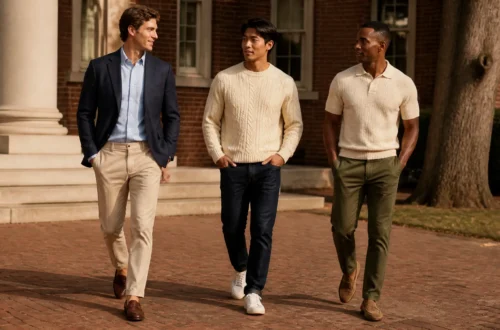
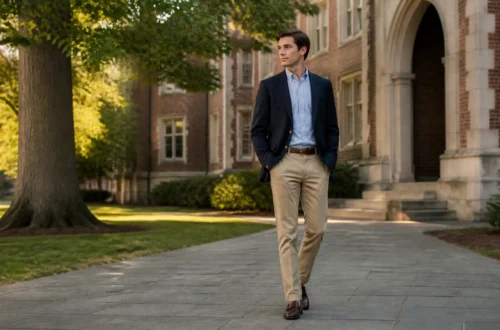
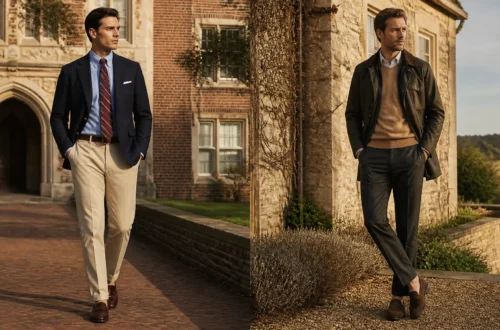
An old money outfit may combine a navy blazer, striped Oxford shirt, pleated chinos, and penny loafers. Details such as brass buttons, a repp tie, a cable-knit sweater, or a waxed jacket fit naturally because they carry recognizable heritage associations.
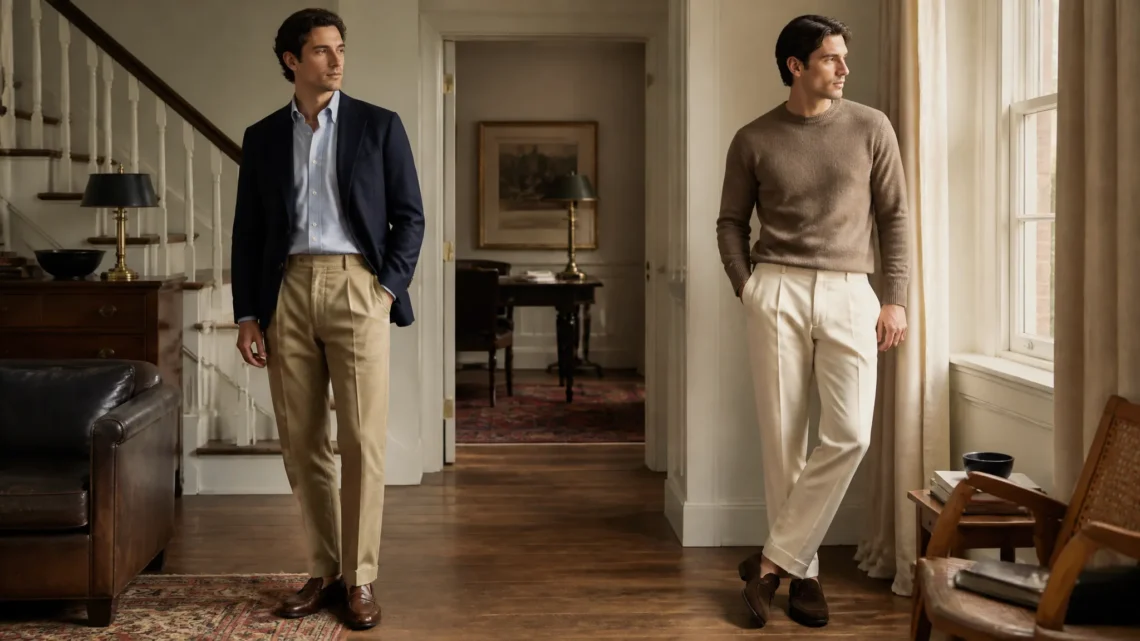
A quiet luxury outfit might pair a taupe cashmere knit with cream wool trousers, dark brown suede shoes, and an unstructured coat. The impression comes less from tradition and more from clean lines, tonal coordination, subtle texture, and the way each garment hangs.
Neither style requires inherited wealth, despite what social media labels imply. These are visual languages, not financial credentials. The useful question is not which one looks richer, but which one better reflects your tastes, routine, and surroundings.
How the Clothes and Silhouettes Differ
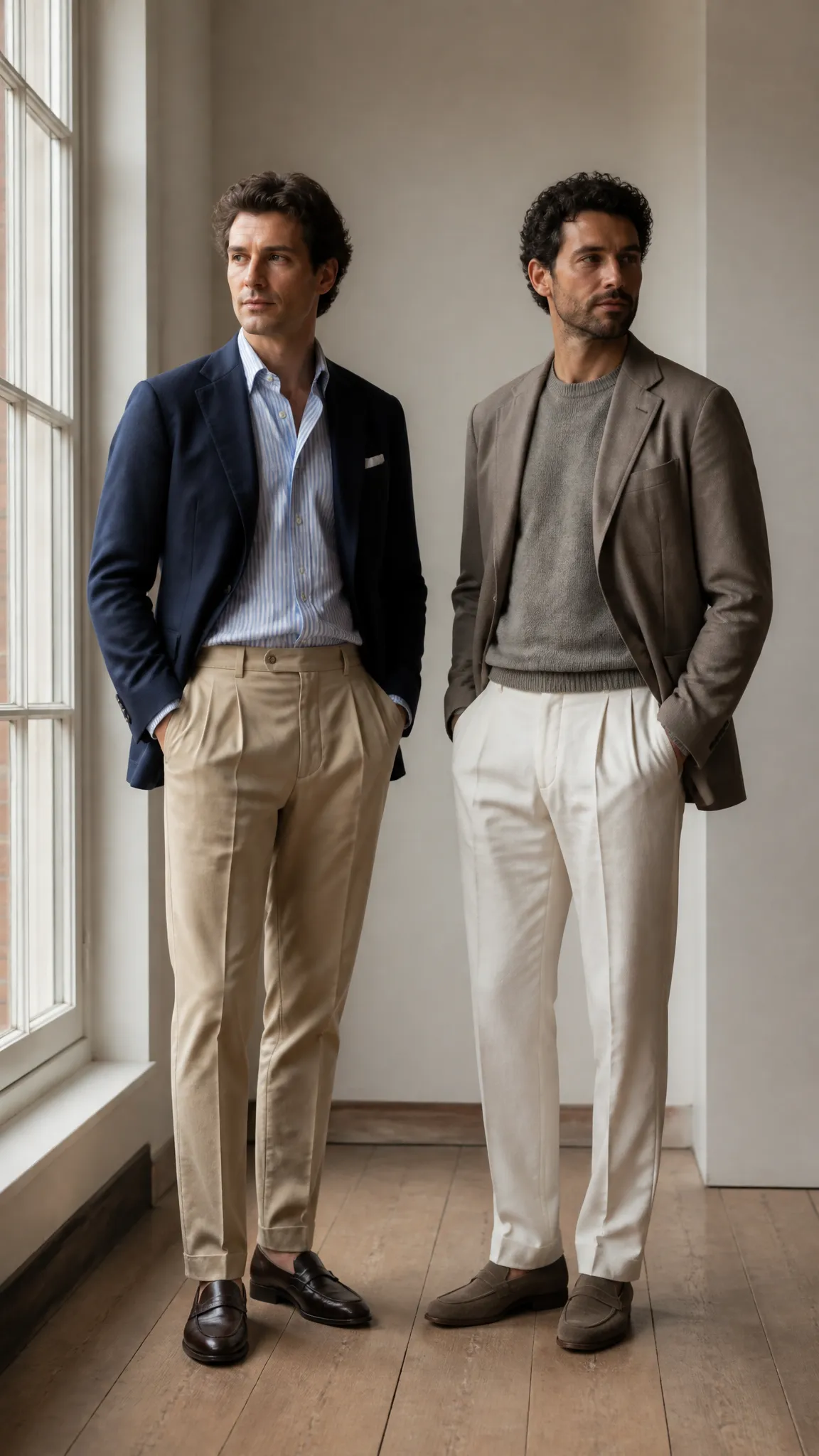
Once the broad distinction is clear, the garments make it easier to recognize each look. Old money menswear generally uses classic shapes and pieces with identifiable origins. Quiet luxury favors fewer references, softer construction, and silhouettes that feel current without chasing short-lived trends.
Old money favors recognizable classics
Old money style often relies on structured or semi-structured tailoring. A blazer may have natural shoulders but still show a defined lapel and waist, while trousers tend to sit closer to the natural waist and may include pleats or cuffs. Shirts commonly have button-down, spread, or club collars.
The casual wardrobe is equally specific: rugby shirts, cricket sweaters, polos, field jackets, loafers, boat shoes, and clean leather sneakers. These pieces can show gentle wear because the aesthetic is not meant to look freshly assembled for a photo shoot.
Quiet luxury favors clean continuity
Quiet luxury removes much of that visual punctuation. Jackets are often unstructured, trousers may fall in a longer and straighter line, and knitwear replaces the crisp shirt in many business-casual combinations. Seams, pockets, hardware, and fastenings tend to be discreet.
Proportion matters greatly because there are fewer decorative details to carry the outfit. A slightly relaxed coat over fluid trousers can look deliberate, but oversized garments in every layer may simply look imprecise. Ease should not become shapelessness.
Color, Fabric, and Pattern Send Different Signals
Both aesthetics use restrained palettes, but they organize color differently. Old money dressing welcomes contrast and familiar combinations, whereas quiet luxury often creates harmony through neighboring shades.
Navy with white, forest green with khaki, burgundy with gray, and pale blue with tan all suit the traditional wardrobe. Seasonal colors also have a place: madras and faded pastels in warm weather, then tweed browns, olive, camel, and wine tones in fall.
Quiet luxury often stays within tonal families such as ivory, oatmeal, stone, mushroom, chocolate, charcoal, and black. An outfit might move from a light beige sweater to taupe trousers and dark brown footwear, creating depth without a sharp color break.
Fabric is important in both camps, although the emphasis differs. Old money style makes room for sturdy, characterful textiles such as Oxford cloth, Shetland wool, tweed, corduroy, cotton twill, flannel, and linen. Quiet luxury tends toward smooth or softly textured materials, including fine merino, cashmere, brushed wool, suede, silk blends, and dense long-staple cotton.
Patterns offer another clue. Stripes, checks, herringbone, tartan, and subtle crests can belong in an old money wardrobe. Quiet luxury usually limits pattern so the material, cut, and tonal composition remain the focus.
Building Outfits Without Looking Like a Character
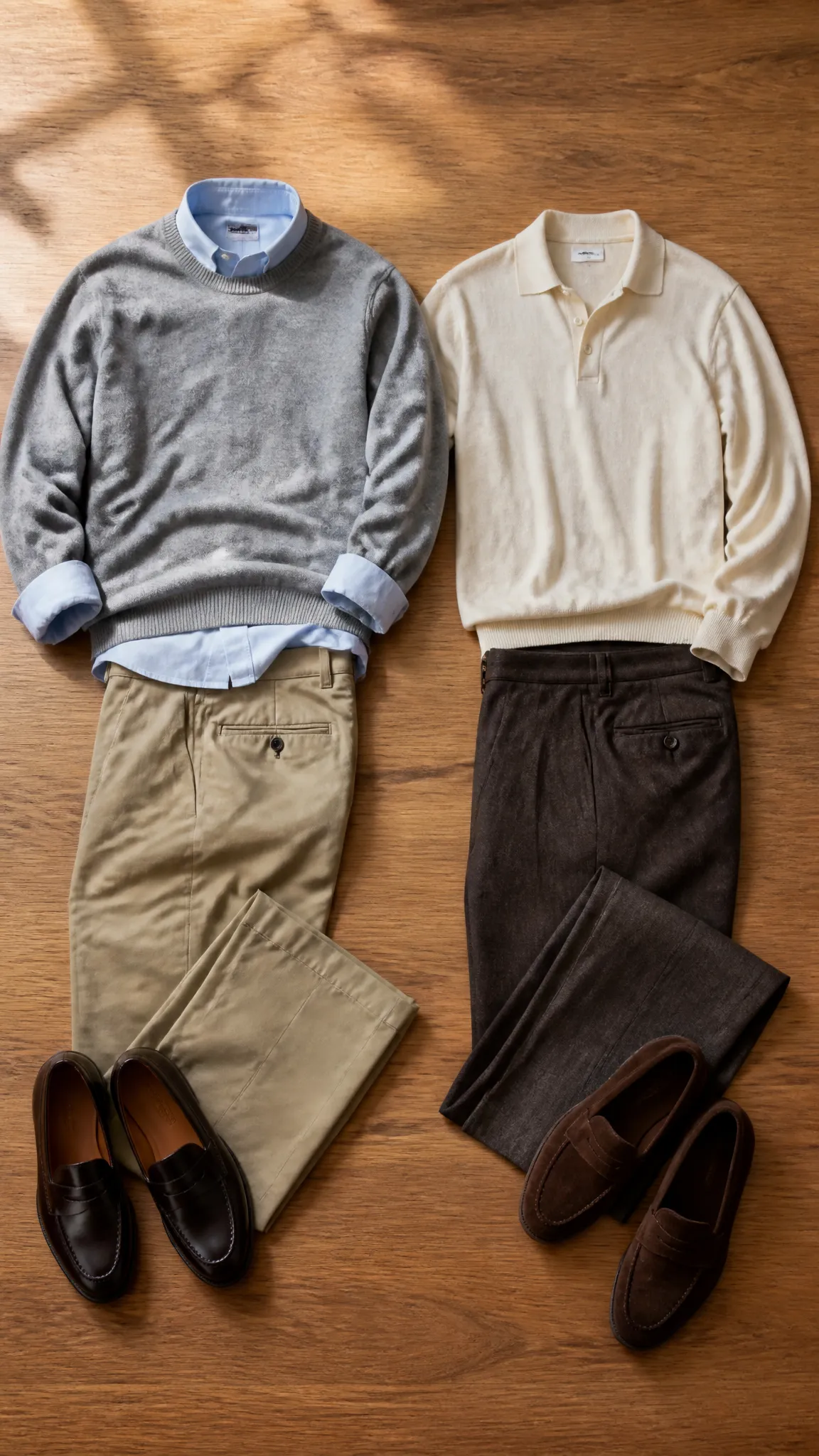
The old money vs quiet luxury men comparison becomes most useful when you translate it into complete outfits. The goal is coherence, not maximum adherence to an online aesthetic. Wearing every visual cue at once can turn classic clothing into fancy dress.
For a traditional weekend look, try a blue Oxford shirt under a heather-gray crewneck, with straight khaki chinos and dark brown loafers. The sweater adds softness, the collar provides structure, and the loafers connect the relaxed pieces to a polished tradition. A navy waxed jacket can replace the knit when the weather calls for practical outerwear.
For quiet luxury, combine a cream merino polo with medium-brown wool trousers and chocolate suede loafers. Keep the belt close to the shoe color, or choose side-adjuster trousers and omit it. A camel or charcoal coat adds a long, uninterrupted line without introducing obvious branding.
Business-casual settings can support either approach. The old money version could use a navy blazer, pale blue shirt, gray flannel trousers, and penny loafers. The quiet luxury version might use an unstructured dark brown jacket over a fine-gauge knit, paired with charcoal trousers and minimal leather derbies.
Avoid turning the old money look into a pileup of prep symbols. A crest blazer, striped tie, cable-knit vest, bright trousers, and bit loafers in one outfit may suggest a themed party. Quiet luxury has its own trap: dressing entirely in beige can resemble a showroom display unless varied textures and deeper anchor colors provide contrast.
Footwear, Accessories, and Grooming Complete the Message
Accessories reveal the difference between the styles because small choices carry disproportionate weight in restrained outfits. Old money accessories can feel storied and practical; quiet luxury accessories tend to disappear into the overall composition.
Penny loafers, tassel loafers, brogues, plain-toe derbies, boat shoes, and simple leather sneakers work with traditional wardrobes. Belts may use braided leather or canvas, and watches can appear on leather, steel, or understated fabric straps. A patterned pocket square or repp tie is appropriate when the setting supports it.
Quiet luxury footwear usually has cleaner surfaces and simpler geometry. Suede loafers, sleek derbies, pared-back sneakers, and plain leather boots complement the aesthetic. Bags, watches, and eyewear should have discreet hardware and balanced proportions rather than conspicuous emblems.
In either style, accessories should not compete for attention. One distinctive item, such as a textured tie or handsome suede shoe, gives the eye somewhere to land. Five status-coded objects produce noise, even when each one is expensive.
Grooming follows the same principle. Neat hair, maintained facial hair, clean shoes, and pressed or properly steamed clothing support both looks. The point is care rather than a rigid, lacquered finish.
Choosing the Right Approach for Your Life and Budget
Style works best when it fits your actual calendar. Old money clothing suits men who enjoy classic American prep, traditional tailoring, visible pattern, and garments that develop character over time. Quiet luxury suits those drawn to minimal design, tonal dressing, soft tailoring, and a more urban or contemporary impression.
Climate matters too. In much of the United States, heavy tweed and layered cashmere have limited seasons. Warm-weather wardrobes can express old money style through linen shirts, cotton trousers, polos, and unlined blazers, while quiet luxury can use lightweight knit polos, linen-blend trousers, suede loafers, and softly constructed jackets.
You do not need a luxury budget to capture either aesthetic. Prioritize fit, fabric, and condition before labels. A well-proportioned wool sweater in a useful color will contribute more than a recognizable logo attached to a mediocre garment.
Build around versatile foundations: dark brown leather shoes, navy or charcoal outerwear, straight trousers, quality knitwear, and shirts that frame your face cleanly. Secondhand tailoring can offer value if alterations remain practical, while shoe care and proper storage extend the useful life of what you already own.
The two approaches can also mix. A navy blazer and Oxford shirt can sit comfortably above clean wool trousers and sleek suede loafers. In the old money vs quiet luxury men style choice, consistency matters more than purity.
Frequently Asked Questions
Is quiet luxury the same as minimalism?
No. Minimalism focuses on reduction, while quiet luxury also depends on material quality, fit, and tactile richness. A plain outfit is not automatically quiet luxury if the garments drape poorly or lack visual depth.
Can old money style include jeans?
Yes, particularly straight or gently tapered jeans in clean dark indigo or a naturally faded mid-blue. Pair them with an Oxford shirt, crewneck sweater, suede loafers, or a field jacket rather than heavily distressed pieces.
Which style works better in a conservative office?
Old money-inspired tailoring often integrates easily because blazers, button-down shirts, flannel trousers, and loafers already belong to conventional office wardrobes. Quiet luxury also works when the clothes retain enough structure and formality, such as a fine knit under an unstructured jacket.
Do clothes need to be logo-free?
Not completely, but branding should remain secondary. A small, discreet mark can coexist with either style; a large logo changes the focus from cut and coordination to brand recognition.
Can younger men wear these styles without looking older?
Yes. Keep proportions current, avoid overly formal combinations in casual settings, and mix one traditional piece with simpler clothing. A relaxed Oxford shirt with straight trousers often feels fresher than a full blazer-and-tie ensemble.
Choose a Vocabulary, Not a Costume
Old money style expresses continuity through recognizable classics, while quiet luxury expresses refinement through modern restraint. Start with the approach that matches your daily life, then borrow selectively from the other when it improves the outfit.
Before buying anything, assemble one look from your current wardrobe and assess its silhouette, color relationships, and condition. That simple exercise will show whether you need another garment or merely a better combination.