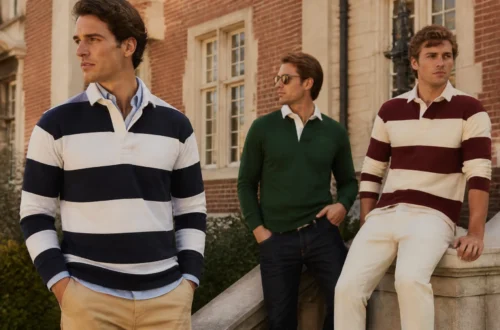
Ivy League style can easily turn into costume when every item looks borrowed from an old yearbook. The real question behind how to dress Ivy League men today is how to keep the polish, ease, and collegiate character while using clothes that fit contemporary life.
This guide explains the proportions, core garments, colors, shoes, and combinations that make the look recognizable without making it feel frozen in time.
The Modern Ivy League Outfit Starts With Restraint
The Ivy look works because it sits between formal and casual. A soft blazer feels more relaxed than a business suit, while an Oxford shirt and loafers bring more structure than a T-shirt and sneakers. That tension is the style’s central idea.
Traditional references include American campus clothing, natural-shoulder tailoring, button-down collars, chinos, penny loafers, Shetland sweaters, and repp-striped ties. You do not need all of them at once. In fact, using too many recognizable signals can make the outfit resemble period wardrobe.
For anyone learning how to dress Ivy League men with current clothing, the best approach is to combine one or two heritage pieces with simple modern basics. A navy blazer, pale blue Oxford shirt, straight chinos, and dark brown loafers already communicate the idea. The same blazer worn with a rugby shirt, relaxed jeans, and suede loafers feels younger and more casual.
The goal is coherence rather than historical precision. Keep the shapes clean, the palette grounded, and the branding quiet.
Build the Wardrobe Around Familiar Ivy Staples
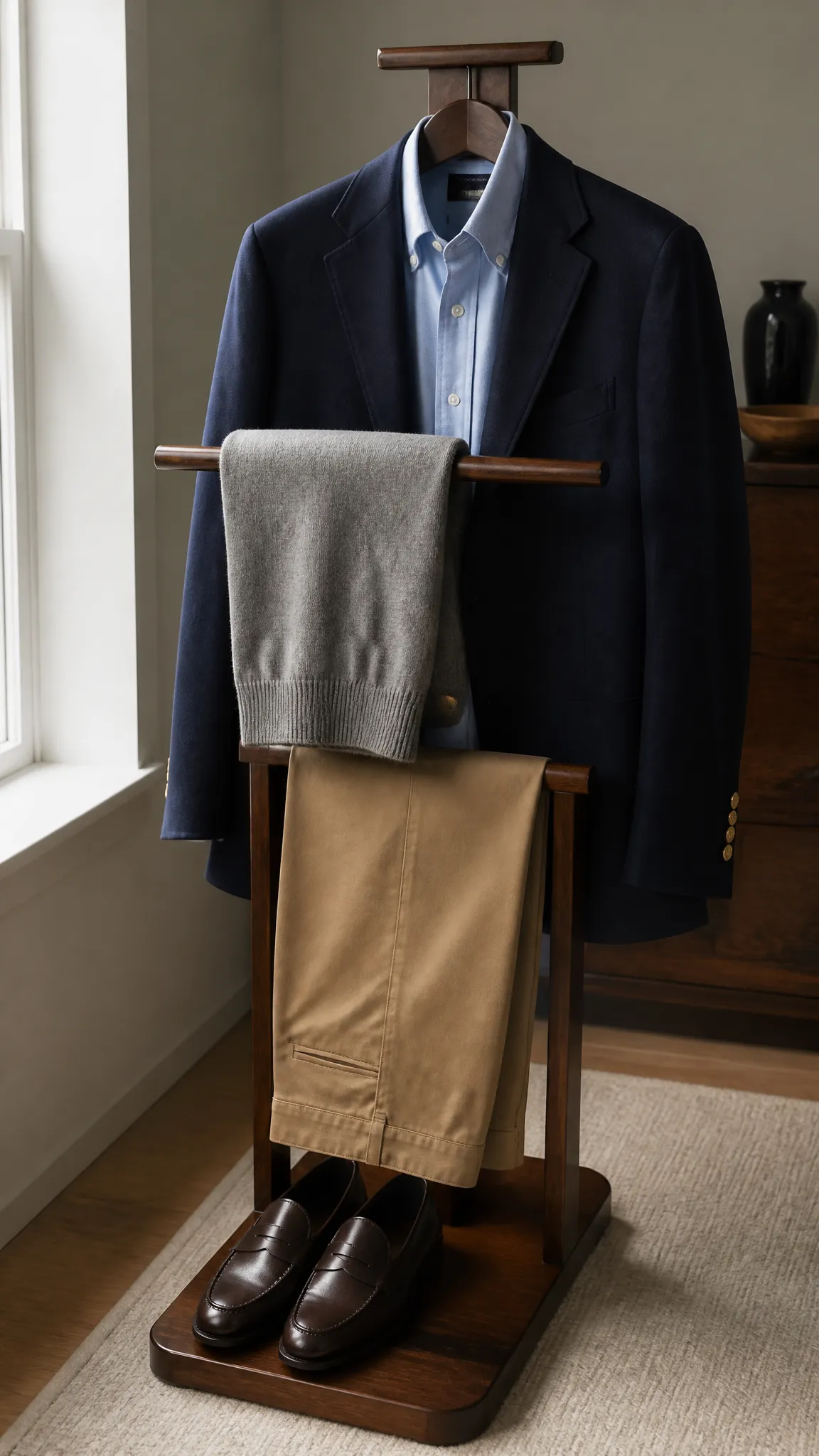
A convincing outfit begins with versatile garments rather than novelty pieces. The classics remain useful because they coordinate easily and can move between work, weekends, dinners, and smart-casual events.
Choose shirts with structure but little stiffness
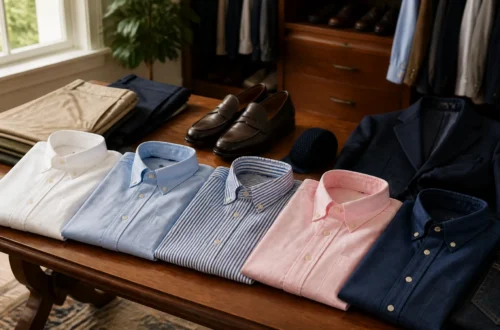
The Oxford cloth button-down is the most adaptable starting point. Its textured cotton and soft collar look appropriate under a blazer, beneath a crewneck sweater, or worn alone with sleeves casually rolled. White and pale blue are dependable; blue-and-white stripes add interest without dominating the outfit.
Rugby shirts, polos, and plain crewneck T-shirts provide casual alternatives. Look for substantial fabric and restrained colors rather than athletic shine or oversized logos. A polo collar should sit neatly under a jacket, not spread across the lapels like it is attempting an escape.
Use knitwear to add texture
Crewneck sweaters, sweater vests, and cardigans soften tailored pieces and make layering practical. Lambswool and Shetland-style wool offer a slightly fuzzy, dry texture associated with classic collegiate dress, while cotton knits work better in warmer weather.
Gray, navy, oatmeal, burgundy, forest green, and muted yellow all suit the Ivy palette. Choose a knit with enough room for a shirt underneath but not so much fabric that it bunches under a jacket.
Keep jackets relaxed
A navy sport coat is more useful than a highly formal suit jacket. Look for a natural shoulder, moderate lapels, patch pockets, and a lightly structured body. These details help the jacket coordinate with chinos, cords, and denim.
Tweed, herringbone, and subtle checks make good cool-weather alternatives. Their texture pairs naturally with Oxford cloth, wool knitwear, and suede footwear, but one patterned garment is generally enough.
Update the Fit Without Losing the Character
Fit determines whether an Ivy-League outfit looks current or archival. Contemporary does not have to mean tight, cropped, or oversized. It means choosing proportions that look intentional on your frame and work together from shoulder to shoe.
Shirts should allow movement through the chest and shoulders without billowing heavily at the waist. A button-down collar benefits from a soft roll, so avoid collars that are tiny, rigid, or flattened beneath a sweater.
Trousers look most natural with a mid or moderately high rise and a straight or gently tapered leg. Very low rises interrupt the classic proportions, while extremely narrow ankles make loafers appear disproportionately large. Aim for a clean line with little break or a single soft break over the shoe.
Jackets should cover most of the seat and close without pulling across the chest. A slightly relaxed blazer usually looks more authentic than a short, sharply pinched one. Comfortable ease is part of the silhouette, not evidence that the clothes fit poorly.
Modern wide-leg trousers can also work, particularly with loafers and a fitted knit, but balance matters. If the pants are roomy, keep the upper layers controlled rather than piling an oversized coat over an oversized sweater.
Coordinate Color, Pattern, and Texture
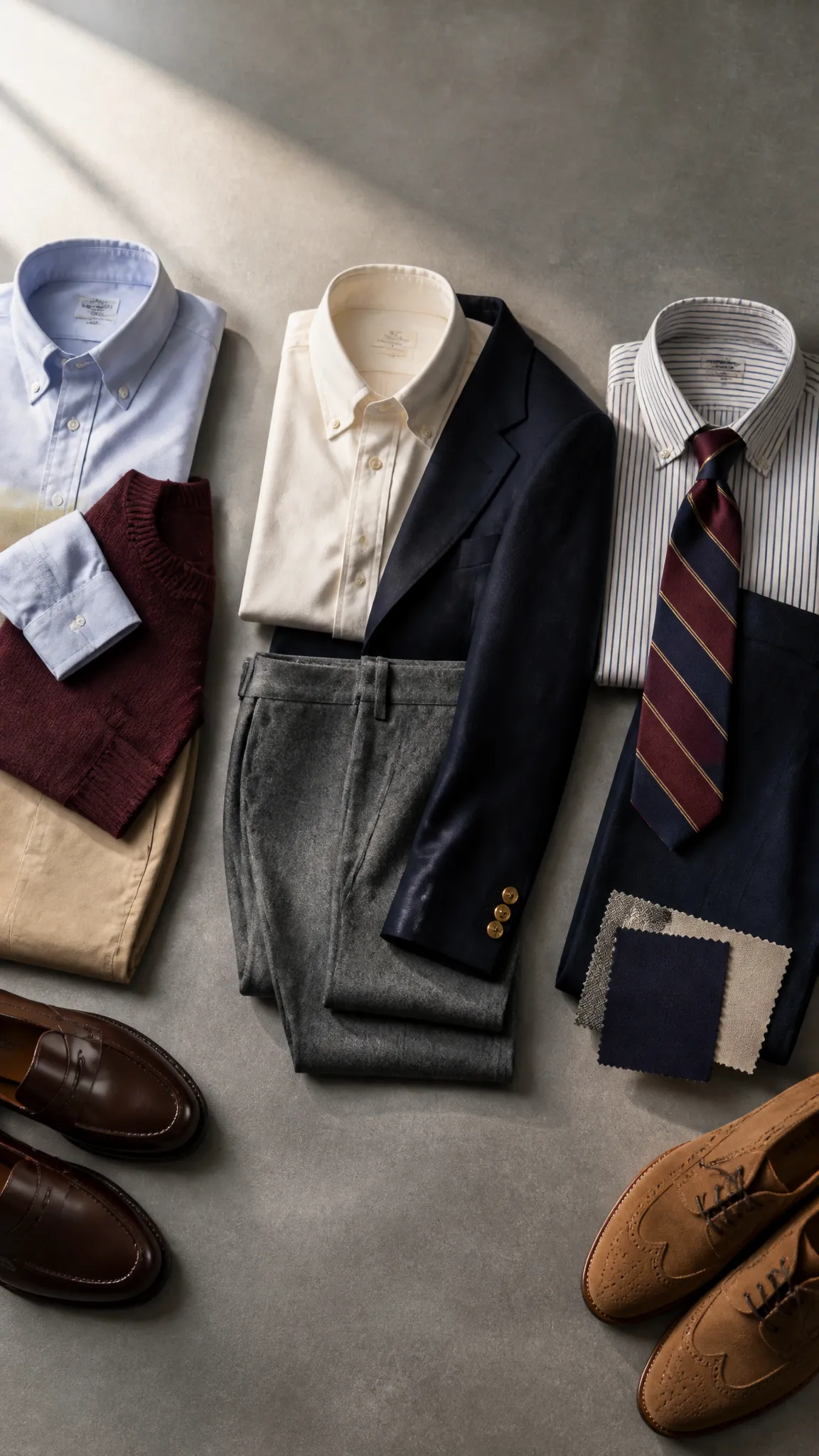
Ivy style favors colors that appear richer together than they do separately. Navy, gray, khaki, cream, olive, brown, burgundy, and pale blue form a flexible base. These shades can be repeated across seasons without making every outfit look identical.
Start with two neutrals and introduce one deeper accent. For example, pair khaki chinos and a pale blue shirt with a burgundy sweater, or wear gray flannel trousers and a cream Oxford shirt beneath a navy blazer. Brown shoes connect comfortably with all of these combinations.
Patterns should differ in scale when worn together. A fine-striped shirt can sit beneath a broad repp tie, while a small checked shirt works under a largely solid jacket. When the shirt, tie, and jacket all use dense patterns of similar size, the eye has nowhere to rest.
Texture often supplies enough visual interest without pattern. Consider these balanced combinations:
- Oxford cloth with smooth chinos and polished leather loafers
- Brushed wool with denim and matte suede shoes
- Tweed with fine-gauge knitwear and cotton trousers
- Corduroy with a crisp shirt and a softly textured wool tie
Season should guide fabric weight. Linen blends, cotton madras, seersucker, and lightweight chinos suit warm weather; flannel, corduroy, tweed, and substantial knitwear belong naturally in cooler months. Seasonal fabric choices make a classic palette feel responsive rather than repetitive.
Shoes and Accessories Should Finish, Not Announce
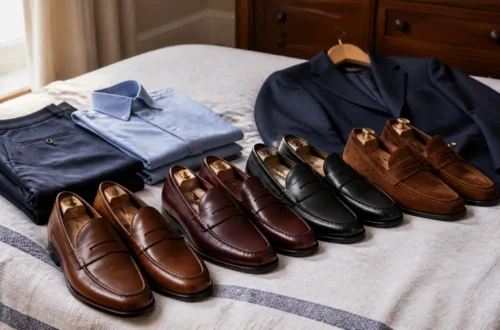
Footwear gives the outfit its final degree of formality. Penny loafers are the clearest Ivy reference, but tassel loafers, plain-toe derbies, moccasin-style shoes, and understated leather sneakers can all work. Dark brown is particularly versatile, while burgundy leather provides depth without becoming flashy.
Wear sleeker leather loafers with flannel trousers or a blazer, and reserve chunkier or suede styles for denim, cords, and relaxed chinos. White athletic sneakers can modernize a casual combination, but simple uppers and modest soles preserve the clean character.
Socks offer room for personality in small doses. Ribbed navy, gray, burgundy, or cream socks are easy choices. Argyle and collegiate stripes can work, though they are most effective when the rest of the outfit stays quiet.
Belts should relate to the shoes without matching them exactly. A brown leather belt can accompany burgundy loafers, for example, as long as the tones are compatible. Braided leather and canvas belts make chinos and shorts feel more casual.
Accessories such as repp ties, simple watches, pocket squares, and canvas totes should appear functional rather than decorative. One recognizable prep accent is usually sufficient. A striped tie, crest patch, colorful sock, and campus scarf worn together may suggest that the admissions brochure has become sentient.
Adapt the Look to Real Dress Codes
Knowing how to dress Ivy League men is most useful when the clothes suit the setting. The same small wardrobe can cover casual weekends, offices, dates, and celebrations by changing layers and footwear rather than replacing the whole outfit.
For casual days
Wear straight jeans or chinos with an Oxford shirt, crewneck sweater, and suede loafers. A rugby shirt can replace the button-down for a sportier version. Keep denim in a clean medium or dark wash if you want the outfit to remain polished.
For a smart-casual office
Combine gray trousers or khakis with a pale blue button-down and navy blazer. Add penny loafers or derbies, then include a tie only if the workplace calls for one. An unstructured jacket preserves authority without making the outfit feel like incomplete corporate suiting.
For dinners and dressier occasions
Choose gray flannel trousers, a white or blue shirt, a navy blazer, and polished leather loafers. A burgundy knit tie adds texture while remaining less formal than silk. For events that explicitly require a suit, wear the suit; prep styling is not a loophole in the dress code.
The easiest seasonal adjustment is to swap fabric rather than concept. Cotton knitwear and lightweight trousers can replace wool in spring, while tweed, flannel, and an Oxford shirt carry the same structure into fall.
Avoid the Costume Effect
The line between classic and theatrical usually comes down to editing. Vintage references are welcome, but they should appear as normal clothes rather than props. If an outfit seems designed to prove that you understand prep, remove one conspicuous element.
Avoid jackets that are too small, trousers that cling through the calf, and shirts with miniature collars. These proportions undermine the relaxed confidence associated with the style. At the opposite extreme, loose garments still need shape at the shoulders, waist, or hem.
Excessive crests, varsity letters, embroidered animals, and school colors can also feel forced. Genuine university apparel is casual merchandise, not an automatic shortcut to Ivy style. Favor material, fit, and color over borrowed institutional identity.
Finally, do not make every item pristine and precious. Oxford cloth wrinkles, suede develops variation, and leather loafers crease. Basic care matters, but a little honest wear makes traditional clothes feel lived in rather than displayed.
Frequently Asked Questions
Can you wear Ivy League style without a blazer?
Yes. An Oxford shirt, straight chinos, loafers, and a crewneck sweater create the same polished-casual balance. A cardigan, chore jacket, or simple raincoat can provide the outer layer when a blazer feels too formal.
Do jeans belong in an Ivy-League outfit?
Straight dark or medium-wash jeans work well with button-down shirts, rugby tops, Shetland-style sweaters, and loafers. Avoid heavy distressing when you want a more traditional result, though that is a styling preference rather than a hard rule.
Can sneakers work with this look?
Simple white, off-white, navy, or gray sneakers can complement casual Ivy outfits. Choose a low-profile pair with limited branding, and wear loafers or derbies when the occasion calls for sharper footwear.
What is the difference between Ivy League and preppy style?
The terms overlap, but Ivy style often emphasizes classic campus tailoring, natural-shoulder jackets, Oxford shirts, loafers, and restrained colors. Preppy style may lean more heavily into resort wear, bright color, nautical references, and overt collegiate motifs.
Can this style work on a limited budget?
Yes. Start with a blue Oxford shirt, khaki chinos, a navy sweater, and brown loafers, then add a blazer later. Prioritize fit and versatile colors; secondhand shops can also be useful for wool jackets, ties, and sturdy knitwear.
Start With One Reliable Combination
The clearest answer to how to dress Ivy League men today is to preserve the style’s relaxed structure while loosening its rules. Begin with an Oxford shirt, straight trousers, a textured knit, and loafers, then adjust the jacket, fabric, and accessories for the occasion.
Build slowly around garments you can wear separately. When every piece earns its place in ordinary life, the Ivy influence feels natural rather than rehearsed.