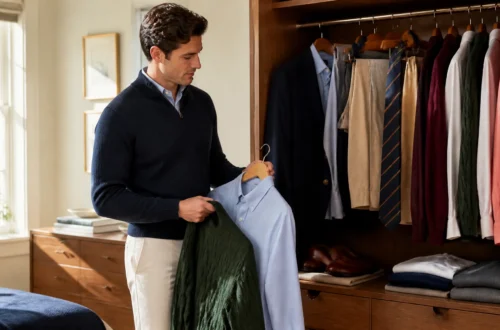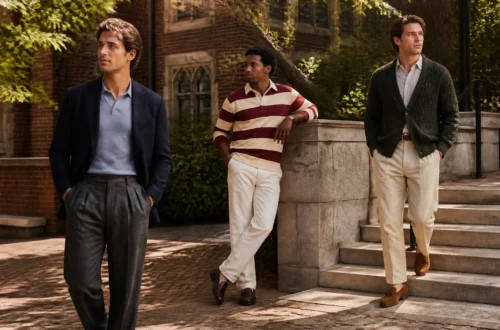
An Oxford shirt, sweater, and blazer can look polished together, but only if each layer leaves enough room for the next. Otherwise, the collar disappears, the jacket pulls, and a classic outfit starts to resemble carry-on luggage.
This guide to preppy layering men can use in real life explains how to balance fit, fabric, color, and formality. You will also learn how to adjust the combination for different seasons and occasions.
Build the Layers From the Oxford Shirt Outward
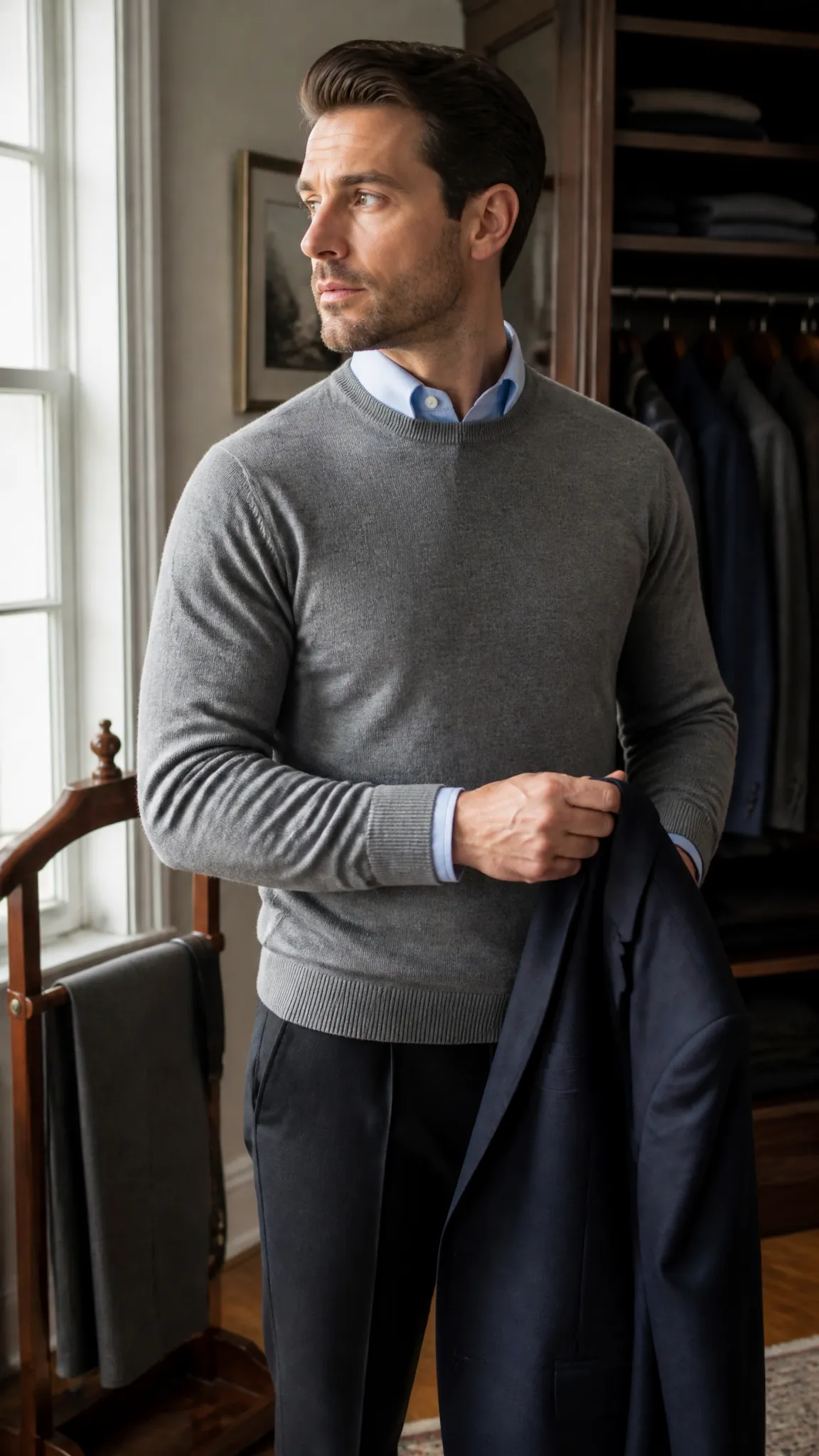
The Oxford shirt is the outfit’s foundation, so begin there rather than choosing a blazer and trying to stuff everything beneath it. A proper base layer keeps the neckline tidy and prevents bunching around the waist, shoulders, and cuffs.
Choose an Oxford cloth button-down that fits close without clinging. The shoulder seams should sit near the ends of your shoulders, the collar should accommodate a finger comfortably, and the body should stay smooth when tucked. Excess fabric becomes more obvious under a sweater, while an overly tight shirt restricts movement once two additional layers are added.
A button-down collar is especially useful because its points remain controlled beneath a crewneck or V-neck. White and light blue are the easiest starting colors; pale pink, blue-and-white stripe, and subtle university stripe add interest without competing with the rest of the outfit.
Unless the shirt is deliberately cut short for casual wear, tuck it in. A tucked shirt creates a cleaner line beneath the sweater and blazer, particularly with tailored trousers or chinos. Keep the shirt cuffs buttoned, then allow roughly a quarter to half inch to show beyond the blazer sleeves if the proportions cooperate naturally.
The sweater goes on next, but its neckline should work with the shirt collar. A crewneck gives the combination a relaxed, collegiate character and frames only the upper portion of the collar. A V-neck exposes more shirt and can accommodate a tie, although a deep V often looks dated and leaves too much empty space.
Fine-gauge knitwear is the reliable choice. Merino wool, cotton, or a restrained cashmere blend can sit under tailoring without creating swollen sleeves or a padded torso. Save chunky cable knits and heavy ribbing for outfits without a fitted blazer.
Choose a Blazer With Enough Room
Once the shirt and sweater sit correctly, the blazer must contain them without strain. This is where many attempts at preppy layering men favor go wrong: a jacket that fits beautifully over a shirt may be too trim over knitwear.
Put on all three pieces before judging the blazer. The shoulder line should remain clean, the lapels should lie flat, and the button should close without forming sharp horizontal creases. You should also be able to bend your elbows and reach forward without feeling the sleeves lock against your arms.
A softly constructed blazer usually layers more comfortably than a rigid suit jacket. Natural shoulders, modest padding, and a little room through the chest suit the relaxed character of an Oxford shirt and sweater. Patch pockets reinforce that informality, though flap pockets also work.
The blazer should still have shape. Buying an oversized jacket simply to gain room can leave the shoulders drooping and sleeves too long. If your usual size feels tight only through the chest or upper arms when layered, look for a roomier cut or ask a tailor whether modest alterations are practical.
Navy hopsack is exceptionally versatile because its open texture looks at home with Oxford cloth and knitwear. Brown herringbone, gray flannel, and muted tweed offer more seasonal depth. Avoid using the orphaned jacket from a shiny business suit; smooth worsted wool often looks too formal beside casual button-down cloth and chinos.
Balance Color, Pattern, and Texture
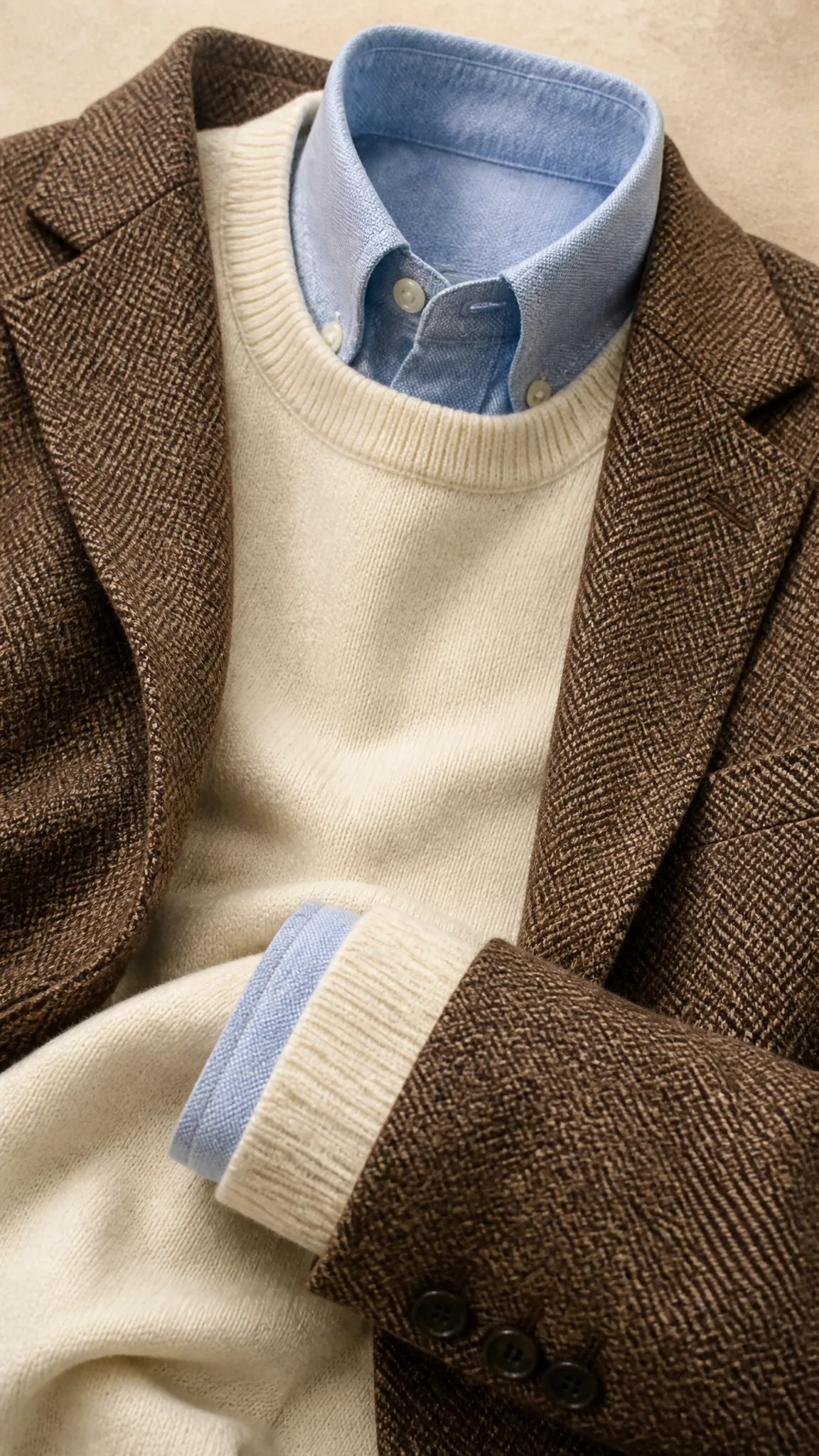
Three visible garments create plenty of visual information, so coordination works best when one piece carries the main pattern and the others provide support. The goal is not to make everything match. It is to create enough contrast that each layer remains distinct.
A light blue Oxford, heather gray sweater, and navy blazer is nearly foolproof because it moves from light to dark as the layers progress outward. A white shirt, burgundy sweater, and charcoal blazer offers stronger contrast, while a blue striped shirt, oatmeal knit, and brown herringbone jacket feels softer and more autumnal.
If the blazer is patterned, keep the sweater solid and the shirt quiet. With a solid navy blazer, you can introduce a striped Oxford or a small geometric tie. Combining a striped shirt, Fair Isle sweater, and plaid jacket is possible, but it requires careful differences in pattern scale and is rarely the easiest route before coffee.
Texture gives understated outfits depth. The slightly nubby surface of Oxford cloth works well with brushed wool, lambswool, flannel, hopsack, and tweed because no single fabric appears unnaturally sleek. In warmer weather, cotton knitwear and a breathable wool or linen-blend blazer reduce both bulk and visual heaviness.
A useful approach is to keep two garments in a restrained neutral family and use the third for color. Consider these combinations as adaptable formulas rather than strict rules:
- Light blue Oxford, navy sweater, and gray blazer
- White Oxford, forest green sweater, and navy blazer
- Blue striped Oxford, cream sweater, and brown tweed blazer
- Pale pink Oxford, charcoal sweater, and navy blazer
Very similar shades can merge into a flat block, especially when all three fabrics are smooth. If you wear navy knitwear beneath a navy blazer, use a noticeably lighter shirt and distinct textures so the layers do not disappear into one another.
Finish the Outfit at the Right Level of Formality
The upper half establishes a polished but approachable tone, and the trousers and shoes should continue it. A sharp suit trouser can make an otherwise relaxed combination feel mismatched, while distressed jeans may pull it too far in the opposite direction.
Gray flannel trousers are the dressiest natural partner. Chinos in khaki, olive, stone, or charcoal create a business-casual outfit, and dark indigo jeans work when the blazer is textured and the setting is informal. Whatever you choose, a mid-rise waistband helps keep the tucked shirt contained and prevents the sweater from appearing unusually long.
Loafers, brogues, plain-toe derbies, and clean leather sneakers can all work, depending on the setting. Brown suede loafers pair especially well with navy and gray, while dark brown derbies lend more authority. Reserve sneakers for relaxed offices, dinners, or weekend plans rather than occasions that clearly call for traditional business attire.
A tie is optional. If you wear one, choose a matte texture such as knit silk, grenadine, wool, or subdued repp stripe, and make sure the sweater neckline reveals the knot cleanly. A pocket square should complement rather than duplicate the tie; a simple white linen square is sufficient.
Belts, watches, and socks should remain supporting players. Match the general color family of leather shoes and belt without obsessing over an exact shade. Socks can relate to the trousers or sweater, creating continuity without turning your ankles into the outfit’s headline.
Adapt the Combination to Weather and Setting
The basic formula remains consistent, but fabric weight should change with the temperature. Layering works only when you can keep the layers on comfortably; a technically handsome outfit loses its charm when the room feels like a sauna.
For fall and winter
Choose a brushed or heavyweight Oxford, merino or lambswool sweater, and blazer in flannel, tweed, or substantial hopsack. These fabrics provide warmth and enough textural contrast to feel seasonally appropriate. A wool overcoat can go over the entire combination, provided its shoulders and sleeves have sufficient room.
Earth tones become particularly useful here. Rust, olive, oatmeal, burgundy, and chocolate brown sit naturally beside navy and gray. Keep the overall palette controlled by repeating one color subtly, such as burgundy in the sweater and socks.
For spring and mild weather
Use a lighter Oxford, thin cotton or merino sweater, and an unlined or partially lined blazer. Pale gray, cream, soft blue, tan, and muted green create a lighter impression without demanding bright color.
In genuinely warm conditions, three layers may simply be impractical. Remove the sweater rather than substituting an undersized or transparent knit. Good preppy layering men can rely on includes knowing when one layer has become unnecessary.
For offices and social occasions
For a business-casual workplace, combine a pale blue shirt, charcoal or navy sweater, navy blazer, gray trousers, and brown leather shoes. For a weekend lunch or casual date, switch to chinos or dark jeans, a textured blazer, and loafers.
A tie, tailored trousers, and darker shoes move the outfit toward dressier territory, but the combination is not a substitute for a suit when the invitation specifically requests one. Respecting the dress code is more stylish than attempting to negotiate with it through knitwear.
Correct the Details That Make Layers Look Bulky
Most problems come from cumulative bulk rather than a single bad garment. Thick shirt fabric, a loose sweater, and a narrow blazer may each seem acceptable alone, yet become uncomfortable and untidy together.
Check the outfit from the side as well as the front. The sweater hem should lie flat instead of rolling over the waistband, the shirt collar should remain visible and symmetrical, and the blazer vents should hang closed. If the back of the jacket catches above the seat, the layers may be pulling it upward.
A few corrections solve the majority of issues:
- Collar buried under the sweater: Use a crewneck with a slightly wider opening or a shallow V-neck.
- Shirt bunching at the waist: Choose a trimmer shirt body, tuck it smoothly, and avoid an excessively long sweater.
- Blazer sleeves feel tight: Switch to finer knitwear or a jacket with more room through the armholes and sleeves.
- Lumpy shoulders: Smooth the sweater seams before putting on the blazer and avoid heavy shoulder construction.
- Too much fabric at the cuffs: Adjust shirt and jacket sleeve lengths rather than repeatedly pushing the sweater sleeves upward.
Finally, sit down while wearing the complete outfit. Comfort at rest does not guarantee comfort at a desk, restaurant table, or steering wheel. If the jacket pulls severely or the sweater rides up, change one layer instead of hoping gravity will negotiate a settlement.
Frequently Asked Questions
Should the Oxford collar go inside or outside the sweater?
Keep the collar inside the sweater neckline, with the points resting neatly against the shirt or tucked naturally beneath the knit. Pulling the collar over a crewneck usually looks costume-like, though personal style can bend the convention in very casual settings.
Can you wear a cardigan instead of a pullover?
Yes, provided the cardigan is thin enough to sit beneath the blazer and its buttons do not create bumps. A fine-gauge cardigan also gives you more temperature control and creates a subtle waistcoat-like effect when buttoned.
Should the sweater be tucked in?
Usually not. A fine sweater should end around the waistband and lie smoothly over the tucked shirt. Tucking knitwear can create bulk at the waist, although extremely thin knits may work with higher-rise tailored trousers.
Can the blazer and sweater be the same color?
They can, but separate them through shade and texture. A heathered navy sweater under a darker navy hopsack blazer reads more clearly than two smooth pieces in an identical blue.
Do you need an undershirt beneath the Oxford?
An undershirt is optional, but it can absorb perspiration and make the shirt more comfortable. Choose a thin, fitted V-neck in a skin-adjacent tone so its neckline and sleeves do not show through the Oxford.
Make the Three-Layer Formula Work
Successful preppy layering men can repeat across many outfits starts with a simple order: a well-fitting Oxford, a fine-gauge sweater, and a blazer cut with enough room for both. Control bulk first, then use color and texture to give the outfit personality.
Try the full combination on before you need to wear it, including trousers and shoes. If the collar stays neat, the lapels lie flat, and you can move comfortably, the outfit is doing exactly what classic layering should.