Preppy clothing can look polished and relaxed, but it can also veer into country-club costume surprisingly fast. The difference lies less in owning traditional pieces than in choosing contemporary fits, restrained colors, and combinations that feel natural.
This guide to modern preppy style men can actually wear will help you build a versatile wardrobe, assemble outfits, and avoid looking as though you dressed for a theme party.
What Modern Preppy Style Means for Men
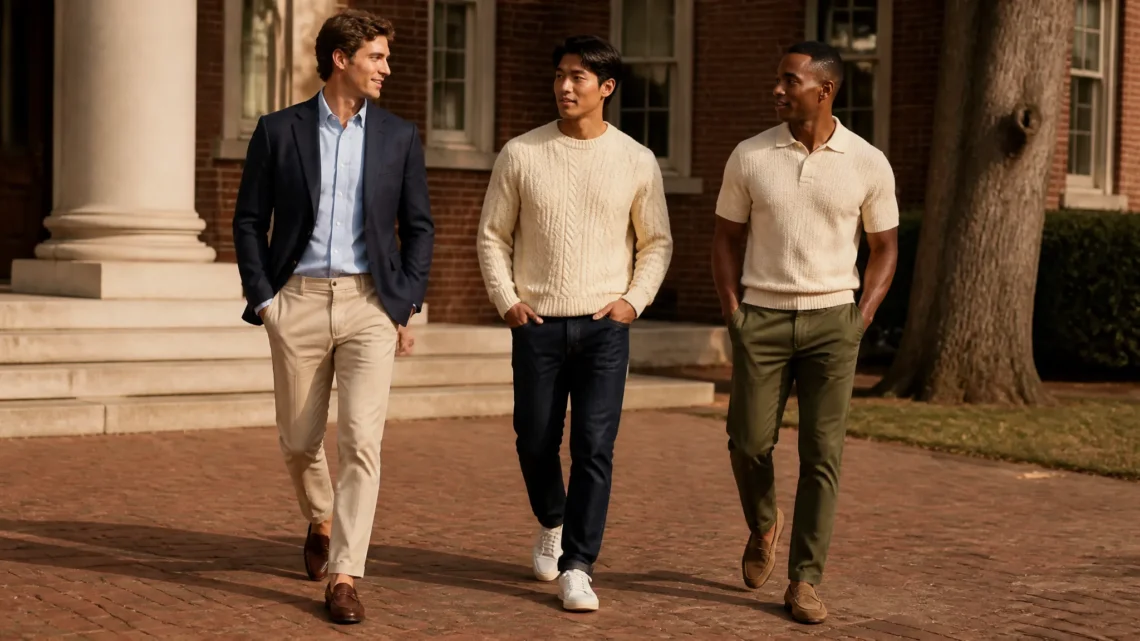
Modern prep retains the practical foundations of classic American collegiate style: Oxford shirts, chinos, knitwear, loafers, polos, and tailored outerwear. What changes is the attitude. Clothes fit more naturally, branding stays quiet, and traditional pieces mingle with clean sneakers, relaxed trousers, and casual layers.
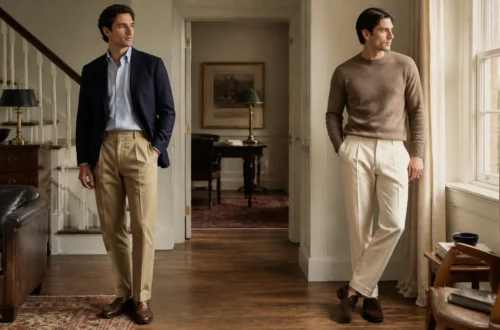
The look should communicate easy structure rather than rigid formality. A navy blazer still belongs, but it might accompany a pale blue Oxford shirt, straight-leg chinos, and brown suede loafers instead of a tie, pressed khakis, and highly polished dress shoes.
Restraint is central to the modern version. You do not need a cable-knit sweater, striped tie, boat shoes, madras shorts, and embroidered belt in one outfit. Select one or two recognizable preppy elements, then surround them with simple clothing.
Build the Wardrobe Around Reliable Staples
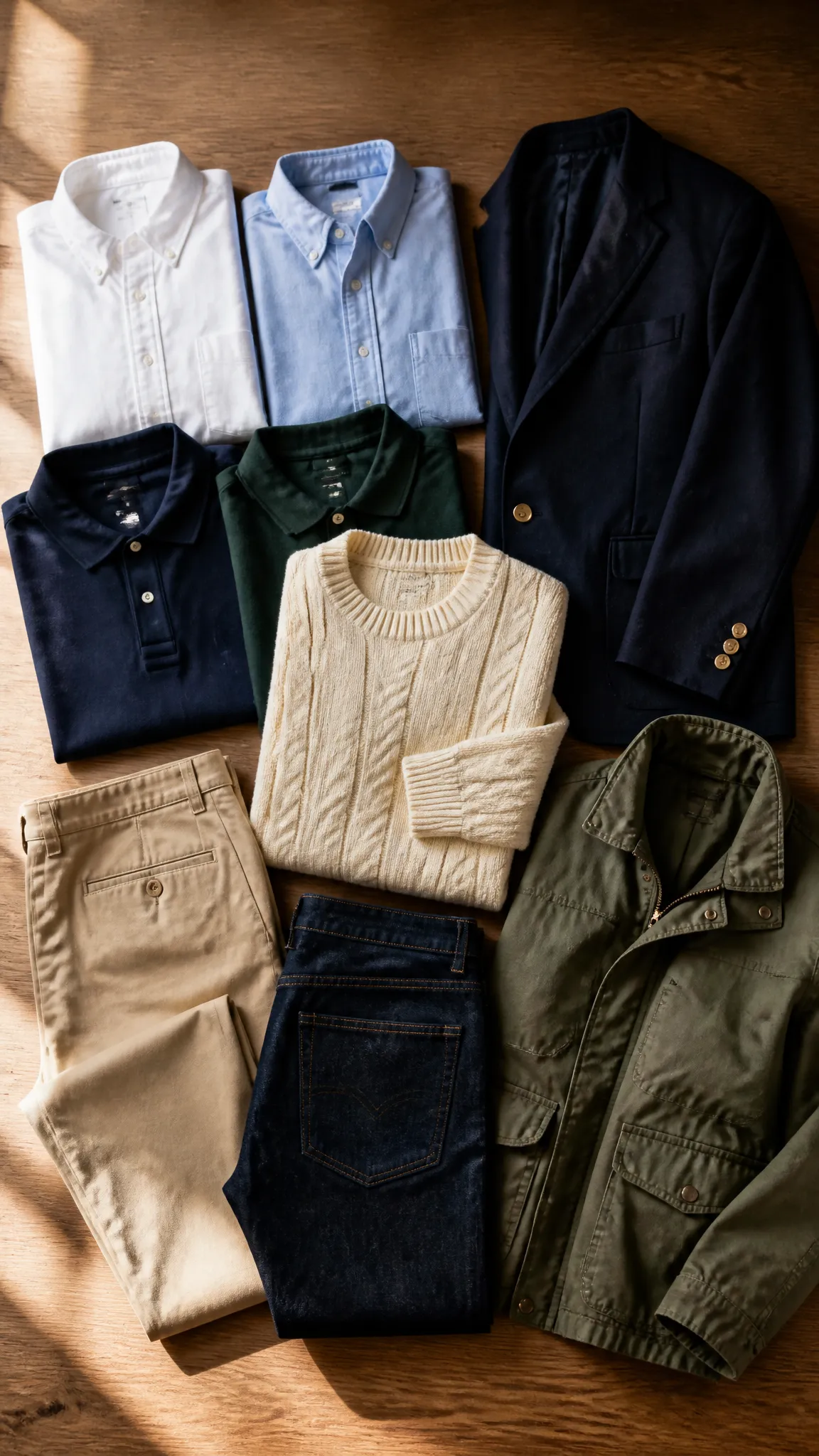
A useful preppy wardrobe begins with pieces that work together rather than garments that merely look impressive on their own. Concentrate on natural fabrics, moderate silhouettes, and familiar colors. This gives you enough consistency to dress quickly without making every outfit identical.
Shirts, polos, and knitwear
Start with an Oxford cloth button-down in white or light blue. Its textured cotton looks appropriate under a blazer but also holds its own with rolled sleeves and chinos. A university stripe, usually blue and white, adds pattern without becoming difficult to coordinate.
Choose polos in cotton piqué or a smooth knitted fabric, with sleeves that end around the middle of the upper arm. Navy, forest green, burgundy, cream, and muted blue are more versatile than neon colors. Keep the collar substantial enough to sit neatly rather than curling into surrender.
For knitwear, consider a cotton crewneck, merino V-neck, or cable-knit sweater. The best beginner choices skim the torso and leave room for a shirt underneath without producing bulky folds. A fine-gauge cardigan offers another useful layer, particularly in offices where a blazer feels too formal.
Trousers and outer layers
Flat-front chinos form the backbone of the look. Khaki is traditional, but navy, olive, stone, and off-white broaden your options. A mid-rise, straight or gently tapered cut usually balances preppy shirts and jackets better than either painted-on pants or extremely wide trousers.
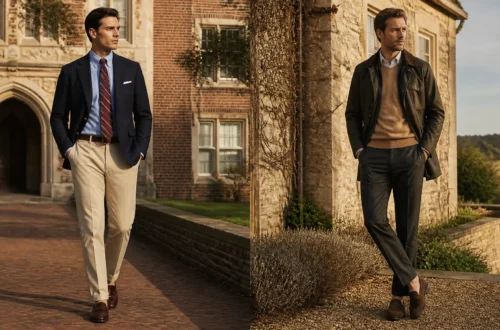
Dark, minimally faded jeans bring the wardrobe into casual settings. Add an unstructured navy blazer with softer shoulders, plus one practical outer layer such as a Harrington jacket, waxed cotton jacket, or simple raincoat. These pieces supply shape while remaining easier to wear than heavily padded tailoring.
If you are starting from scratch, this compact group covers most everyday needs:
- Two Oxford cloth button-down shirts
- Two solid polos or knitted polos
- One crewneck or cable-knit sweater
- Chinos in khaki and navy or olive
- Dark straight-leg jeans
- An unstructured navy blazer
- A casual jacket for changing weather
Use Fit and Proportion to Keep It Current
Fit does more to modernize preppy clothing than any trend-driven purchase. The goal is not necessarily slimness. It is a clean silhouette that allows movement and creates intentional proportions from shoulder to shoe.
Shirt shoulder seams should sit close to your natural shoulder edge, while the body should fall without pulling at the buttons. If you plan to wear the shirt untucked, choose a hem that lands around the middle of the fly. Longer dress shirts tend to look untidy when freed from the waistband.
Trousers should remain secure near your natural waist without requiring a belt to hold them up. A small break or no break above the shoe creates a crisp line, but aggressively cropped chinos can undermine the classic character. Cuffs are optional and work best when the trousers have enough width to drape cleanly.
Balance matters when layering. A relatively relaxed Oxford shirt pairs well with straight chinos and a soft blazer, while a trim knitted polo suits fuller trousers because the contrast appears deliberate. As a general principle, avoid making every garment equally tight or equally oversized.
Tailoring can improve sleeve and trouser length, but it cannot easily fix narrow shoulders, a restrictive armhole, or a jacket that is too short. Prioritize the fit of difficult-to-alter areas when buying, then adjust the simpler details afterward.
Coordinate Color, Pattern, and Texture
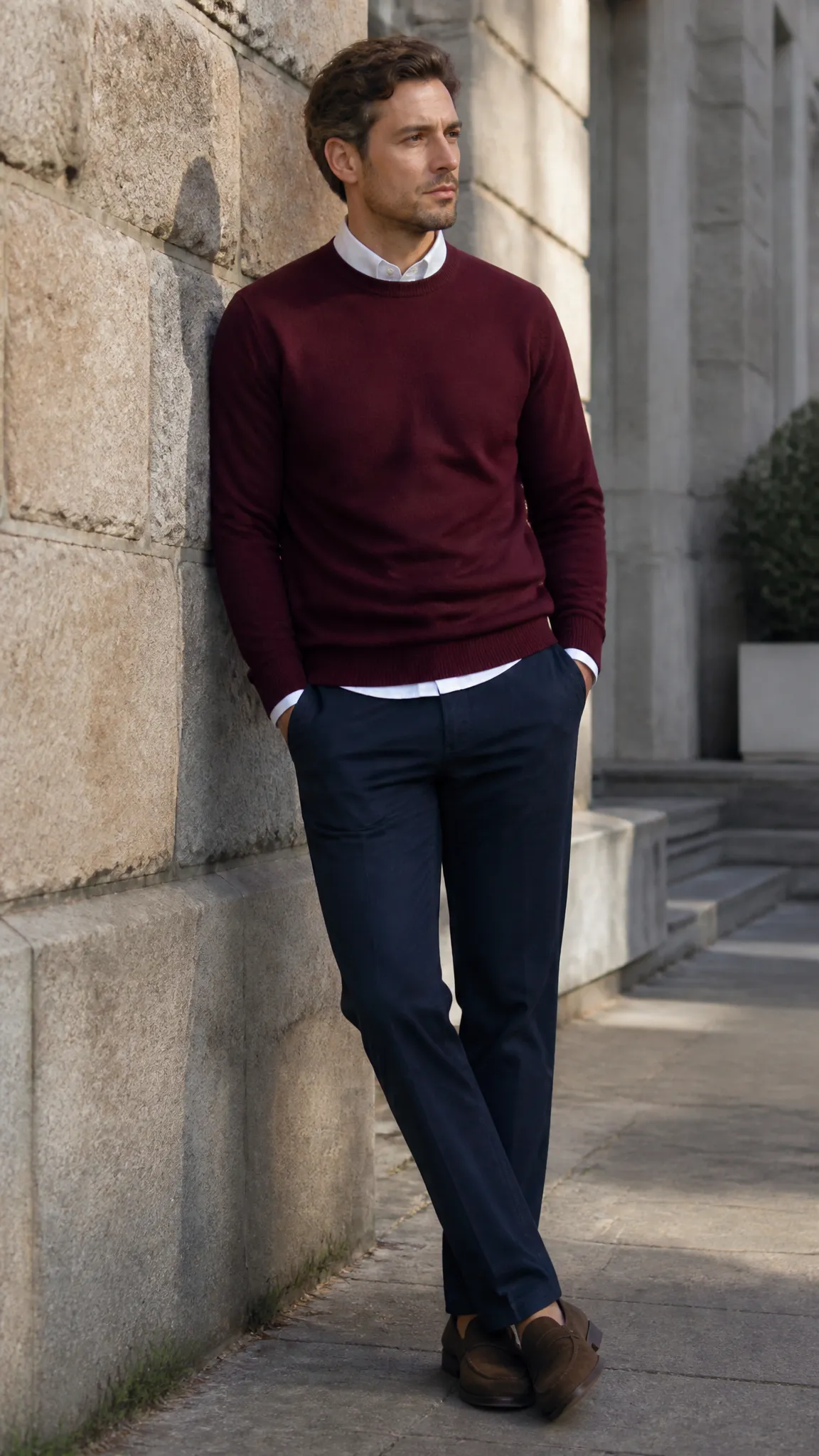
The preppy palette is broad, yet beginners benefit from a disciplined foundation. Navy, white, light blue, gray, khaki, olive, cream, and brown coordinate easily and suit the style’s understated character. Seasonal color can then enter through a polo, sweater, or sock rather than taking over the whole outfit.
A simple method is to build around two neutrals and one muted accent. Navy chinos, a white Oxford shirt, and a burgundy crewneck feel richer than an all-neutral outfit but remain controlled. In warm weather, stone trousers, a pale blue polo, and dark brown loafers produce the same balance with fewer layers.
Patterns should vary in scale. A fine striped shirt looks comfortable under a solid sweater or subtly textured blazer; combining it with equally narrow striped trousers creates visual interference. Checks, madras, and regimental stripes are legitimate preppy motifs, but one prominent pattern per outfit is usually enough for a beginner.
Texture prevents restrained colors from feeling flat. Oxford cotton, brushed wool, suede, corduroy, piqué, and cable knit all respond differently to light. For example, a tonal outfit of navy chinos, a blue Oxford shirt, and a navy wool blazer gains definition because each surface has a distinct weave.
Black is not forbidden, but dark brown and burgundy often harmonize more naturally with traditional preppy colors. Treat that as a coordination principle, not an absolute rule. Black loafers can look sharp with gray trousers and a navy jacket, particularly in a city setting.
Choose Shoes and Accessories That Support the Outfit
Footwear establishes how formal your clothes appear. Penny loafers are the classic bridge between casual and dressed-up outfits, while brown suede loafers create a softer impression than polished leather. Derbies and brogues work when the setting calls for more formality, provided their shape is not excessively chunky or pointed.
For relaxed outfits, clean leather sneakers or simple canvas sneakers pair naturally with chinos, jeans, and polos. Boat shoes make sense in genuinely casual warm-weather settings, but they are not mandatory equipment. Wearing them with every nautical reference at once risks turning a style influence into a uniform.
Accessories should provide function or a small point of interest. A leather belt can roughly relate to the warmth of your shoes without matching them exactly. A woven belt, understated watch, patterned sock, or simple baseball cap can loosen a polished outfit, but stacking all four rarely improves it.
Ties still have a role in modern preppy style for men, especially for business-casual events, dinners, and celebrations. Choose a textured knit tie, repp stripe, or small geometric print and pair it with an Oxford shirt and soft-shouldered jacket. The texture keeps the outfit from feeling like generic corporate wear.
Dress Preppy Without Dressing Like a Character
The easiest way to wear this style is to adapt its vocabulary to the occasion. For a casual weekend, try an Oxford shirt over a white T-shirt with olive chinos and clean sneakers. Leave the outer shirt open or roll the sleeves neatly to reduce formality.
For a smart-casual office, combine a light blue button-down, navy chinos, an unstructured blazer, and brown loafers. If the workplace is more relaxed, replace the blazer with a merino crewneck or cardigan. For dinner, dark jeans, a knitted polo, and suede loafers look considered without appearing overdressed.
Warm-weather prep relies on breathable cotton and linen blends, lighter colors, and fewer layers. Chino shorts should have a clean front and enough room through the thigh; pair them with a polo, camp-collar shirt, or rolled-sleeve Oxford. In cooler months, use wool trousers, corduroy, heavier chinos, and textured knitwear beneath a raincoat or wool topcoat.
A few habits tend to make the look feel forced:
- Wearing several crests, monograms, or obvious logos together
- Combining too many heritage motifs in one outfit
- Choosing extreme skinny fits that restrict movement
- Matching every color and accessory too precisely
- Ignoring the actual dress code in favor of the aesthetic
The solution is subtraction. Before leaving, identify the item making the strongest statement and let everything else support it. If both your madras shirt and embroidered pants are competing for attention, one of them probably deserves the day off.
Shop Gradually and Care for What You Own
A coherent wardrobe does not require buying everything at once. Begin with the situations you dress for most often, then add pieces that create several new combinations. A second pair of trousers may be more valuable than an unusual blazer if it works with every shirt you already own.
When shopping, examine fabric and construction before labels. Natural fibers often offer appealing texture and breathability, although small amounts of synthetic fiber can improve stretch, shape retention, or weather resistance. Check whether collars lie flat, button plackets remain straight, and patterned seams align reasonably.
Secondhand stores can be useful for wool blazers, Shetland-style sweaters, loafers, and traditional outerwear because the basic designs change slowly. Focus on condition and alterability. Deep moth damage, cracked leather, or a jacket that is too small through the shoulders will not become charming through optimism.
Care also preserves the crisp but lived-in balance this style needs. Wash cotton shirts according to their labels, remove them promptly to limit wrinkles, and use a garment brush on wool. Rotate leather shoes, use shoe trees when practical, and condition smooth leather occasionally. Good maintenance looks better than conspicuous spending.
Frequently Asked Questions
Can preppy style work with a casual dress code?
Yes. Use the less formal parts of the wardrobe: polos, Oxford shirts, chinos, dark jeans, clean sneakers, and casual jackets. Softer fabrics and unstructured layers preserve the preppy character without making you look dressed for a board meeting.
Do I need loafers to dress preppy?
No. Loafers are versatile and recognizable, but plain sneakers, suede derbies, brogues, and even sturdy boots can work. Choose footwear according to the weather and occasion, then keep its shape and color consistent with the rest of the outfit.
Can bigger or shorter men wear modern prep?
Absolutely. Prioritize correct shoulder fit, comfortable rises, and clean trouser lengths rather than chasing a specific body shape. Moderate proportions, such as straight trousers and jackets that cover the seat, often create a more balanced line than extreme cuts.
Is it acceptable to mix preppy clothes with streetwear?
Yes, if the contrast feels controlled. A rugby shirt with relaxed chinos and minimal sneakers can work, as can an Oxford shirt beneath a simple bomber jacket. Keep branding limited and let one style lead while the other provides an accent.
How many colors should a preppy outfit include?
There is no fixed limit, but two neutrals and one accent provide an easy starting point. Additional colors work best when they share a similar level of saturation, as in a muted madras shirt paired with plain shorts and understated shoes.
Start With One Dependable Outfit
The most practical entry into modern preppy style men will find wearable is a simple combination: a blue or white Oxford shirt, well-fitting chinos, and loafers or clean sneakers. Add a crewneck sweater or navy blazer once the foundation feels comfortable.
Build outward from that outfit according to your real calendar, climate, and preferences. When fit is clean, colors cooperate, and traditional details appear in moderation, preppy style looks current because it looks like your wardrobe, not a costume borrowed for the afternoon.