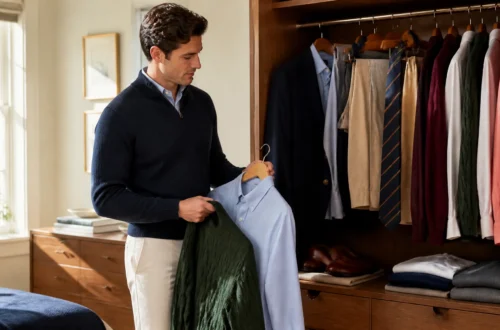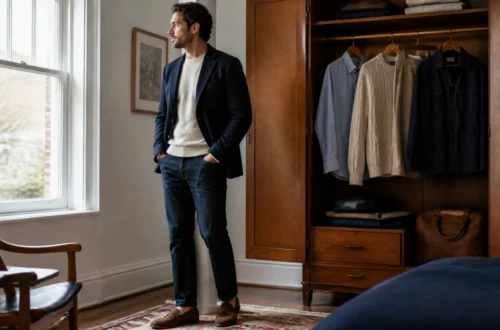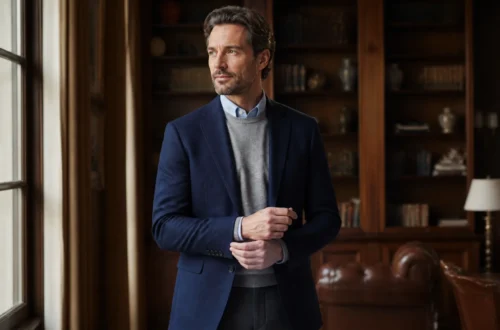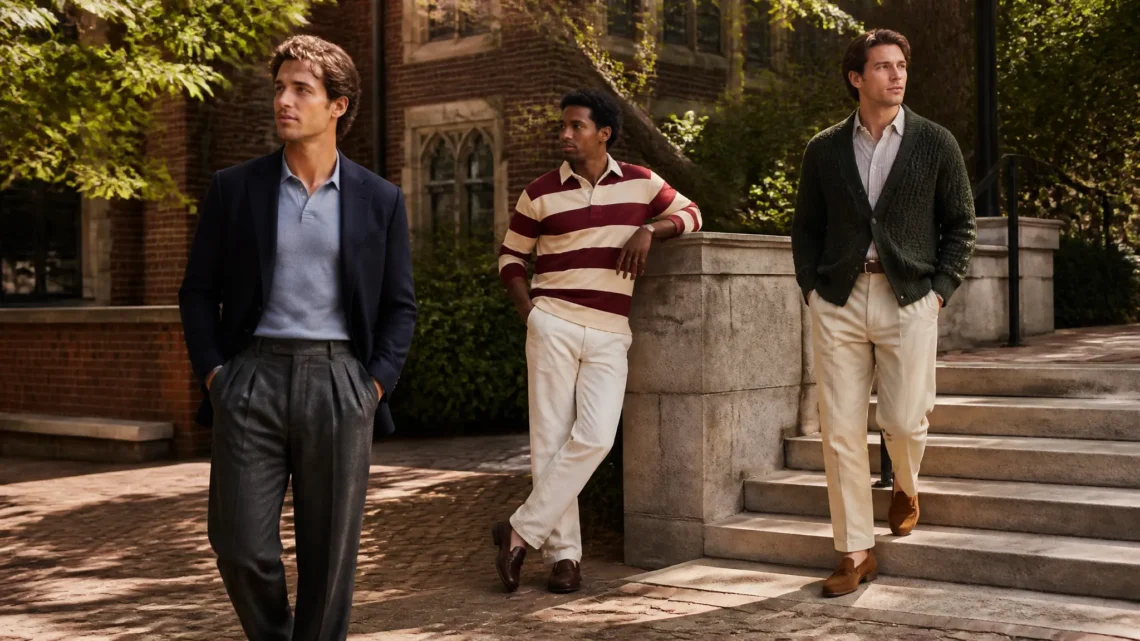
Preppy style can easily look like a costume when every polo, loafer, and crest arrives at once. The best preppy men’s fashion trends 2026 offer a more relaxed alternative, retaining familiar collegiate pieces while changing their fit, texture, and attitude.
This guide explains how to build that balance, from updated tailoring and color to footwear, seasonal outfits, and the small details that keep the look current.
The New Direction of Preppy Men’s Fashion Trends 2026
Modern prep is less concerned with looking perfectly pressed and more interested in making established wardrobe staples feel lived-in. The Oxford shirt, navy blazer, rugby top, chinos, and penny loafers remain relevant, but they no longer need to appear in their most conservative forms.
The key shift is toward relaxed refinement. A roomy striped shirt can sit over a substantial white T-shirt, while pleated trousers replace narrow chinos. An unstructured blazer can be worn with denim rather than matching dress pants. Each item still carries preppy associations, but the styling feels personal instead of prescribed.
This approach also makes the wardrobe more practical. Rather than buying novelty pieces with obvious collegiate graphics, prioritize versatile garments that suggest prep through fabric, cut, or color. A brushed Shetland-style sweater says more than a sweatshirt covered in fictional club insignia.
Silhouettes Are Relaxed, Not Sloppy
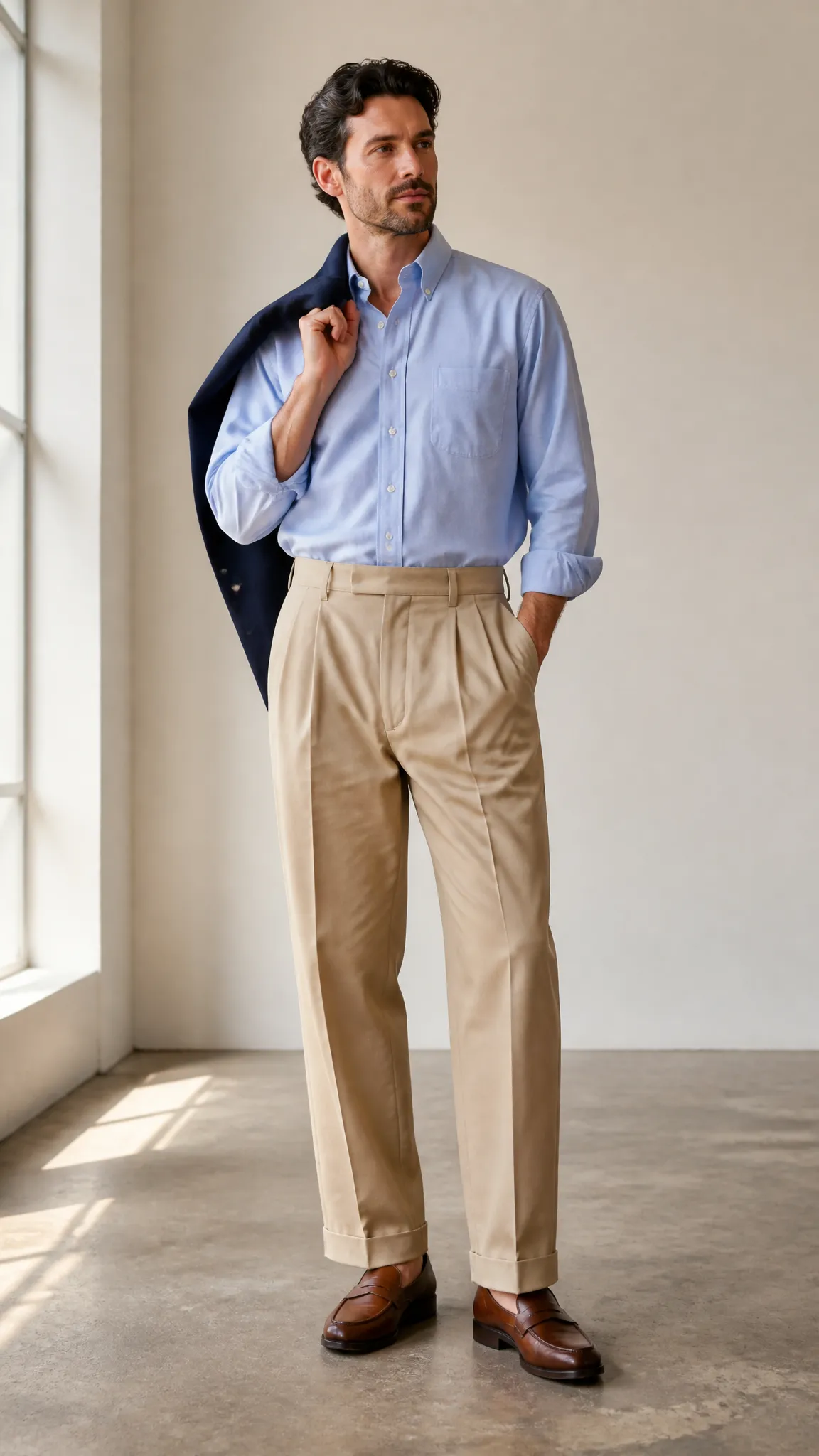
Fit is the clearest dividing line between yesterday’s prep and its 2026 interpretation. Skinny chinos and undersized blazers can make traditional clothes feel dated, while exaggerated volume may overwhelm their clean character. The useful middle ground is comfortable, structured, and intentional.
Trousers Gain Shape
Look for chinos, wool trousers, and corduroys with a medium or higher rise, a straight or gently tapered leg, and enough room through the thigh. Single pleats can add shape without turning the outfit into office wear. A small break or clean full-length hem generally works better than an ankle-baring crop when you want a contemporary proportion.
Shorts are also becoming easier and slightly roomier. A hem around the mid-thigh or somewhat lower suits the relaxed direction, especially when paired with a tucked knit polo or loose Oxford shirt.
Shirts and Jackets Lose the Squeeze
An Oxford cloth button-down should skim the torso rather than pull across it. Slightly dropped shoulders and a fuller body can look deliberate when the collar fits correctly and the sleeves end near the wrist. You can tuck it into higher-rise pants or wear it open over a tee for a less formal layer.
Blazers benefit from softer construction, natural shoulders, and modestly longer proportions. Relaxed does not mean oversized everywhere: if the jacket is roomy, keep the shirt clean and the trousers controlled. Good shoulder alignment and proper sleeve length still matter.
Color, Pattern, and Texture Do More of the Work
Because the silhouettes are simpler, fabric and color provide much of the personality. The foundation remains familiar: navy, cream, gray, khaki, olive, white, and pale blue. In preppy men’s fashion trends 2026, those neutrals are increasingly accompanied by muted reds, butter yellow, dusty pink, forest green, burgundy, and washed cobalt.
The easiest method is to place one expressive color against two quiet ones. A burgundy rugby shirt works naturally with ecru jeans and brown suede shoes. A pale yellow cardigan feels grounded over a white tee and navy trousers. Wearing several saturated prep colors together can resemble a school-uniform mood board, which is probably more enthusiasm than the occasion requires.
Patterns should also have room to breathe. Fine stripes, madras, tartan, houndstooth, and small checks remain useful, but one patterned garment is usually enough. Wider university stripes feel especially current on rugby shirts and scarves, while blue-and-white banker stripes give roomy shirts a crisp visual rhythm.
Texture brings subtle depth to restrained outfits. Consider brushed wool, fuzzy lambswool, cotton pique, Oxford cloth, suede, corduroy, linen, seersucker, and cable knitting. These materials make tonal combinations such as navy with navy or cream with khaki appear layered rather than flat.
The Core Pieces and How to Style Them Now
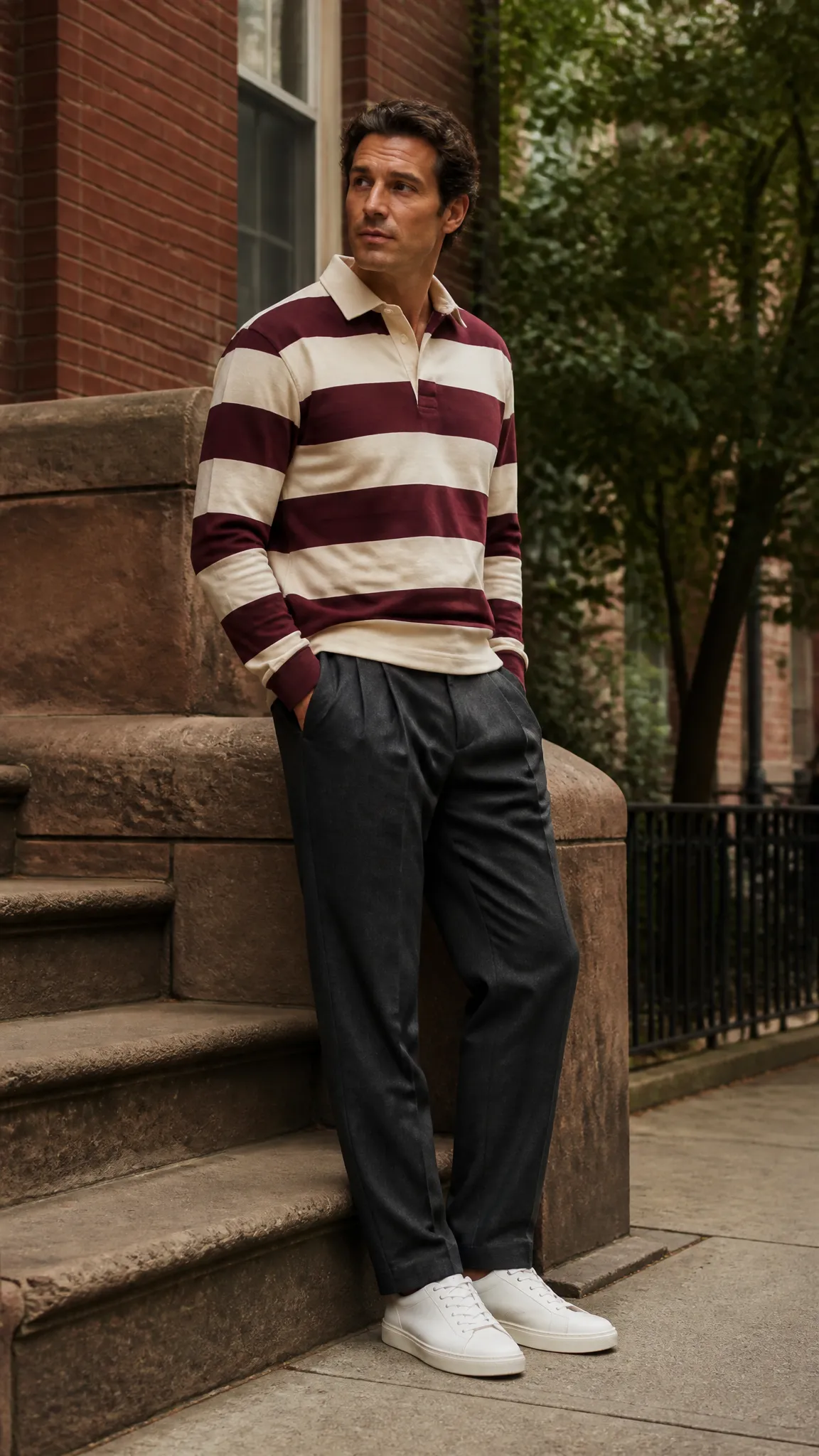
A modern preppy wardrobe does not require replacing every classic. It requires choosing versions with the right proportions, then avoiding the temptation to wear all of them simultaneously. The following combinations show how familiar garments can take on a fresher role.
- Wear a roomy blue Oxford shirt with straight ecru denim, dark loafers, and a brown leather belt.
- Pair a striped rugby shirt with pleated gray trousers and plain white leather sneakers.
- Layer a textured crewneck sweater over a white T-shirt, then add relaxed chinos and suede desert boots.
- Combine an unstructured navy blazer with a knit polo, faded straight-leg jeans, and penny loafers.
- Style a cable-knit cardigan with a chambray shirt, olive pants, and simple moc-toe shoes.
Knitwear is particularly valuable because it bridges casual and polished clothing. Crewnecks, sweater vests, quarter-zips, and cardigans can soften a collared shirt, but they also work directly over a tee or tank in warmer transitional weather. Choose natural-looking texture and a neckline that holds its shape.
The polo is becoming more versatile as well. A knitted polo with an open collar reads dressier than pique cotton but less formal than a dress shirt. It can sit under a blazer, tuck into pleated trousers, or pair with tailored shorts without suggesting that a golf tee time is imminent.
Outerwear should provide contrast rather than repeat the whole theme. A waxed jacket, cotton field coat, Harrington jacket, or simple wool topcoat adds practical structure. Varsity jackets can work too, particularly when branding and patches are restrained.
Footwear and Accessories Keep Prep Grounded
Shoes often determine whether an outfit feels modern or overly ceremonial. Penny loafers remain central, but they work best when their visual weight matches the trousers. A substantial leather sole or modest lug sole can support wider pants, while a slim loafer suits cleaner, narrower tailoring.
Brown leather is the most flexible choice, though black loafers provide sharper contrast with pale denim, gray trousers, and navy separates. Suede brings softness to spring and fall outfits. Boat shoes and camp moccasins also fit the relaxed mood when styled with full-length pants or simple shorts rather than a head-to-toe nautical uniform.
Minimal leather sneakers, retro court shoes, and canvas sneakers keep rugby shirts and blazers from appearing too formal. Avoid highly technical running shoes unless the contrast is clearly intentional; their synthetic complexity can compete with the natural fabrics that define prep.
Accessories should look useful. A woven belt, understated leather watch, striped scarf, baseball cap, or canvas tote can finish the outfit without turning it into a character study. Socks offer an easy decision point: use ribbed cream, navy, gray, or burgundy socks for cohesion, or go sockless only when the setting and weather make sense.
Dressing Preppy Across Seasons and Occasions
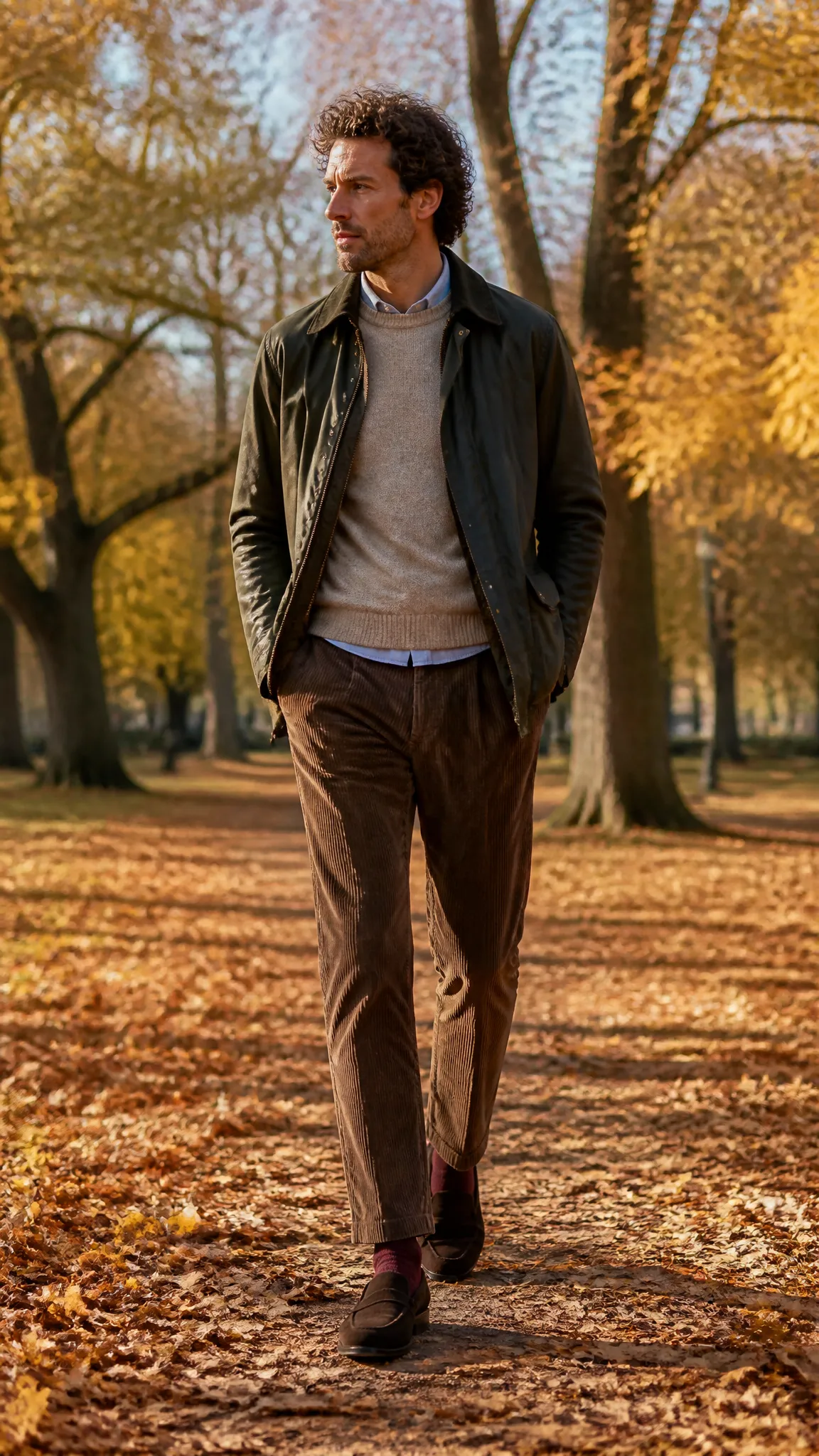
The strongest preppy wardrobe adjusts easily because its layers already share a common visual language. Changing the fabric and degree of structure lets the same core pieces travel from a casual weekend to a smart-casual workplace.
In spring, combine a striped Oxford shirt with a cotton cardigan, straight chinos, and loafers or canvas sneakers. Summer calls for breathable linen blends, madras, seersucker, pique polos, and relaxed shorts. Keep the palette light with white, stone, pale blue, faded green, and soft yellow, then add one darker anchor such as navy footwear.
Fall is ideal for corduroy, brushed knits, suede, rugby shirts, and waxed cotton. Layering a crewneck sweater over an Oxford shirt remains effective, but leaving the shirt hem exposed can loosen the effect. In winter, a wool topcoat over a chunky knit and pleated flannel trousers keeps the style polished without relying on formal suiting.
For the office, let the dress code set the limits. A soft blazer, knit polo, wool trousers, and leather loafers work in many smart-casual environments, while conservative workplaces may still require a structured jacket and collared shirt. For dates, dinners, and parties, texture tends to look more considered than conspicuous branding.
How to Shop Without Building a Costume
The smartest way to adopt preppy men’s fashion trends 2026 is to begin with what you already own. A standard navy sweater may only need roomier trousers and different shoes to feel current. This avoids buying a collection of trend-specific garments that all perform the same job.
When shopping, check fabric, fit, and compatibility before focusing on labels. Oxford cotton should feel substantial enough to hold its collar. Knitwear should recover after gentle stretching, and trousers should hang cleanly from the seat without pulling or collapsing around the shoes.
Vintage and secondhand shopping can be useful for Shetland-style sweaters, blazers, rugby shirts, leather belts, and loafers. Condition matters more than provenance. Inspect knits for holes, jacket collars for wear, and footwear for cracked uppers or heavily distorted soles.
Finally, introduce one directional piece at a time. Wider pleated trousers, a colorful cardigan, or chunkier loafers can shift an existing wardrobe on its own. Editing creates modernity; piling every recognizable preppy item into one outfit rarely does.
Frequently Asked Questions
Can men wear preppy style casually?
Yes. Use one polished item, such as loafers, an Oxford shirt, or a knit polo, with casual denim, chinos, or sneakers. Keeping the fabrics tactile and the fit relaxed prevents the outfit from feeling like business attire.
Are skinny chinos still appropriate?
They can still work if they suit your preference and fit comfortably, but straight or gently tapered chinos align more naturally with current proportions. Avoid severe bunching, pulling, or an extremely low rise regardless of the leg shape.
Can preppy clothing work without bright colors?
Absolutely. Navy, cream, gray, olive, brown, and white can create a complete preppy wardrobe. Use texture, such as suede against wool or Oxford cloth beneath cable knitting, to keep a neutral outfit visually interesting.
What is the difference between preppy and old-money style?
The terms overlap, but preppy style draws more visibly from collegiate and sporting clothes, including rugby shirts, varsity knits, chinos, and boat shoes. So-called old-money styling usually emphasizes quieter tailoring, restrained colors, and minimal branding, though neither category has rigid boundaries.
How can shorter men wear relaxed preppy fits?
Keep the volume balanced rather than avoiding it. Higher-rise trousers, a clean hem, properly placed jacket shoulders, and limited fabric pooling can preserve a clear vertical line while still allowing comfortable room through the body.
Build the Look One Adjustment at a Time
Modern prep works when classic pieces feel useful rather than precious. Start with one proportion change, such as straighter trousers or a softer blazer, then add texture and color only where they improve the outfit.
If you can wear each garment in several non-preppy combinations too, you are building a flexible wardrobe rather than a theme. That distinction is what keeps the 2026 version confident, comfortable, and convincingly your own.