A good coat shouldn’t need a loud logo to look expensive. I’m convinced the best quiet luxury coats men can buy earn their place through fabric, proportion, and the way they improve everything underneath.
These combinations show you how to wear understated outerwear across casual weekends, office days, dinners, and formal occasions. You’ll also learn which lengths, colors, trousers, and shoes make each coat look considered rather than merely costly.
We’ll move from relaxed transitional layers to substantial winter tailoring, gradually increasing the formality. First up is the coat that works almost like a cardigan, only much sharper.
1. The Suede Car Coat for Polished Weekends
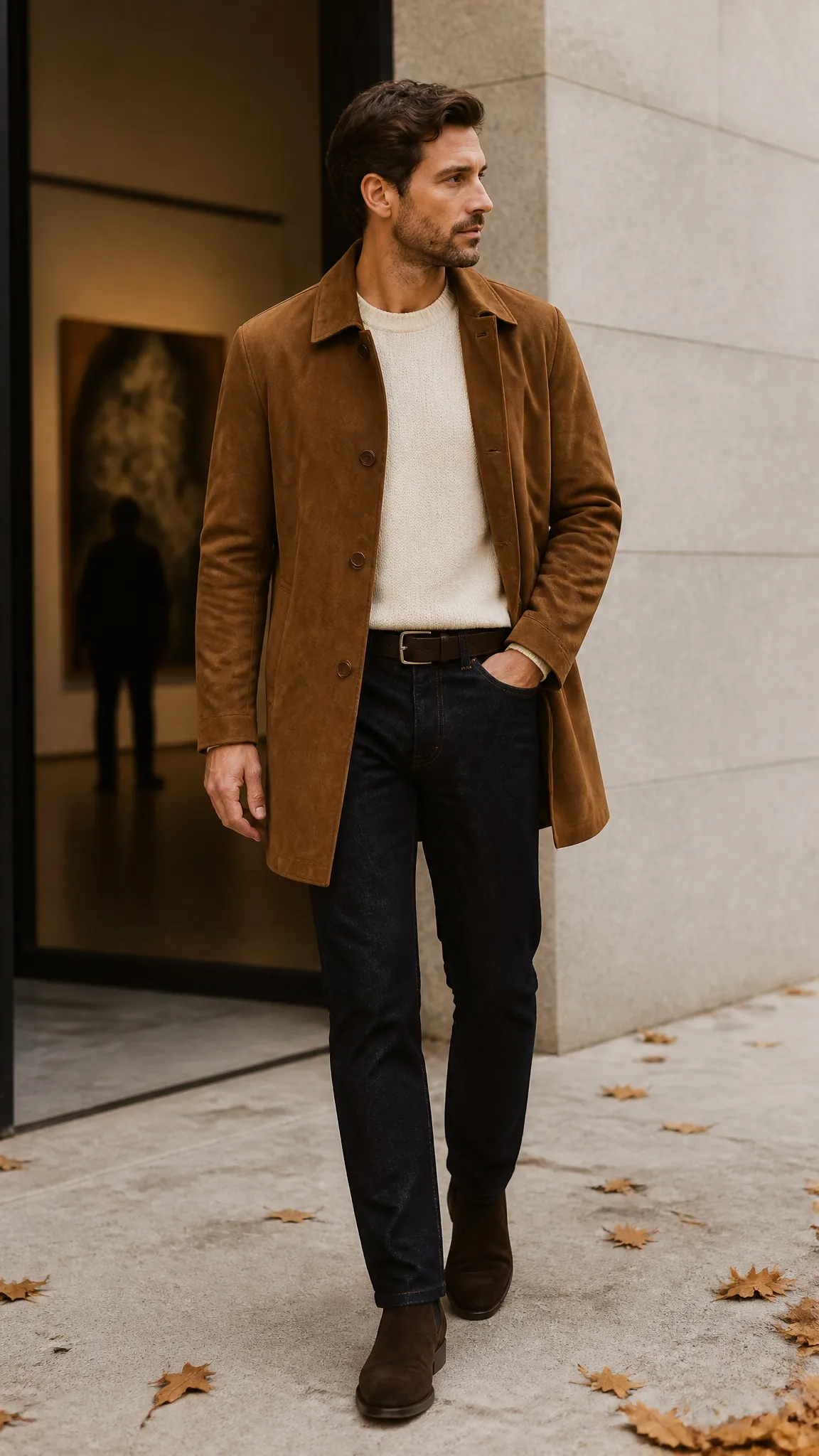
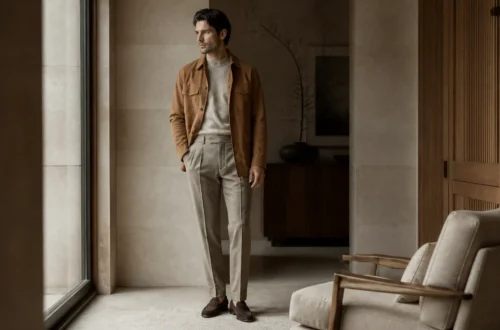
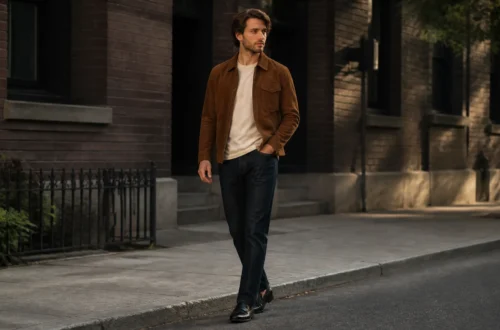
A tobacco suede car coat gives jeans and knitwear a richer, softer finish without feeling precious. Wear this combination for weekend lunches, gallery visits, or any smart-casual setting where a blazer would seem overly businesslike.
Outfit Pieces:
-
Tobacco suede car coat with a clean point collar
-
Cream midweight merino crewneck
-
Dark indigo straight-leg jeans
-
Dark brown suede Chelsea boots
-
Brown leather belt
Styling Tips:
The coat should finish around mid-thigh, with shoulders that sit cleanly and enough room for the sweater without pulling at the buttons. Keep the denim straight rather than skinny, since a narrow leg can make the coat look disproportionately large. Dark indigo also supplies useful contrast against tobacco and cream.
Suede dislikes heavy rain, so reserve this for dry autumn and spring days. If your lifestyle is more practical, replace suede with brushed cotton in the same warm brown, which lowers the maintenance while preserving the restrained color story.
2. The Navy Mac Built for Rainy Commutes
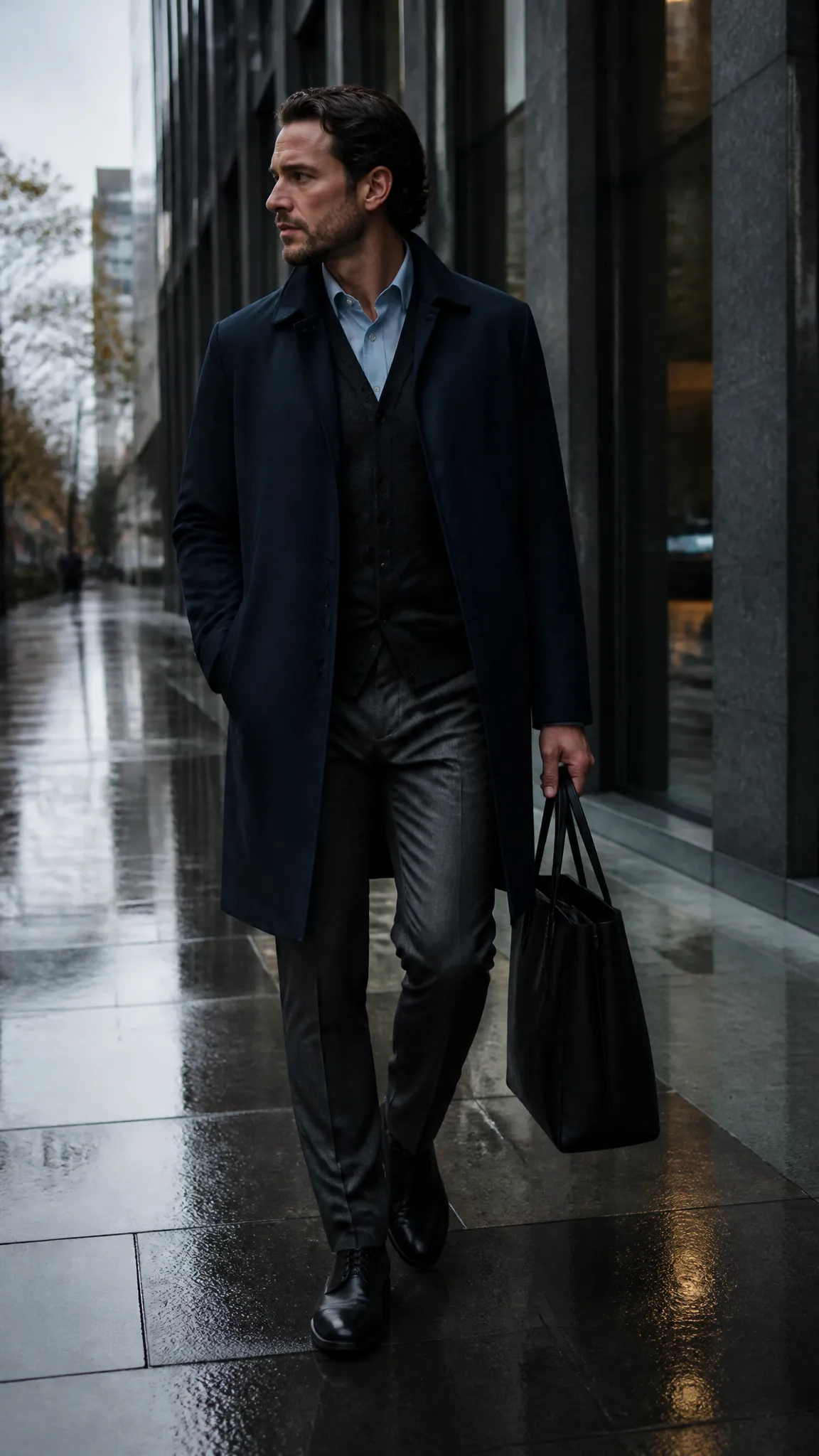
The single-breasted mac is quiet luxury at its most useful: clean lines, concealed fastenings, and very little visual clutter. A navy version handles wet commutes without making your office clothes resemble hiking gear.
Outfit Pieces:
-
Navy water-resistant cotton-blend mac
-
Pale blue Oxford shirt
-
Charcoal fine-gauge merino cardigan
-
Mid-gray wool trousers with a gentle taper
-
Black leather Derby shoes with rubber soles
-
Structured black leather tote
Styling Tips:
Choose a mac that covers your suit jacket or cardigan completely, usually ending a few inches above the knee. The raglan sleeve is especially forgiving for broad shoulders, while a set-in sleeve creates a sharper frame. Trousers should have little to no break so damp hems don’t gather around your shoes.
This combination suits business-casual offices and travel days. In warmer rain, remove the cardigan and wear the shirt open at the collar; in colder weather, add a charcoal scarf rather than introducing a bright accent that competes with the clean navy-gray palette.
3. The Olive Balmacaan with Relaxed Tailoring
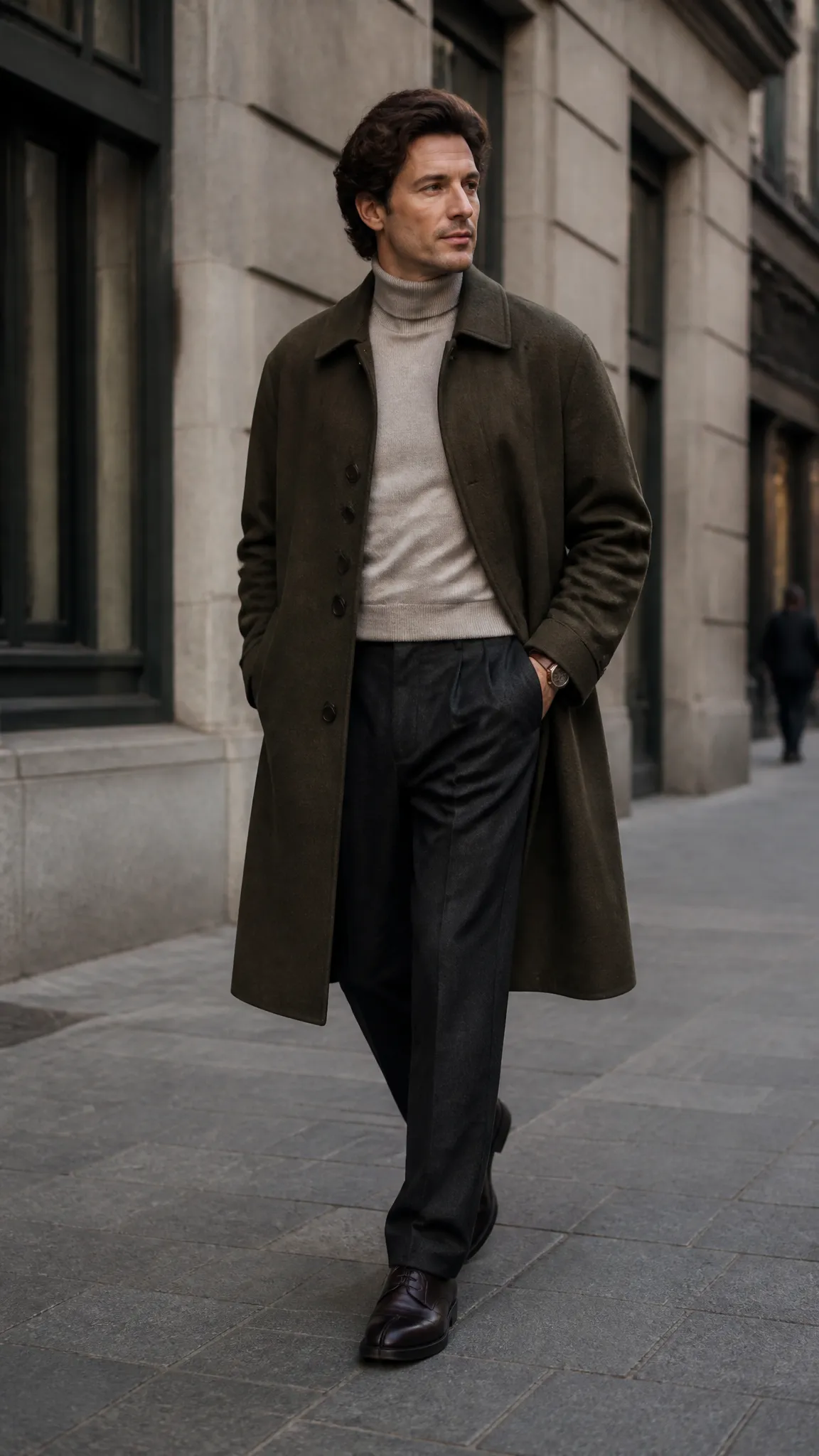
An olive balmacaan brings character through its roomy cut and subtle texture, not conspicuous detailing. Paired with pleated trousers and a rollneck, it feels intelligent but relaxed enough for creative offices, daytime dates, and city weekends.
Outfit Pieces:
-
Olive brushed-wool balmacaan coat
-
Oatmeal merino rollneck
-
Charcoal pleated wool trousers with a straight leg
-
Dark brown split-toe Derby shoes
-
Brown leather-strap watch
Styling Tips:
A balmacaan should skim rather than hug the body. Its raglan shoulders and fuller sleeve need trousers with some width, so choose a straight leg and let the pleats create a smooth line through the hip. The oatmeal knit brightens olive and charcoal without producing a harsh contrast.
Shorter men should keep the hem near the knee and avoid an excessively oversized body. If rollnecks feel restrictive, substitute a mock neck, which maintains the uninterrupted neckline while giving you more breathing room.
4. The Camel Overcoat That Softens Office Clothes
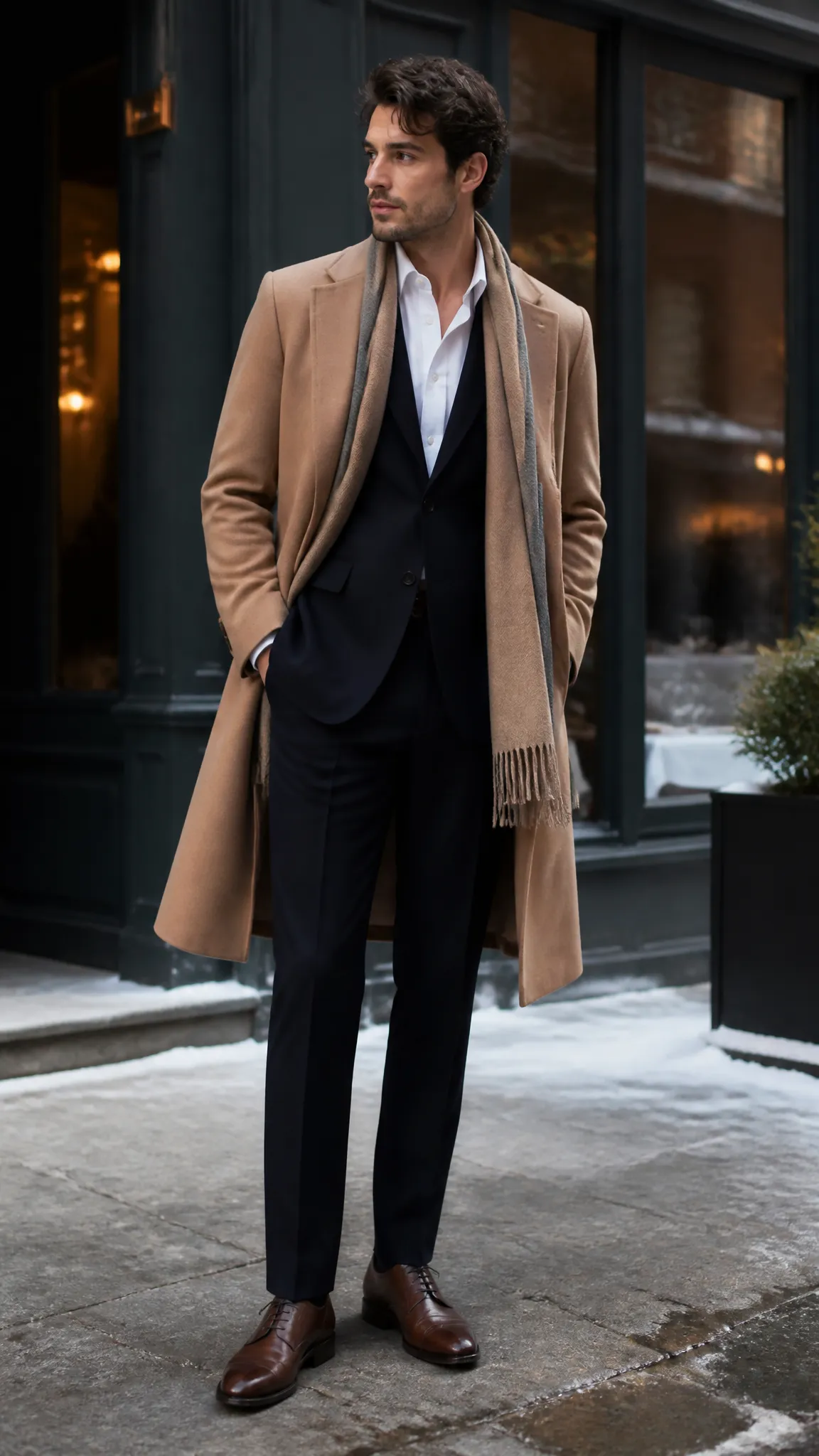
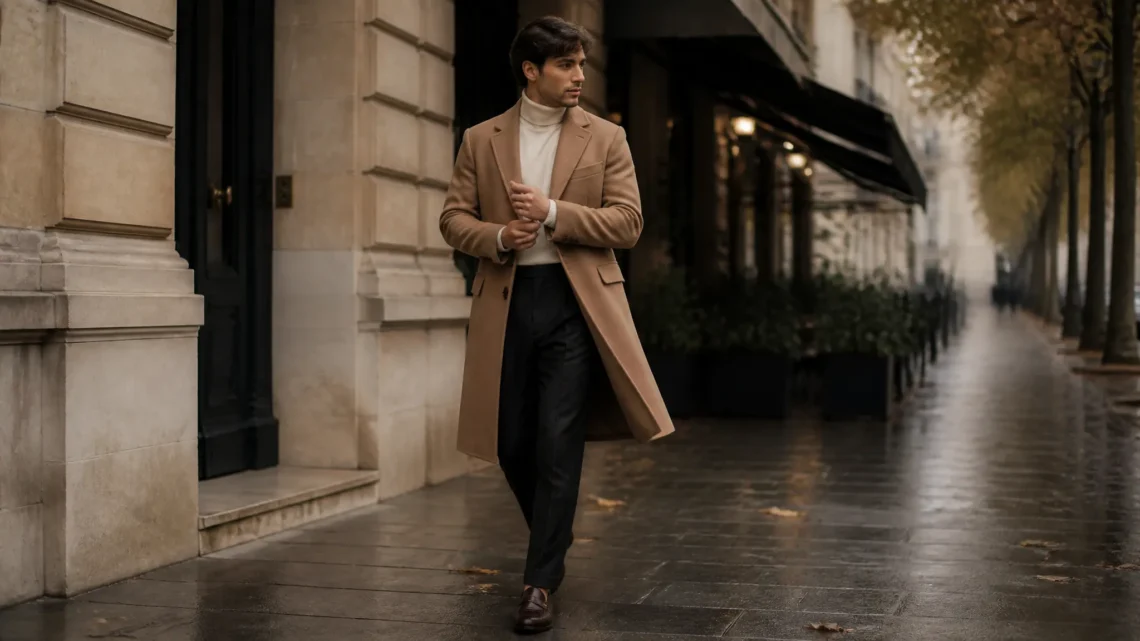
Camel can look flashy when paired with strong black-and-white contrast, but beautifully restrained alongside navy and chocolate brown. This is one of the most useful quiet luxury coats men can wear when standard office tailoring needs warmth and a less corporate mood.
Outfit Pieces:
-
Single-breasted camel wool overcoat
-
Navy unstructured wool blazer
-
White poplin shirt
-
Navy tailored trousers
-
Chocolate brown cap-toe Oxford shoes
-
Camel and gray wool scarf
Styling Tips:
Make sure the overcoat’s shoulders extend just beyond the blazer beneath, with no indentation around the upper sleeve. A knee-length hem gives the navy tailoring enough coverage and creates a long vertical line. Keep the coat single-breasted if you have a shorter or broader frame, since the open front reveals more of the darker column underneath.
This works for client meetings, smart restaurants, and winter weddings with a business dress code. A substantial wool flannel wears better in cold weather, while a lighter wool-cashmere blend is more comfortable for mild winters and frequent indoor use.
5. The Charcoal Polo Coat for Dinner and Drinks
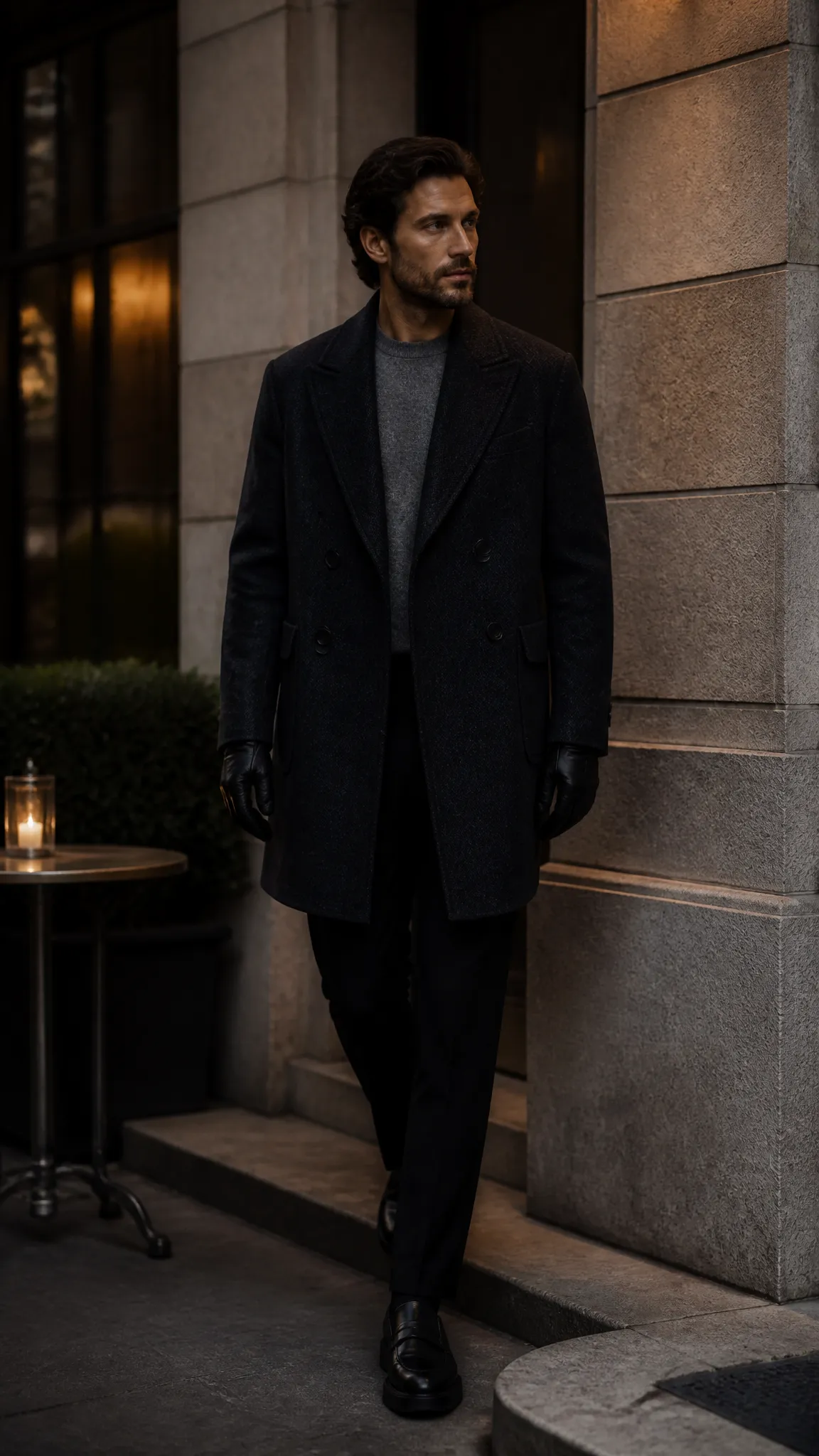
A polo coat has presence from its broad lapels, patch pockets, and double-breasted front, yet charcoal prevents those details from becoming theatrical. Keep the layers beneath tonal and the result feels confident enough for dinner without drifting into full formalwear.
Outfit Pieces:
-
Charcoal double-breasted wool polo coat
-
Medium-gray cashmere crewneck
-
Black tailored trousers with a straight cut
-
Black leather loafers with substantial soles
-
Black leather gloves
Styling Tips:
The lapels should sit flat across your chest, and the coat should button without forming an X-shaped pull. Because a double-breasted coat carries visual weight up top, avoid narrow trousers and delicate shoes. A straight trouser leg and solid-soled loafer keep the lower half grounded.
Wear this for evening drinks, theater, or a smart date night. In freezing conditions, exchange loafers for streamlined black boots and add a thin rollneck; both substitutions increase warmth without disrupting the charcoal-to-black progression.
6. The Brown Herringbone Coat with Tonal Texture
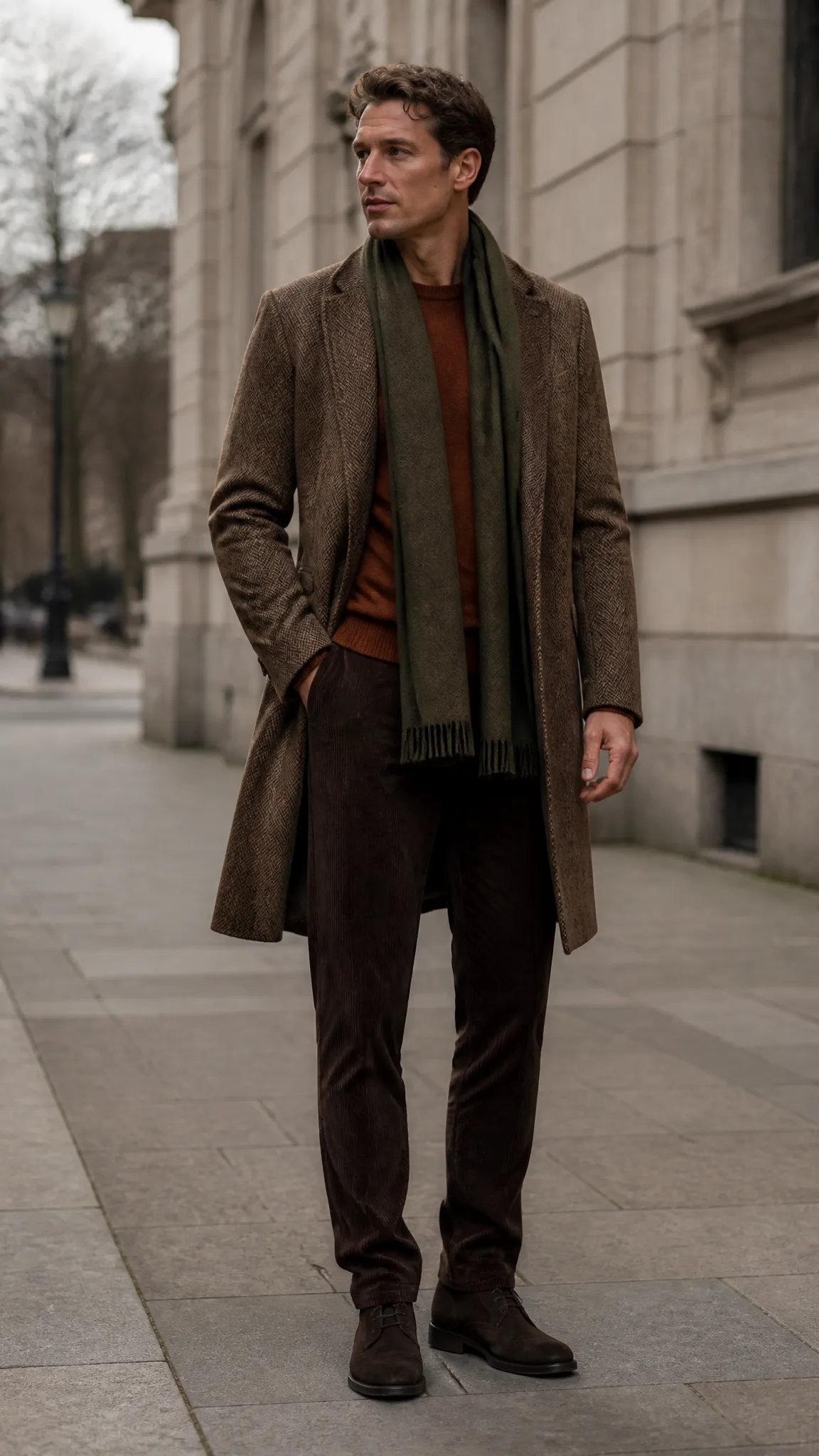
Quiet luxury doesn’t mean every surface must be plain. A brown herringbone coat adds depth through its weave, then corduroy and lambswool continue the tactile story in a controlled, tonal way.
Outfit Pieces:
-
Brown herringbone wool overcoat
-
Rust or chestnut lambswool crewneck
-
Dark brown fine-wale corduroy trousers
-
Espresso suede lace-up boots
-
Olive wool scarf
Styling Tips:
Vary the shades so the outfit doesn’t collapse into one muddy block: a medium-brown coat, warmer knit, and dark trousers create visible layers. Keep the herringbone pattern small and the corduroy wale fine, since two bold textures can look more costume department than country weekend.
The coat needs a softly structured shoulder and enough ease through the chest for the thicker knit. This outfit is ideal for cold weekends and relaxed workplaces; swap corduroy for dark brown flannel trousers when the dress code calls for a cleaner finish.
7. The Black Chesterfield for Understated Evenings
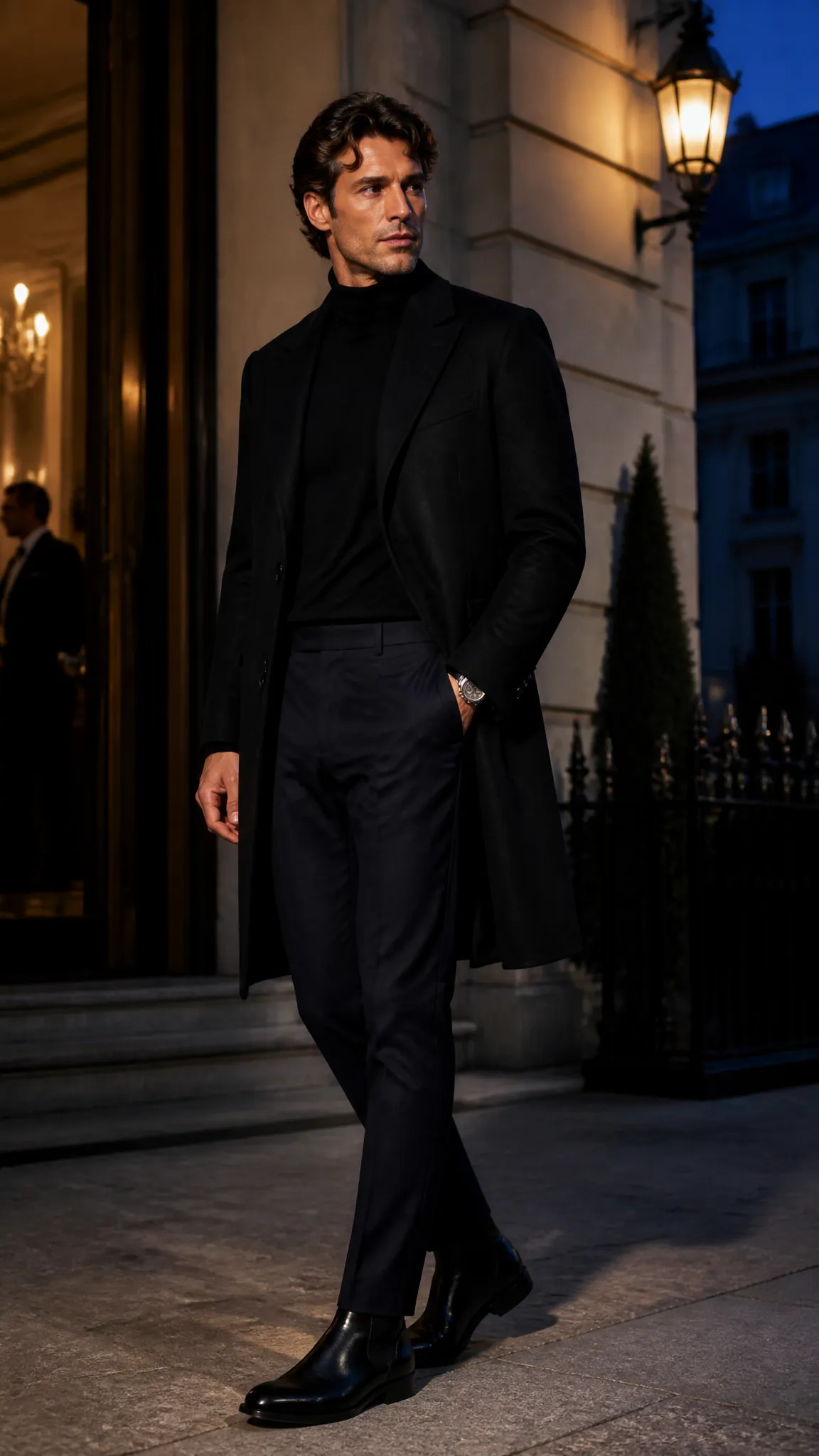
The black Chesterfield is the sharpest coat here, defined by a trim single-breasted body and restrained notch lapels. Rather than wearing it with a matching black suit, soften it with midnight navy and a fine knit for evening events that stop short of black tie.
Outfit Pieces:
-
Black wool-cashmere Chesterfield coat
-
Black fine-gauge merino rollneck
-
Midnight-navy tailored trousers
-
Black polished leather Chelsea boots
-
Minimal silver-tone watch
Styling Tips:
The Chesterfield should follow your torso without gripping it, and its hem should land at or just below the knee. Choose trousers with a clean front and minimal break, then use boots with a close-fitting ankle so the silhouette remains uninterrupted. Midnight navy creates subtle separation that’s easier on the eye than head-to-toe black.
Wear it to formal dinners, evening receptions, and smarter holiday events. Men with a long, lean build can choose a slightly fuller coat, while a compact frame benefits from a shorter knee-length cut and narrow lapels.
8. The Double-Breasted Navy Greatcoat for Deep Winter
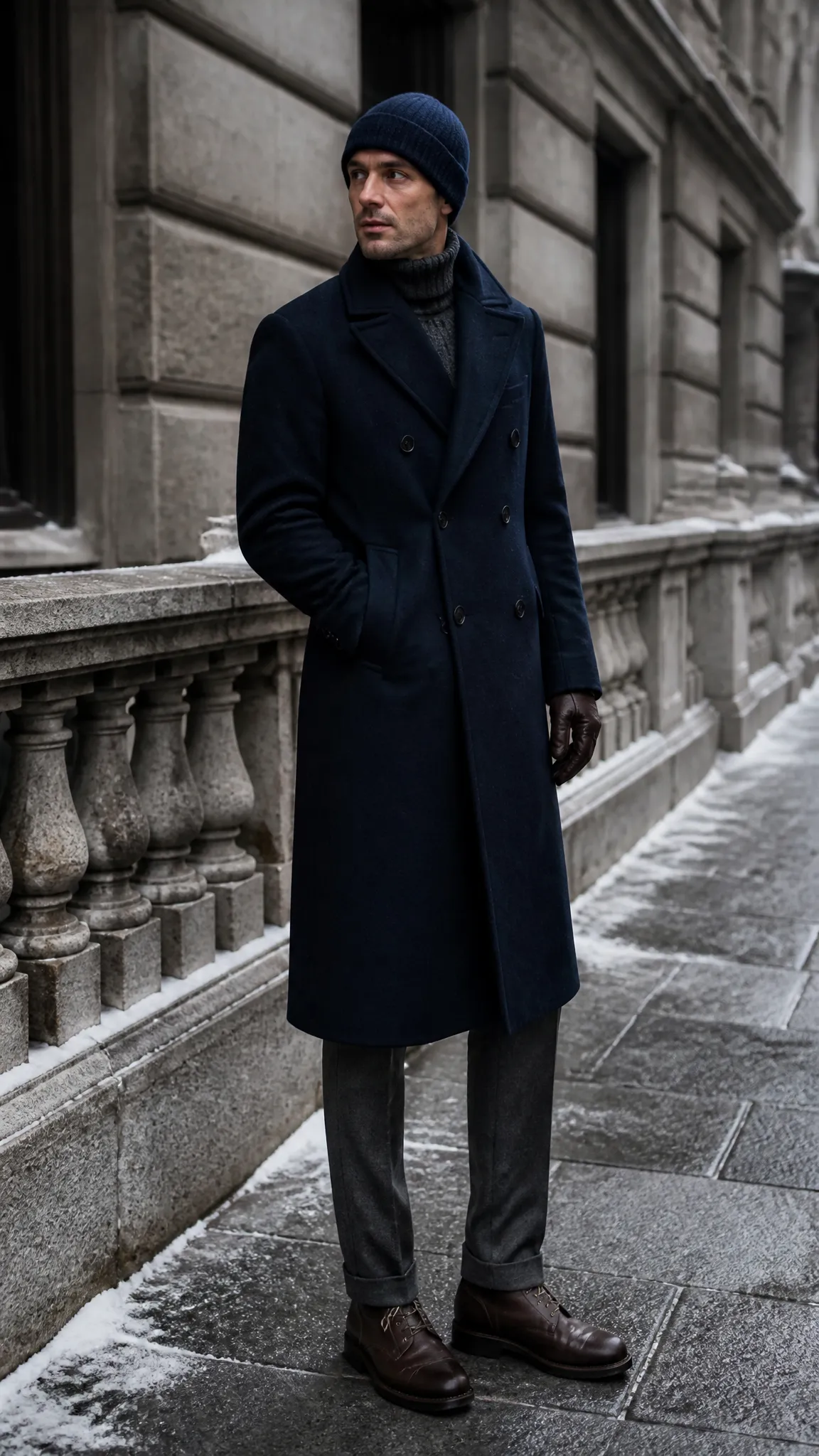
When the temperature properly drops, a navy greatcoat delivers warmth without padded bulk. Its substantial wool, strong collar, and longer line make it the most commanding option in this quiet-luxury wardrobe, so the remaining pieces should stay disciplined.
Outfit Pieces:
-
Double-breasted navy melton-wool greatcoat
-
Charcoal chunky merino rollneck
-
Gray cavalry-twill trousers
-
Dark brown leather lace-up boots
-
Navy ribbed beanie
-
Dark brown leather gloves
Styling Tips:
Look for dense melton wool and armholes roomy enough for a heavy sweater. The coat can finish below the knee, but the waist suppression should remain subtle rather than military-tight. Cavalry twill has enough structure to balance the coat, while sturdy boots match its visual weight.
This is built for freezing commutes, outdoor events, and winter travel. If you drive frequently, choose a version ending at the knee for easier movement; the shorter hem sacrifices some coverage but won’t bunch awkwardly behind the wheel. Serious coat, sensible compromise.
How to Choose Quiet Luxury Coats Men Will Actually Wear
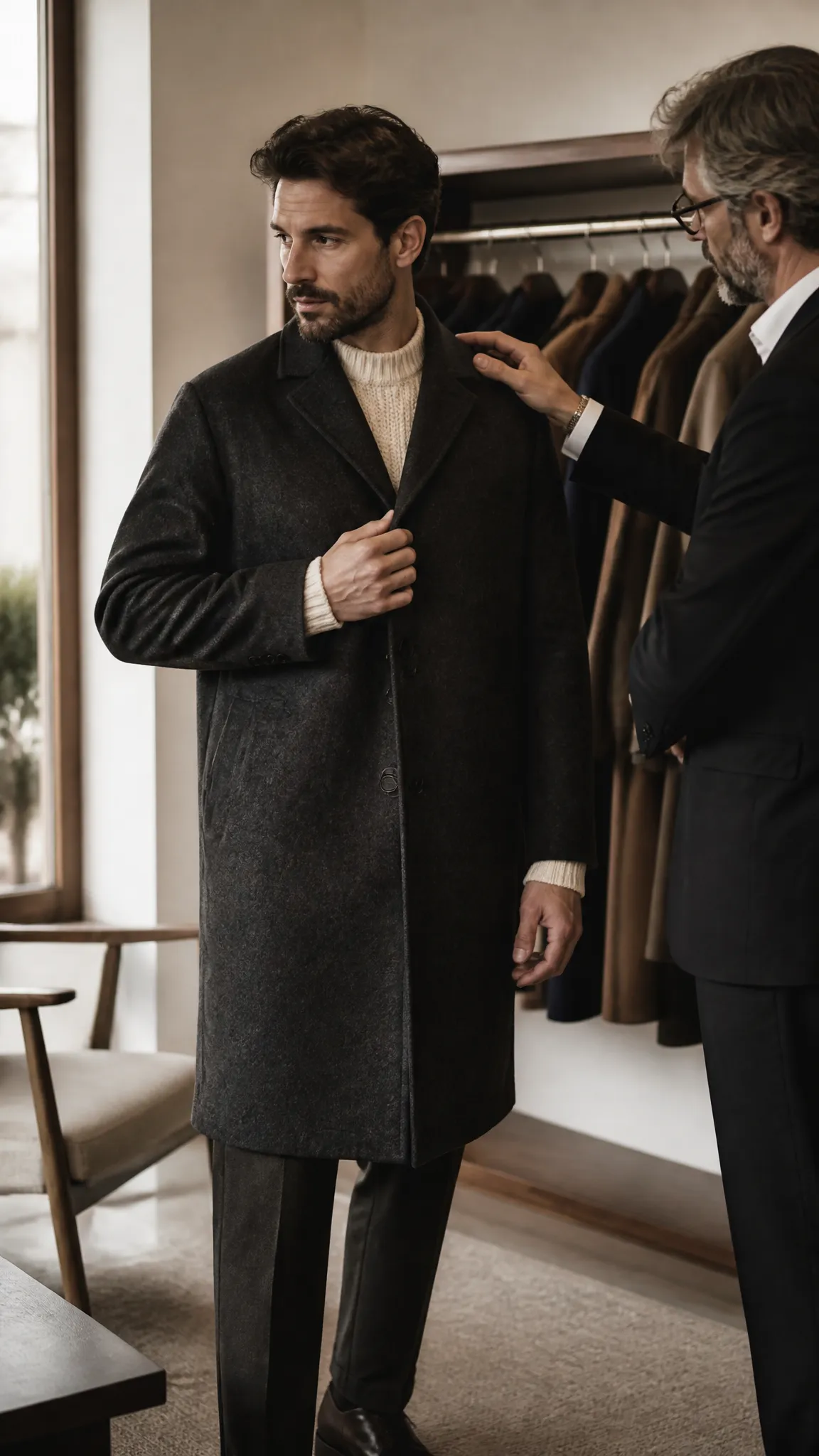
Price alone doesn’t produce the refined effect. The coat has to suit your proportions, climate, existing wardrobe, and daily routine.
-
Check the shoulders first: Set-in seams should meet your shoulder edge, while raglan sleeves should fall smoothly without excess fabric at the upper arm.
-
Leave layering room: Try the coat over your thickest regular layer, then button it and reach forward. Pulling at the chest means you need more ease.
-
Build around useful colors: Navy and charcoal suit formal wardrobes, camel and brown warm up denim, and olive works especially well with cream, gray, and earth tones.
-
Match length to routine: Longer hems provide warmth and formality, while mid-thigh and knee-length coats are easier for driving, cycling, and crowded commutes.
Start with one or two combinations using trousers, knitwear, and shoes you already own, then judge what your coat genuinely needs to do. The appeal of quiet luxury coats for men comes from strong fit, balanced proportions, comfort, and personal preference, not from chasing a label.
Frequently Asked Questions About Quiet Luxury Coats for Men
What Makes a Men’s Coat Look Quietly Luxurious?
A quietly luxurious coat has clean construction, substantial fabric, controlled proportions, and minimal branding. Details such as smooth lapels, well-matched buttons, neat seams, and a collar that sits close matter more than decorative hardware.
Which Coat Color Is the Most Versatile?
Navy is the most adaptable choice for most men because it works with denim, gray tailoring, brown footwear, and black accessories. Charcoal is slightly more formal, while camel makes a stronger visual impression.
How Should an Overcoat Fit Over a Suit?
An overcoat should cover the suit jacket completely and button without pulling across the chest or upper arms. Its shoulders must accommodate the jacket beneath, and the sleeves should extend roughly half an inch beyond your shirt and suit sleeves.
Are Quiet Luxury Coats Suitable for Shorter Men?
Yes, shorter men generally look best in clean single-breasted coats ending around the knee. Avoid excessive shoulder padding, very low button stances, and oversized bodies that overwhelm your frame.
What Fabrics Should I Look for in a Winter Coat?
Dense wool, melton, wool-cashmere blends, and substantial herringbone are strong winter choices. Prioritize fabric density and lining over softness alone, because a very soft but loosely woven coat may offer less protection from wind.
Can I Wear Formal Coats with Jeans and Sneakers?
Yes, provided the jeans are dark, clean, and straight-cut, and the sneakers are minimal leather rather than technical running shoes. A navy or charcoal single-breasted overcoat handles this contrast better than a highly structured double-breasted Chesterfield.