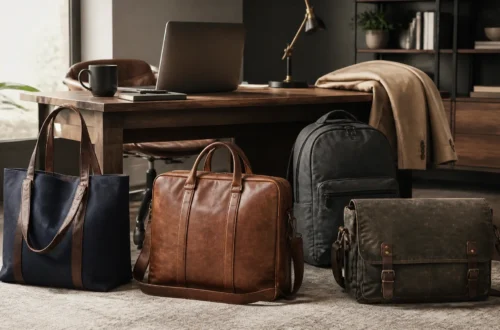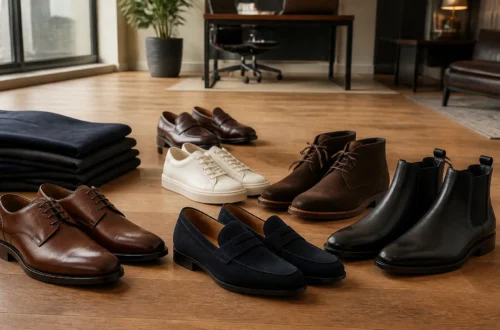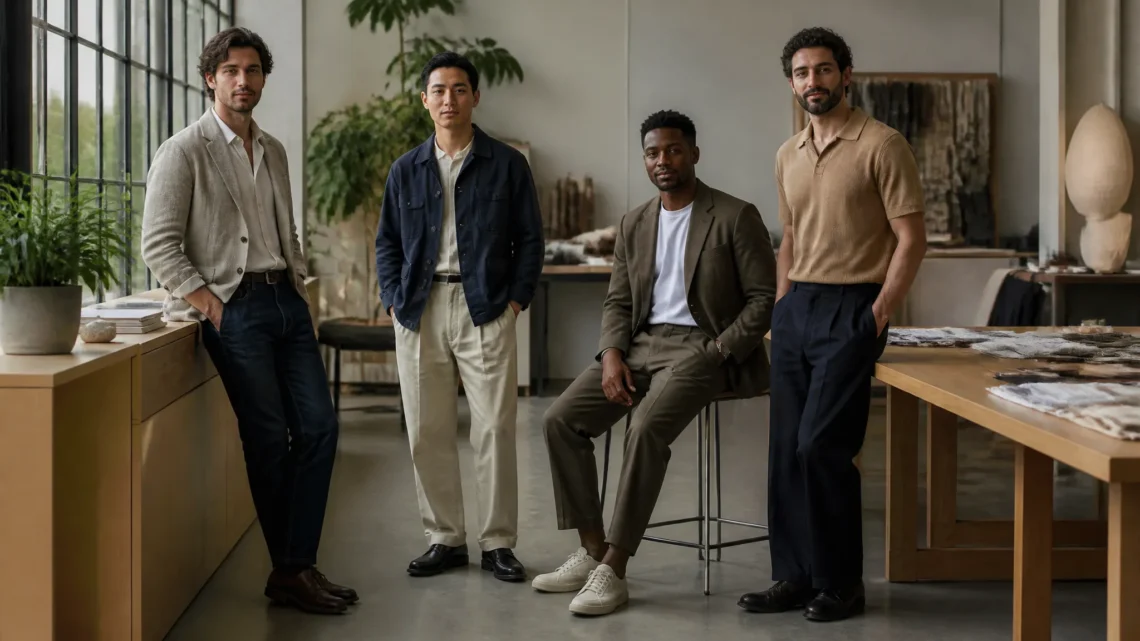
Getting dressed for a creative workplace can be tricky when a traditional suit feels stiff but weekend clothes look too casual. The best creative office outfits men can wear balance personality, polish, and comfort without seeming overplanned.
These 12 combinations give you practical formulas built around versatile pieces, from relaxed tailoring to refined workwear. Each one also includes simple adjustments for your office culture and schedule.
1. Unstructured Blazer and Dark Jeans
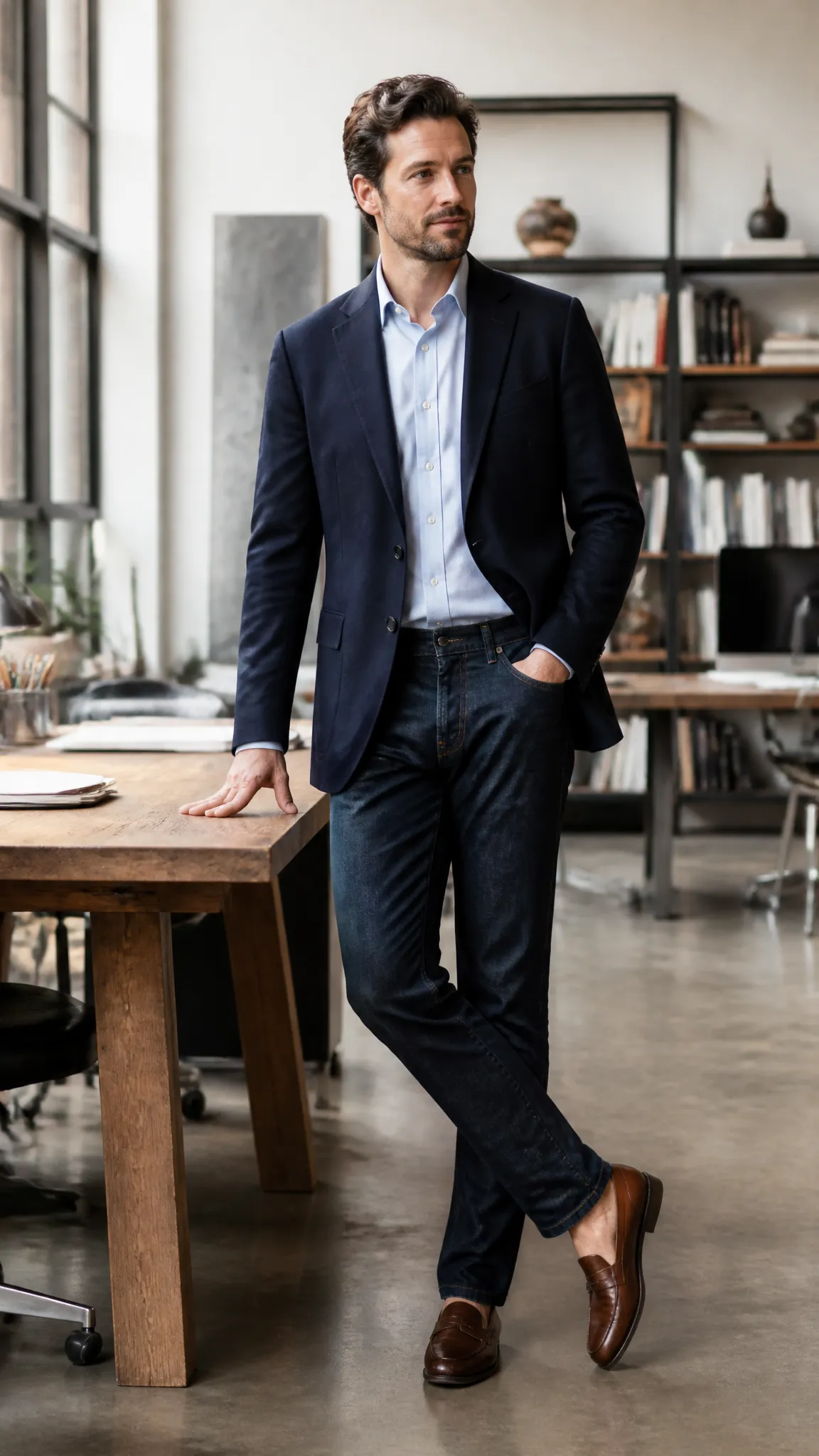
This dependable pairing lands between business casual and dressed-down without leaning too far in either direction. An unstructured blazer has softer shoulders than a conventional suit jacket, so it works naturally with clean denim rather than fighting against it.
Outfit Pieces
- A navy, charcoal, or brown unstructured blazer
- A solid Oxford shirt or fine-gauge knit polo
- Dark straight-leg jeans without fading or distressing
- Brown loafers, derbies, or minimalist leather sneakers
How to Style It
Choose a blazer long enough to cover most of your seat and jeans with a tidy hem. Leave the shirt collar open for an ordinary workday, then add a textured tie if you have a client presentation. A pocket square is optional, but if you wear one, keep it simple rather than sharply folded.
2. Chore Jacket and Pleated Trousers
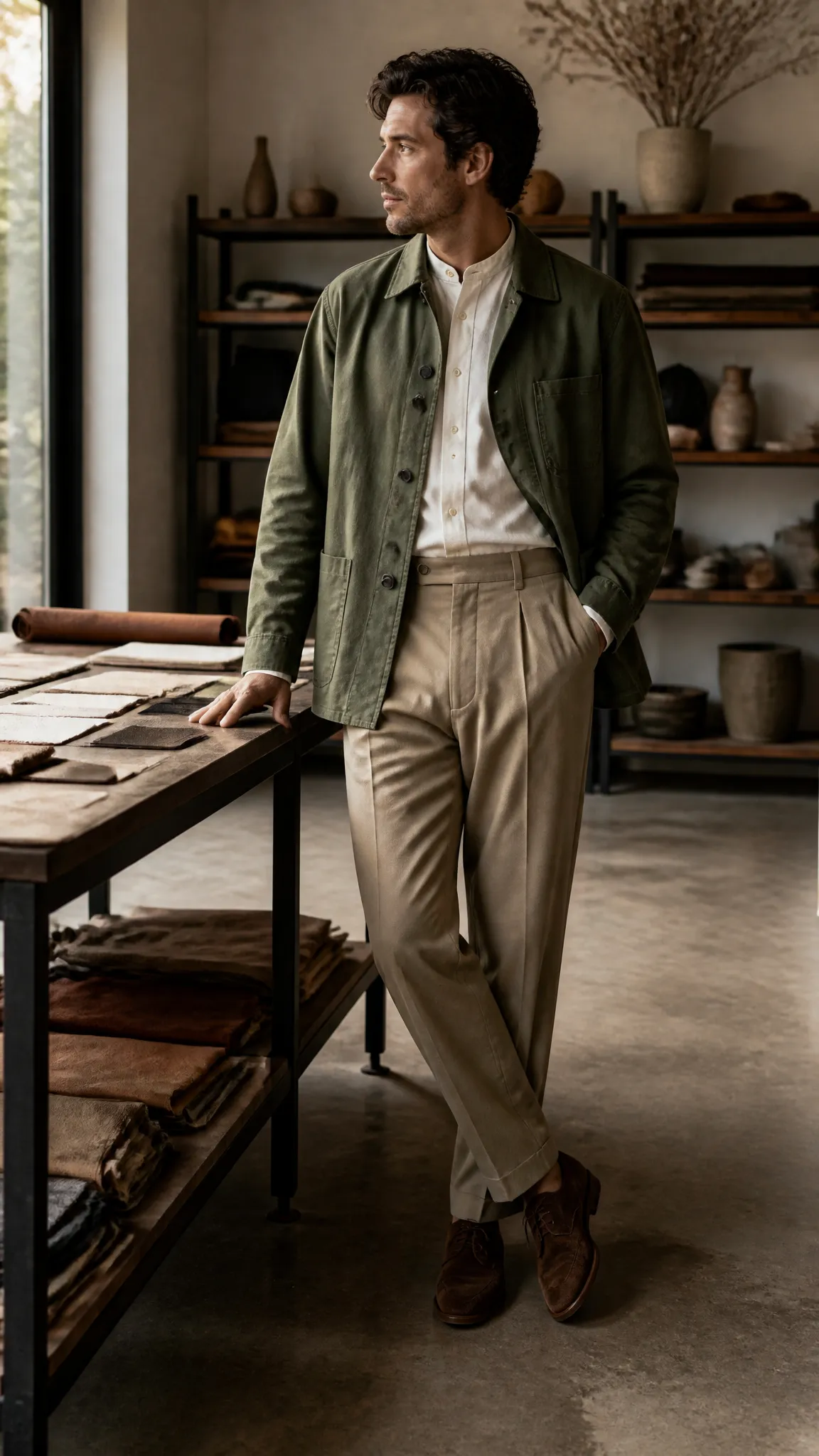
A chore jacket gives tailored pants a practical, design-minded edge. The contrast works because both pieces have structure, but the jacket’s patch pockets and relaxed construction keep the result approachable.
Outfit Pieces
- A cotton twill, moleskin, or linen-blend chore jacket
- A crewneck T-shirt or band-collar shirt
- Pleated trousers with a relaxed taper
- Suede derbies or streamlined sneakers
How to Style It
Use complementary earth tones, such as an olive jacket with stone trousers, rather than matching the separates exactly. Tuck in your base layer to define the trouser rise, and roll the jacket sleeves only if the fabric is light enough to sit neatly. This outfit is especially useful when your day moves between a desk, studio, and casual meeting.
3. Knit Polo and Wide-Leg Pants
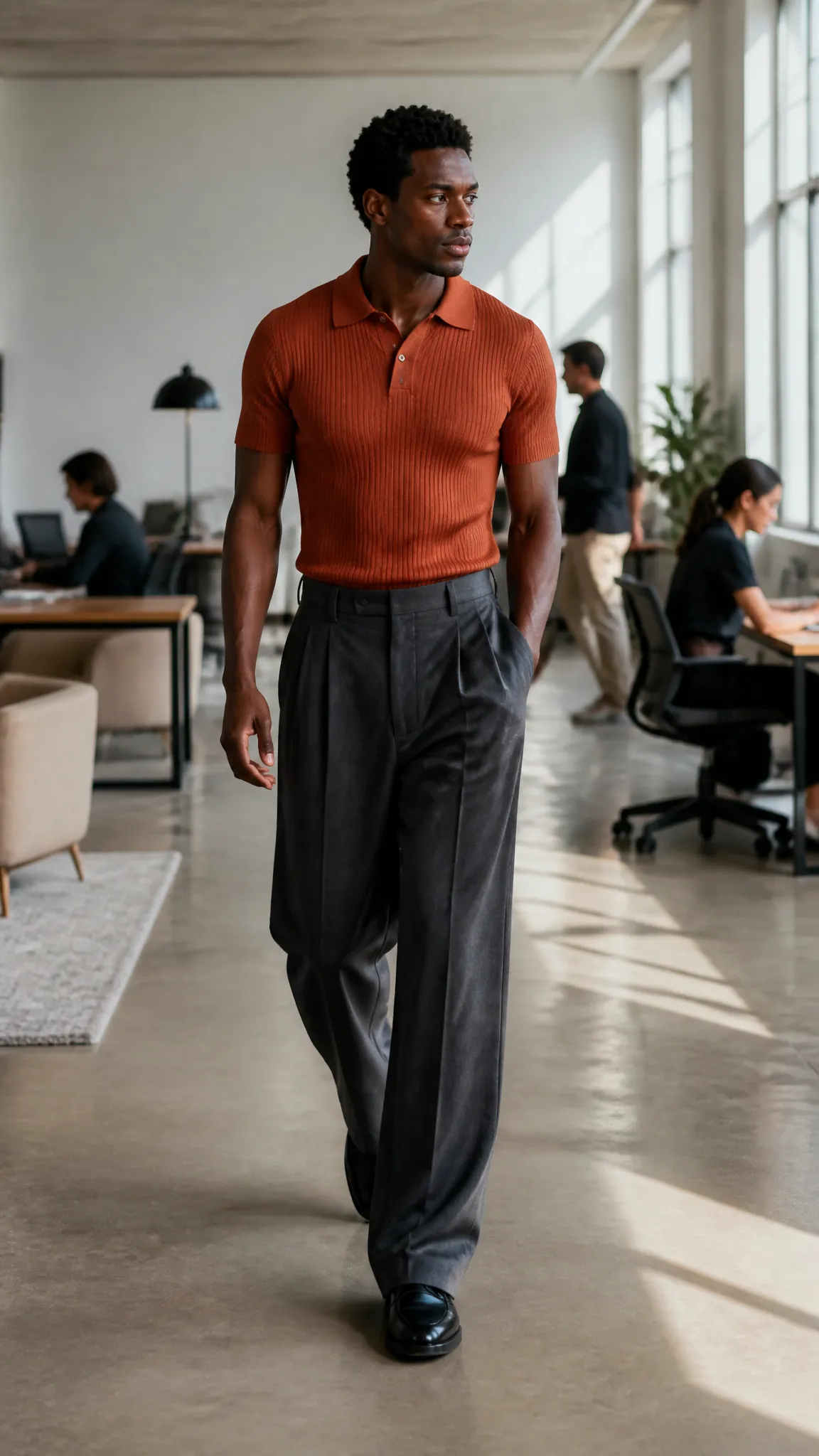
A knit polo offers the collar of a dress shirt with a softer, more contemporary feel. Roomier trousers balance its fitted shape and create a strong silhouette without relying on bright colors or attention-grabbing accessories.
Outfit Pieces
- A merino, cotton, or textured knit polo
- High- or mid-rise wide-leg trousers
- Leather loafers or low-profile sneakers
- A slim belt that closely matches the shoes
How to Style It
Tuck the polo in fully and let the trousers fall with a slight break over your shoes. Keep the top close to the body but not tight, since pulling at the buttons undermines the polished effect. If your workplace runs casual, choose fluid cotton pants; for a smarter setting, use tropical wool.
4. Monochrome Overshirt and Trousers
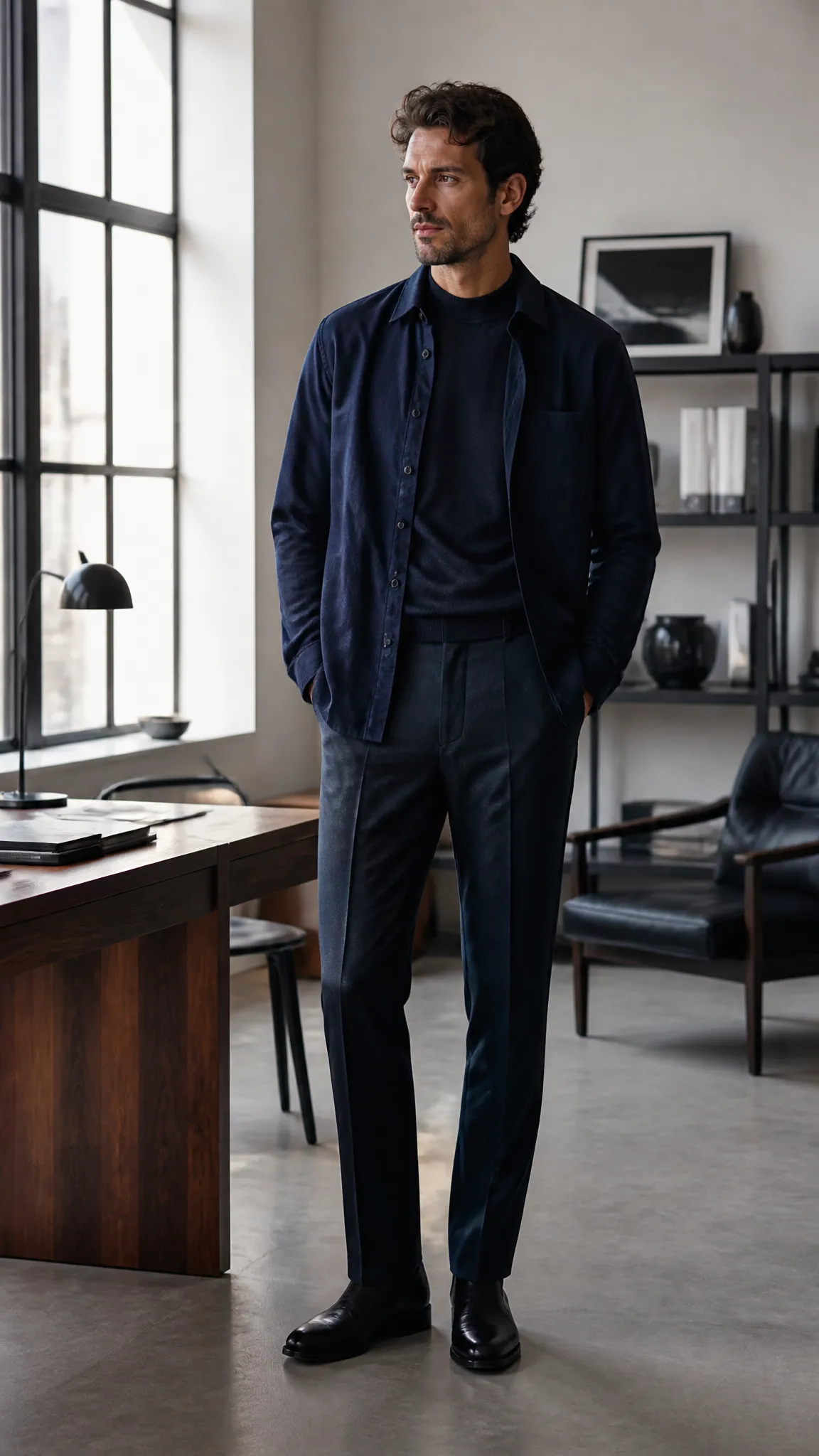
Dressing mostly in one color creates visual impact while remaining restrained enough for work. It also makes simple pieces look intentional, which is why tonal dressing appears often in effective creative office outfits men can repeat.
Outfit Pieces
- A structured overshirt in navy, gray, tan, or olive
- A T-shirt or mock neck in a related shade
- Trousers within the same color family
- Shoes with subtle contrast and minimal detailing
How to Style It
Vary the textures and shades so the outfit doesn’t read like a uniform. For example, combine a washed navy cotton overshirt, an ink-blue knit, and charcoal-blue wool trousers. Black shoes make darker palettes sharper, while off-white sneakers or taupe suede soften lighter combinations.
5. Cardigan and Oxford Shirt
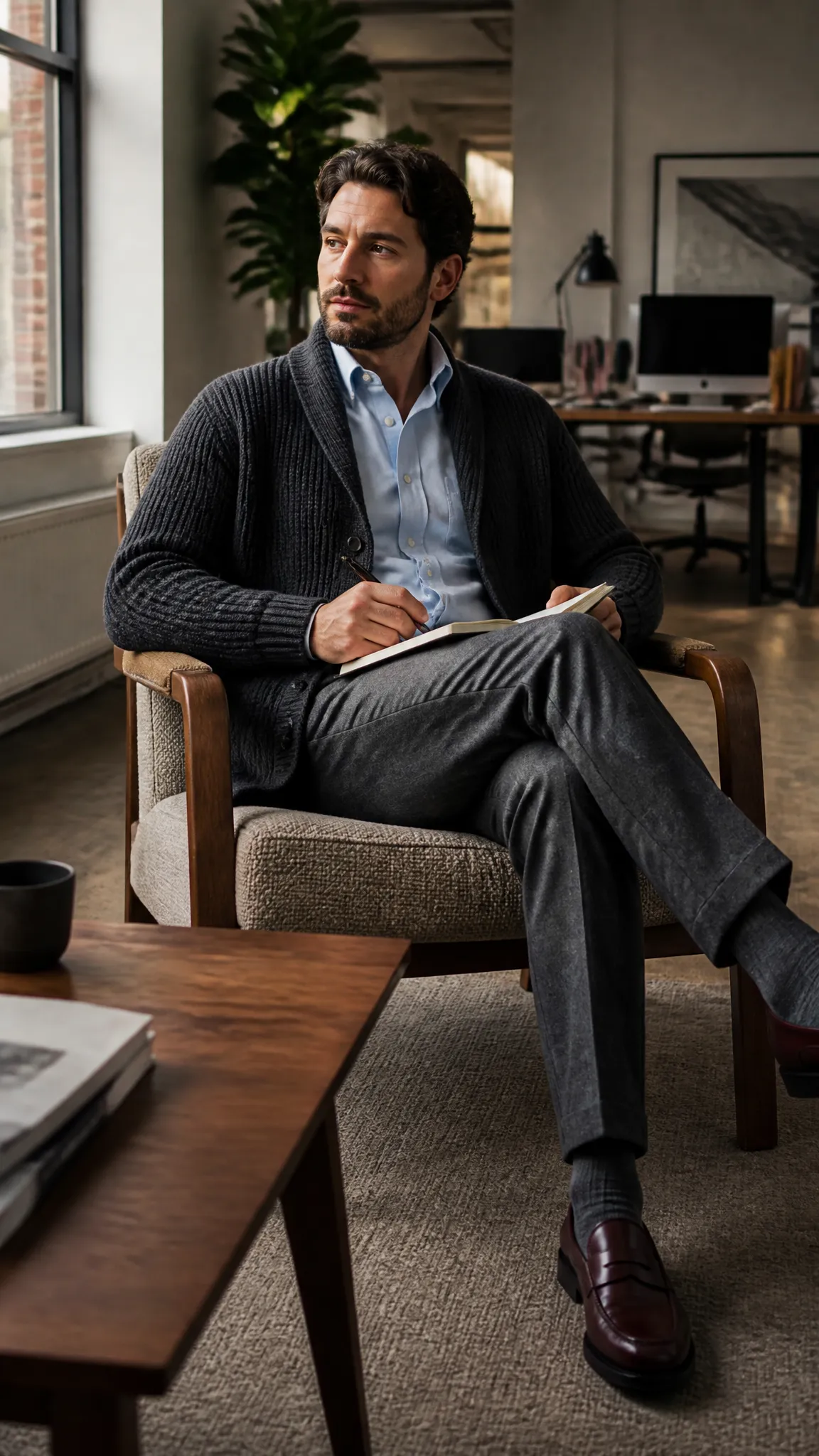
A cardigan communicates ease but still frames a collared shirt like a soft jacket. It’s a useful option for cold offices, long work sessions, or days when formal tailoring would feel unnecessarily rigid.
Outfit Pieces
- A medium-gauge cardigan with a clean placket
- A white, blue, or striped Oxford cloth shirt
- Flat-front chinos or wool trousers
- Penny loafers, derbies, or leather sneakers
How to Style It
Leave one or two cardigan buttons open at the top and the bottom to prevent a boxy line. A slightly relaxed shirt works better than a skin-tight dress shirt, but its collar should stay contained rather than spreading over the cardigan. Choose trousers for polished offices and chinos for casual agencies or studios.
6. Relaxed Suit and Clean T-Shirt
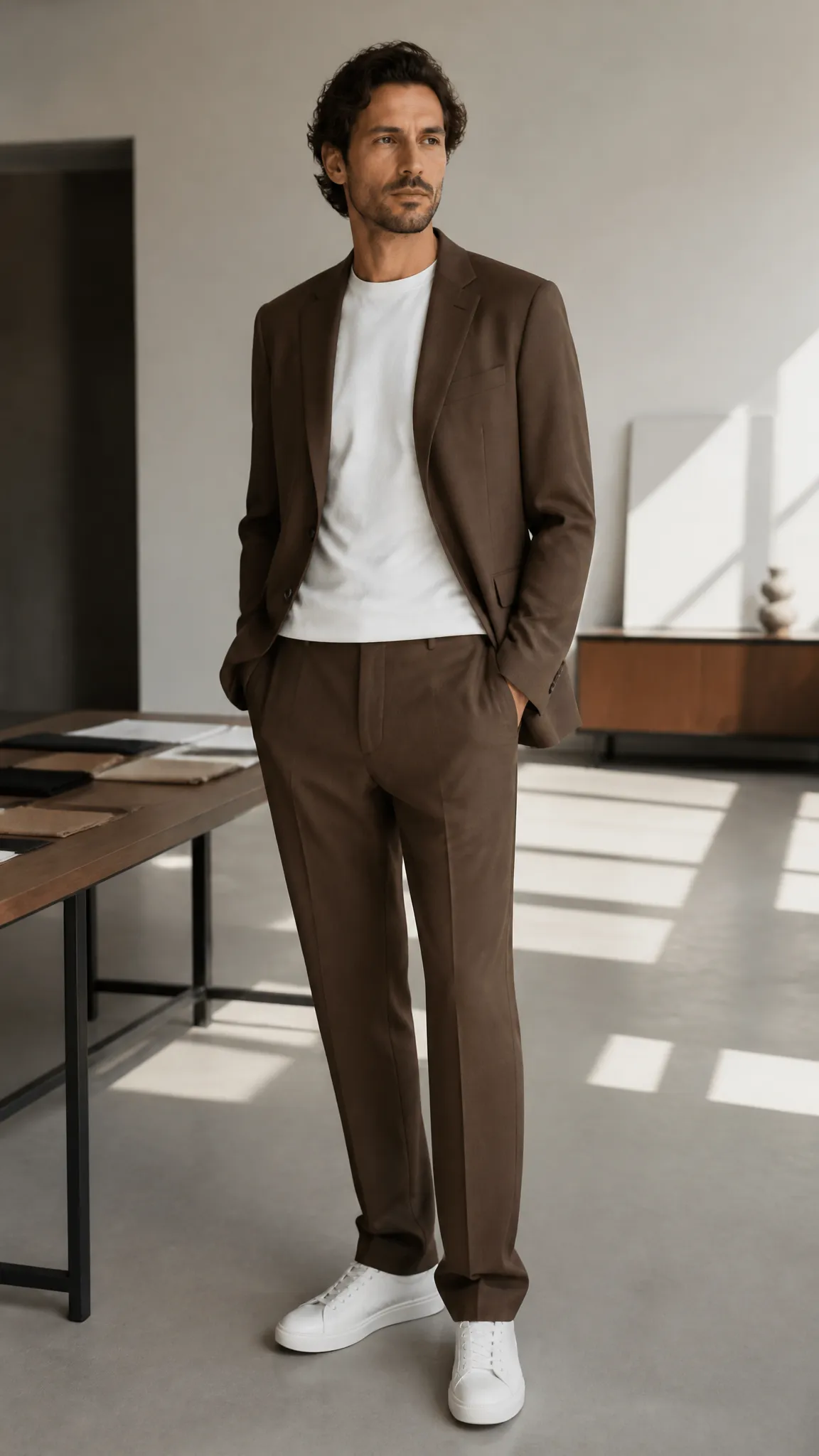
A suit can belong in a creative office when it has soft construction, comfortable proportions, and casual styling. Replacing a dress shirt with a substantial T-shirt removes the corporate edge while preserving a strong overall shape.
Outfit Pieces
- A relaxed suit in navy, tobacco, olive, or charcoal
- A heavyweight crewneck T-shirt
- Minimal leather sneakers or soft loafers
- A simple watch or understated ring
How to Style It
Avoid combining a formal business suit with an undershirt-weight tee. The jacket should have natural shoulders, the trousers should offer some room through the thigh, and the T-shirt collar should hold its shape. Keep the shirt tucked for meetings, or leave it untucked only if its hem is short and the suit is especially relaxed.
7. Patterned Shirt and Neutral Separates
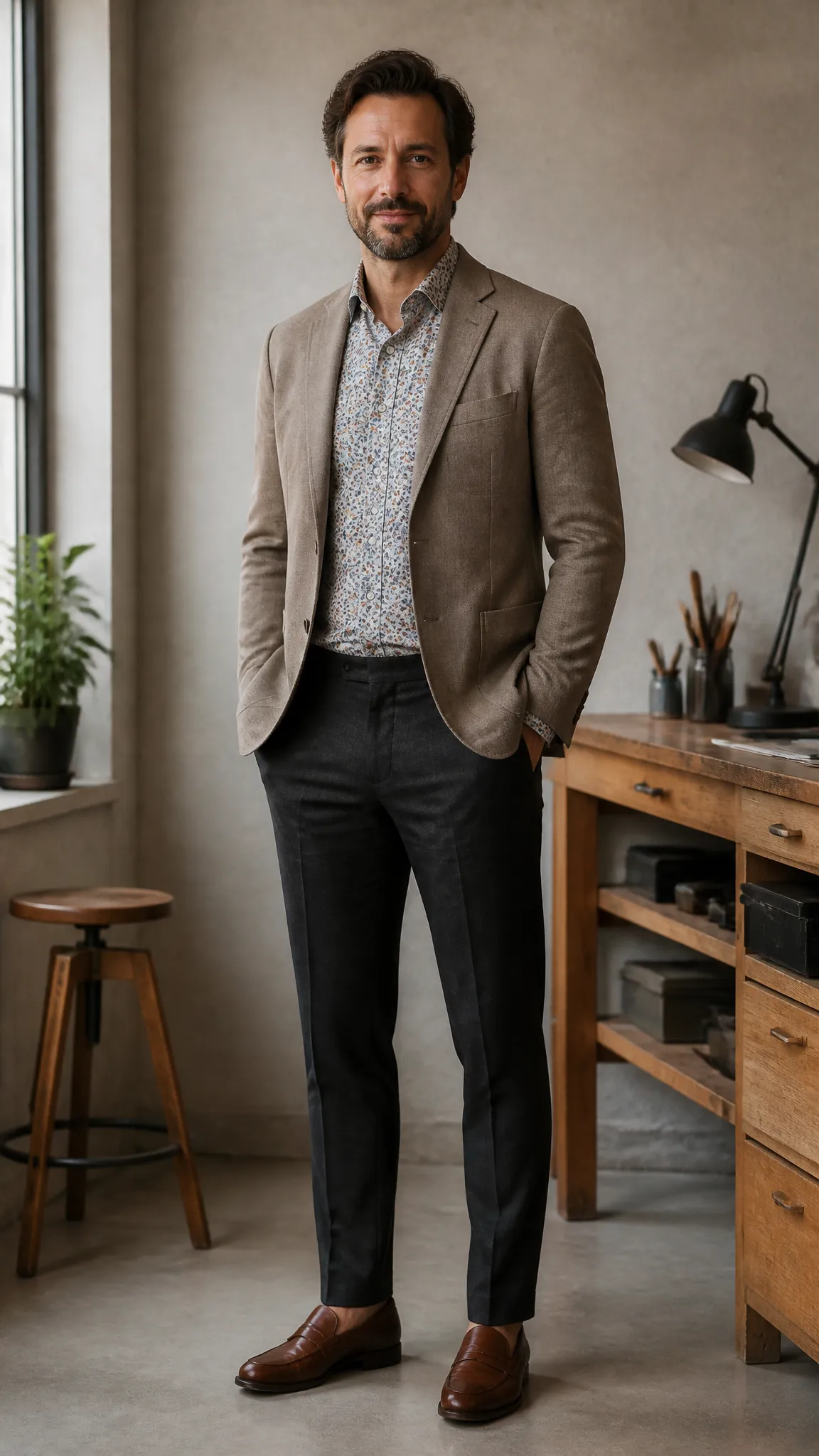
A patterned shirt brings personality to a work outfit without requiring unusual tailoring. Neutral layers around it control the visual noise, allowing the print to feel expressive instead of distracting.
Outfit Pieces
- A patterned shirt with a limited color palette
- A solid casual blazer or fine cardigan
- Neutral chinos or tailored trousers
- Plain loafers, derbies, or sneakers
How to Style It
Small geometrics, restrained florals, and irregular stripes are easier to wear than oversized novelty motifs. Pull one quiet color from the pattern into your jacket or pants, then keep your footwear simple. If the print still feels bold for your office, wear the shirt under a buttoned cardigan so only the collar and center panel show.
8. Mock Neck and Tailored Trousers
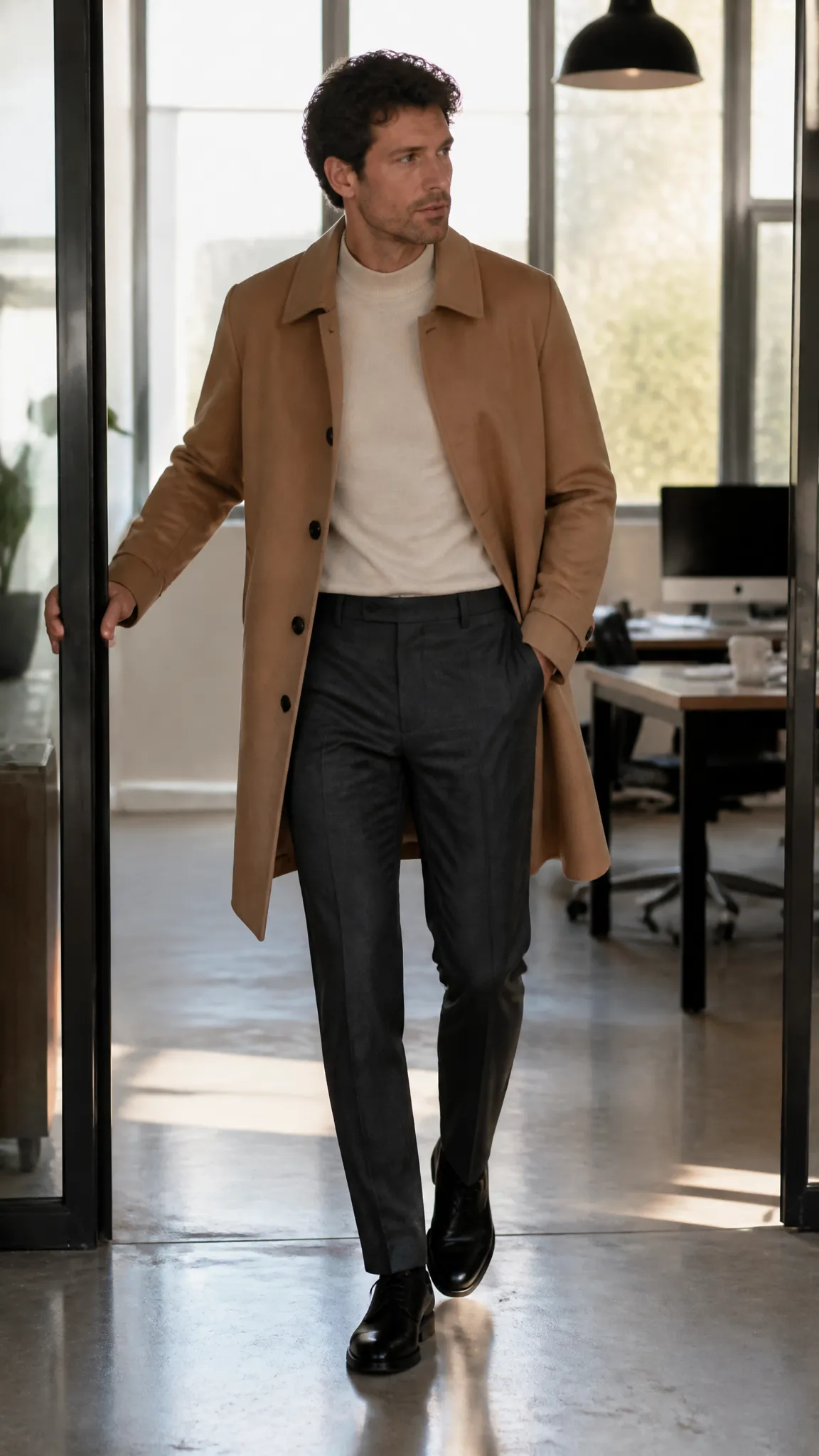
A mock neck creates a clean neckline that looks modern under outerwear and polished on its own. It has less visual formality than a roll-neck sweater, making it comfortable through a full workday.
Outfit Pieces
- A fine-gauge cotton or merino mock neck
- Tapered or straight tailored trousers
- A mac, topcoat, or short blouson
- Leather boots, loafers, or derbies
How to Style It
Keep the knit light enough to tuck without bunching at the waist. A cream mock neck with charcoal trousers feels graphic, while tonal brown or gray looks quieter. Add a jacket with a clean collar rather than a bulky hood, particularly when the outfit needs to move from internal work to an evening event.
9. Denim Shirt and Textured Blazer
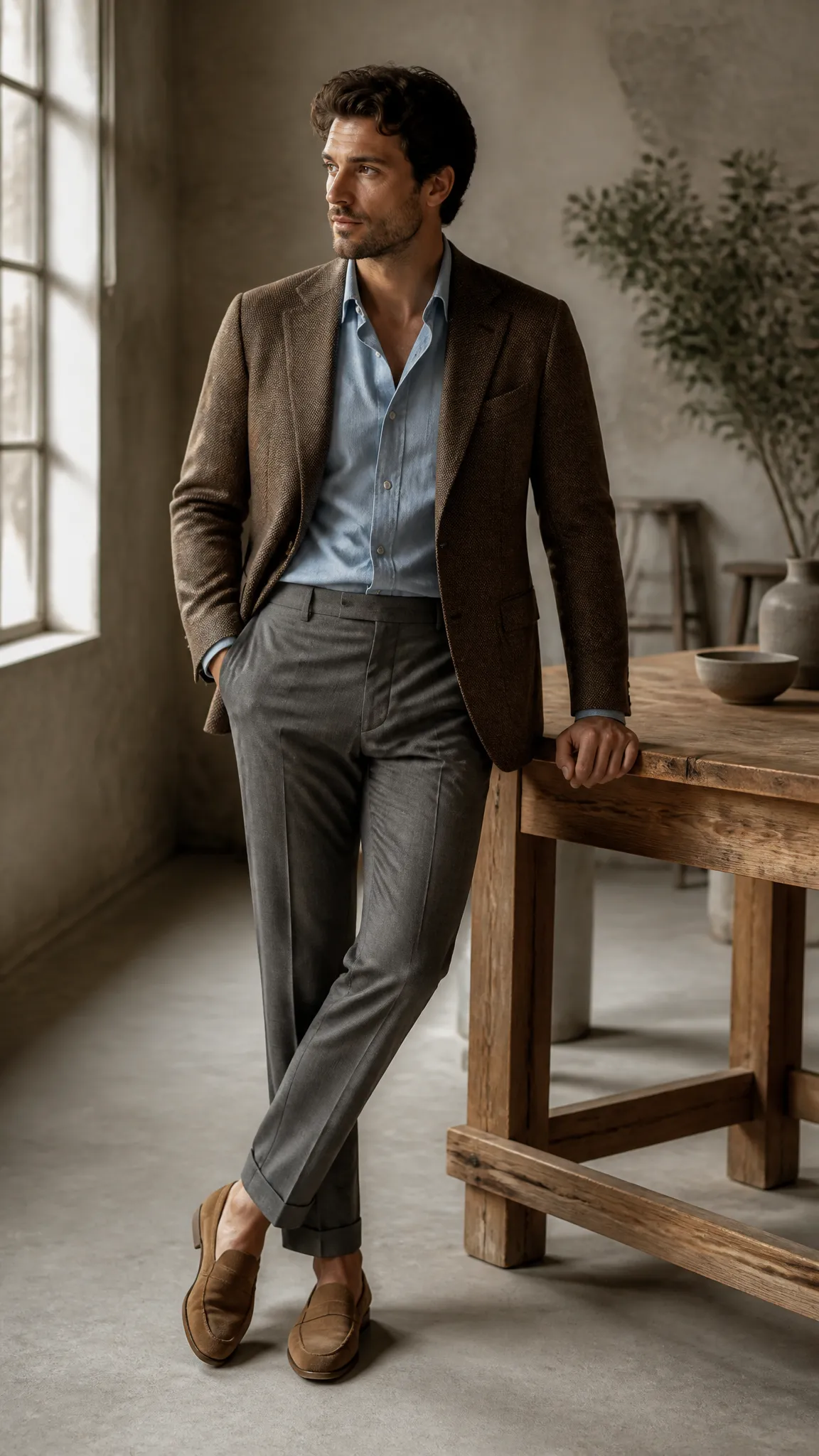
A denim shirt makes a blazer feel less formal while still providing the structure of a collar and button front. Texture helps the jacket meet denim at the same casual level, producing a coherent mix rather than a mismatched one.
Outfit Pieces
- A lightweight denim or chambray shirt
- A tweed, hopsack, or brushed-cotton blazer
- Khaki, olive, gray, or brown trousers
- Suede loafers or lace-up boots
How to Style It
Use a shirt in a medium or light wash and avoid prominent western details unless your office is very casual. A brown textured blazer and gray trousers create an easy foundation, while suede shoes repeat the jacket’s matte finish. Don’t pair this with blue jeans unless the washes are clearly different and your workplace accepts double denim.
10. Refined Workwear Layers
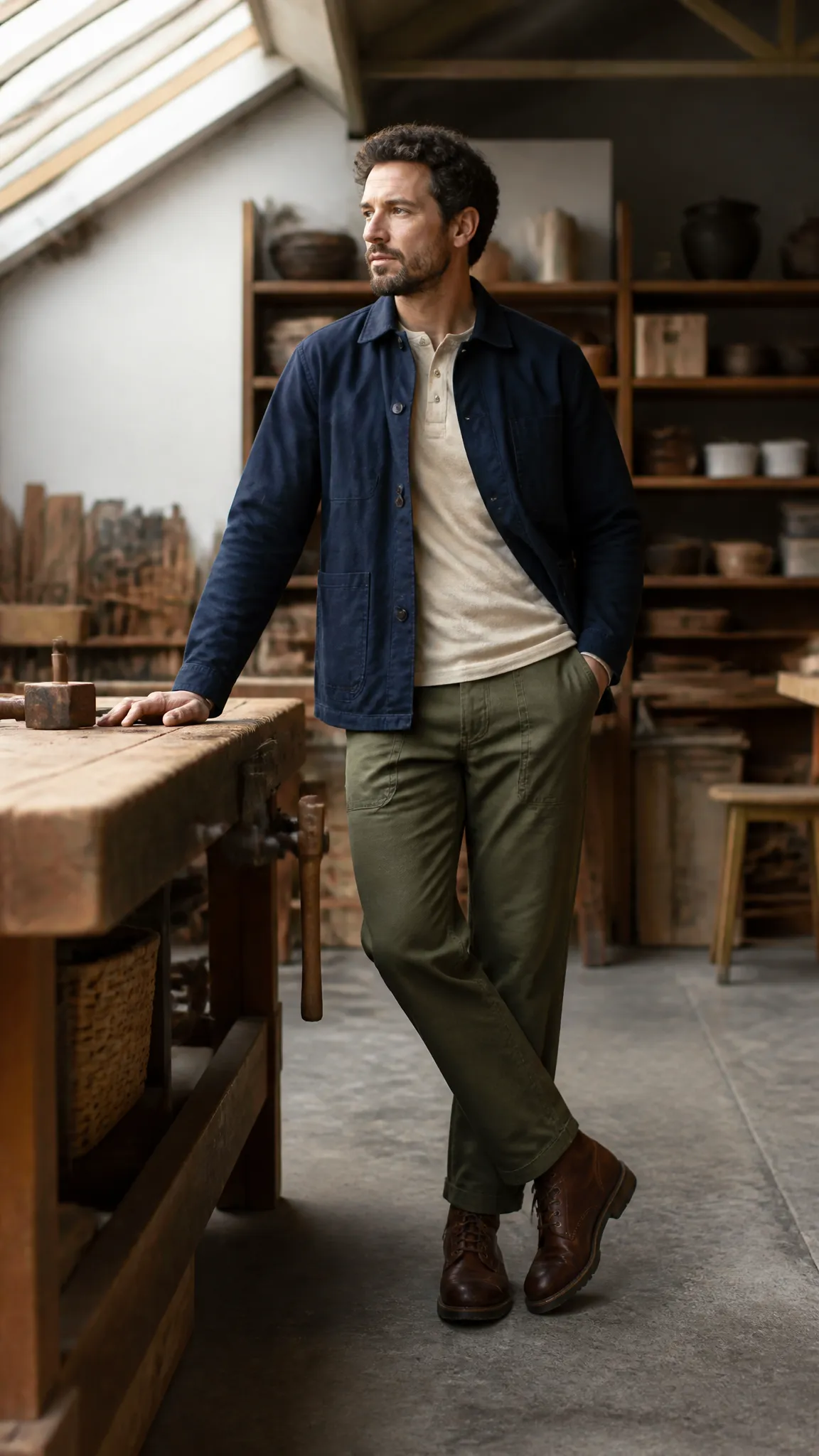
Workwear pieces suit creative environments because they’re functional, comfortable, and visually distinctive. The key is refinement: clean fabrics, controlled proportions, and one practical layer rather than a head-to-toe costume.
Outfit Pieces
- A canvas jacket, utility vest, or clean chore coat
- A plain tee, henley, or lightweight sweatshirt
- Straight chinos or fatigue pants
- Simple service boots or suede shoes
How to Style It
Limit the outfit to one piece with conspicuous pockets, and make sure everything is free of stains, frayed hems, and bulky hardware. Navy, ecru, olive, and tobacco mix easily without looking theatrical. Choose sleeker footwear and tailored chinos when meeting clients; save heavier boots and fatigue pants for hands-on studio days.
11. Sweater Vest and Loose Shirt
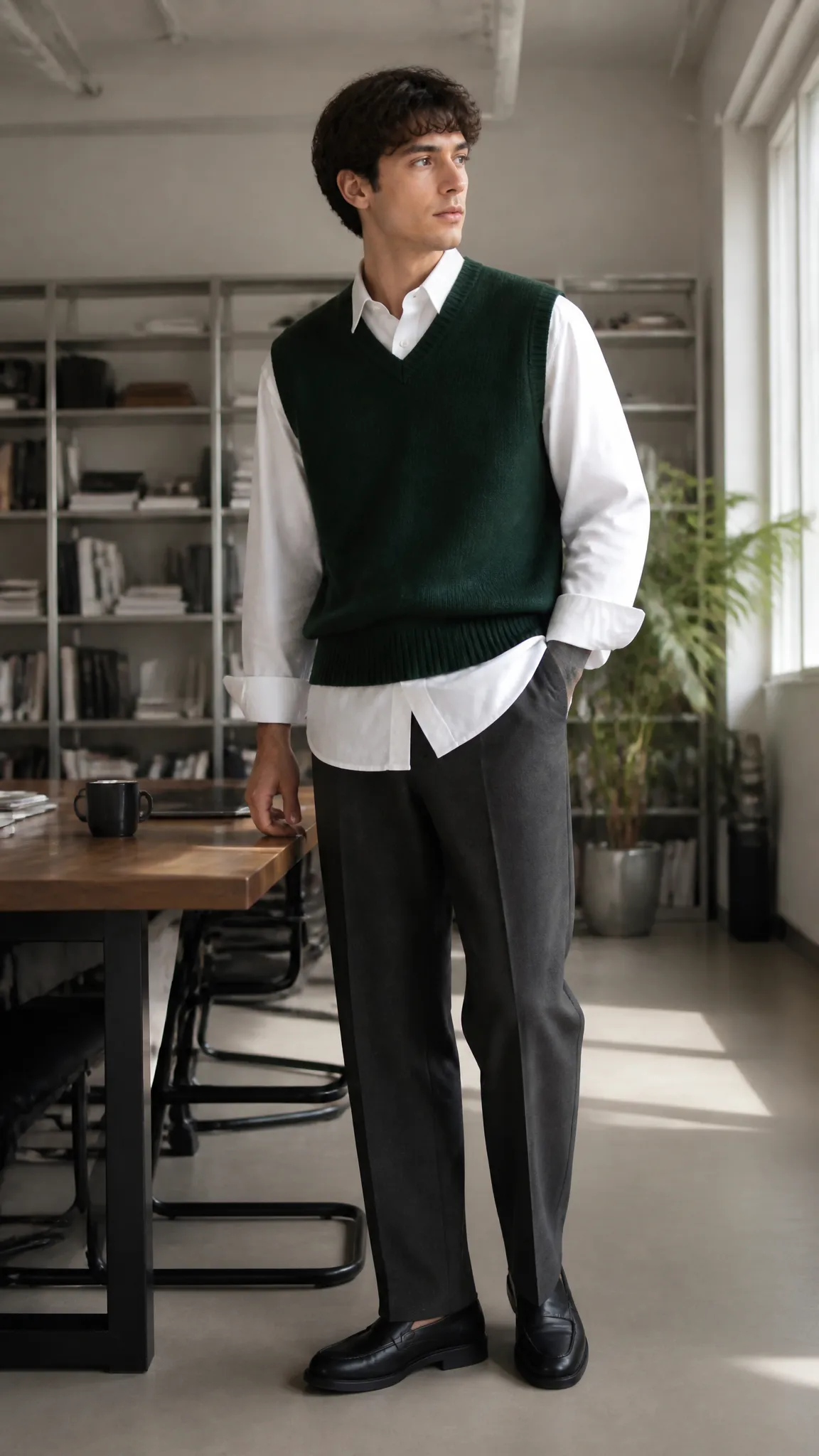
A sweater vest adds color, texture, and shape while keeping your arms unrestricted. Worn over a slightly roomy shirt, it feels more contemporary than the close-fitting vest and tie combinations associated with traditional offices.
Outfit Pieces
- A solid or subtly patterned sweater vest
- A relaxed Oxford or poplin shirt
- Straight-leg trousers or dark jeans
- Loafers or low-profile sneakers
How to Style It
Let the shirt sleeves retain a little volume, but keep the cuffs buttoned and the collar tidy. The vest should skim your torso without stretching at the hem. Pair a colorful vest with subdued trousers, or use a neutral vest over a striped shirt if you prefer pattern near your face.
12. Polo, Smart Chinos, and Suede Loafers
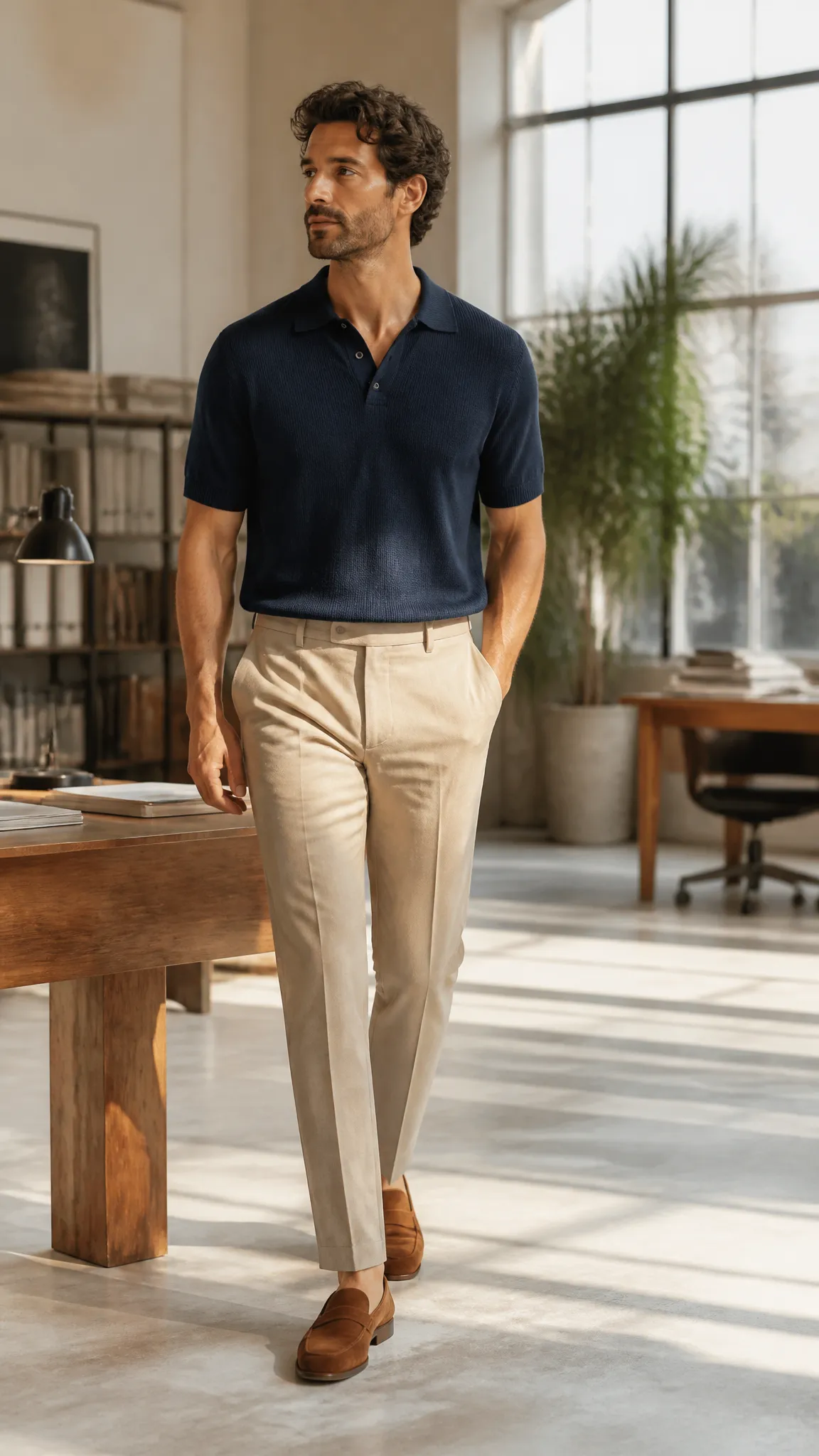
This simple combination is an easy foundation for warm weather and relaxed offices. Its effectiveness depends on fit and material, since a crisp polo and tailored chinos read very differently from golf attire or weekend basics.
Outfit Pieces
- A knit or substantial pique polo
- Smart chinos with a clean front
- Unlined suede loafers or minimal sneakers
- An optional lightweight bomber or overshirt
How to Style It
Choose a polo with sleeves ending around mid-bicep and a collar that lies flat. Tuck it into higher-rise chinos for a sharper result, or wear it untucked when the hem ends near mid-fly. Invisible socks create a summery look with loafers, but regular lightweight socks are usually the safer office choice.
How to Make Creative Office Style Look Intentional
Start by learning your workplace’s practical boundaries. Notice how client-facing leaders dress, whether sneakers are common, and how much experimentation appears in important meetings. Creative doesn’t automatically mean casual, and some offices still expect a polished layer when clients visit.
Prioritize fit, fabric, and condition before adding statement pieces. Trousers should sit securely at the waist, shirt collars should keep their shape, and shoes should be clean. Natural-looking textures such as brushed cotton, suede, hopsack wool, denim, and merino make simple color combinations more interesting.
Build around a restrained palette, then introduce one expressive element through color, pattern, jewelry, or silhouette. This approach makes creative office outfits for men easier to repeat because most pieces can move between combinations. Keep a blazer or overshirt at work if your schedule changes without much notice.
Frequently Asked Questions
Can men wear jeans in a creative office?
Usually, if the dress code permits them. Dark, straight-leg jeans without tears or heavy fading look most professional. Combine them with a collared shirt, knit, blazer, or polished shoes rather than stacking several casual pieces together.
Are sneakers appropriate for a creative workplace?
Clean, simple sneakers often work, especially in design, media, and technology settings. Leather or suede pairs with restrained detailing are easier to dress up than running shoes. For interviews, presentations, or client meetings, loafers and derbies remain safer choices.
How can I add personality without looking unprofessional?
Choose one focal point, such as a patterned shirt, unusual knit texture, relaxed trouser shape, or distinctive accessory. Keep the rest of the outfit quiet and make sure every garment fits well. Personal style looks more convincing when it doesn’t compete for attention.
What should I wear to a creative office interview?
A relaxed blazer, solid shirt or knit polo, tailored trousers, and clean leather shoes make a flexible starting point. It’s generally better to arrive slightly more polished than the daily dress code, then adapt after you’ve observed the team.
How many pieces are needed for a creative office wardrobe?
Focus on a compact rotation rather than a specific number: two useful jackets, several shirts or knits, dark jeans, two pairs of trousers, and two footwear options can produce varied combinations. Choose compatible colors so your layers and bottoms work interchangeably.