Cool mornings and warm afternoons can make getting dressed feel like a choice between shivering early or carrying a heavy coat later. The best fall layering outfits men can rely on use thin, breathable pieces that work together instead of competing for space.
These combinations show you exactly what to pair, how each layer should fit, and where to use color or texture without creating a bulky silhouette. You’ll find options for casual weekends, offices, dinners, and colder days.
1. Fall Layering Outfits Men Can Start With: Oxford and Chore Coat
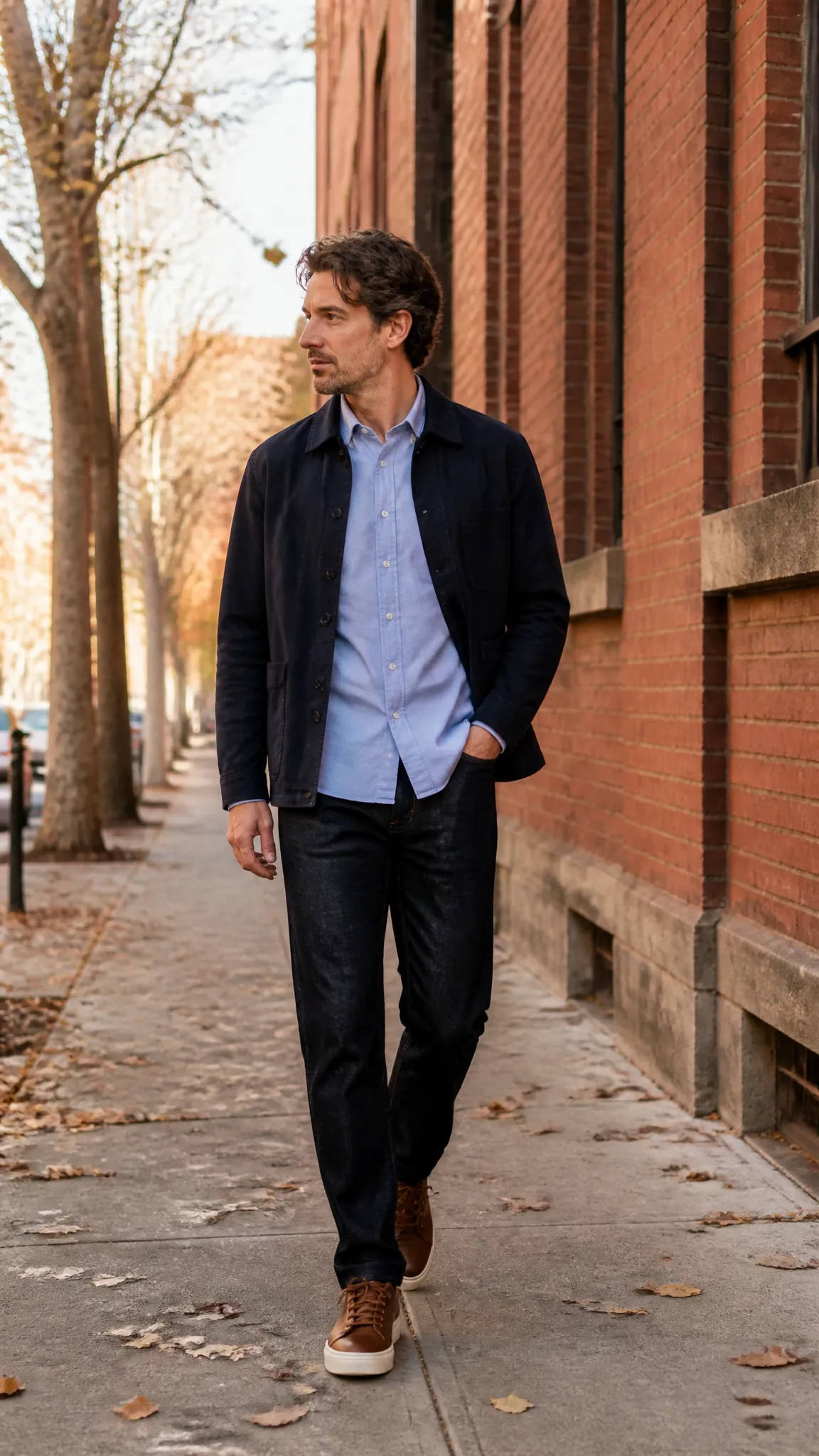
A cotton Oxford shirt under an unlined chore coat is an easy starting point because both pieces have structure without heavy padding. The visible collar and button placket create a polished layered look that still feels relaxed.
Outfit Pieces
- White or pale blue cotton Oxford shirt
- Navy, olive, or tan unlined chore coat
- Straight dark jeans and leather sneakers
How to Style It
Choose a shirt that sits close to your torso and a coat with enough room to button comfortably. Keep the Oxford untucked for casual plans, or tuck it into higher-rise jeans for a cleaner office-ready shape.
2. Long-Sleeve Tee With an Overshirt
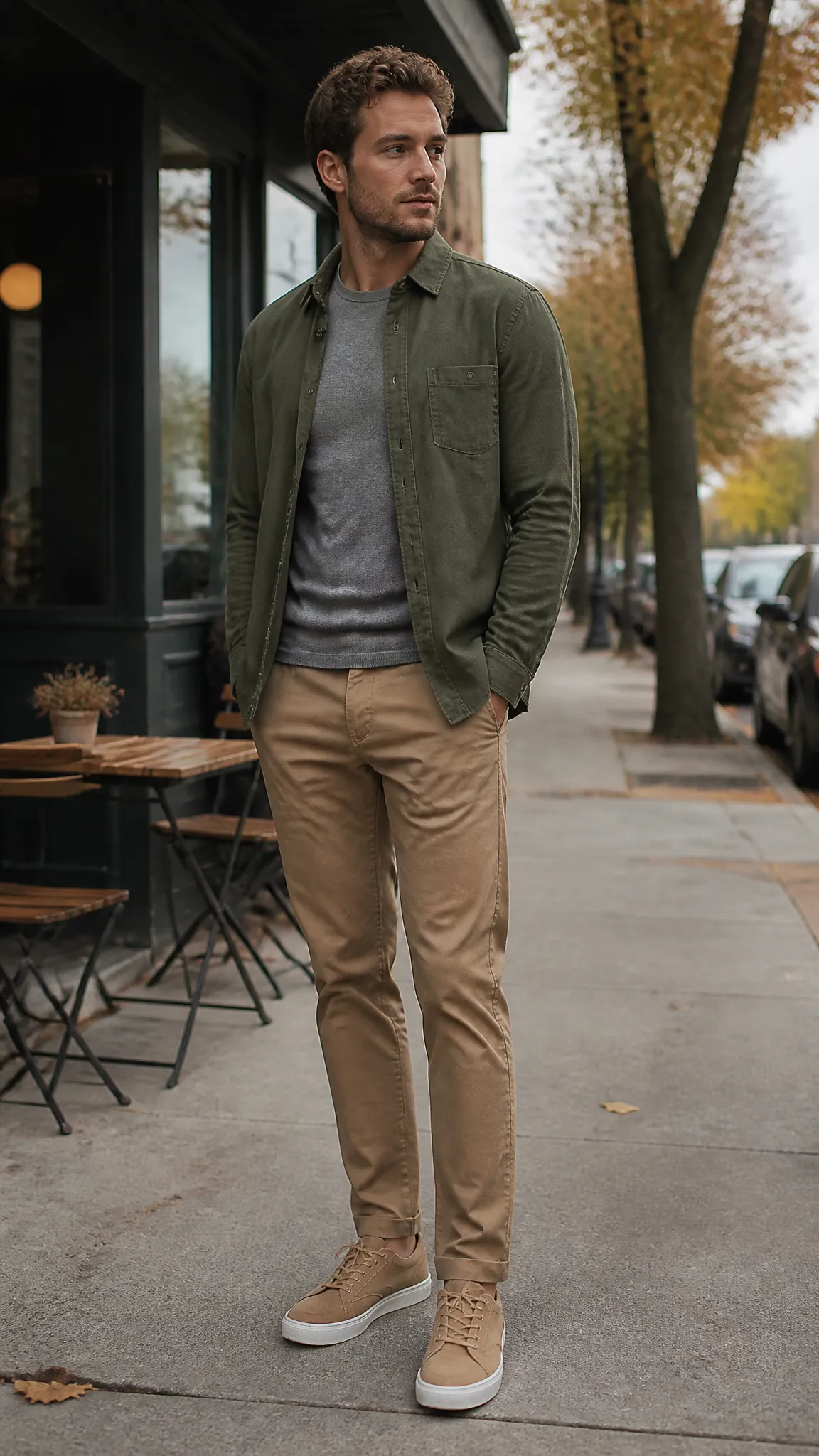
This straightforward combination offers warmth without the thickness of a sweatshirt. A sturdy overshirt adds color and texture while the lightweight base layer prevents bunching at the sleeves.
Outfit Pieces
- Fitted crewneck long-sleeve T-shirt
- Cotton twill or lightweight wool overshirt
- Tapered chinos and suede sneakers
How to Style It
Wear the overshirt open when temperatures are mild and button it when the air cools. If you shop using the phrase Long Sleeve Under Shirt, prioritize smooth cotton or merino fabric over thick thermal knits.
3. Merino Crewneck Under a Denim Jacket
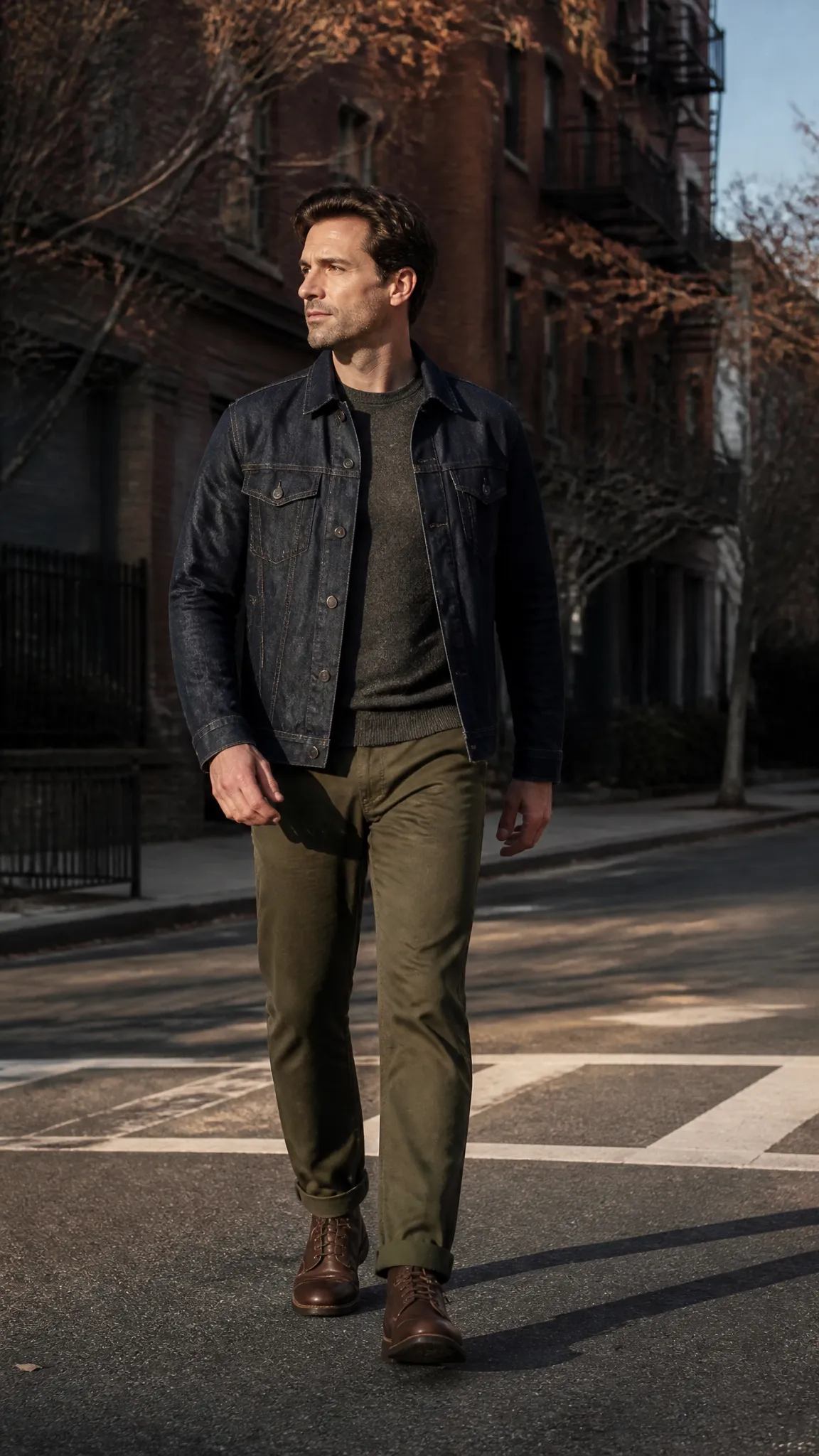
A fine-gauge merino sweater provides more insulation than its slim profile suggests. Layering it beneath a denim jacket gives you a useful mix of softness and rugged structure.
Outfit Pieces
- Charcoal, oatmeal, or burgundy merino crewneck
- Mid-wash or dark indigo denim jacket
- Olive chinos and brown service boots
How to Style It
Make sure the sweater hem doesn’t extend below the jacket. A crewneck with a close collar also keeps the neckline tidy, while a small cuff of knit fabric can show beneath each jacket sleeve.
4. Polo Shirt With an Unstructured Blazer
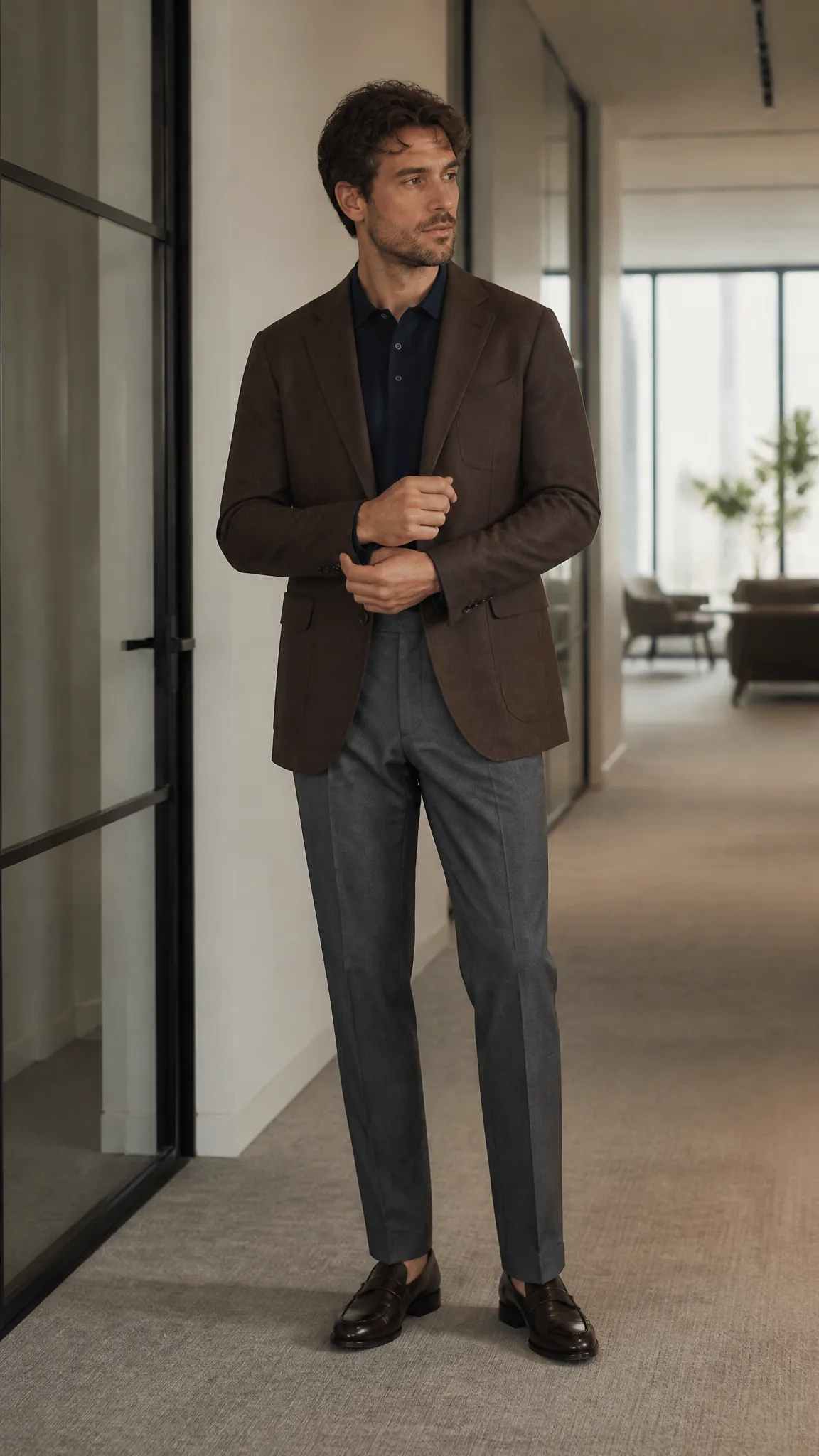
A long-sleeve polo replaces a conventional dress shirt when you want refinement without stiff collars or excess fabric. An unstructured blazer completes the outfit while remaining flexible and easy to remove.
Outfit Pieces
- Fine-knit long-sleeve polo shirt
- Unlined navy or brown blazer
- Gray trousers and leather loafers
How to Style It
Use a polo with a firm collar that stays beneath the blazer lapels. Keep the palette tonal and skip a belt if your trousers have side tabs, which helps preserve a clean waistline.
5. Henley Beneath a Suede Jacket
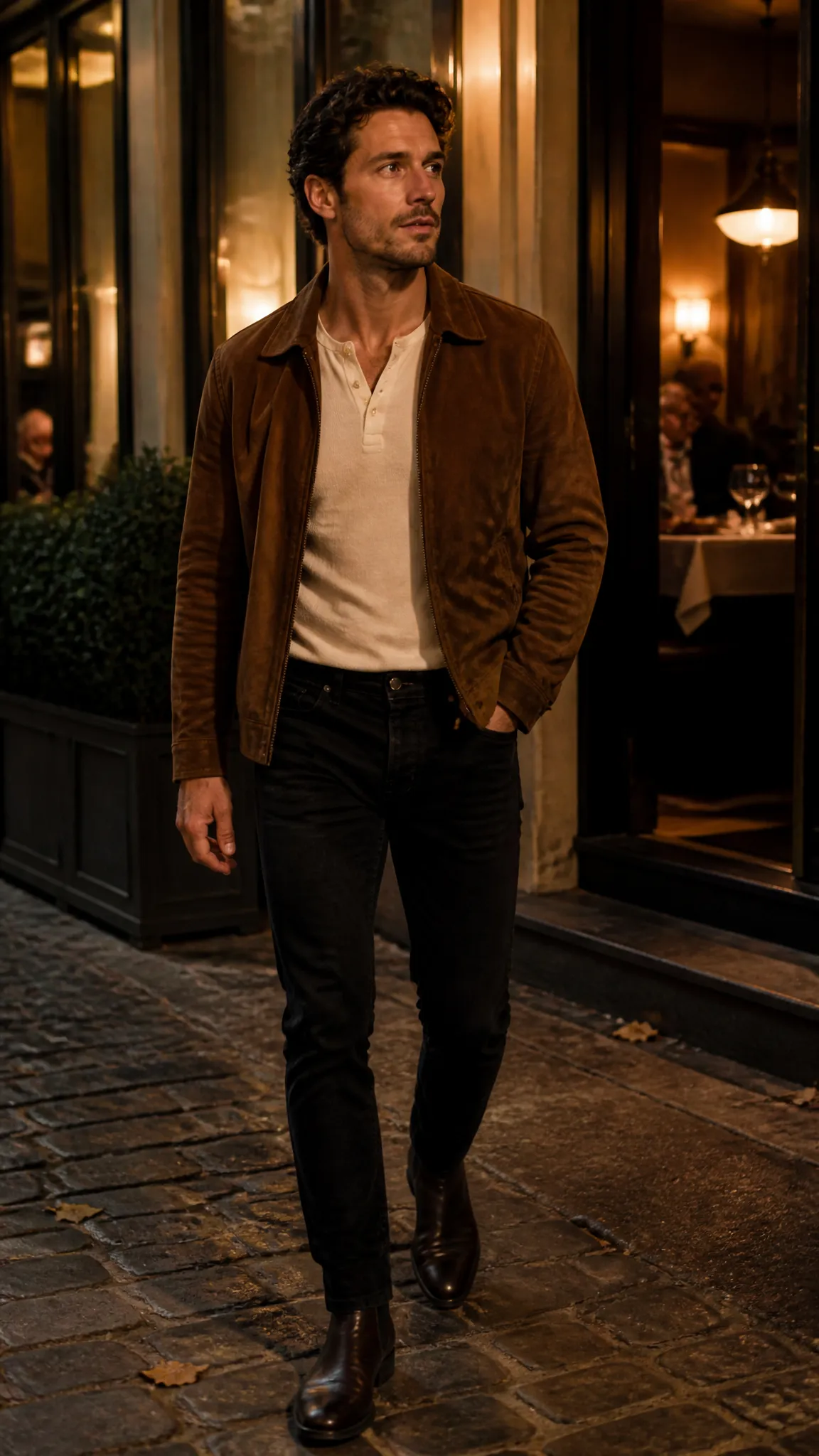
The short button placket of a Henley adds visual detail without another full collar. Paired with a supple suede jacket, it creates an understated outfit suited to dates, dinners, and weekend gatherings.
Outfit Pieces
- Lightweight cream or heather gray Henley
- Tobacco or dark brown suede jacket
- Black jeans and minimal leather boots
How to Style It
Leave one or two Henley buttons open, but avoid a loose neckline. Since suede already supplies rich texture, keep the jeans dark and the footwear simple rather than adding more competing materials.
6. Turtleneck With a Harrington Jacket
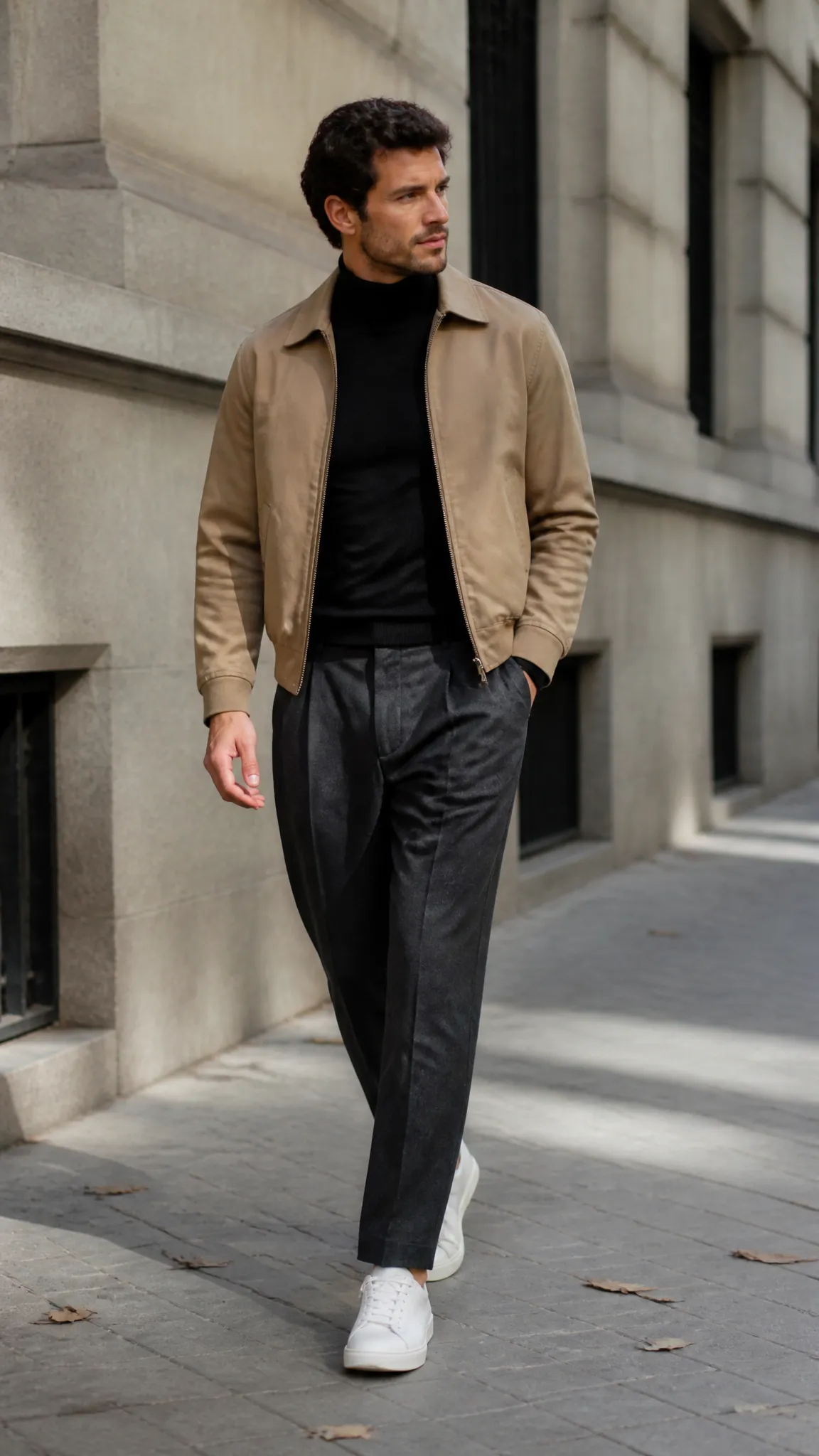
A thin turtleneck closes the gap around your neck, reducing the need for a scarf on moderately cool days. The cropped Harrington jacket balances that coverage and keeps your proportions sharp.
Outfit Pieces
- Fine-gauge black or charcoal turtleneck
- Tan, navy, or deep green Harrington jacket
- Pleated trousers and low-profile sneakers
How to Style It
Choose a neck that folds cleanly once rather than pooling under your chin. Because the jacket ends near the belt line, medium- or high-rise trousers will create a more balanced silhouette.
7. Hoodie Under a Lightweight Bomber
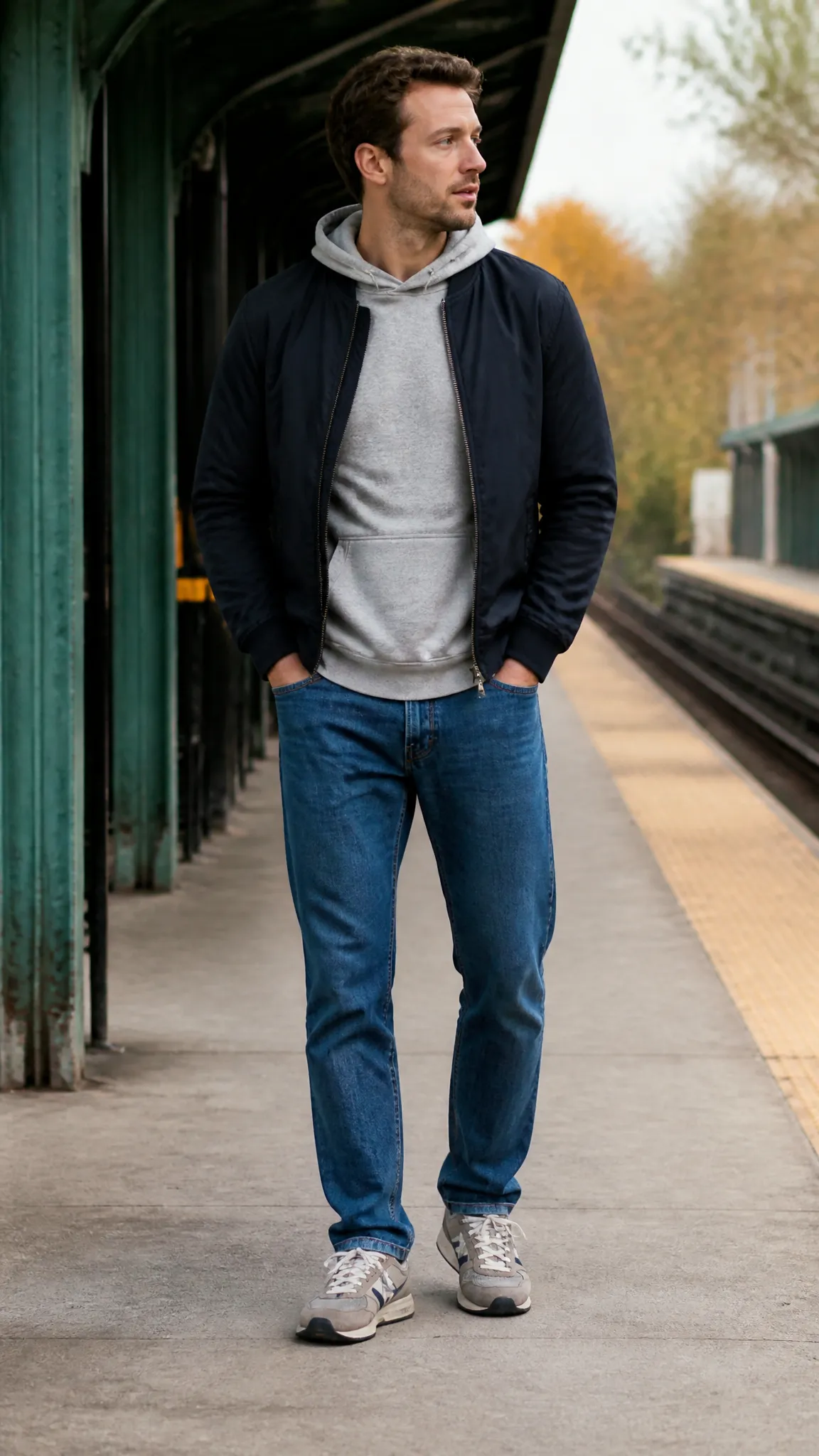
A hoodie and bomber can look bulky when both are heavily insulated. The streamlined version uses a loopback cotton hoodie and an unpadded nylon shell for practical, casual Layering Outfits.
Outfit Pieces
- Trim loopback cotton hoodie
- Unpadded nylon or cotton bomber jacket
- Straight jeans and retro running shoes
How to Style It
Check that the hood lies flat instead of crowding the jacket collar. Keep the hoodie hem level with or slightly shorter than the bomber, and avoid oversized sleeves that bunch at the wrists.
8. Quarter-Zip Over a Cotton Tee
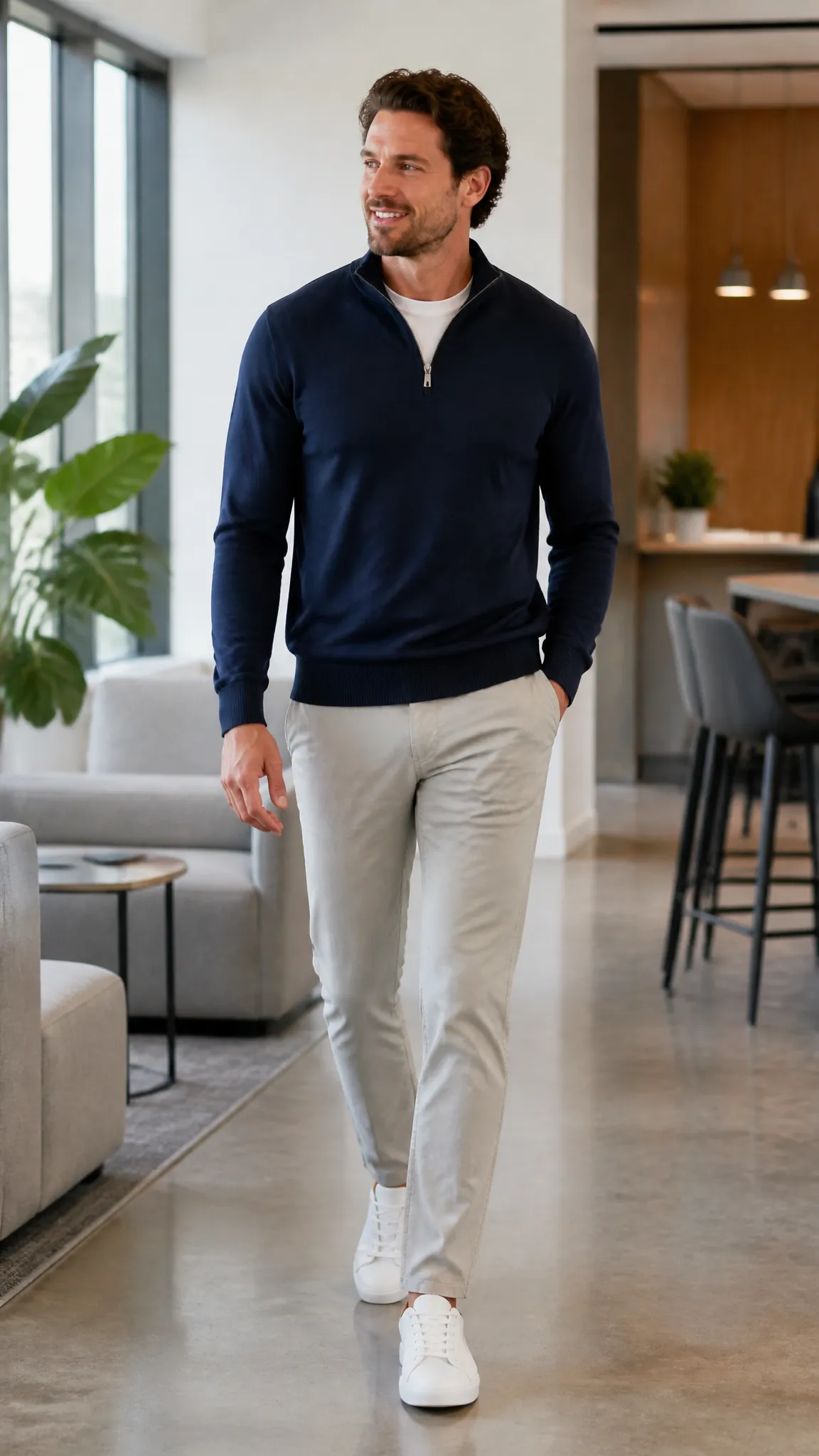
A lightweight quarter-zip lets you adjust ventilation throughout the day while giving a plain T-shirt more structure. It works especially well for casual offices, travel, and low-key weekends.
Outfit Pieces
- White or gray fitted crewneck T-shirt
- Fine merino or cotton quarter-zip
- Navy chinos and clean leather sneakers
How to Style It
Open the zipper enough to reveal a narrow triangle of the tee, not most of its neckline. Select a knit with ribbed cuffs and a waistband that rests neatly rather than gripping your torso.
9. Cardigan Over a Chambray Shirt
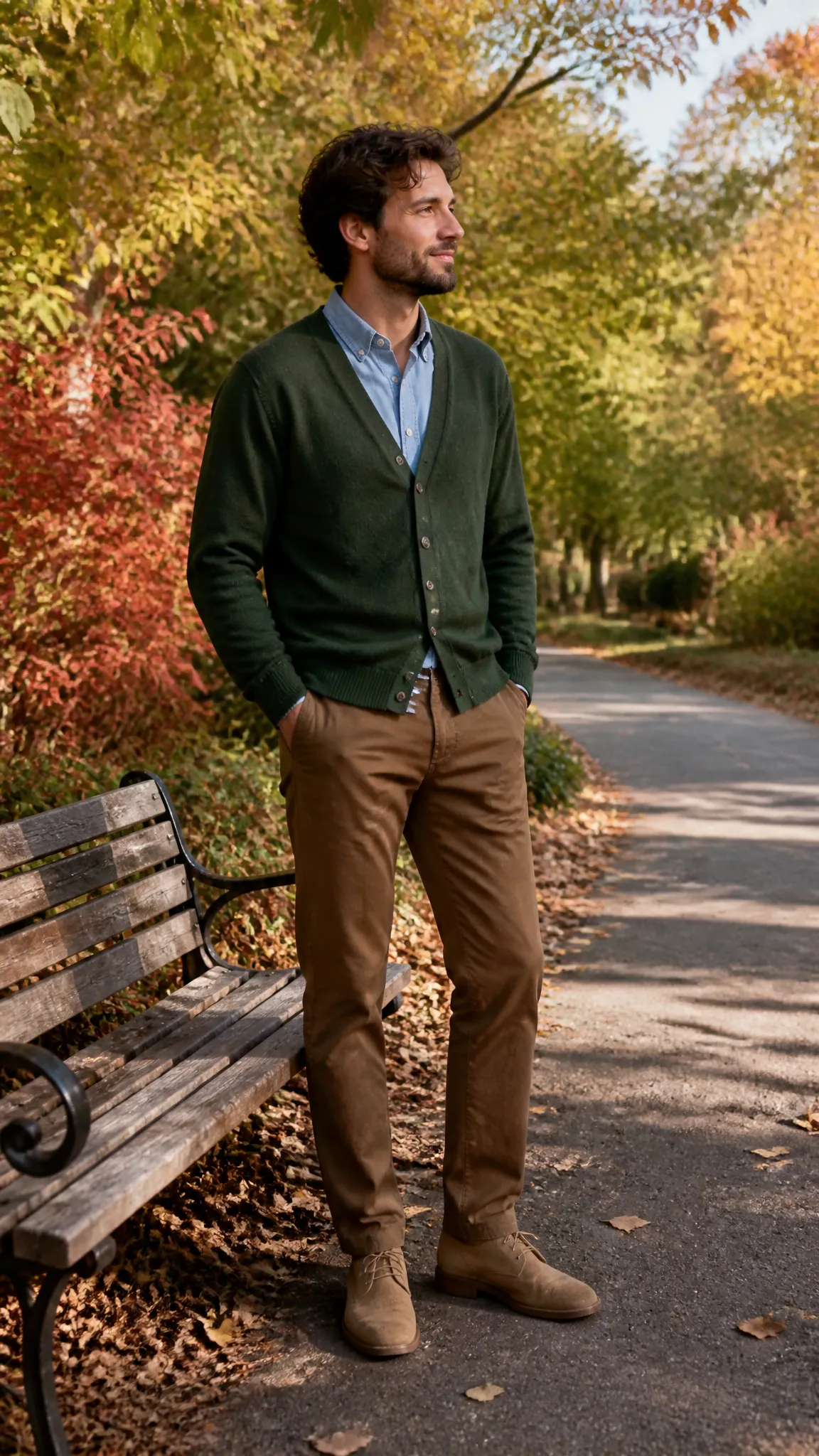
A cardigan gives you the warmth of a sweater with easier temperature control. Chambray contributes subtle workwear character while remaining thinner and softer than most denim shirts.
Outfit Pieces
- Light blue chambray button-down
- Charcoal or forest green V-neck cardigan
- Brown chinos and suede desert boots
How to Style It
Leave the top shirt button open and fasten the middle cardigan buttons. A fine or medium knit is usually enough for fall; chunky shawl collars can add unnecessary volume around the chest and neck.
10. Flannel Shirt Under a Waxed Jacket
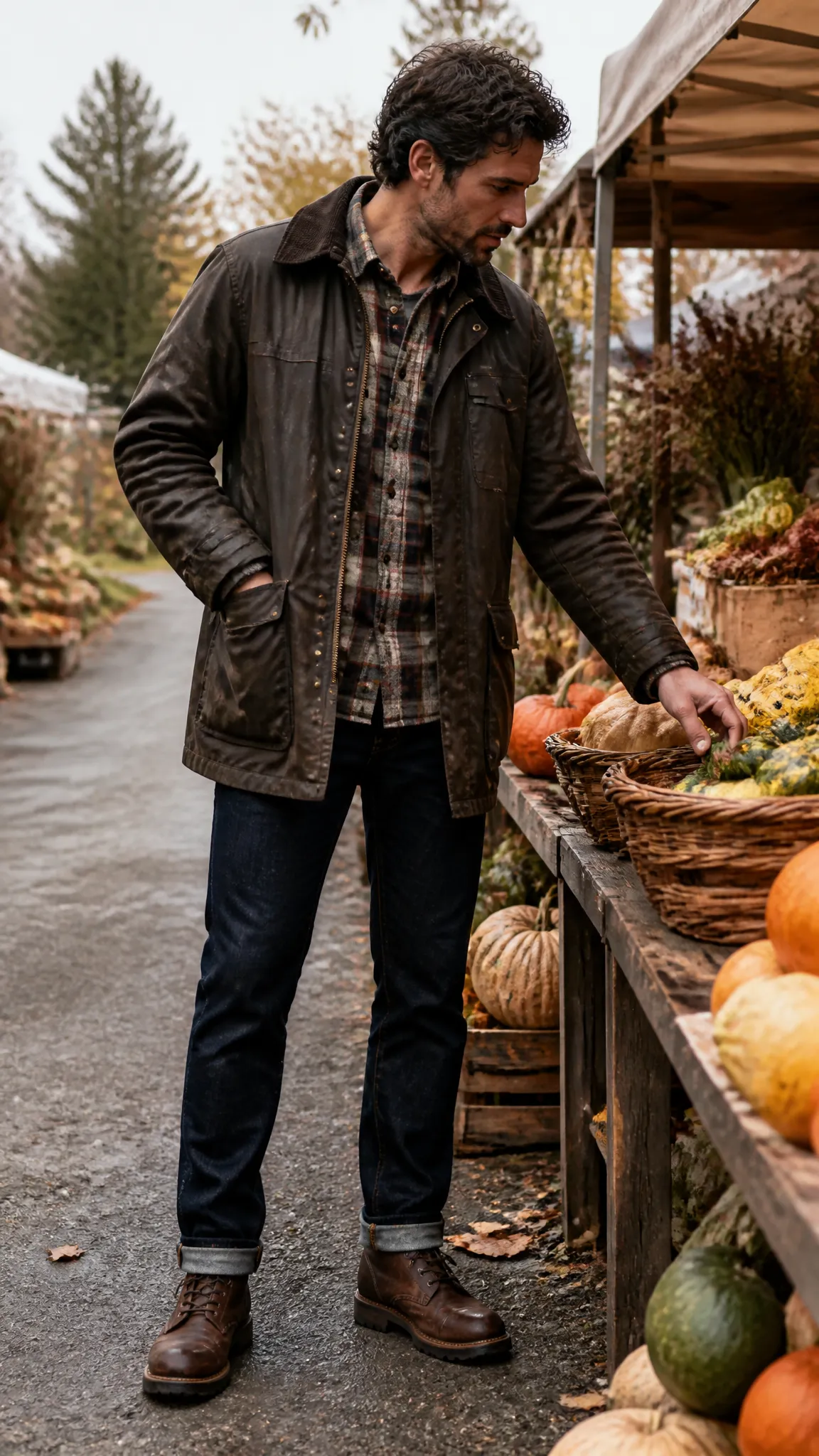
Flannel adds warmth close to the body, while a waxed cotton jacket helps with wind and light moisture. This practical combination provides Mens Outfit Inspiration for outdoor markets, casual errands, and country weekends.
Outfit Pieces
- Brushed cotton flannel shirt
- Unlined waxed cotton field jacket
- Raw denim jeans and lace-up boots
How to Style It
Choose a small check or muted plaid so the outfit doesn’t feel visually heavy. An unlined jacket is important here because the brushed shirt already provides insulation and the waxed shell blocks wind.
11. Shirt Jacket Over a Mock Neck
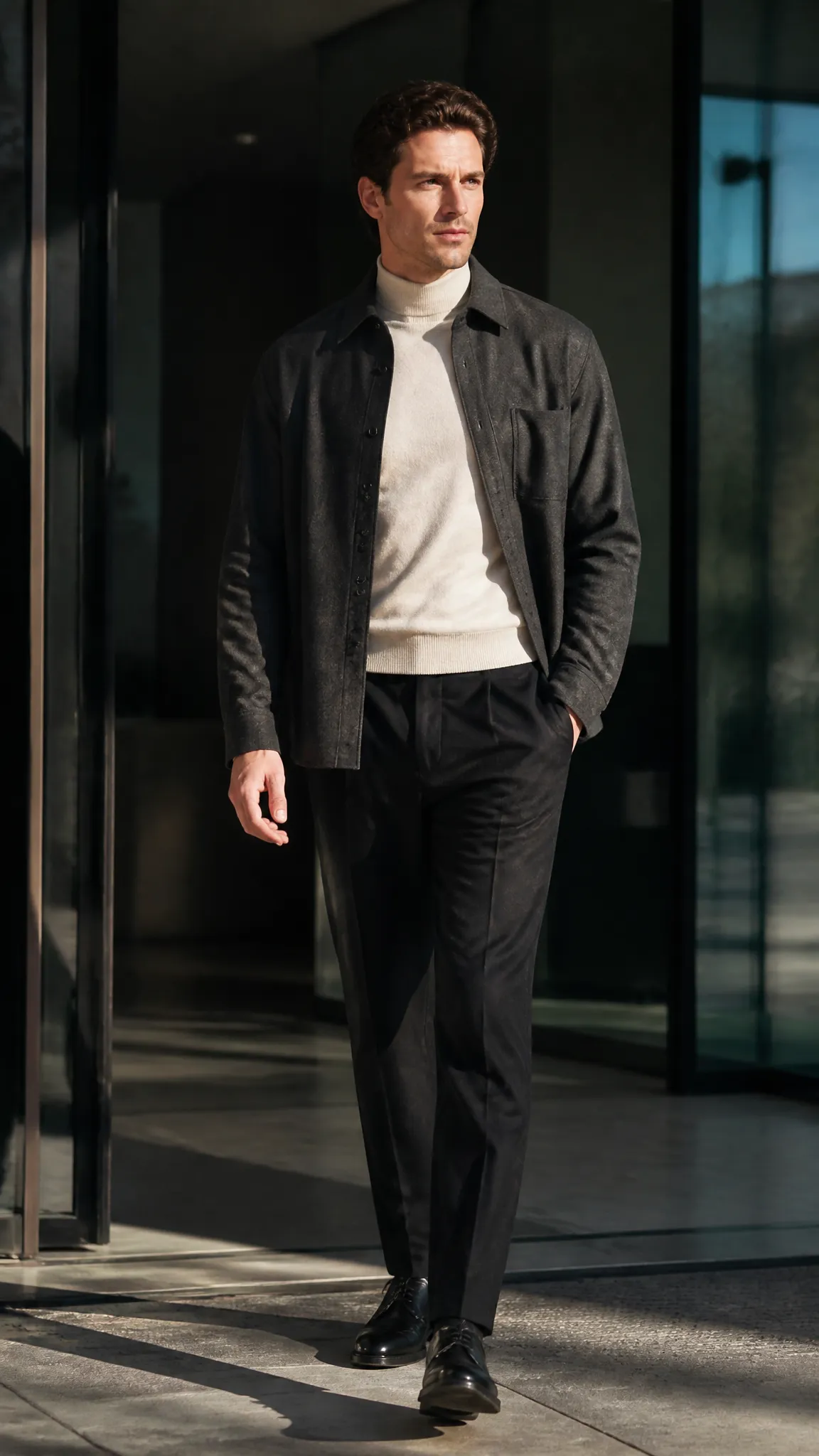
A mock neck delivers much of a turtleneck’s coverage with less fabric around the throat. Under a shirt jacket, it creates a modern silhouette that can move easily from the office to dinner.
Outfit Pieces
- Fine-knit cream or black mock neck
- Wool-blend shirt jacket
- Relaxed trousers and polished derby shoes
How to Style It
Keep the shirt jacket open to form two vertical lines down the torso, which visually lengthen your frame. Select soft tailoring and dropped patch pockets instead of thick chest padding.
12. Sweater Vest Over an Oxford Shirt
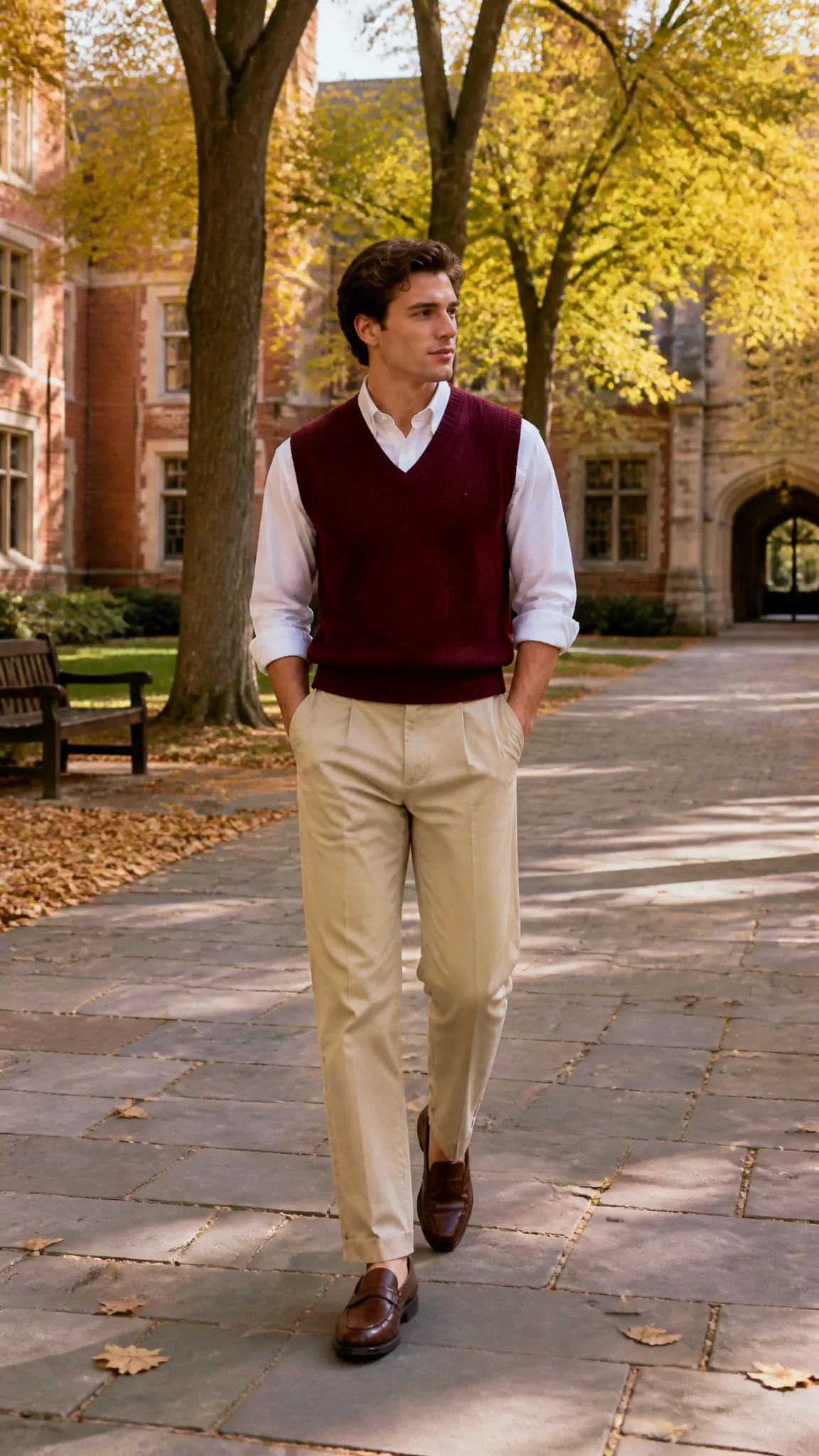
A sweater vest warms your core while leaving your arms unrestricted, making it one of the most efficient layers for transitional weather. It also brings subtle collegiate character without requiring a blazer.
Outfit Pieces
- White or striped Oxford button-down
- Fine-knit solid sweater vest
- Pleated chinos and penny loafers
How to Style It
Use a vest with trim armholes so the shirt fabric doesn’t balloon at the shoulders. A slightly relaxed trouser balances the fitted upper layers and keeps the outfit from looking overly formal.
13. Quilted Vest Over a Rugby Shirt
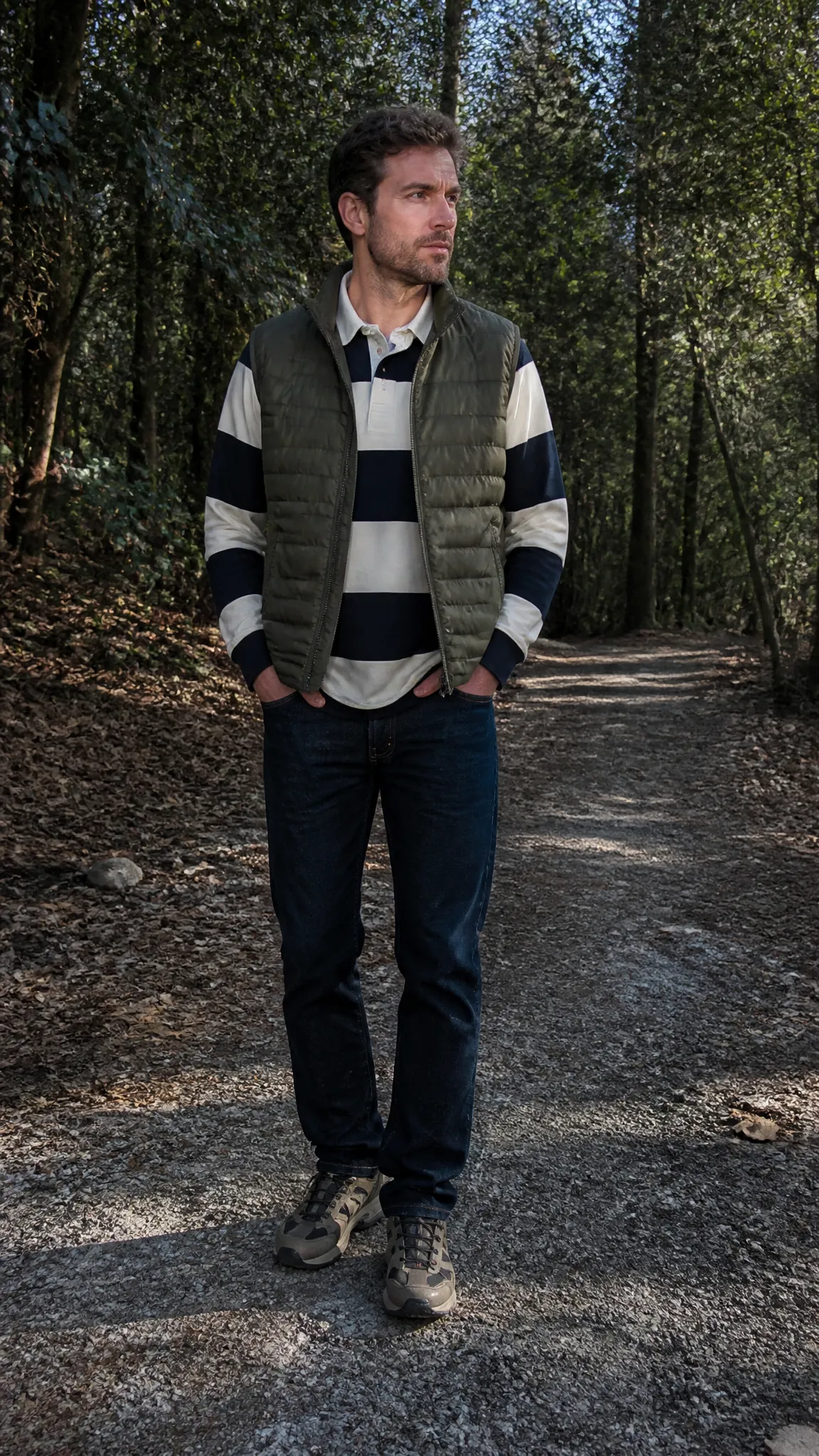
A thin quilted vest protects your torso on brisk days without restricting your arms. The rugby shirt’s collar, placket, and contrasting color give this casual combination enough visual interest.
Outfit Pieces
- Midweight cotton rugby shirt
- Low-profile quilted vest
- Dark jeans and trail-inspired sneakers
How to Style It
Look for narrow quilting and light synthetic fill rather than a puffy outdoor vest. Keep the vest open when possible so the rugby shirt creates a strong vertical panel through the center.
14. Rain Shell Over a Merino Base Layer
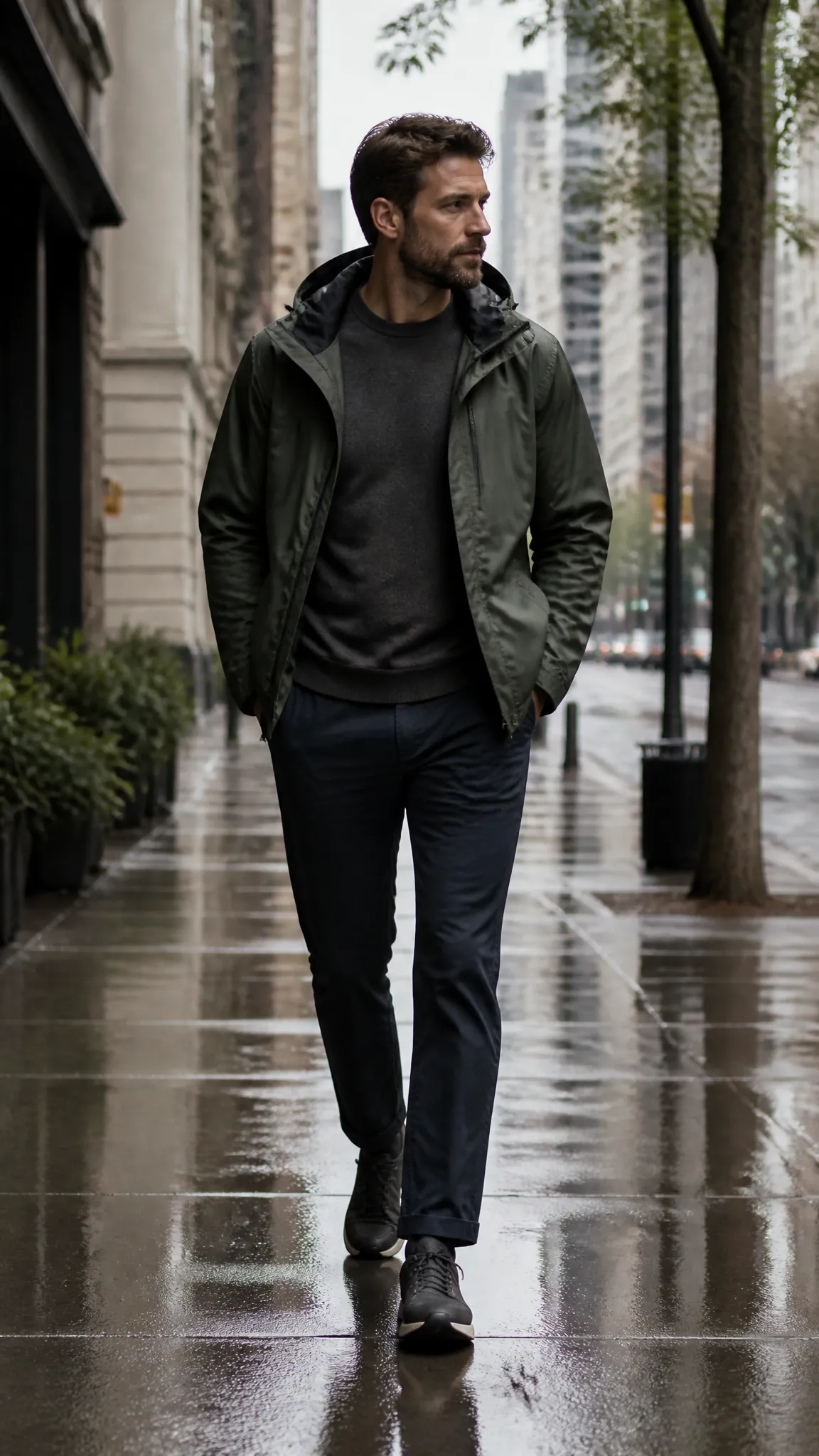
Wet, windy fall days call for function, but you don’t need a thick technical system around town. A breathable merino base and an uninsulated rain shell provide adaptable protection in a compact package.
Outfit Pieces
- Lightweight merino long-sleeve crewneck
- Matte waterproof shell with a clean cut
- Technical chinos and weather-resistant sneakers
How to Style It
Avoid wearing cotton beneath the shell if you expect sustained rain or active walking. Choose restrained colors such as slate, navy, and moss to make the technical pieces feel appropriate beyond the trail.
15. Topcoat Over a Crewneck and Tee
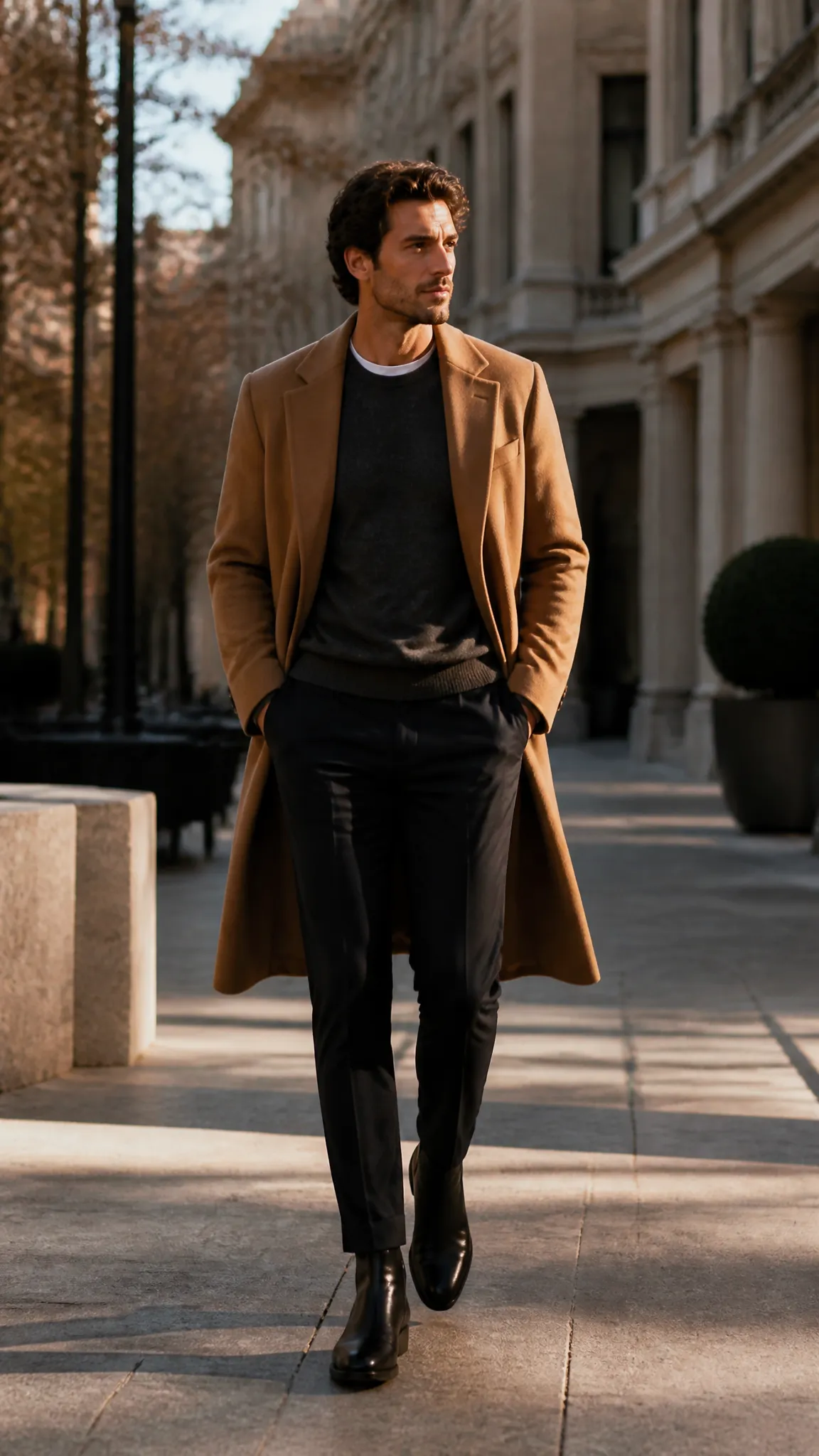
A soft, unlined topcoat can finish an outfit without the rigid weight of traditional overcoats. Worn over a fine sweater and T-shirt, it gives you three useful layers with very little bulk.
Outfit Pieces
- Lightweight cotton crewneck T-shirt
- Fine-gauge wool or cashmere-blend sweater
- Unlined topcoat, tailored trousers, and boots
How to Style It
Let the coat fall cleanly from the shoulders and leave enough room for the sweater without sizing up excessively. This is strong Style Inspiration Fall dressing because every layer can stand alone as temperatures change.
How to Layer Without Looking Bulky
The most reliable fall layering outfits men can assemble begin with the thinnest garment and gradually add structure. Your base should skim the body, the middle layer should fit comfortably over it, and the outer layer should close without pulling across the chest.
Mixing textures is often more effective than stacking contrasting colors. Try smooth cotton under brushed flannel, fine merino beneath denim, or chambray under a soft cardigan. Limit yourself to one visibly chunky material, and keep hems ordered from shortest on the inside to longest on the outside whenever the garment shapes allow it.
Before leaving home, raise your arms, sit down, and button the outer layer. If fabric collects under your armpits or the sleeves feel tight, the problem is usually a thick middle layer, not an outer jacket that’s too small.
Frequently Asked Questions
How many layers should men wear in fall?
Two or three layers are usually the most adaptable: a breathable base, an optional insulating middle, and a light outer layer. Your weather, activity level, and time outdoors matter more than a fixed number.
Which fabrics add warmth without much bulk?
Fine-gauge merino wool, lightweight fleece, tightly woven cotton, and thin quilted insulation offer useful warmth with relatively slim profiles. Heavy cable knits and thick sweatshirt fleece take up more room under jackets.
Should each layer be a different color?
No. Tonal combinations often look cleaner because the layers are distinguished by texture rather than sharp color changes. Navy with blue, brown with cream, or charcoal with gray are dependable starting points.
How should an outer layer fit over a sweater?
It should button or zip without pulling, while the shoulder seams remain close to your natural shoulders. Test the jacket with the sweater you plan to wear rather than assuming your usual size will fit every combination.