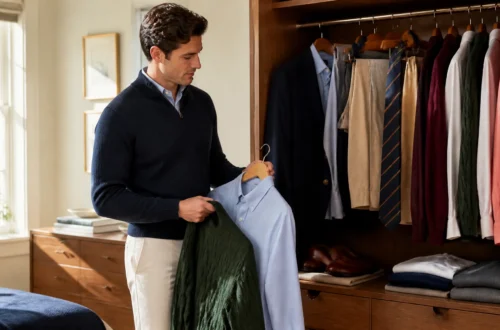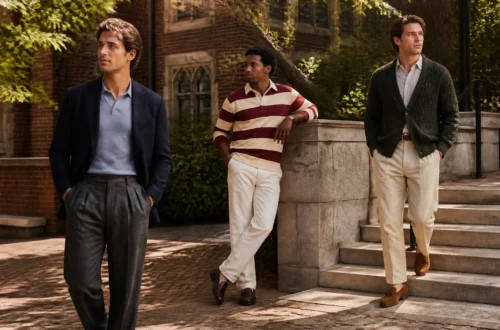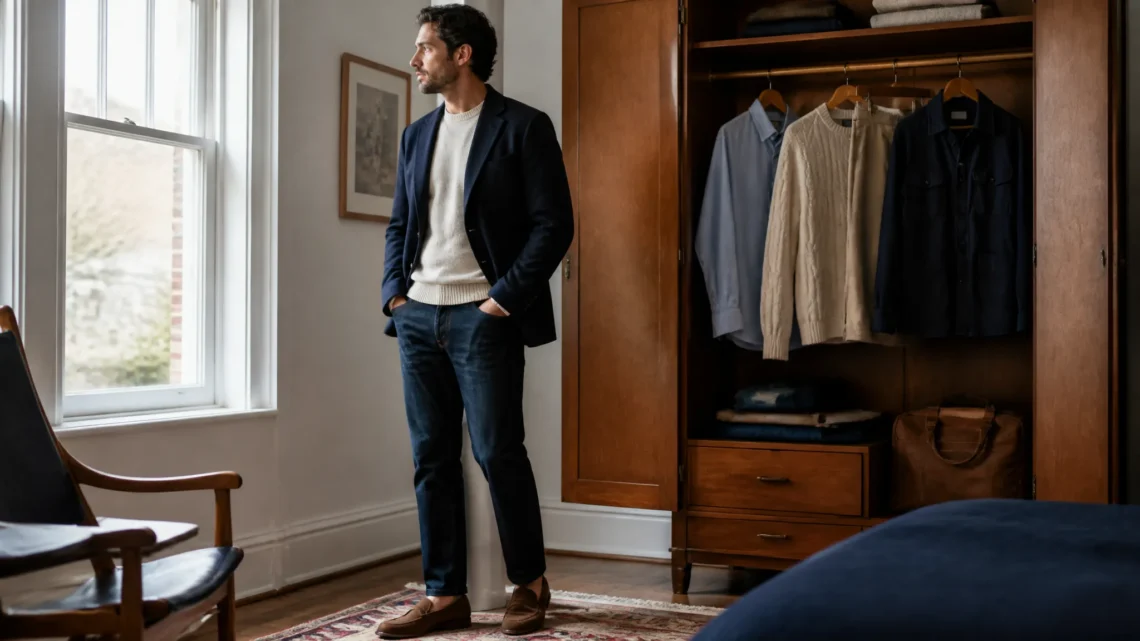
Vintage prep can look sharp and relaxed, but one wrong combination may leave you dressed for a theme party rather than your actual plans. The key to making vintage preppy style men can wear today is balancing recognizable classics with cleaner, simpler modern pieces.
This approach will help you choose worthwhile garments, update their proportions, and build outfits that feel personal instead of overly nostalgic.
Build Vintage Preppy Style Men Can Wear Around One Strong Piece
A convincing outfit rarely needs more than one clearly vintage preppy focal point. A cable-knit sweater, navy blazer, striped rugby shirt, penny loafers, or pleated chinos can establish the mood by itself. When several heritage pieces compete for attention, the clothes begin to resemble a costume.
Start with the item that has the most personality, then give it quieter companions. A brushed Shetland sweater works with a plain white T-shirt, straight dark jeans, and understated leather sneakers. An oxford cloth button-down with a softly frayed collar can sit under a modern chore jacket rather than another traditional tailored layer.
One statement, several supporting players is a useful principle rather than an inflexible rule. If the central piece has a bold crest, madras check, contrast trim, or unusual texture, keep the remaining garments relatively restrained. Subtle vintage items can share an outfit more easily because they do not announce the reference so loudly.
Consider the setting as well. A navy blazer may serve as the focal point at dinner, while loafers can provide enough prep character for a casual office. The goal is not to display every piece you own, but to make one good piece seem completely at home in your wardrobe.
Balance Traditional Garments With Modern Fit and Proportion
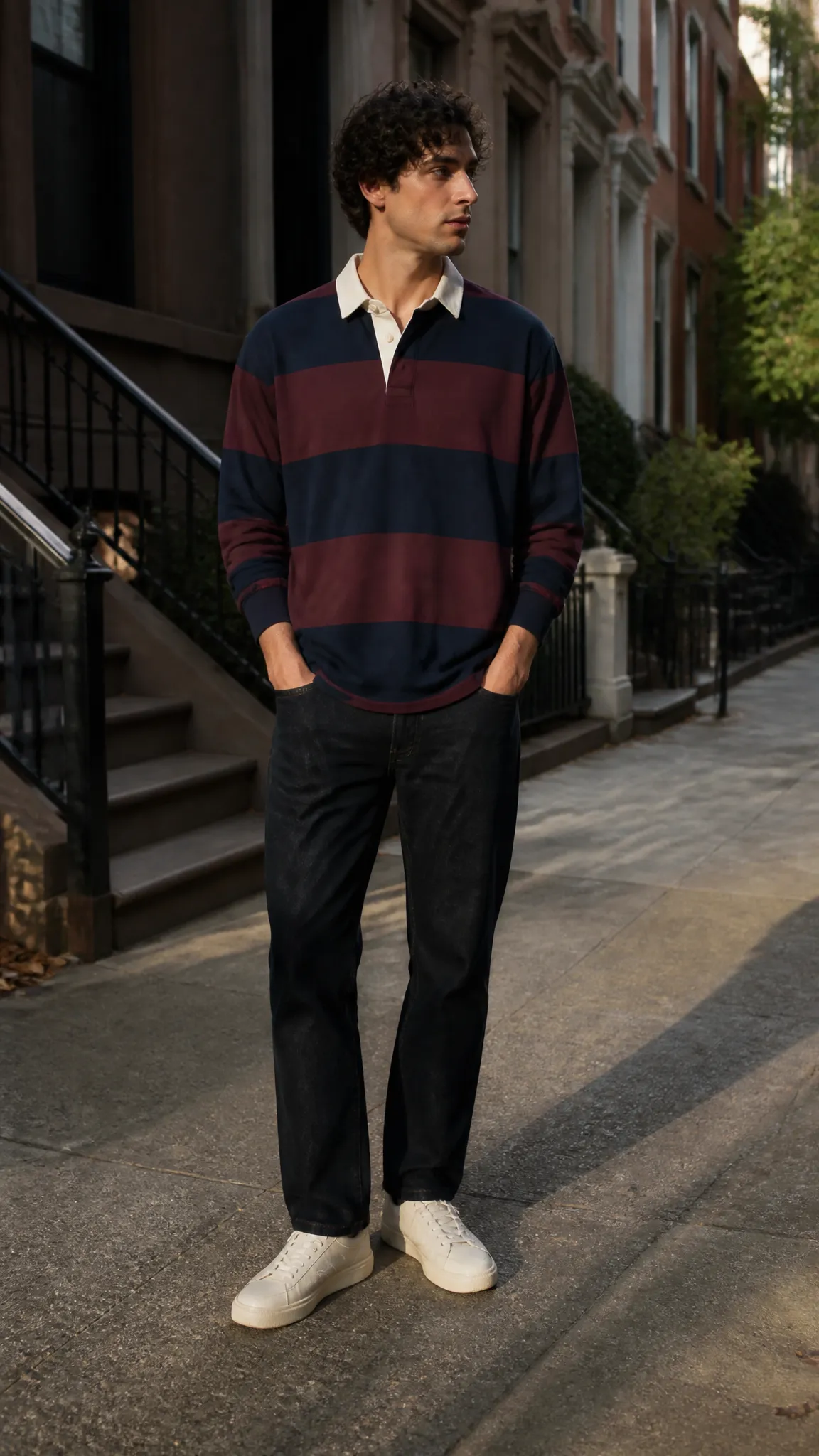
Once you have chosen the focal piece, proportion determines whether the outfit feels current. Vintage clothing often reflects the preferred silhouette of its era, which may mean fuller trousers, shorter jackets, roomy sleeves, or long sweater hems. Those traits are not flaws, but they need to work with the rest of your clothes.
A roomy rugby shirt looks intentional with straight or relaxed jeans and sneakers that have enough visual weight beneath them. Pairing it with extremely narrow pants can make the upper half appear disproportionately large. Likewise, wide pleated chinos usually sit more comfortably beside a compact knit or neatly tucked shirt than an oversized coat and bulky sweater.
Aim for contrast without contradiction. If an old blazer has padded shoulders and a generous chest, use trousers with a clean line rather than skin-tight denim. If a vintage cardigan fits close to the body, it can balance relaxed modern pants or loose fatigues.
Length deserves special attention. A blazer should allow comfortable movement and cover roughly the seat without swallowing your frame, while trouser hems should break cleanly over the shoe or finish with a deliberate crop. Sweater cuffs and shirt collars can show, but they should not bunch into distracting layers.
Tailoring can rescue an excellent garment, although extensive reconstruction often costs more effort than the piece warrants. Sleeve length, trouser hems, and modest waist adjustments are generally more straightforward than changing a jacket’s shoulders or substantially resizing its body. Buy for the shoulders and overall structure first.
Use Color and Texture to Connect Old and New
Color gives vintage prep its familiar warmth, but it also offers an easy bridge to contemporary basics. Navy, camel, cream, burgundy, forest green, gray, faded red, and pale blue combine naturally with modern denim, neutral outerwear, and simple footwear. You can preserve the traditional palette without copying a period outfit from head to toe.
Choose two or three main colors and let texture create depth. A navy lambswool crewneck, washed blue jeans, and brown suede loafers look richer than the restrained palette suggests because wool, denim, and suede reflect light differently. Cream cords beneath a charcoal technical shell create a similar conversation between old and new.
Patterns require a little more editing. Repp stripes, argyle, herringbone, tartan, madras, and university-style motifs all carry strong associations. Let one lead, then use solids or very small-scale patterns elsewhere. A striped tie with a boldly checked jacket and plaid trousers may be historically plausible in some circles, but plausibility is not the same as ease.
Condition also affects color. Slight fading, softened leather, and the gentle nap of older wool can add character. Yellowed collars, deep stains, brittle fabric, and peeling synthetic coatings are damage, not patina. Vintage charm does not require lowering your standards of cleanliness.
Build Outfits That Mix Decades, Not Costumes
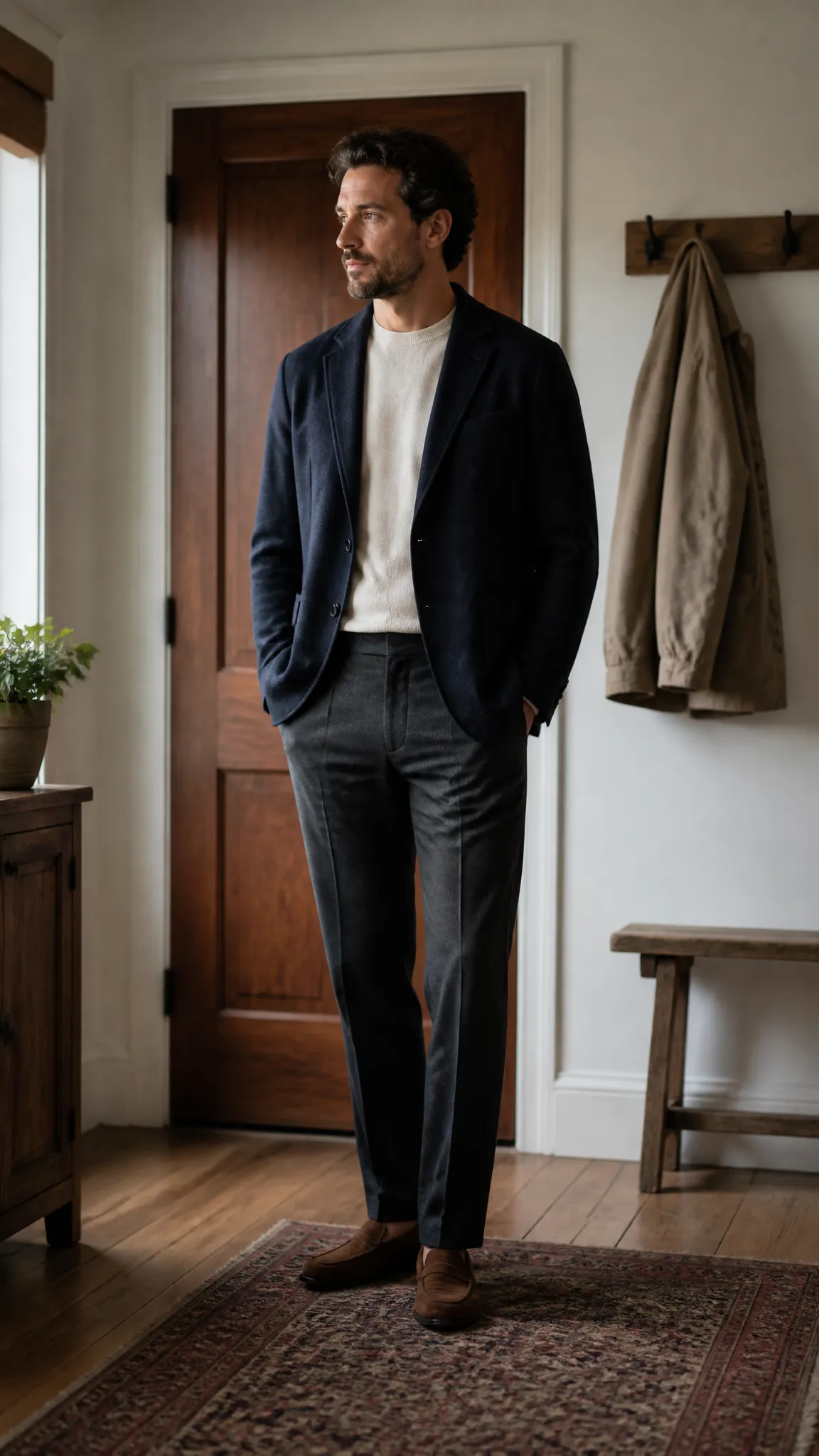
The most practical way to develop vintage preppy style men can repeat is to create outfit formulas rather than reproducing complete archival looks. A formula tells you which roles need filling while leaving room to switch fabrics, colors, and levels of formality.
A relaxed everyday combination
Try a vintage cable-knit or cricket sweater over a plain tee, then add straight-leg jeans and minimal sneakers. The sweater carries the preppy reference, while the T-shirt and denim remove the expectation of a collared shirt, tie, and polished loafers. Push up the sleeves slightly if the knit permits it, but avoid stretching fragile cuffs.
A polished casual combination
Wear an oxford cloth button-down with pleated chinos, a simple leather belt, and suede loafers or clean sneakers. A contemporary bomber, chore coat, or unstructured jacket keeps the outfit from feeling too clubby. This combination suits casual workplaces, lunches, and low-key evening plans where a suit would be excessive.
A smarter combination
Start with a vintage navy blazer or herringbone sport coat, then introduce a fine-gauge crewneck, modern straight trousers, and sleek loafers. Leaving out the tie creates breathing room, while a plain pocket square can add polish if the occasion calls for it. For a more casual version, replace the trousers with dark, minimally distressed denim.
Seasonal changes should affect fabric before they affect the basic formula. In warm weather, use cotton poplin, madras, linen blends, lightweight chinos, and unlined tailoring. In colder months, turn to Shetland wool, corduroy, flannel, tweed, and waxed cotton, layering thin garments rather than piling on several heavy pieces.
Let Shoes and Accessories Set the Level of Formality
Footwear often decides whether a preppy outfit reads as traditional, contemporary, or confused. Penny loafers, tassel loafers, boat shoes, camp mocs, and plain derbies reinforce the vintage influence. Minimal sneakers, retro runners, or simple suede boots can shift the same clothing toward a more casual present-day look.
Match the shoe’s visual weight to the trousers. Slimmer chinos pair well with low-profile loafers, while relaxed cords or wide pleated pants can support a chunkier sole. Bright white athletic shoes create a sharp contrast with tweed or wool, so choose them deliberately rather than treating them as a neutral solution for everything.
Accessories work best as punctuation. A woven belt, striped tie, leather-strap watch, wool scarf, canvas cap, or patterned socks can complete the thought, but wearing all of them at once tends to overexplain it. Choose accessories according to function first, particularly when the outfit already contains a crest, patch, piping, or bold pattern.
Small leather goods do not need to match exactly. Brown suede shoes, a dark brown belt, and a tan watch strap can coexist when their undertones are related. Exact matching can appear formal, while thoughtful variation usually feels more relaxed.
Shop for Wearability, Then Protect What You Find
A vintage label or collegiate emblem does not automatically make a garment useful. Examine the fabric, construction, fit, and compatibility with clothes you already wear. A plain old oxford that fits beautifully may earn far more use than an ornate blazer that only works for one imagined occasion.
Before buying, check the areas most likely to reveal wear:
- Inspect collars, cuffs, underarms, pockets, and trouser seats for thinning or discoloration.
- Test zippers, buttons, snaps, linings, and elastic gently.
- Look for moth holes in wool and dry rot or cracking in older leather.
- Measure the garment itself rather than trusting the tagged size.
- Confirm that odors, stains, and structural damage can be addressed safely.
Measurements matter because sizing varies across decades and makers. Compare chest width, shoulder width, sleeve length, rise, waist, inseam, and hem opening with a garment you already like. The label is a clue; the tape measure provides the useful answer.
Care should follow the material and construction. Wool sweaters often benefit from gentle airing and careful spot cleaning between washes, while structured jackets may require a cleaner familiar with older tailoring. Use supportive hangers for coats and jackets, fold knits to prevent stretching, and store clean wool in a dry space with protection from moths.
Regular rotation also extends a garment’s life. Older loafers need time to dry between wears, and delicate knits should not become daily uniforms. A wardrobe works better when its vintage pieces participate in ordinary life without being treated as either disposable or untouchable.
Frequently Asked Questions
Can vintage preppy clothing work in a business-casual office?
Yes, provided the garments are clean, well fitting, and consistent with the workplace dress code. Try an oxford shirt, tailored chinos, loafers, and an unstructured blazer, keeping crests, distressed finishes, and loud collegiate graphics for more casual settings.
How can I wear a vintage blazer without looking overdressed?
Remove other formal signals. Pair it with a crewneck knit or plain T-shirt, dark jeans or relaxed chinos, and understated sneakers or suede loafers. Softer fabrics and an open collar also make tailoring feel less ceremonial.
Do preppy pieces need to come from vintage stores?
No. A modern garment with traditional materials and details can provide the same function, often with more predictable sizing. Mixing genuinely old pieces with contemporary oxford shirts, chinos, knitwear, and loafers can make the wardrobe easier to maintain.
Can vintage prep work without loafers?
Absolutely. Plain sneakers, retro runners, suede desert boots, and simple derbies all work, depending on the trousers and occasion. The shoes should support the outfit’s overall level of polish rather than imitate a specific campus-era uniform.
How many vintage pieces should one outfit include?
One prominent vintage piece is a reliable starting point, though two subtle pieces can work together. Pay more attention to visual intensity than the actual count: a plain cardigan and loafers feel quieter than one brightly patched varsity sweater.
Make the Old Piece Belong to You
The most successful mix does not hide a garment’s age or build an entire costume around it. It uses modern fit, restrained color, and practical styling to make vintage character feel relevant.
Begin with one piece you genuinely want to wear, combine it with familiar basics, and adjust only one variable at a time. If the result feels natural in your routine, you have built a wardrobe rather than assembled a reference.