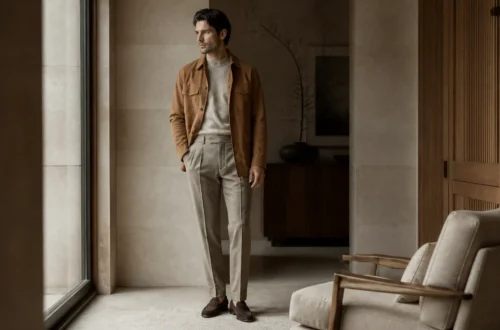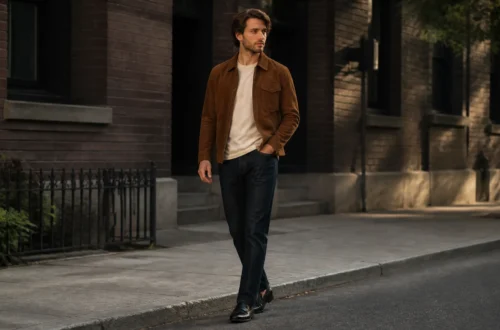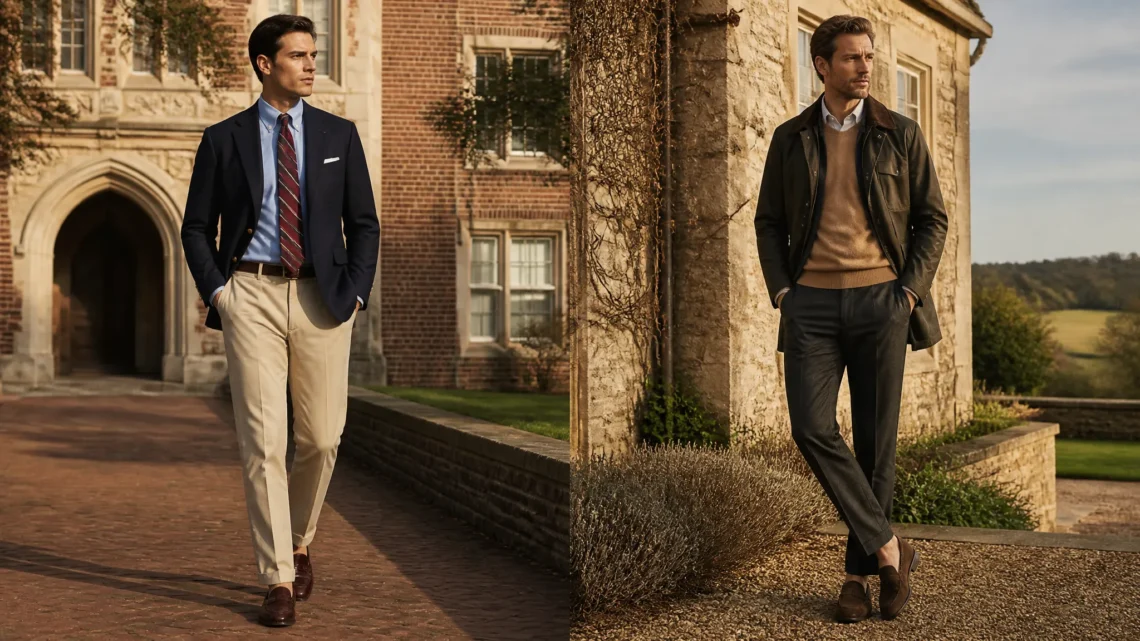
The two aesthetics share loafers, tailored jackets, and an aversion to obvious flash, so confusing them is understandable. Yet the question of Ivy style vs old money men is not merely about which sweater goes with which trousers.
This comparison explains the traditions, garments, fit, colors, and social signals behind each look, then shows you how to dress in either style without slipping into costume.
Ivy Style vs Old Money Men: The Essential Distinction
Ivy style is a recognizable American clothing tradition with roots in the dress of Northeastern college campuses and the broader mid-century prep wardrobe. Old-money style is a looser cultural image based on how established wealth is presumed to dress: restrained, durable, appropriate, and largely indifferent to trends.
That difference matters because Ivy has a fairly specific design language. Natural-shoulder sack jackets, button-down Oxford shirts, penny loafers, Shetland sweaters, chinos, repp ties, and tweed belong to a coherent tradition. Old-money dressing may borrow all of them, but it also draws from British country clothing, European resort wear, conservative business tailoring, and practical sporting clothes.
In short, Ivy is a clothing tradition; old money is an impression. One can dress in textbook Ivy without appearing wealthy, and someone from an affluent background may wear faded jeans and running shoes without looking remotely like a social-media mood board.
The phrase “old-money aesthetic” also tends to present a polished fantasy. Actual inherited wardrobes are often less coordinated, more worn, and more situational. Clothing earns its place through usefulness and familiarity, not because every item matches a beige-filtered fantasy of a country club.
How the Clothes and Silhouettes Differ
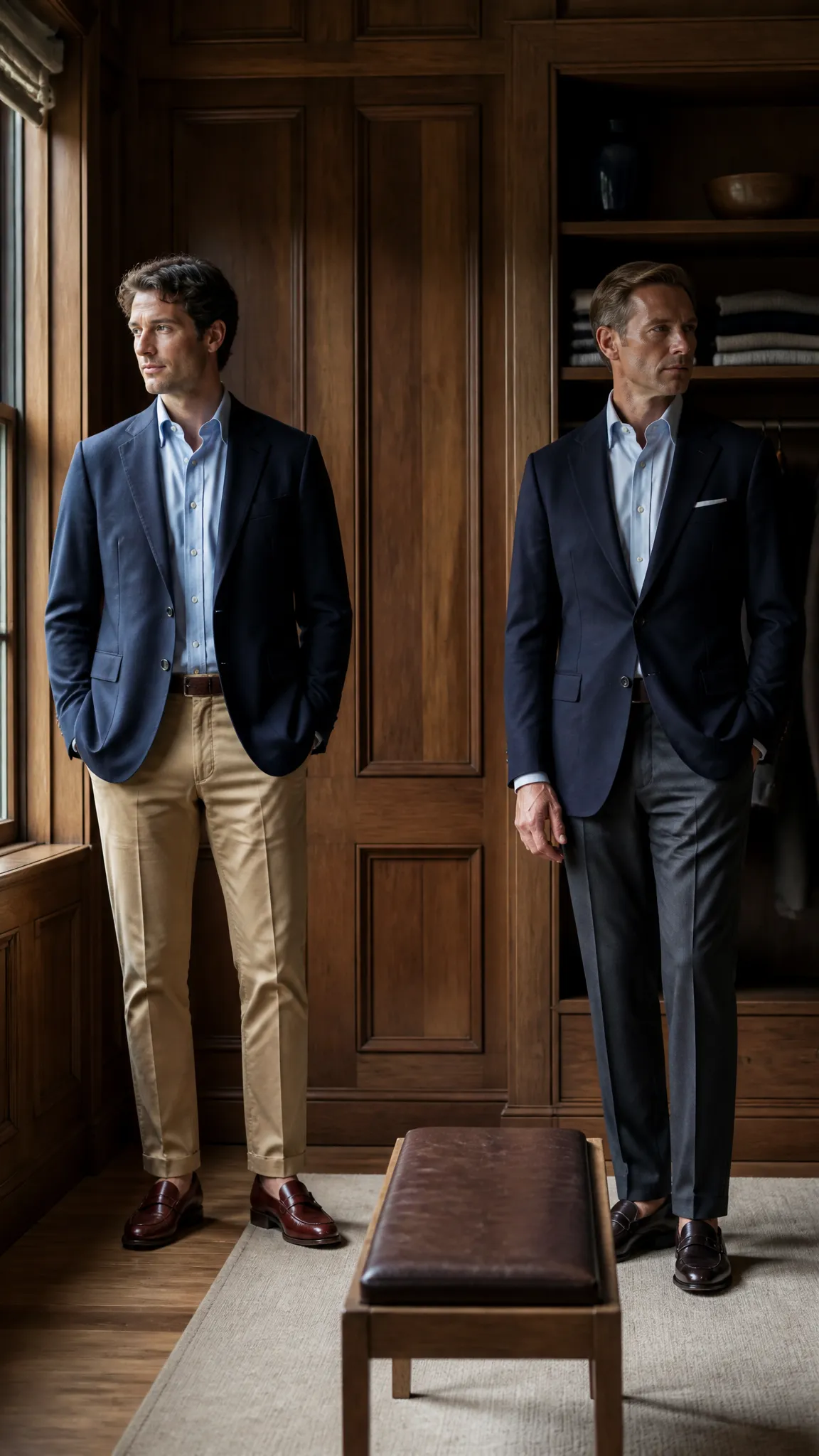
The clearest answer to Ivy style vs old money men appears in the cut and composition of an outfit. Ivy favors relaxed tailoring and recognizable campus staples, while old-money-inspired clothing ranges from formal city suits to rumpled country layers and breezy vacation pieces.
The Ivy silhouette
A classic Ivy jacket has a soft or natural shoulder, a relatively straight body, and often a three-button front rolled to the middle button. It avoids the aggressively padded shoulder and tightly pinched waist associated with sharper tailoring. Flat-front chinos or gray flannel trousers continue that easy line, usually with enough room to move rather than a skin-tight taper.
The button-down collar is central because it looks composed without becoming stiff. Under a tweed sport coat or crewneck sweater, its collar points create a casual frame around the face. Penny loafers, plain-toe bluchers, or simple canvas sneakers keep the outfit grounded.
The old-money silhouette
Old-money style has no single proprietary cut. Its city version may involve a dark navy suit, crisp shirt, restrained tie, and polished black or brown shoes. A country version might combine corduroy trousers, a checked shirt, waxed jacket, and sturdy boots, while a coastal version could use linen trousers, a knit polo, and suede loafers.
The connecting principle is not a particular lapel or trouser rise. It is quiet appropriateness: clothes should suit the setting, fit comfortably, and avoid pleading for attention. The silhouette generally remains moderate, neither dramatically oversized nor conspicuously tight.
Color, Pattern, and Fabric Tell Different Stories
Both styles rely on traditional colors and natural fibers, but they arrange them differently. Ivy permits more collegiate energy, whereas old-money styling usually seeks a quieter, less immediately identifiable result.
An Ivy wardrobe often begins with navy, gray, khaki, white, light blue, olive, and burgundy. It can also accommodate madras, tartan, seersucker, university stripes, colorful repp ties, and bright Shetland sweaters. The stronger patterns work because simple shapes and familiar combinations keep them from feeling theatrical.
Old-money-inspired palettes tend to emphasize cream, camel, tobacco, forest green, navy, chocolate brown, charcoal, and soft blue. Patterns remain traditional, such as herringbone, glen check, discreet stripes, and muted plaids, but several attention-grabbing motifs rarely compete in one outfit.
Material quality matters in both traditions. Oxford cloth, wool flannel, tweed, corduroy, cotton twill, linen, suede, and smooth leather develop character with wear. Synthetic fibers are not automatically wrong, especially in practical outerwear, but a glossy finish can undermine the tactile restraint these styles depend on.
Wear is not the enemy. Softened loafers, a gently faded Oxford shirt, and a sweater with a little surface texture often look more convincing than an outfit whose pieces arrived together yesterday. There is a difference, however, between patina and neglect: repair loose buttons, brush wool, condition leather sparingly, and keep collars clean.
Building Outfits That Read Clearly
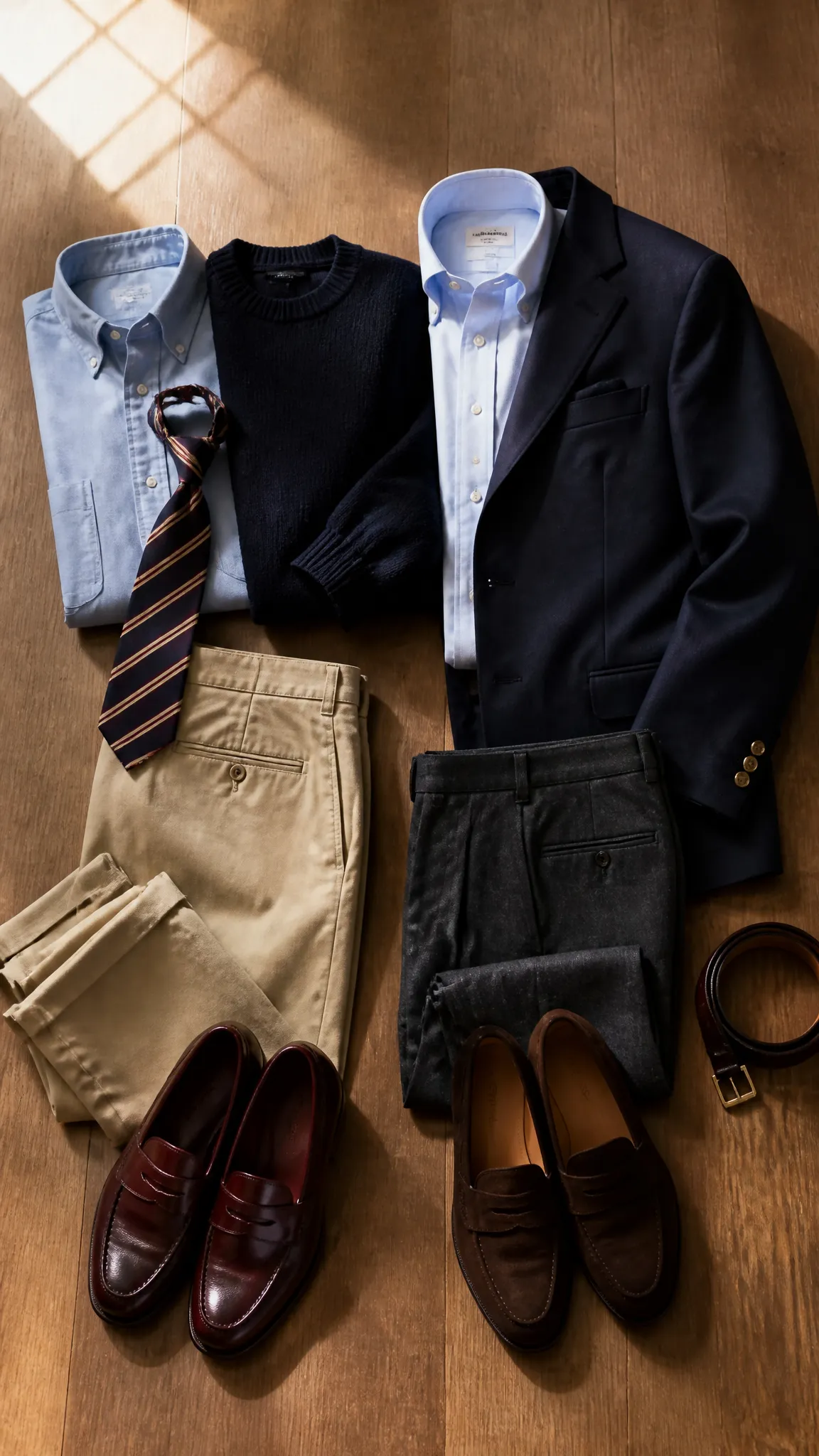
You do not need a separate closet for each aesthetic. A small group of traditional menswear staples can lean Ivy or old money depending on proportion, layering, color, and context.
For a clear Ivy outfit, try a blue Oxford cloth button-down, khaki chinos, burgundy penny loafers, and a navy crewneck sweater. Add a brown herringbone sport coat when the occasion calls for tailoring. The button-down collar, chinos, loafers, and soft jacket make the lineage legible without requiring a varsity letter.
For an old-money-inspired city outfit, combine charcoal wool trousers with a pale blue shirt, navy blazer, dark brown loafers, and a simple leather belt. Keep the materials matte and the fit relaxed but clean. A discreet watch may finish the look, though piling on signet rings, a silk scarf, and conspicuous equestrian references will make the whole thing feel like audition attire.
Setting matters just as much as clothing. These compact formulas show how each approach can change with the occasion:
- Casual Ivy: rugby shirt, straight chinos, canvas sneakers, and a weathered field jacket.
- Dressier Ivy: gray flannels, blue OCBD, striped tie, navy sack blazer, and penny loafers.
- Country restraint: tattersall shirt, lambswool sweater, corduroy trousers, waxed jacket, and leather boots.
- Warm-weather refinement: knit polo, high-rise linen trousers, suede loafers, and an unstructured jacket.
If you want to blend the two, begin with Ivy’s concrete framework and edit toward old-money restraint. Choose the Oxford shirt, chinos, soft blazer, and loafers, then reduce contrast, remove the tie, and favor muted textures. This is more reliable than buying garments labeled “old money,” a phrase that often describes marketing better than construction.
Fit, Restraint, and the Problem of Looking Costumed
The practical lesson in Ivy style vs old money men is that authenticity comes from proportion and repetition, not symbols of status. A reasonably priced Oxford shirt that fits well and has softened through regular wear will usually look more natural than a luxury-logo sweater worn solely as proof of taste.
Start with fit through the shoulders, collar, and waist. A shirt collar should sit comfortably without a wide gap; a jacket shoulder should end near your own; trousers should hang cleanly rather than cling to the thigh or puddle heavily over the shoe. Traditional style allows ease, but ease is not the same as buying everything two sizes too large.
Avoid stacking too many references in one outfit. Boat shoes, embroidered trousers, a cricket sweater, club tie, signet ring, and sweater draped over the shoulders might each work separately. Together, they suggest that the wardrobe is speaking louder than the wearer.
Visible branding causes a similar problem. Neither aesthetic requires a completely logo-free closet, but oversized crests and designer monograms shift attention from cut and material to price signaling. Choose recognizable forms over recognizable labels.
Finally, dress for your actual life. If you rarely wear tailored clothing, begin with chinos, loafers, an Oxford shirt, and a textured sweater rather than purchasing a closet full of sport coats. Clothes look settled when they become familiar, and familiarity cannot be rushed by adding another crest.
Choosing the Better Style for Your Wardrobe
Your preference should follow the degree of structure and cultural specificity you want. Ivy works well if you enjoy a repeatable uniform, American sportswear, relaxed tailoring, and occasional pattern. Its core pieces coordinate easily, making it practical for offices, dinners, campuses, and everyday errands.
Old-money-inspired dressing may appeal more if you want broader flexibility across business, country, and resort settings. It lets you combine conservative tailoring with knitwear, practical outerwear, and seasonal fabrics without adhering to a particular campus vocabulary.
Budget does not decide which style you can wear. Focus first on pieces that carry several outfits: a blue Oxford shirt, straight khaki or stone chinos, gray wool trousers, a navy sweater, brown loafers, and a versatile jacket. Secondhand stores can be especially useful for tweed, wool knitwear, traditional ties, and older tailoring, provided the shoulders fit and alterations remain realistic.
Buy slowly enough to notice what you actually use. A tightly edited wardrobe with sound shoes and proper trouser lengths communicates more confidence than a large collection of themed items. The aim is not to impersonate a class background; it is to adopt clothing principles that serve you.
Frequently Asked Questions
Is preppy style the same as Ivy style?
Not exactly. Preppy style is a broader category that includes colorful leisurewear, nautical influences, athletic references, and contemporary fashion interpretations. Ivy style is narrower and more closely associated with traditional American campus clothing, natural-shoulder tailoring, Oxford shirts, chinos, loafers, and specific classic patterns.
Can old-money style include jeans?
Yes, especially in casual settings. Choose straight or gently tapered denim in a clean dark rinse or naturally faded mid-blue, then pair it with a textured sweater, Oxford shirt, loafers, or practical boots. Heavy distressing and conspicuous decoration make the look less restrained, though that is a style preference rather than a moral failing.
Are loafers essential to either look?
They are useful, not mandatory. Penny loafers strongly support an Ivy outfit, while understated tassel or suede loafers fit many refined wardrobes. Derbies, plain-toe bluchers, boat shoes, canvas sneakers, and country boots may be more appropriate depending on weather and setting.
What is the easiest first purchase?
A light blue Oxford cloth button-down is difficult to beat because it works with chinos, jeans, gray flannels, sweaters, and sport coats. If you already own one, consider straight khaki chinos or simple brown penny loafers next, based on which gap limits your current outfits.
Can these styles work in hot American climates?
Yes. Replace heavy tweed and flannel with linen, seersucker, tropical wool, breathable cotton, and lightweight knit polos. Keep silhouettes easy enough for airflow, choose unlined or lightly constructed jackets, and treat climate-appropriate comfort as part of dressing well.
Choose a Tradition, Not a Costume
Ivy gives you a defined American vocabulary; old-money style gives you a broader ideal of restraint, quality, and situational good sense. You can use either one, or combine them, as long as the clothes suit your life and do not depend on status props to make their point.
Start with one outfit built from what you already own, correct the fit, and add only the piece that solves a real gap. That measured approach belongs naturally to both styles.