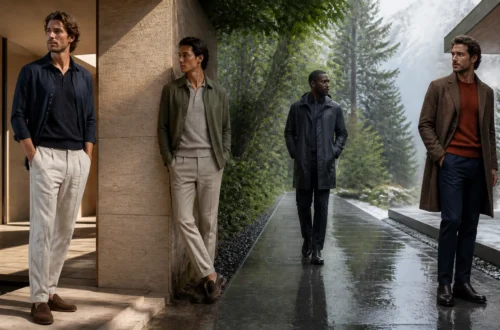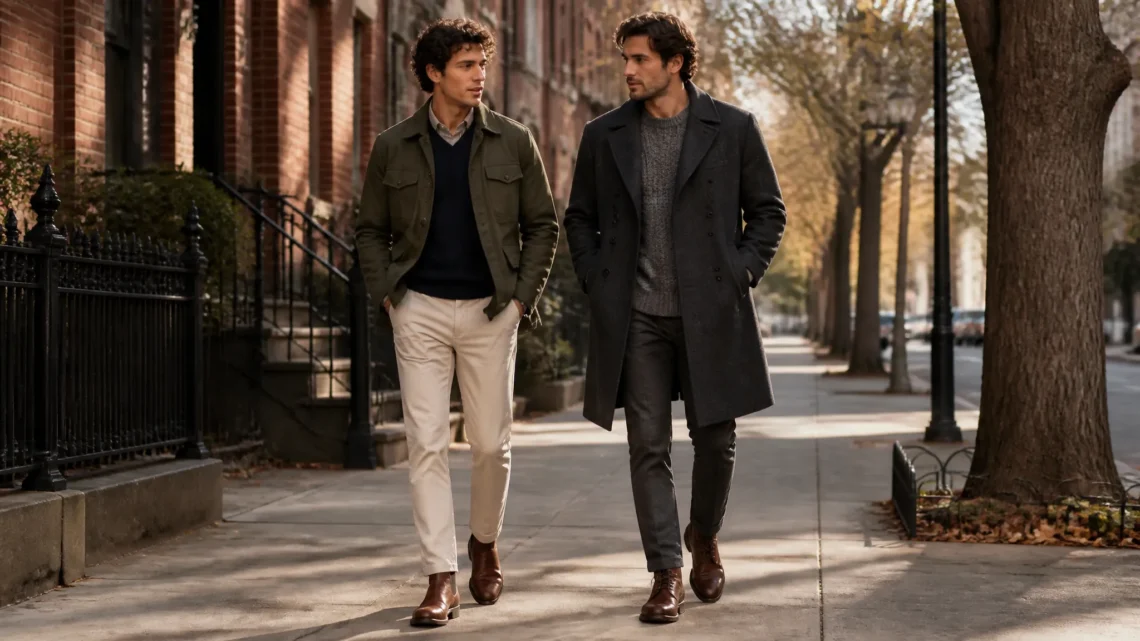
Choosing between lightweight and heavyweight layers sounds simple until a chilly morning becomes a warm afternoon or a bulky sweater refuses to fit under your coat. The question behind lightweight vs heavyweight layering men often comes down to more than temperature.
You also need to consider activity, fabric, fit, wind, rain, and where you are going. Here is how to build comfortable, balanced outfits without dressing for the wrong forecast or looking wrapped in every garment you own.
Lightweight vs Heavyweight Layering Men: The Core Difference
Layer weight describes how much warmth and physical bulk a garment adds, but those qualities do not always rise together. A thin insulated jacket may retain more heat than a thick cotton sweatshirt, while a dense wool overshirt can block wind better than several flimsy tops.
Lightweight layers include cotton or merino T-shirts, fine-gauge sweaters, Oxford shirts, flannels, chore shirts, unlined overshirts, and packable shells. They make it easier to regulate temperature because you can remove or add one piece without dramatically changing the outfit.
Heavyweight layers include chunky knitwear, thick fleece, lined work jackets, substantial wool coats, down parkas, and insulated outerwear. They are useful when cold, wind, or prolonged outdoor exposure makes heat retention more important than easy adjustment.
The most practical distinction is flexibility versus concentrated protection. Several lighter pieces offer more combinations, while one or two heavier garments provide stronger insulation with less decision-making.
Build Layers by Function, Not Just Thickness
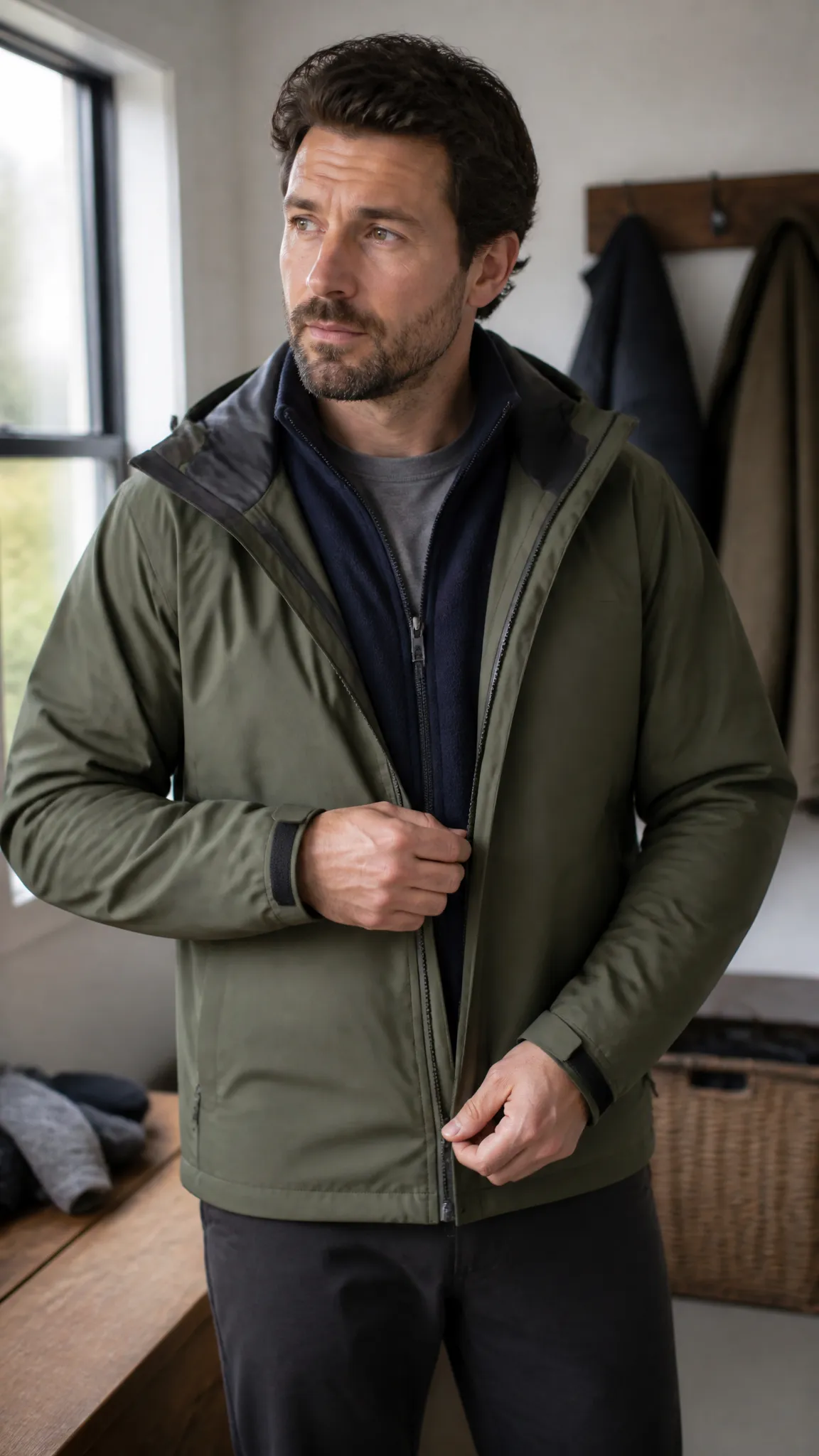
A well-layered outfit works because each garment has a job. Piling on random pieces may add warmth, but it can also trap moisture, restrict movement, and create awkward bunching around the shoulders and waist.
The base layer manages comfort
Your first layer sits closest to the skin. A cotton T-shirt works for mild weather and low activity, but cotton holds moisture, making it less useful for hiking, commuting by bike, or spending hours outside in the cold.
Merino wool and synthetic performance fabrics handle moisture more effectively. Choose a close fit without compression so the fabric can sit smoothly beneath a shirt or sweater. Long-sleeve thermal tops belong here too, although their warmth may be excessive indoors.
The midlayer provides insulation
A midlayer holds warm air near the body. Fine-gauge merino sweaters, cardigans, fleece jackets, flannel shirts, and quilted vests all serve this purpose at different temperatures.
For adaptable outfits, choose a midlayer that looks presentable on its own. A navy crewneck over a pale blue Oxford shirt works under a topcoat but still looks complete after the coat comes off. Technical fleece is highly practical outdoors, though it may feel too casual in an office or restaurant.
The outer layer handles exposure
The outermost garment protects against wind, precipitation, and abrasion. A lightweight rain shell may provide almost no insulation, yet it can make the layers underneath feel much warmer by stopping cold wind.
Conversely, a thick wool coat insulates well but is not the best choice for sustained rain. Match the shell to the conditions rather than assuming the heaviest coat is always the most protective.
Match Layer Weight to Weather and Activity
Temperature matters, but a forecast number cannot tell you how an outfit will feel. Wind, humidity, sun exposure, physical effort, and time outdoors all influence whether lightweight or heavyweight layering makes sense.
For cool transitional weather, several light layers are usually easier to manage. A T-shirt, overshirt, and unlined jacket can cover a crisp morning and a mild afternoon. Each piece is thin enough to carry or tie around the waist if necessary, without turning your commute into a traveling coat closet.
Near freezing temperatures, favor a warm midlayer and weather-resistant outer layer. A merino sweater beneath an insulated parka often works more efficiently than three bulky cotton pieces. If you will move between the street, a car, and heated buildings, a coat that opens easily offers better temperature control.
Activity changes the equation. Walking briskly, shoveling snow, or hiking generates heat, so breathable lightweight layers help prevent overheating. Watching a game from the stands requires more insulation because you remain relatively still. For lightweight vs heavyweight layering men should therefore ask not only, “How cold is it?” but also, “How much will I move?”
A useful dressing check considers:
- The lowest temperature and windchill you expect
- How long you will remain outdoors
- Whether rain, sleet, or snow is likely
- How physically active you will be
- How often you will enter heated spaces
Control Fit, Silhouette, and Proportion
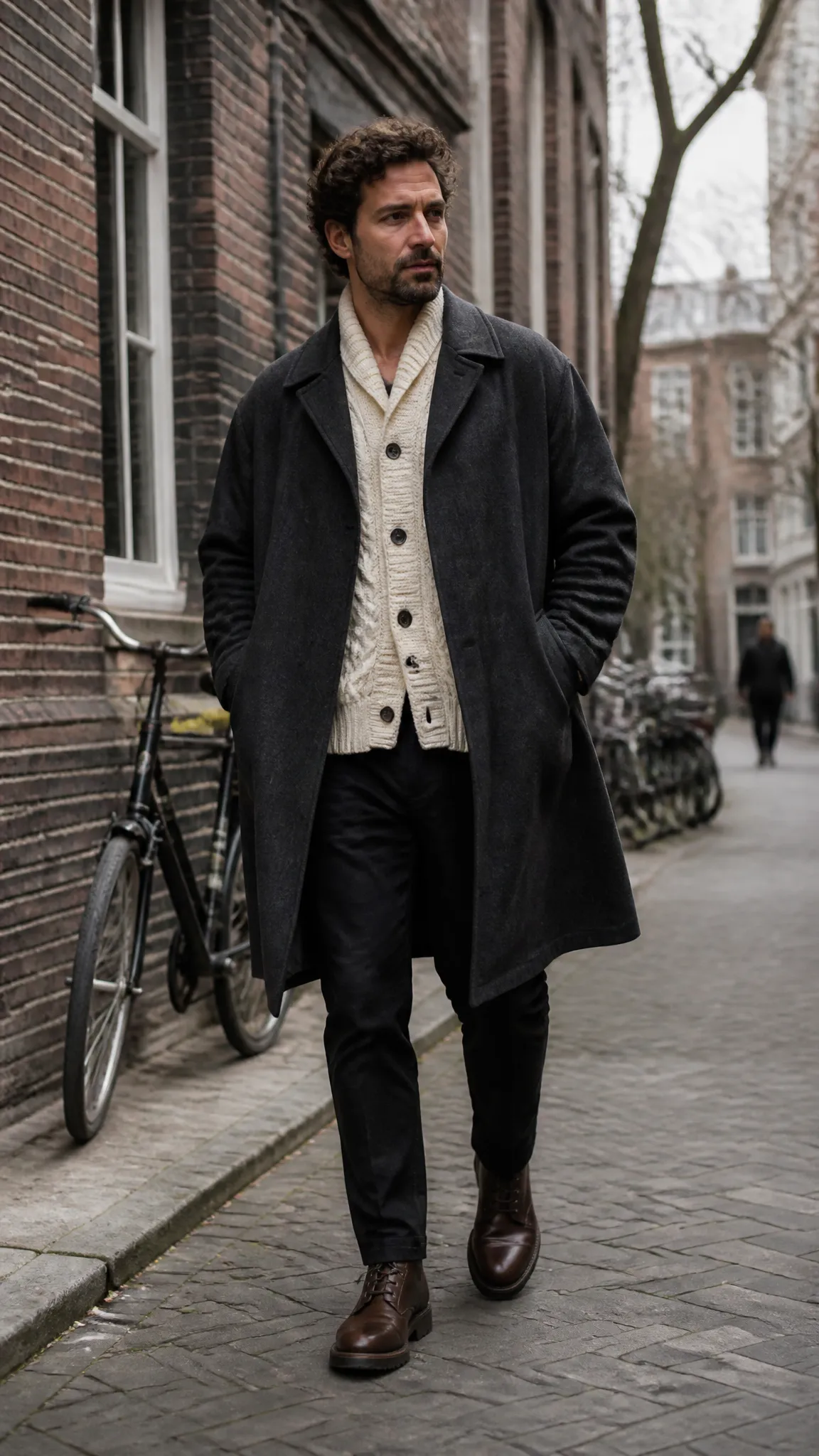
Layering succeeds visually when each garment has enough room for the one beneath it. Even good pieces look wrong if a tight jacket compresses a thick sweater or a long shirt hangs below a short, fitted coat without clear intention.
Start relatively close to the body and increase ease as you move outward. A fitted T-shirt can sit beneath a regular-fit shirt, followed by a relaxed jacket. This progression preserves movement and keeps the silhouette from looking lumpy.
Check the armholes, upper back, and sleeves before judging the chest alone. If raising your arms pulls the entire jacket upward, the combination is too restrictive. If the shoulders collapse and excess fabric pools around the waist, the outer layer may be too large rather than comfortably relaxed.
Length also affects balance. A hip-length bomber or trucker jacket pairs naturally with straight jeans, chinos, and work pants. A longer topcoat creates a cleaner line over tailored trousers or dark denim. Thick upper layers often look better with footwear that has some visual weight, such as leather boots, sturdy derbies, or substantial sneakers.
Bulk should look intentional. A chunky cardigan under a roomy overcoat can appear composed because the coat accommodates it. The same cardigan forced beneath a trim blazer creates strain at the lapels and sleeves.
Choose Fabrics That Work Together
Fabric determines warmth, breathability, texture, and how easily garments slide over one another. Thinking about material is often more useful than simply counting layers.
Merino wool offers warmth with relatively little bulk and works especially well in sweaters, socks, and base layers. Lambswool and heavier knit wool provide more insulation and visible texture but need extra room under outerwear. Fleece is light for its warmth and dries relatively quickly, making it useful for casual and outdoor settings.
Cotton is comfortable and versatile in T-shirts, sweatshirts, denim, canvas, and flannel. Its weakness is moisture management, so avoid relying on damp cotton for warmth during extended cold-weather activity. Down and synthetic insulation supply concentrated warmth; down is sensitive to moisture unless protected, while synthetic fill generally retains insulating ability better when damp.
Texture should progress without creating friction. A smooth shirt slips easily under a knit sweater, while a coarse flannel beneath a close-fitting rough wool jacket may catch and bunch. Slippery linings in coats and jackets help heavier midlayers move naturally.
Color coordination becomes easier when the heaviest garment is neutral. Navy, charcoal, olive, camel, brown, and black outerwear can anchor lighter layers in white, gray, pale blue, burgundy, rust, or forest green. You do not need every shade to match; aim for colors that share a muted or similarly saturated character.
Dress for the Setting as Well as the Season
The right thermal system can still feel misplaced if it ignores the occasion. Heavyweight workwear, outdoor gear, and tailored overcoats communicate different levels of formality even when they provide similar warmth.
For business-casual settings, a button-down shirt, fine-gauge sweater, and wool topcoat keep bulk under control. A quilted vest may also work in relaxed offices, particularly when its fit is clean and its fabric is matte rather than glossy. Avoid stuffing a thick hoodie under a structured blazer unless both pieces have deliberately relaxed proportions.
Casual outfits allow more texture. Try a heavyweight T-shirt beneath a flannel overshirt and canvas jacket, or a sweatshirt under a roomy denim jacket. Keep one area streamlined: if the upper half is bulky, straight or gently tapered pants usually balance it better than extremely slim jeans.
For outdoor recreation, performance comes first. A moisture-managing base, insulating fleece or puffer, and protective shell form a dependable system because each piece addresses a different condition. Accessories matter too. Wool socks, gloves, a knit cap, and a scarf can add meaningful comfort without forcing you into a much heavier coat.
The broader lesson of lightweight vs heavyweight layering men is that no single formula works everywhere. The best outfit fits both the weather and the social environment, then allows you to adjust without rebuilding the entire look.
Common Layering Mistakes That Create Bulk or Discomfort
Most layering problems come from garments competing rather than cooperating. Too many thick pieces restrict motion, while several oversized layers can erase shape and make practical clothing feel cumbersome.
One common mistake is treating every garment as insulation. If your sweater, jacket, and coat are all extremely warm, you may overheat indoors and have no useful way to adjust. Instead, combine one strong insulating piece with lighter supporting layers.
Another is ignoring ventilation. Zippers, buttons, adjustable cuffs, and removable accessories let you release heat before you start sweating. Opening a jacket early is more comfortable than removing a damp base layer later.
Finally, do not size up automatically. Outerwear should accommodate intended layers, but excessively large shoulders and sleeves do not improve warmth. When shopping, try a coat over the kind of sweater you will actually wear, then sit, reach forward, and bend your arms to test movement.
Frequently Asked Questions
Can men wear two lightweight jackets together?
Yes, if the inner jacket is slim, unstructured, and shorter than or similar in length to the outer one. A light denim jacket beneath a roomy topcoat can work, while two stiff jackets with tight armholes usually feel crowded.
Is one heavy sweater warmer than several thin layers?
It can be, depending on the fibers, knit density, fit, and wind exposure. Several thin layers often trap warm air effectively and provide more temperature control, but a dense sweater may be simpler when conditions stay consistently cold.
Should a base layer be tight or loose?
It should sit close enough to manage moisture and avoid bunching, but it should not restrict breathing or movement. For everyday wear, a neat, body-skimming fit is usually more comfortable than a compression fit.
How can I layer without looking bulky?
Use thin, warm fabrics such as merino wool, keep the base and midlayers tidy, and reserve extra room for the outer garment. Maintain visible structure through the shoulders and pair a bulky top half with straight, proportionate pants.
What layer should I remove first indoors?
Remove the outer coat first because it is designed for exposure and often retains the most heat. If you remain warm, take off the midlayer while keeping a presentable shirt or long-sleeve top underneath.
Choose the System, Not the Heaviest Garment
Start with the day ahead: check the weather, estimate your activity, and identify how often you will move indoors. Choose a comfortable base, add only as much insulation as needed, and finish with protection suited to wind or precipitation.
When uncertain, favor lighter adjustable layers for changing conditions and heavyweight insulation for sustained cold or low activity. That simple distinction will produce outfits that feel better, move better, and make far more sense once the coat comes off.