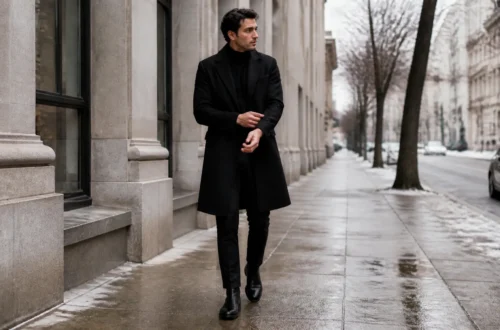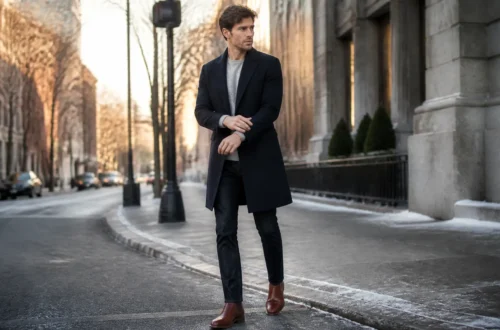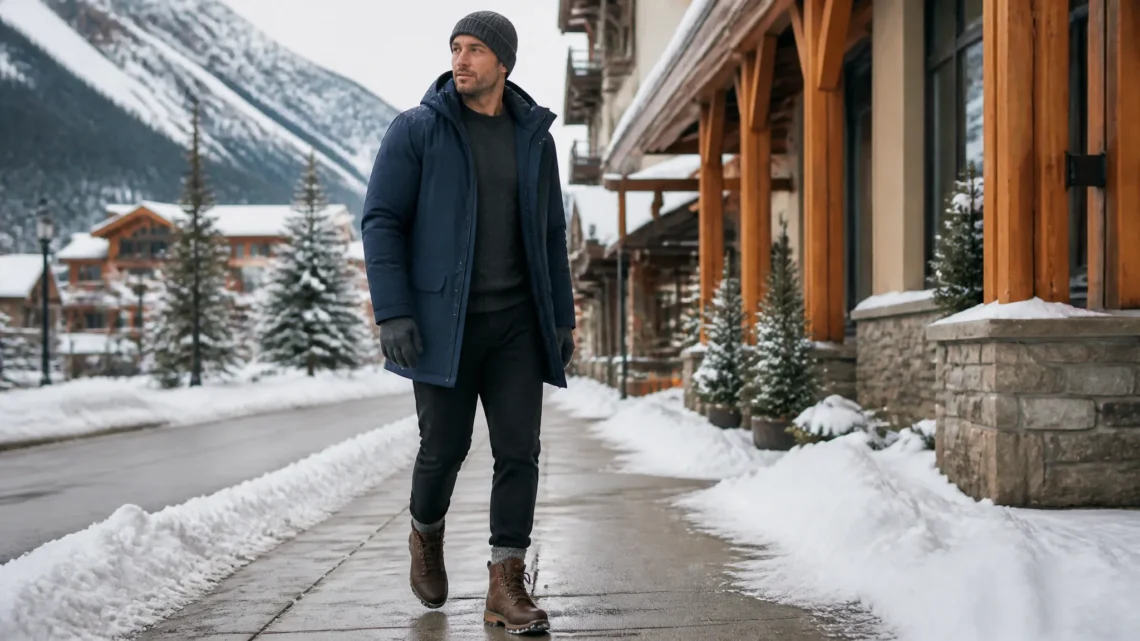
Cold-weather dressing gets frustrating when a warm outfit feels bulky the moment you walk, bend, or get into a car. When you search for winter snow outfits men can actually move in, the most useful ideas rely on flexible layers rather than one oversized coat.
These 12 combinations cover everyday errands, outdoor activities, ski-town plans, and cleaner casual occasions. Each outfit includes practical pieces plus an easy adjustment for changing temperatures.
Everyday Winter Snow Outfits Men Can Move In
1. Insulated Parka With Stretch Jeans

A thigh-length parka and flexible denim make a dependable Men’s Snow Outfit for commuting, shopping, or clearing light snow. The longer coat blocks wind around your hips, while stretch jeans feel less restrictive than stiff heavyweight denim.
Outfit Pieces
- Water-resistant insulated parka
- Merino wool or synthetic base layer
- Dark stretch jeans with a relaxed taper
- Waterproof lace-up boots with wool socks
Movement and Warmth
Choose a parka with a two-way zipper so the hem can open when you sit or climb stairs. Keep the jeans roomy through the thigh and add a thin thermal bottom only in severe cold, since excessive layering can limit knee movement.
2. Puffer Jacket With Fleece-Lined Pants
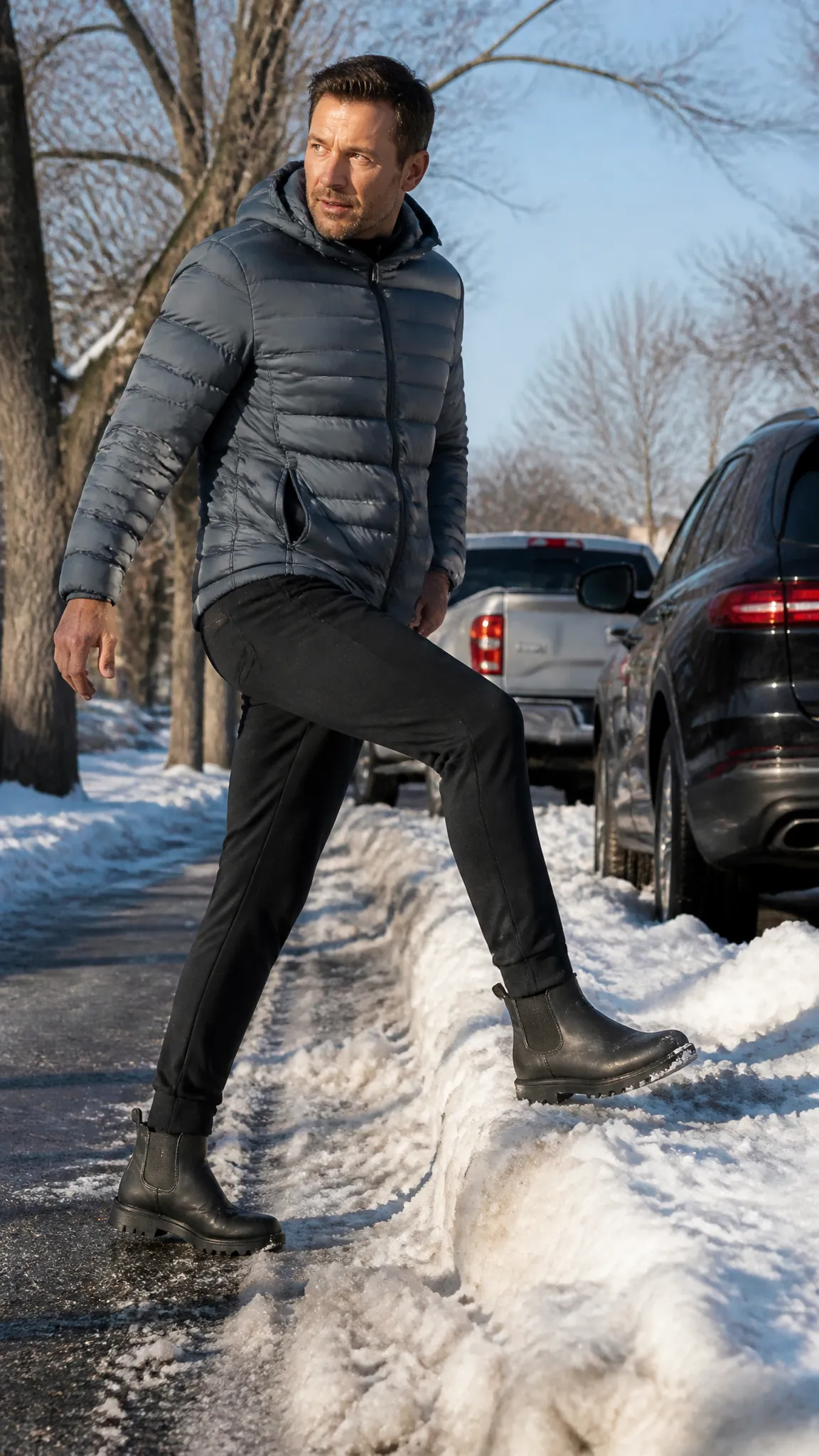
This combination provides substantial insulation without the stiffness of dressier winter clothing. A hip-length puffer preserves your stride, while fleece-lined pants add warmth without requiring a separate base layer for short periods outside.
Outfit Pieces
- Lightweight hooded puffer jacket
- Breathable long-sleeve thermal shirt
- Fleece-lined stretch pants
- Insulated waterproof Chelsea boots
Movement and Warmth
Look for articulated knees or a small amount of elastane in the pants. A puffer with narrower baffles usually layers comfortably under a shell, but avoid compressing its insulation with clothing that’s too tight.
3. Wool Topcoat Over a Quilted Vest
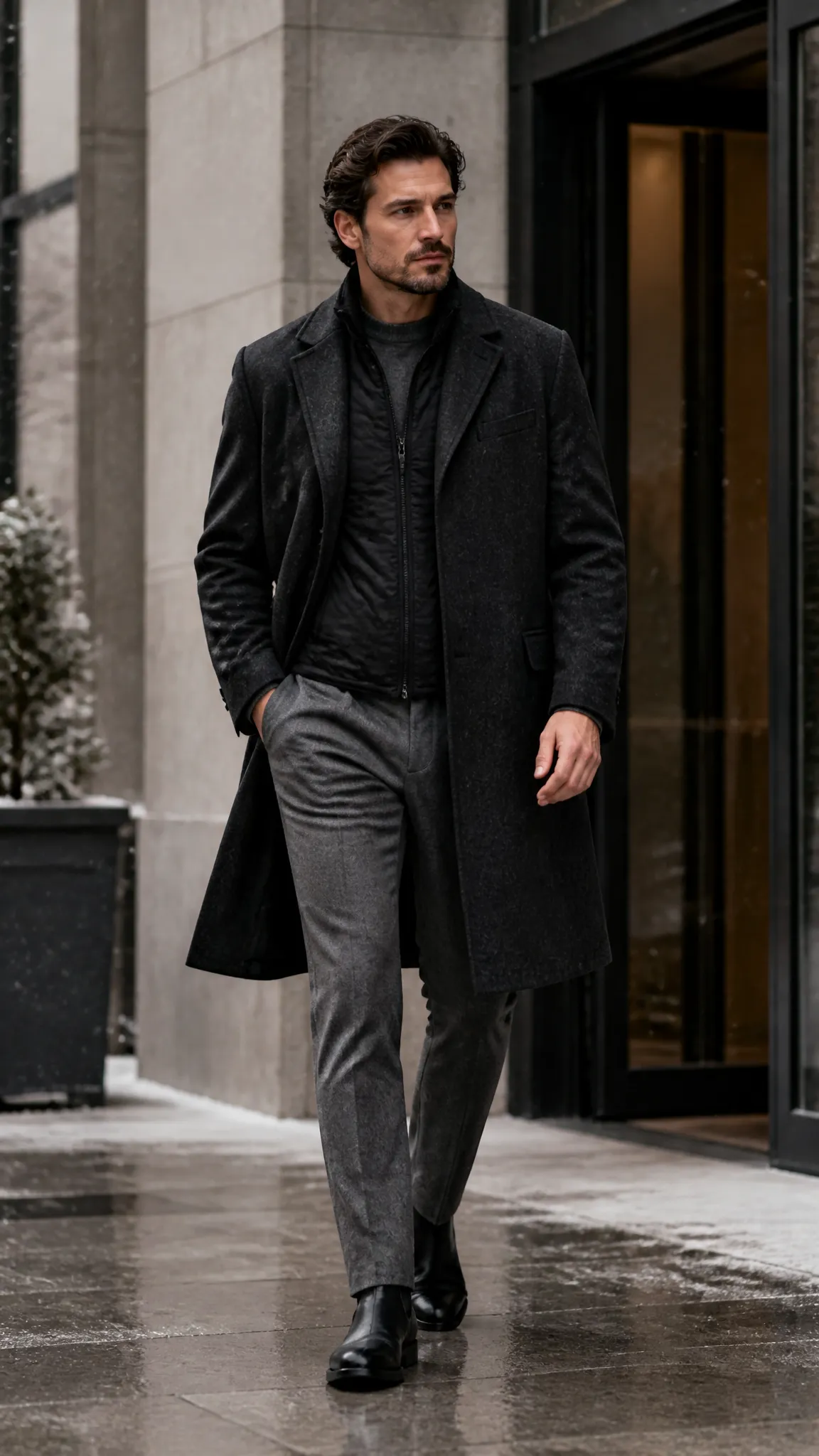
A wool topcoat can handle snowy city plans when it’s supported by a light insulating layer. The quilted vest warms your core while leaving your arms relatively free, creating a polished outfit for the office, dinner, or a winter event.
Outfit Pieces
- Knee-length wool-blend topcoat
- Slim quilted vest and fine-gauge sweater
- Brushed cotton trousers
- Weather-resistant leather boots
Movement and Warmth
Make sure the coat’s shoulders fit over both midlayers without pulling across your back. During wet snow, carry an umbrella or choose a coat with a water-resistant finish, since wool shouldn’t be treated like a dedicated rain shell.
4. Chore Coat With Thermal Workwear Layers
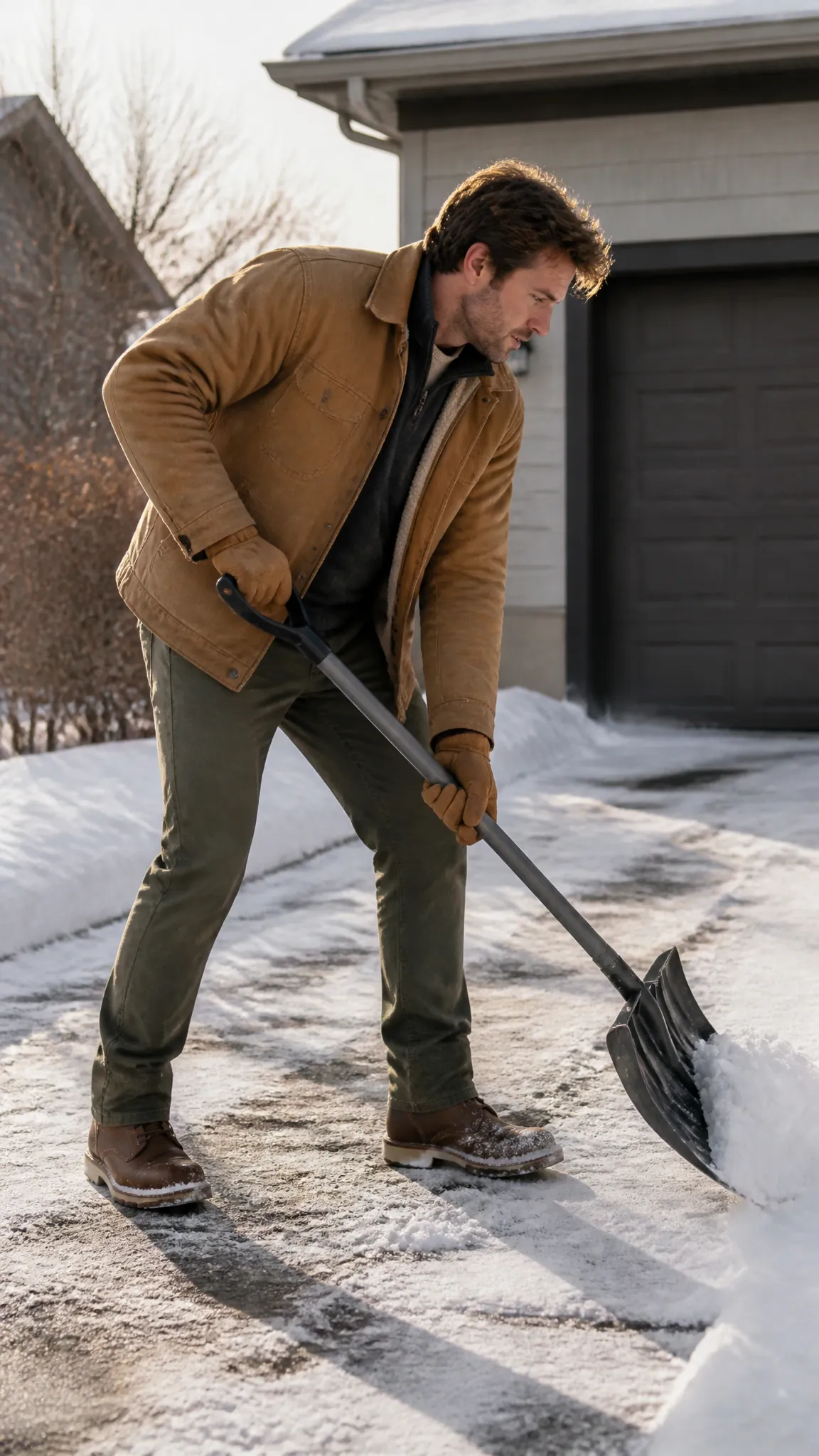
For driveway chores or casual weekend projects, a roomy chore coat accommodates practical layers without swallowing your shape. Durable canvas works well in dry, powdery conditions, while a thermal shirt and fleece supply most of the warmth.
Outfit Pieces
- Blanket-lined canvas chore coat
- Waffle-knit thermal shirt and zip fleece
- Relaxed work pants with stretch
- Waterproof moc-toe winter boots
Movement and Warmth
Use this outfit for dry snow and active tasks, not prolonged exposure to sleet. If precipitation increases, swap the canvas coat for a waterproof shell and keep the same breathable layers underneath.
Active Outfits for Slopes, Trails, and Snow Days
5. Shell Jacket With Insulated Bib Pants

A waterproof shell and bib pants form a reliable Ski Trip Outfit because they protect your waist when you sit, fall, or reach overhead. Separate insulation layers also let you adapt to changing wind, elevation, and activity.
Outfit Pieces
- Waterproof, breathable ski shell
- Moisture-wicking base layer and grid fleece
- Insulated bib snow pants
- Ski socks, gloves, and suitable ski boots
Movement and Warmth
Test the outfit by squatting and raising both arms before leaving home. The shell shouldn’t lift above the bib, and the pants should bend without pulling at the knees or pressing tightly over the boots.
6. Anorak With Relaxed Snow Pants

A pullover anorak paired with relaxed pants creates functional Snowboarding Style without relying on excessive oversizing. The longer jacket coverage helps keep snow out, while generous leg room supports a deeper, more mobile stance.
Outfit Pieces
- Waterproof anorak with side zipper
- Synthetic base layer and low-bulk fleece
- Relaxed waterproof snow pants
- Snowboard socks, mittens, and snowboard boots
Movement and Warmth
Use the side zipper for ventilation and easier on-and-off access. Keep cuffs secured over your boots, but avoid stacking casual socks underneath snowboard socks because bunching can create pressure and reduce comfort.
7. Softshell Jacket With Hiking Pants

For snowshoeing or a maintained winter trail, a softshell offers more stretch and airflow than a heavy insulated coat. It suits steady movement in relatively dry conditions, especially when paired with flexible pants and an adjustable midlayer.
Outfit Pieces
- Wind-resistant stretch softshell jacket
- Merino base layer and breathable fleece
- Water-resistant winter hiking pants
- Insulated hiking boots with gaiters
Movement and Warmth
Carry a waterproof shell if the forecast includes wet snow or strong wind. Open your jacket or remove the fleece before sweat builds, since damp layers can become uncomfortable once your pace slows.
8. Packable Puffer With Snow Overalls

Snow overalls make sense for sledding, shoveling, and playing outside because their high front and back provide dependable coverage. A packable puffer adds warmth without creating the rigid feel of a bulky one-piece snowsuit.
Outfit Pieces
- Packable synthetic puffer jacket
- Quick-drying thermal crew
- Waterproof insulated snow overalls
- Rubber-bottom winter boots and insulated gloves
Movement and Warmth
Adjust the overall straps so the crotch doesn’t hang too low or pull when you kneel. Synthetic insulation is a practical choice around wet snow, and reinforced knees help if the day involves repeated kneeling or falls.
Casual Snow Outfits for Travel and Social Plans
9. Down Jacket With Corduroy Pants
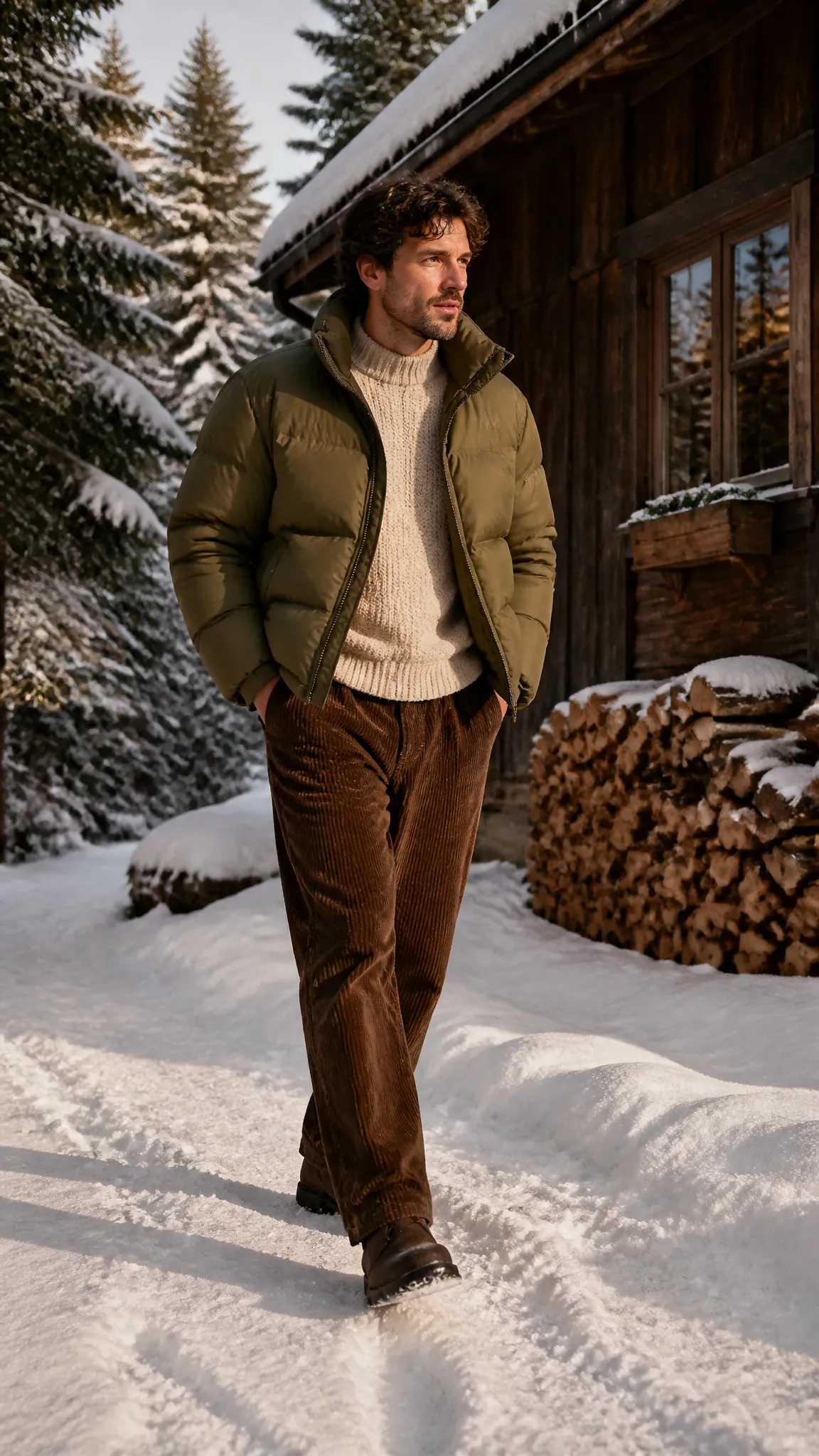
A streamlined down jacket and soft corduroy pants offer warmth with a relaxed, textured appearance. This is useful Winter Outfit Inspiration for a cabin weekend, casual meal, or walk through a snowy downtown area.
Outfit Pieces
- Matte-finish down jacket
- Wool-blend crewneck sweater
- Wide-wale stretch corduroy pants
- Suede-look waterproof winter boots
Movement and Warmth
Choose straight or relaxed-tapered corduroys so the ridged fabric doesn’t bind at the knees. If snow is wet, keep the pants hem above the boot collar and prioritize treated boots over untreated suede.
10. Fishtail Parka With Cargo Pants

A fishtail parka provides extra rear coverage while maintaining a casual, modern silhouette. Stretch cargo pants keep essentials accessible and bring a utilitarian edge without the stiffness of traditional heavy work trousers.
Outfit Pieces
- Insulated fishtail parka
- Half-zip fleece over a thermal top
- Stretch cargo pants with secure pockets
- Waterproof lug-sole boots
Movement and Warmth
Tighten the parka’s waist drawcord enough to reduce drafts while preserving room through the torso. Don’t overload cargo pockets, since bulky objects can knock against your legs and interfere with a natural stride.
11. Bomber Jacket With Wool Trousers

An insulated bomber works for short city outings when you want a cleaner shape than a long parka. Wool trousers improve warmth and visual polish, while a thermal layer quietly handles the gap created by the jacket’s shorter hem.
Outfit Pieces
- Water-resistant insulated bomber
- Fine merino turtleneck
- Lined wool-blend trousers
- Leather service boots with grippy soles
Movement and Warmth
Wear a longer base layer that stays tucked in when you reach or sit. This outfit is better for cleared sidewalks and brief outdoor periods than deep snow, particularly if the trouser fabric lacks water resistance.
12. Sherpa-Lined Jacket With Knit Joggers

This easy combination is designed for travel days, cabin mornings, and low-key errands. A structured sherpa-lined jacket keeps soft joggers from looking like sleepwear, while flexible knit fabric makes long drives and indoor transitions more comfortable.
Outfit Pieces
- Sherpa-lined nylon or canvas jacket
- Midweight cotton-blend hoodie
- Thick knit joggers with a tapered cuff
- Slip-on waterproof winter boots
Movement and Warmth
Pick dense joggers that block some wind and leave room for a thin base layer. For slushy sidewalks, avoid absorbent cuffs that extend over the boot and choose an outer jacket with a water-resistant face.
How to Build a Warm Outfit Without Adding Bulk
The most effective winter snow outfits men wear regularly follow a simple three-layer system: a moisture-managing base, an insulating middle, and a protective outer layer. Each garment needs enough room to trap warm air, but not so much extra fabric that it bunches under the next layer.
Start with merino wool or a synthetic base layer rather than cotton when you’ll be active. Add fleece, wool, or a packable insulated jacket based on the temperature, then finish with a windproof or waterproof shell when conditions require it. Your outer layer should allow a full arm swing, while pants should pass a squat test without pulling across the seat or knees.
A mood board labeled Winter Outfits Men Snow can still produce practical looks if you evaluate footwear, precipitation, and activity before color or silhouette. Keep accessories functional too: wear one pair of well-fitting wool or synthetic socks, cover exposed skin, and select boots with traction appropriate for snowy or icy surfaces.
Frequently Asked Questions
How should men layer clothes for snow?
Begin with a close-fitting, moisture-wicking base layer, add a breathable insulating layer, and finish with weather protection. The outer layer should block the expected wind or moisture without squeezing the insulation underneath.
Are jeans suitable for snowy weather?
Stretch jeans can work for short outings in light, dry snow, especially under a longer coat. They absorb moisture and dry slowly, however, so waterproof snow pants or technical trousers are safer for extended activity and wet conditions.
Should snow boots fit larger than regular shoes?
They should provide toe room for normal movement and suitable socks, but they shouldn’t allow your heel to slide excessively. Avoid sizing up simply to accommodate multiple thick socks, which can bunch, create pressure, and make walking less stable.
What colors work well for men’s winter snow outfits?
Navy, charcoal, olive, brown, and black are easy foundations, while rust, burgundy, cobalt, or forest green can add contrast. For outdoor recreation, brighter outerwear may also make you easier for companions to spot against snow.