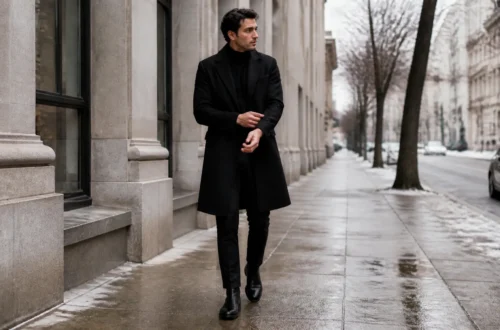
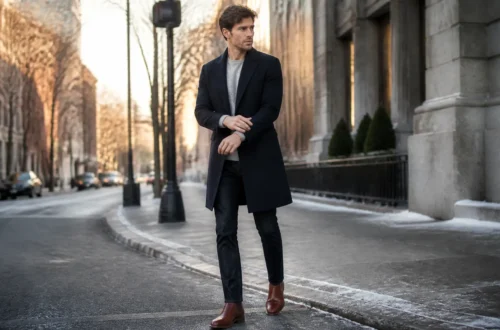
Getting dressed for freezing mornings and overheated indoor spaces can turn a simple outfit into a daily puzzle. The best cold winter outfits men can rely on use removable layers that provide warmth without unnecessary bulk.
These combinations cover casual weekends, office days, outdoor errands, and relaxed evenings, with practical guidance for adjusting each one to the forecast.
Casual Everyday Layers
1. Parka, Flannel Shirt, and Thermal Henley
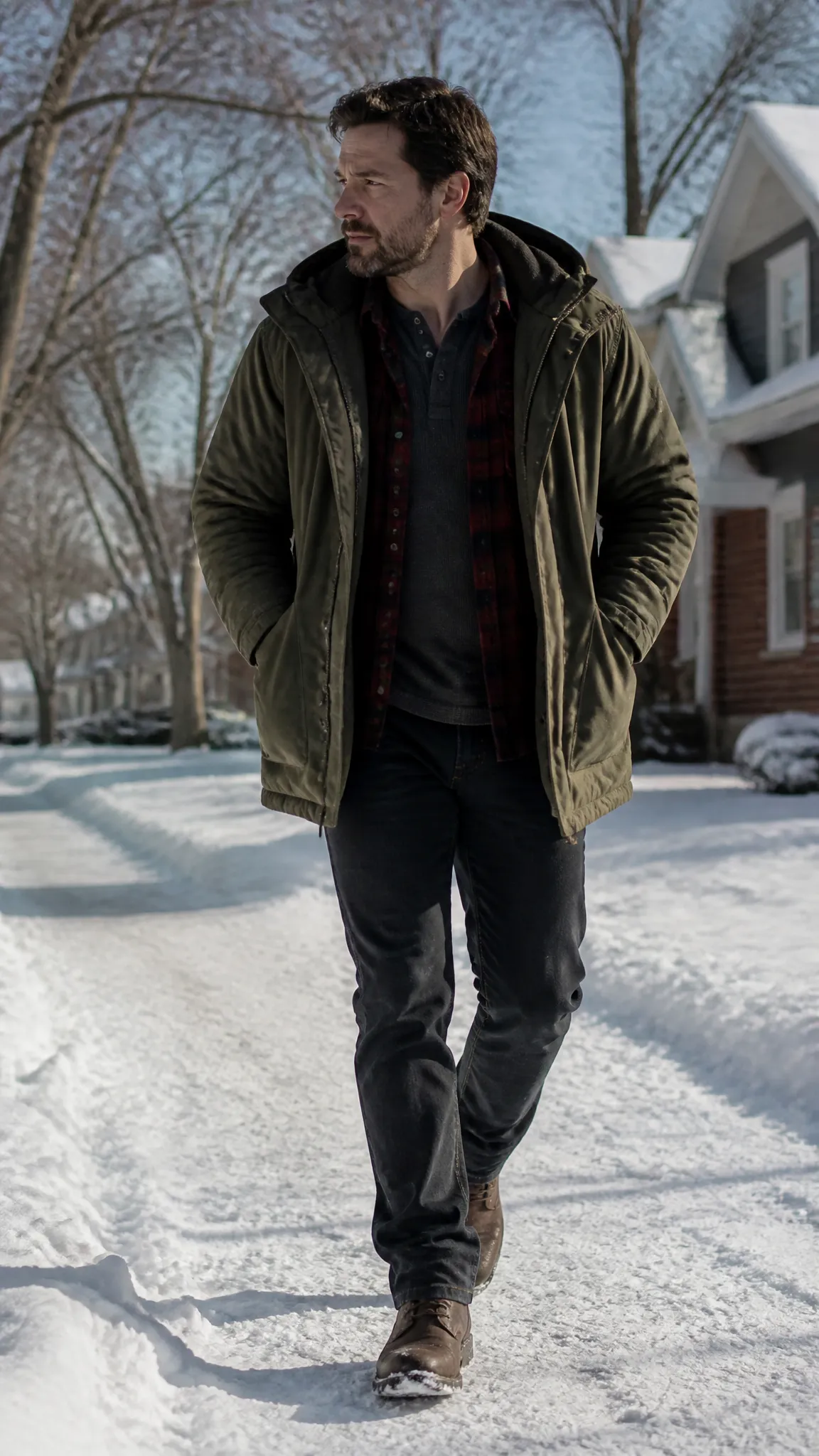
A weather-resistant parka gives this everyday outfit a protective outer shell, while flannel and a thermal henley create two adjustable layers underneath. Straight-leg jeans and rugged boots keep the proportions balanced.
Outfit Pieces
- Water-resistant insulated parka
- Brushed cotton flannel shirt
- Waffle-knit thermal henley
- Straight-leg jeans and weatherproof boots
How to Layer It
Choose a parka roomy enough to close comfortably over both tops. Keep the flannel open indoors, then button it when temperatures fall; a longer thermal undershirt can also help prevent cold air from reaching your waist.
2. Wool Topcoat, Hoodie, and Dark Jeans

A tailored topcoat over a simple hoodie bridges polished outerwear and casual comfort. The combination works especially well for coffee runs, dinners, and offices where the dress code leaves room for sneakers.
Outfit Pieces
- Single-breasted wool-blend topcoat
- Midweight pullover hoodie
- Dark straight or tapered jeans
- Leather sneakers or lace-up boots
How to Layer It
Use a relatively smooth, trim hoodie so the hood sits neatly above the coat collar. A charcoal coat, gray sweatshirt, and black denim create an easy Men Streetwear Winter palette without relying on oversized pieces.
3. Puffer Jacket, Crewneck Sweater, and Chinos
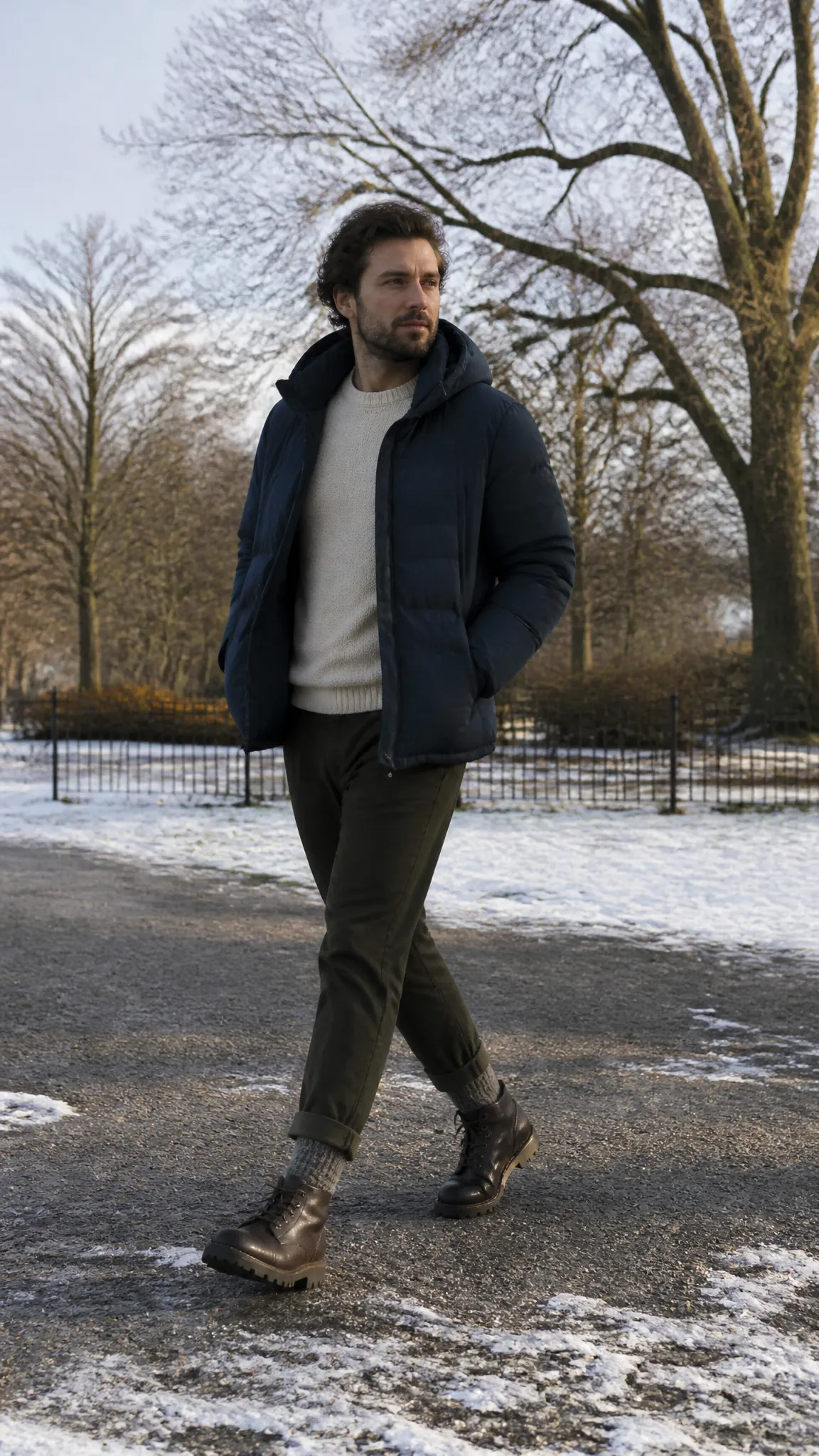
This practical combination pairs the loft of a puffer with a sweater that still looks presentable after the jacket comes off. Chinos make it slightly sharper than a jeans-based outfit while remaining comfortable.
Outfit Pieces
- Hip-length insulated puffer jacket
- Merino or cotton-wool crewneck sweater
- Heavyweight chinos
- Thick socks and lug-sole boots
How to Layer It
Wear a breathable T-shirt beneath the crewneck to simplify temperature control indoors. If the puffer is bulky, choose straight or gently tapered chinos rather than very slim pants, which can make the jacket look disproportionately large.
4. Chore Coat, Quilted Vest, and Chambray Shirt
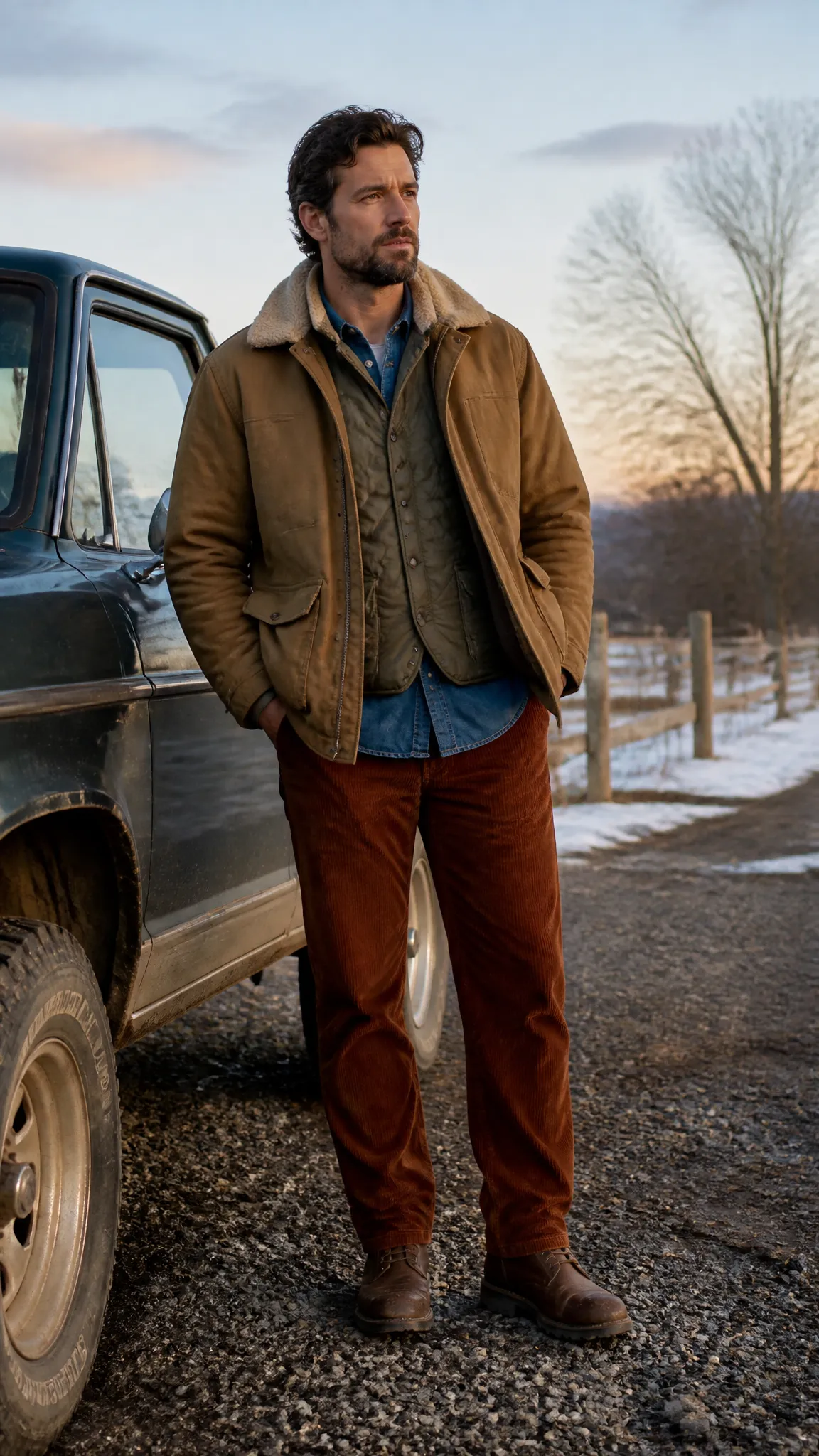
A lined chore coat and quilted vest offer warmth through several light, useful layers rather than one heavy garment. Chambray adds texture without feeling as thick as flannel.
Outfit Pieces
- Blanket-lined or insulated chore coat
- Low-profile quilted vest
- Chambray button-down shirt
- Corduroy pants and leather boots
How to Layer It
Make sure the vest ends near the chore coat’s hem and doesn’t bunch around the armholes. This is Winter Layering Men can adjust easily: remove the coat outside a warm shop, or remove both insulated pieces when settling in indoors.
5. Sherpa Jacket, Turtleneck, and Corduroy Pants
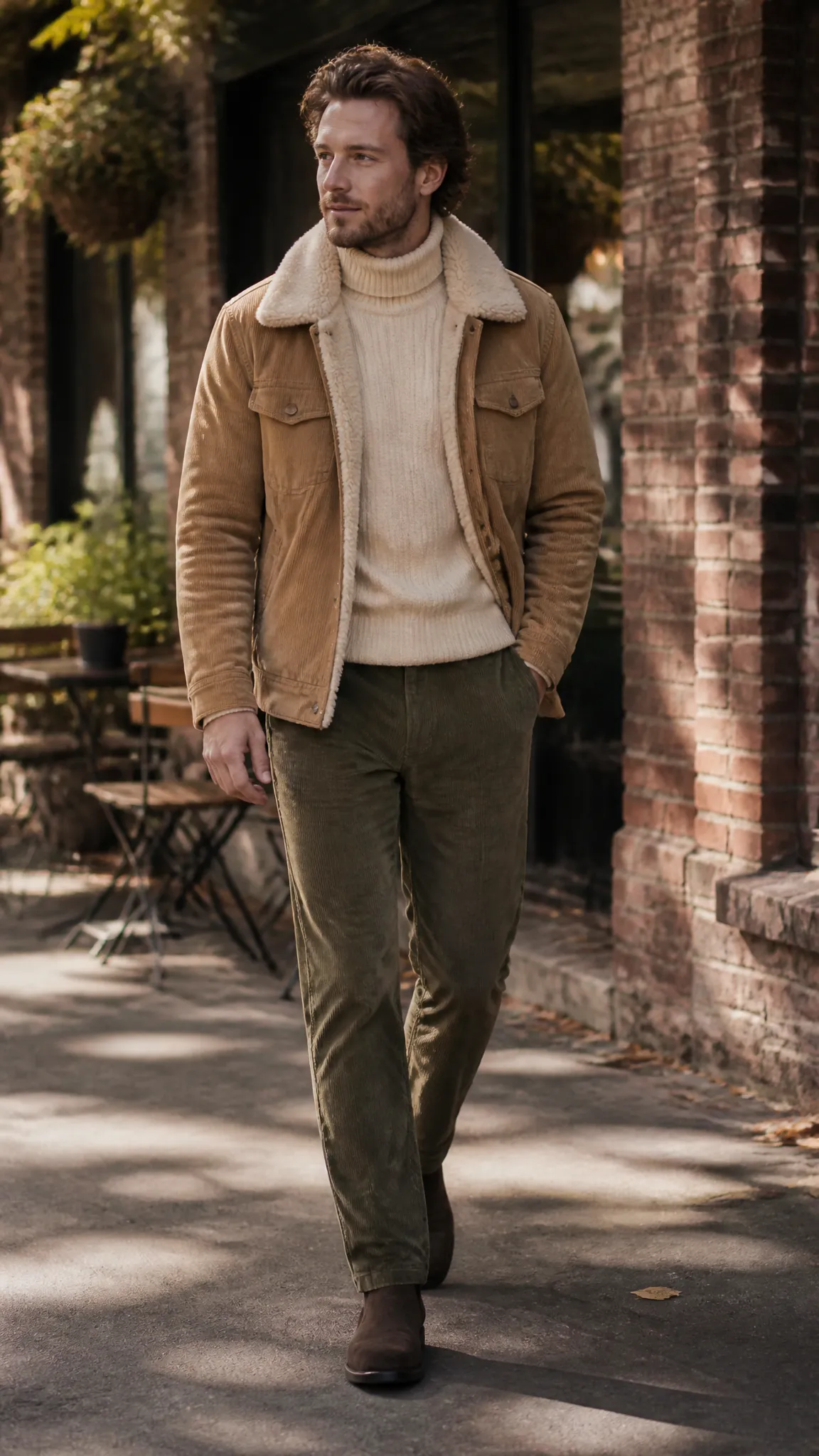
A sherpa-lined jacket provides visible texture and substantial warmth, while a fine-gauge turtleneck protects the neck without requiring a scarf. Corduroy reinforces the outfit’s cold-weather character.
Outfit Pieces
- Sherpa-lined trucker or field jacket
- Fine-gauge merino turtleneck
- Straight-leg corduroy pants
- Suede or smooth-leather boots
How to Layer It
Keep the turtleneck fitted enough to slide cleanly beneath the jacket, but not tight at the collar. Use related earth tones such as tan, olive, cream, and brown, then vary the textures so the outfit retains definition.
Polished Workday Outfits
6. Overcoat, Suit, and Merino Base Layer
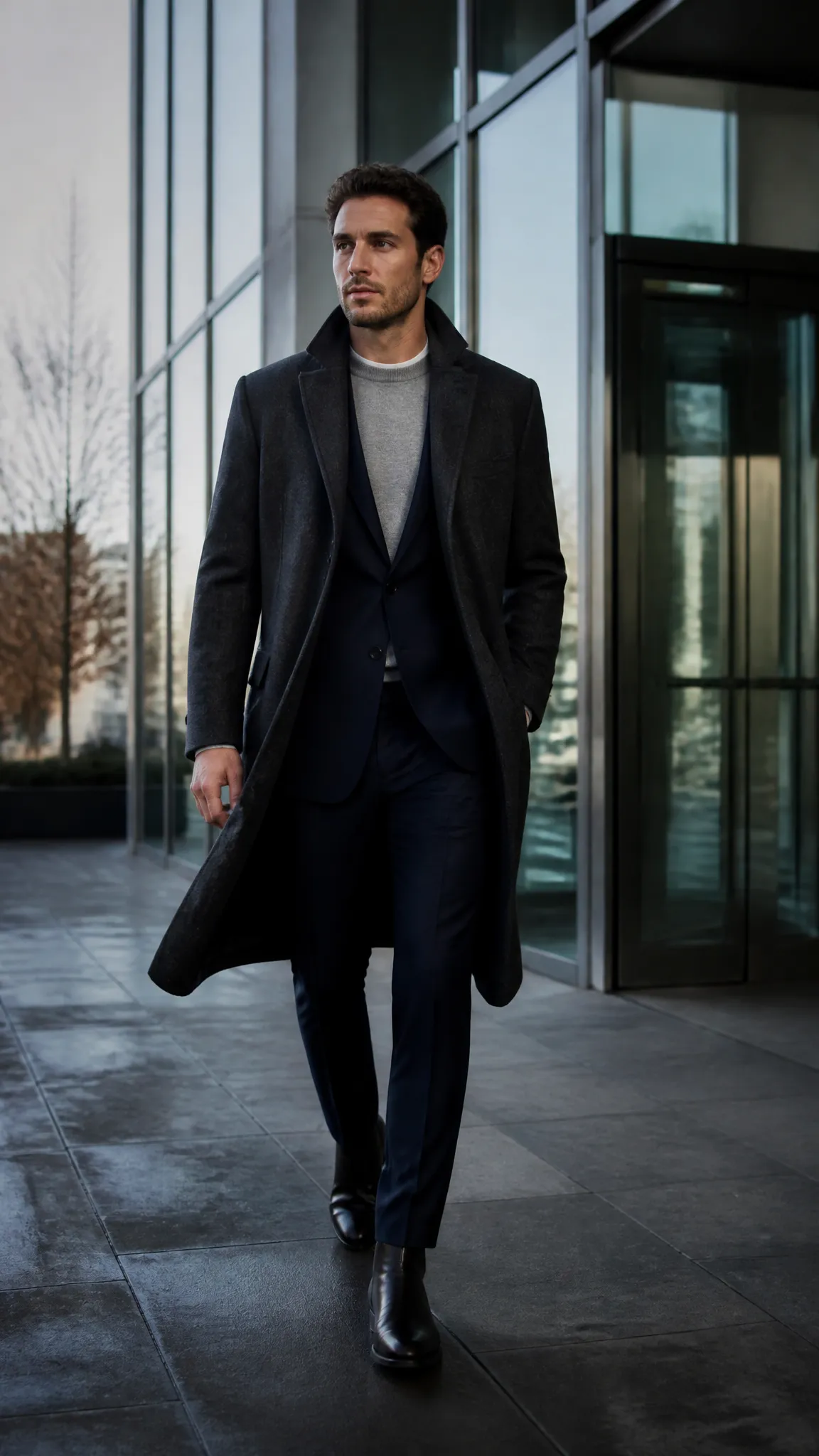
Replacing a dress shirt with a merino crewneck makes a suit warmer and a little less formal. A knee-length overcoat shields the jacket hem and gives the outfit a clean, professional outline.
Outfit Pieces
- Structured wool overcoat
- Wool or wool-blend suit
- Fine-gauge merino crewneck
- Dress boots with grippy soles
How to Layer It
Choose a thin sweater that fits beneath the suit jacket without pulling at the shoulders. Navy, charcoal, and dark brown mix easily, while a white or light-gray base layer brightens the look without creating harsh contrast.
7. Peacoat, Cardigan, and Oxford Shirt
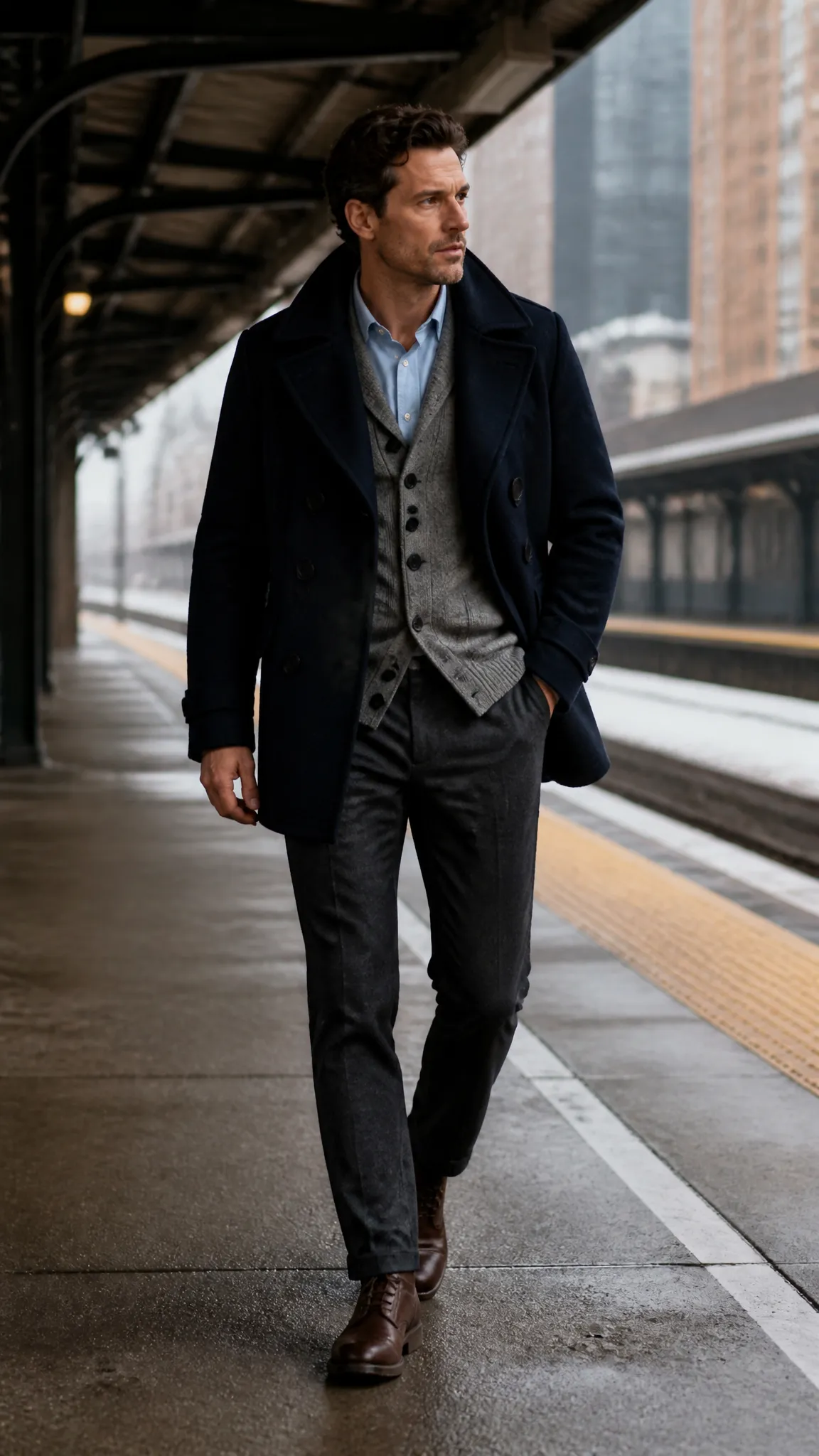
The peacoat’s short length works well for commutes that involve driving or public transit. Underneath, a cardigan offers warmth while preserving the familiar shape of an Oxford shirt and tailored trousers.
Outfit Pieces
- Heavy wool peacoat
- Button-front cardigan
- Cotton Oxford shirt
- Wool trousers and leather boots
How to Layer It
Leave the cardigan’s bottom button undone to prevent bunching when you sit. For an easy example of Winter Fashion Men can wear repeatedly, pair a navy coat with a heather-gray cardigan, pale-blue shirt, and charcoal trousers.
8. Car Coat, Quarter-Zip, and Dress Trousers
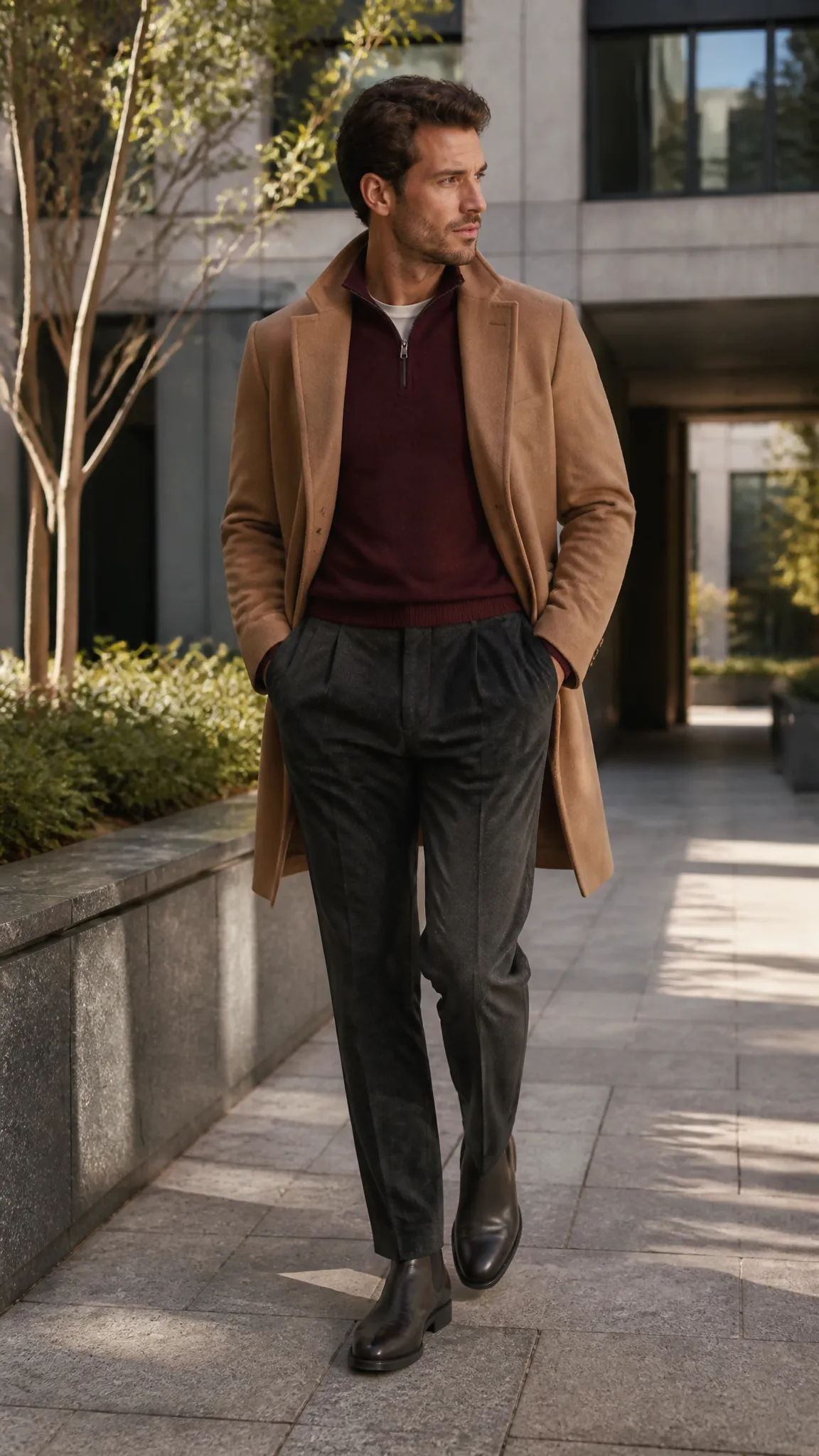
A clean car coat and quarter-zip sweater strike a useful middle ground between business formal and casual. The zip collar also lets you vent heat quickly without removing a full layer.
Outfit Pieces
- Thigh-length wool car coat
- Fine-knit quarter-zip sweater
- Lightweight undershirt
- Pleated trousers and Chelsea boots
How to Layer It
Keep the quarter-zip partially open indoors and zipped higher beneath a scarf outside. Trousers with a little room through the thigh accommodate a tucked base layer and create a more balanced line with the structured coat.
9. Trench Coat, Insulated Vest, and Mock Neck
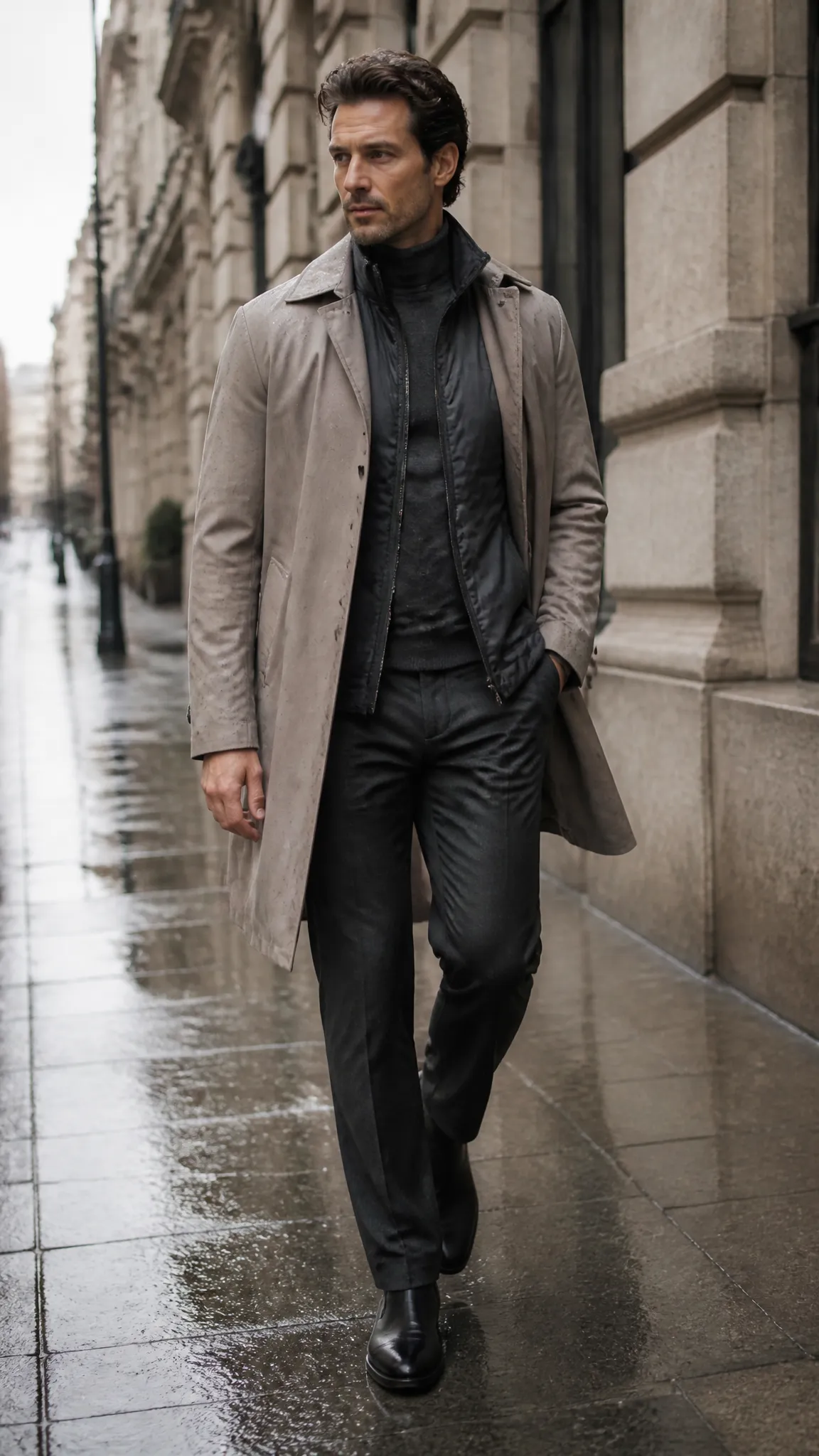
For wet, windy winters, a trench coat can serve as the protective shell while a slim insulated vest supplies warmth. A mock neck closes the remaining gap around the collar without adding much bulk.
Outfit Pieces
- Water-resistant lined trench coat
- Thin insulated vest
- Merino mock-neck sweater
- Wool trousers and weather-resistant boots
How to Layer It
Check that the vest remains hidden when the trench is buttoned for a streamlined finish. This modular setup is useful in milder, rainy regions where a heavy insulated coat may become uncomfortable during a commute.
Weekend and Streetwear Combinations
10. Technical Shell, Fleece, and Cargo Pants
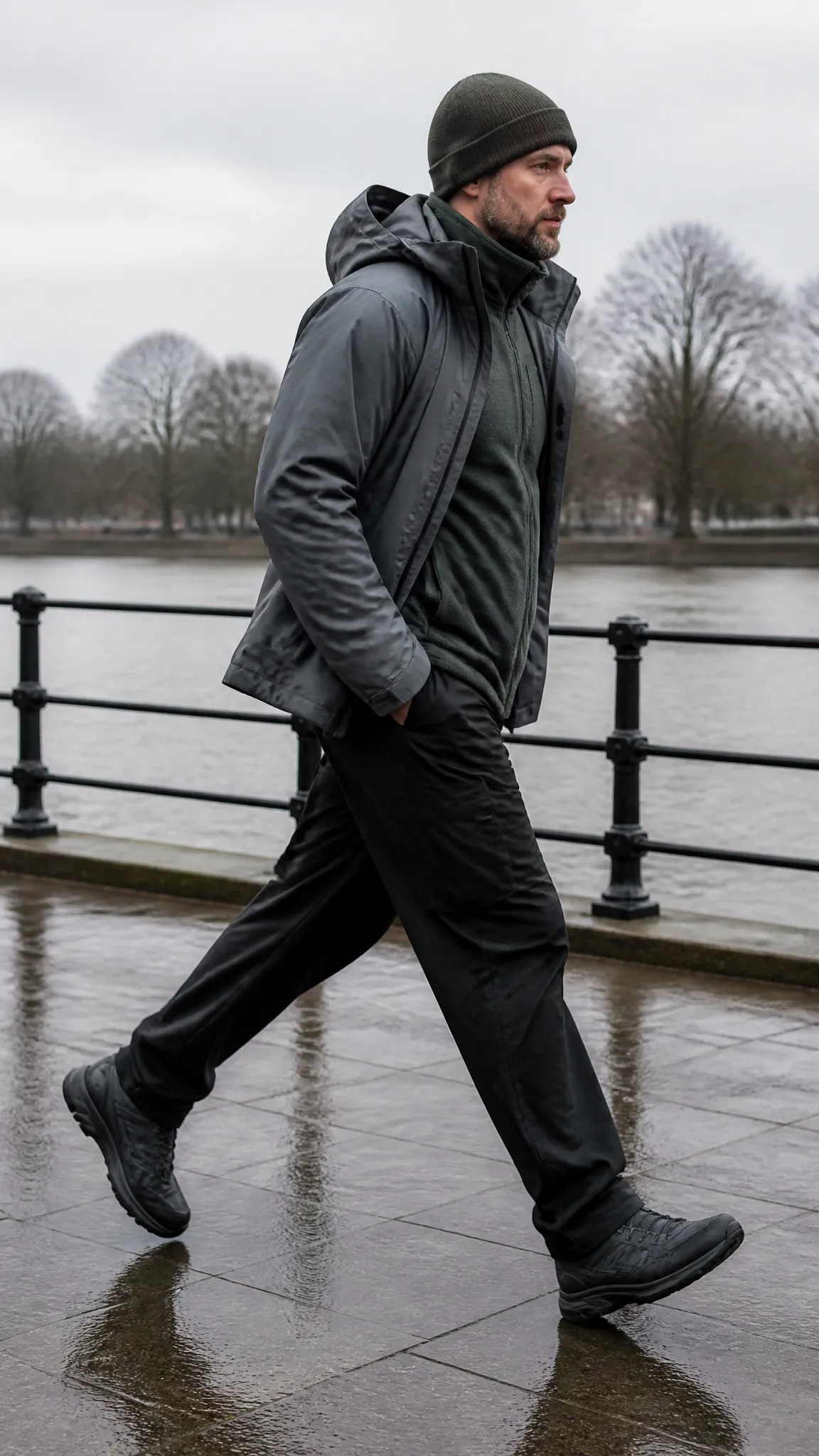
A technical shell blocks wind and precipitation, while fleece traps warm air beneath it. Cargo pants support the outfit’s functional direction and provide convenient storage for gloves or a knit cap.
Outfit Pieces
- Waterproof or water-resistant shell
- Zip-front fleece jacket
- Relaxed utility or cargo pants
- Trail-inspired waterproof sneakers
How to Layer It
Start with a moisture-managing base layer because neither the shell nor fleece is intended to replace it during active use. Keep the palette controlled, such as slate, black, and muted green, for a practical streetwear look rather than full hiking attire.
11. Bomber Jacket, Zip Hoodie, and Thermal Tee

A roomy insulated bomber worn over a zip hoodie creates a casual system that opens and closes quickly. The thermal tee adds low-profile warmth and still looks intentional when both jackets come off.
Outfit Pieces
- Insulated bomber jacket
- Midweight zip hoodie
- Long-sleeve thermal T-shirt
- Relaxed jeans and high-top sneakers
How to Layer It
Avoid stacking three oversized layers, which can restrict movement and overwhelm your frame. Let the bomber supply the volume, then choose a closer-fitting hoodie and thermal in complementary neutral colors.
12. Down Vest, Heavy Hoodie, and Work Pants

A down or synthetic vest warms the torso while leaving your arms unrestricted, making this outfit useful for errands and active weekends. A substantial hoodie covers the arms and provides a built-in head layer.
Outfit Pieces
- Insulated down or synthetic vest
- Heavyweight cotton-blend hoodie
- Canvas work pants
- Beanie and moc-toe boots
How to Layer It
Choose a vest with enough room through the chest to avoid compressing the hoodie. Among versatile Winter Outfits Ideas Men can adapt, this one shifts easily into spring by swapping the heavy hoodie for a lighter sweatshirt.
13. Long Puffer, Sweatshirt, and Track Pants
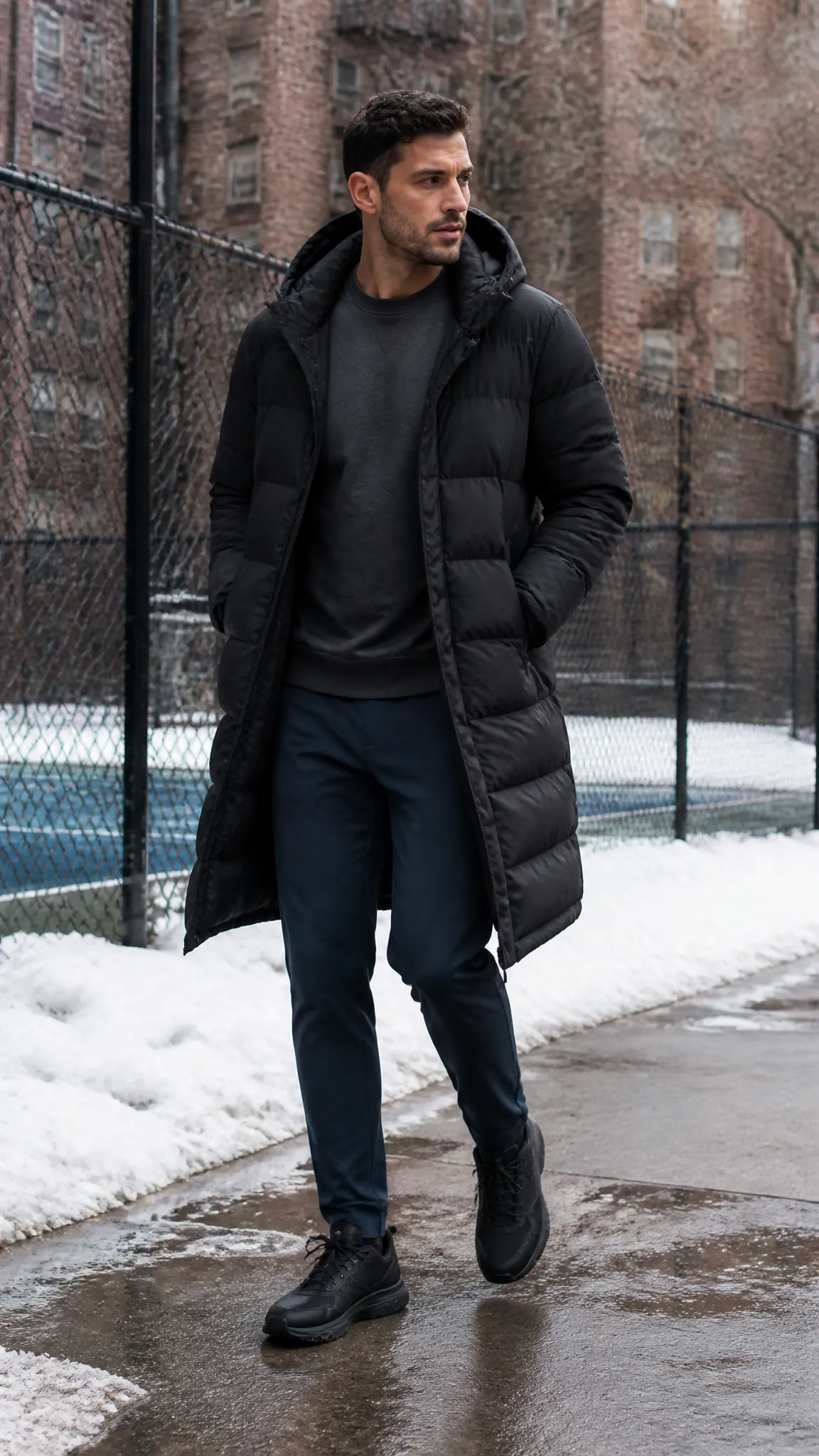
A long puffer adds coverage around the hips and thighs, making relaxed athletic separates more practical in deep cold. A structured sweatshirt keeps the outfit from reading like sleepwear.
Outfit Pieces
- Thigh-length insulated puffer
- Heavy crewneck sweatshirt
- Tapered track pants
- Insulated sneakers or winter boots
How to Layer It
Select track pants in a substantial knit or woven fabric, with room for a thin base layer if needed. Keep visible branding minimal and use a tonal palette such as black, charcoal, and deep navy for a cleaner finish.
Outdoor-Ready Cold-Weather Looks
14. Waxed Jacket, Aran Sweater, and Flannel

A waxed cotton jacket resists light precipitation and wind, while a textured Aran-style sweater creates a warm middle layer. Flannel beneath it supplies softness and gives you a presentable fallback indoors.
Outfit Pieces
- Waxed cotton field jacket
- Chunky cable-knit wool sweater
- Soft flannel button-down
- Dark denim and weatherproof boots
How to Layer It
Because the sweater is thick, the jacket should have generous sleeves and enough room across the back. Keep the shirt collar tucked neatly under the knit and use the waxed shell for cool, damp conditions rather than sustained heavy rain.
15. Wool Field Coat, Roll-Neck, and Lined Trousers
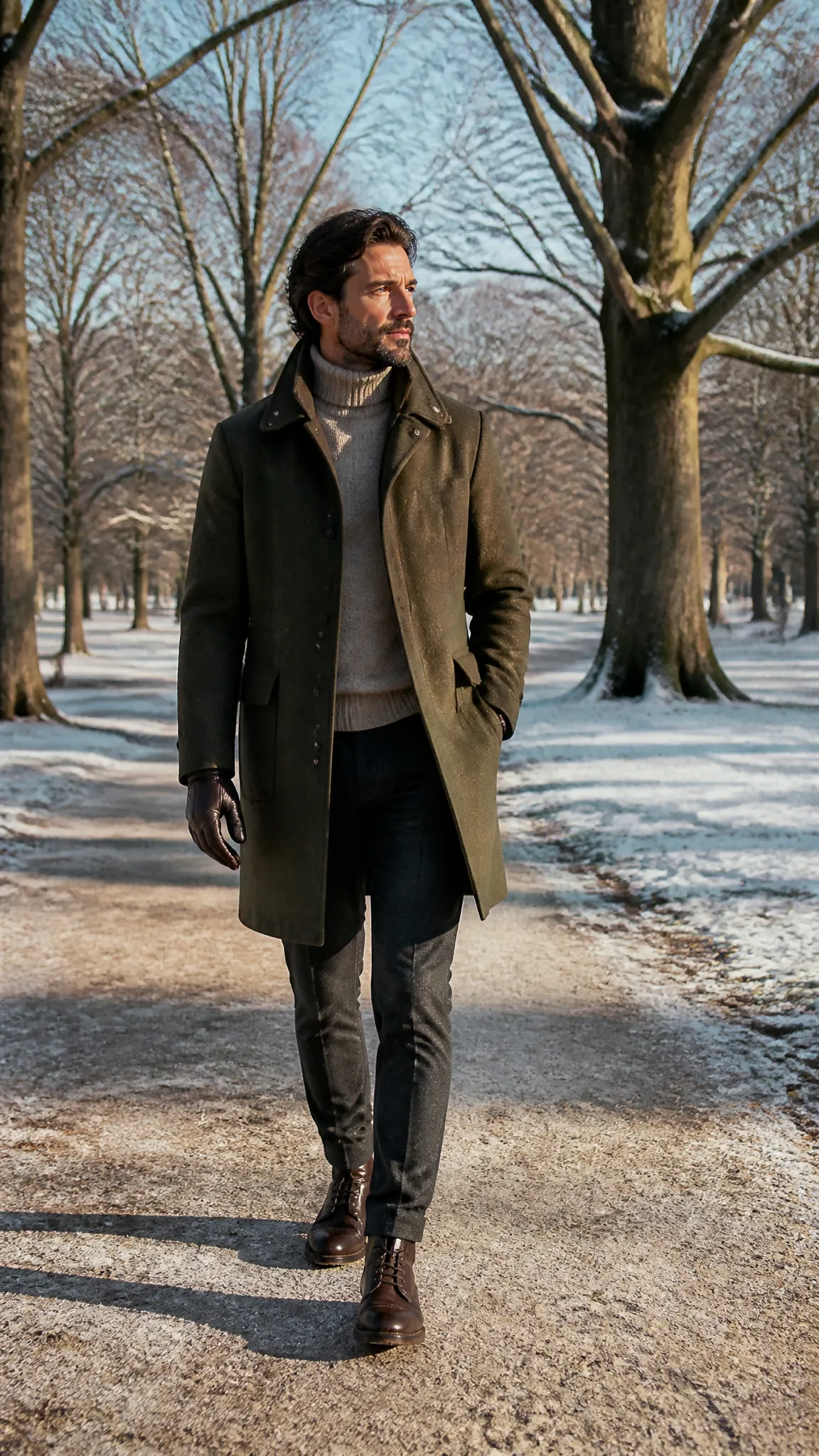
A wool field coat combines useful pockets with a less formal shape than an overcoat. The roll-neck and lined trousers provide quiet warmth, producing one of the more refined cold winter outfits men can wear off duty.
Outfit Pieces
- Wool field coat
- Merino roll-neck sweater
- Flannel-lined or brushed trousers
- Leather gloves and sturdy boots
How to Layer It
Try olive outerwear with an oatmeal sweater, charcoal trousers, and dark-brown boots for relaxed Effortless Chic Men can achieve without fragile fabrics. Add a thin base layer beneath the knit when temperatures drop, rather than sizing up every visible piece.
How to Build Better Winter Layers
Start with a close-fitting base layer that manages moisture, add a midlayer that traps warmth, and finish with outerwear suited to wind or precipitation. Not every day requires all three, but this order makes it easier to adjust without rebuilding the entire outfit.
Pay attention to fit at the shoulders, armholes, and collar. Each outer layer should accommodate what sits beneath it without compressing insulation or restricting your reach. For the most reusable cold winter outfits men should choose neutral outerwear first, then bring color and texture into sweaters, shirts, scarves, and hats.
Footwear matters as much as the coat. Look for adequate traction, room for warm socks, and materials appropriate for wet sidewalks. If conditions are severe, prioritize weather protection over keeping every piece dressy.
Frequently Asked Questions
How many layers should a man wear in winter?
Two or three upper-body layers are usually practical: a base layer, an insulating midlayer, and a protective coat or shell. Adjust the thickness and number according to temperature, wind, activity, and how much time you’ll spend indoors.
How can you layer without looking bulky?
Keep inner layers relatively thin and fitted, then allow gradually more room toward the outside. Fine merino wool, low-profile vests, and thermal knits add warmth efficiently, while straight-leg pants help balance a substantial coat.
What materials are best for winter layering?
Merino wool and performance synthetics work well close to the skin because they handle moisture better than heavy cotton. Wool, fleece, and insulated fills are useful for midlayers, while treated cotton or technical fabrics can protect against wind and precipitation.
Should winter clothes fit looser?
Outerwear should have enough ease for intended layers, but it shouldn’t hang excessively loose. Try coats while wearing your typical sweater or jacket underneath, then check that you can fasten the front and move your arms comfortably.