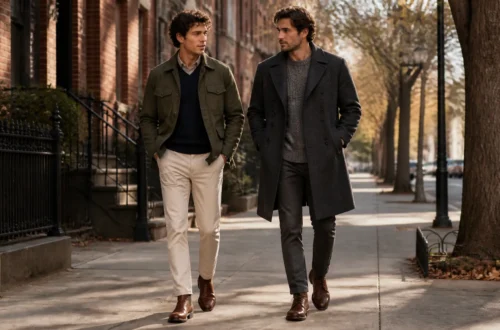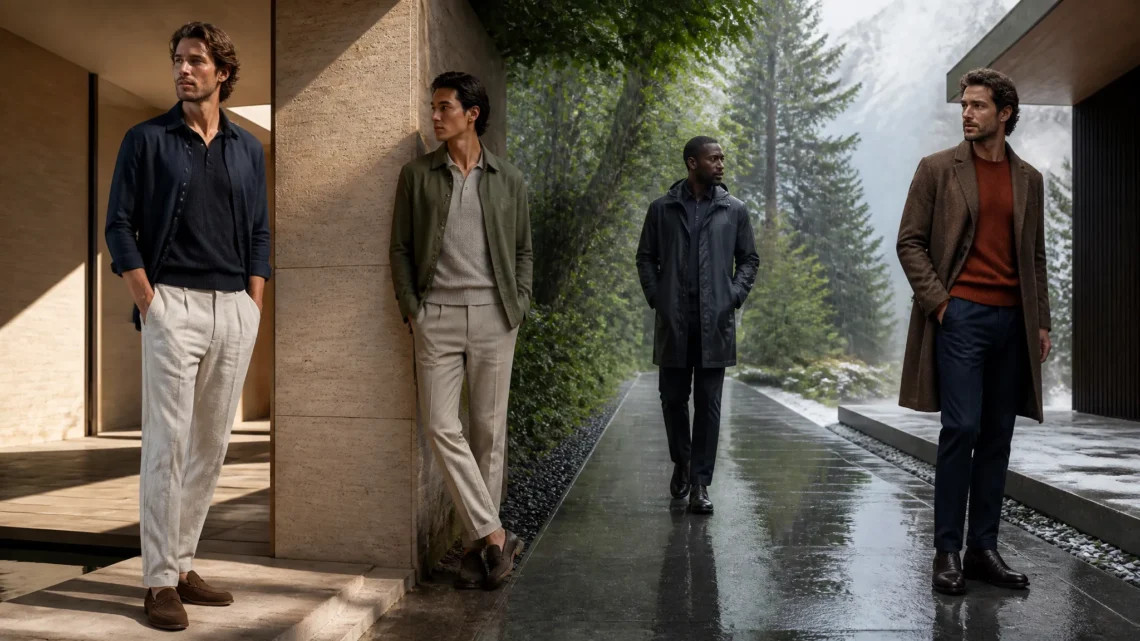
A September style guide may recommend wool jackets while your local forecast still reads 88 degrees. Building men’s outfits by climate solves that mismatch by treating actual temperature, humidity, wind, and precipitation as more important than the date.
You will learn how to read your local conditions, choose fabrics and layers accordingly, and maintain a wardrobe that feels appropriate without sacrificing comfort or personal style.
Why Men’s Outfits by Climate Work Better Than a Seasonal Calendar
Traditional fashion seasons offer a useful visual vocabulary, but they are unreliable dressing instructions. Fall in Phoenix, coastal Maine, and South Florida can demand three completely different outfits on the same day.
Instead of asking whether an outfit looks sufficiently autumnal, ask what your body and schedule will encounter. Air temperature matters, but so do humidity, direct sun, wind, rain, indoor climate control, and the difference between morning and afternoon conditions.
Dress for your exposure, not only the forecast. A 60-degree day feels different when you are standing at a windy train platform, walking briskly through downtown, or moving between a car and a heated office. Your activity level and time outdoors determine whether you need insulation, ventilation, or merely a removable top layer.
The seasonal mood can still influence color and texture. You can wear olive, rust, chocolate brown, or charcoal in warm weather through breathable cotton, linen, and tropical-weight wool rather than forcing heavy flannel into the outfit.
Build Around Temperature, Humidity, Wind, and Rain
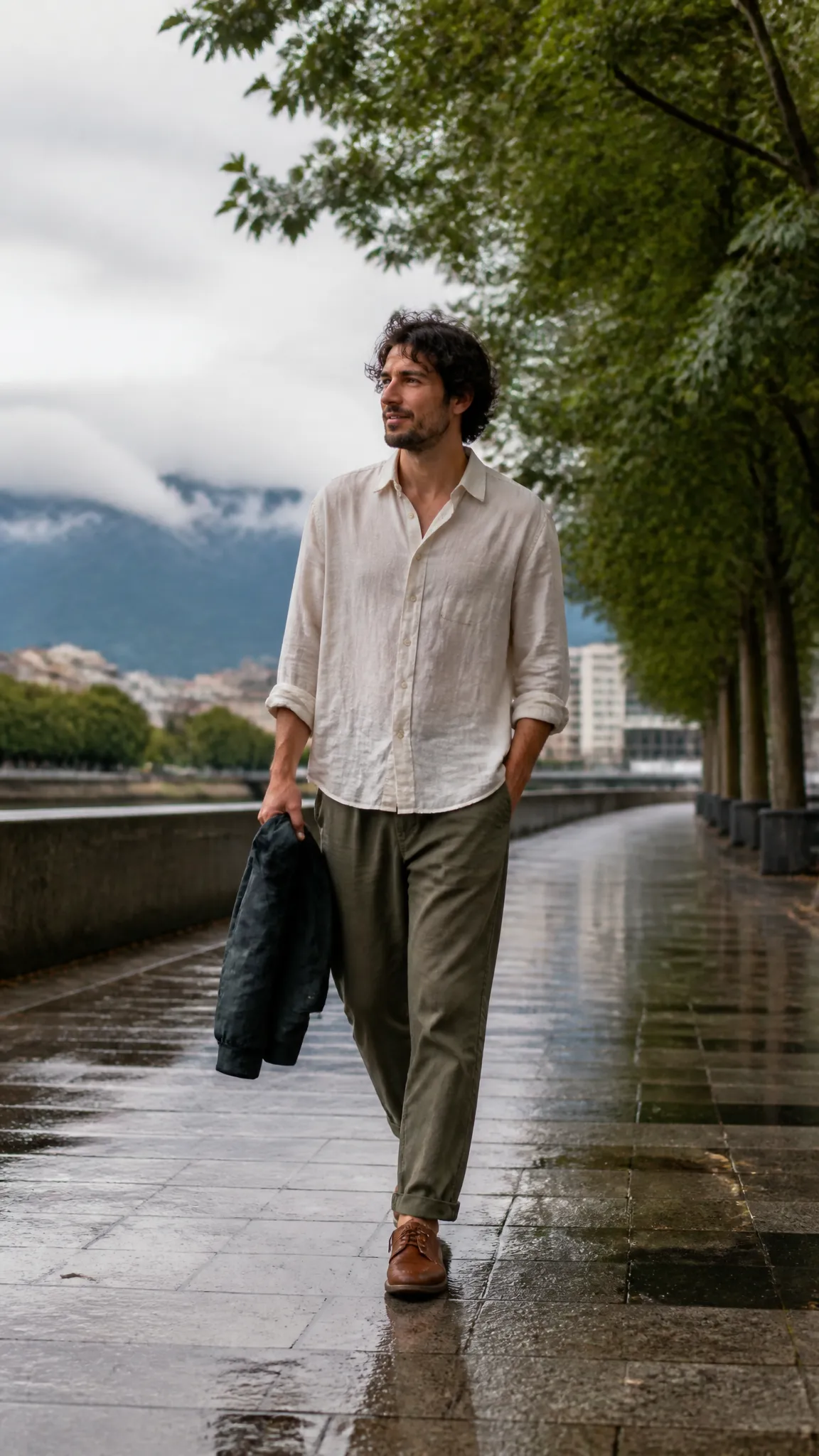
Once you stop treating the calendar as a dress code, weather becomes a practical design brief. Each condition points toward a different garment property, and several may apply at once.
Temperature and daily range
Consider both the day’s high and the spread between its coolest and warmest hours. A wide temperature swing favors light, removable layers: perhaps a T-shirt or knit polo beneath an overshirt, unstructured blazer, or thin jacket.
In consistently hot conditions, fewer layers and looser silhouettes help heat escape. In cold conditions, multiple moderate layers usually adapt better than one enormous coat, especially when buildings and transit are heavily heated.
Humidity and airflow
Humidity slows evaporation, so fabric construction and fit become crucial. Linen, seersucker, lightweight cotton, and open-weave wool permit more airflow than dense fabrics. A shirt that skims the torso generally feels better than one pulled tightly across the back and underarms.
Dry heat presents a different problem because intense sun and hot air can make exposed skin uncomfortable. A loose, long-sleeve linen shirt or breathable cotton overshirt can provide coverage without trapping as much heat as a fitted synthetic layer.
Wind and precipitation
Wind can make mild temperatures feel surprisingly sharp and can cut through porous knits. A tightly woven outer shell, chore coat, field jacket, or lined topcoat blocks airflow more effectively than adding another loose sweater.
For rain, prioritize a water-resistant or waterproof outer layer, covered footwear, and a hem length suited to your route. A technical rain shell works for casual settings, while a clean mac coat or trench coat sits more comfortably over office clothes. Water resistance and breathability are separate qualities, so choose the balance according to rain intensity and activity level.
Choose Fabrics by Performance, Not Seasonal Labels
Fabric names often carry seasonal associations, but weight and weave tell you more about how a garment will behave. Wool is not automatically warm, and cotton is not automatically cool. A dense cotton sweatshirt can retain more heat than a lightweight wool shirt.
For hot and humid climates, look for fabrics that feel light, dry reasonably quickly, and stand slightly away from the skin. Linen wrinkles, but that relaxed texture is part of its character. Seersucker’s puckered surface reduces skin contact, while tropical wool offers a crisp drape for trousers and tailoring.
In cold or windy climates, denser materials provide insulation and protection. Flannel, corduroy, brushed cotton, fleece, and substantial wool trap warm air, while tightly woven shells reduce wind penetration. When conditions are wet, an absorbent outer layer may become heavy, so wool coats work best with an umbrella or in relatively dry cold.
Synthetic fibers deserve a selective role rather than automatic praise or rejection. Nylon and polyester can improve weather resistance, durability, and drying time, but some constructions hold odor or feel clammy. Check the garment’s weave, lining, and intended use instead of judging performance from fiber content alone.
Whatever the material, fit affects function. Room under a cold-weather jacket permits insulating layers, while excessive fabric in a humid climate can bunch and cling. Aim for enough ease for air or layers, depending on what the weather demands.
Create a Climate-Based Outfit Formula
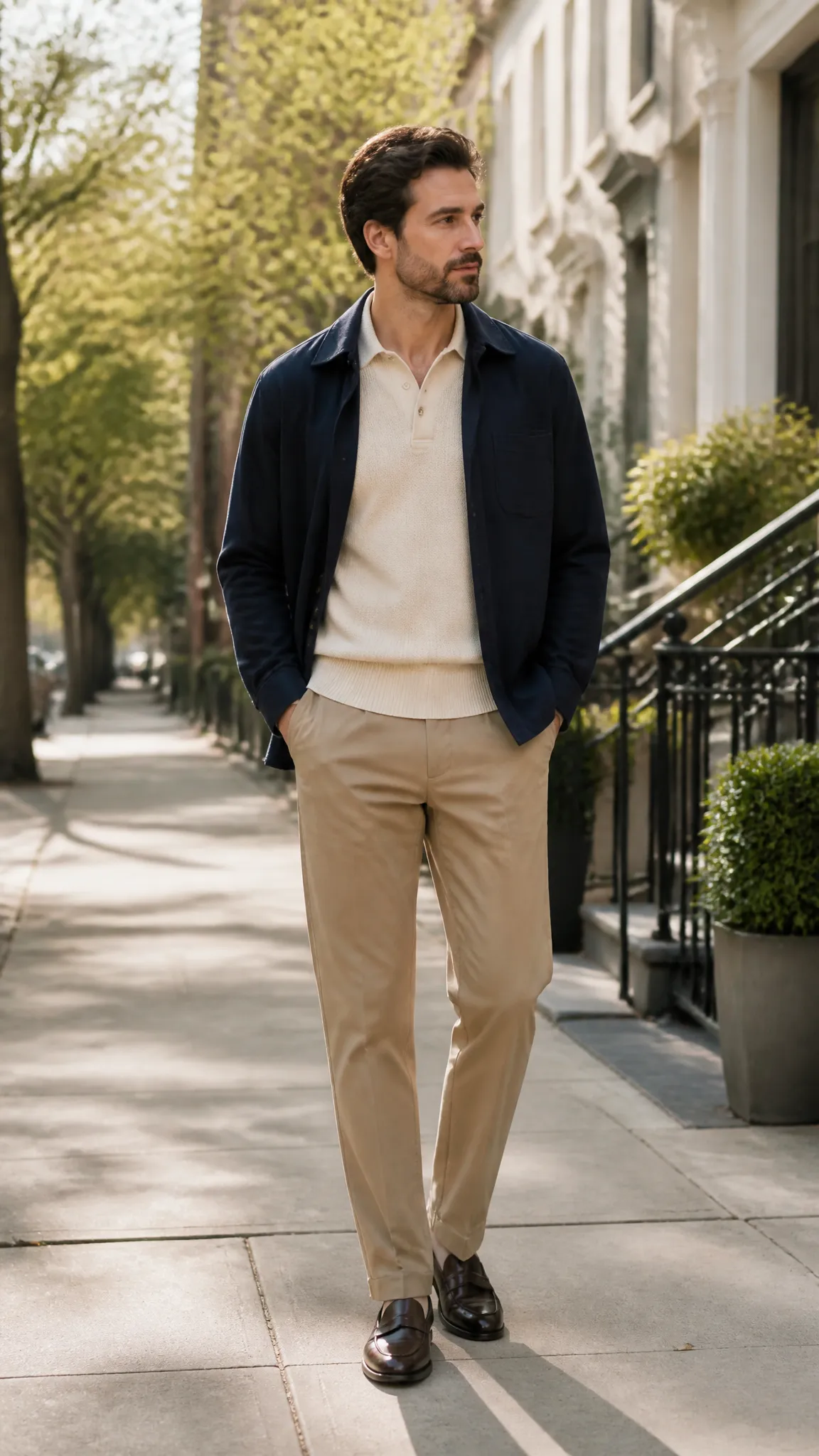
A repeatable outfit formula makes climate-aware dressing easy on ordinary mornings. Begin with a comfortable base, add only the insulation you need, and finish with protection from the most likely outdoor condition.
The following combinations are adaptable starting points rather than rigid uniforms:
- Hot and humid: a linen-blend camp-collar shirt, airy straight-leg trousers or tailored shorts, moisture-managing socks, and leather sandals or lightweight sneakers.
- Hot and dry: a loose long-sleeve cotton or linen shirt, lightweight chinos, a breathable hat, and shoes with enough coverage for hot pavement and dust.
- Mild with changing temperatures: a cotton T-shirt or knit polo, an unlined overshirt, medium-weight trousers, and loafers, sneakers, or chukka boots.
- Cold and dry: a base layer, wool sweater, insulated or substantial wool coat, lined trousers, warm socks, and boots with an adequately thick sole.
- Cold and wet: a quick-drying base, insulating midlayer, waterproof shell, water-resistant trousers, and treaded waterproof footwear.
Dress codes can be handled within the same framework. In humid business settings, an unlined or half-lined jacket in tropical wool will usually feel more comfortable than heavy worsted tailoring. In a cold office environment, a fine-gauge merino sweater under a blazer adds warmth without distorting the jacket’s shape.
Proportion keeps practical clothing intentional. Wide, breezy trousers tend to pair well with a shirt that has some ease, while bulky winter footwear benefits from trousers with enough hem width to meet the shoe naturally. Climate comfort should not require mismatched scale.
Use Layers That Have a Clear Job
Effective layering is not simply piling on garments until the weather surrenders. Each layer should manage moisture, retain heat, block wind or rain, or provide the polished surface the occasion requires.
The base layer sits closest to the skin. In heat, it may be the visible shirt itself; in cold, it should manage perspiration without becoming bulky. The middle layer supplies insulation through a sweater, fleece, quilted vest, or light insulated jacket. The outer layer protects against wind and precipitation.
Every layer should also work with the one above it. A thick hoodie may bunch beneath a trim blazer, while a fine merino crewneck slips under tailoring cleanly. Likewise, a rain shell needs enough room through the shoulders and sleeves to cover its intended midlayer without restricting movement.
Keep color coordination simple when several pieces are visible. A neutral foundation of navy, gray, tan, olive, cream, or brown allows one richer accent to carry the outfit. Similar colors with contrasting textures, such as charcoal wool over a gray cotton shirt, can add depth without looking busy.
Before leaving, perform a quick movement check. Reach forward, sit down, and close the outer layer. If collars collide, hems bunch, or the coat barely fastens, the system may look acceptable while standing still but fail during actual use.
Match Footwear and Accessories to Local Conditions
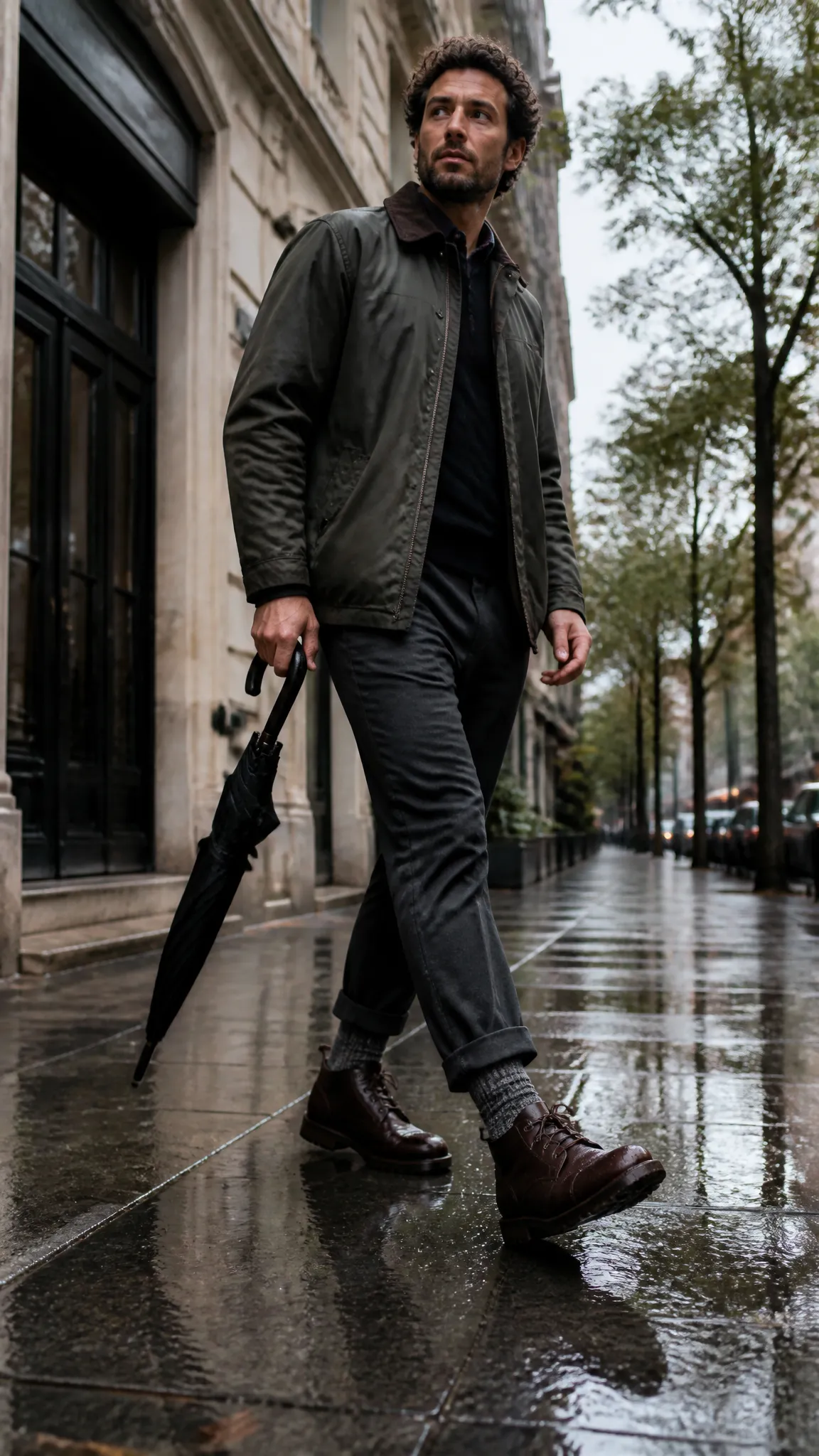
Shoes often reveal whether an outfit was truly planned around climate. A breathable shirt cannot compensate for heavy, nonventilating boots in muggy heat, just as thin canvas sneakers offer little comfort on icy, waterlogged sidewalks.
In warm climates, unlined loafers, breathable sneakers, and dress-appropriate sandals reduce bulk. In frequent rain, rubber soles, storm welts, treated leather, and waterproof membranes can improve practicality. For snow and ice, prioritize traction, warmth, and water resistance over a sleek profile.
Socks are part of the system. Lightweight wool or performance blends can manage moisture across a range of temperatures, while thicker wool adds insulation in cold weather. Cotton may feel comfortable in dry conditions but can stay damp after heavy perspiration or rain.
Accessories make small adjustments without requiring an entirely different wardrobe. A brimmed hat provides sun coverage; a compact umbrella handles intermittent rain; gloves and a scarf protect exposed areas in cold wind. Sunglasses matter in both summer glare and bright winter conditions.
Care also affects weather performance. Allow shoes to dry between wears, clean salt or mud promptly, and renew water-repellent treatments according to the garment or footwear instructions. Weather-ready clothing still needs maintenance to keep doing its job.
Build a Wardrobe for Your Real Year
A climate-based wardrobe begins with observation rather than a generic essentials checklist. Review what you repeatedly wear during your hottest, coldest, wettest, and most variable weeks. The neglected pieces often reveal that you bought for an imagined season rather than your actual routine.
Organize clothing by function: hot-weather bases, transitional layers, insulation, rain protection, and setting-specific pieces. This makes gaps easier to see. Someone in a warm region may need several breathable shirts and one packable jacket, while a resident of a northern inland climate may need dependable coats, knitwear, and weatherproof boots.
When shopping, ask whether a garment works with at least two common weather scenarios and several existing pieces. A lightweight overshirt might serve cool mornings, aggressive air conditioning, and mild evenings. That versatility is more valuable than owning a highly specific item that appears only when the calendar and weather happen to agree.
This approach does not require abandoning seasonal style. It simply puts function first. Men’s outfits by climate can still incorporate summer’s pale neutrals, fall’s earthy palette, or winter’s rich textures, provided the materials suit the conditions outside your door.
Frequently Asked Questions
Can you wear fall colors in a hot climate?
Yes. Color does not determine warmth; fabric and construction do. Choose olive, burgundy, rust, navy, or brown in linen, poplin, lightweight cotton, or open-weave wool rather than heavy flannel or corduroy.
How should you dress when it is cold outside but hot indoors?
Use removable layers and avoid one excessively warm indoor garment. A breathable base, fine sweater, and protective coat let you remove insulation gradually while keeping the underlying outfit presentable.
Is wool practical in warm weather?
Lightweight, open-weave wool can work very well in warm weather, particularly for trousers and suits. Tropical wool drapes cleanly, resists wrinkling better than many linens, and allows more airflow than dense cold-weather wool.
How many jackets does a variable climate require?
There is no universal number, but distinct functions matter more than quantity. Many wardrobes benefit from a light layer for mild conditions, a rain-resistant option, and an insulated coat for the coldest local weather; one garment may cover more than one role.
What should you wear during an unpredictable weather day?
Choose a breathable base, a packable midlayer, and weather-appropriate footwear. Check the hourly forecast rather than only the daily high, then carry rain or wind protection if conditions are expected to change.
Let the Forecast Set the Dress Code
The most useful wardrobe is not built around four idealized seasons. It responds to the heat, cold, moisture, wind, indoor settings, and daily movement that define your life.
Start by noting which conditions make your current clothes uncomfortable, then address the most frequent problem with a better fabric, layer, or pair of shoes. Style remains part of the decision, but the weather gets the first vote.