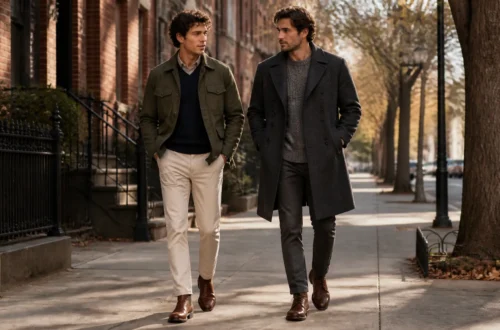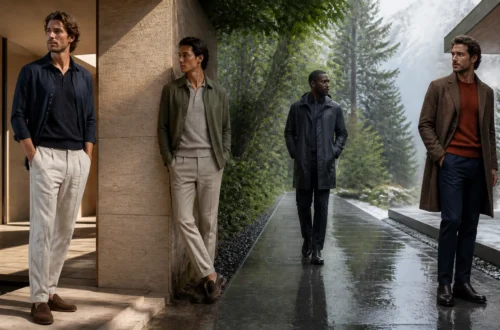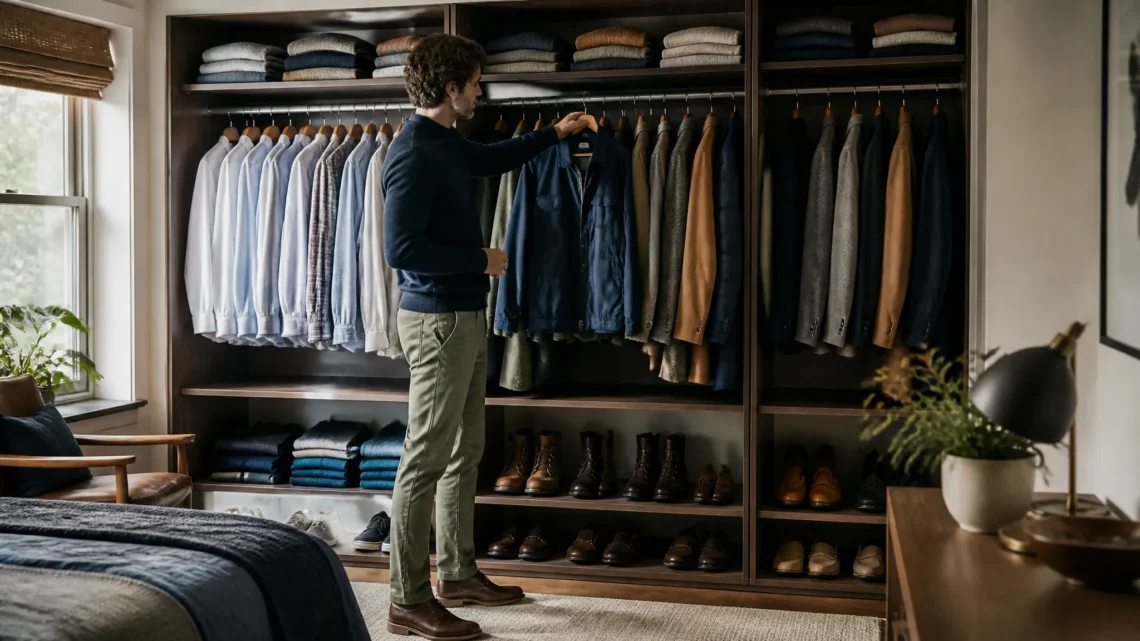
Getting dressed becomes needlessly complicated when summer shirts, winter coats, and rarely worn purchases all compete for the same space. A useful seasonal wardrobe guide men can follow begins not with buying more clothes, but with identifying what fits their climate, routine, and existing closet.
This approach will help you build a flexible year-round wardrobe, make sensible seasonal changes, and avoid replacing half your clothes whenever the weather shifts.
Start Your Seasonal Wardrobe Guide Men With Real Life, Not a Shopping List
The right wardrobe reflects how you spend most weeks. Before considering colors or fabrics, think about your workplace, social plans, transportation, local weather, and tolerance for heat or cold. A man who drives to a casual office in Atlanta needs a different seasonal rotation from someone who walks to work in Chicago.
Review what you already own and separate it into three broad groups: year-round clothing, warm-weather clothing, and cold-weather clothing. Oxford shirts, dark jeans, chinos, and unstructured jackets often work through several seasons. Linen shirts and shorts have a narrower window, as do heavy wool coats and insulated boots.
Next, notice what you actually wear. A pristine sweater that has survived three winters untouched is not automatically an asset. It may fit poorly, feel uncomfortable, or belong to a version of your life that no longer exists.
A brief wardrobe inventory should answer a few practical questions:
- Which clothes fit well and suit your current routine?
- Which pieces need cleaning, repair, or tailoring?
- Where are the genuine gaps in your everyday outfits?
- Which items duplicate something you already prefer?
- What can be stored until the appropriate season?
This keeps seasonal wardrobe planning grounded in use. It also prevents the classic mistake of buying a handsome third jacket while still lacking enough shirts for a normal workweek.
Build a Year-Round Core Before Adding Seasonal Clothes

A stable core makes seasonal transitions easier because only part of the wardrobe needs to change. Choose versatile garments that can be worn alone in mild weather and layered when temperatures drop. Versatility comes from coordination, not from making every garment bland.
For many men, a practical core includes straight or gently tapered jeans, cotton chinos, solid T-shirts, Oxford cloth button-downs, a casual overshirt, and one jacket appropriate to their usual dress code. White, light blue, gray, navy, olive, tan, and brown tend to coordinate easily, but they are options rather than compulsory uniforms.
Fit matters more than accumulating alternatives. Shoulder seams should sit near the edge of your shoulders, shirt bodies should allow movement without billowing, and pants should stay secure without a belt doing all the work. Choose a leg shape that creates a clean line with your footwear rather than chasing whichever extreme silhouette happens to be fashionable.
Footwear should also reflect your real calendar. Clean leather sneakers, loafers, casual derbies, or simple boots can each cover broad territory, depending on your workplace and social life. Begin with two or three useful pairs that differ in function, then add specialized shoes only when an actual occasion demands them.
Plan for Temperature With Fabric and Layers
Calendar seasons are imperfect clothing instructions. A better system considers temperature, precipitation, wind, indoor heating, and air conditioning. Spring in Seattle and spring in Phoenix may share a name while demanding almost nothing in common.
Warm-weather fabrics and shapes
In hot conditions, look for breathable fabrics and enough room for air to move. Linen, lightweight cotton, seersucker, tropical-weight wool, and some moisture-managing technical fabrics can reduce the clammy feeling created by dense material. Loose does not have to mean shapeless; a straight linen trouser or relaxed camp-collar shirt can still look deliberate.
Light and medium colors absorb less visible sunlight than very dark ones, though fabric weight and weave also affect comfort. Try off-white, stone, pale blue, faded olive, or light gray alongside darker anchors. Summer footwear may include canvas sneakers, loafers, or minimal leather sandals where the setting permits.
Cold-weather fabrics and shapes
Cold-weather dressing works best as a system. A soft base layer manages comfort, a middle layer traps warmth, and an outer layer blocks wind or rain. You may not need all three every day, but separating their jobs makes adjustment easier when you move between a freezing sidewalk and an overheated room.
Merino wool, lambswool, fleece, flannel, corduroy, and heavier cotton add warmth and texture. Outerwear should leave enough space for a sweater without pulling across the chest or restricting the arms. If a coat fits beautifully only over a thin T-shirt, it is probably not performing its winter assignment.
Make Spring and Fall Your Layering Seasons
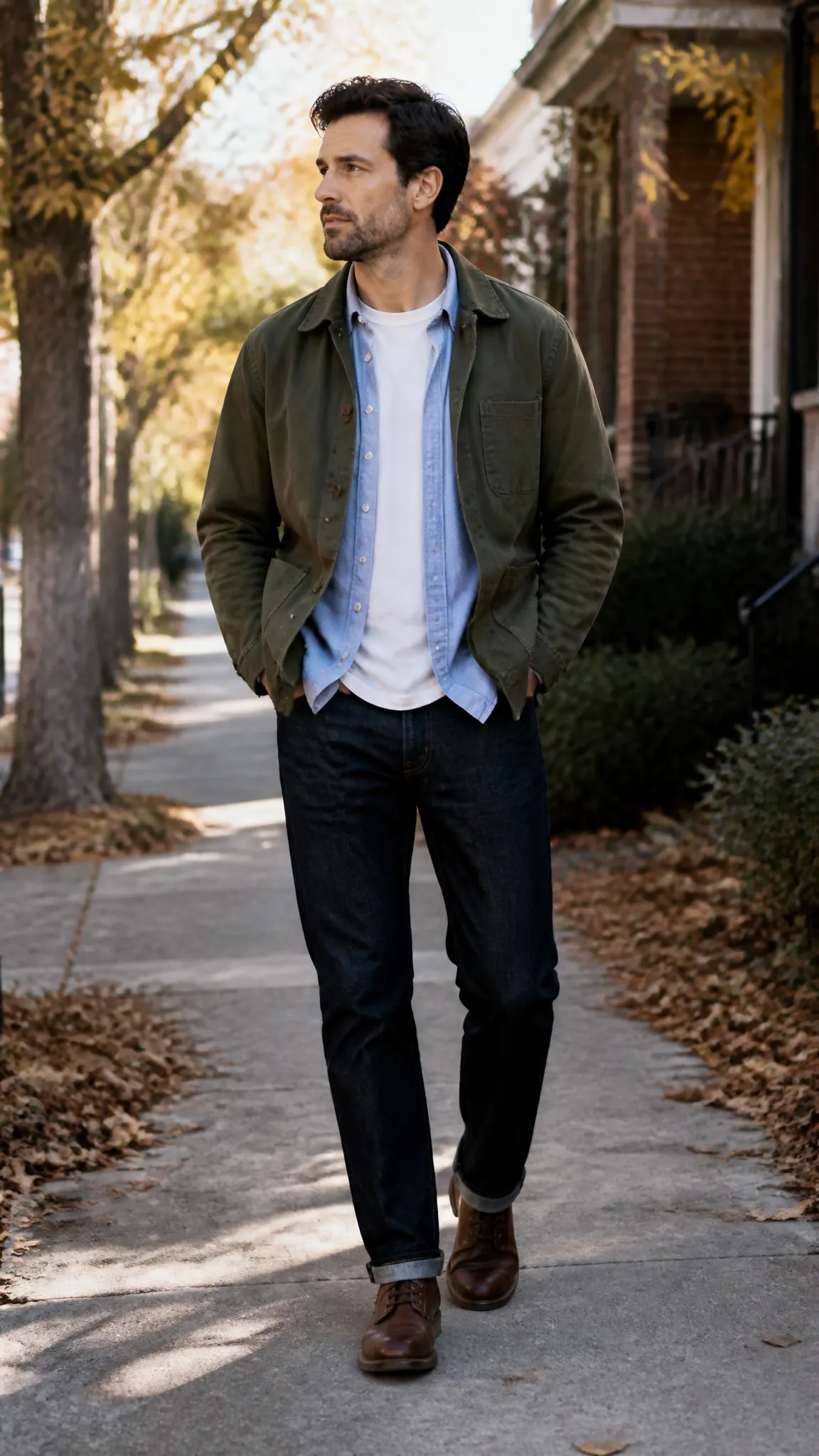
Transitional weather causes the most confusion because conditions can change within hours. Instead of relying on one heavy garment, combine lighter pieces that can be removed, carried, and worn in different arrangements. This is where a planned wardrobe becomes noticeably more useful.
A T-shirt under an Oxford shirt and chore jacket offers several temperature settings without much bulk. A fine-gauge sweater under an unstructured blazer works for a dressier setting, while a hoodie beneath a rain shell suits casual errands. Keep each layer slightly roomier than the one beneath it so the outfit moves naturally rather than bunching at every seam.
Proportion helps layered outfits remain clean. If an overshirt or jacket has a boxier cut, pair it with straight or moderately tapered trousers rather than extremely skinny pants. Longer coats generally sit well over knitwear and tailored clothing, while waist-length jackets complement casual jeans and chinos.
Spring often supports lighter neutrals and clearer colors, while fall naturally suits rust, forest green, burgundy, camel, and chocolate brown. These are conventions, not laws. The more reliable method is to keep most of the outfit in familiar neutrals and introduce one seasonal color or texture.
Accessories can solve weather problems without changing the whole outfit. A compact umbrella, wool scarf, knit cap, leather gloves, or lightweight cap earns its place by making an otherwise suitable outfit comfortable. Good layering should expand your options, not make you resemble an overpacked suitcase.
Rotate, Store, and Shop With a Purpose
The seasonal wardrobe guide men need should include closet management because visibility affects use. If every garment stays crowded onto one rail, useful pieces disappear between clothes that will not be worn for months. A simple rotation creates breathing room and reveals any real gaps.
At the start of a weather change, clean garments before storing them. Empty pockets, address stains, and repair loose buttons or small tears. Fold knitwear to prevent stretching, and keep clothing in a clean, dry place with enough airflow; follow each garment’s care label when washing or treating it.
Do not rotate everything on a fixed date. Keep transitional pieces accessible until local weather settles. One warm week does not mean winter is finished, and one cool evening does not require excavating every sweater you own.
When you do shop, buy for a specific outfit and situation. “I need a jacket” is vague; “I need a rain-resistant jacket that fits over office clothes and works with navy chinos” provides useful boundaries. Check whether a potential purchase coordinates with at least a few garments you already wear, and confirm that its care requirements suit your habits.
A modest shopping order usually works better than a seasonal spree: replace worn essentials first, fill repeated outfit gaps second, and consider expressive extras last. This does not eliminate fun. It simply ensures the fun purchase has clothes to play with.
Use Outfit Formulas Without Wearing a Uniform
Planning becomes easier when you develop a few repeatable combinations. An outfit formula specifies roles rather than exact products, so it provides consistency without forcing you to wear identical clothes every day.
For casual warm weather, a breathable short-sleeve shirt, straight chinos or tailored shorts, and low-profile sneakers create a dependable base. In cooler months, try an Oxford shirt, textured sweater, dark jeans, and leather boots. A business-casual formula might combine a collared shirt, unstructured blazer, wool trousers or chinos, and loafers or derbies.
Color relationships make these formulas easier to vary. Start with two neutrals, such as navy trousers and a gray jacket, then add a pale blue shirt or muted green knit. Repeating a color family can create harmony, but avoid trying to match every brown or every shade of blue exactly. Slight variation often looks more natural.
Texture becomes especially valuable when an outfit uses similar colors. A navy wool sweater over a blue cotton shirt with dark denim has visual depth because each surface reflects light differently. In summer, a linen shirt and cotton twill trousers achieve a similar effect without heavy layering.
Before leaving home, assess the outfit as a whole. Check whether the formality levels agree, whether the footwear suits the weather, and whether you can comfortably sit, walk, and raise your arms. The most elegant combination on paper fails if you spend all day tugging it back into place.
Frequently Asked Questions
How many clothes does a beginner need for each season?
There is no universal count because laundry frequency, dress codes, and climate vary. Aim for enough tops and base layers to cover the period between washes, then add a smaller selection of pants, knitwear, jackets, and shoes that coordinate with them.
Should I use a capsule wardrobe?
A capsule wardrobe can help if you value a smaller closet and easy coordination, but it is a method rather than a requirement. You can borrow its strongest principle, choosing pieces that work together, without imposing a strict item limit.
When should I begin shopping for the next season?
Review your wardrobe before the weather changes, but avoid buying solely because retailers have introduced a new season. Identify specific gaps first, then shop when you can compare suitable options without rushing.
Can black clothing work in every season?
Yes. Black can work year-round, although heavy black fabrics may feel visually and physically dense in hot weather. For summer, choose breathable materials and combine black with lighter shades or exposed skin at the forearms and ankles to reduce visual weight.
How should weight changes affect wardrobe planning?
Keep the clothes that fit comfortably now at the center of your plan. Avoid building an entire seasonal wardrobe around a hoped-for future fit; use forgiving layers, adjustable waist details, and limited tailoring where practical.
Build the Next Season From What You Own
Effective seasonal planning is less about constructing four separate wardrobes than adapting one coordinated closet to changing conditions. Begin by inventorying what fits, selecting a reliable year-round core, and identifying the few fabrics, layers, or shoes that your next season genuinely requires.
Your practical next step is simple: assemble three complete outfits for the coming month using only your current clothes. Any missing piece that appears across several outfits is a credible shopping need; everything else can wait.