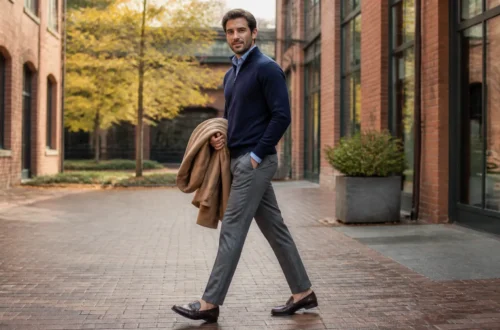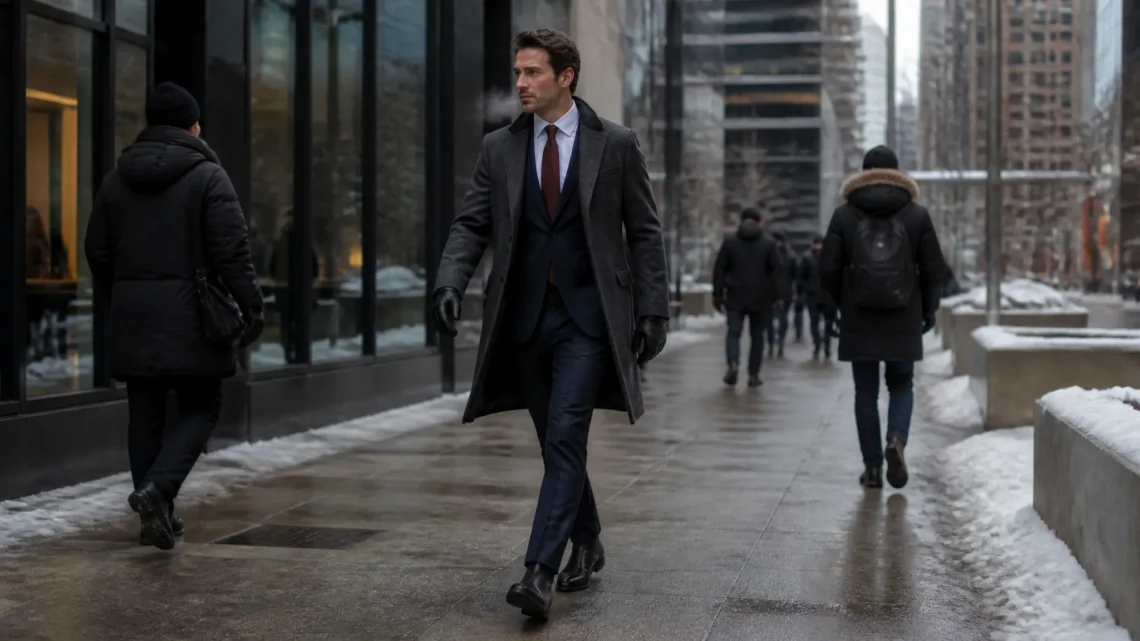
A freezing train platform or windy walk can make office dressing feel like a choice between warmth and credibility. The best business professional outfits men can wear in winter solve both problems with insulating layers, weather-aware footwear, and tailored outerwear.
These combinations give you practical formulas for staying comfortable outside without looking bundled up at your desk. Each one includes specific pieces and adjustments for a polished arrival.
Tailored Suits for Formal Offices
1. Navy Suit With a Charcoal Overcoat
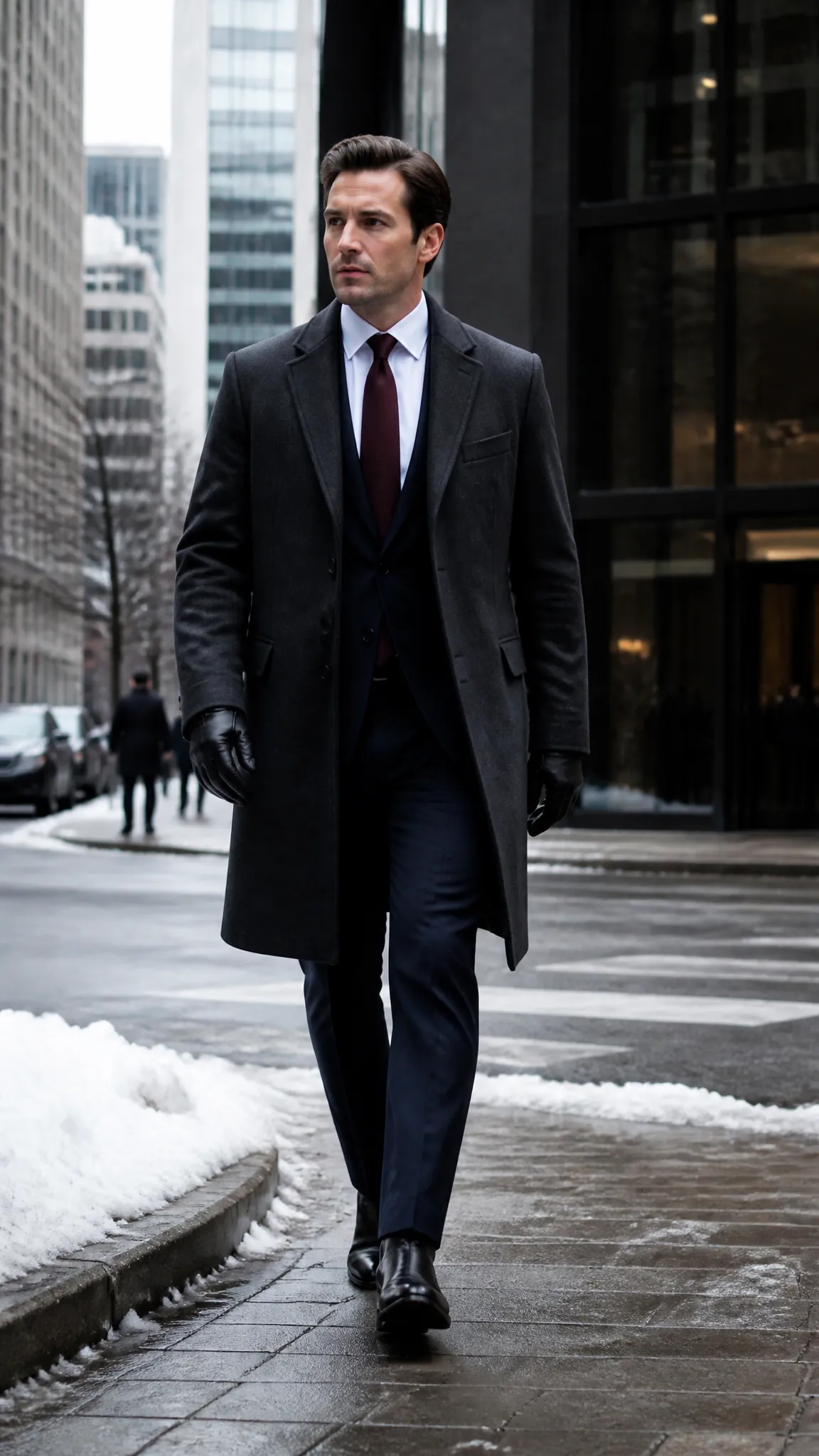
This dependable pairing works for client meetings, presentations, and conservative workplaces. A navy wool suit stays formal, while the darker overcoat creates a clean frame and conceals most of your insulating layers.
Outfit Pieces
- Navy wool suit
- White poplin shirt and burgundy silk tie
- Charcoal knee-length wool overcoat
- Black leather gloves and dress boots
Cold-Commute Strategy
Choose a coat long enough to cover the suit jacket completely, with room through the shoulders for natural movement. A thin merino undershirt adds warmth without changing the shirt’s fit, and sleek black boots provide more coverage than oxfords while preserving a polished look.
2. Charcoal Suit With a Camel Topcoat
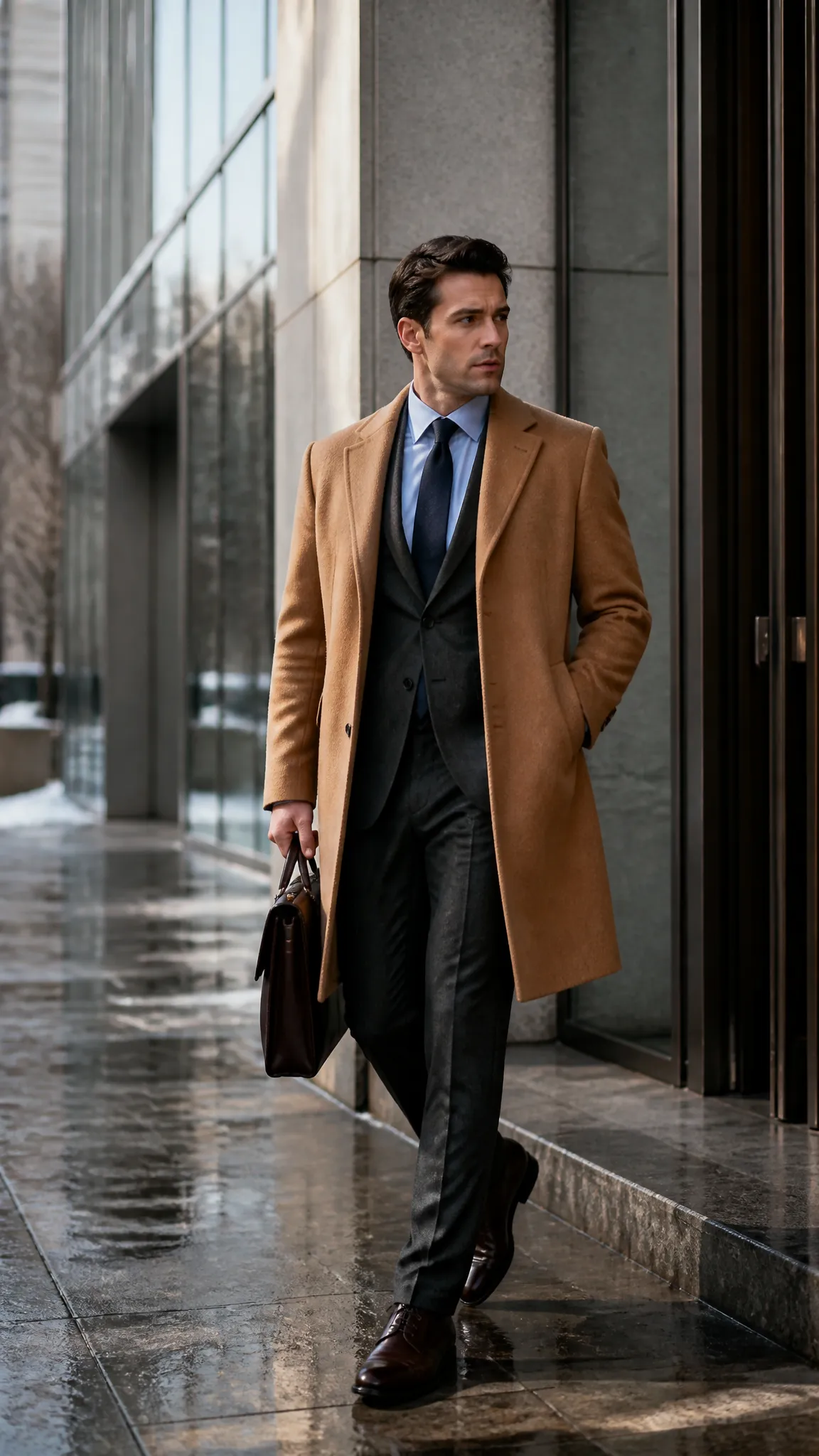
A camel topcoat brings warmth and contrast to a charcoal suit without making the outfit casual. The neutral combination is especially effective when your office expects traditional tailoring but allows some personality in outerwear.
Outfit Pieces
- Charcoal worsted-wool suit
- Pale blue dress shirt and navy tie
- Camel wool topcoat
- Dark brown cap-toe boots and matching belt
Cold-Commute Strategy
Keep the coat’s cut streamlined rather than oversized, and coordinate the brown leather accessories closely. For wet sidewalks, select dress boots with a discreet rubber sole and wipe them before entering the office. A navy or charcoal scarf can add insulation without competing with the coat.
3. Flannel Suit With a Quilted Coat
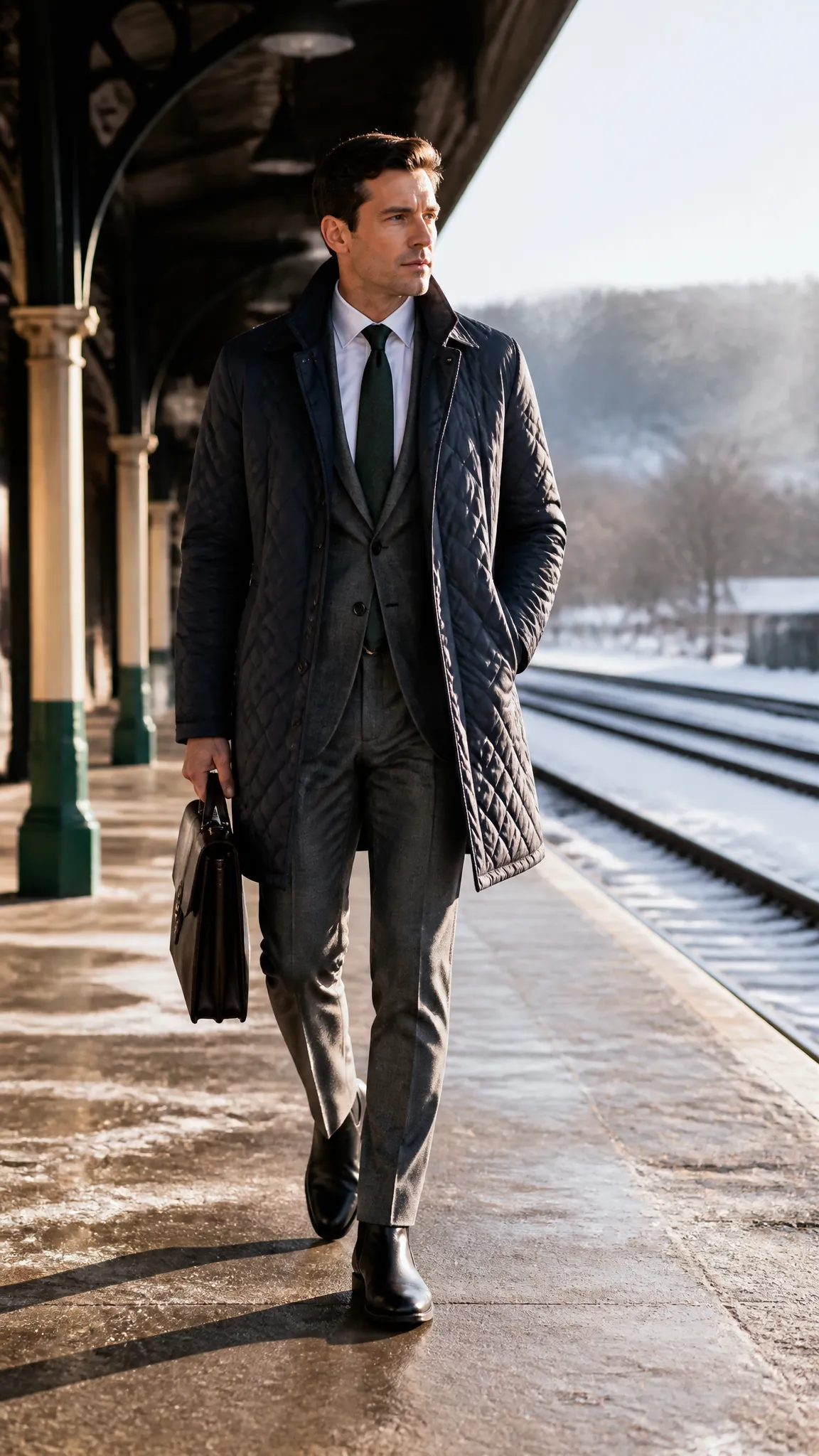
A midweight flannel suit has a softly textured surface and offers more cold-weather comfort than a lightweight year-round fabric. A restrained quilted coat adds protection during a long commute while remaining appropriate for many professional settings.
Outfit Pieces
- Medium-gray flannel suit
- White twill shirt and dark green tie
- Navy tailored quilted coat
- Black leather Chelsea boots and gloves
Cold-Commute Strategy
Look for a quilted coat with minimal hardware, a matte finish, and a hem that covers your jacket. Avoid bulky outdoor styling that overwhelms the suit. Once indoors, remove the coat and brush away any snow or moisture so the flannel retains its neat drape.
4. Windowpane Suit With a Solid Overcoat

A subtle windowpane suit gives formal winter dressing visual depth while still reading as business attire. Because the suit already has a pattern, a solid overcoat and restrained accessories keep the overall effect composed.
Outfit Pieces
- Charcoal suit with a muted windowpane
- White dress shirt and solid navy tie
- Deep navy wool overcoat
- Black lace-up boots and plain leather gloves
Cold-Commute Strategy
Keep the pattern low-contrast and let it be the only prominent motif. These are timeless wardrobe staples when chosen in versatile colors, but fit matters: the overcoat should close easily without pulling across the suit’s lapels or compressing its shoulders.
Business Separates With Warm Layers
5. Navy Blazer With Gray Flannel Trousers
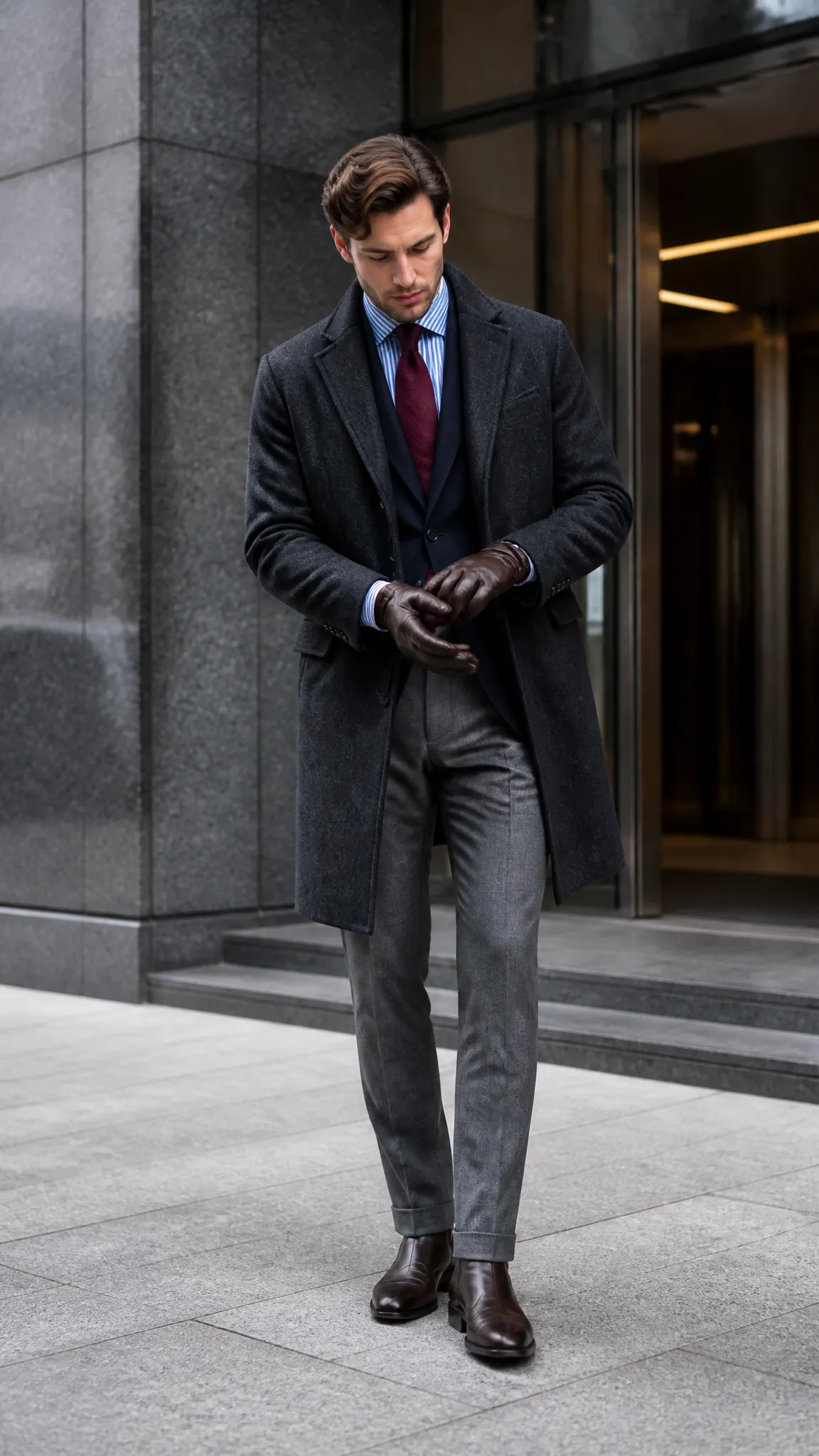
This classic combination suits offices where a matching suit isn’t required but business dress still needs structure. A navy blazer and gray flannel dress pants look intentional, coordinate easily, and handle winter textures well.
Outfit Pieces
- Navy wool blazer
- Mid-gray flannel trousers
- Blue-and-white striped dress shirt with a burgundy tie
- Charcoal topcoat and dark brown dress boots
Cold-Commute Strategy
Use clearly different textures so the blazer and trousers don’t resemble a mismatched suit. Over-the-calf wool-blend socks prevent exposed skin when you sit, while a topcoat protects the blazer’s hem. This is one of the most adaptable business professional outfits men can build from existing workwear.
6. Tweed Sport Coat With Charcoal Trousers

A refined tweed jacket provides natural texture and insulation for a workplace that accepts traditional business separates. The key is choosing a controlled pattern and clean tailoring rather than a rugged, oversized country jacket.
Outfit Pieces
- Brown herringbone tweed sport coat
- Charcoal wool trousers
- Cream dress shirt and dark brown knit tie
- Dark olive overcoat and brown brogue boots
Cold-Commute Strategy
Keep the shirt smooth and the trousers sharply pressed to balance tweed’s rougher surface. A knit tie fits the textural story but should remain dark and narrow enough for the office. If the jacket is already substantial, choose a lightly structured overcoat to avoid excess bulk.
7. Blazer Over a Fine-Gauge Turtleneck

A fine merino turtleneck can replace a shirt and tie in offices with a modern interpretation of professional dress. It keeps the neck covered, reduces the need for a heavy scarf, and creates a clean line beneath a tailored blazer.
Outfit Pieces
- Charcoal fine-gauge merino turtleneck
- Navy hopsack blazer
- Gray tailored wool trousers
- Black overcoat and black Chelsea boots
Cold-Commute Strategy
Choose a smooth, close-fitting knit that sits neatly at the neck without folding heavily. Keep lint and pilling under control, since the sweater is acting as your formal top layer. This outfit fits creative and contemporary offices better than strict workplaces that explicitly require ties.
8. Dress Shirt, Cardigan, and Pleated Trousers
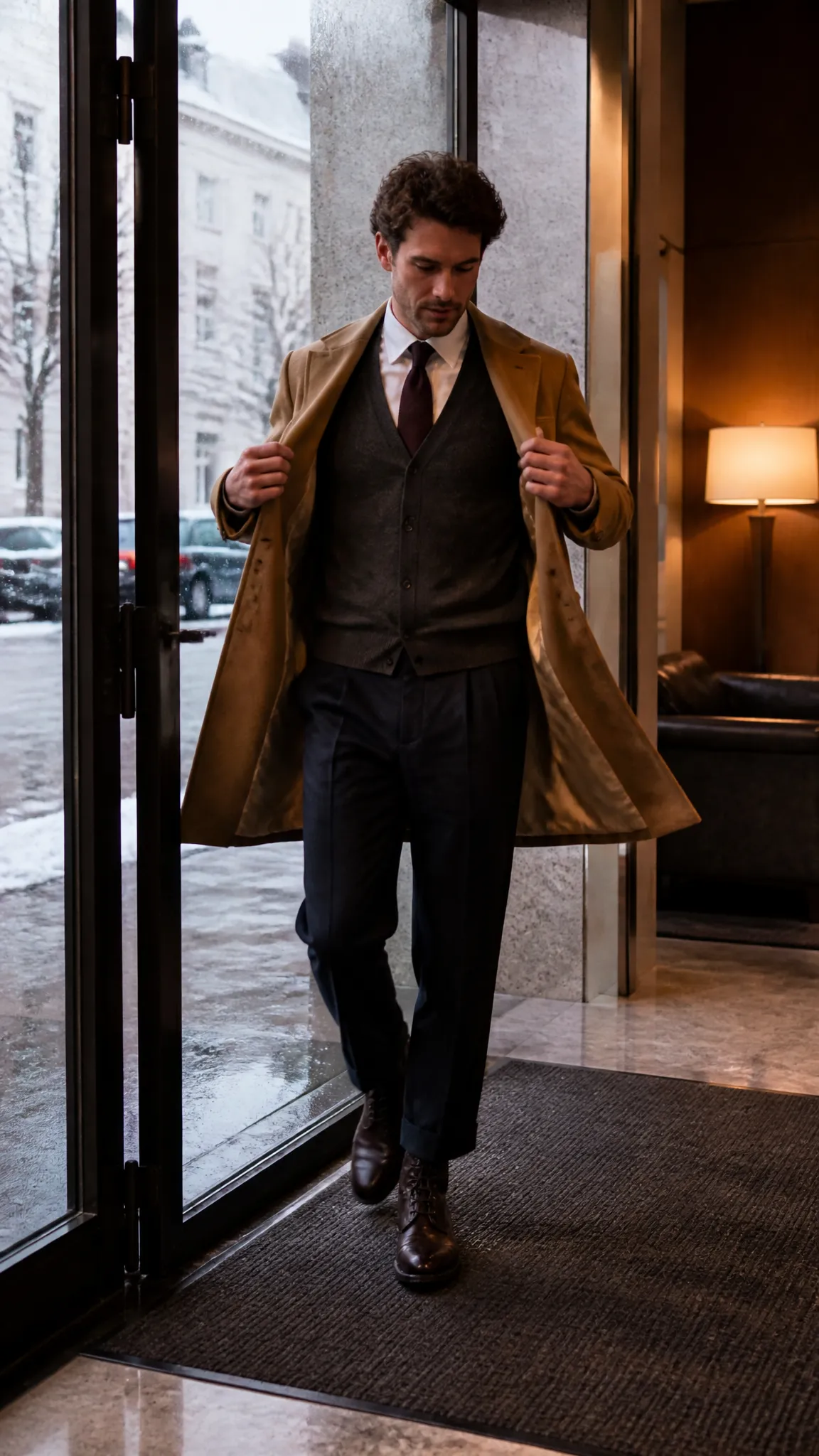
A fitted cardigan provides removable warmth without the heavier profile of a chunky sweater. Worn under a structured coat, it creates practical professional fashion for commutes that shift between cold sidewalks and overheated transit.
Outfit Pieces
- White Oxford-cloth dress shirt
- Charcoal fine-knit V-neck cardigan
- Navy single-pleat wool trousers
- Camel topcoat and dark brown lace-up boots
Cold-Commute Strategy
Button the cardigan except at the bottom and keep its hem from extending below your belt line. The V-neck should leave enough space for a burgundy tie without exposing too much shirt. At your desk, remove the cardigan if needed while keeping the shirt and trousers office-ready.
Weather-Ready Commuter Combinations
9. Suit With a Belted Trench and Warm Liner
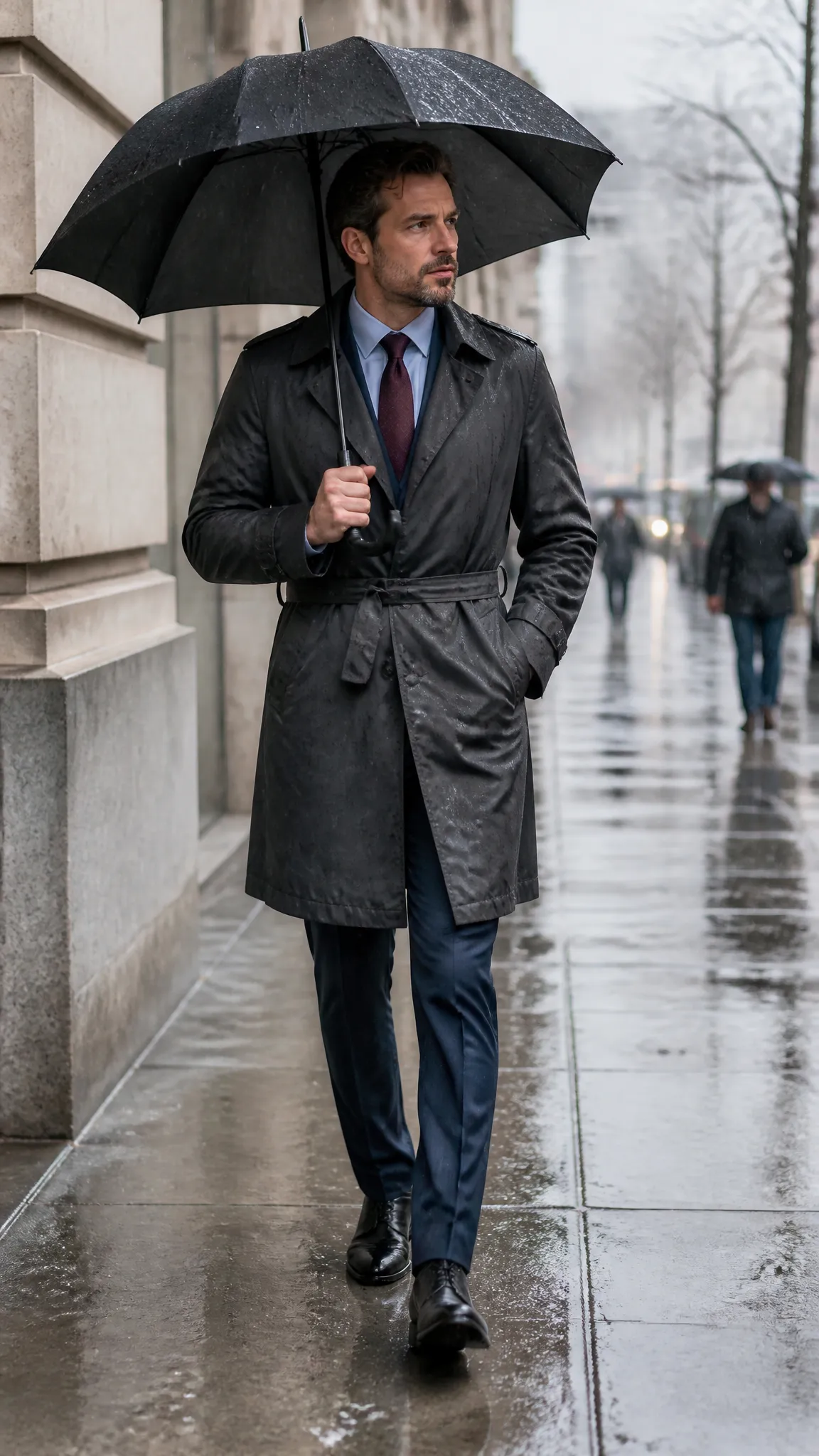
Cold rain and slushy conditions call for an outer shell that blocks moisture rather than simply absorbing it. A lined trench protects tailored clothing while maintaining the sharp vertical shape expected in a formal office.
Outfit Pieces
- Dark navy wool suit
- Light blue dress shirt and burgundy tie
- Charcoal water-resistant trench with a removable liner
- Black weather-resistant dress boots
Cold-Commute Strategy
Buckle or tie the belt neatly instead of leaving it dangling, and make sure the trench extends below the suit jacket. Use an umbrella rather than relying on the coat in sustained rain. Keep a shoe cloth at work for removing salt marks before meetings.
10. Wool Trousers With a Technical Commuter Coat
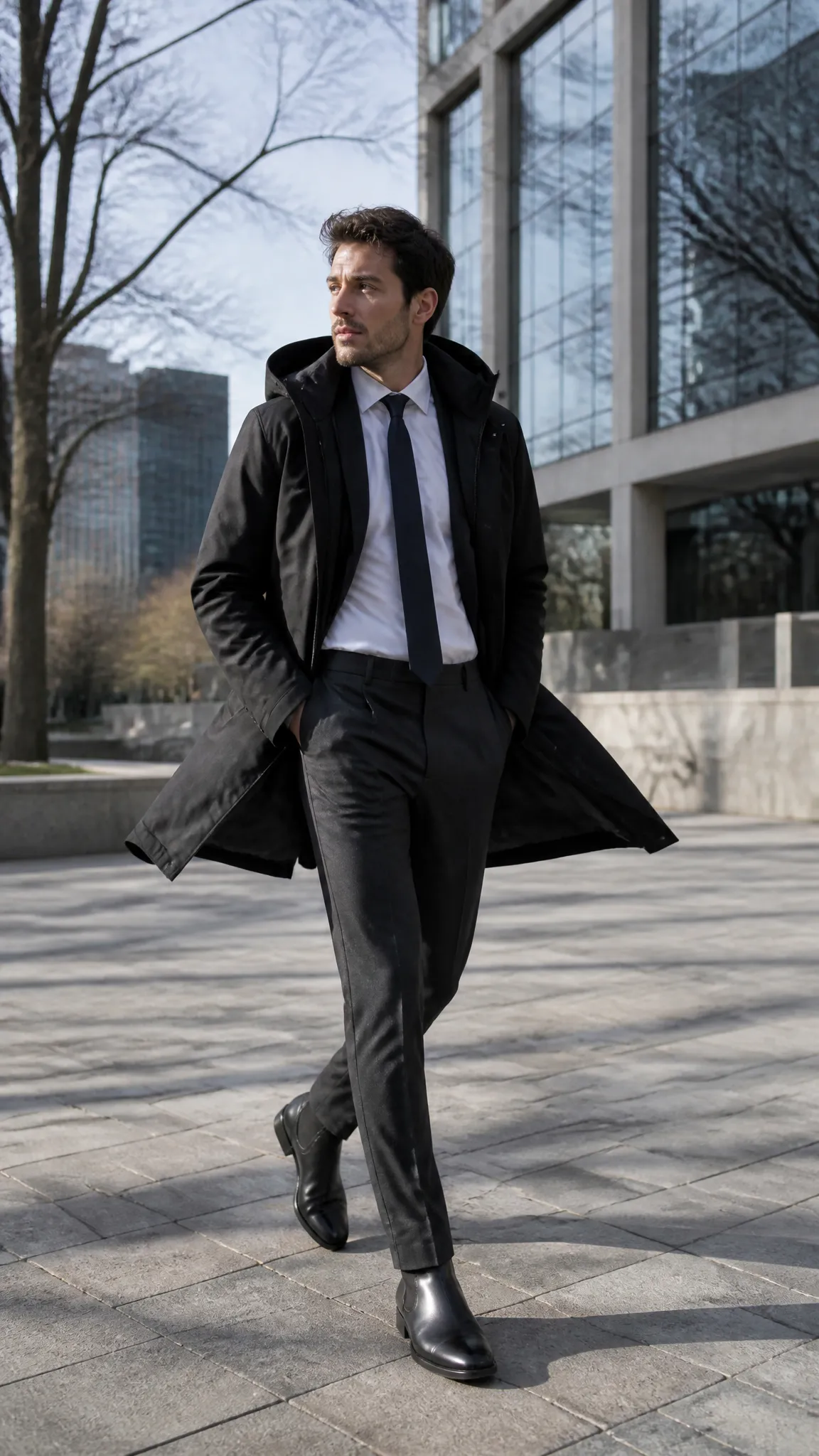
A minimalist technical coat can work with formal separates when severe wind or precipitation makes a traditional wool coat impractical. Success depends on a matte fabric, subdued color, and a simple silhouette without conspicuous outdoor details.
Outfit Pieces
- White dress shirt and navy wool tie
- Charcoal tailored wool trousers
- Black insulated commuter coat
- Black leather dress boots with a traction sole
Cold-Commute Strategy
Wear the technical coat strictly as outerwear and remove it promptly at the office. The clothing beneath should be fully professional, not a casual travel outfit. Favor concealed closures and minimal pocket bulk so the coat complements rather than competes with your tailoring.
11. Three-Piece Suit Under a Classic Overcoat

A matching waistcoat adds a useful layer of insulation across the torso while maintaining the formality of a suit. It’s a strong option for ceremonies, executive meetings, or traditional offices where a fully tailored appearance is expected.
Outfit Pieces
- Charcoal three-piece wool suit
- White dress shirt and deep red tie
- Black single-breasted overcoat
- Black cap-toe boots and leather gloves
Cold-Commute Strategy
The waistcoat should cover the shirt at the waistband without extending below the suit jacket. Leave its bottom button undone, and choose a coat with sufficient chest room for all three tailored layers. Skip bulky sweaters here, since the waistcoat already provides structured warmth.
12. Merino Quarter-Zip Under a Blazer

A fine quarter-zip offers flexible warmth for long rail commutes, especially when you need to adjust quickly between platforms, train cars, and office interiors. Styled carefully, it can sit within business dress rather than looking like athletic wear.
Outfit Pieces
- Pale blue dress shirt and subtle patterned tie
- Navy fine-gauge merino quarter-zip
- Charcoal blazer and matching tailored trousers
- Dark brown topcoat and leather dress boots
Cold-Commute Strategy
Use a sweater with a small, discreet zipper and no visible branding. Leave it partly open so the shirt collar and tie remain tidy, then remove it if your office expects a conventional suit appearance. This adaptable formula rounds out the business professional outfits men can rely on during variable winter weather.
How to Build a Cold-Commute Work Wardrobe
Start with a navy or charcoal wool suit, gray flannel trousers, two fine-gauge merino knits, and a knee-length overcoat. These timeless wardrobe staples combine in several ways, making it easier to dress consistently without buying a separate outfit for every temperature.
Fit your outerwear while wearing a suit jacket, not just a shirt. You should be able to button the coat comfortably and reach forward without tightness across the upper back. For base layers, favor thin merino or smooth synthetic fabric that won’t bunch beneath a fitted dress shirt.
Footwear deserves equal attention. Leather dress boots with understated rubber soles provide ankle coverage and grip while still working with tailored trousers. If conditions are severe, commute in dedicated weather boots and change at the office rather than risking soaked shoes or a fall.
Finally, consider how each layer behaves indoors. Good employee clothes should remain presentable after a crowded bus ride, and removable layers help you manage heated offices without perspiring into your suit. Keep a clothes brush, lint roller, shoe cloth, and spare pair of socks at work for quick maintenance.
Frequently Asked Questions
Can a puffer jacket be business professional?
A slim, understated puffer can work for the commute, but it generally reads less formal than a wool overcoat or lined trench. Choose a dark matte finish with minimal branding, make sure it covers your suit jacket, and remove it before entering professional meetings.
What’s the warmest material for office trousers?
Wool flannel is a practical choice because its brushed surface feels warmer than many smooth, lightweight suit fabrics. Select a lined or partially lined pair if you find wool itchy, and avoid extremely heavy cloth that becomes uncomfortable in a heated office.
Are dress boots acceptable with a suit?
Yes, provided they’re sleek, clean, and close in appearance to formal dress shoes. Plain-toe, cap-toe, and streamlined Chelsea boots in black or dark brown leather pair well with suits; heavy lug soles and rugged hiking details are less suitable.
Should an overcoat be longer than a suit jacket?
Yes. The overcoat should fully cover the suit jacket, with mid-thigh to knee length offering useful protection from cold and precipitation. Try it on over your normal tailoring to confirm the sleeves, shoulders, and chest have enough room.
How do you prevent winter layers from looking bulky?
Use several thin layers rather than one thick sweater, and reserve loftier insulation for your outermost coat. Fine-gauge merino, a properly fitted jacket, and an overcoat cut with layering room will produce a cleaner silhouette.